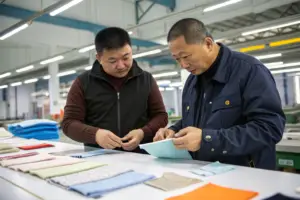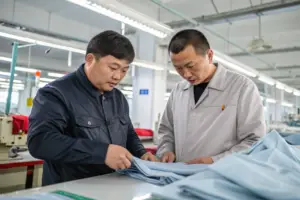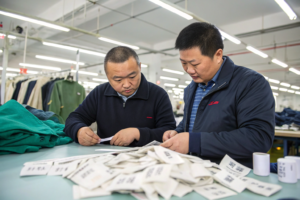
You have a great idea for a basic. A perfect t-shirt. A go-to hoodie. A lounge set. You order samples from a wholesale supplier. They arrive. The fit is fine. The color is right. But the fabric feels... average. It feels like everything else on the market. It feels like a commodity. You know that to charge $68 for a hoodie instead of $38, you need a fabric that makes the customer stop and say, "Oh, this is soft." You need a tactile advantage. But when you search Alibaba for "soft cotton jersey," you get ten thousand results. How do you find the real ultra soft fabric? How do you specify it so the factory does not substitute a cheaper, scratchier version? This is the secret of the best DTC basics brands. They win on hand feel.
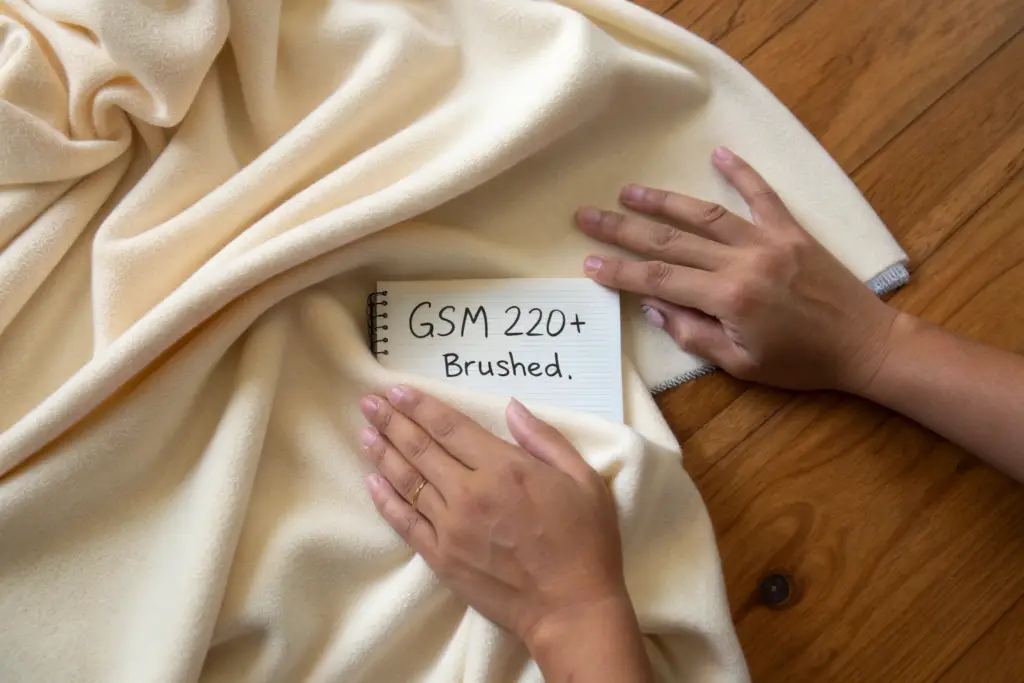
Sourcing ultra soft fabrics for wholesale basics requires shifting the conversation from generic fiber names to specific technical specifications that correlate directly with softness. The three critical specifications are: (1) Yarn Count (Ne) and Ply. For premium softness in cotton, you need a minimum of 40s single or 50s two-ply yarn. Higher numbers indicate finer, longer fibers. (2) Fabric Weight (GSM). For a "substantial but soft" hand feel, target 200-240gsm for jersey and 300-350gsm for fleece. Avoid anything under 160gsm for basics unless it is a summer sheer. (3) Mechanical Finishing. This is the most overlooked factor. "Peaching," "Brushing," or "Sueding" are post-weave processes where the fabric is run over abrasive rollers to raise tiny fibers on the surface. This creates that velvety, worn-in softness. You must specify "Double Brushed" or "Peached Finish" in the Purchase Order. Without these specs, the factory defaults to a standard, unbrushed greige goods which will feel stiff and papery.
At Shanghai Fumao, we have developed a library of "Touch Approved" fabrics specifically for brands that want to elevate their basics. Let me walk you through exactly how to find and secure this feel.
What Are the Technical Specifications That Guarantee "Ultra Soft" Hand Feel?
You ask a supplier for "soft cotton." They send you a sample. It feels like sandpaper. You are frustrated. The problem is the word "soft." It is subjective. It means nothing in a manufacturing context. You need to speak the language of the mill. You need to use objective, measurable terms that define softness. These terms are in the fine print of the fabric spec sheet. Once you understand Yarn Count, Ply, and Finishing, you can compare apples to apples. You can look at a spec sheet and know if the fabric will feel like a luxury cloud or a cheap tablecloth before you even touch it.
The technical specifications that guarantee ultra soft hand feel are Yarn Count, Fiber Staple Length, and Mechanical Finish. Yarn Count (Ne) measures the fineness of the yarn. A higher number like 60s or 80s means the cotton fibers are longer and thinner, resulting in a smoother, silkier surface. Standard basics use 20s or 30s yarn, which is coarser. Fiber Staple Length refers to the length of the individual cotton fibers. Long-staple cotton (like Supima or Egyptian Giza) measures over 1 3/8 inches and resists pilling. Short-staple cotton feels rough and pills quickly. Mechanical Finish is the post-production treatment. "Brushing" raises surface fibers for a fleece-like warmth. "Peaching" creates a subtle, sueded micro-nap. "Enzyme Wash" uses natural enzymes to eat away the tiny fuzz and pill balls, leaving a perfectly clean, smooth surface. Specifying a combination of these elements, such as "40s Single Jersey, 220gsm, Enzyme Washed with Peached Finish," removes all ambiguity.
At Shanghai Fumao, we provide a technical data sheet with every fabric submission. We want you to know exactly what you are buying.
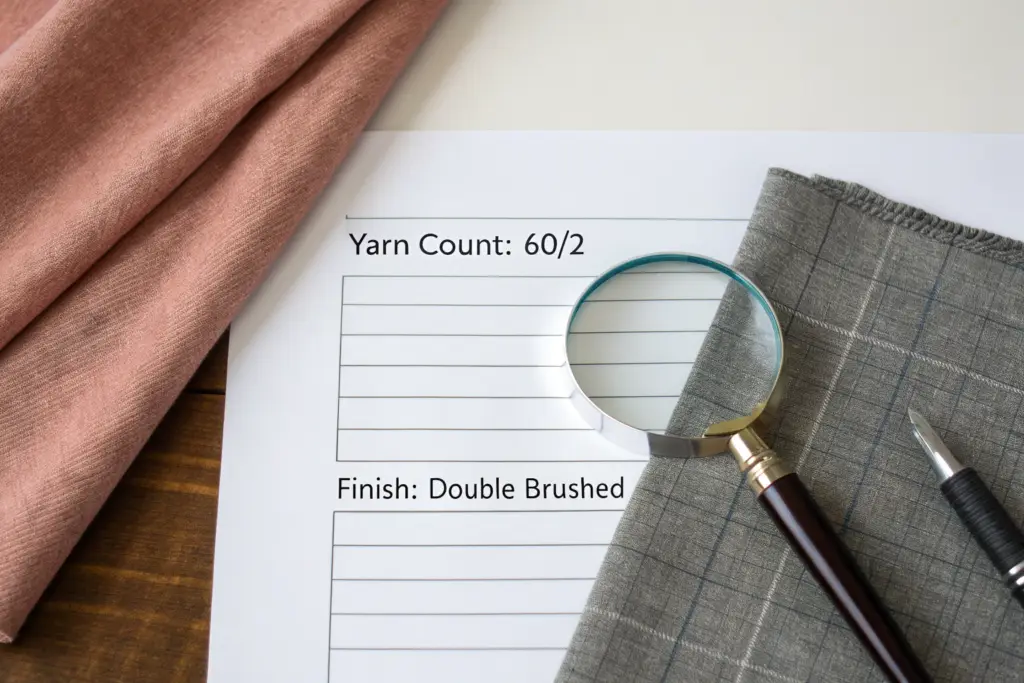
Why Is Yarn Count (Ne) the Secret Code to Softness?
Think of yarn count like thread count for sheets, but it actually matters. A 20s yarn is thick and coarse. It is durable, but it feels rough against sensitive skin. A 50s yarn is thin and fine. It is soft, but it can be sheer.
For a premium basic t-shirt that balances softness and opacity, the sweet spot is 40s single jersey or 50s two-ply.
Single vs. Two-Ply: Single yarn is one strand twisted. Two-ply is two strands twisted together. Two-ply is stronger and resists pilling better. It also has a slightly smoother, more "expensive" feel.
I recall a client who was trying to replicate the feel of a very popular, expensive basics brand. We analyzed the fabric. It was a 60/2 Combed Cotton Jersey. That spec—60s yarn count, two-ply, combed (meaning short fibers were removed)—is the gold standard. We sourced that exact spec. The client's cost per yard went up by about 15% compared to standard 30s. But she was able to retail her tee for $58 instead of $34. The customer could feel the difference instantly. The fabric was the marketing.
How Does "Brushing" and "Peaching" Transform Cheap Fabric?
You can take a standard 30s jersey and make it feel twice as expensive with the right finish. This is the magic of mechanical finishing.
Brushing: The fabric is passed over rotating wire brushes. This tears up the surface fibers, creating a soft, fuzzy "halo." This is how you make the inside of a hoodie feel fleecy. "Double Brushed" means both the face and the back are brushed.
Peaching (or Sueding): This is a gentler version of brushing. The fabric is passed over fine sandpaper-like rollers. It creates a microscopic nap that feels like a peach skin or suede. It is incredible on woven shirts and dresses.
I had a client who wanted an ultra soft woven poplin for a men's shirt. Standard poplin is crisp and can be stiff. We sourced a 50s poplin and sent it for "Peach Finish." The transformation was night and day. The fabric went from office-stiff to weekend-soft. It draped beautifully. The client sold out of the shirt in two weeks. The difference was a finishing process that cost about $0.35 per yard.
| Specification | Standard Basic | Ultra Soft Elevated Basic |
|---|---|---|
| Yarn Count (Ne) | 20s - 30s | 40s - 60s |
| Ply | Single | Two-Ply (or Combed Single) |
| Fiber | Generic Cotton | Supima, BCI Long-Staple, Modal Blend |
| Finish | None (Loomstate) | Enzyme Wash, Peach Finish, or Double Brushed |
| GSM (Jersey) | 140-160gsm | 200-220gsm |
Where Do You Find Reliable Suppliers for Premium Modal, Tencel, and Supima Blends?
You want to use Modal or Tencel because you know it is soft. You ask a random factory, "Do you have Modal?" They say, "Yes, we have Modal." They send you a sample. It feels nice, but not amazing. You ask for the mill certificate. They cannot provide one. You have just purchased "Modal-like" fabric, which is usually a cheap viscose rayon blend. True, premium softness comes from branded fibers with strict quality control. Lenzing Modal and Lenzing Tencel from Austria are the gold standard. Supima cotton from the USA is the premium long-staple cotton standard. You need to find suppliers who are authorized to use these branded fibers. This ensures you are getting the real chemical composition and fiber length that creates the softness.
Finding reliable suppliers for premium blends requires searching for "Authorized Lenzing Mill" or "Supima Licensee" rather than generic fabric types. Lenzing AG licenses specific mills in China, India, and Turkey to produce fabric using their trademarked Tencel and Modal fibers. These mills are audited for quality and can provide a "Lenzing Certificate" that verifies the fiber content. For Supima, the Supima organization licenses spinners and mills. Using an authorized supplier ensures three things: (1) The fiber is genuine long-staple cotton, not a generic Pima label, (2) The fabric has traceability back to the US cotton fields, and (3) The mill is held to higher production standards. You can find these suppliers by visiting the "Supply Chain" or "Licensees" section of the Lenzing and Supima websites. Alternatively, work with a manufacturing partner who already has these mill relationships established.
At Shanghai Fumao, we are connected with certified Lenzing and Supima mills. We can provide the fiber certification with the bulk fabric.
What Is the Difference Between Generic Rayon and Lenzing Modal?
This is a crucial distinction. Both are made from wood pulp. Both are soft. But Lenzing Modal is made in a closed-loop process that is more environmentally sound, and the fiber itself is stronger and more resistant to pilling.
Generic viscose rayon feels soft when new. It also shrinks unpredictably, stretches out of shape, and pills into a fuzzy mess after three washes. It loses its softness.
Lenzing Modal retains its softness and color wash after wash. It has higher "wet strength," meaning it does not become weak and fragile when wet. This means the garment lasts longer.
I had a client making lounge sets. She wanted that buttery, drapey feel. She was quoted a low price using generic viscose. I advised her to switch to a Lenzing Micromodal blend. The fabric cost increased by about 25%. The return rate on the product dropped to under 2%. The reviews consistently said, "Softest pajamas I have ever owned." The fabric sold the product. The brand built a reputation for quality. You cannot build that on generic viscose that falls apart in the dryer.
How Do You Verify a Supima Cotton Claim?
"Pima" cotton is a generic term. It is often mislabeled. "Supima" is a trademarked brand representing the top 1% of American Pima cotton.
To verify a Supima claim, ask the supplier for the Supima License Number. Every authorized spinner, knitter, and manufacturer has one. You can cross-reference this number on the Supima website.
If they cannot provide a license number, they are selling generic Pima. It might be good cotton. It might not be. But you are paying a premium for the Supima name without the guarantee of the Supima quality.
I recall a brand that was paying a premium for "Supima Cotton" t-shirts. The hand feel was inconsistent batch to batch. We asked the factory for the Supima license. They admitted they used "Supima-like" Chinese long-staple cotton when the US cotton was out of stock. The brand was not getting what they paid for. We switched their production to an authorized Supima mill. The consistency problem vanished. The cost was the same. They just needed the right supplier partner.
How Do You Test and Compare Fabric Softness Before Committing to Bulk?
You receive five swatches in the mail. They all look like cream-colored jersey. You touch them. They all feel "soft." You cannot decide. You pick the cheapest one. This is a mistake. Your fingers get fatigued. Your memory of "Softness A" fades by the time you touch "Softness E." You need a more objective way to compare and communicate softness. You need to simulate the wash and wear experience. You need to test for the enemy of softness: pilling.
Testing fabric softness before bulk commitment requires a three-part protocol that goes beyond the initial hand feel. First, perform the "Wash and Dry Cycle Test." Cut a 4x4 inch square of each swatch. Machine wash warm, tumble dry medium. Do this three times. Then compare the hand feel. Fabric that feels soft "off the bolt" due to finishing chemicals (softeners) will often feel stiff and rough after those chemicals wash out. Second, perform the "Pilling Rub Test." Rub the fabric swatch vigorously against itself or a piece of denim for 30 seconds. Look for tiny fuzz balls. Long-staple cotton and Tencel will resist this. Cheap cotton and viscose will pill immediately. Third, perform the "Drape and Recovery Test." Hold the fabric by one corner. Does it drape fluidly or stand stiff? Scrunch it in your fist. Does it wrinkle deeply or release? These tests give you a preview of how the garment will feel and look after three months of wear.
At Shanghai Fumao, we can perform these wash tests for you and send you photos of the swatches post-laundry.
How Do You Simulate the "Three Month" Hand Feel at Home?
The softener trick is common in the industry. Mills apply a topical softener (often silicone-based) to make the fabric feel amazing on the roll. It washes out after one or two cycles. The true hand feel of the greige goods is revealed.
You must strip the softener. Soak the swatch in hot water with a tablespoon of white vinegar for 30 minutes. Rinse and dry. Now touch it. This is the real fabric.
I had a client who fell in love with a brushed sweat fleece swatch. It was incredibly plush. I asked her to wash it first. She did. The plushness deflated by about 30%. It was still a good fabric, just not the cloud she remembered. This allowed us to negotiate with the mill for a "Double Brushed" finish that would survive washing, rather than a single pass that was just for showroom appeal. The bulk order matched her washed expectation, not the unrealistic showroom sample.
What Is the "Fist Test" for Drape and Recovery?
This is a low-tech but highly effective test for knits, especially for jersey dresses and t-shirts.
Take the fabric swatch in your hand. Close your fist tightly around it. Squeeze hard for ten seconds. Release.
Observe two things:
- Wrinkle Severity: Are there deep, sharp creases? Or soft, gentle waves? Sharp creases mean the garment will look like a crumpled mess after sitting in a chair.
- Recovery: Does the fabric spring back to flat? Or does it hold the wrinkled shape? Good recovery means less ironing and a neater appearance throughout the day.
This test simulates the experience of wearing the garment. A fabric that fails the fist test will look sloppy on the body. It does not matter how soft it feels on the hanger if it looks like a wrinkled sack on the customer. This is especially important for travel-friendly basics.
How Do You Specify "Hand Feel" in a Purchase Order to Prevent Substitutions?
You found the perfect fabric. You washed it. You love it. You send the reference swatch to the factory. You write on the PO: "Fabric: 95% Cotton 5% Spandex Jersey, 200gsm, Soft." The bulk arrives. It is 200gsm. It is the right fiber content. But it feels like cardboard. The factory says, "It is the spec." They are technically right. You wrote "Soft." They used their definition of soft. You are stuck. To prevent this, you must create a binding, physical standard. The Purchase Order must reference an approved physical swatch that has been signed and dated. You must also include a penalty clause for deviation.
Specifying hand feel in a Purchase Order requires creating a "Sealed Trim Card" and referencing objective technical language. The process is: (1) Create three identical Trim Cards. Each card has a cutting of the APPROVED fabric stapled to it. You sign and date the back of the card. The factory manager signs and dates the back. One stays with you. One goes to the factory. One goes to the QC inspector. (2) In the PO text, write: "Fabric must match approved physical swatch Ref: #SW-2026-01 in hand feel, drape, and surface finish. Substitution requires written approval and new swatch submission." (3) Include a specific test standard if possible: "Fabric must pass ASTM D3512 Pilling Test with rating of 4.0 or higher." This combination of a physical standard and a written objective test makes it very difficult for a factory to substitute a cheaper fabric without clear breach of contract.
At Shanghai Fumao, we require signed Trim Card approval before we release the fabric purchase order to the mill. It protects us and it protects the client.
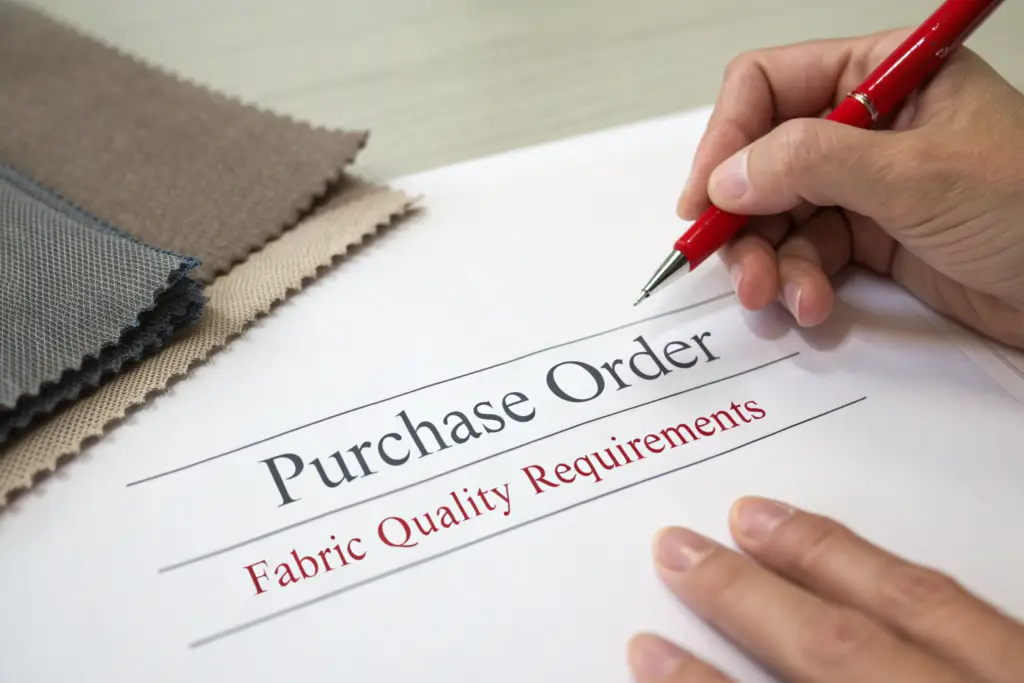
What Is a "Sealed Trim Card" and Why Does It Protect You?
A Trim Card is a piece of heavy cardstock. It has the fabric swatch stapled to it. It has lines for:
- Style Number
- Fabric Content
- Supplier/Mill
- Date Approved
- Signature of Buyer
- Signature of Factory Representative
When you sign this card and the factory signs it, it becomes a legal attachment to the Purchase Order. It is not just a "reference." It is the "Standard."
If the bulk fabric arrives and it does not match the hand feel of the card, the factory cannot argue. The evidence is in their hands. They signed it.
I insist on this for all special finish fabrics like peached or brushed goods. The visual is not enough. The tactile is the product. A signed Trim Card has saved my clients tens of thousands of dollars in chargebacks and rework costs.
What Language Should You Use to Describe "Softness" in an Email?
Avoid subjective adjectives. Use comparative benchmarks.
Bad: "Please make it super soft."
Good: "Please match the hand feel of the attached swatch, which is similar to a well-worn vintage t-shirt. It should have a peached surface and low crispness."
Better: "Target Hand Feel: Supima Cotton 40s Single Jersey, Enzyme Washed. Reference: Feel of Brand X 'Cloud Tee' (2024 version)."
Referencing a known commercial product gives the factory a target they can research. They might have even produced that fabric before. This is far more effective than adjectives.
I once had a client describe the desired feel as "buttery soft." The factory sent a fabric with a greasy, silicone finish. They took "buttery" literally. Now I always use technical descriptors: "peached," "sueded," "low-friction surface." It saves a lot of confusion.
Conclusion
Sourcing ultra soft fabrics is the single most effective way to differentiate your basics brand in a crowded market. When the fit is standard and the color is neutral, the fabric becomes the product. We have seen that "soft" is not a word; it is a combination of specific technical choices—yarn count, fiber length, and mechanical finishing. You learned to ask for 40s combed cotton instead of just "cotton." You learned to seek out authorized Lenzing and Supima mills for genuine, traceable quality. You learned to wash the swatch and perform the fist test to see the true, long-term character of the fabric. And you learned to lock in that hand feel with a signed Trim Card that leaves no room for substitution.
At Shanghai Fumao, we understand that the tactile experience is your brand's silent ambassador. We work with our mill partners to develop exclusive finishes and weights that are not available on the open market. Whether you are looking for the perfect buttery Modal blend for loungewear or a crisp yet peached poplin for shirting, we can help you navigate the specification and testing process.
If you are ready to elevate your next collection with fabrics that customers cannot stop touching, we invite you to connect with us. We can send you a curated selection of our "Touch Approved" swatches and walk you through the technical specs that guarantee a premium hand feel.
Please reach out to our Business Director, Elaine. She can arrange for a Swatch Pack to be sent to you and discuss how we can integrate these premium fabrics into your production plan.
Email: elaine@fumaoclothing.com