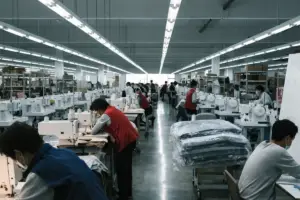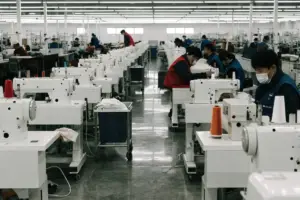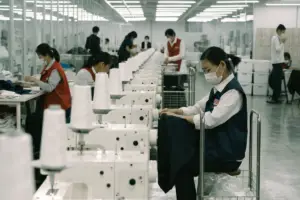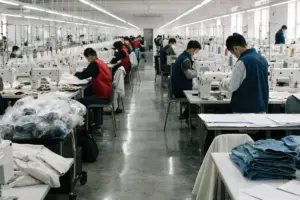
You found a factory with beautiful samples. The stitching was perfect. The fabric was gorgeous. You placed a bulk order. You waited. The shipment arrived. It looked like a different factory made it. The seams were wavy. The buttons were loose. The sizing was all over the place. You call the sales rep. They apologize. They offer a discount on the next order. You are confused. What changed between the sample room and the production floor? The machines are the same. The workers are the same. The difference is invisible to the camera lens. The difference is leadership. A factory without strong leadership is just a building full of sewing machines. A factory with strong leadership is an engine of consistent quality.
Strong factory leadership is the secret to consistent clothing quality because it establishes and enforces the “Process Discipline” that bridges the gap between a perfect sample and 5,000 perfect bulk units. Leadership translates to specific, observable operational behaviors: (1) The presence of a “Production Floor Manager” who walks the line hourly to check seam guide settings and operator fatigue, not someone sitting in an office, (2) A culture of “Stop and Fix” rather than “Push and Ship,” where workers are empowered to halt production if they spot a recurring defect, and (3) Consistent investment in “Preventative Maintenance” of machinery, ensuring that fusing press temperatures and cutting blade sharpness are checked daily, not just when they break. Without this top-down pressure for standards, even the most skilled individual sewer will drift toward the path of least resistance, which inevitably lowers quality over the course of a long production run.
At Shanghai Fumao, our production director has been with the company for fifteen years. He knows every machine, every operator, and every corner of the floor. This is not just management. This is leadership. Let me show you why this matters more than any machine we own.
How Does Floor-Level Leadership Prevent “Sample-to-Bulk” Quality Drift?
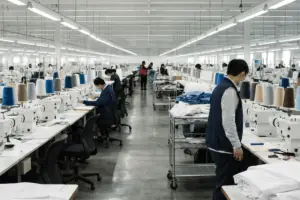
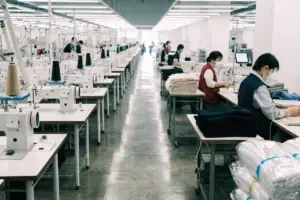
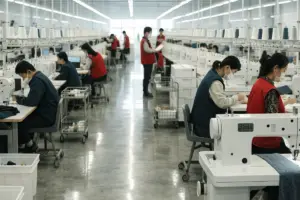
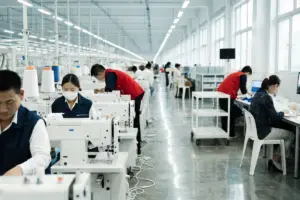
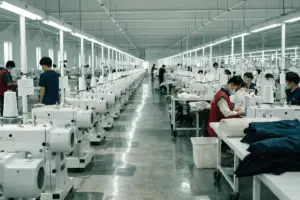
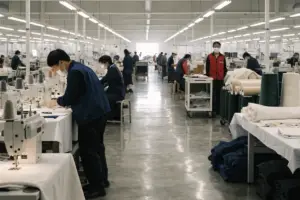
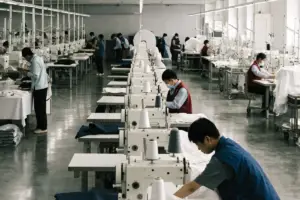
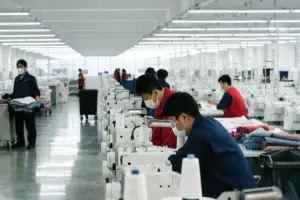
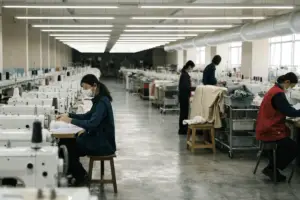
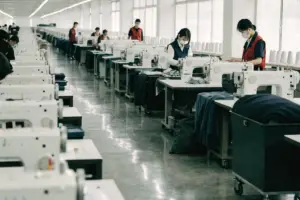
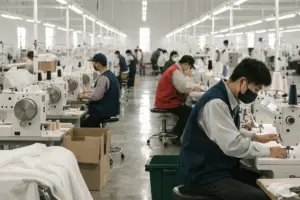
The sample room is a laboratory. It is quiet. The sample maker has unlimited time. They can redo a seam three times to get it perfect. The production floor is a battlefield. It is loud. There are deadlines. There are 50 operators sewing the same seam 500 times. Without strong floor leadership, the quality of that seam will degrade hour by hour. The operator gets tired. The machine vibrates out of alignment. The fabric stack changes tension. A weak leader accepts this as “normal manufacturing variance.” A strong leader sees it happening and corrects it immediately. They do not wait for the final inspection table. They fix it at the source, at the sewing machine, in real-time.
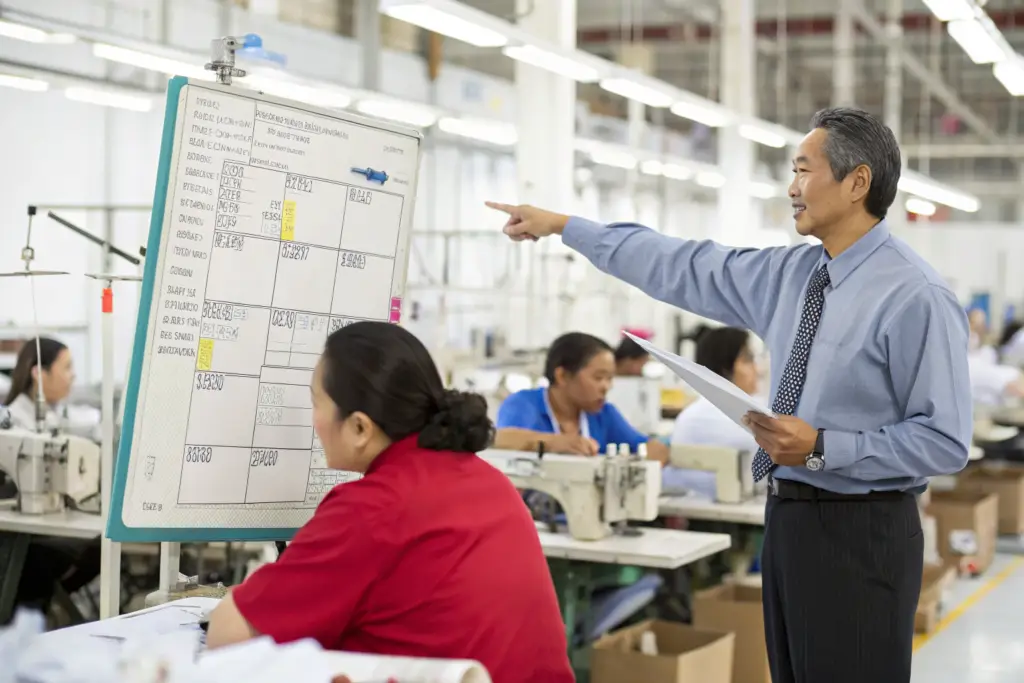
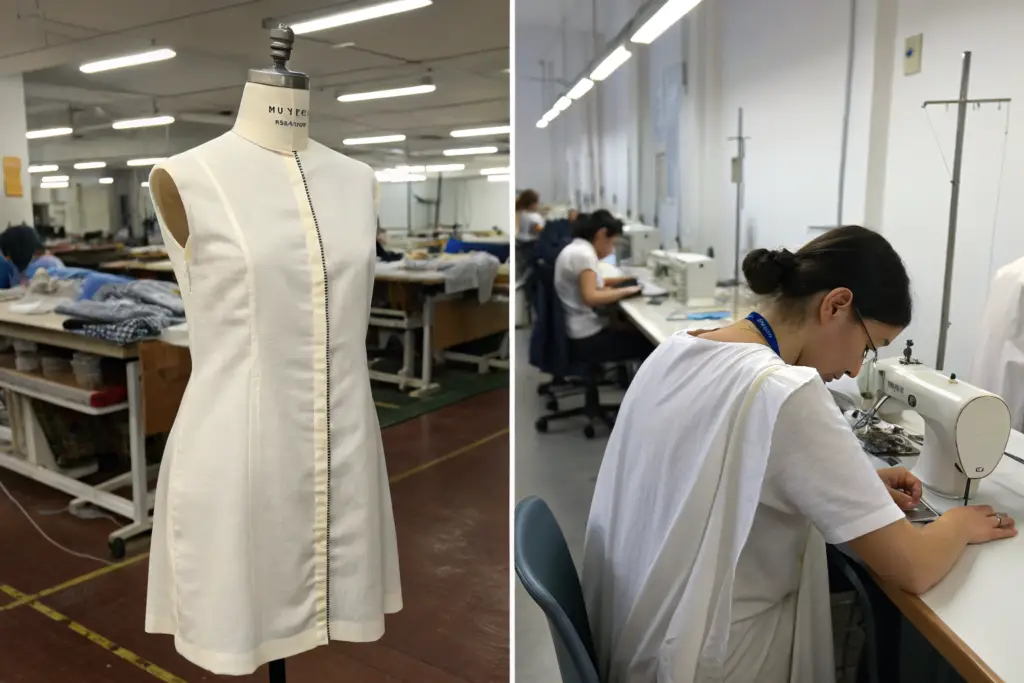
Floor-level leadership prevents sample-to-bulk drift through a process called “Active Supervision” or “Gemba Walks.” This means the production manager or line supervisor spends the majority of their day standing behind the operators, not sitting at a desk. They are watching for three specific drift indicators. First, “Seam Allowance Creep.” The operator’s fabric edge drifts away from the machine guide, changing the garment’s finished measurement. A strong leader checks the first three pieces off every machine and resets the guide if it has moved. Second, “Tension Variation.” The thread tension knob gets bumped. The seam becomes too tight (puckering) or too loose (grinning). A strong leader hears the change in the machine’s sound and adjusts the tension immediately. Third, “Fatigue Posture.” An operator leaning too far over the machine stretches the fabric as they feed it. A strong leader corrects the operator’s posture or adjusts the chair height. These micro-corrections are invisible to an auditor but define the final product.
At Shanghai Fumao, our line supervisors are required to be on their feet, moving between stations, with a measuring tape in their hand at all times.
What Does a “Gemba Walk” Look Like in a Quality-Focused Factory?
“Gemba” is a Japanese term meaning “the real place.” In manufacturing, it means the factory floor. A Gemba Walk is not a stroll. It is a disciplined inspection routine.
A strong leader walks the line with a specific checklist. They stop at Station 12. Operator is attaching the sleeve. Leader picks up the last piece sewn. They lay it on the flat table next to the machine. They measure the sleeve cap height. It is 1/8 inch too high. They show the operator. They adjust the folder guide on the machine. They watch the operator sew the next piece. They measure it. It is correct. They initial the operator’s production ticket. They move to Station 13.
This takes 90 seconds. It prevents 300 bad sleeves from being sewn that day. This is the difference between leadership and management. Management looks at the end-of-day production report and sees that 300 sleeves were sewn. Leadership looks at the sleeve and sees that it was sewn wrong.
I recall a visit to a factory we were vetting for a client’s silk charmeuse blouse order. The factory manager walked the floor with us. He stopped at a machine. He touched the seam. He said, “Too much pressure on the presser foot. Look at the feeding mark.” He reached down and adjusted the foot pressure by a quarter turn. The shiny mark on the delicate silk disappeared. He saw a defect that was invisible to me and to the operator. That is leadership born of deep experience. We placed the order with that factory. The quality was flawless.
Why Is “Operator Empowerment” a Direct Result of Good Leadership?
In a factory with weak leadership, operators are afraid to stop the machine. If they see a problem—a flaw in the fabric, a broken needle—they keep sewing. They know they will be penalized for low output. They let the problem pass to the next station.
In a factory with strong leadership, the culture is different. The leader tells the operators: “If you see a problem, stop. Raise your hand. I will come fix it. You will not be penalized for caring about quality.”
This is called “Andon Cord” culture, named after the Toyota system where any worker can stop the line.
You can see this on a video tour. Watch the operators. Do they look tense and rushed? Or do they look focused and calm? Do they occasionally stop and call a supervisor over? If you see a supervisor quickly walking over to a raised hand, you are seeing strong leadership in action.
We have a policy at Shanghai Fumao. If an operator spots a fabric flaw, they stop. They call the QC supervisor. The flaw is marked with a sticker. The piece goes to the rework rack. The operator gets credit for the piece anyway. This policy costs us a few minutes of lost sewing time. It saves us thousands of dollars in customer returns and brand damage.
How Does Leadership Investment in Machinery Maintenance Affect Stitch Consistency?
You do not think about sewing machine maintenance. You assume the machine just works. That assumption is why you get garments with skipped stitches, thread breaks, and uneven tension. A sewing machine sewing 4,000 stitches per minute generates friction and heat. It requires oil. It requires timing adjustments. In a factory with weak leadership, maintenance is reactive. The machine breaks, and then they fix it. By the time it breaks, it has already sewn 200 bad garments. In a factory with strong leadership, maintenance is proactive and scheduled. The leader understands that a well-oiled machine produces a consistent stitch. They invest in a maintenance team and hold them accountable for a schedule.
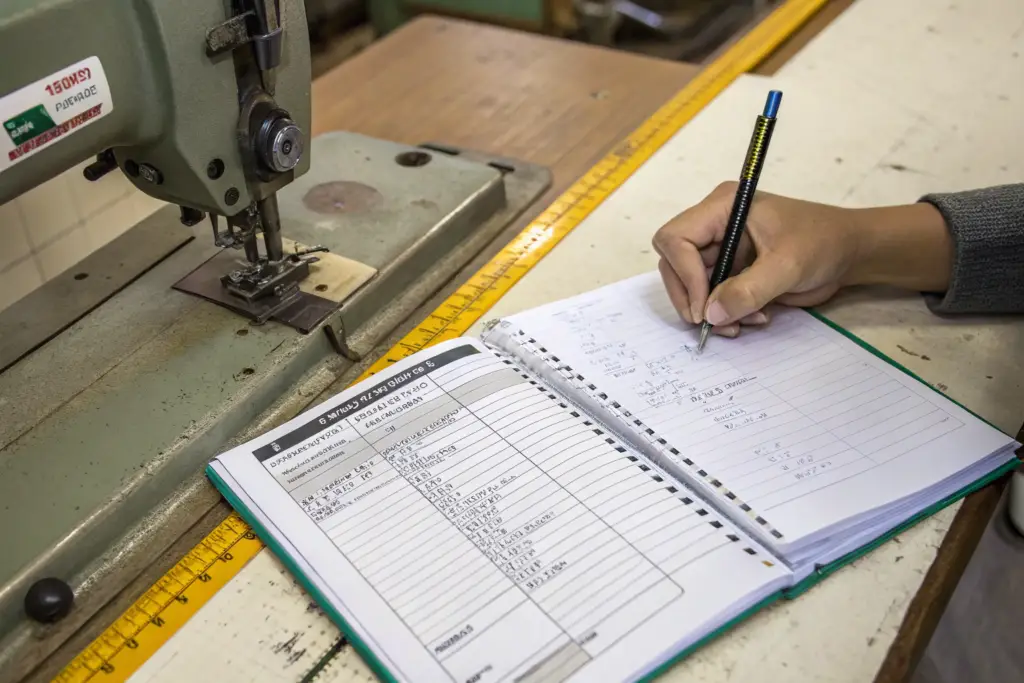
Leadership investment in machinery maintenance directly affects stitch consistency through the implementation of a “Total Productive Maintenance” (TPM) schedule. This involves three specific practices visible in a well-led factory. First, “Daily Operator Checks.” The sewer is trained to clean lint from the bobbin area and check oil levels at the start of every shift. A leader ensures this checklist is actually signed, not just ignored. Second, “Weekly Mechanic Tuning.” A dedicated mechanic walks the line and checks the timing of the hook and needle on every machine. A machine out of time by a fraction of a millimeter will skip stitches on certain fabrics. Third, “Quarterly Overhaul.” Machines are taken offline, deep cleaned, and worn parts like feed dogs and tension assemblies are replaced. This level of care is expensive in the short term but eliminates the “Monday Morning” quality drop and the “Friday Afternoon” drift that plague poorly maintained lines.
At Shanghai Fumao, we have a full-time mechanic whose only job is preventative maintenance. Our machine downtime is less than 1%.
What Is the “Friday Afternoon” Quality Drop and How Does Leadership Prevent It?
This is a real phenomenon. By Friday afternoon, the machines have been running for 50 hours straight. The oil is dirty. The operators are tired. In a factory with weak leadership, the defect rate on Friday afternoon is double the Monday morning rate. Management accepts this because they just want to hit the weekly shipping target.
Strong leadership refuses to accept the Friday drop. They implement countermeasures. They might schedule a 30-minute “Maintenance Pause” on Friday at 2:00 PM. All operators stop sewing. They clean their machines. The mechanic walks the line with an oil gun. The machines get a refresh for the final push.
I visited a factory in Vietnam that did this. At 2:00 PM, a bell rang. Everyone stopped. For 15 minutes, the floor was quiet except for the sound of cleaning and oiling. The factory manager told me, “It costs us 200 units of lost production time. It saves us 400 units of rework and repair.” That is the math of leadership.
This is especially critical for stretch fabrics like spandex blends. A machine with dirty feed dogs will stretch the fabric unevenly, creating a wavy hem. The operator cannot fix this with skill. Only a clean, properly maintained machine can sew a flat hem on stretch fabric. Leadership ensures the machines are clean.
Why Is Blade Sharpness a Leadership Issue in the Cutting Room?
The cutting room is where precision begins. A dull blade on a straight knife cutter or a band saw does not cut fabric. It chews it. It fuses synthetic fibers together. It creates a beveled edge where the top layer is a different size than the bottom layer.
Replacing blades costs money. A dull blade can still “cut” for a few more days. In a weak leadership environment, the cutting master is told to “make the blades last.” They push them one day too long. They cut 5,000 units with a dull blade. The entire run has inconsistent sizing because the panels are distorted.
A strong leader sets a non-negotiable blade change schedule. “Replace straight knife blade every 4 hours of cutting. Replace band knife blade at the start of every shift.” This is a fixed cost of quality. The leader inspects the blade change log. They touch the blade edge with their thumb to feel for sharpness.
I recall a specific issue with a leather jacket order. Leather dulls blades faster than fabric. The factory manager we were auditing showed me the blade change log. They were changing blades every 2 hours for the leather cutting. He said, “If I don’t check this log, the cutter will push it to 3 hours. Then the seams won’t match because the pieces are stretched.” That attention to a tiny detail in the cutting room is the reason the finished jackets fit perfectly.
How Does Leadership Culture Impact Raw Material Honesty and Sourcing Integrity?
You specify a 100% cotton 200gsm fabric. The factory quotes a price. The price seems good. The fabric arrives on the cutting table. It looks like your sample. But it is 100% cotton 170gsm. The factory swapped in a cheaper, lighter greige goods base to save money on the bulk order. They did this because leadership allowed it. They did this because the owner or manager created a culture where “hitting the target price” is more important than “honoring the specification.” Strong leadership creates a culture of Material Integrity. The leader makes it clear that substituting materials without approval is a fireable offense. They audit the fabric receipts against the purchase orders. They verify the yarn count.
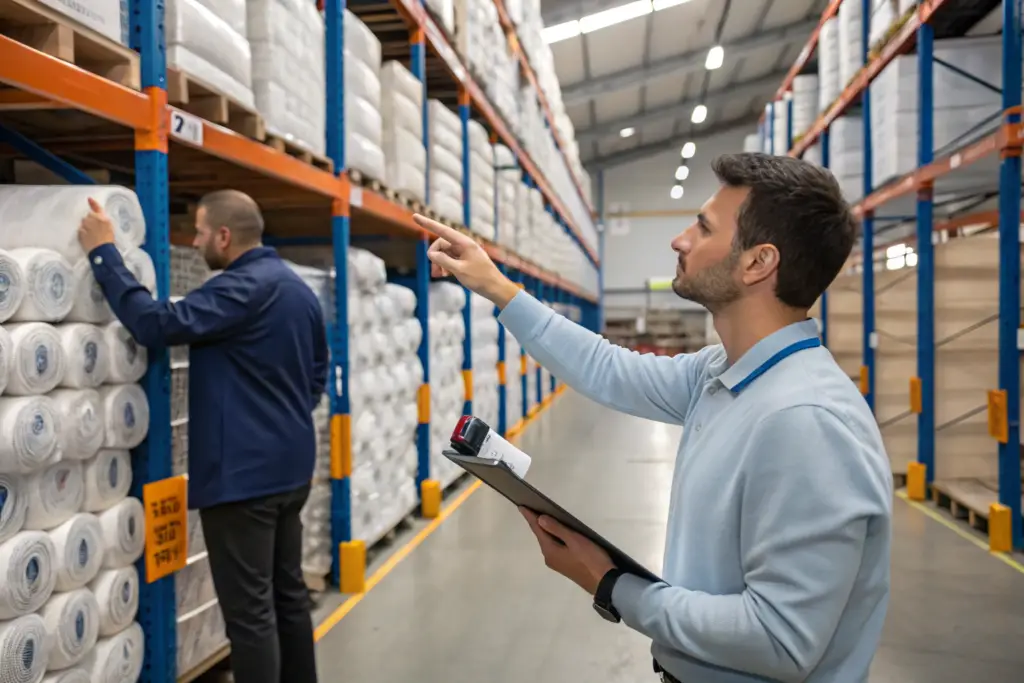
Leadership culture directly impacts raw material honesty through the enforcement of a “Chain of Custody” and “Incoming Inspection” protocol. In a well-led factory, the following behaviors are standard: (1) Mill Certificates are matched to the physical roll numbers. The receiving clerk checks the weight and construction on the label against the PO. (2) The Fabric Inspection Machine is used on 100% of rolls, not just a random 10%. The leader reviews the inspection reports daily. (3) “Remnant Accountability.” The leader expects the cutting room to account for the fabric issued. If 1,000 yards were issued, the cutting yield plus waste should equal 1,000 yards. Significant shrinkage or disappearing yardage indicates fabric being diverted or stolen. Strong leadership closes these loopholes. Weak leadership looks the other way. When a factory swaps fabric, it is never an accident. It is always a failure of leadership.
At Shanghai Fumao, our material integrity is non-negotiable. We provide mill certificates and inspection reports to any client who requests them.
What Is “Fabric Diversion” and How Does Strong Leadership Stop It?
Fabric diversion is an ugly secret in some parts of the apparel industry. A brand orders 1,000 yards of premium custom-dyed fabric. The factory buys 1,000 yards. They use 800 yards on the brand’s order. They set aside 200 yards. They use that 200 yards to make “ghost shift” garments that are sold out the back door, or they use it for another client’s order who is paying a premium for “quick turn” fabric.
This happens when leadership is either complicit or negligent. A strong leader implements a “Cut Order Plan Reconciliation.” After the order is cut, the finance department reconciles the fabric consumed (based on the marker efficiency) against the fabric purchased. If there is a variance greater than 2-3%, there must be a written explanation.
I worked with a brand that suspected fabric diversion on a printed rayon order. The yield seemed low. We asked the factory for the reconciliation report. They could not produce it. The factory manager stammered and said, “The rest was defective.” We asked to see the defective fabric. They had already “discarded” it. We did not place a second order with that factory. The leadership allowed the grey practice to happen. It cost them a long-term client.
How Do You Spot a Leader Who Values Sourcing Integrity?
During a video tour or visit, ask about the “Incoming Fabric Inspection” process. Do not just ask if they do it. Ask: “Can you show me the report for the last roll of custom color you received?”
A leader with integrity will walk over to a filing cabinet or open a spreadsheet and show you the report. It will have the date, the roll number, the shade grade, and the inspector’s signature.
Ask: “What happens if the shade is out of tolerance?”
The leader should answer: “We reject the roll and send it back to the mill. We do not cut it.”
If they say, “We try to blend it in,” or “We use it for internal parts,” they are telling you that they will ship you garments with shade variation. They just admitted it to your face. Strong leadership rejects bad raw materials because they know that accepting them creates a problem for the customer and a headache for the sewing line. Weak leadership accepts bad raw materials and hopes the customer does not notice.
How Does Leadership Handle Crisis and Problem Resolution with Buyers?
Every factory makes mistakes. Fabric shrinks more than expected. A zipper shipment arrives late. A color dyes off-shade. The difference between a good factory and a great factory is not the absence of problems. It is the presence of leadership during the problem. When you email a weak factory about a quality issue, you get silence. Or you get a vague reply: “We are checking.” And then more silence. When you email a strong factory, you get a Corrective Action Plan within 24 hours. You get a phone call from a manager who takes ownership. You get a clear path to resolution. This is leadership. It is the confidence to say, “We made a mistake. Here is exactly how we will fix it so it never happens again.”
Leadership in crisis resolution is characterized by the implementation of a formal “8D Problem Solving” or “CAPA” (Corrective and Preventative Action) process. The specific behaviors that signal strong leadership include: (1) Immediate Acknowledgment of the issue with a commitment to investigate, rather than deflection or denial, (2) Root Cause Analysis that goes beyond blaming the operator and examines the system (e.g., “The seam puckered because the fabric relaxation time was cut from 24 hours to 12 hours due to a scheduling change made by management”), and (3) A Verifiable Preventive Action that is added to the production checklist for future orders (e.g., “All rayon orders will now have a mandatory 24-hour relaxation period documented on the cutting ticket”). This structured response transforms a complaint into an opportunity for process improvement. It is the ultimate sign of a mature, well-led organization.
At Shanghai Fumao, we have a “No Surprises” policy. If we see a problem developing, we tell the client immediately. We do not wait for them to discover it at the warehouse.

What Does a Professional “Corrective Action Report” Look Like?
When a problem occurs, a strong leader does not send a one-line email apology. They send a formal document. This document is a sign of respect for your business.
It includes:
- Problem Statement: “300 units of Style #4567 were found to have sleeve length 1 inch shorter than spec.”
- Immediate Containment: “Remaining inventory has been isolated and will be re-inspected. We will not ship affected units.”
- Root Cause Analysis: “The cutting room used a manual marker that had been adjusted for fabric savings without approval from pattern room. The adjustment shortened the sleeve.”
- Corrective Action: “The cutting master has been retrained on the Change Control Procedure. All markers are now reviewed by Pattern Maker before release.”
- Preventative Action: “A new QC checkpoint has been added: Sleeve length measurement on first piece of every cutting spread.”
I received a report like this from a factory manager after a linen pant order had a waistband issue. The report was so thorough, so professionally done, that I actually felt more confident in the factory after the mistake than before. They proved they had the systems to catch and fix errors. That is the power of leadership.
How Does Leadership Attitude Affect Long-Term Partnership Viability?
You will have problems with any factory you work with for more than two years. The question is: Do you want to solve problems with a partner or fight battles with a vendor?
A factory with strong leadership views problems as shared challenges. The leader says, “Let’s figure out the most cost-effective way to fix this. What can we do on our end? What can you do on your end?” This is a partnership.
A factory with weak leadership views problems as threats. The manager hides. The sales rep blames the shipping company. You are left holding the bag.
The attitude of the leadership determines the long-term viability of the relationship. When you find a factory leader who takes ownership, who communicates clearly, and who implements preventive actions, you hold onto that factory. You do not switch to save $0.10 per unit. Because that $0.10 savings will cost you $10 in headaches and lost inventory when the inevitable problem arises and there is no leader to fix it.
I have clients who have been with Shanghai Fumao for over a decade. They stay not because we are the cheapest. They stay because they know that when something goes wrong—and in this business, something always goes wrong eventually—Elaine and our production leadership team will answer the phone and fix it.
Conclusion
Consistent clothing quality is not a machine setting. It is not a checklist. It is a reflection of the human being in charge of the factory floor. Strong leadership is the invisible thread that runs through every straight seam, every sharp collar point, and every on-time shipment. We have seen how floor-level leaders prevent the slow drift from sample perfection to bulk mediocrity by standing at the shoulder of the sewer with a measuring tape. We have explored how a leader’s commitment to preventative maintenance keeps the stitch quality consistent from Monday morning to Friday afternoon. We have examined how leadership integrity stops fabric substitution and material dishonesty before it starts. And we have learned that the true test of leadership is not when things are going right, but when they go wrong, and how the factory responds with a Corrective Action Plan.
At Shanghai Fumao, we have invested not just in machines, but in people. In leaders. Our production director knows every inch of the floor. Our QC supervisor empowers operators to stop the line for quality. Our management team responds to issues with transparency and speed. This is not just our policy. It is our culture.
If you are tired of factories that promise quality in the sample room and deliver excuses in the bulk shipment, you are looking for leadership. You are looking for a partner who takes full responsibility for the output of their floor. We invite you to experience the difference that strong, accountable leadership makes in every stitch of your garment.
To discuss how our leadership team can provide the consistency and reliability your brand deserves, please reach out to our Business Director, Elaine. She can connect you with our production leadership for a direct conversation about your quality standards.
Email: elaine@fumaoclothing.com