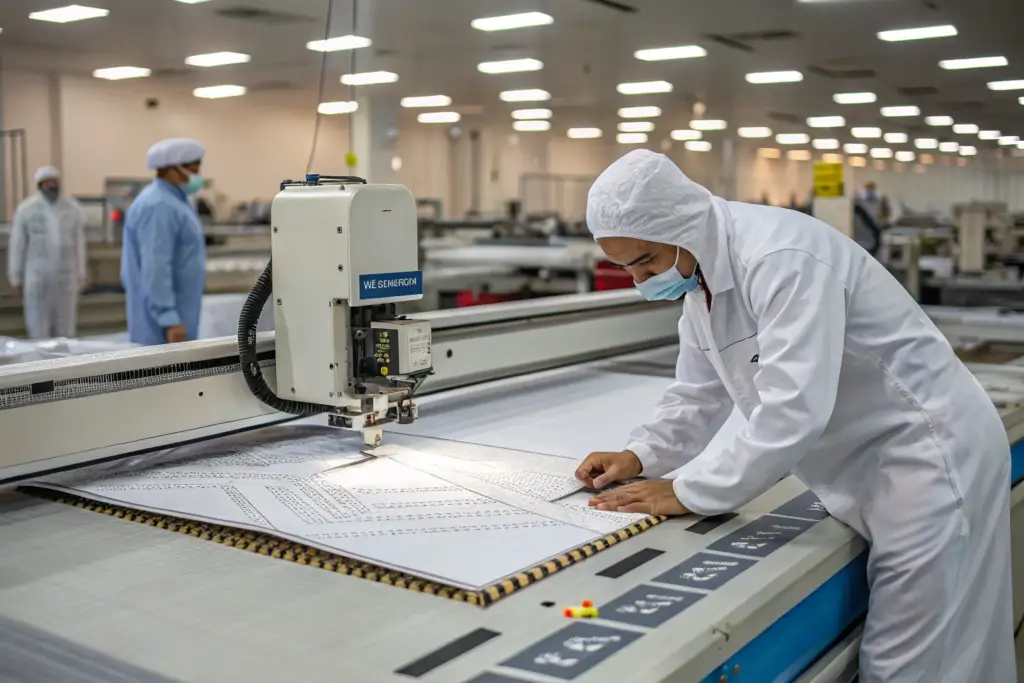
You have spent months perfecting your design. You have approved the samples. The fabric has arrived. The production line is ready. Then the first batch of finished garments comes out, and something is wrong. The shoulders are uneven. The side seams pull to the front. The pattern on a printed fabric does not match at the pockets. Your heart sinks. You wonder what went wrong. Often, the problem started not at the sewing machine, but at the cutting table.
Precision cutting is important in garment production because it is the foundation upon which every other step is built. If the pieces are cut incorrectly, the most skilled sewer in the world cannot fix it. Accurate cutting ensures that all pieces fit together perfectly during assembly. It guarantees that the final garment matches the approved fit sample. It minimizes fabric waste, which directly reduces your material costs. And in patterned or striped fabrics, precise cutting is the only way to ensure visual matching, which is a hallmark of quality.
I run Shanghai Fumao. After 15 years in this business, I have learned that the cutting room is where quality is won or lost. You cannot sew a straight garment from crooked pieces. Let me take you inside our cutting department and show you why this step is so critical to the success of your clothing line.
How does cutting accuracy affect the final fit of your garment?
Fit is everything in fashion. A garment that fits beautifully feels expensive. A garment that pulls or gaps feels cheap. The fit is determined by the pattern. But the pattern is just an idea until it is cut into fabric. If the cutting knife strays even 2 millimeters from the pattern line, every garment cut from that ply will be 2 millimeters off. Multiply that by dozens of pieces, and the whole garment becomes distorted.
What is the relationship between the pattern and the cut pieces?
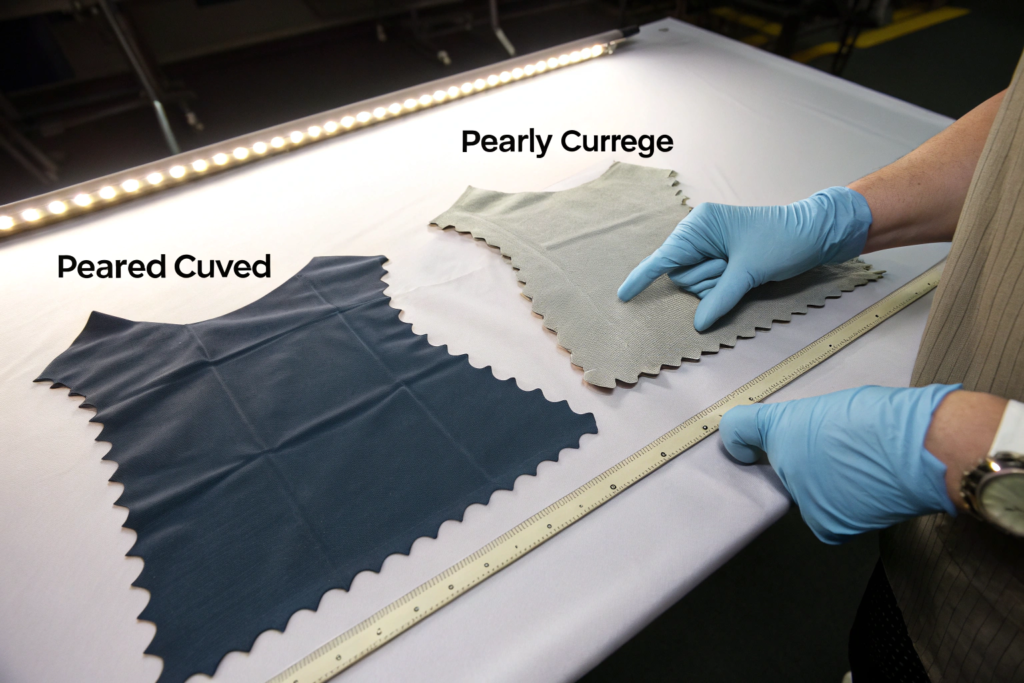
Think of the pattern as the blueprint. The cutting process is the act of cutting the building materials exactly to that blueprint. In our factory, we use computerized pattern grading and marker making software. This software takes your approved pattern and creates a "marker." The marker is the most efficient layout of all the pattern pieces on the fabric width. This digital file is then sent to our cutting machines. For a client in Boston making tailored blazers, the precision of the cut is non-negotiable. The blazer has many pieces: the front, the side panels, the sleeves, the collar, the facings. If any of these pieces is cut even slightly off, the whole jacket will not hang correctly on the body. The lapels might twist. The shoulders might slump. Our automated cutter follows the digital marker with an accuracy of less than 1 millimeter. This ensures that every piece is exactly the shape the pattern maker intended. This digital pattern precision is the first step to a perfect fit.
How do we ensure all pieces for one garment are cut consistently?
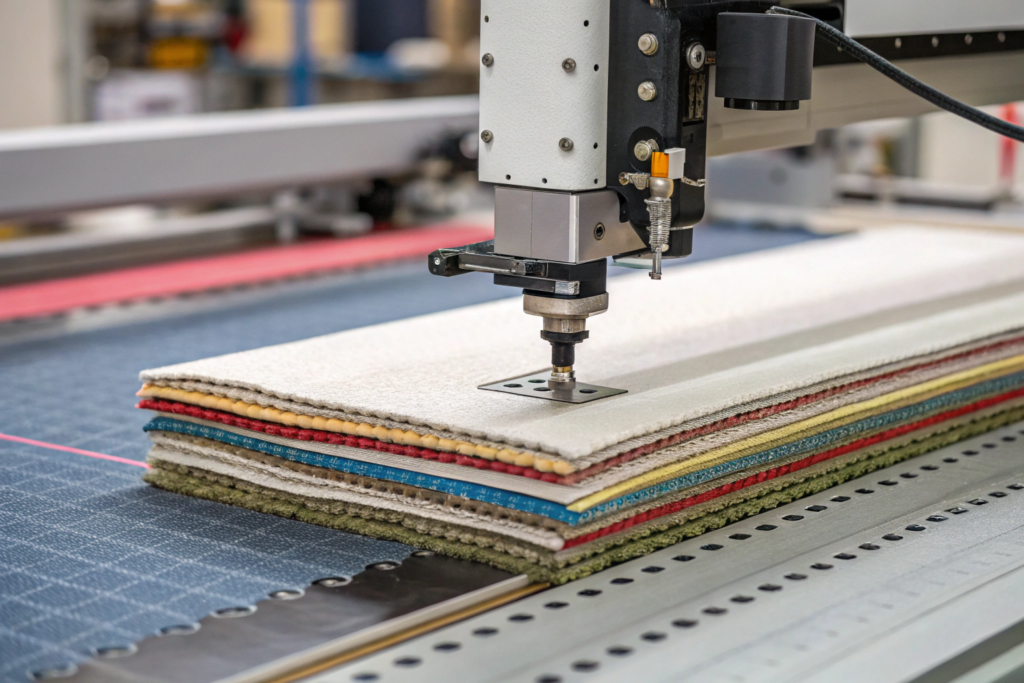
In mass production, we cut many layers of fabric at once. This is called a "spread." We might cut 100 layers of fabric for your t-shirt order. The top layer and the bottom layer must be cut identically. If the cutting blade deflects or if the spread is uneven, the bottom pieces can be larger or smaller than the top pieces. This is a disaster. We use specialized cutting equipment to prevent this. Our main cutter is a high-precision straight-knife machine with an automatic sharpening system. It maintains a perfect vertical blade. We also use a vacuum table that sucks the air out from between the layers, compressing the stack into a solid block. This holds every layer in place and prevents shifting. For a denim brand in Texas, we cut 200 layers of heavy denim for their jeans. Because of our vacuum system and precise blade, every single one of the 200 front panels was identical. This consistency means that when the sewers assemble the jeans, every piece fits perfectly. There is no stretching or forcing. This layered cutting precision is invisible to your customer, but they feel it in the perfect fit of the jeans.
How does precision cutting impact your material costs?
Fabric is often the most expensive part of your garment. Typically, it accounts for 50-70% of your cost of goods sold. Wasting fabric is like burning money. Precision cutting is the most effective tool we have to minimize that waste and keep your costs down.
What is "marker efficiency" and how does it save money?
"Marker efficiency" is the term we use for how well we pack your pattern pieces onto the fabric. A more efficient marker means less empty space between pieces, which means less fabric wasted. Our software automatically calculates the most efficient layout. It can rotate pieces, nest them together, and find arrangements that a human eye would miss. For a simple t-shirt, a good marker might achieve 85% efficiency. For a complex garment with many small pieces, like a bra, we can achieve 75-80%. For a client in Florida making swimwear, the fabric is expensive and stretchy. Marker efficiency is critical. We spent extra time with our software to nest the small pieces of their bikini tops and bottoms together. We achieved 82% efficiency, which was 5% higher than their previous factory. On an order of 5,000 units, that 5% saving translated to over $2,000 in fabric cost saved. This fabric utilization optimization directly improves your margin.
How do we minimize waste with automated spreading and cutting?
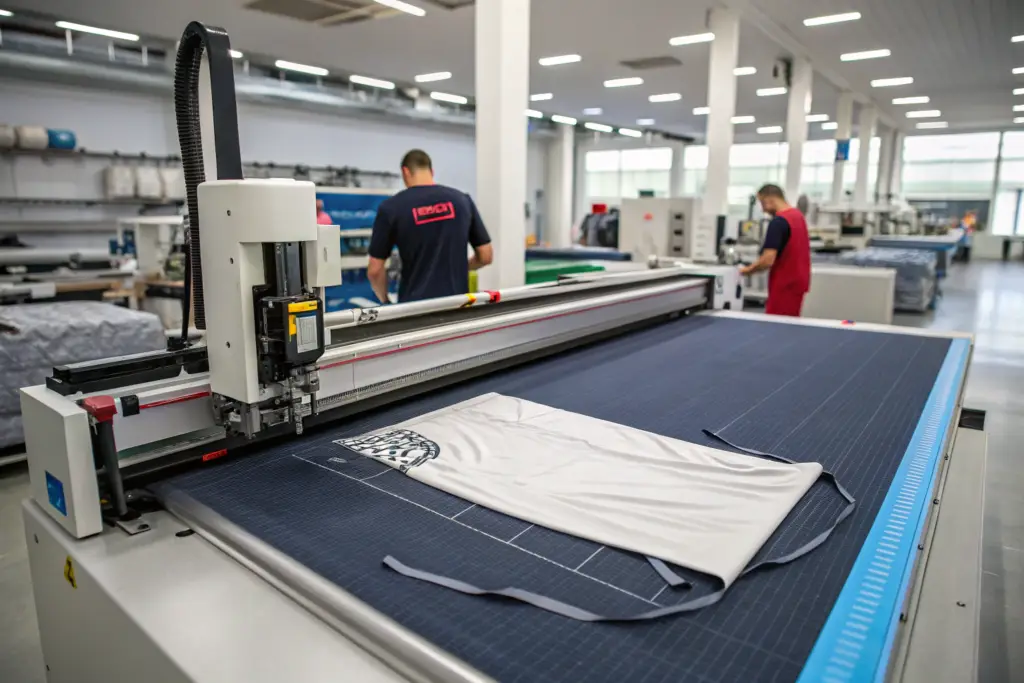
Manual cutting is prone to errors. A manual cutter might accidentally cut inside the line, ruining the piece. Or they might make a mistake and have to recut, wasting fabric. Automated cutting eliminates these human errors. Our machine cuts exactly on the line, every time. It also reduces the need for "allowances." In manual cutting, you might add a small buffer to the pattern pieces to account for human error. With our precision, we do not need that buffer. We cut exactly to the spec. For a sportswear brand in Colorado, the fabric for their running shorts was a high-tech, expensive material. Manual cutting was too risky. Our automated system allowed us to cut with zero waste from human error. We also use software that "spreads" the fabric perfectly, without tension. If fabric is stretched during spreading, it will relax after cutting and the pieces will be the wrong size. Our spreading machines lay the fabric without tension, ensuring that the cut dimensions are the true dimensions. This tension-free spreading ensures that your garments are the right size after they are sewn and worn.
How does precision cutting enable complex designs and patterns?
Some garments are simple. Some are works of art. If your design has stripes, plaids, or prints that need to match at the seams, precision cutting is not just important. It is absolutely essential. Without it, the whole look of the garment is ruined.
How do we match stripes and plaids perfectly?
Matching stripes and plaids is one of the most difficult skills in garment production. The pattern pieces must be cut so that the stripe continues seamlessly from the front panel to the side panel, or from the sleeve to the body. This cannot be done with random cutting. We use special techniques. First, we analyze your fabric. We mark the repeat of the pattern. Then, in our software, we create a marker that is aligned to that repeat. We do not cut through a whole stack of fabric for plaid matching. We often cut single plies or very small stacks, aligning each piece carefully to the pattern. For a luxury shirt brand in New York, their signature was a perfectly matched plaid. We used a projection cutting system. The pattern is projected onto the single layer of fabric. The operator can see exactly where the plaid lines fall and can adjust the placement of the projected pattern piece to ensure a perfect match. The result is a shirt that looks expensive because it is made with extreme care. This pattern matching technology is a service that few factories offer, but it is a specialty of ours.
What is the process for cutting delicate or tricky fabrics?
Not all fabrics behave nicely. Slippery silks, stretchy jerseys, and delicate laces all present challenges. If you cut them wrong, they can distort, pucker, or tear. Precision cutting requires the right tools for the fabric. For slippery fabrics like silk charmeuse, we use a die-less cutting system that uses a reciprocating blade, which moves up and down very fast, rather than a traditional knife that pulls. This prevents the fabric from being dragged and distorted. For delicate laces, we sometimes use a laser cutter. The laser seals the edge of the lace as it cuts, preventing fraying. For a bridal brand in Chicago making lace wedding dresses, this laser cutting was essential. It allowed us to cut intricate lace patterns cleanly, with no loose threads. The dresses were beautiful and durable. This specialized fabric cutting shows that we treat every material with the respect it needs.
Conclusion
Precision cutting is the unseen hero of quality garment production. It is the foundation that supports everything else. It ensures that your garments fit perfectly, because every piece is the exact shape the pattern intended. It saves you money by maximizing fabric yield and minimizing waste. And it makes complex, beautiful designs possible, from matching plaids to handling delicate laces. When you hold a finished garment from Shanghai Fumao, you are holding the result of a process that began with millimeter-perfect cuts. It is the first step, and the most critical, in delivering a product that you and your customers can be proud of.
If you are looking for a manufacturing partner who understands that true quality starts at the cutting table, let's talk. Contact our Business Director, Elaine, at elaine@fumaoclothing.com. Tell us about your next collection. We will show you the difference that precision makes.