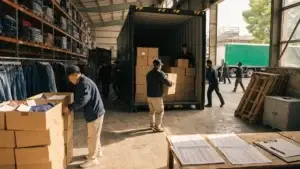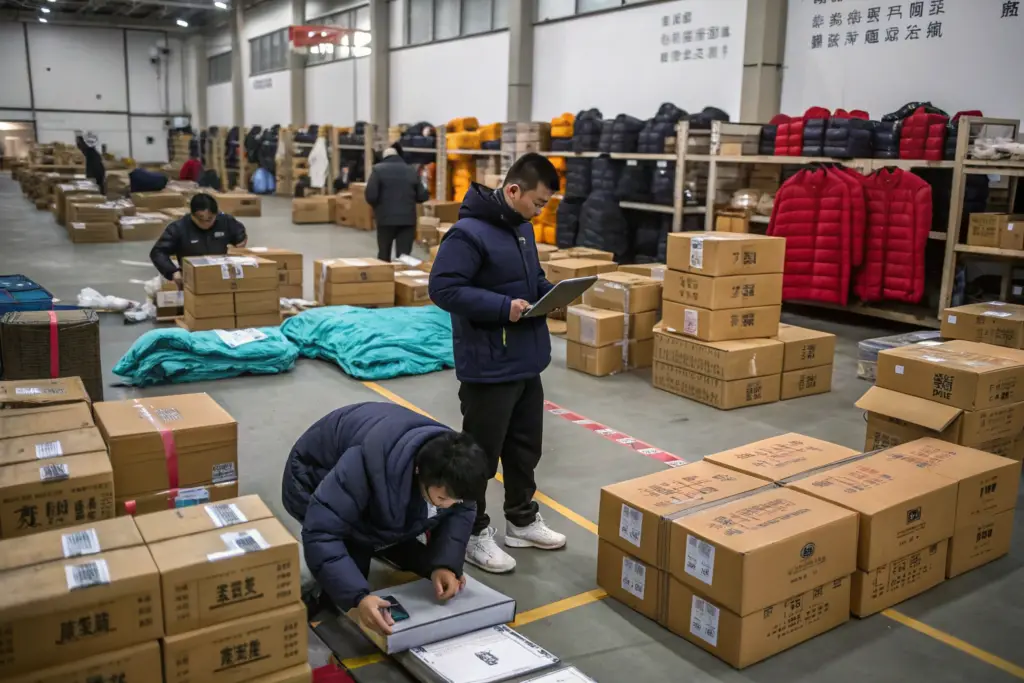
The email from your warehouse manager hits your inbox at 7 AM. A shipment of 2,000 units arrived, but the cartons are labeled with SKU codes that do not match your system. Your team spends three days manually relabeling before the inventory can go live on your Shopify store. Three days of lost sales. Three days of customers seeing "Out of Stock" on your best-selling jacket. The factory that shipped those cartons sewed the garments perfectly. But they had no idea how your direct-to-consumer fulfillment center operates. They treated the shipment like any wholesale order to a retailer. The result was a logistics failure that cost you revenue.
Apparel CEOs prefer a top clothing manufacture that understands direct sales channels because the modern brand is no longer just a designer and a marketer. It is a vertically integrated operator managing customer acquisition costs, conversion rates, fulfillment speed, and return rates. A manufacturer that understands these metrics produces garments and ships cartons in ways that optimize the brand's entire direct sales operation, not just the factory's production efficiency.
At Shanghai Fumao, we have invested significant effort into understanding how our brand partners sell. We know the difference between a wholesale shipment to Nordstrom and a DTC fulfillment shipment to a 3PL in Dallas. We know why polybag specifications affect return rates. We know why carton labeling accuracy affects sell-through. This operational knowledge makes us a strategic partner to the CEOs we serve, not just a production vendor. Let me explain why this understanding matters so deeply to the leader sitting in the corner office.
What Is the Modern Direct Sales Landscape for Apparel Brands in 2026?
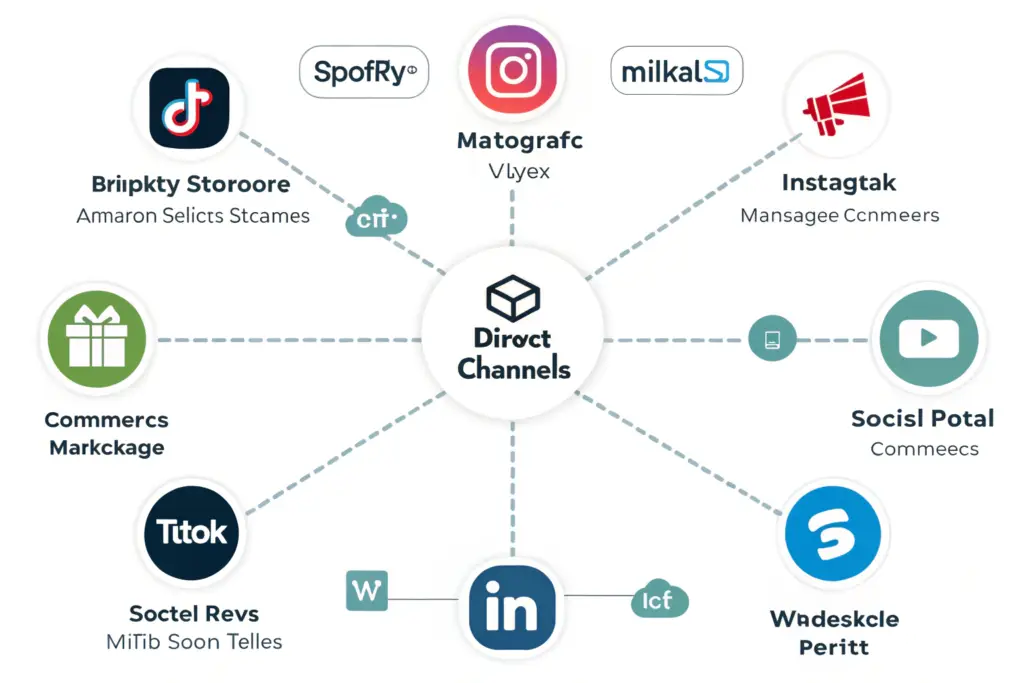
The days of selling exclusively through wholesale accounts are over. Today's apparel CEO manages a complex web of direct sales channels. The brand's website is the flagship store. Amazon is the discovery engine. Instagram and TikTok Shops are the impulse purchase platforms. Wholesale remains a volume driver, but the margin and customer data from direct channels are what build enterprise value. Each channel has different packaging requirements, labeling needs, and fulfillment expectations. A factory that ships all orders identically, as if every carton goes to a department store dock, is actively damaging the brand's operational efficiency.
The 2026 direct sales landscape requires a manufacturer to understand the distinct operational demands of DTC ecommerce, marketplace fulfillment, social commerce drop-shipping, and traditional wholesale. Each channel demands different carton labeling, packaging specifications, and shipping documentation. A CEO needs a manufacturing partner who treats these channel-specific requirements as production specifications, not afterthoughts.
How Does DTC Fulfillment Differ from Wholesale Shipping at the Factory Level?
A wholesale shipment to Macy's is a bulk delivery. Fifty cartons of men's dress shirts arrive on pallets. The retailer's receiving team checks the carton count against the purchase order, spot-checks a few units, and moves the inventory to distribution. The carton label needs a PO number and a style number. Simple.
A DTC fulfillment shipment to a brand's 3PL is fundamentally different. Each carton must contain a mixed assortment of sizes and colors because the 3PL needs to stock individual pickable units. The carton label must include a scannable barcode that matches the brand's warehouse management system (WMS). The polybag on each garment must include a UPC or EAN barcode that matches the brand's product catalog. If any of these elements are incorrect, the 3PL cannot receive the inventory, or worse, receives it and stocks it incorrectly. The CEO's customer orders a medium black hoodie, the 3PL picks a carton labeled medium black hoodie, but inside is a large navy hoodie because the factory's carton labeling did not match the 3PL's system. The customer receives the wrong item, returns it, and leaves a one-star review. This failure chain starts at the factory's packing station. Understanding DTC fulfillment requirements is not a logistics afterthought. It is a core manufacturing competency.
Why Does Marketplace Compliance Require Factory-Level Integration?
Amazon FBA and Walmart Fulfillment Services have exacting requirements. Carton dimensions, weight limits, labeling specifications, and polybag requirements are non-negotiable. A shipment that violates these requirements is rejected at the fulfillment center dock. The rejected inventory sits in a carrier facility accruing storage fees while the brand scrambles to arrange rework. The CEO watches their inventory count on Amazon drop to zero, losing the Buy Box and destroying weeks of advertising momentum.
We have a dedicated FBA preparation line in our Shanghai facility. This line is trained specifically on Amazon's packaging and labeling requirements, which are updated periodically. Garments are polybagged with suffocation warning labels in the correct size and language. Cartons are built within Amazon's dimensional and weight limits. FNSKU labels are applied with scannable barcode quality verified by a scanner before packing. The shipping plan is integrated with the brand's Seller Central account so that the shipment arrives at the fulfillment center with all digital documentation pre-filed. This Amazon FBA compliance capability at the factory level eliminates the need for the brand to receive, relabel, and re-ship goods through a domestic prep center. The savings in time and handling costs flow directly to the CEO's bottom line.
How Does Factory Understanding of Customer Acquisition Cost Impact Production?
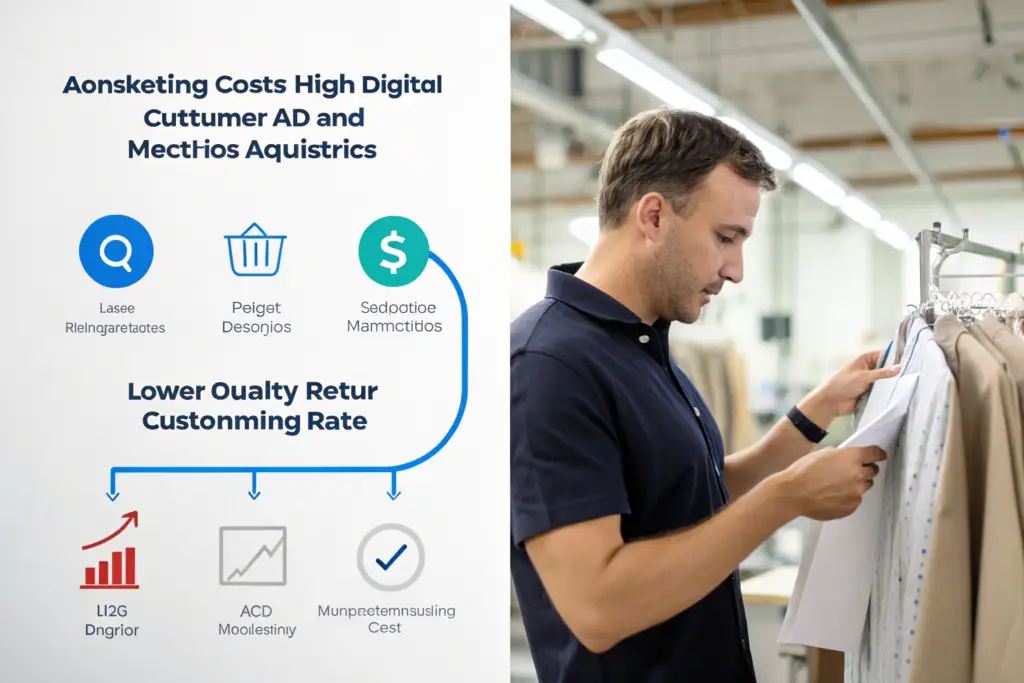
Customer acquisition cost is the metric that keeps apparel CEOs awake at night. Every dollar spent on Facebook ads or Google Shopping must convert efficiently to sustain the business. The quality of the product that arrives at the customer's doorstep is the single biggest variable affecting conversion rate, return rate, and repeat purchase rate. A factory that understands this connection makes different production decisions than a factory that merely sews to a specification sheet.
When a manufacturer understands that a customer who returns a garment due to poor quality not only costs the brand the refund and shipping but also the $40 it spent to acquire that customer, quality control becomes a customer retention activity rather than a compliance activity. The factory treats every defect as a customer acquisition cost wasted, and production standards rise accordingly.
How Does Out-of-the-Box Experience Affect Return Rates and Brand Loyalty?
The customer opens their package. The garment is folded neatly, not crammed into the polybag. It is wrapped in branded tissue paper. The hang tag is attached with a quality string, not a plastic barb that leaves a hole. The garment smells clean, not like chemicals. The stitching is consistent. The color matches the website photo. The customer feels they received something worth the price they paid. This experience determines whether they keep the garment, buy again, and tell their friends.
A factory that does not understand the DTC customer journey treats packaging as a protective function only. The garment is folded to minimize creasing during transit, not to look beautiful when the box is opened. The polybag is the cheapest available. The presentation is industrial. The customer receives a product that feels like it came from a warehouse, not a brand they love. We work with our DTC brand partners to design the entire out-of-box experience. We test folding methods, tissue paper options, and sticker placements. We photograph the final presentation and share it with the brand's marketing team so the website imagery matches the physical product. This attention to customer experience in apparel is not a factory's traditional role, but it is what a top manufacturing partner provides. The CEO sees the return rate data improve and understands the direct impact on their unit economics.
Why Does Consistent Sizing Directly Reduce Marketing Costs?
The number one reason for apparel returns is poor fit. A customer orders a medium based on the size chart, the medium arrives too small, the customer returns it. The brand loses the sale, pays return shipping, and loses the customer acquisition cost spent to acquire that sale. If the factory's sizing is inconsistent—if medium in this batch fits differently than medium in the previous batch—the brand cannot fix the problem with a size chart adjustment. The problem is manufacturing variance.
We maintain sizing consistency through calibrated measurement templates and regular inline measurement checks during production. Each size grade has a specific measurement tolerance, and garments that fall outside that tolerance are reworked before packing. This is standard quality control, but understanding the connection to customer acquisition cost gives it urgency. A 1% reduction in the return rate for a brand spending $500,000 annually on digital advertising represents $5,000 in recovered acquisition cost, plus the saved return shipping, plus the retained revenue. When we present this math to a CEO, they understand that our quality control process is not a cost center. It is a direct contributor to their marketing efficiency. This apparel sizing consistency discipline is a manufacturing capability that directly impacts the brand's profitability.
What Logistics Knowledge Does a CEO Need Their Factory Partner to Possess?
The CEO of a modern apparel brand is not a logistics expert. They hire operations directors and work with 3PLs to manage the complexity. But the factory sits at the origin of the physical product flow. If the factory makes decisions about carton construction, labeling, or shipping documentation without understanding the downstream logistics chain, those decisions create friction at every subsequent step. The CEO needs a factory partner that thinks like a logistics partner.
A factory partner must understand three logistics domains that directly impact the brand's operations: carton labeling and barcoding integration with major warehouse management systems, DDP shipping execution including customs clearance and duty optimization, and split-shipping capabilities that allow a single production run to be distributed across multiple channels or geographies. Mastery of these domains transforms the factory from a production origin into a supply chain control point.
How Does Carton Labeling Accuracy Prevent Costly Fulfillment Delays?
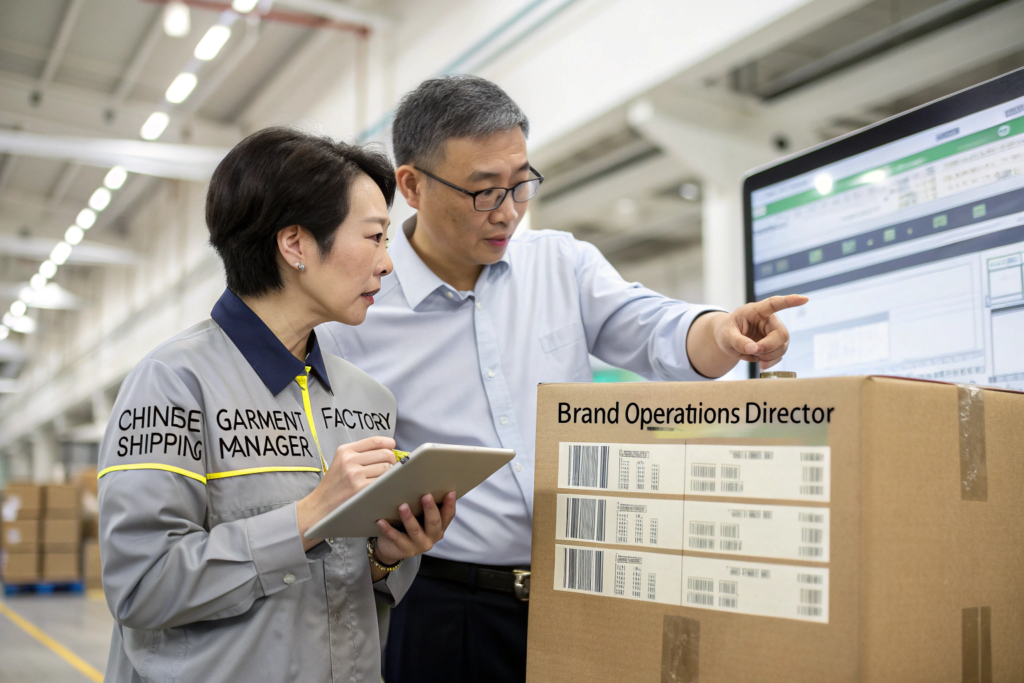
A 3PL receives a container of 200 cartons. Each carton must be scanned into inventory. If the barcode on the carton does not match the Advanced Shipment Notification (ASN) that the brand uploaded, the carton is quarantined. The 3PL's system cannot process it. The brand's operations team must manually resolve each quarantined carton, a process that can take days and incur processing fees.
We generate carton labels using barcode specifications provided by the brand's 3PL. Our system integrates with common WMS platforms to ensure the barcode symbology, data structure, and label format match the receiving system exactly. Before any carton is sealed, our shipping team scans the label and verifies that the data populates correctly in a test environment. For a recent DTC brand launch, our labeling integration with their ShipStation-connected 3PL resulted in 100% scan accuracy on their first container receipt. The 3PL's receiving report showed zero quarantined cartons. The brand's operations director told us this was the first time in three factory relationships that a first shipment arrived clean. This warehouse integration labeling capability eliminates a pain point that directly consumes the CEO's operational budget.
Why Does the Factory's DDP Expertise Protect the CEO's Margin Forecast?
The CEO sets retail prices based on a landed cost calculation. If the landed cost is $18 per unit and the retail price is $54, the gross margin is 66%. If hidden customs fees, storage charges, or trucking surcharges add $2 per unit after the goods arrive, the margin drops to 63%. On a 10,000-unit order, that is $20,000 of unplanned cost. The CEO reports lower margins to the board because of logistics charges their factory did not anticipate.
Our DDP model provides a binding landed cost before production begins. We calculate duties using our HS code engine, book freight at contracted rates, clear customs with our continuous bond, and deliver to the brand's specified destination. The price we quote is the price the brand pays. There are no post-delivery surcharges. This certainty allows the CEO to set retail prices with confidence and report margin forecasts with accuracy. For a brand that raised venture capital based on specific unit economics, this predictability is essential. The board does not accept "unexpected logistics costs" as an explanation for margin misses. Our DDP logistics expertise protects the CEO's financial credibility and the brand's valuation.
How Does Factory Speed Enable the "Test and Scale" Model of Direct Sales?
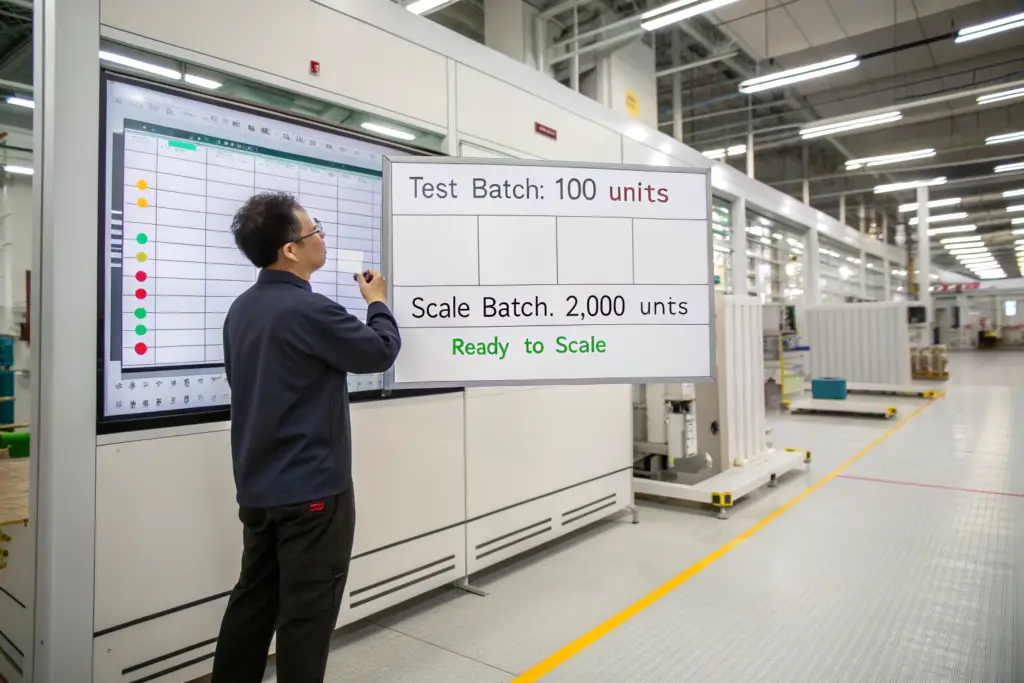
Direct sales brands do not place one large order per year. They place small test orders, measure sell-through rates and customer feedback, and then place scaled reorders of the winning styles. This "test and scale" model demands a factory that can produce a 100-unit test run quickly, hold the pattern and materials for a rapid reorder, and then execute a 2,000-unit scale order on a compressed timeline. A factory optimized for annual bulk orders cannot support this rhythm. The CEO who commits to a test-and-scale strategy without a flexible manufacturing partner will find their winning styles out of stock while the factory slowly retools.
A factory that supports the test-and-scale model offers dedicated small-batch production capacity with fast changeover times, material reservation systems that hold fabric and trims for rapid reorders, and tiered pricing that makes the test run affordable while preserving margin at scale. This operational flexibility translates directly into the CEO's ability to respond to market demand without overcommitting to inventory.
How Do Rapid Reorder Capabilities Prevent Stockouts of Winning Products?
A brand tests a new women's linen dress in three colors. The white and sage sell out in two weeks at full price. The terracotta moves slowly at a discount. The CEO needs 500 more units in white and sage within six weeks to capture the remaining summer demand. A factory that requires a 12-week lead time kills the opportunity. The demand window closes while the product is in production.
We structure our production scheduling to accommodate rapid reorders for test-and-scale partners. When a brand places a test order, we reserve additional greige fabric and trim inventory based on a jointly agreed forecast. If the test succeeds, the reorder production begins within days, not weeks, because the materials are already allocated and the pattern is already digitized. For the linen dress scenario, we turned a 500-unit reorder in four weeks because the fabric was reserved and the cutting file was ready. The brand captured the remaining eight weeks of summer demand and sold through at full price. This rapid apparel reorder capability is the operational backbone of the test-and-scale model. The CEO who has this manufacturing partnership can pursue demand aggressively without the risk of long production timelines leaving them with inventory that arrives after the season ends.
What Role Does the Factory Play in Managing Inventory Risk for New Launches?
A new product launch is a bet. The CEO believes in the design, but the market will deliver the verdict. Ordering 2,000 units upfront risks $36,000 in production cost on an unproven style. Ordering 100 units for a test costs $1,800 but risks stockouts if the product is a hit. The factory's role is to structure production so that the downside is capped while the upside is captured.
We structure launch programs with a "reserved capacity" model. The brand orders 100 units for the initial test at a higher per-unit cost. We reserve production capacity and material allocation for an additional 500 to 1,000 units for a defined window, typically 30 days after the test order ships. If the product sells, the brand exercises the reservation and the reorder moves into production at a lower per-unit cost because the fixed setup costs are already amortized. If the product does not sell, the brand releases the reservation with no penalty. This model gives the CEO the confidence to launch new products frequently because the inventory risk of each launch is minimized. The factory absorbs some scheduling uncertainty in exchange for a long-term partnership with a growing brand. Our inventory risk management for apparel brands approach aligns our incentives with the CEO's need to innovate without betting the company on each new style.
Conclusion
Apparel CEOs prefer a top clothing manufacture that understands direct sales channels because their business is no longer just about making clothes. It is about acquiring customers profitably, fulfilling orders flawlessly, managing returns efficiently, and scaling winners rapidly. Every decision the factory makes—how it labels a carton, how it folds a garment, how quickly it can reorder a winning style, how accurately it predicts landed cost—ripples through the brand's income statement.
A CEO who partners with a factory that only understands sewing is managing a supply chain with one hand tied behind their back. A CEO who partners with a factory that understands DTC fulfillment, Amazon marketplace compliance, customer acquisition cost dynamics, and test-and-scale production rhythms has an operational force multiplier. The factory becomes part of the brand's competitive advantage rather than a cost to be managed.
At Shanghai Fumao, we built our understanding of direct sales channels by listening to the CEOs who lead the brands we serve. We learned their metrics. We studied their fulfillment workflows. We invested in the labeling systems, the packaging options, the rapid reorder capabilities, and the DDP logistics expertise that directly impact their profitability and growth. We did this because we understood that a factory's value in 2026 is measured not just by the garments it sews, but by the business outcomes it enables.
If you are an apparel CEO looking for a manufacturing partner that speaks the language of customer acquisition cost, fulfillment integration, and test-and-scale agility, let us demonstrate our understanding with a specific, data-backed proposal for your next collection. Contact our Business Director, Elaine, at elaine@fumaoclothing.com. Let us show you how a factory that understands your sales channels can improve your unit economics from the first shipment.