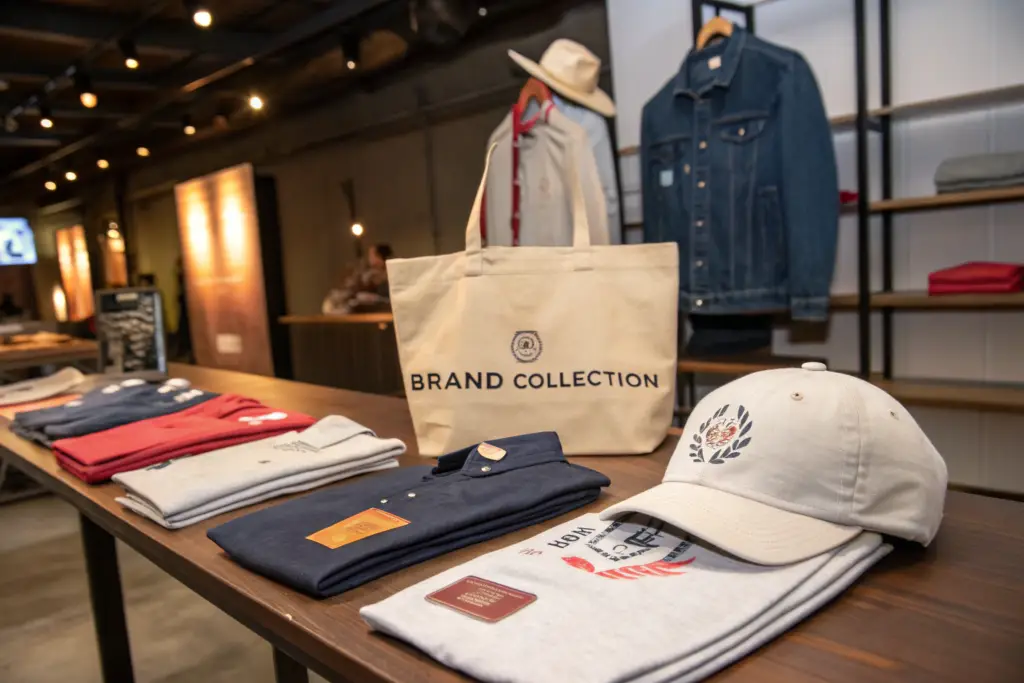
Your clothing collection is selling well. Customers are asking for matching tote bags, branded caps, and silk scarves that complement your aesthetic. You contact your garment factory. They tell you accessories are not their specialty. You now face a choice: find a separate accessories manufacturer, manage another supplier relationship, deal with different minimum order quantities, navigate different lead times, and somehow ensure the branding, quality, and delivery timelines align with your garment production. Or leave the revenue opportunity on the table. Neither option is attractive.
Yes, a top clothing manufacture specializing in apparel can offer private label accessories, provided they have invested in the specialized equipment, material sourcing networks, and skilled workforce required for accessories production. Accessories like tote bags, caps, scarves, and belts share core manufacturing competencies with apparel—fabric cutting, sewing, printing, embroidery, and branding application—but each category requires specific machinery and expertise that not every garment factory possesses. Shanghai Fumao has built these capabilities to serve brands that want a single, coordinated manufacturing partner for their entire product assortment.
Consolidating apparel and accessories production with a single manufacturer eliminates the fragmentation that drains brand resources and creates inconsistency. At Shanghai Fumao, we developed our accessories capability because our brand partners asked for it repeatedly. They were tired of managing separate suppliers for products that should feel like part of the same collection. Let me explain which accessories we produce, how we ensure the quality matches our garment standards, and how consolidating production benefits your brand operationally and financially.
Which Private Label Accessories Does Fumao Clothing Produce Alongside Garments?
Not all accessories are created equal from a manufacturing perspective. A garment factory's core competencies—fabric handling, precision sewing, printing, embroidery, and branding application—translate directly to certain accessory categories and not to others. Understanding which accessories align with a garment factory's capabilities helps a brand make informed decisions about consolidation.
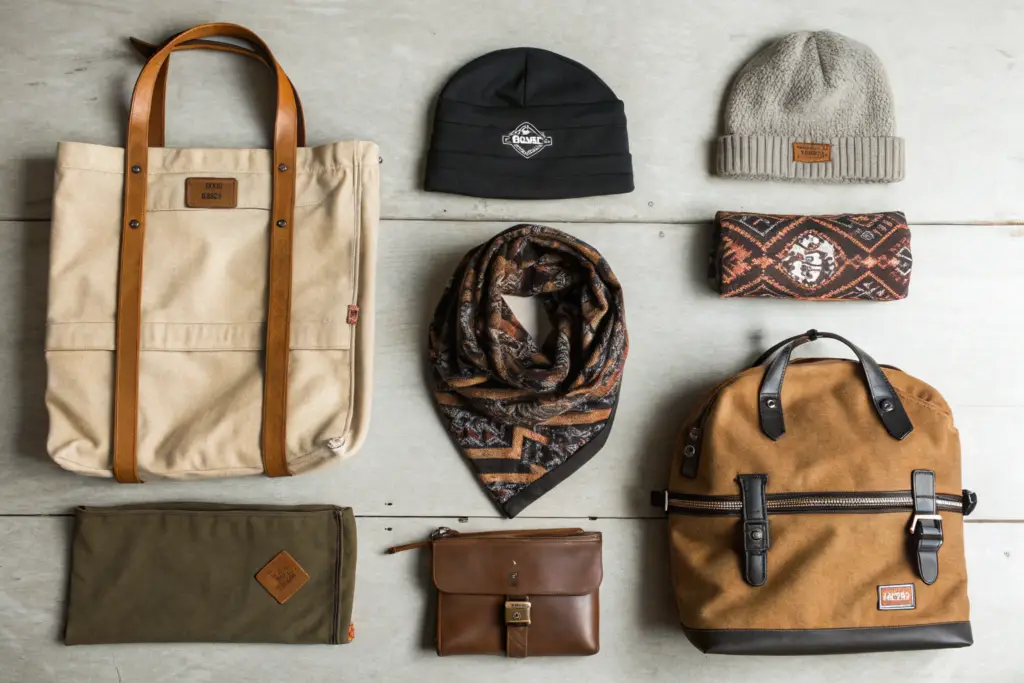
Shanghai Fumao's private label accessories program focuses on soft goods accessories that leverage our existing expertise in fabric, sewing, printing, and embellishment. These categories include canvas and fabric tote bags, baseball caps and bucket hats, silk and polyester scarves, knitted beanies and winter accessories, drawstring backpacks and gym bags, and fabric belts. We do not produce hard goods like metal jewelry, watches, or rigid luggage, as these require fundamentally different manufacturing processes outside our core competency. For the categories we do produce, the quality standard matches our garment production.
How Does Tote Bag Production Leverage Existing Garment Manufacturing Skills?
A canvas tote bag is, from a manufacturing perspective, a simple garment without a body to fit. It requires fabric cutting, seam construction, handle attachment, and branding application. These are the same core operations performed on a pair of chinos or a jacket. The sewing machines are the same. The quality control principles are the same. The branding techniques are the same.
Our tote bag production line uses the same industrial sewing machines that produce our woven garments. The canvas is cut on the same cutting tables using the same optimized marker layouts. Handle attachment is performed with reinforced stitching patterns that we test for load-bearing strength, similar to how we test button attachment strength on garments. Branding is applied using the same embroidery, screen printing, and heat transfer equipment that we use for garment logos. A brand that produces a canvas tote bag alongside their garment collection receives the same fabric quality, the same stitching precision, and the same branding consistency. We recently produced a run of heavyweight canvas totes for a sustainable fashion brand that wanted bags matching the durability and aesthetic of their workwear jackets. The totes used the same 16-ounce canvas, the same thread color, and the same woven label as the jackets. The brand sold them as a set. The manufacturing consistency was visible to the customer. This tote bag private label manufacturing integration is possible because the core competencies overlap almost entirely with garment production.
What Specialized Equipment Enables Cap and Hat Custom Manufacturing?
Baseball caps and bucket hats require specialized equipment that a standard garment factory may not possess. Cap construction involves a structured front panel with buckram backing, a curved brim that requires specialized pressing equipment, and a sweatband that requires specific attachment machinery. A factory that tries to produce caps on standard flat-sewing machines will produce a substandard product.
We invested in cap-specific manufacturing equipment to serve this demand. Our cap line includes a brim curving press, a multi-panel cap sewing station, a sweatband attachment machine, and an adjustable closure setting tool. The structured front panels are produced with precise embroidery backing to ensure logo embroidery sits flat and professional. The brim curvature is consistent across the production run because the pressing process is calibrated, not manual. A streetwear brand we serve produces matching hoodies and caps for each collection drop. Before consolidating with us, their caps were produced by a separate accessories supplier. The embroidery thread color on the caps often differed slightly from the hoodies, creating a visible inconsistency in their brand presentation. Now that both products are produced in our facility, the same embroidery thread, the same digitized logo file, and the same quality inspector review both items. The brand consistency is seamless. This custom cap manufacturing capability required investment, but it closed a gap that was frustrating our brand partners.
How Does Branding Consistency Work Across Apparel and Accessories?
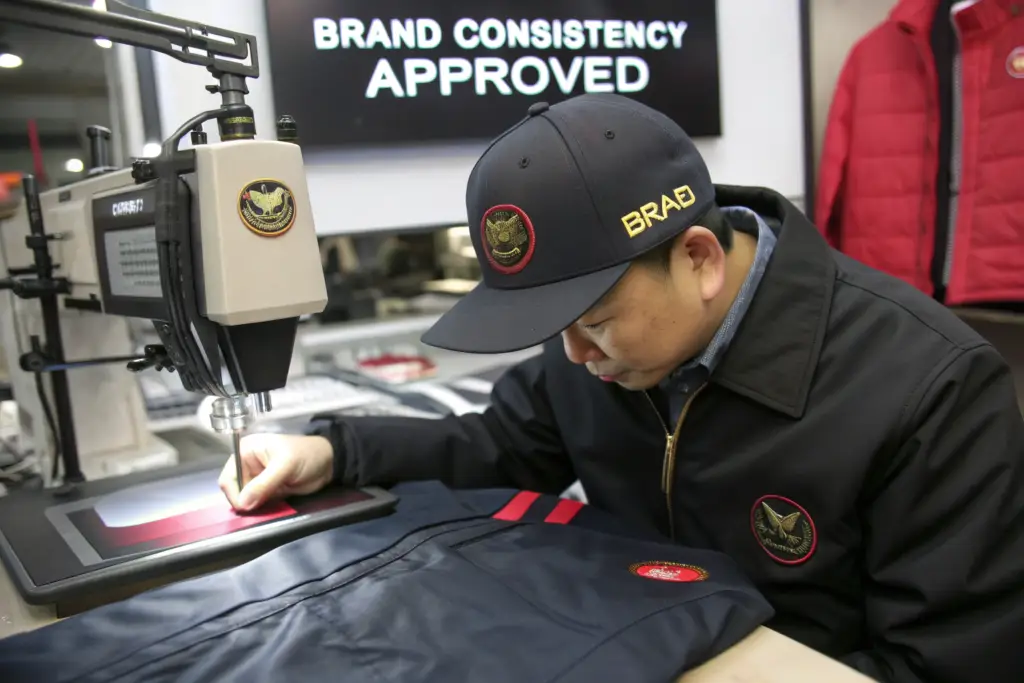
The reason many brands hesitate to consolidate accessories with a different factory is the fear of inconsistent branding. A woven label on a dress and a woven label on a scarf might come from different label suppliers, use different thread colors, and look subtly different to the customer. These inconsistencies erode brand perception even if each individual item is high quality. A single manufacturing partner eliminates this risk by centralizing branding procurement and application.
Branding consistency across apparel and accessories is achieved through centralized branding material procurement, unified quality standards for label and logo application, and cross-category inspection protocols. When the same factory orders the woven labels, programs the embroidery machines, and inspects the finished products for both garments and accessories, the brand identity is applied consistently by default rather than requiring coordination across multiple suppliers.
How Does Centralized Trim Procurement Ensure Label and Logo Consistency?
A woven neck label for a shirt and a woven label for a tote bag interior might be ordered from different suppliers if different factories produce the items. Even if the same artwork is provided, different suppliers use different looms, different thread stocks, and different dye processes. The resulting labels may be close in appearance but not identical. A customer who notices the difference questions the brand's attention to detail.
When both the shirt and the tote bag are produced by Shanghai Fumao, we order all woven labels, hang tags, and care labels from a single trim supplier using a single production batch. The thread color is matched once to the brand's Pantone specification. The label dimensions and finishing are uniform. The same label roll is used for the garment production line and the accessories production line. The result is absolute consistency. The brand does not need to audit label quality from multiple suppliers or manage multiple trim approval processes. One approval covers all products. This branded trim management consolidation reduces the brand's administrative workload and eliminates a common source of brand presentation inconsistency.
What Quality Standards Apply Equally to Garments and Accessories?
A loose thread on a tote bag is the same quality failure as a loose thread on a dress. The customer does not categorize defects by product type. They categorize them by brand experience. A factory that applies different quality standards to accessories than to garments is creating an inconsistent brand experience.
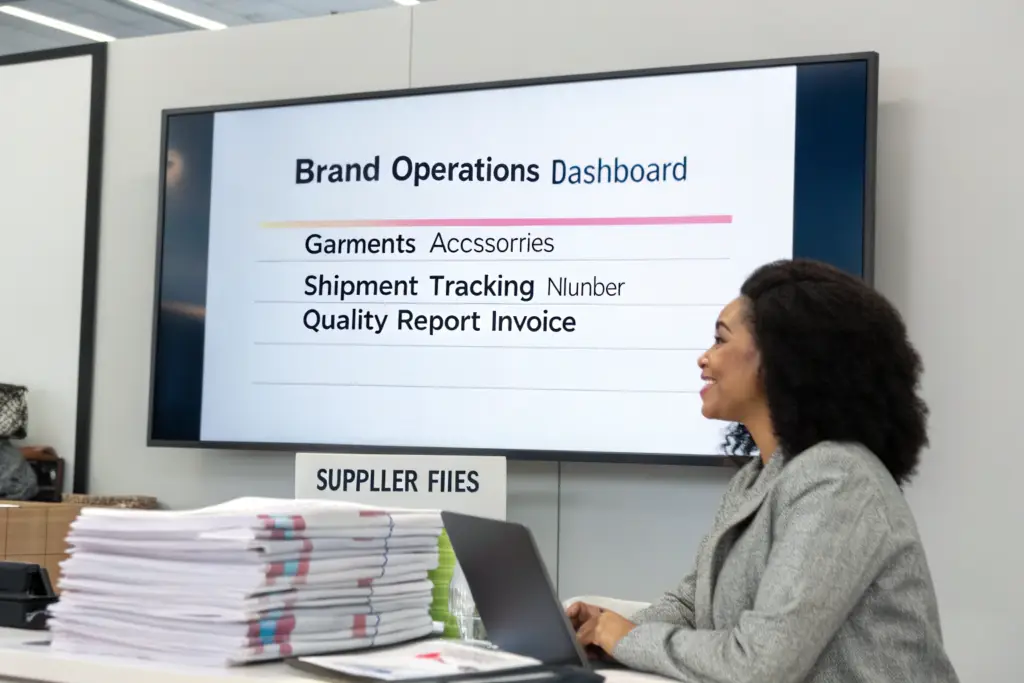
Our quality control system uses the same AQL sampling methodology, the same defect taxonomy, and the same acceptance criteria for accessories as for garments. A tote bag undergoes the same stitch integrity inspection as a pair of trousers. A cap undergoes the same embroidery quality review as a hoodie. A scarf undergoes the same fabric defect inspection as a blouse. The quality data is reported in the same format, on the same dashboard, as the garment quality data. The brand receives a unified quality report covering their entire production order. This unified quality management for fashion brands approach means the brand does not need to translate between different quality systems, different defect definitions, or different reporting formats from different suppliers. One standard. One report. One quality conversation.
What Operational Advantages Does a Single Manufacturing Partner Provide?
Managing multiple supplier relationships is not just an administrative inconvenience. It is a direct operational cost that consumes time, creates risk, and fragments the brand's supply chain visibility. A brand that produces garments with one factory and accessories with another factory doubles the communication channels, the sampling timelines, the quality audit requirements, and the logistics coordination points. The operational friction compounds as the brand grows and the number of SKUs increases.
Consolidating apparel and accessories production with a single manufacturing partner delivers four measurable operational advantages: unified production scheduling that synchronizes delivery of coordinated collection pieces, combined shipping that reduces freight costs and simplifies logistics, a single point of communication for all production inquiries, and consolidated quality reporting that provides a holistic view of production performance. These advantages translate directly into reduced operational overhead and improved time-to-market for coordinated collections.
How Does Unified Production Scheduling Support Coordinated Collection Launches?
A fashion brand launching a spring collection wants the dresses, the jackets, and the matching scarves to arrive in their warehouse, in their retail stores, and on their e-commerce site simultaneously. If the garments are produced by one factory and the scarves by another, the production schedules must be coordinated manually by the brand's production manager. If one factory is delayed, the coordinated launch is compromised. Either the collection launches incomplete, or the completed items sit in the warehouse accruing carrying costs while waiting for the delayed items.
Unified production scheduling solves this coordination problem at the source. We schedule the production of garments and accessories within the same master production plan. The scarf production is timed to complete in the same week as the dress production. The goods are packed into the same container, or into coordinated containers that ship on the same vessel. The shipment arrives at the brand's warehouse as a complete collection, ready for simultaneous launch. A women's brand we serve launches seasonal collections with coordinated dresses and silk scarves. Since consolidating both categories with us, they have eliminated the "partial launch" problem that plagued them when using separate suppliers. Their collection launches are complete, their marketing photography is shot once with all items available, and their customers can purchase the full look immediately. This collection launch coordination capability is a direct competitive advantage for brands in the fast-moving fashion market.
How Does Combined Shipping Reduce Costs and Carbon Footprint?
Two separate factories mean two separate shipments. Two containers, two freight bills, two customs entries, two delivery appointments. Even if both shipments are less-than-container-load, the combined cost is almost always higher than a single consolidated shipment. Beyond the cost, the carbon footprint of two separate shipments is higher than a single consolidated load.
When garments and accessories are produced under one roof, they ship together. The combined volume fills a container more efficiently, often qualifying for a lower per-unit freight rate than two partial shipments. A single customs entry is filed. A single delivery appointment is scheduled. The freight cost savings, customs brokerage savings, and administrative time savings compound across each production cycle. A sustainable fashion brand we partner with values the carbon footprint reduction of consolidated shipping as much as the cost savings. Their sustainability report tracks emissions per unit sold, and consolidated manufacturing directly reduces their Scope 3 transportation emissions. This consolidated supply chain sustainability benefit is increasingly important for brands serving environmentally conscious European and North American consumers.
What MOQ and Pricing Considerations Apply to Private Label Accessories?
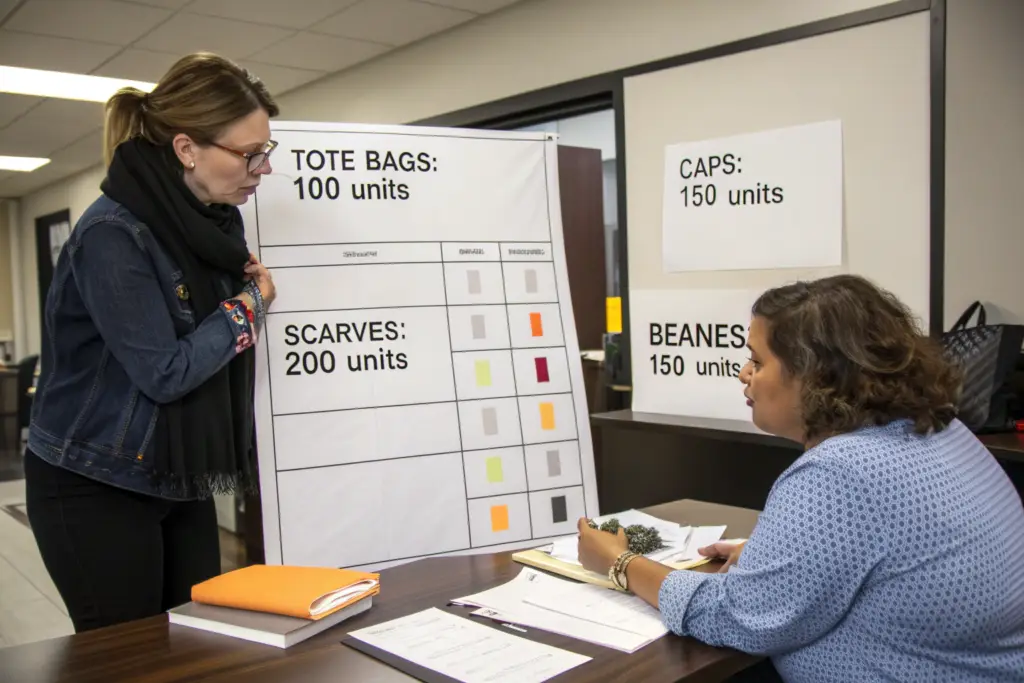
Minimum order quantities for accessories can be a barrier for brands testing a new product category. A specialized accessories factory might demand 1,000 units per style to justify production setup. For a brand that wants to test 200 branded tote bags as an add-on to their existing garment line, this MOQ is prohibitive. The brand must either overcommit to inventory or abandon the opportunity.
Shanghai Fumao's accessory MOQs are structured to be accessible for brands already producing garments with us. Because the production infrastructure, branding equipment, and material sourcing networks are shared with our garment operations, we can offer lower minimums for accessories than a dedicated accessories factory. Typical MOQs for private label accessories start at 100-200 units per style, depending on the complexity of the item and the branding requirements. Pricing is transparent and follows the same tiered structure as our garment pricing, with per-unit cost decreasing as volume increases.
A dedicated cap factory must cover all its overhead—rent, equipment amortization, labor, utilities—from cap production alone. The minimum order must be large enough to absorb these fixed costs. Our cap production operates as a line within a larger factory. The facility overhead, the management structure, the quality department, and the logistics team are shared with our garment operations. The cap line contributes to covering these shared costs rather than carrying them alone.
This shared infrastructure model enables lower MOQs because the fixed cost burden on the accessories line is proportionally smaller. Similarly, our material purchasing power benefits accessories. We buy canvas for tote bags from the same mill that supplies canvas for our workwear garments. The aggregate volume across both categories lowers the per-yard cost and allows us to meet mill minimums without over-ordering for a single category. A brand that orders 200 tote bags benefits from the fabric pricing negotiated for thousands of workwear units. This low MOQ accessory manufacturing model is only viable for a factory that produces both garments and accessories under one roof.
What Is the Pricing Structure for Combined Garment and Accessory Orders?
Transparency in pricing extends to how combined orders are structured. A brand placing an order for 500 dresses and 200 matching scarves should understand exactly how the pricing breaks down and how the combined volume affects the per-unit cost of each category. We provide a single, itemized quote that shows the per-unit and total cost for each product category, with any volume discounts clearly indicated.
The combined order volume can unlock pricing benefits. If the dresses and scarves use the same fabric, the total fabric order is larger, potentially qualifying for a better per-yard rate from the mill. If both products use the same branding, the trim order is larger, potentially reducing the per-label cost. We pass these combined-volume savings to the brand transparently. A brand we work with orders matching silk blouses and silk scarves each season. Because both products use the same silk charmeuse from the same mill, the combined fabric order qualifies for a bulk discount that would not apply to either product ordered alone. They save approximately 8% on fabric cost compared to ordering the categories separately from different suppliers. This combined production pricing advantage makes consolidated manufacturing financially attractive beyond the operational simplicity.
Conclusion
A top clothing manufacture can offer private label accessories, and doing so creates significant value for brands that want a coordinated, operationally efficient supply chain. The key is selecting a manufacturer that has made genuine investments in accessories capability—the equipment, the sourcing relationships, and the quality systems—rather than one that treats accessories as an afterthought.
At Shanghai Fumao, our private label accessories program grew directly from listening to our brand partners. They needed totes that matched their jackets, caps that matched their hoodies, and scarves that matched their dresses. They needed these products to share the same branding, the same quality standards, and the same delivery schedule. Building this capability required investment, but it was an investment in being the comprehensive manufacturing partner our brands deserve.
If you are currently managing separate garment and accessories suppliers, or if you have been delaying an accessories launch because the operational complexity seems overwhelming, let us show you how consolidated manufacturing simplifies the process. Send us your accessories concepts alongside your garment designs. We will provide a unified quote, a coordinated production schedule, and a single shipment plan. Contact our Business Director, Elaine, at elaine@fumaoclothing.com. Let us produce the complete collection your brand envisions, from the dress to the tote bag to the cap, under one roof with one standard of quality.