You found the perfect jacket. It is vintage. It is from a competitor. It is from your own closet. The fit is amazing. The proportions are perfect. You think, "I want to make something just like this." You reach out to a factory and ask if they can copy it. They say yes. But deep down, you worry. Will it come out exactly the same? Will they understand the subtle details? Will the new version capture the magic of the original? This uncertainty can keep you up at night.
Yes, an experienced clothing manufacturer can absolutely work from your reference garments. In fact, this is one of the most common and effective ways to start a project. We can reverse engineer the garment by taking detailed measurements, analyzing the construction, identifying the fabric and trims, and creating a new pattern that replicates the original fit and style. However, we must be careful to create a new, original design and avoid directly copying any protected elements that could infringe on trademarks or copyrights.
I have done this hundreds of times. A client walks in with a garment they love. They lay it on the table. We all gather around. We touch the fabric. We turn it inside out. We measure every seam. It is a collaborative and exciting process. A few years ago, a client from Chicago brought us a vintage military jacket he had worn for decades. It was falling apart. He wanted us to recreate it using new, better materials. We studied every detail, from the pocket shape to the stitching on the epaulets. The new jackets we made became the cornerstone of his brand. They sold out every season. Let me walk you through exactly how we work with reference garments and what you need to know to make the process successful.
What information do you need to provide with a reference garment?
Bringing a reference garment is a great start. But to get the best results, you need to give us more than just the physical item. The more context you provide, the more accurately we can capture your vision.
What measurements should you take from your reference garment?
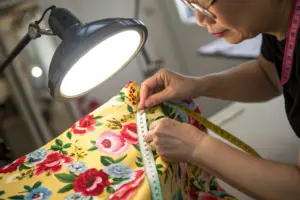
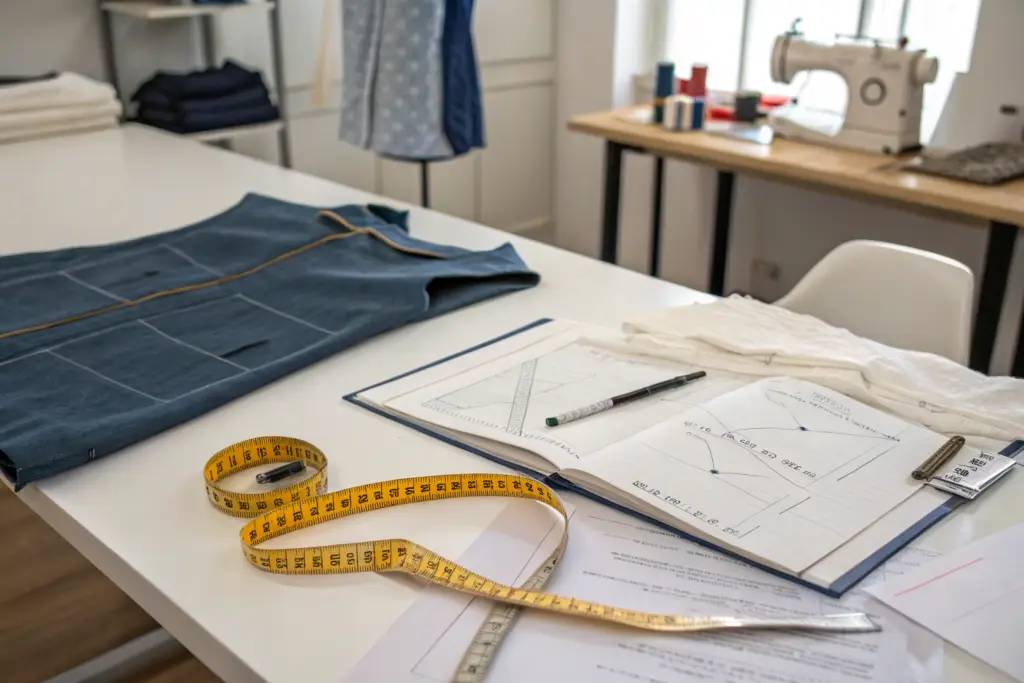
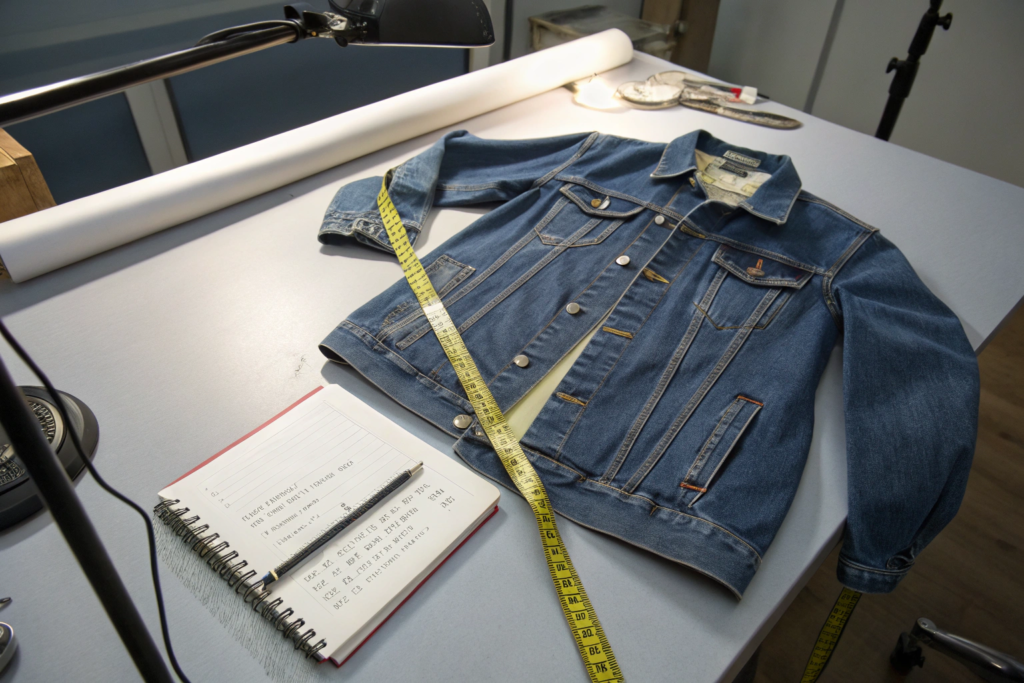
Before you even send the garment, you should take your own measurements. This gives you a baseline to compare against later. Lay the garment flat on a hard surface. Smooth out any wrinkles. Measure the chest, measured 1 inch below the armhole. Measure the body length from the highest point of the shoulder to the hem. Measure the sleeve length from the shoulder point to the cuff. Measure the shoulder width from seam to seam.
Write all these numbers down. Take photos of the garment with the measuring tape in place. This creates a record. I remember a client from Seattle who sent us a reference jacket with a note that said, "Make it exactly like this." But when we measured it, the jacket was stretched and distorted from years of wear. The chest measurement was different on the left and right sides. We called him and asked which measurement was correct. He had no idea. If he had measured it himself when it was new, he would have known. We had to make our best guess. The first sample was slightly off. We had to do a second round. Taking your own measurements upfront saves time and frustration. You can learn proper measuring techniques from resources like the US Standard Product Measurement Database.
What details beyond measurements should you document?
Measurements are just the beginning. You also need to document the construction details. How many pieces make up the garment? How are the pockets constructed? What type of stitching is used? Take photos of every detail. Take photos of the inside. Take close-ups of the seams, the buttonholes, the label placement.
Write notes about the fabric. What does it feel like? Is it stiff or soft? Is it heavy or light? What is the fiber content? If you know, tell us. If you do not know, we can help you identify it. A client from Boston brought us a reference shirt with a very specific type of pleating on the back. He had photos from the front, but no photos of the inside construction. We had to carefully unpick a small part of the seam to see how the pleats were made. We fixed it, but we damaged the original garment slightly. With better documentation, we could have avoided that. The more information you provide, the less we have to guess.
How does a factory reverse engineer a reference garment?
Once we have your reference garment and notes, the real work begins. Reverse engineering is a skill. It requires patience, attention to detail, and deep knowledge of garment construction. It is not simply copying. It is understanding why the garment was made a certain way and recreating that logic.
What is the process of deconstruction and pattern creation?
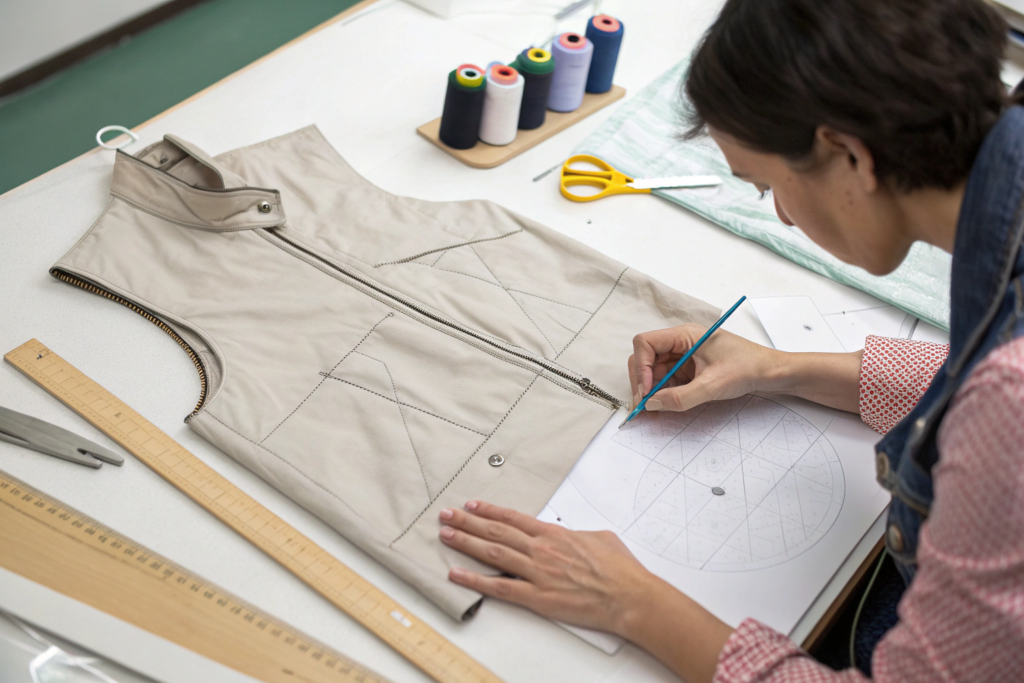
The first step is often deconstruction. We carefully take apart the reference garment. We remove the threads. We separate the pieces. This allows us to see exactly how it was assembled. We can measure each individual piece without the distortion of seams.
We trace each piece onto pattern paper. We add seam allowance. We note grain lines. We mark pocket placements and buttonholes. This creates a new, clean pattern based on the original. But it is not a perfect copy. The original fabric may have stretched over time. The original pattern may have had errors. Our pattern maker uses their expertise to correct any issues and improve the pattern. For a client from Denver who sent us a well-worn pair of jeans, the original pattern was good, but the back pockets were slightly crooked. Our pattern maker straightened them. The new jeans looked better than the original. This is the value of working with skilled professionals. They do not just copy; they improve.
How do we analyze fabric and trims from a reference garment?
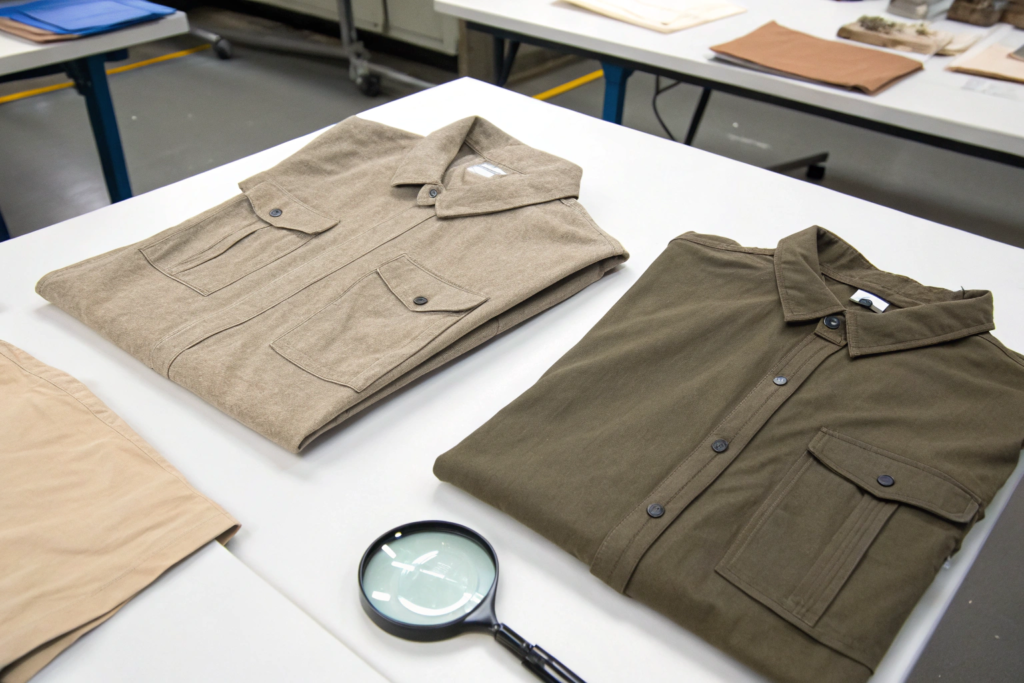
While the pattern is being made, our sourcing team analyzes the fabric and trims. We examine the fabric under magnification. We test the fiber content with burn tests or chemical analysis. We weigh it to determine the GSM. We look at the weave or knit structure.
We do the same for trims. We measure the buttons. We identify the zipper type and size. We look at the thread weight and composition. Then we source materials that match as closely as possible. Sometimes we can find an exact match. Sometimes we find something very close. Sometimes the original material is no longer available, and we need to propose alternatives. A client from New York sent us a vintage dress with a unique silk fabric that was no longer made. We found a modern silk with a similar weight and drape. The client approved the substitution. The new dress was beautiful, even though the fabric was slightly different. We always present options and let you decide. At Shanghai Fumao, we believe in transparency throughout this process.
What are the legal considerations when using reference garments?
This is a topic that many brands ignore, but it is critically important. Using a reference garment can get you into legal trouble if you are not careful. You must understand the difference between inspiration and infringement.

What can and cannot be legally copied?
You can legally copy the fit and silhouette of a garment. You can copy the construction techniques. You can use a similar fabric weight. These are functional aspects of a garment that are generally not protected by law.
You cannot legally copy unique, original design elements that are protected by trademark or copyright. This includes things like a unique graphic print, a patented zipper pull design, or a distinctive logo. It also includes garments that are themselves protected by design patents, which is rare in fashion but does happen for truly unique designs. A client from Los Angeles once brought us a reference jacket from a famous luxury brand. He wanted us to copy it exactly, including the brand's signature quilted pattern on the lining. We had to explain that we could not do that. That pattern was a protected design element. We helped him create a new, original quilted pattern that gave the same luxurious feel without infringing. He was grateful for our honesty. If you want to learn more about fashion law, organizations like the Council of Fashion Designers of America offer resources on intellectual property.
How do we help you avoid infringement?
At Shanghai Fumao, we take intellectual property seriously. We will not knowingly help you infringe on another brand's rights. When you bring us a reference garment, we will discuss it with you. We will ask questions. Is this your design? Is it from a competitor? Are you trying to create something inspired by this, or are you trying to make an exact copy?
We will guide you toward creating an original garment that captures the essence of the reference without crossing legal lines. We might suggest changing the pocket shape slightly. We might recommend a different stitch detail. These small changes create a new, original design while maintaining the vibe you love. A client from Miami once brought us a reference swimsuit from a high-end brand. We helped him create a new version with a different back detail and a modified strap design. His swimsuit was clearly inspired by the luxury look but was legally distinct. It sold very well, and he never received a cease-and-desist letter. That is the right way to work from reference garments.
What are the limitations of working from reference garments?
While working from a reference garment is a powerful tool, it is not magic. There are limitations. The new garment will never be an exact carbon copy. Understanding these limitations helps set realistic expectations.
Why might the fabric and color not match exactly?
The biggest limitation is often the fabric. The original fabric may be discontinued. It may be from a specific mill that no longer exists. Even if we find a very similar fabric, it will have subtle differences. The drape might be slightly different. The hand-feel might be different. The color might be slightly off.
We can get very close, but exact matches are rare. A client from Chicago sent us a reference jacket made from a Japanese denim that was no longer produced. We sourced a denim from a different mill with a similar weight and indigo shade. It was beautiful, but it was not the same. When the sample arrived, the client was happy, but he noted the color was slightly greener than the original. We had to manage that expectation from the start. If you have a specific fabric in mind, it is always better to source it yourself and send it to us, rather than relying on us to find an exact match to a reference garment.
Can we replicate the exact fit of a worn garment?
Another challenge is fit replication from a worn garment. A garment that has been worn and washed many times is not in its original shape. It has stretched in some areas and shrunk in others. The fabric has softened. The fit feels different than when it was new.
When we measure a worn garment, we are measuring a distorted object. We use our expertise to estimate the original dimensions, but it is an estimate. For a client from Seattle who sent us a worn-out pair of jeans he loved, we had to guess how much the fabric had stretched in the waist and thighs. The first sample was close but not perfect. We did a second round with adjustments. It turned out great, but it took two tries. If you are using a worn garment as a reference, be prepared for a fitting round to fine-tune the measurements. This is normal and expected.
Conclusion
Working from a reference garment is a fantastic way to start a new project. It bridges the gap between a vague idea and a concrete design. It gives us a tangible object to study and understand. But it requires clear communication, careful measurement, and a partnership built on trust. You provide the vision and the inspiration. We provide the technical expertise to turn that inspiration into a manufacturable product. Together, we can create something new that captures the best of the original while being uniquely yours.
At Shanghai Fumao, we have helped countless brands bring their reference garment dreams to life. We have worked with vintage pieces, competitor samples, and even well-loved personal items. We know how to study them, measure them, and improve upon them.
If you have a reference garment you want to work from, let us talk. Please contact our Business Director, Elaine, at elaine@fumaoclothing.com. She will discuss your project and explain exactly how we can turn that special piece into a successful new product for your brand.