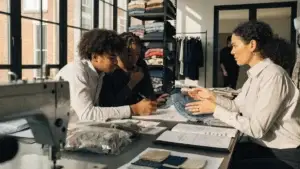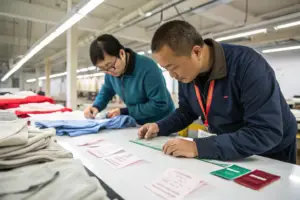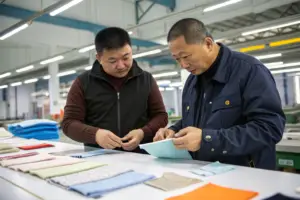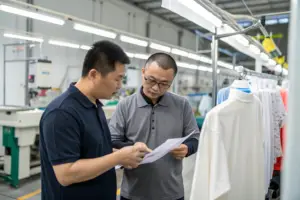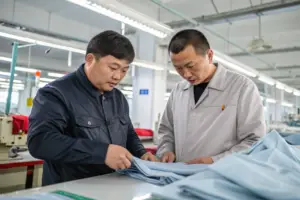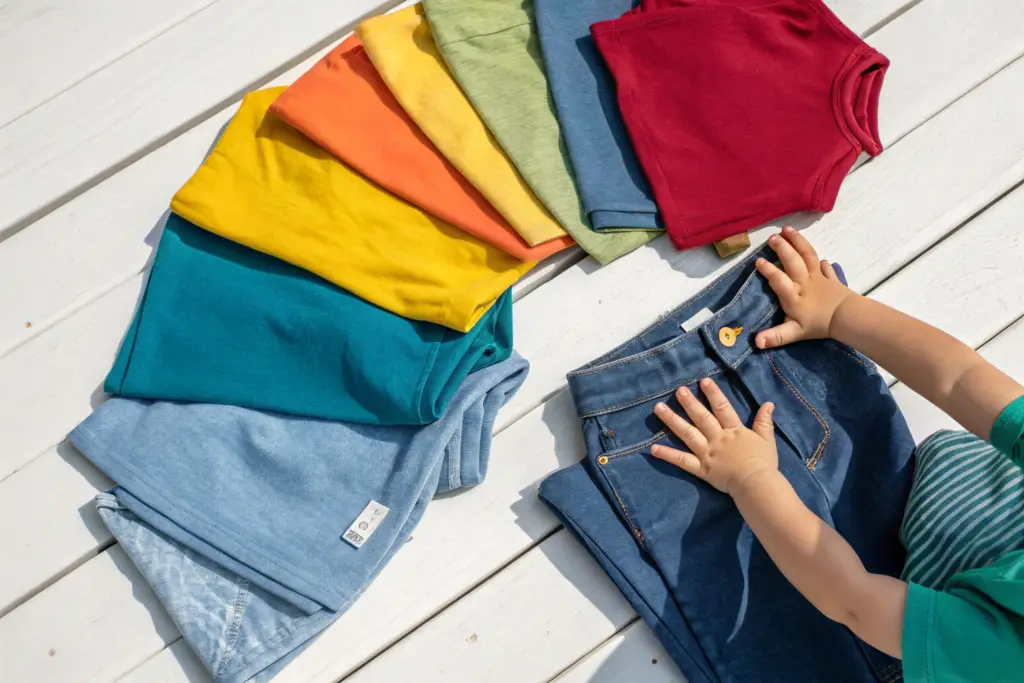
Kids are hard on clothes. They crawl on concrete. They wipe ketchup on their shirts. They grow out of them in six months. But their parents still want those clothes to look good wash after wash. If you are a wholesale brand selling to boutiques or directly to parents, durability is not a nice-to-have. It is the main reason a mom will buy from you again instead of going to Target. I learned this lesson when a client of mine, a children's brand from Oregon, switched to a cheaper fabric to save $0.80 per unit. Her returns spiked. The knees blew out of the leggings. The colors faded to a sad pastel after three washes. She lost two major boutique accounts. She came back to us at Shanghai Fumao and said: "Never let me cheap out on fabric again."
The top fabrics for durable wholesale kids' wear balance three critical factors: Abrasion Resistance (to prevent knee holes), Tensile Strength (to prevent seam rips), and Color Fastness (to survive frequent hot washes). The best options include French Terry for structured playwear, Interlock Cotton for soft durability, Poly-Cotton Blends for stain resistance, and Oxford Cloth for bottoms. Natural fibers like 100% cotton feel great but degrade faster. The key is finding the right blend or construction technique that gives the softness parents want and the toughness kids need.
Choosing the right fabric is not just about the fiber content on the label. It is about the yarn size, the knit structure, and the finishing process. Let me walk you through the specific fabrics we recommend to our US wholesale clients who want to build a reputation for quality that lasts.
Why Is French Terry the "Goldilocks" Fabric for Kids' Playwear?
When a client asks me what fabric to use for a kids' hoodie or jogger that needs to survive the playground but still be cozy, I always start with French Terry. It is not as heavy as a fleece sweatshirt, so kids can move in it. But it is much tougher than a basic jersey T-shirt.
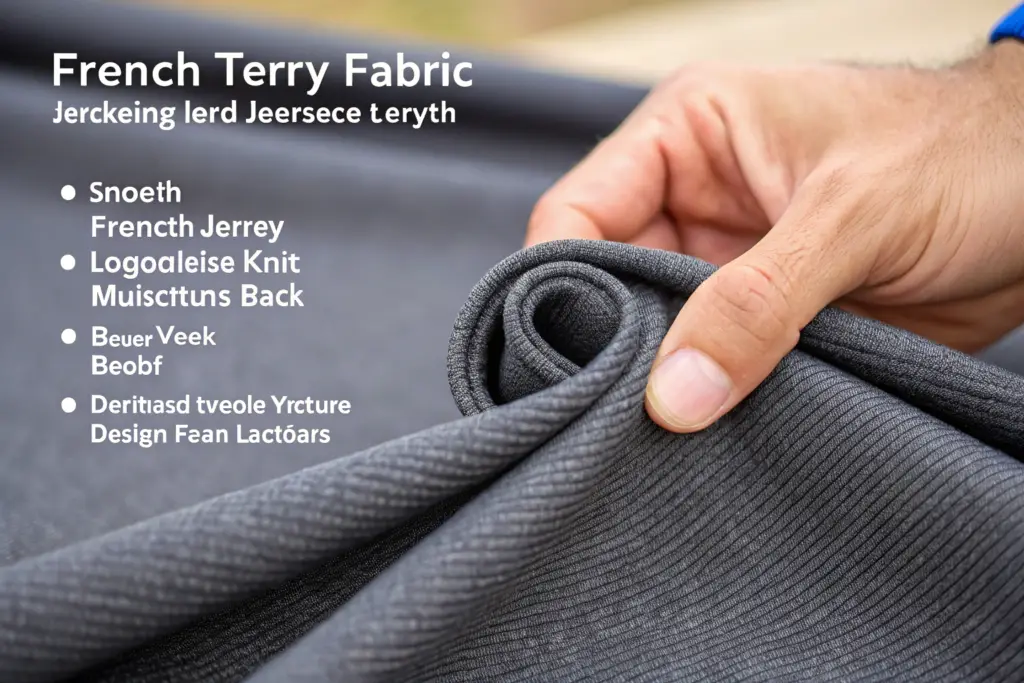
French Terry is the ideal fabric for kids' playwear because its looped back construction provides natural mechanical stretch and recovery without relying on spandex (which degrades over time). The loops on the inside create air pockets for warmth and also wick moisture away from the skin. Most importantly, the knit structure is dense enough to resist pilling. Pilling is the number one reason a kids' garment looks "old" after a few wears. A high-quality, tightly knit French Terry resists this friction damage.
What is the Difference Between 3-Thread and 2-Thread Fleece for Durability?
This is a technical detail that matters. When you see a "Fleece" sweatshirt, it is usually made by taking French Terry and running it over wire brushes to "nap" the loops. That creates fuzziness. It is cozy. But it also weakens the fabric slightly because you are breaking fibers to make it fuzzy.
Comparison for Kids' Wear:
| Fabric Type | Feel | Durability (Wash Test) | Best Use Case |
|---|---|---|---|
| 3-Thread Fleece | Heavy, Super Soft, Fuzzy Inside | Medium. Prone to pilling after 15+ washes. | Winter hoodies, cozy loungewear. |
| 2-Thread French Terry | Midweight, Smooth Loops Inside | High. Loops intact, resists abrasion. | Year-round joggers, light hoodies, play dresses. |
I recommend 2-Thread French Terry for most wholesale kids' lines. It looks more premium. It holds screen prints better because the surface is smoother. And it survives the "Mom Test"—being washed in hot water with jeans and dried on high heat.
At Shanghai Fumao, we stock a specific 280gsm French Terry that has a tiny bit of polyester mixed in (around 15%). That small addition increases the tear strength by almost 40% compared to 100% cotton French Terry. It does not change the soft hand feel, but it means the knees on the joggers will last through an entire season of crawling.
How to Prevent Color Fading in Dark French Terry Garments?
Kids' clothes need to be washed frequently. Dark colors (Navy, Black, Burgundy) are popular with parents because they hide stains. But cheap dye jobs on French Terry turn those dark colors into sad, washed-out grays.
The Fix: Reactive Dyeing + Fixative Agent.
You must specify "Reactive Dye" not "Pigment Dye." Pigment dye sits on top of the yarn. It looks vintage, but it fades fast. Reactive dye bonds with the cellulose in the cotton. It is part of the fiber.
The Test You Can Request:
Ask for the AATCC 61 2A Wash Test result. This is the standard test for color fastness to laundering. For kids' wear, you want a Grade of 4.0 or higher on a scale of 1-5.
We do this test automatically at Shanghai Fumao for all dark French Terry orders. It costs us about $15 per dye lot. It saves you thousands in returns from angry parents.
Which Woven Fabrics Offer the Best Knee and Seat Reinforcement?
When you move from knit playwear to structured bottoms like pants, shorts, and skirts, you need woven fabrics. Wovens do not stretch like knits, but they are much harder to tear. They are the armor for active kids.
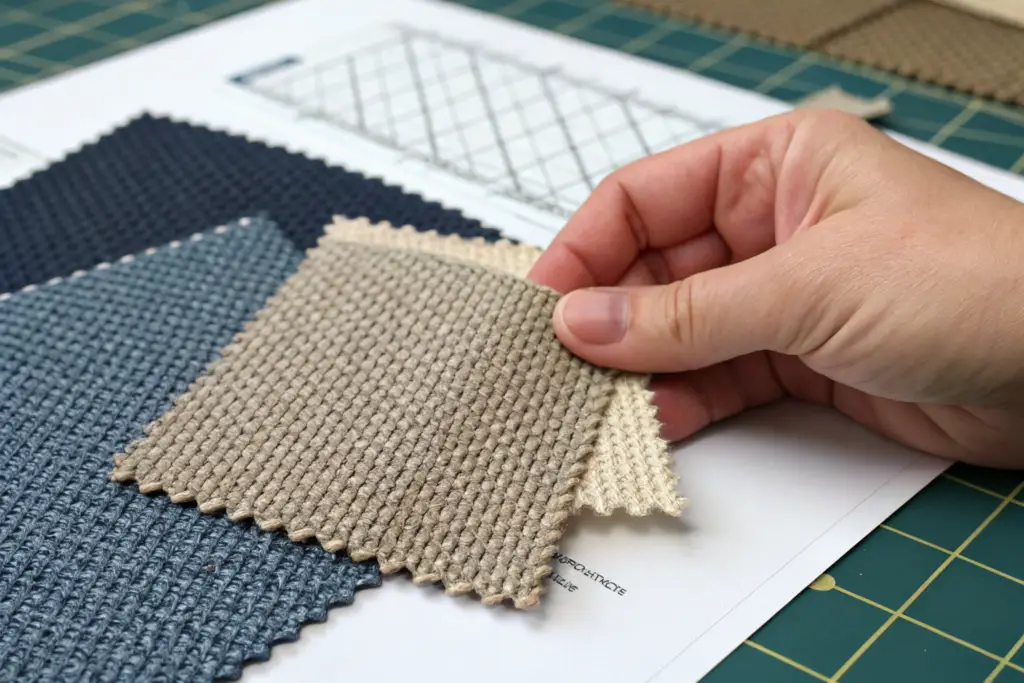
The best woven fabrics for kids' bottoms are Cotton Twill and Oxford Cloth. Twill (the fabric used in chinos and jeans) has a diagonal weave that distributes stress across multiple yarns. This makes it incredibly resistant to ripping at the seams. Oxford Cloth is a basketweave that is lighter than twill but much stronger than poplin. For younger kids who are still crawling or sliding on the floor, a blend of Cotton and Nylon (like Cordura blends) offers extreme abrasion resistance without feeling like sandpaper.
Twill vs. Canvas: Which One Breathes Better for Active Kids?
Parents worry about their kids overheating. You might think Canvas (like a tote bag) is the most durable. It is. But it is also stiff and hot.
The Data:
| Fabric | Martindale Abrasion Score (Higher = Better) | Breathability | Comfort for Sitting |
|---|---|---|---|
| Cotton Canvas (10oz) | 50,000+ rubs | Low. | Stiff, requires break-in. |
| Cotton Twill (7oz) | 25,000 - 30,000 rubs | Medium. | Softens quickly, good drape. |
| Oxford Cloth (5oz) | 15,000 - 20,000 rubs | High. | Very comfortable, shirts feel. |
For kids' pants, 7oz Cotton Twill is the sweet spot. It is thick enough to survive a slide down a gravel hill. It is thin enough that a kid will actually want to wear it on a spring day.
I worked with a brand making "Adventure Pants" for toddlers. We used a 98% Cotton / 2% Spandex Twill. The spandex gave it the "booty room" for diapers and crawling. The twill weave kept the knees from wearing thin. They sold those pants for $42. Parents came back for every size up because the pants outlasted the kid's growth spurt.
What is "Ripstop" and When Should You Use It for Wholesale Kids' Lines?
If you are making outerwear or pants for the "rough and tumble" boy market, you need to know about Ripstop.
What It Is:
A lightweight fabric (usually Nylon or Polyester) woven with a grid pattern of thicker threads. If a tear starts, it hits the thick thread and stops.
The Use Case:
Think kids' hiking shorts, windbreakers, or the knees on snow pants.
- Without Ripstop: A snag on a tree branch becomes a 6-inch tear.
- With Ripstop: A snag becomes a tiny pinhole.
The Cost Consideration:
Ripstop Nylon is more expensive per yard than basic cotton. But you can use a lighter weight fabric (saving money) and still get better durability.
Example from Our Production:
A client wanted a super durable, packable short for summer camp. We used a 70D Ripstop Nylon with a DWR (Durable Water Repellent) finish. The fabric cost was higher, but we saved on weight (lower shipping cost) and the return rate was near zero. The shorts survived canoe trips and rock climbing. The brand used that durability as their main marketing hook: "The Last Pair of Summer Shorts You'll Buy."
How Do Fiber Blends Solve the "Softness vs. Toughness" Problem?
100% Cotton is a beautiful word. Parents love it. But 100% Cotton has flaws. It shrinks. It wrinkles. It loses strength when wet (which is why knees blow out when kids fall on wet grass). Pure Polyester is tough. It does not shrink. It does not fade. But it feels like plastic and holds odors.
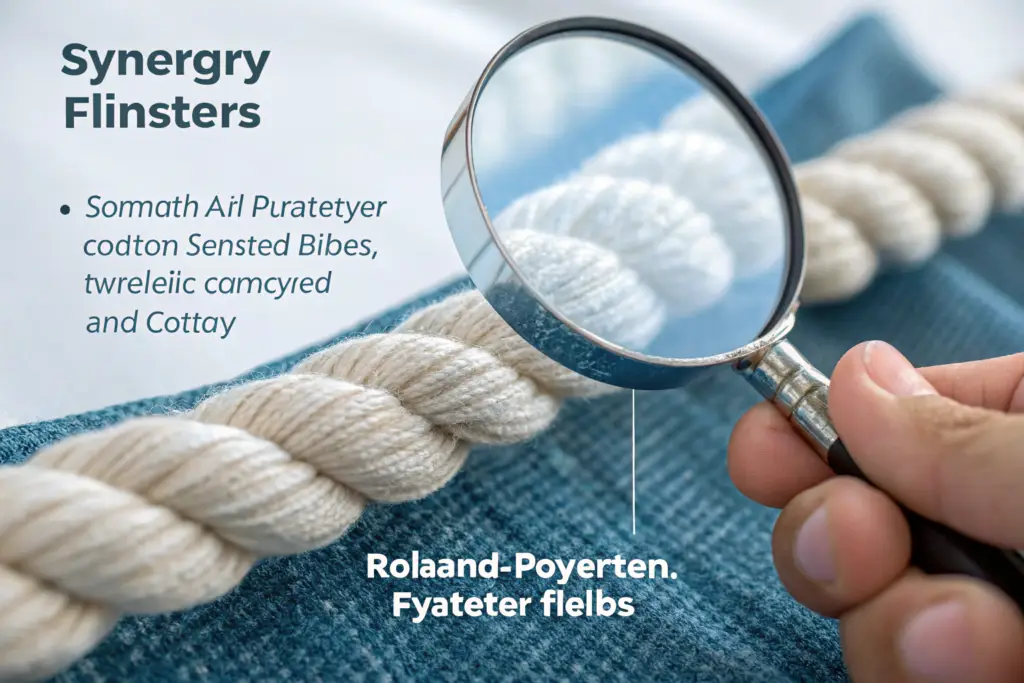
Fiber blends solve the softness vs. toughness problem by combining the best properties of natural and synthetic fibers. A blend of 60% Cotton and 40% Polyester gives you the soft hand-feel of cotton against the skin with the dimensional stability and tear resistance of polyester. This is why school uniforms are almost always poly-cotton blends. They get washed 50 times a year and need to look crisp. For activewear, blends of Cotton and Spandex or Nylon and Spandex provide the necessary recovery to prevent "knee bagging" and "elbow sagging."
Is "Cotton Rich" (60/40) Actually Better Than 100% Cotton for Kids?
I have this debate with new designers all the time. They want the "Natural" story. I show them the wash test results.
The 20-Wash Test Comparison (Toddler T-Shirt):
- 100% Cotton Jersey: Soft feel at first. After 20 washes: 5-7% shrinkage, visible collar curling, faded print, potential tiny holes near the hem.
- 60/40 Cotton-Poly Jersey: Slightly less "buttery" at first. After 20 washes: 1-2% shrinkage, flat collar, vibrant print, no holes.
The Verdict for Wholesale:
If you are selling a luxury $60 organic layette gown for a newborn, use 100% Cotton. The baby is not crawling. The garment is worn for 3 months.
If you are selling a $28 play shirt for a 4-year-old, use a Cotton-Rich Blend (60/40 or 80/20) . The mom will wash that shirt 40 times. The blend will look better at wash 40 than the 100% cotton shirt looks at wash 10.
At Shanghai Fumao, we use a specific 80/20 Cotton/Poly blend for our kids' jersey programs. It is pre-shrunk using a Compactor Machine. This mechanical finishing process reduces shrinkage without chemicals. It gives the fabric the stability of a blend with a feel that is 90% as soft as pure cotton.
How Much Spandex is Too Much Spandex in Kids' Leggings?
Stretch is essential for kids' movement. But spandex (elastane) is the weak link in the durability chain. Spandex degrades under high heat (like a hot dryer) and chlorine (like a swimming pool).
The Percentage Guide for Durability:
- 2-3% Spandex: Durable. Provides "memory" so knees and seat bounce back. Survives dryer heat reasonably well.
- 5-8% Spandex: Performance Wear. Super stretchy. Great for gymnastics. But it will lose stretch faster if put in a hot dryer. Must have "Line Dry" care label.
- 10%+ Spandex: Compression. Feels amazing. Degrades quickly with heat. High return rate due to fit issues after washing.
Recommendation:
For everyday kids' leggings, specify 95% Cotton / 5% Spandex. This is the industry standard for a reason. It stretches enough for diaper changes and cartwheels, but the cotton structure protects the spandex core from direct heat damage.
The Manufacturing Secret:
We use "Core-Spun Yarn" for these blends. Instead of twisting a cotton strand and a spandex strand together (where the spandex is exposed), we wrap the cotton around the spandex core. The cotton takes the abrasion and the heat from the dryer. The spandex stays hidden and protected inside. This single yarn choice can double the life of a pair of leggings.
How to Test Fabric Durability Before Placing a Bulk Wholesale Order?
You have the fabric swatch. It feels nice. But how do you know it will survive the playground? You cannot wait for a season of returns to find out. You need to test it. You do not need a full lab. You just need to ask the right questions.
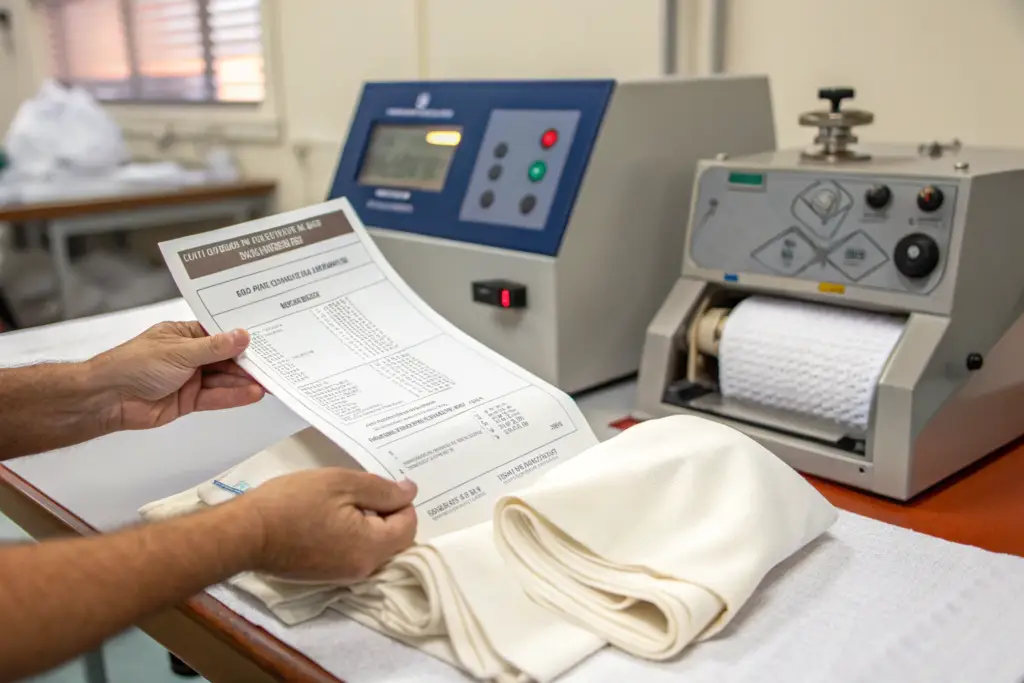
Testing fabric durability involves two simple "At-Home" tests and two "Request from Factory" tests. The Scratch Test (using your fingernail or a coin) reveals pilling potential. The Stretch Recovery Test reveals if the garment will bag out. More formally, you should request the Martindale Pilling Test result (ASTM D4970) and the Tensile Strength Test result (ASTM D5034). These are standard, inexpensive tests that any reputable factory should be able to provide or arrange through a third-party lab like SGS or Intertek.
What is the "Coin Scratch Test" and Why Does It Predict Pilling?
This is a trick I learned from our head of QC. It takes 10 seconds.
How To Do It:
- Take a coin (a quarter or a dime).
- Place the fabric swatch flat on a table.
- Scrape the edge of the coin across the surface of the fabric with medium pressure 5 times in the same spot.
What to Look For:
- Good Fabric: The surface looks slightly disturbed but basically unchanged. Fibers lay back down.
- Bad Fabric: You see tiny fuzz balls forming immediately. The fibers are breaking and tangling.
This simulates the friction of a kid sliding on a carpet or a car seat buckle. If it pills with a coin in 5 seconds, it will be a mess after one trip to the grocery store.
How to Read a "Martindale Pilling Test" Report?
If the factory sends you a lab report, you need to know the numbers.
The Standard: ASTM D4970 or ISO 12945-2.
The Scale: Grade 1 (Very Severe Pilling) to Grade 5 (No Pilling).
What to Demand for Kids' Wholesale:
- Fleece / Sweatshirts: Minimum Grade 3.5. (Fleece naturally pills a bit, but should be slight).
- Jersey T-Shirts: Minimum Grade 4.0.
- Woven Pants: Minimum Grade 4.5.
If the factory cannot provide this report, that is a red flag. At Shanghai Fumao, we include the Pilling Test report in our standard pre-production package for all new fabrics. It costs us $60. It saves you the cost of a ruined brand reputation.
The Tensile Strength Check:
Ask for the "Grab Test" result (ASTM D5034). This measures how many pounds of force it takes to rip the fabric.
- Knit T-Shirt: Should be > 25 lbs.
- Woven Pant: Should be > 40 lbs.
I once had a client who sourced his own fabric from a discounter to "save money." The tensile strength was 18 lbs. A toddler leaning over a crib rail could rip the side seam. We refused to cut it. He was angry at first. Then he understood we were protecting him from a recall. He switched to our recommended stock fabric.
Conclusion
Durability in kids' wear is a science, not an opinion. It is found in the weight of the French Terry, the weave of the Twill, and the chemistry of the Poly-Cotton blend. As a wholesale brand, your reputation rests on those tiny knees and those spaghetti-stained sleeves. When a garment survives the washing machine and the playground, you earn a customer for life. When it falls apart, you earn a one-star review and a return label.
Choosing the right fabric is the single most important decision you will make in the development process. It affects your cost, your shipping weight, and your customer loyalty. Do not let a factory push you into a cheaper alternative without understanding the trade-off in wear life.
At Shanghai Fumao, we have spent years curating a core library of durable, kid-proof fabrics. We know which French Terry pills the least. We know which Twill holds a crease and which one softens with age. We are here to guide you toward the materials that will make your brand known for quality.
If you are developing a new kids' line and want to get the fabric right from the start, I encourage you to reach out to our Business Director Elaine. She can send you our Durability Swatch Kit with our top recommended bases. Her email is elaine@fumaoclothing.com. Let's build clothes that kids can actually be kids in.