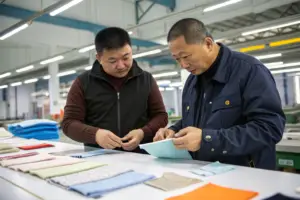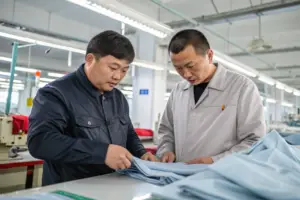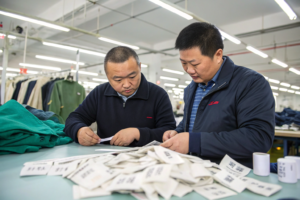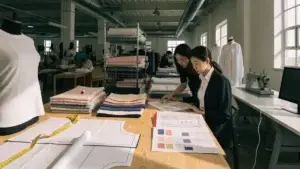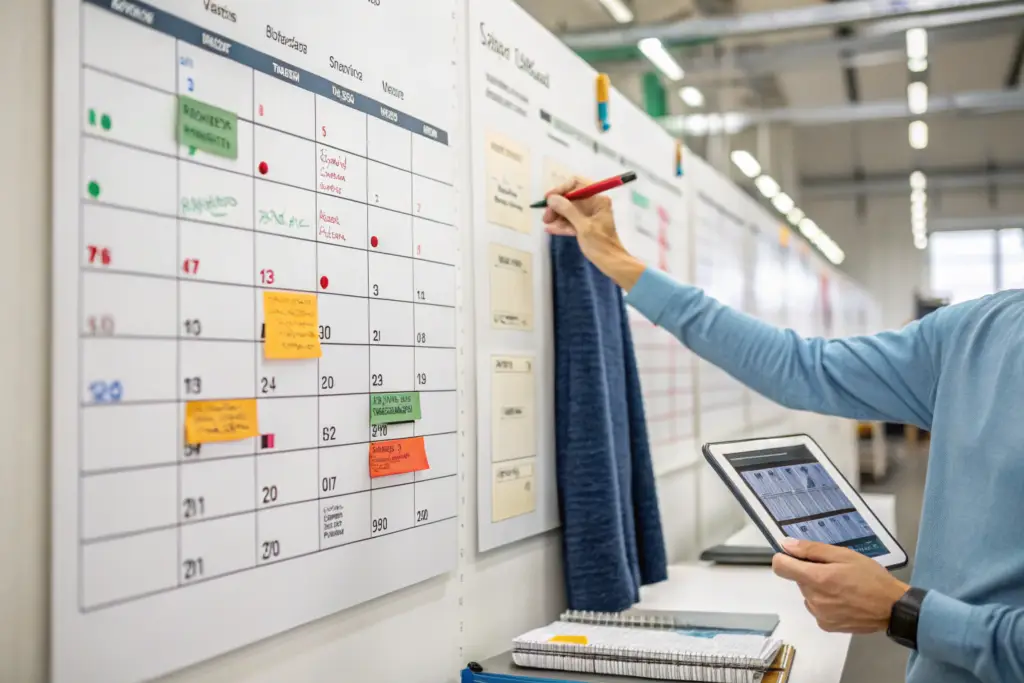
A men's shirt is not a T-shirt. A tailored blazer is not a hoodie. I have to remind buyers of this constantly. They come to me after working with T-shirt factories and expect the same 3-week turnaround for a five-pocket chino pant with a zipper fly. It does not work that way. Menswear is about structure. It is about interfacing, fusing, and precise topstitching. The machines are different. The skills are different. The time required is different.
The standard production time for bulk custom menswear orders ranges from 45 to 75 days depending on the garment complexity and fabric availability. Basic woven shirts take 45-55 days. Structured trousers with complex pocketing take 55-65 days. Tailored jackets and outerwear take 65-75 days. These timelines assume the fabric is in stock at the mill and the trims are standard. Custom-developed fabric or custom embossed buttons add 14-21 days to the front end. This is the reality of cut-and-sew manufacturing for the men's market.
At Shanghai Fumao, we run a dedicated woven line just for menswear. I have seen the bottlenecks. I know where time gets lost. Let me break down exactly where those 45 to 75 days go and how you can avoid the mistakes that push it to 90 days or more.
Why Does Menswear Take Longer to Produce Than Basic T-Shirts?
A basic T-shirt has about 4-6 pattern pieces. The front, the back, the sleeves, and the neckband. The stitching is simple. A men's woven shirt has 14-18 pieces. The collar alone is 3-4 pieces. The cuff is 3 pieces. The sleeve placket is 2 pieces. Each piece requires precise alignment and a different machine setting.
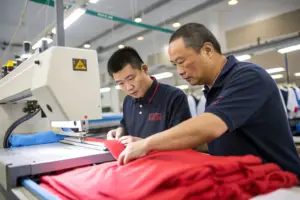
Menswear takes longer because the construction is fundamentally more complex and involves multiple "off-line" operations. A T-shirt is assembled in one continuous flow. A men's shirt stops at the fusing press for the collar, stops at the buttonhole machine, and stops at the button attachment station. These are separate machines operated by specialized technicians. If one of those machines is backed up, the entire order waits. Additionally, menswear demands a higher level of pressing and finishing. A dress shirt must be pressed on a buck press to set the collar and cuffs. This adds a full day to the finishing process.
How Do "Interfacing" and "Fusing" Add Hidden Days to Production?
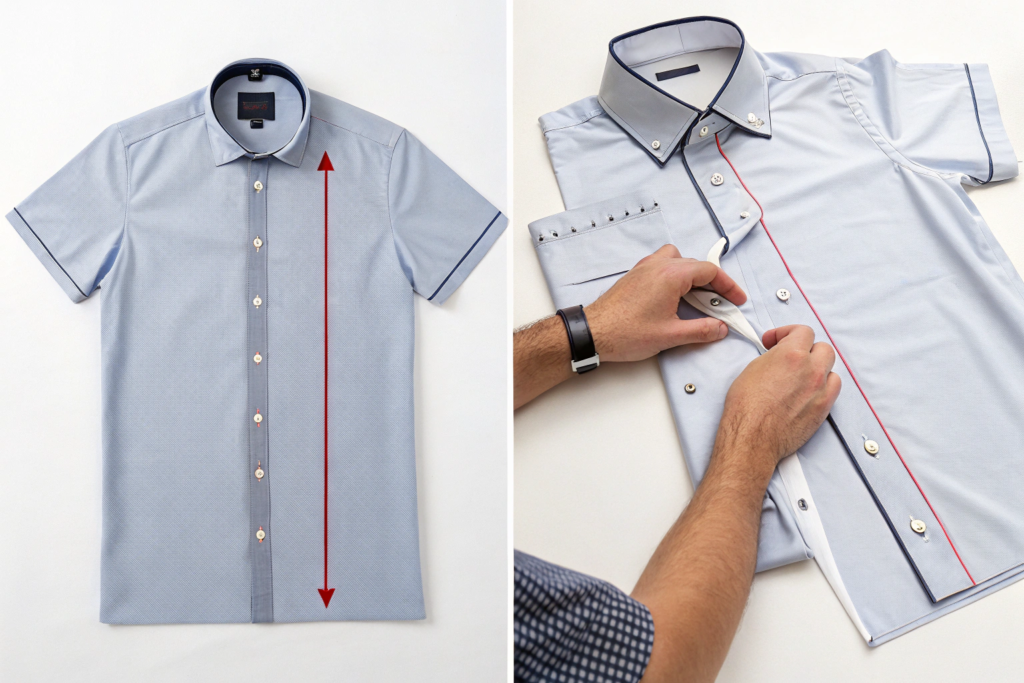
This is the invisible step that new brands never account for. In a T-shirt, the fabric is the fabric. In a dress shirt or blazer, you have the shell fabric and a hidden layer called Interfacing. This is a special material that gives the collar stiffness and the cuff crispness.
The Fusing Process:
- Cutting the Interfacing: A separate cutting operation.
- Fusing Press: The shell fabric and interfacing are placed in a large heat press for 12-15 seconds per piece. They bond together.
- Cooling Time: The pieces must cool flat for 1-2 hours. If you fold them too soon, they wrinkle permanently and the bond weakens.
- Testing: We cut a small sample and try to peel the layers apart. If it separates, the entire batch fails.
The Time Cost:
This process adds 2-3 days to the pre-sewing phase. You cannot skip it. If you try to rush it, the collar bubbles after the first wash. That is a guaranteed return.
I had a client launching a new line of "performance" dress shirts. We used a special stretch fusible interfacing. The cooling time was double the standard. We had to add 4 days to the timeline. He was frustrated until he saw the competitor's shirts with wrinkled collars. Then he understood.
Why Do Buttonholes and Buttons Create a Production Bottleneck?
In a T-shirt factory, you might have two buttonhole machines. In a menswear factory, you need a bank of them.
The Math of a Dress Shirt:
- Front Placket: 7 buttons + 7 buttonholes.
- Cuffs: 2 buttons + 2 buttonholes (per sleeve).
- Collar: 1 button + 1 buttonhole (sometimes 2).
- Total per shirt: ~10 buttons and 10 buttonholes.
The Bottleneck:
A good buttonhole machine operator can sew 1 buttonhole every 15 seconds. That is fast. But for a 500-piece shirt order, that is 5,000 buttonholes.
- 5,000 x 15 seconds = 75,000 seconds = 20.8 hours of continuous machine time.
- And that is just the buttonholes. Button attachment takes equally long.
If the factory only has one operator for this task, that is 5 working days just for buttons. This is why we run multiple shifts on the button machines for large orders.
The Customization Impact:
If you want contrast thread on the buttonholes, the operator must stop and re-thread the machine between colors. That doubles the time. This is a small detail that has a big impact on the delivery date.
At Shanghai Fumao, we use a combination of automated button feeders and skilled hand-finishers. We also have backup machines. If one goes down, we have a spare. In a smaller factory, a broken buttonhole machine means the order stops for two days while waiting for a repairman.
What is the Step-by-Step Timeline for a Custom Men's Shirt Order?
Let me walk you through a real-world timeline. This is for a custom men's Oxford shirt, 500 units, using a stock fabric from our library. This is the "Standard" clock.
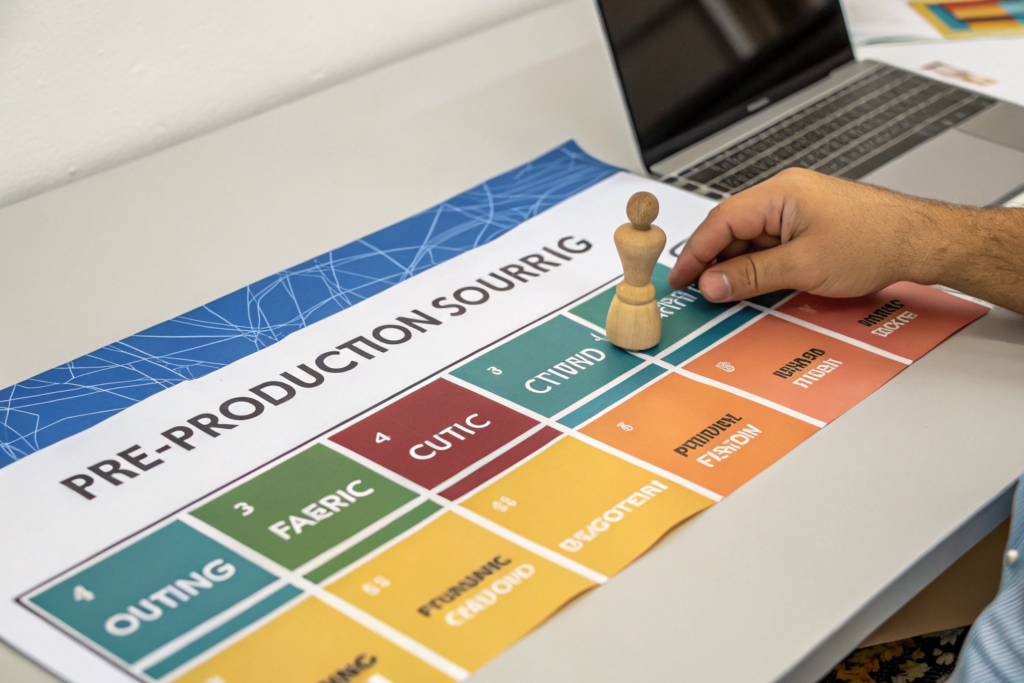
Phase 1: Pre-Production & Sampling (7-10 Days)
- Day 1-2: Finalize Tech Pack and BOM (Bill of Materials).
- Day 3-7: Cut and sew Counter Sample. (This is the sample made with bulk fabric to lock in the fit and construction).
- Day 8-10: Sample approval and fit adjustments.
Phase 2: Material Sourcing (7-14 Days)
- Day 11-15: Fabric roll inspection and relaxation (Fabric needs 24-48 hours to relax before cutting).
- Day 16-20: Trim gathering (Buttons, Labels, Hangtags).
Phase 3: Cutting (3-5 Days)
- Day 21-23: Marker making and spreading fabric plies.
- Day 24-25: Cutting and bundling.
Phase 4: Sewing (15-20 Days)
- Day 26-30: Collar and Cuff fusing and sub-assembly.
- Day 31-40: Main body assembly and sleeve setting.
- Day 41-45: Buttonholes and Buttons.
Phase 5: Finishing & Packing (5-7 Days)
- Day 46-48: Trimming loose threads and initial inspection.
- Day 49-50: Pressing and folding.
- Day 51-52: Final AQL inspection and polybagging.
Total: 45-55 Working Days.
Why Does "Fabric Relaxation" Add 48 Hours Before Cutting?
You might think fabric arrives and we cut it immediately. That is a mistake that ruins the fit of the shirt.
The Science:
Fabric is wound tightly on a roll for weeks during shipping. The fibers are under tension. If you cut it immediately, the pieces will shrink and distort after they are cut. The collar you cut at 16 inches might relax to 15.75 inches. The shirt will not fit the spec.
The Process at Shanghai Fumao:
We receive the fabric roll. We cut off the tight outer layer. We roll the fabric out loosely onto a spreading table and let it sit in a climate-controlled room (65% humidity) for 24 to 48 hours. This allows the yarns to return to their natural state.
The "Sponging" Option for High-End Shirting:
For luxury dress shirts, we do an extra step called "Sponging." We run the fabric through a steam chamber. This pre-shrinks it and sets the hand feel. This adds 2 days and about $0.80 per yard. It is worth it for a $98 retail shirt. It prevents the collar from shrinking after the first dry clean.
I had a client skip this step once to save time. He cut the fabric the same day it arrived. The shirts fit perfectly out of the box. After one wash, the sleeves were 3/4" too short. He had to offer refunds. He never skipped fabric relaxation again.
How Does "Spot Cleaning" Impact the Final Week of Production?
Menswear is unforgiving. A tiny oil spot from the sewing machine is invisible on a printed T-shirt. On a crisp white dress shirt, it is a disaster.
The Reality:
Even in the cleanest factory, a drop of lubricant can fall on a sleeve. Or a worker's hand can leave a smudge.
The Process:
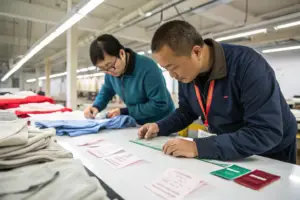
Every single white or light-colored shirt goes to the Spot Cleaning Station. A worker with a specialized air-powered gun sprays a tiny amount of solvent on the mark. Then they press it with a hot iron to lift the stain.
The Time Cost:
- Dark Shirts: 1 minute per shirt inspection.
- White/Light Shirts: 3-5 minutes per shirt for spot cleaning and re-pressing.
If you order 500 white shirts, that is an extra 25 man-hours of labor just to make them "perfect." This is why white shirts often have a slightly longer lead time and a slightly higher labor cost.
At Shanghai Fumao, we factor this into the timeline. We do not rush spot cleaning. If we do, the stain sets in the plastic polybag during shipping and you open the box to find a yellow ring on the collar.
How Do Custom Trims and Hardware Extend the Timeline?
The fabric is in stock. The factory is ready. But the buttons are late. This happens more often than I can count. Custom trims are the single biggest cause of delay in menswear production.
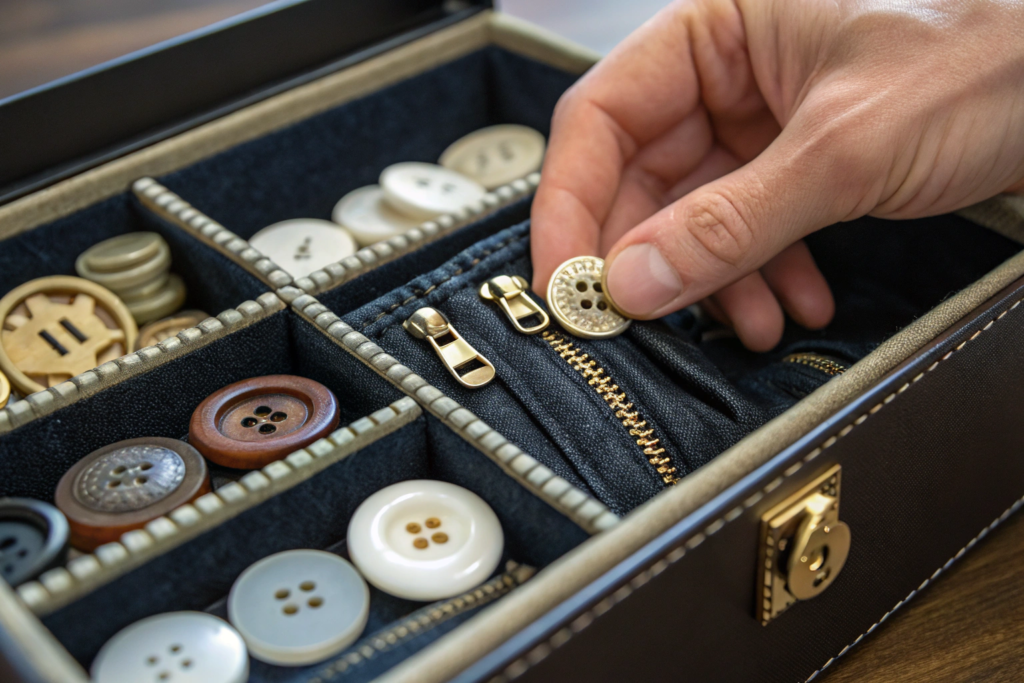
Custom trims and hardware extend the timeline because they require a separate supply chain and a mold setup. A standard horn button can be pulled from stock. A custom button with your logo requires a mold to be made ($80-$150), a sample to be approved (3-5 days shipping), and then bulk production (10-14 days). If you have a custom zipper pull or a branded rivet on the pocket, that is another supplier with their own lead time. The entire trim package must arrive at the factory and be counted and checked before the cutting can even begin.
What is the Difference Between "Stock" and "Custom" Zipper Lead Times?
Zippers are the most critical trim in trousers and jackets. A broken zipper means an unsellable garment.
Stock Zipper (YKK #5 Brass):
- Availability: Distributors in every major city carry stock.
- Lead Time: 1-3 days (Local courier).
- MOQ: 1 piece.
Custom Zipper (Your Logo on the Puller + Custom Tape Color):
- Mold for Puller: 7-10 days to make the metal mold.
- Sample Approval: 3-4 days shipping.
- Bulk Dyeing: 7 days to dye the zipper tape to match your exact Pantone fabric color.
- Bulk Production: 10-14 days.
- Total Lead Time: 25-35 Days.
The Pro Strategy:
If you are a new brand, do not use a custom zipper on your first order. Use a YKK Excella or Riri zipper (premium stock brands). They look expensive. They perform flawlessly. And you can get them in 3 days.
Save the custom zipper for your second season, once you have confirmed the style sells and you can plan 35 days ahead. I have steered several clients away from custom zippers on their first run. They thanked me later when the order shipped on time and the premium stock zipper still looked great.
How to Manage "Button Mold Fees" and Lead Times Efficiently?
You want a custom button with your logo. It adds a lot of value. But here is how to do it without delaying the entire order.
The Timeline Hack:
- Month 1 (Design Phase): Finalize button design. Order mold and samples immediately. Do not wait for the fabric to arrive.
- Month 2: Approve button sample. Place bulk button order.
- Month 2.5: Buttons arrive at factory. Fabric arrives at factory. They meet at the same time. Zero delay.
The Cost-Saving Tip:
Ask the factory: "Do you have a library mold that is close to my design?"
At Shanghai Fumao, we have a library of over 200 button molds from previous clients. If we have a mold that is 90% similar to your design (e.g., a rimmed shank button with a textured center), you can use it for $0 mold fee. You just pay for the buttons.
This is a huge advantage for small brands. You get a custom-looking button without the $150 setup fee and the 10-day mold delay.
What Factors Can Push a Menswear Order Past 75 Days?
The standard timeline assumes everything goes right. But in manufacturing, things go wrong. Knowing what can go wrong helps you plan for it.
Factors that push orders past 75 days include: Failed Lab Dips, Failed Inline Inspections, and Chinese National Holidays. A failed lab dip means the dye house must re-run the color. That adds 7-10 days. A failed inline inspection means we find a systemic sewing error early (e.g., collar points not matching). We stop the line and fix it. That adds 3-5 days. And Chinese New Year (CNY) and October Golden Week effectively shut down the supply chain for 1-2 weeks each. If your order is scheduled to finish during a holiday, it will be delayed by the length of the holiday plus the recovery time.
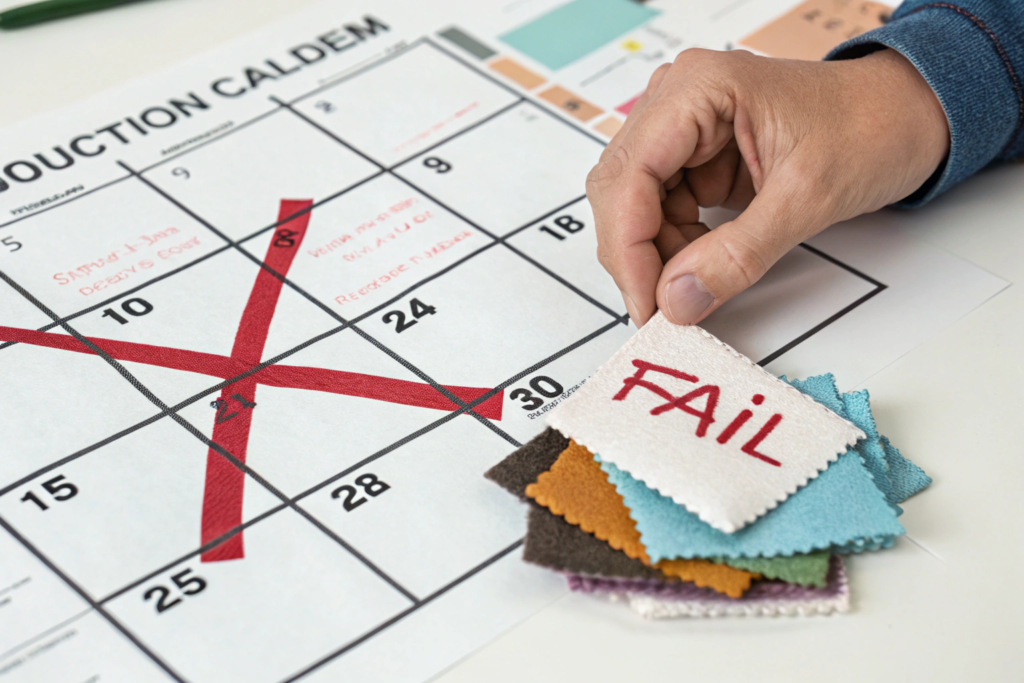
How Do "Lab Dip Rejections" Cause a 10-Day Domino Effect?
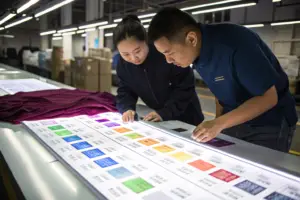
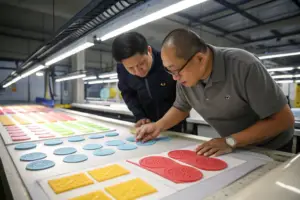
You want a specific shade of "Slate Blue." The dye house sends a small swatch (Lab Dip) for approval. You look at it. It is too purple. You reject it.
The Domino Effect:
- Day 1: You reject the lab dip via email.
- Day 2-5: The dye house re-formulates the color and runs a new dip.
- Day 6-8: The new lab dip is shipped to you.
- Day 9: You approve.
- Day 10: Bulk dyeing begins.
Total Delay: 10 Days.
How to Prevent This:
- Provide a Physical Standard: Do not send a Pantone code only. Send a physical swatch of fabric from a previous order or a competitor's garment. Colors look different on screens.
- Use a Spectrophotometer: Professional factories (like us) use a machine to read the exact color composition of your standard. This reduces lab dip rounds to 1-2 instead of 3-4.
- Be Decisive: Do not wait 5 days to open the FedEx envelope with the lab dip. Open it immediately. The dye house is waiting for your "Go."
I had a project delayed by 18 days because the buyer was on vacation and did not approve the lab dips. The fabric was ready to dye. The machines were idle. It was a very expensive vacation for his launch timeline.
Why is "Chinese New Year" (CNY) a Non-Negotiable Blackout Period?
This is the most predictable disruption in global trade. It happens every year in late January or February. It is not a surprise. Yet every year, I have buyers calling me on February 1st asking why their order is not shipping.
The Reality of CNY:
- 2 Weeks Before: Workers start traveling home. Production slows.
- 1 Week Holiday: Factories are closed. Lights off. No one answers email.
- 2 Weeks After: Workers trickle back. Some do not return. We hire and train new staff.
The Total Impact: 4-6 Weeks of reduced or zero output.
The Shanghai Fumao CNY Planning Rule:
We stop accepting orders with a Pre-CNY Ship Date roughly 60 days before the holiday.
- If CNY starts Jan 29, our cutoff for pre-CNY shipment is November 20.
The Smart Buyer Strategy:
Plan to ship BEFORE December 15th. Or plan to ship AFTER March 1st. Do not try to ship in January or February. The price is higher. The quality is lower. The stress is immense.
I cannot emphasize this enough. If you are reading this and planning a Spring launch, count backwards 75 days from your In-Store Date. Then add 3 weeks if that 75-day window overlaps with February. This is not factory greed. This is a cultural and logistical reality of manufacturing in China.
Conclusion
The standard production time for bulk custom menswear is a function of physics and skill. It takes time to fuse a collar correctly. It takes time to sew 5,000 buttonholes. It takes time for fabric to relax. There are no shortcuts that do not result in a cheaper, worse product.
When you plan your buying calendar, build in the 45-55 days for shirts and the 65-75 days for trousers and jackets. Build in the extra 14 days for custom hardware if you must have your logo on the button. And build in the holiday blackout periods. The brands that succeed in menswear are the brands that master the calendar. They are the ones who are never out of stock. They are the ones who launch on time.
At Shanghai Fumao, we help our clients build these calendars. We are transparent about the bottlenecks. We tell you when a custom detail will add time. We tell you when a fabric choice will save time. We do this because we want you to plan your business effectively.
If you are developing a menswear line and want a realistic, detailed timeline for your specific project, I encourage you to reach out to our Business Director Elaine. She can map out a production calendar that accounts for all the variables we discussed today. Her email is elaine@fumaoclothing.com. Let's get your timeline right before we even cut the first thread.