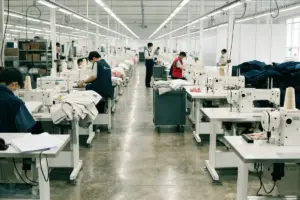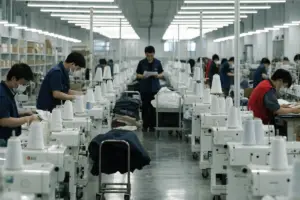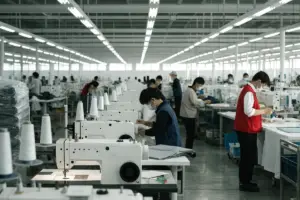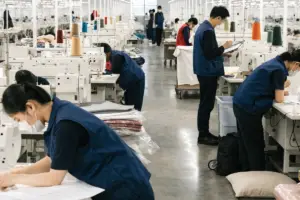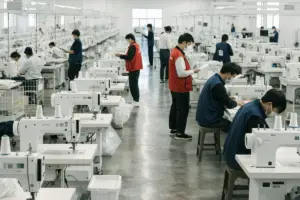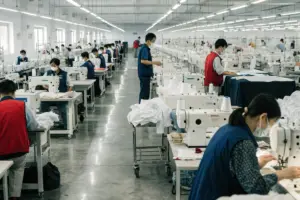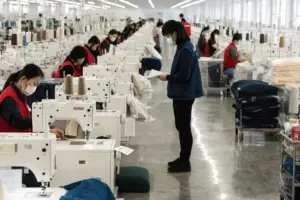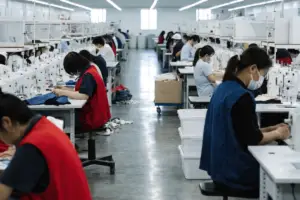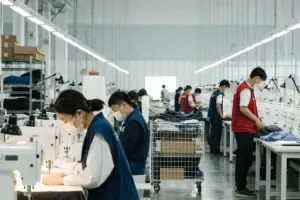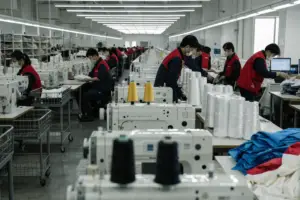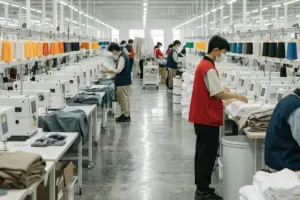
I have been on the other side of the table for fifteen years. I know every trick in the book. I know when a buyer is bluffing. I know when they are desperate. And I know exactly how much margin I have to give before I start cutting corners. The buyers who get the best price from me are not the ones who shout the loudest. They are not the ones who threaten to walk away. They are the ones who make my life easier. They are the ones who understand that a garment is a sum of its parts, not just a number on a quote sheet.
Negotiating the best price without losing quality requires shifting the conversation from “How cheap can you make this?” to “How can we engineer this to hit my target cost?” The best price comes from value engineering, not margin squeezing. When you ask a factory to simply cut their profit, they will agree. But they will also swap your 200gsm fabric for 180gsm. They will reduce the stitches per inch. They will use a cheaper zipper. You will not see the difference in a photo. Your customer will feel it after three washes. The winning strategy is to partner with the factory to find legitimate cost savings in construction and materials.
This is the exact playbook I use when I source materials for Shanghai Fumao. And it is the playbook I respect when a buyer uses it with me. Let me walk you through the specific levers you can pull to get a fair price without destroying the product you worked so hard to design.
What Cost Drivers Should You Understand Before Starting a Negotiation?
You cannot negotiate what you do not understand. Walking into a negotiation without knowing the cost structure of a garment is like walking into a car dealership without knowing the invoice price. You will get taken for a ride. Garment cost is not magic. It is math.
The key cost drivers in garment manufacturing are Fabric (60-70% of total cost), Trims (10-15%), Labor/Cutting/Sewing (15-20%), and Overhead/Profit (5-10%). The biggest leverage for negotiation is almost always in the Fabric and the Construction efficiency. You should never ask the factory to cut their Overhead/Profit below 5%. That is the money they use to pay their QC staff and keep the lights on. If you squeeze that, quality control is the first thing that disappears.
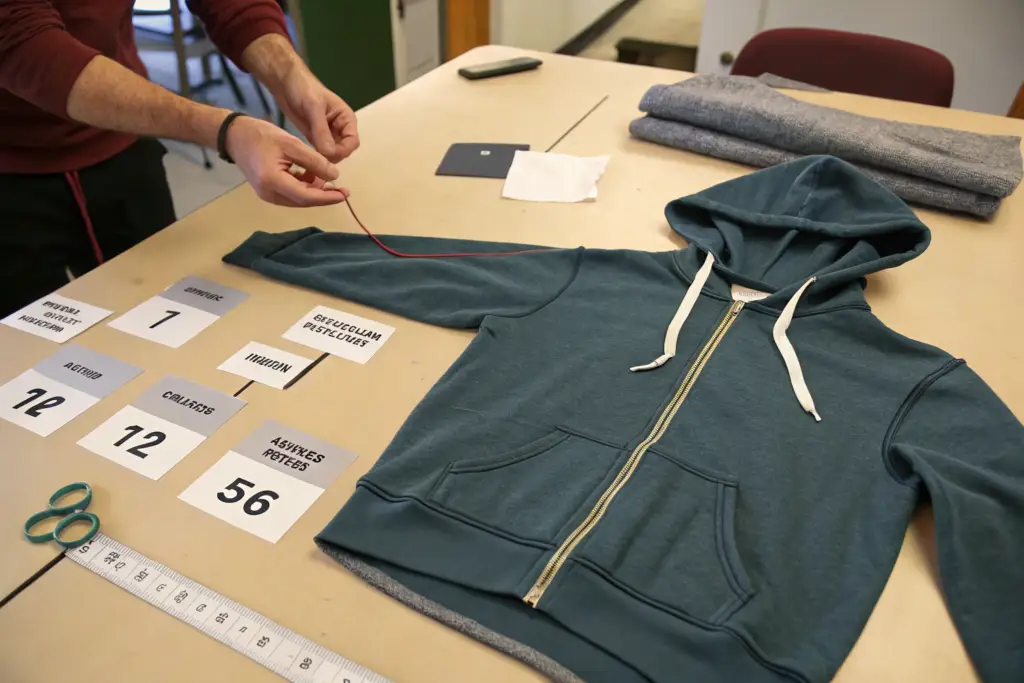
How Much Does Fabric Weight (GSM) Actually Impact Price?
This is the single biggest line item in your quote. And it is where most buyers make a mistake by saying “Make it cheaper.” The factory hears: “Use less fabric.”
The GSM Trap:
You designed a beautiful 220gsm (grams per square meter) heavy cotton tee. It feels substantial. It drapes well.
- Quote: $6.80 per unit.
- Your Target: $6.20 per unit.
- Factory Suggestion: “We can use 180gsm fabric. Save $0.60.”
The Hidden Cost of Lower GSM:
The shirt will be thinner. It will be slightly see-through. It will lose shape faster. Your returns will increase. Your reviews will say: “Cheap material. Not like the photo.” You saved $0.60 on the front end. You lost $10 on the back end in customer service and brand damage.
The Smarter Negotiation:
Instead of asking for a cheaper fabric, ask: “Is there a way to source this 220gsm fabric with a slightly different blend that lowers cost but keeps the hand feel?”
Example from Our Mill Sourcing:
- Original: 100% Combed Ring-Spun Cotton 220gsm. Price: High.
- Alternative: 80% Cotton / 20% Recycled Polyester 220gsm. Price: 8% Lower.
- Result: Same weight. Same feel. Slightly better durability. Lower cost. Better sustainability story.
At Shanghai Fumao, we keep a library of “Alternative Fabrics” specifically for these conversations. We can show you a swatch of the expensive fabric and a swatch of the smart alternative side-by-side. You decide. This is value engineering.
Why Do “Trims and Notions” Create Hidden Opportunities for Savings?
Trims are the zippers, buttons, drawstrings, and labels. They are small. They add up fast. A YKK zipper is great. But it costs $0.45. A generic zipper costs $0.15. The difference is $0.30.
Where to Save vs. Where to Splurge:
| Trim Component | Safe to “Value Engineer” | Never Cheapen This |
|---|---|---|
| Main Zipper | No. It is the most touched part. | Use YKK or SBS (reputable brand). |
| Hangtag String | Yes. Use generic cotton string. | It just holds the tag. |
| Care Label | Yes. Use standard satin. | It’s hidden inside. |
| Sewing Thread | No. Absolutely not. | Cheap thread breaks. It causes seams to unravel. |
| Polybag | Yes. Use recycled thin gauge. | It is thrown away. |
| Buttons | Depends. If it’s a functional shank button, use good quality. If decorative, use standard. | Broken buttons are a return reason. |
The Negotiation Tactic:
“I see we have a branded zipper pull here. That is a nice touch, but it’s adding $0.12. For this first run, can we use a standard pull and apply that savings to keep the 220gsm fabric weight?”
This shows the factory you understand the trade-offs. You are not just saying “Cheaper.” You are reallocating the budget. A good factory manager respects this. It shows you care about the things that matter to the end customer.
How to Use Order Volume and Lead Time as Negotiation Levers?
Price is just one variable in the equation. Time is the other. If you are rigid on time, you pay a premium. If you are rigid on price, you wait longer. But if you are flexible on both, you can find a sweet spot.
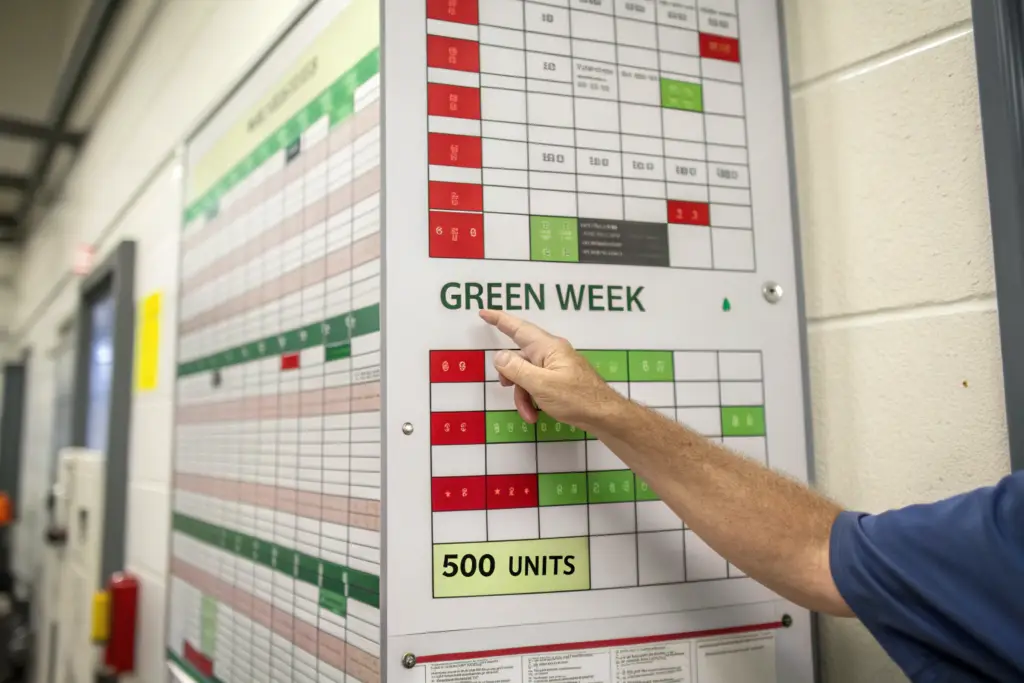
Order volume and lead time are powerful negotiation levers because they directly impact the factory’s production efficiency. A factory hates downtime. If a sewing line is sitting idle, the factory is losing money. If you can place an order that fills a “gap week” in the production schedule, the factory may accept a lower margin just to keep the workers busy and the machines running. Similarly, if you can commit to a larger volume spread over a longer period (a Blanket Order), the factory can buy fabric in bulk and pass those savings on to you.
What is “Gap Week” Pricing and How Do You Access It?
This is an insider strategy. Every factory has a master production schedule. There are peaks (just before Christmas, just before Fall market). And there are valleys.
The Question to Ask:
“We have some flexibility on the delivery date. Is there a window in the next 6-8 weeks where the factory is slower? We can align our order with that window if it helps with pricing.”
What Happens Next:
The factory manager checks the board. Line 3 is finishing a big order on the 15th. The next order for Line 3 does not start until the 22nd. That is a 7-day gap. That is 7 days of paying workers to stand around or clean machines.
The Deal:
If your order can be cut and sewn in those 7 days, the factory might offer you a 5-10% discount on the CMT (Cut-Make-Trim) labor cost. They are not discounting the fabric. They are discounting their value-added service to keep the line moving.
I have offered this discount myself. A client wanted 600 units. We were looking at a slow week. I told him: “If you can give me the green light today, and you accept shipment 3 days later than originally planned (to fit the gap), I can take $0.45 off the unit price.” He saved $270. He used that $270 to pay for his shipping. That is a win-win negotiation.
How to Structure a “Blanket Order” to Lower Fabric Cost?
Fabric mills give discounts for volume. The biggest price break is usually at 1,000 yards and 3,000 yards. If your order only needs 400 yards, you pay the “Small Lot Premium” which can be 15-20% higher.
The Blanket Order Strategy:
You know you will sell 1,200 units of this style over the next 12 months. But you only have cash for 400 units now.
The Negotiation:
“We want to issue a Blanket Purchase Order for 1,200 units to be delivered in three lots of 400 units over the next 9 months. Can we buy the full 1,200 yards of fabric now and hold it at the factory?”
The Factory’s Perspective:
We get to buy the fabric in bulk. We get the 15% discount from the mill. We pass 10% of that discount to you (keeping 5% for the cost of storing the greige fabric). You get a better price. The factory gets a committed forecast and a little extra margin. The fabric is reserved. You will not face a “Fabric Out of Stock” situation in six months.
This is how we manage core basics programs at Shanghai Fumao. It requires trust. You have to sign a document saying you will take the 1,200 units. But the cash flow and pricing benefits are substantial.
What Phrases Should You Avoid When Negotiating with Asian Suppliers?
Language matters. Culture matters. You can be a tough negotiator without being a rude one. In fact, in Chinese business culture, rudeness guarantees you will get the worst service and the lowest priority. The factory will take your order. But they will not go the extra mile for you.
Phrases to avoid include any direct attack on the factory’s integrity or any ultimatum that causes a “loss of face.” Avoid saying: “Your price is a rip-off” or “I can get this cheaper elsewhere.” These phrases shut down collaboration. Instead, use language that frames the problem as a shared challenge: “We need to find a way to close this gap” or “Help me understand the cost driver here.” This approach maintains the relationship while still pushing for a better number.

Why is “This is Too Expensive” the Worst Opening Line?
I hear this every week. When a buyer says, “This is too expensive,” I immediately think one of two things:
- This buyer does not understand the quality of what they are asking for.
- This buyer is just fishing for a discount and will be a difficult partner.
The Better Approach: The “Price Gap” Analysis
“Thank you for the quote. Our target landed cost for this item is $6.20. We are currently at $6.80. That is a $0.60 gap. Can you help us understand where we might adjust the specifications to get closer to that number without sacrificing the core look?”
Why This Works:
- It is specific. ($0.60).
- It is collaborative. (“Help us understand”).
- It acknowledges quality. (“Without sacrificing the core look”).
This invites me, the factory owner, to put on my engineer hat. I look at the spec sheet. “Ah, the curved hem requires a special machine that slows down production. If we change to a straight hem, we save $0.35. That gets us halfway there.” We are now partners solving a math problem.
How to Handle the “Last Price” Standoff Gracefully?
You have gone back and forth. The factory says: “This is the best price.” You think there is still room. You are at an impasse.
The Wrong Move:
“Okay, I’m going to get quotes from three other factories. I’ll let you know.” (This is a threat. It burns the bridge).
The Graceful Move:
“I completely understand. We really want to work with you on this because we trust your quality. We are just a bit stuck on the budget for this particular style. Would it be possible to split the difference? If you can come down $0.15, we can place the order today.”
The Psychology:
“Splitting the difference” is a universal concept. It allows the factory to save face. They did not “give in.” They “met you in the middle.” And the promise of placing the order today is valuable. It reduces their sales cycle time.
I have accepted this exact proposal many times. The buyer gets a small win. I get a signed PO and a clean production slot. We both walk away feeling like we won.
How to Lock in Quality Standards During a Price Negotiation?
This is the most important part of the entire article. You can negotiate the price down. But if you do not simultaneously lock the quality up, you will get a cheaper, worse product. The time to define quality is during the negotiation, not after the production is finished.
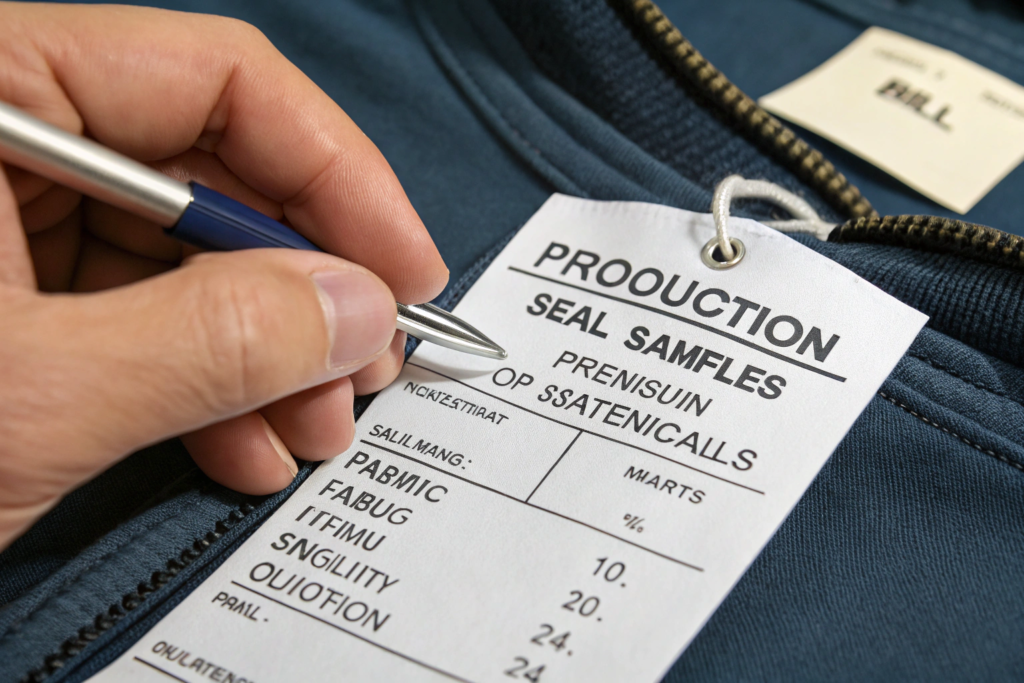
Locking in quality standards during a price negotiation requires creating a “Sealed Sample” and a detailed “Bill of Materials (BOM).” The Sealed Sample is the physical garment that both parties sign off on. It represents the exact quality expected. The BOM lists the exact fabric content, weight, and trim suppliers. By referencing these documents in the Purchase Order contract, you create a legal and practical standard. If the bulk production does not match the Sealed Sample, you have grounds for a discount or a rework, regardless of the final negotiated price.
What is a “Counter Sample” and Why Does It Prevent Bait-and-Switch?
You negotiated hard. You got the price down 8%. You are happy. The factory is happy (or at least not unhappy). Then the goods arrive. The fabric feels thinner. The stitching is looser. You complain. The factory says: “This is what you paid for.”
The Prevention: The Counter Sample
A Counter Sample is made after the price is finalized. It is made with the exact bulk fabric that will be used in production. It is sewn by the exact production line that will make your order.
The Process at Shanghai Fumao:
- Negotiation Ends: Price agreed at $6.20 (down from $6.80).
- Counter Sample Made: We use the 80/20 Cotton/Poly blend fabric and the standard zipper pull that were agreed upon to hit the $6.20 price.
- Approval: You receive this sample. You feel it. You try it on. You say: “Yes. This is acceptable quality for the price.”
- Seal It: You sign the hangtag. You keep one. We keep one.
- Production: Every single unit is compared to this Counter Sample.
If you skip this step, the factory’s definition of “Good Quality” and your definition of “Good Quality” will drift apart. The Counter Sample aligns those definitions before 5,000 units are cut.
How to Use “AQL” as a Negotiation Tool, Not Just an Inspection Tool?
AQL (Acceptable Quality Limit) is usually discussed at the end. But it should be part of the price negotiation.
The Trade-Off:
- Strict AQL (1.0): Very few defects allowed. Factory must inspect more. Labor cost goes up.
- Standard AQL (2.5): More defects allowed. Factory inspects less. Labor cost goes down.
The Negotiation:
“I see we are at a $0.20 gap. If we agree to a standard AQL 2.5 for minor defects on this run (saving you some QC labor time), can we apply that $0.05 savings to close the gap a bit more?”
What This Signals:
You understand that quality control costs money. You are willing to accept a slightly higher risk of a loose thread (which you can trim in your own warehouse) in exchange for a lower price. But you are NOT willing to accept Major Defects (holes, stains).
This is a very sophisticated negotiation. It shows you are a professional. It gives the factory a legitimate cost offset. And it protects you because Major Defects are still zero-tolerance.
At Shanghai Fumao, we use ISO 2859-1 standards. We can adjust the AQL level based on the price point of the product. A luxury item gets 1.0. A fast fashion basic gets 2.5. That is a legitimate business decision.
Conclusion
Negotiating the best price with a foreign garment supplier is a test of knowledge and relationship, not a test of aggression. The brands that win in the long run are the ones who understand that the factory needs to make a profit to stay in business. A factory that makes zero profit on your order will not be there to make your reorder.
The best price comes from transparency. Show the factory your target. Ask for their help in hitting it. Be willing to adjust the fabric blend, simplify the trim, or adjust the delivery timeline. Be rigorous about locking in the quality with a Counter Sample and a clear BOM. And most importantly, be the kind of client the factory wants to give a discount to because you are easy to work with and you pay on time.
At Shanghai Fumao, we negotiate with our fabric mills every day using these exact principles. We respect the buyers who use them with us. It shows they understand how manufacturing actually works.
If you are ready to have a smart conversation about pricing your next collection, without sacrificing the integrity of your designs, I invite you to reach out to our Business Director Elaine. She can walk you through our value engineering process and show you where the real cost savings are hiding. Her email is elaine@fumaoclothing.com. Let’s find a number that works for both of us.