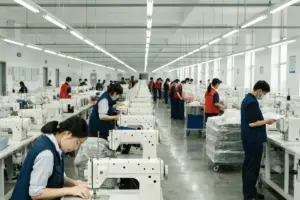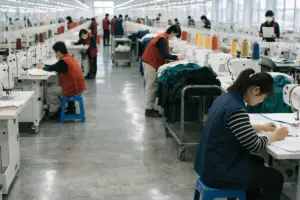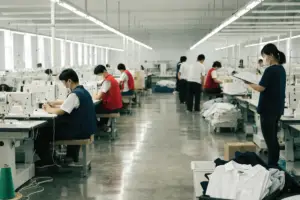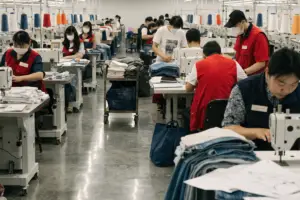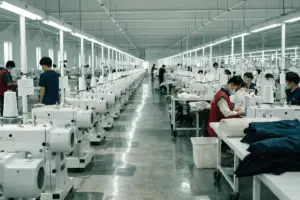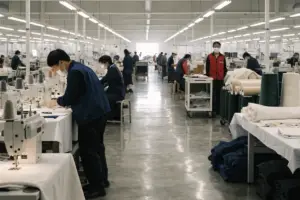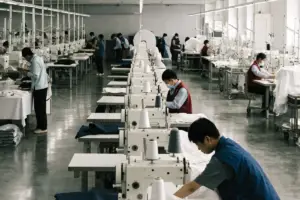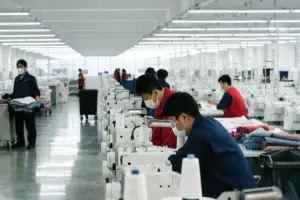
You receive a quote from a garment factory. The price seems high. Your instinct is to reply with, "Can you do better?" or to simply demand a 15% reduction. This approach may get you a lower price, but at what hidden cost? True negotiation in apparel manufacturing isn’t a battle to squeeze the last cent from your supplier; it’s a collaborative process to arrive at a fair price that ensures quality, on-time delivery, and a sustainable partnership. A price that’s too low can be more expensive in the long run.
Negotiating fair prices requires moving beyond simple haggling to understanding cost drivers, building transparency, and aligning incentives for mutual success. It’s about valuing what you’re paying for, not just minimizing what you pay. A fair price covers quality materials, skilled labor, proper factory overhead, and a reasonable profit margin that allows your supplier to invest in reliability and improvement.
At Shanghai Fumao, we recently had a prospective client who aggressively negotiated our quote down by 20%. We reluctantly accepted, knowing the numbers were tight. The result? To meet that price, we had to suggest a lower-grade fabric with longer lead times and reduce the frequency of in-line quality checks. The order was delayed, and the final quality was mediocre. The client was unhappy, and we lost money. They are now a loyal partner—but only after we reset the relationship with complete cost transparency. Let’s explore how to negotiate effectively.
What Are The True Cost Components In A Garment Quote?
Before you utter a counter-offer, you must understand what you’re negotiating. A professional factory’s quote isn’t a random number; it’s the sum of specific, calculable components. Blurting out a lower percentage shows you don’t understand their business, which weakens your position.
Asking for a cost breakdown is your fundamental right and the first step toward intelligent negotiation. This shifts the conversation from "price" to "value."

Can You Request a Detailed Cost Breakdown?
Any reputable factory should be able to provide a line-item breakdown. If they refuse, consider it a major red flag. A typical breakdown includes:
- Fabric Cost: The single largest component (often 50-70% of the total). This is based on fabric consumption (yards per garment calculated from the marker), plus the cost per yard/meter from the mill.
- Trims & Accessories Cost: Buttons, zippers, labels, threads, interlinings, packaging (polybags, hangtags, cartons).
- Labor Cost (CMT – Cut, Make, Trim): The cost of cutting, sewing, finishing, and inspecting each garment. This is based on the Standard Allowed Minute (SAM) value of the garment style, multiplied by the labor rate.
- Factory Overhead & Profit: Covers factory rent, utilities, management, quality systems, and a reasonable profit margin (typically 8-15% for a healthy operation).
How Do Complexity and Order Volume Affect Cost?
Understanding these drivers gives you negotiation leverage based on facts, not feelings.
- Style Complexity: A simple t-shirt has a low SAM (e.g., 12 minutes). A tailored blazer with multiple panels, lining, and functional buttons has a high SAM (e.g., 90 minutes). Negotiating a 10% reduction on the blazer is a much larger absolute saving, but also a bigger ask.
- Order Quantity (MOQ): This is your strongest lever. Economies of scale are real. Doubling the order quantity often reduces the unit cost by 5-15% because fixed costs (like pattern making, sampling, setup) are amortized over more units, and fabric may be bought at a better price.
- Fabric & Trim Choices: You can directly influence the largest cost. Ask: "If we switched from this 100% organic cotton to a 95/5 cotton-poly blend, what would the cost and lead time impact be?"
How To Prepare For Negotiation From A Position of Strength?
Walking into a negotiation informed and strategic is what separates professional buyers from bargain hunters. Your preparation determines whether you’ll be seen as a valuable partner or a transactional risk.
Strength comes from knowledge, clarity, and demonstrating that you are a credible, long-term opportunity for the factory.
What Information Should You Have Ready?
- Clear Tech Packs & Samples: A perfect, detailed tech pack reduces factory risk and quoting time. Ambiguity forces them to add a contingency cost. A physical sample is even better.
- Realistic Target Price: Know your landed cost target. Back into a target FOB price by subtracting estimated shipping, duties, and other logistics costs.
- Market Benchmarking: Have quotes from 2-3 other qualified factories. This isn’t to play them against each other brutally, but to understand the market range. If our quote at Shanghai Fumao is 10% higher, we should be able to justify it with our full-package service, in-house QC lab, or better payment terms.
- Your Business Potential: Factories invest in new clients. Be prepared to discuss your brand’s roadmap, projected annual volume, and growth potential. A factory is more likely to offer a competitive price to a brand with clear growth plans.
What Is Your Best Negotiation Leverage?
Your primary leverage is commitment and clarity, not threats.
- Volume Commitment: "If this first 5,000-piece order goes well, we have a confirmed 20,000-piece order for next season. Can we structure a pricing tier based on that commitment?"
- Long-Term Partnership: "We’re looking for a strategic partner for the next 3-5 years, not just a one-time vendor. How can we work together on cost optimization over time?"
- Process Efficiency: "We guarantee fast approval times (within 48 hours for submits) and will use your standard packaging to streamline your process. Can that efficiency be reflected in the cost?" We value such clients immensely.
What Are Effective Strategies During The Price Discussion?
The conversation itself is a dance. The goal is to create a "win-win" outcome where the factory makes a fair profit to reinvest in quality and service, and you get a reliable product at a competitive price. Avoid ultimatums.
Frame your requests around collaboration and problem-solving, not demands.

How To Open The Conversation About Price?
Don’t lead with "Your price is too high." Instead, use a collaborative opener:
- "Thank you for the detailed quote. We’ve reviewed the cost breakdown. To help us finalize, could we discuss the fabric component? We noticed the price per yard is slightly above our benchmark. Is this a specific mill or finish that adds that value?"
- "We’re very impressed with your facility and quality systems. To align with our budget, are there areas where we could adjust specifications without compromising core quality? For example, the packaging or the thread type?"
What Are "Win-Win" Concessions You Can Offer?
Negotiation is about trading value. Instead of just asking for a lower price, offer something in return that reduces the factory’s cost or risk:
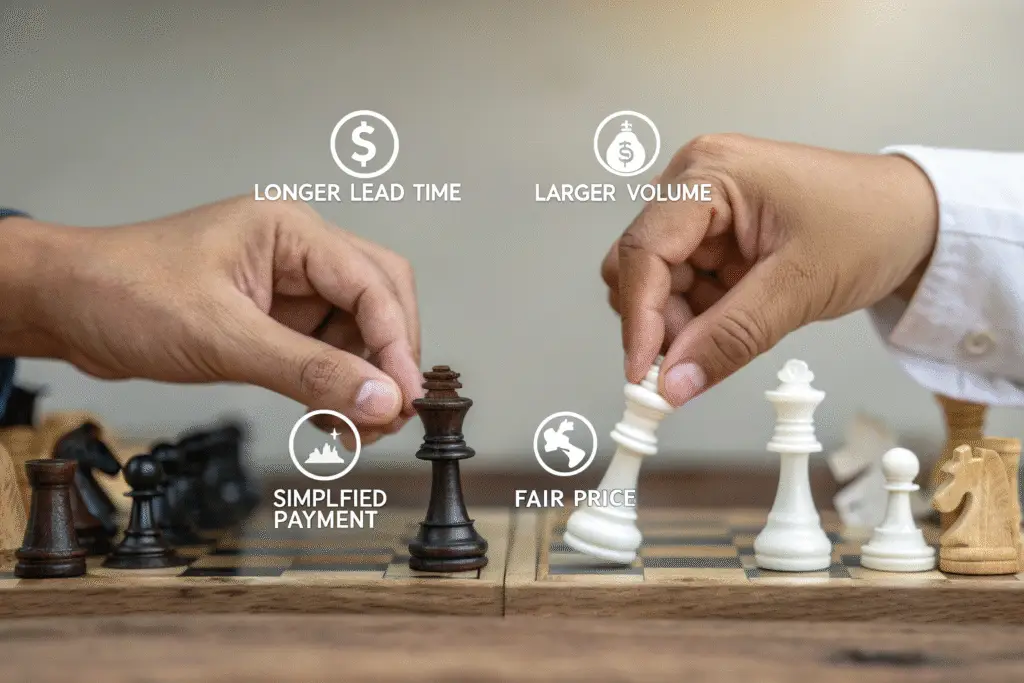
- Extended Payment Terms: Instead of 30% deposit, 70% before shipment, offer 30/70 against copy of Bill of Lading. This improves your cash flow but is a significant benefit to the factory, as it reduces their financial risk.
- Longer Lead Time: Rushing an order costs money (overtime, air freight for materials). If you can be flexible with the delivery date, you can often secure a better price.
- Simplified Logistics: Opt for the factory’s standard DDP shipping consolidation instead of demanding a specific, expedited freight method.
- Order Consolidation: Commit to placing orders for multiple styles or colors in a single production run to maximize their line efficiency.
What Are The Red Flags and Deal-Breakers?
Some negotiation tactics and responses should signal you to walk away. A price that seems "too good to be true" almost always is. Protecting your brand from the hidden costs of a bad partnership is more important than winning a percentage point on paper.
Know your non-negotiables. A fair price supports ethical and sustainable practices.
When Should A Low Price Be A Warning Sign?
Be alarmed if:
- The Quote is Significantly Lower Than Market Average: This often means substandard materials, unskilled labor, or hidden costs that will appear later (e.g., charges for "additional" services).
- The Supplier Agrees Immediately to a Large Reduction Without Justification: This suggests their initial quote was inflated or they plan to cut corners. A professional factory will defend their costs with data.
- They Are Evasive About Providing a Cost Breakdown: This is the biggest red flag. It means they don’t want you to see their margins or the low-quality components they plan to use.
- They Pressure You to Skip Steps: "You don’t need a pre-production sample, it will save time and money." This is a direct threat to your quality control.
What Unethical Practices Might a Rock-Bottom Price Hide?
A suspiciously low price can subsidize:
- Poor Labor Practices: Unpaid overtime, unsafe working conditions.
- Material Substitution: Using a cheaper, unauthorized fabric or trim after you’ve approved the quality.
- Falsified Certifications: Fake ISO 9001 or social compliance certificates to win your business.
- Environmental Corner-Cutting: Illegal dumping of dyes and chemicals.
At Shanghai Fumao, we believe transparency is the foundation of trust. We’d rather lose an order than win it under false pretenses that would damage both our reputations.
How To Build A Partnership For Long-Term Cost Optimization?
The best "negotiation" happens after the first order is placed. A successful partnership naturally leads to cost optimization through continuous improvement, trust, and shared goals. This is where real, sustainable value is created.
View your factory as an extension of your operations, not an adversary.

How Can You Work Together to Reduce Costs Over Time?
Once trust is established, collaborate on value engineering:
- Joint Fabric Sourcing Reviews: After a few seasons, you and your factory can work directly with mills to develop exclusive fabrics at better prices based on forecasted volume.
- Process Improvement: The factory may suggest small design modifications (e.g., simplifying a seam, standardizing a button size) that significantly reduce SAM without affecting the garment’s look or function.
- Forecasting and Planning: Providing accurate, long-term forecasts allows the factory to plan material purchases during off-peak seasons, securing better prices that they can pass on to you.
Why Is a Fair Price an Investment in Reliability?
Paying a fair price ensures:
- Stable Workforce: The factory can pay fair wages, reducing turnover and maintaining skilled operators.
- Investment in Technology: The factory can upgrade machines for better efficiency and quality.
- Financial Health: A profitable factory can survive supply chain shocks without collapsing, protecting your orders.
- Priority Treatment: When problems arise, a valued partner gets the factory’s best resources to solve them.
At Shanghai Fumao, our most successful partnerships are with brands that see us as a strategic ally. We jointly review costs every season, looking for smart savings, not just cuts. This is the future of responsible sourcing.
Conclusion
Negotiating fair prices with a garment factory is a sophisticated skill that blends analysis, psychology, and ethics. It moves far beyond simple haggling to a holistic assessment of value, risk, and long-term partnership potential. The goal is to arrive at a number that allows the factory to produce your goods with quality, consistency, and integrity, while allowing your brand to remain competitive and profitable.
Remember, the cheapest price often carries the highest hidden cost—in quality failures, delayed shipments, and ethical compromises. A fair price is the bedrock of a resilient, successful, and sustainable apparel business.
If you are seeking a manufacturing partner who believes in transparent costing and collaborative growth, we invite you to talk with us. At Shanghai Fumao, we approach every quote with honesty and detail. We welcome informed discussions on cost drivers and are committed to building partnerships where both sides win. Contact our Business Director Elaine to start a conversation based on mutual respect and clear value: elaine@fumaoclothing.com.