The global apparel supply chain is evolving as sustainability becomes a critical priority. Stretch fabrics—valued for elasticity, comfort, and durability—have historically relied on conventional elastane (spandex), which is petroleum-based and non-biodegradable. These synthetics resist decomposition, creating long-term landfill waste and microplastic pollution. With regulations tightening across U.S. and European markets, as well as increasing consumer demand for circular textiles, biodegradable stretch fabrics are emerging as a strategic solution.
Sourcing biodegradable stretch fabrics requires a thorough understanding of material innovation, certification standards, supplier reliability, and cost management strategies. For brand owners, distributors, and sourcing managers, these fabrics represent both compliance readiness and market differentiation.
Understanding Biodegradable Stretch Fabrics
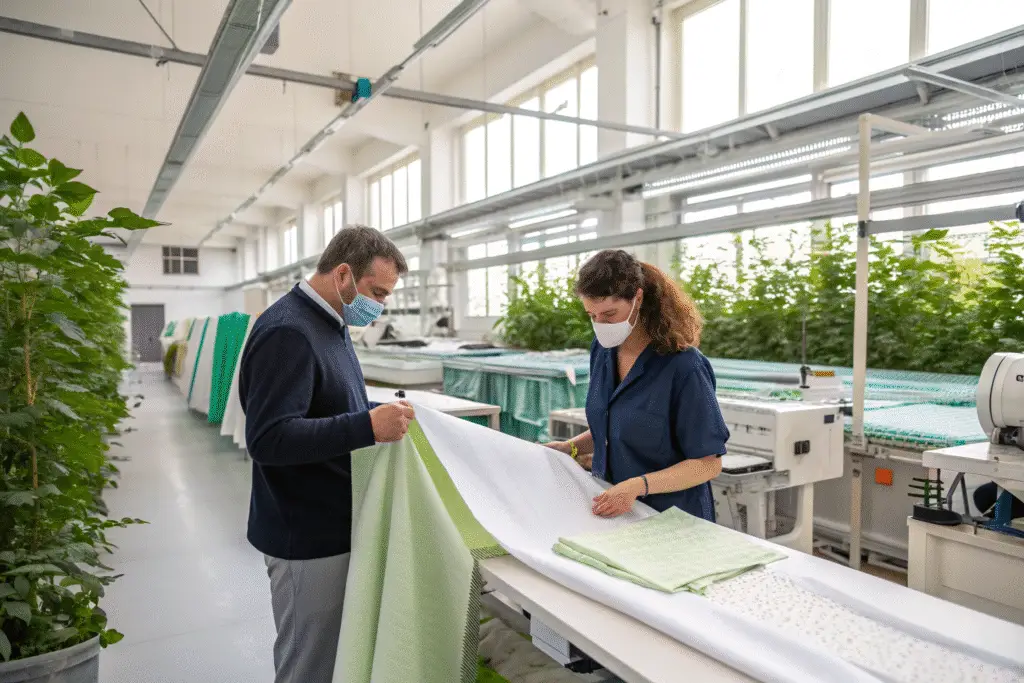
Biodegradable stretch fabrics combine elasticity with end-of-life environmental responsibility. Unlike traditional elastane, these fibers are engineered to decompose under composting conditions, minimizing long-term waste.
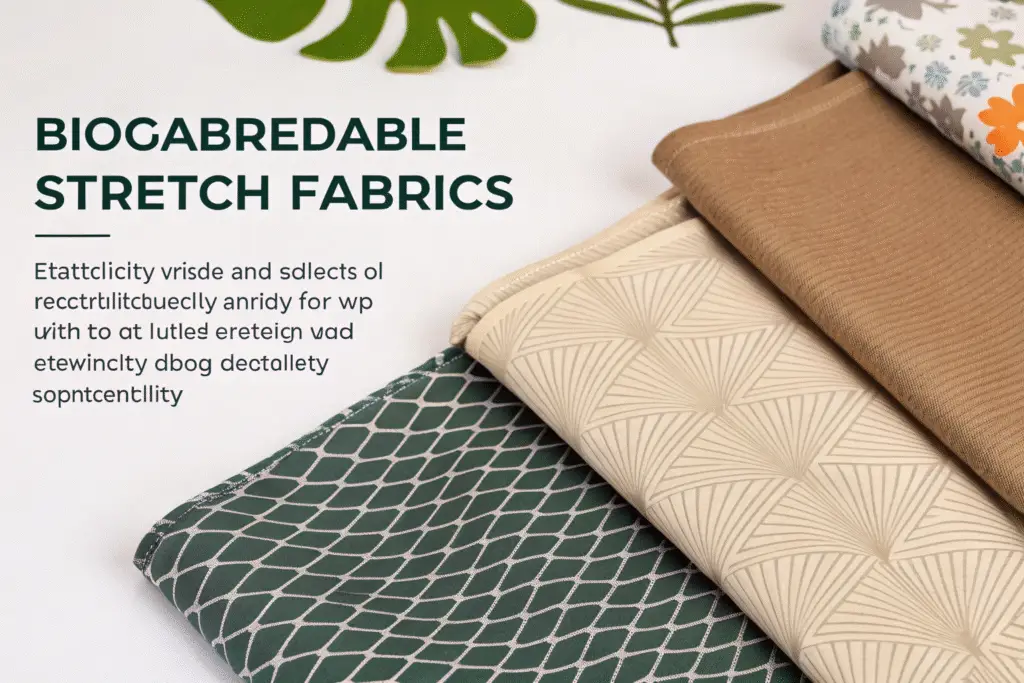
What fibers are used in biodegradable stretch fabrics?
Industry leaders have developed innovative alternatives:
- ROICA™ V550 by Asahi Kasei – a degradable elastane designed for circular apparel systems. Learn more from ROICA Sustainable Stretch.
- Creora® Bio-Based by Hyosung – partially derived from renewable raw materials, offering similar stretch performance to conventional elastane. Details available at Hyosung Creora Bio-Based.
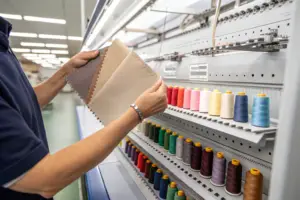
These fibers can be blended with organic cotton, Tencel, or bamboo to create fabrics that balance elasticity with biodegradability.
Are biodegradable fabrics performance-tested?
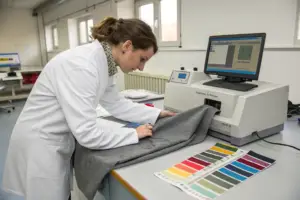
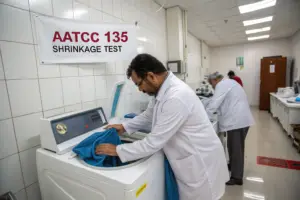
Yes. Biodegradable elastane undergoes testing for tensile strength, recovery, and wash resistance. These evaluations ensure the fabrics meet requirements for categories like activewear, intimates, and children’s clothing.
Certifications That Verify Authenticity
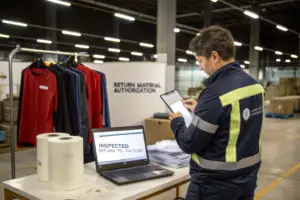
For apparel buyers, certifications are essential when sourcing biodegradable stretch fabrics. They prove compliance with sustainability standards and reduce reputational risk.
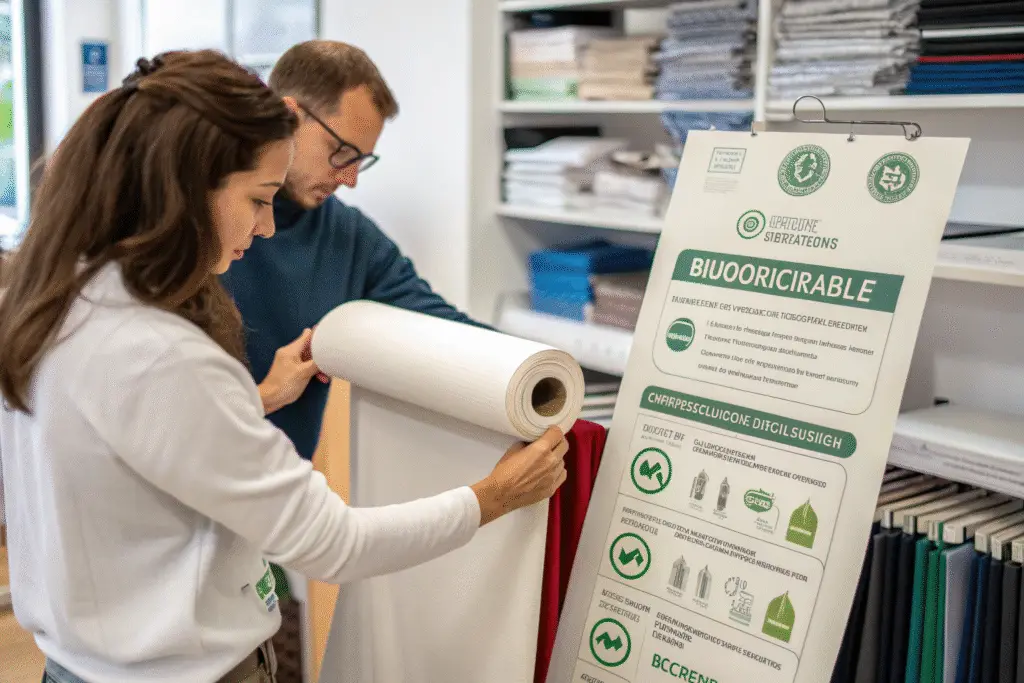
Which certifications matter for biodegradable fabrics?
- Global Organic Textile Standard (GOTS): Ensures organic fiber integration.
- OEKO-TEX Standard 100: Confirms absence of harmful substances. See OEKO-TEX official site.
- Cradle to Cradle (C2C): Validates biodegradability and circularity. Reference: Cradle to Cradle Certified Directory.
- EU Ecolabel: Confirms reduced environmental impact throughout production.
Why do certifications matter for sourcing managers?
Certifications streamline compliance audits, reassure retailers, and strengthen B2B negotiations. Databases such as the Textile Exchange Materials Directory are key tools for identifying certified mills.
Selecting Reliable Suppliers
Because biodegradable elastane and blends are still developing, supplier selection requires close scrutiny of technical capacity and transparency.

Where can buyers source biodegradable stretch fabrics?
- Global trade fairs: Première Vision (Paris), Performance Days (Munich), Intertextile Shanghai.
- Digital sourcing platforms: Material Exchange and Alibaba’s sustainability categories.
- Regional textile hubs: Mills in China, South Korea, and Taiwan are pioneering bio-based stretch solutions.
What factors should sourcing teams evaluate?
- Minimum Order Quantities (MOQs) and lead times.
- Fabric testing reports for biodegradability and stretch performance.
- Supply chain transparency, including raw material origins.
Industry groups like the Taiwan Textile Federation list eco-certified suppliers with export experience.
Managing Supply Chain And Cost Challenges
Biodegradable stretch fabrics offer long-term benefits but present initial cost and logistics considerations.
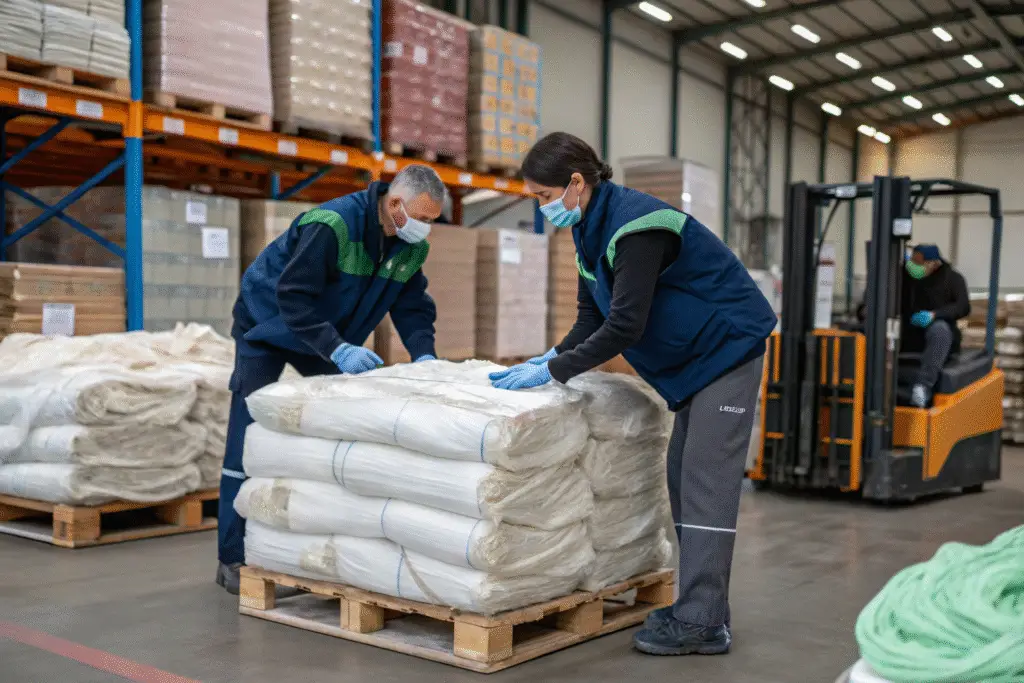
Are biodegradable stretch fabrics more costly?
Yes. Due to limited scale and innovation investments, prices are higher than conventional elastane. However, reports by Fashion for Good show that scaling production reduces costs significantly, narrowing the gap over time.
How can buyers optimize sourcing?
- Secure long-term contracts with certified suppliers to stabilize pricing.
- Blend biodegradable elastane with organic fibers to reduce costs while maintaining sustainability credentials.
- Partner with full-package manufacturers to reduce complexity across sourcing, development, and logistics.
The Global Fashion Agenda provides frameworks for integrating sustainable textiles into commercial sourcing strategies.
Conclusion
Biodegradable stretch fabrics are redefining the future of textiles. For sourcing managers and apparel buyers, they are more than a material choice—they represent compliance readiness, consumer trust, and long-term competitiveness.
At Shanghai Fumao Clothing, we collaborate with certified mills to supply biodegradable and sustainable fabrics for brands worldwide. Our production model emphasizes performance, traceability, and environmental responsibility. To explore how biodegradable stretch fabrics can be integrated into your collection, contact our Business Director Elaine at elaine@fumaoclothing.com.