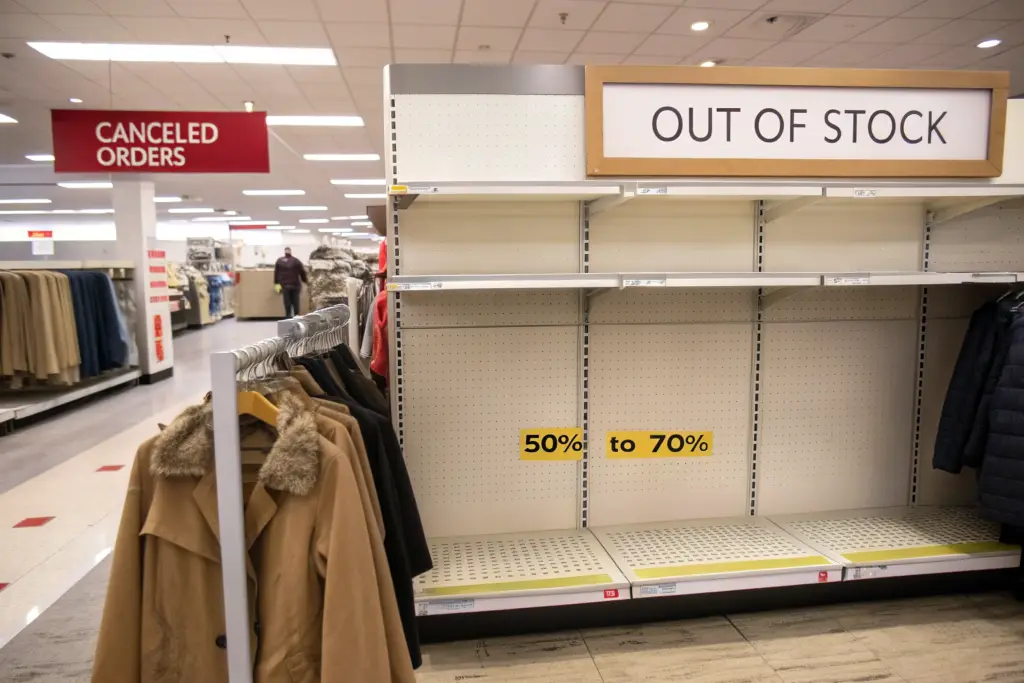
Two summers ago, I received a phone call that I will never forget. A brand owner from Denver had ordered 3,500 units of a lightweight UV-protective duster coat. The design was beautiful. The fabric was innovative. The pre-orders from her wholesale accounts were strong. The factory in China had promised a May 15 ex-factory date. The container was booked for May 20. Then the factory had a power rationing event. The dyeing house was shut down for five days. The ex-factory date slipped to June 5. The vessel sailed on June 10. The container arrived at the Port of Long Beach on June 26. The port was congested. The exam was random. The trucker was unavailable. The coats arrived at her warehouse on July 18. Her wholesale accounts had canceled their orders on June 30. Her e-commerce launch, scheduled for June 1, had gone live with placeholder images and "coming soon" text. The coats that should have sold at $98 full price were liquidated at $34. Her business did not survive the year. This is not a story about a bad product or a bad market. This is a story about a shipment that missed the summer selling season. The gap between a May delivery and a July delivery is not measured in weeks. It is measured in the complete destruction of the planned revenue for the season.
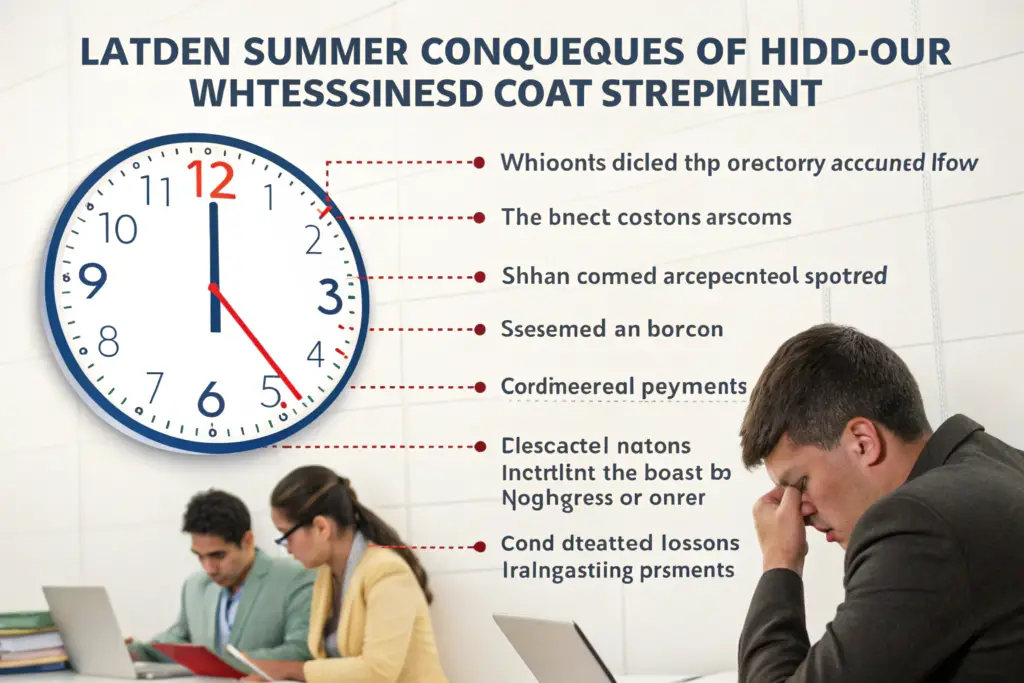
When a summer coat shipment misses the selling season, the financial damage cascades across four fronts. First, wholesale orders are canceled. Department stores and boutiques have strict delivery windows. If the goods are not on their floor by the agreed date, the order is void, and the floor space goes to a competitor. Second, full-price e-commerce sales are lost. The peak online demand for summer outerwear occurs in a tight 8 to 10 week window from late May through early August. Every day the goods are not available is a day of lost full-margin revenue that will never be recovered. Third, the inventory must be liquidated at a deep discount. A summer coat that arrives in late July or August is not a current-season item. It is a clearance item. The markdown is typically 50% to 70% off the intended retail price. Fourth, the brand's reputation with its wholesale accounts and its end customers is damaged. A brand that delivers late once is watched carefully. A brand that delivers late twice is dropped. At Shanghai Fumao, we have seen the financial aftermath of late shipments on our clients' businesses, and we have engineered our production and logistics systems to ensure that our DDP clients do not experience this catastrophe.
The missed selling season is not a theoretical risk. It is the single largest threat to a seasonal apparel brand's survival. Let me walk through the exact financial math, the hidden consequences beyond the immediate revenue loss, and the strategies that can rescue a season that has gone off the rails.
What Is The Exact Financial Impact Of A Late Summer Coat Delivery?
The financial impact of a late delivery is not the loss of the sale. It is the loss of the full-price sale, replaced by a deeply discounted sale, combined with the fixed costs that the brand still must pay regardless of when the goods sell. A coat that arrives on time generates a contribution margin that covers the brand's fixed costs and delivers a profit. A coat that arrives late generates a fraction of that margin, and the fraction is often not enough to cover the fixed costs allocated to that season. The brand loses money on the entire collection even though the coats eventually sell.
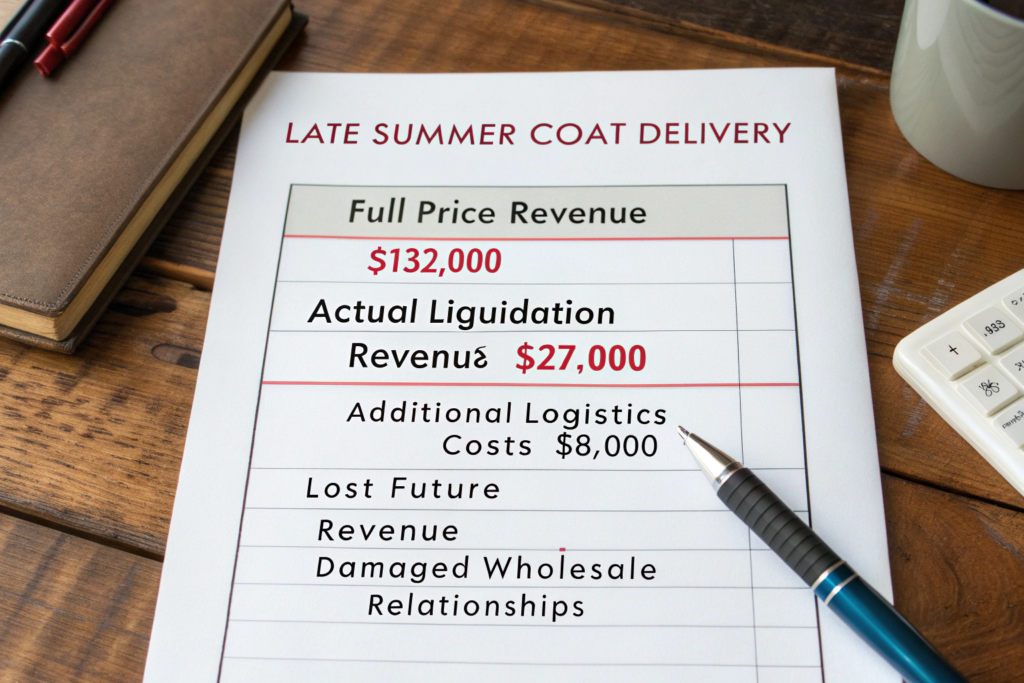
The exact financial impact of a late summer coat delivery can be calculated with a simple formula. The lost profit equals the full-price revenue minus the actual liquidation revenue, minus the additional logistics costs incurred by the delay, minus the lost future revenue from damaged wholesale relationships. For a typical order of 3,000 units with a planned retail price of $88 and a wholesale price of $44, the planned wholesale revenue is $132,000. If the goods arrive four weeks late, 50% of the wholesale orders are canceled. The remaining 1,500 units are sold to off-price channels at $18 per unit, generating $27,000. The lost wholesale revenue is $105,000. The additional logistics costs from the delay, including demurrage, air freight for partial restocks, and expedited handling, are $8,000. The total financial damage is $113,000 on a single order. For many small to mid-sized brands, a loss of this magnitude is not recoverable.
This math assumes the brand has no contractual penalty clauses with the factory. If the brand has a liquidated damages clause for late delivery, the factory compensates a portion of the loss, typically capped at 10% of the FOB value. On a $45,000 FOB order, the maximum compensation is $4,500. This covers 4% of the actual loss. The contract helps, but it does not solve the problem. The only solution is to not be late.
How Do Canceled Wholesale Orders Compound The Revenue Loss?
Wholesale accounts operate on a rigid calendar. A department store has a summer floor-set date, the day the summer merchandise transitions from the back stockroom to the sales floor. The date is set six months in advance. The visual merchandising team has designed the displays. The marketing team has printed the catalog. The buying team has allocated the open-to-buy budget. If your coats are not in the store's receiving dock by the cancellation date, typically 7 to 14 days before the floor-set, the order is canceled. The store fills the floor space with a competitor's product. Your coats, when they eventually arrive, cannot be placed on the floor because the summer floor-set has already been executed and the fall transition is already being planned.
The canceled wholesale order is a permanent revenue loss. The coats that were produced for that order still exist. They still must be sold. But they cannot be sold through the intended channel. The brand must find an alternative channel, and the alternative channel is almost always the off-price market. The off-price market pays 15% to 25% of the original wholesale price. A coat that the brand planned to sell to a boutique for $44 is sold to an off-price liquidator for $11. The revenue per unit drops by 75%. The brand must sell four times as many units to generate the same revenue, but the production quantity is fixed. The math cannot be saved. The canceled wholesale order also damages the brand's relationship with that account. The buyer who allocated budget to the brand and was let down is less likely to allocate budget next season. The buyer's job performance is partially measured by the sell-through of the products they buy. A late delivery that misses the floor-set means the buyer has empty floor space that generates no revenue. The buyer remembers this. The wholesale order cancellation policies are not flexible. The dates are firm. The brands that meet the dates build trust. The brands that miss the dates lose shelf space and the relationships that fill it.
What Is The True Cost Of Markdowns On A Late Summer Collection?
Markdowns are the visible cost of a late shipment. The coats arrive in August instead of May. The summer season is ending. The consumer is thinking about back-to-school, not summer vacations. The demand for lightweight outerwear has collapsed. The brand has two choices: hold the inventory until next summer, which incurs a year of carrying costs and the risk that the style is no longer on-trend, or liquidate the inventory now at whatever price the market will bear. Most brands choose liquidation because their cash flow cannot support holding inventory for a year.
The markdown math is brutal. A coat with a planned retail price of $98 and a wholesale price of $49, sold at full price through the intended channels, generates a gross margin of approximately 60% after deducting the landed cost and the selling costs. The same coat, sold through an off-price channel at $19.99, generates a gross margin that may not cover the landed cost. The brand loses money on every unit sold. If the brand also sold a portion of the collection at full price before the late shipment arrived, the late shipment also damages the full-price sales by flooding the market with the same product at a fraction of the price. The customers who paid full price in June see the same coat on a discount rack in August for $19.99. They feel cheated. They lose trust in the brand's pricing integrity. The markdown damage extends beyond the late units. It contaminates the brand equity for the units that sold on time. The retail markdown strategy and financial impact is a well-studied phenomenon. Late goods are markdown goods. Markdown goods damage the brand's price perception. The cost of a late shipment is not just the lost margin on the late units. It is the erosion of the full-price positioning that the brand has spent years building.
What Are The Hidden Consequences Beyond The Immediate Financial Loss?
The financial loss is the visible part of the iceberg. The hidden part is larger and more dangerous. A late shipment damages relationships, consumes management attention, and creates internal chaos that distracts the brand from its next season's development. The brand owner who spent June and July fighting fires caused by a late shipment did not spend June and July designing the fall collection or selling the spring collection to new accounts. The opportunity cost of the management distraction is real, even though it does not appear on a profit and loss statement.
The hidden consequences of a late summer coat shipment include the loss of the brand's credibility with its wholesale accounts, the internal team burnout from crisis management, the missed development cycle for the next season, and the cash flow crunch that delays or cancels the next production order. A brand that ships late in the summer season is often late paying its factory balance, which damages the factory relationship and reduces the brand's negotiating leverage for the next order. The factory may demand a higher deposit, a shorter payment term, or a premium price to compensate for the perceived risk. The late shipment does not just hurt one season. It cascades into the next season by consuming the time, money, and relationships that the next season needs to succeed.
The hidden consequences are harder to quantify than the markdown cost, but they are often more damaging to the brand's long-term survival. A brand can recover from one season of bad margins. It is harder to recover from a reputation for unreliability.
How Does A Missed Season Damage The Brand's Relationship With Its Factory?
The brand-factory relationship is a two-way street. The brand depends on the factory for quality production and on-time delivery. The factory depends on the brand for consistent orders and on-time payments. A late shipment strains this relationship from both directions. The brand blames the factory for the delay. The factory may or may not accept responsibility, depending on the cause of the delay. If the delay was caused by the brand's late sample approval or the brand's late fabric payment, the factory rightly deflects the blame. If the delay was caused by the factory's overbooking or mismanagement, the brand rightly demands compensation. In either case, the trust is damaged.
The financial consequence for the brand is that the factory will adjust its terms for the next order. A brand that is perceived as high-risk will be asked to pay a larger deposit, 50% instead of 30%. The brand will be asked to pay the balance before shipment, not after. The brand will not be given priority access to the factory's production slots during the peak season. The brand will be slotted into the gaps between the factory's preferred clients. This secondary status increases the probability of another late shipment next season, creating a vicious cycle. The factory may also decline to hold greige inventory for the brand or to offer the flexible split shipment options that the brand needs to manage its inventory risk. The brand that was a valued partner becomes a transactional customer. The transactional customer pays more and gets less. The supplier relationship management after delivery failures requires careful communication and a fair allocation of responsibility. The brands that handle a late shipment professionally, by acknowledging their own role in the delay, negotiating a fair compensation, and committing to a process improvement for the next season, can repair the relationship. The brands that react with anger and blame, without examining their own contribution to the delay, lose the factory's goodwill and the factory's best effort.
Why Does The Next Season's Development Suffer After A Summer Logistics Crisis?
The fashion calendar does not pause for a logistics crisis. While the brand owner is managing the late summer shipment, the fall development calendar is running. The fall fabric needs to be sourced. The fall samples need to be approved. The fall wholesale line sheet needs to be finalized. These tasks require focused, creative attention. They cannot be done well in the margins of a logistics emergency.
A brand owner who spends June chasing a late container, negotiating with an off-price liquidator, and apologizing to canceled wholesale accounts is not spending June refining the fall collection. The fall designs are rushed. The fabric choices are made without proper sampling. The fit sessions are compressed. The resulting fall collection is weaker than it would have been if the brand owner had been fully present. The weaker fall collection generates lower sales, compounding the financial damage of the late summer shipment. The cycle of crisis extends into the next season. The brand is perpetually catching up, never getting ahead. The solution to this cycle is to prevent the summer logistics crisis from occurring in the first place, through the timing and shipping strategies discussed in previous articles. A brand that ships DDP with a reliable factory does not experience the summer logistics crisis. The brand owner spends June designing the fall collection, not chasing a container. The fashion product development calendar management is a discipline that successful brands protect fiercely. A late shipment does not just steal the current season's profit. It steals the next season's creative energy.
What Are The Options For Recovering Value From A Late Shipment?
When the coats arrive late, the brand is in salvage mode. The ideal selling window has passed. The wholesale orders are canceled. The e-commerce demand has peaked. The brand must now extract as much value as possible from the inventory while minimizing the damage to the brand's long-term positioning. There are no good options in salvage mode. There are only less-bad options. The choice among them depends on the brand's cash position, its storage capacity, and its tolerance for brand equity dilution.
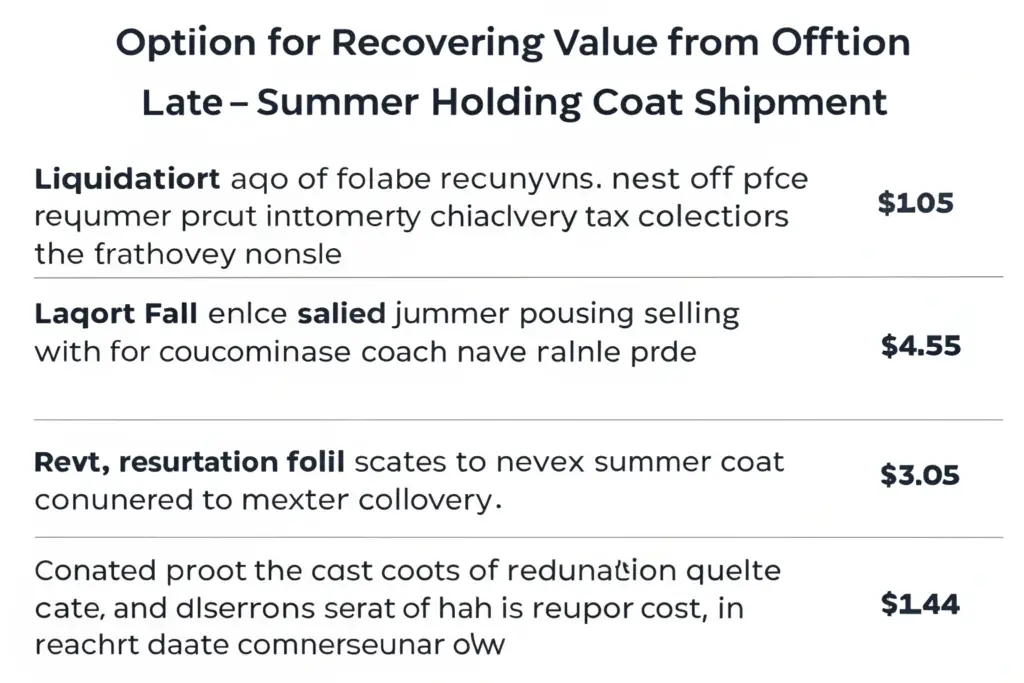
The options for recovering value from a late summer coat shipment are liquidation to off-price channels, holding the inventory for next summer, repurposing the coats as a "resort" or "early fall" collection, selling directly to consumers through flash sale platforms, or donating the inventory for a tax deduction. Each option has a different financial recovery rate and a different impact on the brand's market positioning. Liquidation to off-price channels recovers 15% to 25% of the wholesale value immediately but damages the brand's full-price image. Holding for next summer preserves the potential for full-price sales a year later but incurs storage costs and the risk of style obsolescence. Repurposing as an early fall collection requires marketing investment to reposition the product but can recover 40% to 60% of the value if the brand has the marketing capability to create a new narrative. At Shanghai Fumao, we have helped clients navigate this salvage process by providing storage in our warehouse, facilitating direct-to-consumer fulfillment from China, and adjusting the next season's production to avoid compounding the inventory problem.
The salvage decision should be made quickly. The inventory loses value every day it sits unsold. A decisive, well-executed salvage plan recovers more value than a slow, indecisive one.
When Does It Make Sense To Hold Late Inventory For Next Summer?
Holding late inventory for the next summer season is a bet on the style's longevity. The bet only makes sense for styles that are classic, not trend-driven. A basic linen blazer in a neutral color can be held for next summer with minimal risk of obsolescence. A neon green cropped jacket with a TikTok-driven trend cycle will be dead stock next summer regardless of when it arrives. The decision to hold inventory is also a cash flow decision. The coats have already been paid for. The cash is gone. Holding the coats does not recover the cash. It defers the hope of recovery into the future. The brand must have the cash reserves to survive without the revenue from these coats for an entire year.
The financial calculation compares the net recovery from holding to the net recovery from liquidating. Holding for next summer incurs storage costs. If the coats are stored at a US 3PL, the cost is $0.50 to $1.50 per cubic foot per month. For 3,000 coats occupying 2,000 cubic feet, the annual storage cost is $12,000 to $36,000. There is also a cost of capital for the cash tied up in the inventory. If the landed cost of the coats is $45,000 and the brand's cost of capital is 8%, the carrying cost is $3,600 per year. The total holding cost is $15,600 to $39,600. Next summer, the coats can be sold at full price, generating the planned wholesale revenue of $132,000. The net recovery after holding costs is $92,400 to $116,400. The liquidation option generates $27,000 immediately with no holding costs. The holding option generates $92,400 to $116,400 a year later. The difference is $65,400 to $89,400 in favor of holding, minus the time value of money. The holding option is financially superior if the styles are classic, the storage cost is manageable, and the brand has the cash to survive the year without the revenue. The inventory holding cost vs liquidation analysis is a standard financial exercise. The brands that make this decision rationally, based on the numbers, recover more value than the brands that make it emotionally, based on the desire to avoid the pain of liquidation.
Can You Rebrand A Late Summer Shipment As A "Resort" Or "Pre-Fall" Collection?
The fashion calendar has become fluid. The rigid boundaries between summer, resort, pre-fall, and fall have blurred. A lightweight summer coat that arrives in August can be repositioned as a "resort" or "transitional" piece, provided the marketing supports the repositioning. A resort collection is traditionally designed for warm-weather vacations in December through March. A pre-fall collection bridges the gap between summer and fall, arriving in stores in July and August. A summer coat that is late can slot into either of these windows if the brand has the marketing agility to create a new context for the product.
The rebranding strategy works best when the product is inherently transitional. A lightweight trench coat in a neutral color works in summer, in the fall transition, and as a spring layering piece. A tropical-print kimono jacket does not work in September, no matter how it is marketed. The rebranding also requires a marketing investment. The brand must photograph the coats in a new context, update the e-commerce copy, pitch the collection to a different set of wholesale accounts, and possibly adjust the pricing to reflect the new positioning. The marketing investment reduces the net recovery from the rebranding, but it may be the difference between selling the coats at a modest discount versus liquidating them at a deep discount. A coat that would sell for $19.99 at a liquidator might sell for $49.99 as part of a "pre-fall transitional layering" collection. The incremental revenue of $30 per unit, on 3,000 units, is $90,000. The marketing investment to reposition the collection might be $15,000. The net gain is $75,000. The seasonal inventory repositioning strategies require a brand that is nimble, creative, and willing to invest in creating a new story for the product. The brands that can do this effectively recover significantly more value than the brands that simply dump the inventory into the off-price market.
How Can A Reliable DDP Partnership Prevent This Entire Scenario?
The late shipment scenario I have described is preventable. The root cause of almost every late summer shipment is a failure in the supply chain coordination. The factory overbooked its capacity. The freight forwarder missed the booking window. The customs broker filed the entry late. The brand did not understand the Chinese New Year calendar. These failures are failures of the FOB model, where the brand is the coordinator of a fragmented chain of independent entities. The brand is responsible for the outcome but has no authority over the individual links in the chain.
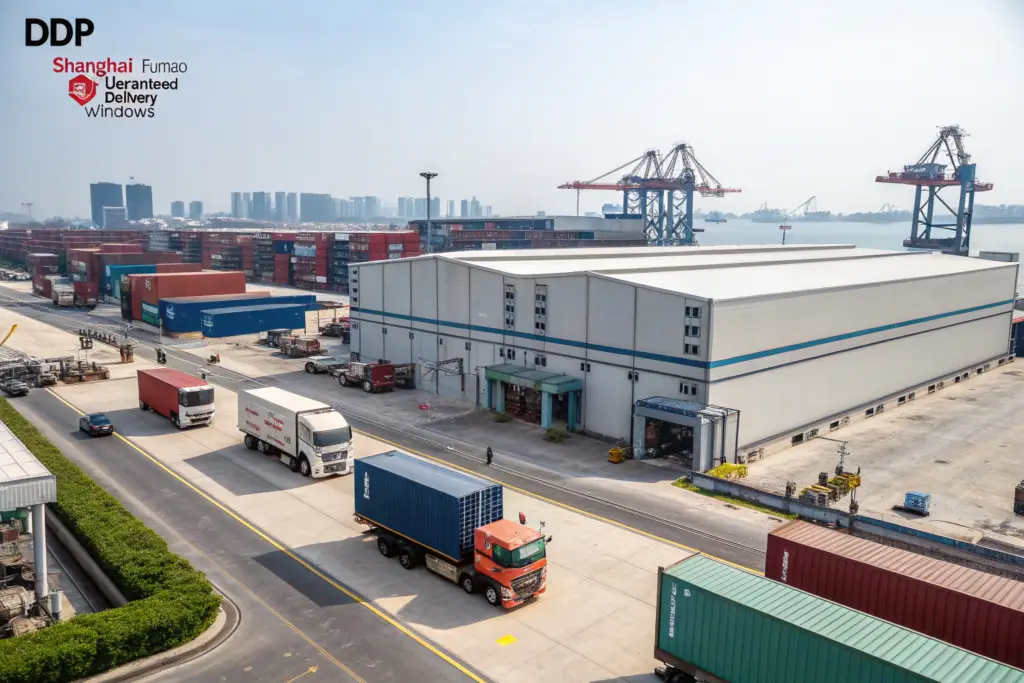
A reliable DDP partnership prevents the missed selling season by consolidating the entire supply chain under a single accountable entity. The factory that produces the coats also manages the freight, the customs clearance, the duty payment, and the delivery to the brand's warehouse. There is no gap in responsibility where delays can hide. If the goods are late, the factory is responsible. There is no forwarder to blame, no broker to blame, no port terminal to blame. The factory is the single point of accountability. At Shanghai Fumao, our DDP model includes a guaranteed delivery window that we commit to in writing before the order is placed. We build the production calendar backwards from the brand's required delivery date. We allocate the production capacity and the freight capacity before we accept the order. We do not accept orders that we cannot deliver on time because a late DDP shipment costs us money, not just the brand. Our financial incentive is perfectly aligned with the brand's need for on-time delivery.
The DDP model does not make the supply chain immune to disruptions. Power rationing, port strikes, and canal blockages still happen. But the DDP model ensures that when a disruption occurs, the party responsible for managing it is the party with the expertise, the relationships, and the financial incentive to resolve it quickly. The brand is not the logistics expert. The brand should not be the logistics expert. The brand's job is to design, market, and sell beautiful summer coats. The factory's job is to make them and get them to the brand's customers on time. DDP aligns the responsibilities with the capabilities.
What Is A Guaranteed Delivery Window And How Does It Work In A DDP Contract?
A guaranteed delivery window is a contractual commitment by the factory to deliver the goods to the brand's named destination by a specific date or within a specific date range. It is not a target. It is not an estimate. It is a promise with consequences for failure. The guaranteed delivery window is the defining feature of a professional DDP partnership.
The guaranteed delivery window is specified in the purchase agreement. It states the location of delivery, usually the brand's warehouse or 3PL address, and the date by which the goods will arrive. A typical clause reads: "The Supplier guarantees delivery of the Goods to the Buyer's warehouse at 123 Main Street, Dallas, TX, on or before June 15, 2026. Delivery is defined as the Goods being unloaded and available for the Buyer's inspection at the named location." If the goods arrive after June 15, the factory is in breach of the delivery guarantee. The purchase agreement includes the remedy for breach, typically a liquidated damages clause as discussed in a previous article. The liquidated damages are a pre-agreed daily penalty for each day of delay, usually 0.5% to 1% of the FOB value, capped at 10% to 15%. The guaranteed delivery window gives the brand the certainty to plan its wholesale launch, its e-commerce go-live date, and its marketing campaign. The brand can book a photoshoot, schedule a warehouse receiving team, and commit to wholesale delivery dates with confidence. The delivery guarantee in supply contracts is the mechanism that converts the DDP model from a hope into a commitment.
How Does The Factory's Financial Incentive Shift Under A DDP Late-Delivery Penalty?
Under FOB, the factory is paid when the goods leave the factory gate. The factory's financial interest in the shipment ends at that moment. If the container is delayed at the port, if the customs exam takes two weeks, if the trucker is unavailable, the factory has already been paid. The factory may offer sympathy, but the factory's money is not at risk. The brand bears the full financial consequence of the post-factory delays.
Under DDP, the factory is paid when the goods arrive at the brand's warehouse. The factory's financial interest extends through the entire logistics chain. Every day the goods are delayed is a day the factory has not been paid and a day the factory is accruing liquidated damages liability. This incentive shift changes the factory's behavior in three specific ways. First, the factory selects forwarders and brokers based on reliability, not just price. A cheap forwarder that misses the booking window costs the factory more in liquidated damages than it saves in freight. Second, the factory proactively monitors the shipment. The factory's logistics team tracks the vessel, communicates with the broker, and intervenes immediately if a delay is detected. The factory does not wait for the brand to report a problem. Third, the factory invests in capacity reserves. A factory that knows it will pay a penalty for late delivery does not overbook its production lines. It maintains a capacity buffer to absorb disruptions. It orders fabric early to avoid mill delays. It manages its workforce to avoid post-Chinese New Year shortages. The DDP penalty clause transforms the factory's risk management calculus. The factory's behavior aligns with the brand's need for on-time delivery because the factory's money is on the line. The supplier performance incentives in logistics research confirms that penalties tied to delivery performance are the most effective tool for improving on-time delivery rates.
Conclusion
A summer coat shipment that misses the selling season is not a minor operational hiccup. It is a business catastrophe. The wholesale orders are canceled. The full-price e-commerce window closes. The inventory is liquidated at a fraction of its value. The brand's reputation with its retail partners is damaged. The management team is consumed by the crisis and neglects the next season's development. The cash flow is disrupted, straining the relationship with the factory. The financial loss on a single late shipment can exceed the profit of the entire season.
This catastrophe is preventable. It is prevented by a supply chain that is designed for reliability, not just for cost. It is prevented by a factory relationship that aligns incentives through the DDP model, where the factory is responsible for the entire logistics chain and pays a penalty if the goods are late. It is prevented by a production calendar that is built backwards from the must-have delivery date, with realistic buffers for the known bottlenecks. It is prevented by a shipping strategy that avoids the peak season congestion, either by shipping early and storing or by using a split shipment with air restock capability. The brands that experience a missed selling season are not unlucky. They are underprepared.
At Shanghai Fumao, we have structured our entire business around the prevention of this catastrophe for our brand partners. We ship DDP with a guaranteed delivery window. We build production calendars that account for the Chinese New Year, the mill lead times, and the ocean freight seasonality. We maintain a continuous customs bond and a dedicated US broker who pre-clears our shipments. We offer the greige reserve and split shipment options that give our clients inventory flexibility when demand patterns shift. We do this because we have seen what happens when a summer coat shipment misses the season, and we are not willing to let it happen to our clients.
If you have experienced a late shipment that damaged your season, or if you are planning your next summer collection and want to ensure it arrives on time, contact our Business Director, Elaine, at elaine@fumaoclothing.com. Tell her your target warehouse delivery date. She will send you a production calendar and a DDP quote with a guaranteed delivery window. Because your summer coats deserve to be on the selling floor when the customers are ready to buy them, not on a liquidation rack when the season is over.