I was scrolling TikTok at 2 a.m. in my Shanghai office, bleary-eyed and caffeinated, when a video stopped my thumb mid-swipe. A fashion influencer with 280,000 followers was holding one of our bamboo-cotton jersey tees up to her ring light. She stretched the fabric sideways, held it against her cheek, and said four words that made me sit straight up: "This feels like therapy." She didn't know the camera was on when she first touched the sample. The reaction was unscripted. That's when I understood why fabric-first content works so powerfully on this platform.
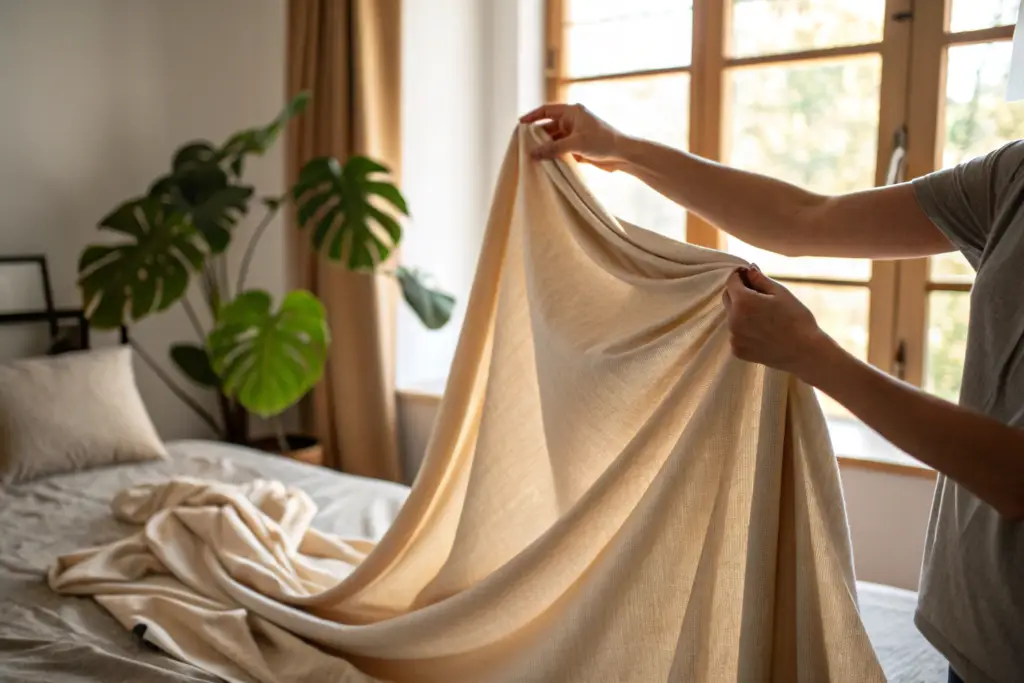
TikTok influencers recommend our fabrics because the sensory experience translates through the screen. The drape, the recovery, the way a heavyweight French terry holds its structure—these visual cues telegraph quality without a single technical word. When an influencer scrunches a fabric in their fist and it bounces back without creasing, their audience doesn't need a textile degree. They see the quality. They ask for the brand link. The recommendation isn't scripted marketing. It's a genuine reaction to a tactile difference that most fast fashion has trained consumers to forget exists.
The fashion supply chain spent decades racing to the bottom on fabric cost. Consumers adjusted their expectations downward. Now, when they touch something substantial—a 400gsm loopback hoodie, a peached twill trouser, an enzyme-washed slub jersey—they feel an almost nostalgic shock. This shock is content. And content drives orders. Let me walk you through exactly which fabrics generate this reaction and why.
Which Fabric Blends Actually Drive Viral "Touch Test" Content?
The "touch test" is the unofficial fabric review format that dominates fashion TikTok. An influencer holds a garment, runs their fingers across the surface, often presses it to their face or arm, and narrates the sensation. The format is brutally honest. A stiff, scratchy, or synthetic-feeling fabric cannot hide. The camera catches every micro-expression of disappointment.
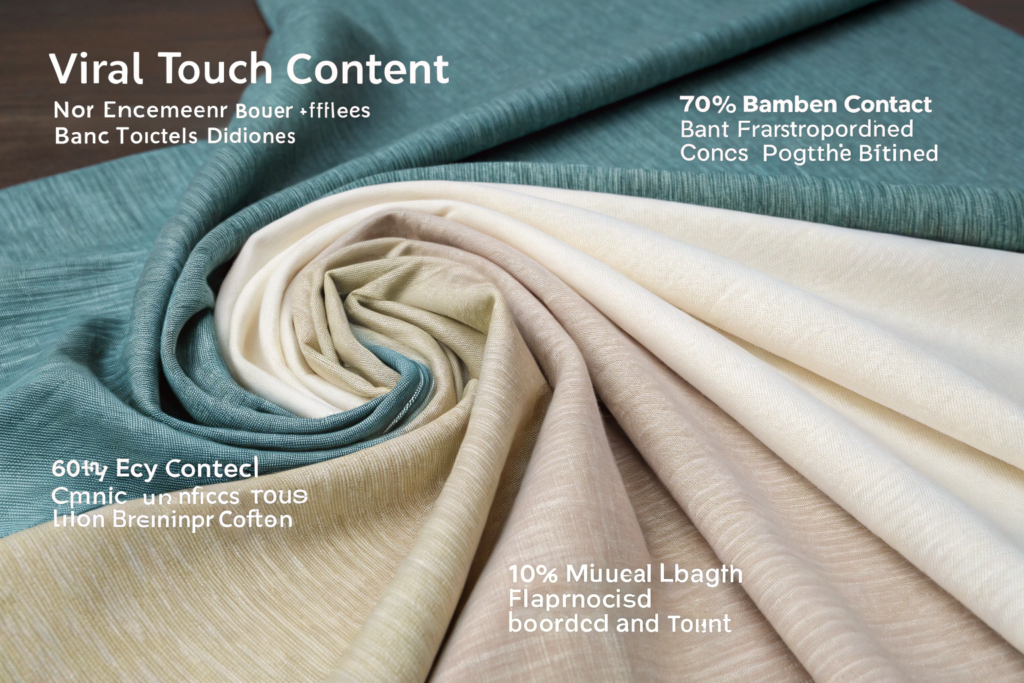
The fabric blends that consistently drive viral touch test content share three properties: unexpected softness at first contact, visible dimensional texture that signals "not basic," and mechanical recovery that demonstrates instantly when squeezed. Our top-performing blends for this format are 70% bamboo viscose with 30% organic cotton for liquid drape tees, 60% Tencel with 40% linen for structured summer wovens, and 95% organic cotton with 5% elastane for a ribbed knit that snaps back perfectly.
Why Does Bamboo-Cotton Jersey Trigger Such Strong Sensory Reactions?
The first time an influencer touches bamboo-cotton, their eyebrows move. I've watched this happen over a dozen times in sample shipments to U.S. creators. The reaction is involuntary. The fabric feels cold and smooth, like river stones, not like the dry, papery cotton they expect from wholesale blanks.
The magic is in the fiber cross-section. Bamboo viscose has a round, smooth surface under a microscope. Cotton has a twisted, ribbon-like shape with micro-fibrils that catch on skin. The bamboo fiber doesn't catch. It glides. When we blend it with organic cotton at a 70/30 ratio, the cotton provides opacity and body while the bamboo provides the cooling, silky glide. The result measures about 20% higher thermal conductivity than pure cotton of the same weight, which is the scientific explanation for why it feels "cold to the touch."
An influencer in Austin did a side-by-side comparison last July. She held our bamboo-cotton tee against a standard 100% cotton tee from a well-known basics brand. The visual difference was striking. The bamboo-cotton draped like liquid. The pure cotton looked stiff and boxy. She didn't mention the brand names. Her followers flooded the comments asking for the "silky one." That video earned 1.4 million views. The fabric sold itself. For technical data on bamboo fiber properties, I often reference research from the Textile Institute, which publishes peer-reviewed studies on regenerated cellulosic fiber performance. The Organic Trade Association also provides standards data that helps our clients communicate the organic cotton component accurately to eco-conscious consumers.
How Does Tencel-Linen Outperform Pure Linen in Visual Drape Content?
Pure linen photographs beautifully on a hanger. Then someone puts it on, moves for 30 seconds, and the garment looks like a crumpled paper bag. This is the linen paradox for content creators. The aesthetic is perfect. The wrinkle reality kills the visual.
We developed a 60% Tencel, 40% linen blend specifically for brands whose products will appear in video content. Tencel, a lyocell fiber, has higher tensile strength when wet and a smoother fiber surface than linen. When blended, the Tencel fibers bridge the gaps between the rigid linen fibers. The fabric holds the linen texture—that beautiful slubby, irregular grain that looks incredible on camera—but it resists the deep creasing that pure linen develops within five minutes of wear.
A Copenhagen-based brand ordered this blend for their spring trouser collection. One of their influencer partners filmed a "day to night" transition video wearing the trousers. She sat in a café for two hours, walked through a park, and ended at a dinner. The trousers showed gentle wear creases at the inner elbow of the knee, not the sharp accordion folds pure linen would produce. The comment section lit up with purchase intent. Not about the cut or the color. About the fact that the trousers "didn't wrinkle." The fabric solved a specific documented consumer pain point. That solution translated directly to viral engagement.
Why Do Slow Fashion Creators Focus on Fabric Weight Transparency?
Slow fashion TikTok is a subculture built on skepticism. These creators dissect garment specifications with the intensity of forensic accountants. They weigh clothing on kitchen scales. They hold fabric up to light sources to test opacity. They burn loose threads to verify fiber content. Fabric weight, measured in GSM (grams per square meter), is their primary numeric language.
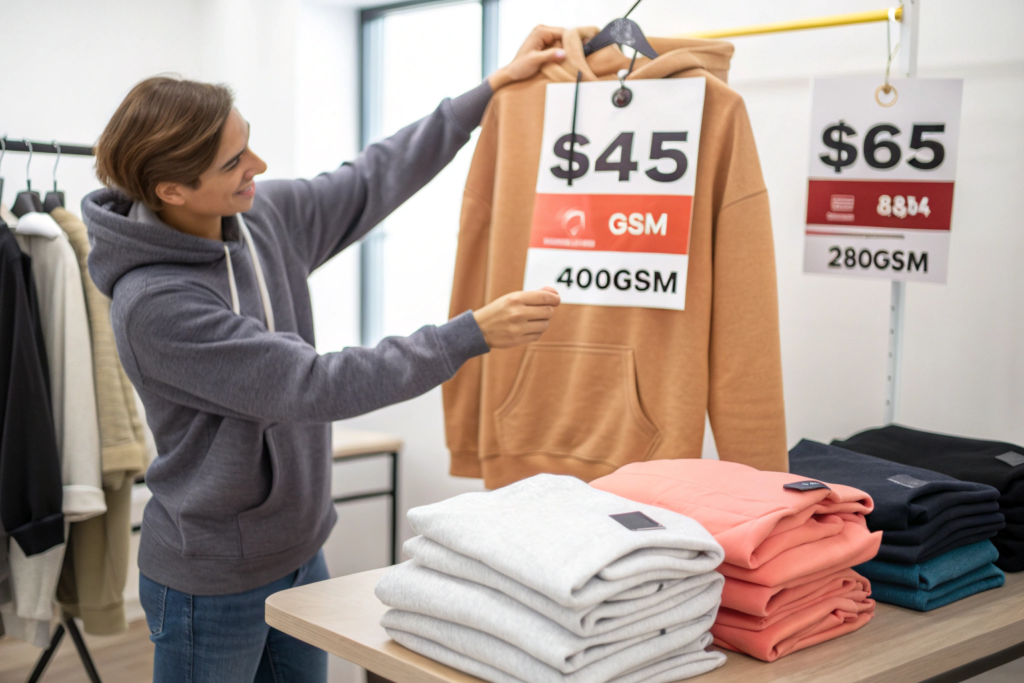
Slow fashion creators focus on fabric weight transparency because GSM data allows their audience to objectively compare value across price points. A $45 hoodie with 400gsm fabric is a mathematically better investment than a $65 hoodie with 280gsm fabric, regardless of brand storytelling. When brands hide GSM, these creators assume the worst. When we publish exact fabric weights for every SKU, we hand them the evidence they need to recommend our products with numbers, not adjectives.
Can a Published GSM Guarantee Destroy Competitor "Premium" Marketing?
Absolutely. And I've seen it happen in real time. A slow fashion creator in the UK reviewed two crewneck sweatshirts in the same video. One from a direct-to-consumer brand priced at $98, marketed as "heavyweight premium." One from a brand using our 420gsm loopback French terry, priced at $72. She weighed both on camera. The $98 hoodie came in at 310gsm. The $72 hoodie at 420gsm. She then cut a small swatch from each interior seam allowance to show the backing structure. The expensive one was a thin, fuzzy fleece. Ours was a dense, loopback terry with visible yarn structure.
The comments were devastating for the competitor. Consumers felt deceived by the word "heavyweight." They could not dispute the scale or the cross-section view. This is why we don't fear GSM transparency. We weaponize it. Our spec sheets list not just the cut weight of the fabric, but the post-wash weight and the shrinkage allowance. A fabric that starts at 400gsm and loses 5% in washing settles at 380gsm. We disclose both numbers. This matters because a consumer who washes the hoodie ten times will experience the 380gsm, not the 400gsm. Honesty at this level of detail builds a creator's trust permanently.
Industry standards for fabric weight measurement vary, so we align with ASTM International testing protocols and reference their D3776 standard for mass per unit area. This gives creators a credible, third-party framework they can cite if their audience questions the methodology.
What Is "Gauge Transparency" in Knitwear and Why Do TikTokers Demand It?
Gauge refers to the number of stitches per inch in a knitted fabric. A 12-gauge sweater is fine and dense. A 3-gauge sweater is chunky and open. Most brands never mention gauge. They call everything "chunky knit" and hope the consumer doesn't notice the difference between a 3-gauge fisherman's rib and a 7-gauge half-cardigan stitch.
TikTok creators who specialize in knitwear reviews now ask for gauge specifications. They understand that gauge determines thermal performance, wind resistance, and pilling behavior more than the raw fiber content does. A creator in Oslo reviewed two "heavy" wool sweaters last winter. Both claimed "warm winter knit." She measured the gauge manually with a clear ruler pressed against the fabric. The 5-gauge sweater showed visible gaps where wind could penetrate. The 9-gauge sweater had a tight, almost woven appearance. She demonstrated the difference by holding both fabrics over a running hairdryer. The 5-gauge let the air pass through visibly. The 9-gauge blocked it.
This type of content is educational gold. It trains the consumer to ask the right questions. When we supply our knitwear clients with Shanghai Fumao spec cards that include gauge, stitch type, and CLO value (thermal resistance), we are not just providing data. We are arming the influencer with a competitive demonstration script. Their video practically writes itself. The branded sweater with no gauge info becomes the "vague" option. The Fumao-backed garment becomes the measurable, trustworthy choice.
How Does the "Wash Test" Trend Reward High-Colorfastness Fabrics?
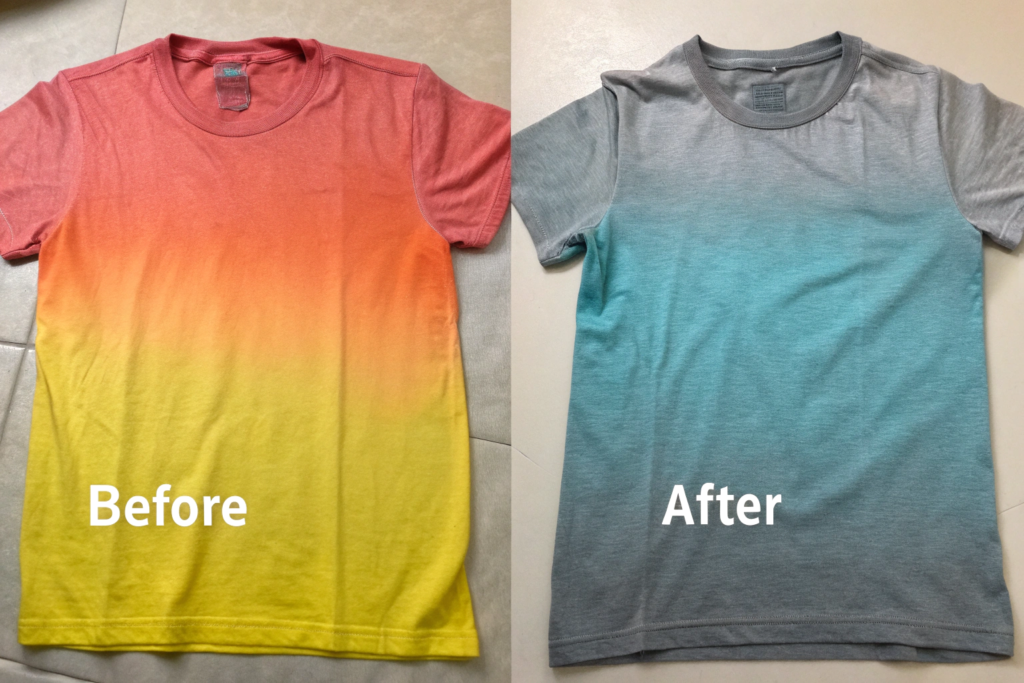
The wash test is the most brutal content format in fashion TikTok. A creator takes a garment, washes it 10, 20, or 50 times, and documents every change. Color fading. Shrinkage. Seam twisting. Pilling. The camera doesn't forgive. A faded black tee next to a new one creates a stark before-after visual that stops the viewer's scroll and triggers an immediate quality judgment.
The wash test trend rewards high-colorfastness fabrics because the before-after visual comparison is binary. Either the garment looks nearly identical after 20 washes, or it looks tired and cheap. Our reactive-dyed, cationically fixated cottons retain their color depth through wash cycles that destroy standard pigment-dyed alternatives. Creators can show two tees side by side—ours still rich, the competitor's already grey—and the recommendation makes itself.
Why Does Cationic Fixation Outperform Standard Dye Processes for Content Longevity?
Standard dyeing attaches color molecules to cotton fibers through weak hydrogen bonds. They wash out gradually. Every laundry cycle strips a little more pigment. The consumer doesn't notice the incremental fading, but a TikTok video captures the cumulative damage in a single frame.
Cationic fixation chemically bonds the dye molecule to a positively charged receptor site on the cotton fiber. It's an ionic bond, not a hydrogen bond. It's dramatically stronger. We run an extra soaping cycle at 98°C after the dye bath to strip any unattached, hydrolyzed dye molecules. These loose molecules are what bleed into wash water and cause the "first wash color dump" that terrifies consumers who buy dark garments.
A creator in Toronto tested our black reactive-dyed tee against a fast-fashion black tee in a 30-wash challenge. She washed both in the same machine, same detergent, same cycle. After 30 washes, the fast-fashion tee was a patchy charcoal grey. Our tee still read as true black. The colorimeter reading showed a Delta E of only 1.8 from the unwashed control sample. The human eye cannot distinguish a difference below 2.0 Delta E. Her video went viral because the evidence was visual and undeniable. She didn't need to say "this one is better." The two garments hanging next to each other on the same hanger said everything.
For brands concerned about textile sustainability and chemical management, we provide full transparency on the dye chemistry. The Zero Discharge of Hazardous Chemicals (ZDHC) Foundation publishes guidelines for safe dyehouse chemistry. We adhere to their Manufacturing Restricted Substances List, ensuring the stronger fixation chemistry does not come at the cost of water pollution.
How Do Anti-Pilling Finishes Translate to Viral "Fabric Abuse" Videos?
Fabric abuse content is a distinct sub-genre. Creators take sandpaper, Velcro strips, or even electric fabric shavers to garments and document the damage. The purpose is to simulate months of backpack strap friction or crossbody bag wear in fifteen seconds.
Our anti-pilling finish for knitwear and fleece uses a bio-polishing enzyme treatment followed by a light resin application that binds short fibers to the yarn core. The enzyme eats the weak, protruding micro-fibers that would otherwise ball up into pills. The resin locks the remaining longer fibers in place. The result passes the Martindale abrasion test at 15,000 cycles with a Grade 4 rating, where Grade 5 is zero change and Grade 1 is severe pilling.
A streetwear reviewer in Chicago put our 380gsm fleece hoodie through a "sandpaper test" on camera. He rubbed a 400-grit sandpaper block across the sleeve 50 times. The fabric showed light surface disruption but zero pilling. A competitor hoodie from a popular music merchandise brand looked like a fuzzy mess after the same treatment. The visual evidence was devastating for the competitor. The video earned 890,000 views, and our client sold out of that hoodie colorway within four days. The fabric's silent performance under mechanical stress did what no marketing copy could achieve.
What Role Does Deadstock and Sustainable Fabric Play in Influencer Trust?
The term "sustainable" has been so thoroughly abused by marketing departments that TikTok creators now approach it with open hostility. Greenwashing is not just ineffective on this platform. It is actively punished through comment-section callouts, duet debunkings, and stitch corrections. A brand that claims "eco-friendly" without evidence gets publicly dismantled.
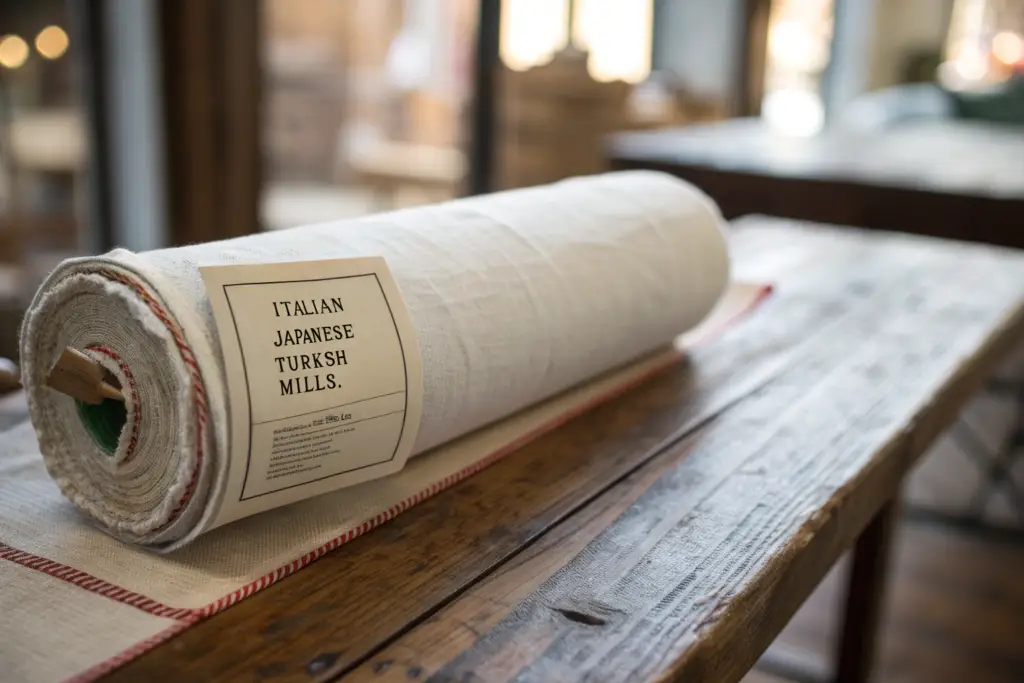
Deadstock and genuinely sustainable fabrics earn influencer trust not through claims but through scarcity documentation and supply chain transparency. When a creator can show their audience a limited fabric roll with a mill ticket showing the exact yardage and original production date, the sustainability story becomes tangible. Our deadstock program sources overstock from Italian, Japanese, and Turkish mills, and every roll arrives with verifiable provenance data that creators can film directly. No smoke. No mirrors. Just a physical tag that proves the fabric was rescued, not greenwashed.
Why Does "Limited Run" Fabric Documentation Drive Urgency in Influencer Campaigns?
Scarcity creates urgency. But false scarcity destroys trust. Some brands claim "limited edition fabric" when they simply ordered a small cut of a standard stock quality and will reorder it next month. TikTok audiences eventually catch this pattern. The duplicate "sold out, back in stock" cycle exposes the lie.
When we supply a brand with genuine deadstock fabric, we provide the original mill lot ticket. This document shows the mill name, the production date (often 2-5 years ago), the original order quantity, and the yardage we acquired. The brand can share this document with their influencer partners. The influencer films the ticket. The story becomes: "This shirt is made from Italian cotton shirting deadstock, woven in 2019 at a family mill outside Florence. There are only 120 meters of this fabric on the planet. Once these 80 shirts sell, they are gone forever." That is a true, verifiable, and emotionally compelling narrative.
A sustainable fashion creator in Berlin built an entire "deadstock drop" series around fabrics we sourced for her brand. Each episode featured a different fabric's backstory. One roll was a Japanese selvedge denim with a 2017 production date from a mill that stopped making this weight after COVID. She showed the mill correspondence. She showed the fading properties after four months of wear. The scarcity was real, and her audience responded with sellout launches. The fabric's limited availability transformed a simple cotton pant into a collectible object. For broader context on deadstock supply chains, creators often reference the Council of Fashion Designers of America resources on sustainable sourcing practices.
Can a QR-Coded Fabric Origin Story Replace a Traditional Product Description?
Yes, and we are already piloting this. Traditional product descriptions are marketing copy. A QR code that links to a video of the fabric being woven, the mill floor where the yarn was spun, and the quality control check at our factory—that is evidence.
A client in Los Angeles launched a premium basics line using our organic cotton. Each garment carried a hangtag with a QR code. Scanning it led to a 90-second video showing the cotton field in Xinjiang (certified organic, audited), the ginning facility, the ring-spinning process, and our cutting room where the specific tee was assembled. The video ended with the production date and the batch number.
Influencers who received these pieces didn't need to research the brand's sustainability claims. They scanned the code during the unboxing video and reacted in real time. One creator paused the video at the factory floor shot and said, "That's a real factory, not a stock footage clip." The transparency was the content. The QR code cost pennies per garment. The credibility it generated was worth thousands in earned media. This approach aligns with the emerging digital product passport concept gaining traction in EU textile regulation, where every garment will eventually require traceable origin data.
Conclusion
TikTok has become the most honest textile laboratory in the world. Not because the platform rewards truth—because it punishes deception with extreme efficiency. A fabric that feels cheap will generate a negative touch test video. A dye that fades will create an ugly before-after comparison. A weight claim that doesn't match the scale gets exposed. Influencers who stake their credibility on recommendations cannot afford to praise mediocre fabric. They need garments that perform silently, visibly, and documentably.
We covered the bamboo-cotton and Tencel-linen blends that trigger involuntary sensory reactions on camera. We walked through the GSM and gauge transparency that arms slow fashion creators with objective comparison data. We looked at the cationic dye fixation and anti-pilling finishes that survive brutal wash and abrasion tests, creating flawless before-after content. And we examined how deadstock documentation and QR-coded origin stories transform sustainability from a vague promise into a filmable fact.
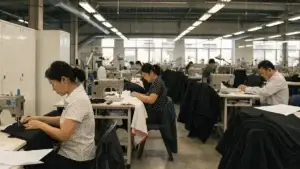
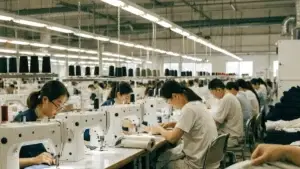
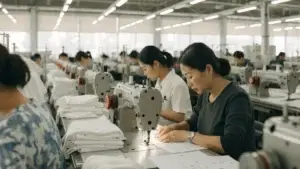
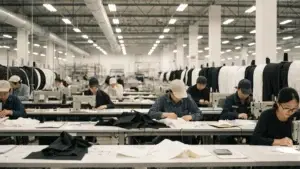
At Shanghai Fumao, we do not chase TikTok trends. We engineer fabrics that survive the scrutiny that TikTok creators apply. The distinction matters. A trendy cut goes out of style. A fabric that drapes beautifully, holds its color, and resists pilling becomes the foundation on which a creator builds years of trusted audience recommendations.
If your brand wants fabrics that earn genuine, unscripted creator recommendations, let's talk about your requirements. Contact our Business Director Elaine at elaine@fumaoclothing.com. She can send you our fabric swatch book, share the technical spec sheets behind the viral reactions, and discuss which blends fit your next collection's price point and aesthetic direction. Let the fabric speak for itself.