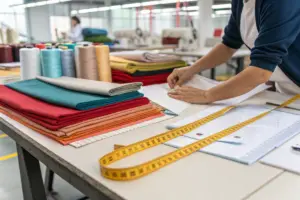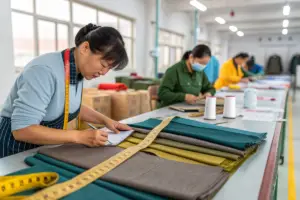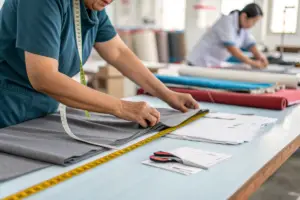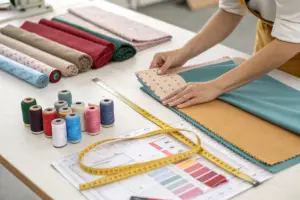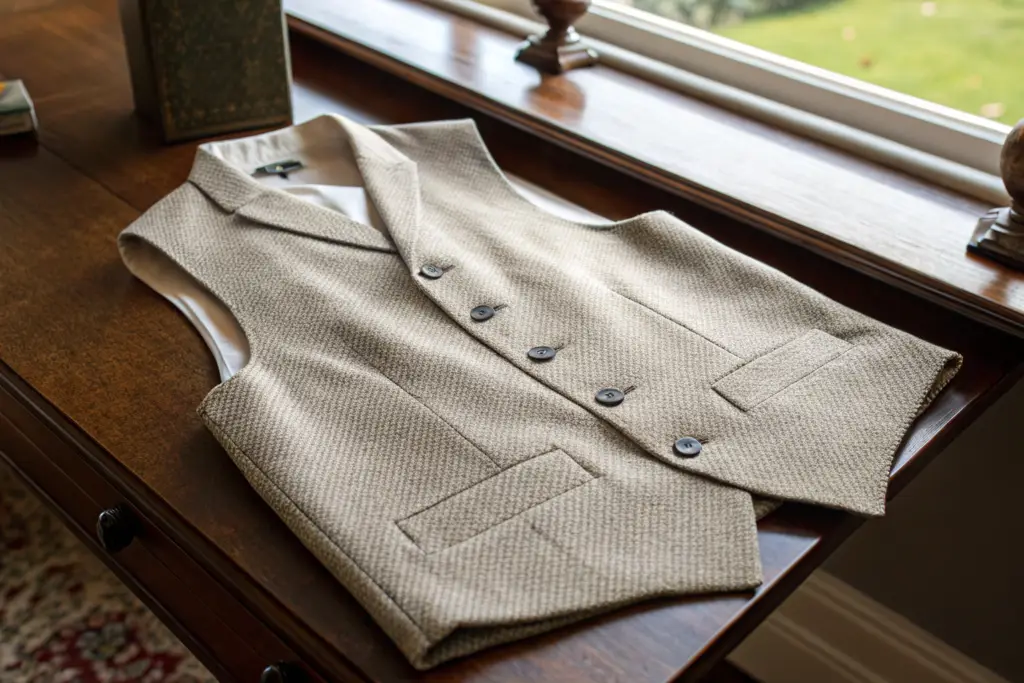
Eighteen months ago, a multi-brand menswear retailer from New York sent me a blunt email. His words stuck with me: "We are drowning in unstructured, casual layers. Our customer is bored. He is walking past our floor displays without stopping. Show me something with structure. Show me something that makes him feel like he is buying an event, not just another piece of clothing." He was articulating a silent crisis in the market. The casualization trend had gone so far that it had left a void. Men wanted to dress with intention again, but the market was only offering them hoodies and performance fleece.
American buyers are seeking our luxury-style vests because they fill a profitable, underserved gap between shapeless casual layers and the full commitment of a tailored jacket, offering their customers a structured, status-signaling garment that can be worn both as a statement separate and as a refined layering piece. The modern vest is no longer just the forgotten third of a three-piece suit. It has been liberated.
Our vest program at Shanghai Fumao grew not from a trend forecast, but from a series of direct, urgent requests from frustrated buyers who saw a white space in their assortments. They needed a garment with defined shoulders, a suppressed waist, and a beautiful back—a piece that conveyed ceremony without the costume feel of a full suit jacket. The surge in demand is not an accident. It is a reaction. Let me explain the four specific forces driving this shift and how our manufacturing approach has turned a small category into a major margin opportunity for our brand partners.
What Makes a Fumao "Luxury-Style" Vest Different from a Basic One?
A basic vest covers the torso. A luxury vest architecturally shapes it. The difference is not subtle; it is structural, and it resides in the hidden engineering between the outer fabric and the lining. Most factory-made vests are simply two pieces of fabric sewn together. A luxury vest is a constructed garment.
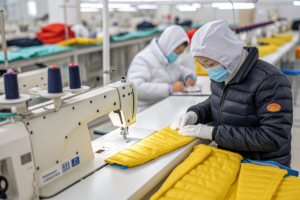
I always tell my design interns that a cheap vest is a pillowcase with buttons. It has no skeleton. The moment it's washed or worn for a few hours, it collapses into a wrinkled bag. At Shanghai Fumao, we build a vest from the inside out, using the same tailoring principles that govern a $2,000 suit jacket, but condensed into a product with a much faster production cycle and a far more accessible retail price point.
Why Is a Floating Canvas Chest Piece the Key to Structure?
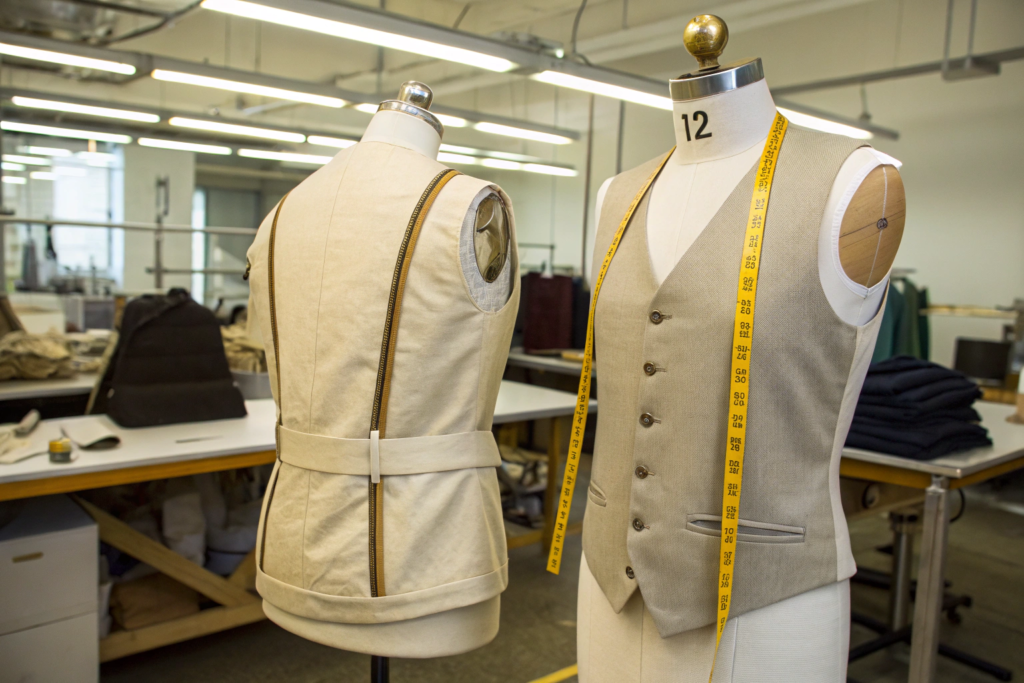
Because it gives the vest a memory. A fused, glued interlining is flat and rigid. It makes the chest look like a plastic board, and after a few dry-cleaning cycles, the glue begins to delaminate, creating ugly, irreparable bubbles on the surface. This is the defining failure of a cheap vest.
A floating canvas, in contrast, is a layer of natural wool and horsehair that is hand-basted loosely between the outer fabric and the lining. It floats freely. It moves with the wearer's body heat and motion, molding to his chest shape over time. We source our canvas from a heritage mill in Italy that has been making chest canvas for over a century. Our master tailor in the sample room cuts each piece by hand and attaches it with a precise, 1-centimeter blind stitch. This single construction detail adds $3.50 to the cost of the garment and roughly 25 minutes of skilled labor. But the result is a chest that rolls softly, not creases, and a lapel that blooms with a three-dimensional life that a fused vest can never achieve. For a brand selling to a man who owns bespoke suits, he will recognize this quality the moment he puts the vest on. It is the secret handshake of true tailoring, and it immediately elevates the brand from a commodity label to a serious menswear competitor. This is the kind of detail that turns a first-time buyer into a loyal, full-price customer who understands he cannot get this construction anywhere else. It's a core principle of luxury menswear construction that we have made accessible to our B2B partners.
How Do Our Custom Horn Buttons Complete the "Quiet Luxury" Message?
The button is the jewelry of a vest. A cheap polyester button shouts. A genuine, hand-polished horn button whispers. It is the first physical touchpoint a customer has with the garment. Before he even puts it on, his fingers find the buttons. In that single tactile moment, the entire price justification of the garment is either confirmed or destroyed.
We source our buttons from a small, family-run workshop in central Italy that has been processing water buffalo horn for three generations. The material is a natural byproduct, and each button has a unique, subtle marbling of dark charcoal and translucent amber that is impossible to replicate in resin. We then specify a "crow's foot" or "hen's foot" hand-stitching technique on the button shank. This is a small, conical thread wrap that elevates the button slightly off the fabric, allowing it to pass through the buttonhole without pulling or distorting the placket. A machine-sewn button lies flat and stresses the fabric. The hand-tied shank creates a small, elegant space. For a quiet luxury brand, this is the detail that a discerning customer photographs and posts on social media. It's a generational signifier of quality. The cost per button is significantly higher, but the marketing value is exponential. It's an authentic, un-ignorable signal of a product that was obsessed over, not just assembled. You can find more on the significance of such authentic details in the modern menswear market.
Why Is the "Vest Renaissance" Happening in the US Market Now?
The vest is back because men are looking for a middle ground between the strict formality of pre-2020 suiting and the total lack of structure of pandemic-era comfort clothing. The cultural signal has shifted. A vest now projects deliberate, thoughtful style rather than stiff, corporate conformity.
This is a post-pandemic formalwear correction. The modern man still wants to feel put-together. He still wants the confidence that comes from a structured garment. But he refuses to feel constricted. The vest is the perfect mechanical solution. It gives him the V-shaped silhouette, it hides the shirt tuck, and it provides a canvas for expressive fabric, all without the weight or heat of a full jacket sleeve. It is suiting, deconstructed.

Can a Vest Replace a Blazer in the Modern "Smart Casual" Office?
Yes, and it's already happening in creative and tech offices across the country. The blazer has a problem. It reads as "trying too hard" in a post-pandemic workplace where the CEO is wearing a fleece vest. But a luxury knit or tailored woven vest over a crisp oxford shirt reads as creative, intentional, and respectful, without crossing into the territory of corporate stiffness.
We have seen this shift in our order book. A San Francisco-based direct-to-consumer brand we partnered with last fall launched a capsule of our lightweight wool vests, marketed specifically as "The Blazer Alternative." They styled it with raw denim and minimal leather sneakers. The campaign was not about dressing up. It was about dressing with intention. The entire capsule sold out in six days. The vest provides the psychological armor of a tailored garment—the structured shoulders, the straight back—while signaling that the wearer is a modern, creative professional, not a mid-level banker. It's a garment that navigates the new, confusing office dress code with fluency. It says, "I take this meeting seriously," without saying, "I'm stuck in 2015." This strategic repositioning of tailoring has been widely discussed in fashion business analysis.
Why Are Celebrities Driving the Vest Trend on Red Carpets?
Because a vest is a high-impact, low-risk red carpet play for a male celebrity. A full suit is expected. A novelty print shirt is forgettable. But a beautifully cut, dramatic vest—perhaps in a black barathea silk with a deep V-neck worn directly against the skin—is an instant photograph. It breaks the red carpet uniform while still adhering to the event's formal dress code.
When Timothée Chalamet wore a backless vest, or when Michael B. Jordan wears a sharply tailored vest with no jacket, millions of younger male consumers see a blueprint. They see that a vest can be the protagonist of the outfit, not a supporting actor. These images filter down from the red carpet to Instagram, then to fast fashion, and then to the premium brands who need to offer a more refined, higher-quality version. Our brands are selling to a customer who has seen the look, wants the confidence it projects, but demands a version made with real tailoring and luxurious fabric, not the polyester knockoff he saw on a discount site. The celebrity endorsement educates the mass market at no cost to our brands. The brand's job is to then deliver the authentic, quality execution of that cultural signal. We manufacture the authentic article. For a deeper look at this influence, browse any recent fashion editorial coverage.
How Do Fumao's Vests Achieve a "Hand-Tailored" Finish?
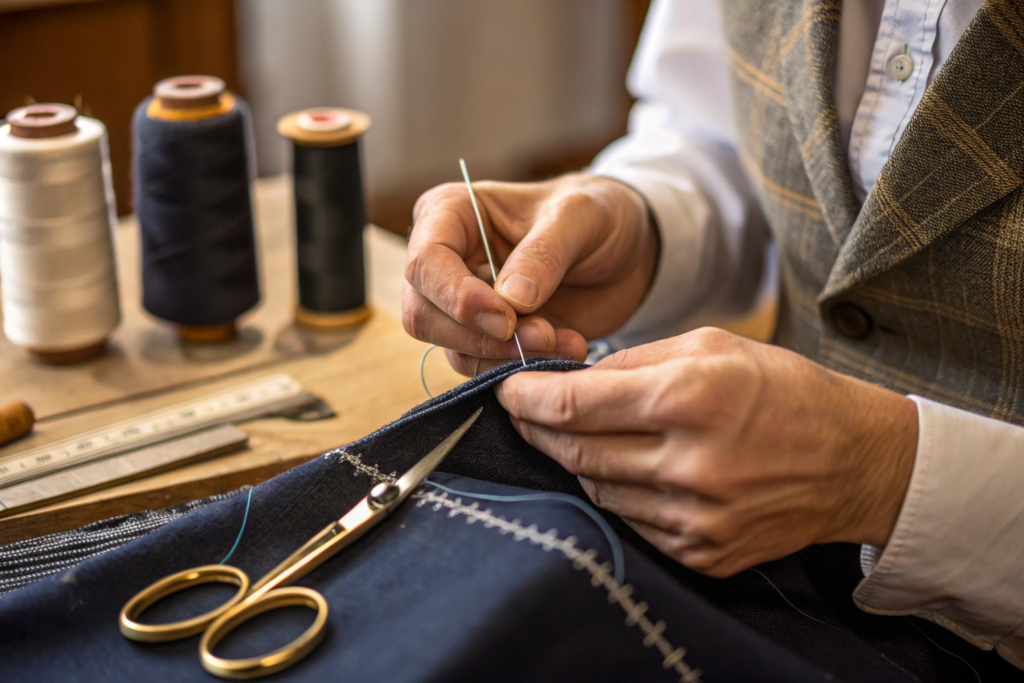
A machine-made garment has a visible, simple lockstitch sealing its edges. It is efficient and flat. A hand-tailored garment carries the irregular, human rhythm of a pick-stitch, a detail that takes 30 minutes of skilled labor per vest and is the universal signifier of a garment that was touched by an artisan, not just a machine.
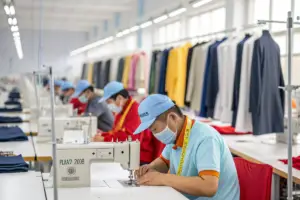
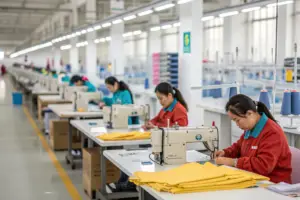
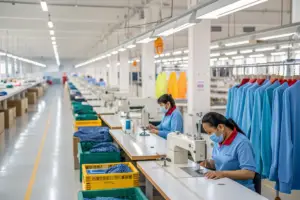
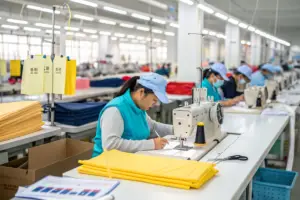
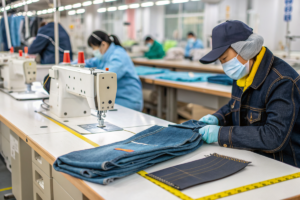
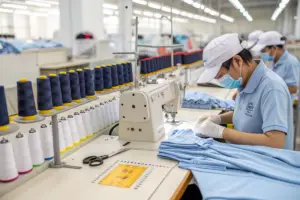
This is the level of finish we have embedded into our production line in Shaoxing. I invested specifically in a small, dedicated team of three senior tailors whose only job is to execute these hand-finishes on our luxury vest program. Their work is not scalable to 10,000 units a month, but it is perfectly scalable to a few thousand units of high-margin, premium product. It is a deliberate, strategic manufacturing choice to serve the top tier of the market.
Why Is a Hand-Sewn Pick-Stitch the First Detail a Buyer Checks?
Because it cannot be perfectly faked by a machine. An experienced buyer, and certainly a discerning customer, will immediately lift the lapel and run their thumb along the edge. A machine stitch is a perfectly uniform, sterile line. A true hand pick-stitch has a subtle, slightly uneven "dotted" appearance. Each stitch is individually formed, carrying a microscopic variation that signals a human being sat with this garment and worked on it.
This is the first thing a luxury boutique buyer looks for when we present a sample at a Paris or New York showroom. They know that this single detail communicates an entire production philosophy. It tells the customer that if the factory spent 30 minutes hand-stitching an edge that could have been machine-finished in 30 seconds, they certainly didn't cut any corners on the internal canvas or the seam construction. It is a guarantee by demonstration. We use a silk buttonhole twist thread for this stitch, which has a subtle sheen that catches the light against the matte wool, adding a barely perceptible but deeply luxurious dimension. This is not a decorative afterthought; it is a technical proof point of a garment's hand-tailored provenance.
How Does Our Bias-Cut Back Panel Improve Fit and Movement?
A man's back is a complex landscape of curves and muscles that move constantly. The standard, cheap way to cut a vest back is to use a straight-grain cut, which is efficient on the cutting table but has no mechanical give. The fabric fights the body. The result is horizontal pulling lines across the shoulder blades the moment the wearer reaches forward.
Our luxury vests use a bias-cut back panel. We cut the lustrous back fabric, often a fine satin or cupro, at a 45-degree angle to the grain line. This is wasteful of fabric, increasing the material cost by about 12%, but it introduces a natural mechanical stretch into a non-stretch woven material. The vest breathes with the body. A bias-cut back panel molds to the wearer's shoulder blades and spine without tension. It allows for a much closer, more aggressive waist suppression without sacrificing comfort. This is the tailoring trick that separates a vest that looks good on a mannequin from a vest that feels invisible on a moving human. One of our brand owners, a former competitive rower with a pronounced V-shaped torso, personally wear-tested a prototype and reported that it was the first off-the-rack vest he could drive a car in comfortably. This kind of ergonomic performance, built into the pattern cutting itself, creates the deep customer satisfaction that suppresses returns and builds word-of-mouth brand loyalty. It's an investment in fabric that pays for itself in reduced return shipping and increased customer lifetime value, a direct application of advanced pattern cutting techniques.
What Supply Chain Advantage Does Fumao Offer for Fast-Turn Vest Programs?
A luxury vest is a high-ticket item with a relatively small fabric consumption per unit, about 1.2 meters. This makes it the perfect vehicle for a fast-turn, inventory-lite brand strategy. You don't need a massive fabric position to launch a capsule. What you need is a supplier who already holds the rare, expensive materials you require.
The bottleneck for most luxury vest programs is not the sewing; it is the fabric. A European mill typically quotes 8 to 12 weeks for a custom jacquard or a high-twist wool. That lead time kills a trend-driven capsule. Our supply chain advantage is built on pre-positioning these materials.
Why Do We Pre-Stock Italian-Milled Fabrics for Immediate Cutting?
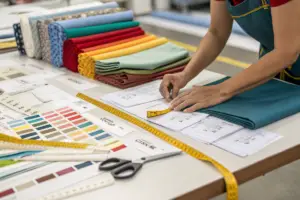
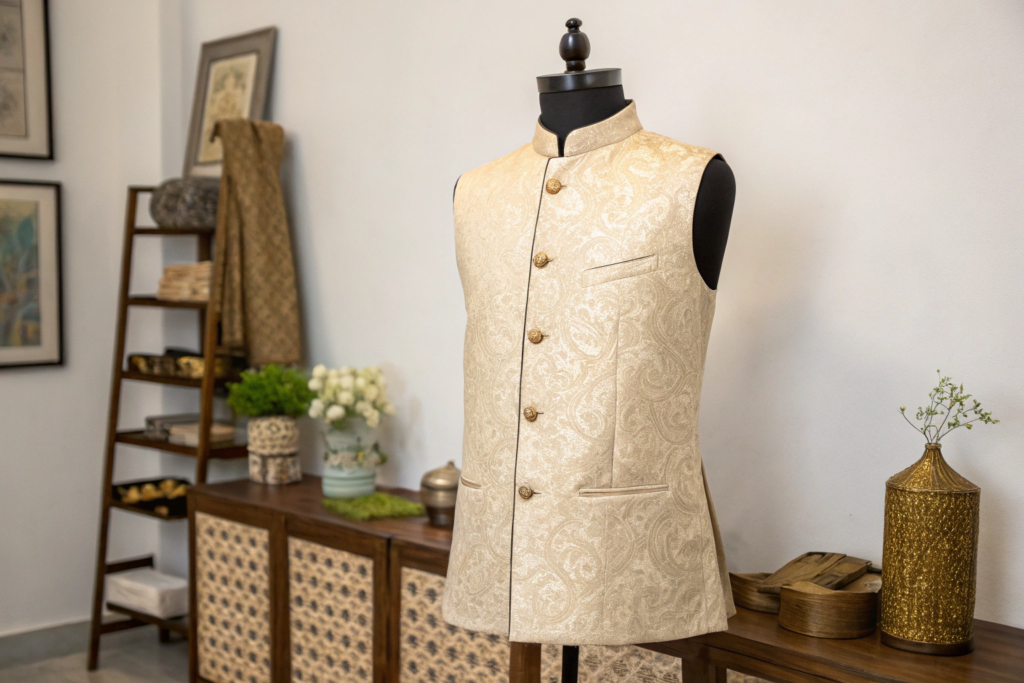
Because the brand that waits 12 weeks for fabric is the brand that arrives late to the trend. We have developed a fabric pre-stocking program specifically for our luxury vest partners. Based on our forward-looking trend analysis and historical sales data, we purchase and hold in our Shaoxing warehouse a curated inventory of the most versatile, high-demand Italian fabrics: a classic barathea, a lightweight wool-linen-silk blend, a textured melange, and a seasonal jacquard.
This means a brand partner can come to us on March 1st, see the trend for a luxury vest exploding, and have their custom-designed, private-label vests cut, sewn, and shipped by the first week of April. They can be in the market in six weeks instead of eighteen. We take the inventory risk on the raw material so they can take the market opportunity. This program was born from a painful lesson a client taught us. A small luxury brand missed the entire holiday season three years ago waiting for a custom-milled alpaca blend. They placed the order in July; the fabric arrived in late November. The selling window was closed. We resolved to never let that happen again. Now, our fabric library is a strategic weapon for our partners. It allows small and mid-sized American brands to behave like large, well-capitalized houses, responding to the market with the speed that modern luxury demands. This is the very essence of a responsive supply chain management strategy.
How Does a Small Brand Test the Market With Just 100 Units?
Through our low-MOQ luxury pilot program. A factory that demands a 1,000-unit minimum on a luxury vest is not a partner; it's a barrier. We understand that a luxury vest is a high-risk, high-reward category. It requires market testing. We cannot expect a boutique brand to commit to a massive volume on a new silhouette.
We offer a 100-unit pilot run on our pre-stocked Italian fabrics. This allows a brand to do a true market test. They can launch a small, exclusive capsule on their DTC website, measure sell-through, gather customer feedback on the fit and the hand feel, and generate high-quality editorial imagery. They risk very little capital. The unit cost on a 100-unit run is higher than a 5,000-unit run, of course, but it's a market research investment, not a speculative inventory bet. If the pilot sells out in days, they can immediately trigger a reorder from our stocked fabric, and we can turn a 500-unit replenishment order in three weeks. This model transforms a brand's supply chain from a rigid, risky, seasonal forecast system into a flexible, responsive, test-and-react engine. It allows a brand to build a luxury category step by step, with real customer data, not just a designer's gut feeling. This approach has been the entry point for several of our most successful U.S. boutique partners, who have scaled their vest programs from 100 units to 2,000 units in three seasons, all while maintaining full-price sell-through. It's a methodology aligned with the principles of lean retail innovation.
Conclusion
The modern luxury vest is a precision instrument for a specific post-pandemic male psychology. It is the answer for the man who wants the ceremony of tailoring without the costume, the structure of a jacket without the constraint, and the quiet signal of luxury without the loudness of a logo. At Shanghai Fumao, we have reverse-engineered this garment from the hand-tailored finish inward. A floating canvas chest piece that breathes and molds to the body, genuine Italian horn buttons with a hand-tied shank, a bias-cut back panel that moves with the wearer, and a pick-stitch that proves the garment was touched by a human, not just a machine. These are not marketing claims; they are verifiable, production-line specifications that create a product a discerning customer will feel the moment he does up the buttons.
We have removed the supply chain friction that usually kills this category for emerging brands. Our pre-stocked Italian fabric library and our 100-unit pilot program mean you can test the market, respond to the trend, and scale the winners without betting your entire season's budget on an unproven silhouette.
If you are a U.S. brand owner or buyer looking to capture the vest renaissance with a product that is architecturally built, not just assembled, let's talk. We can ship you a sample set of our three core luxury vest blocks, complete with our fabric swatch library and detailed costing sheets. Contact our Business Director, Elaine, directly at elaine@fumaoclothing.com. Tell her your target price point and the silhouette you want to test. Let’s build a vest that your customer will wear to the meeting, the dinner, and the event, and feel, every single time, like he made the right choice.