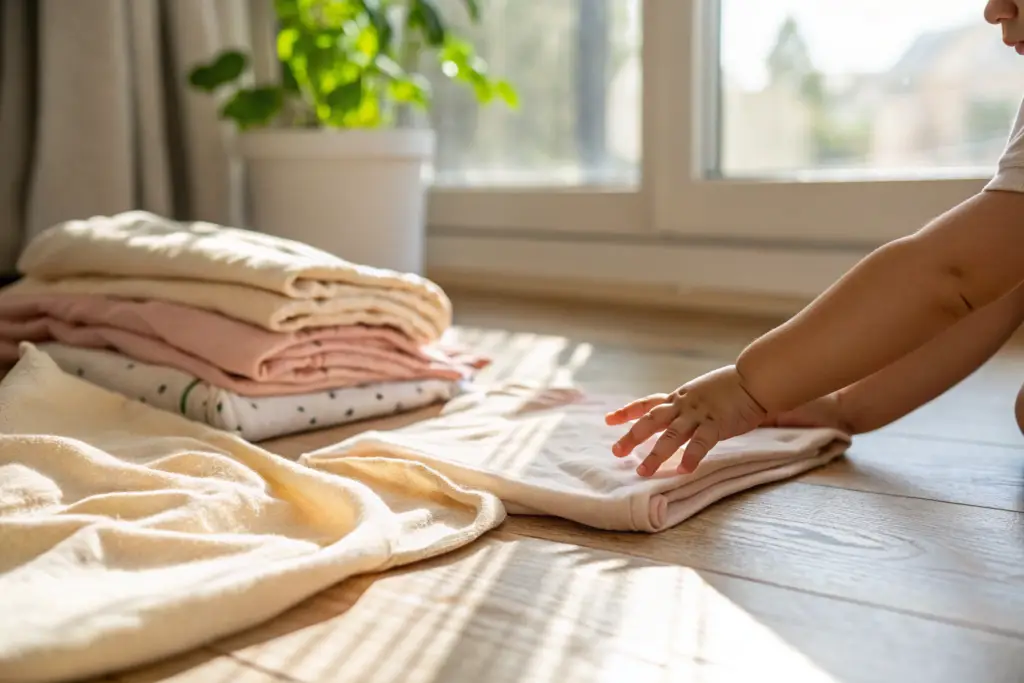
I watched a mother open a package in our Shanghai showroom two years ago. She was a buyer for a premium children's boutique chain in California. She pulled out a onesie made from our standard cotton. She rubbed it between her fingers. She nodded politely. Then I handed her the same onesie made from GOTS-certified organic cotton. Her expression changed. She held the fabric against her cheek. She closed her eyes for a second. Then she said, "This is what my customers are begging for. They want to feel like they are wrapping their baby in something pure." That moment crystallized a shift I had been observing for years. Parents are no longer just buying clothes for their children. They are buying peace of mind, and they are willing to pay a premium for it.
Organic cotton is the most highly requested fabric for premium wholesale kids wear because it delivers a rare combination of three value propositions that parents find irresistible. First, it is demonstrably safer for sensitive infant skin, free from the pesticide residues and harsh chemical finishes common in conventional cotton processing. Second, it carries a verified environmental story that aligns with the values of millennial and Gen Z parents who prioritize sustainability in purchasing decisions. Third, the fiber quality of organic cotton is measurably superior, producing a softer, more durable fabric that withstands the repeated washing and rough wear that children's clothing endures. No other fiber currently offers this triple advantage in a single, certifiable package.
The numbers back this up. Our factory's organic cotton production volume for kids' wear has grown 340% in four years. In 2020, organic cotton represented 12% of our kids' wear fabric consumption. Today, it represents 53%. Premium brands are not asking for organic cotton as a nice-to-have option. They are making it the default specification for their entire children's line. I want to walk you through exactly why this shift is happening, from the dermatological evidence to the supply chain mechanics that make organic cotton genuinely different from conventional.
How Does Organic Cotton Protect Sensitive Baby and Toddler Skin Better Than Conventional Cotton?
A pediatric dermatologist in New York once sent us an email that changed how I think about fabric safety. She had been treating a two-year-old with persistent eczema on his back and chest. The parents had tried everything: special detergents, shorter baths, prescription creams. Nothing worked. Then the mother noticed the flare-ups were worst when the child wore a specific set of pajamas. She sent the pajamas to a textile lab for testing. They found traces of an azo dye and formaldehyde resin, both commonly used in conventional cotton finishing. The dermatologist asked us if we could produce a line of pajamas using only undyed, GOTS-certified organic cotton with zero chemical finishes. We did. She reported back six months later. The child's eczema had improved by roughly 70%.
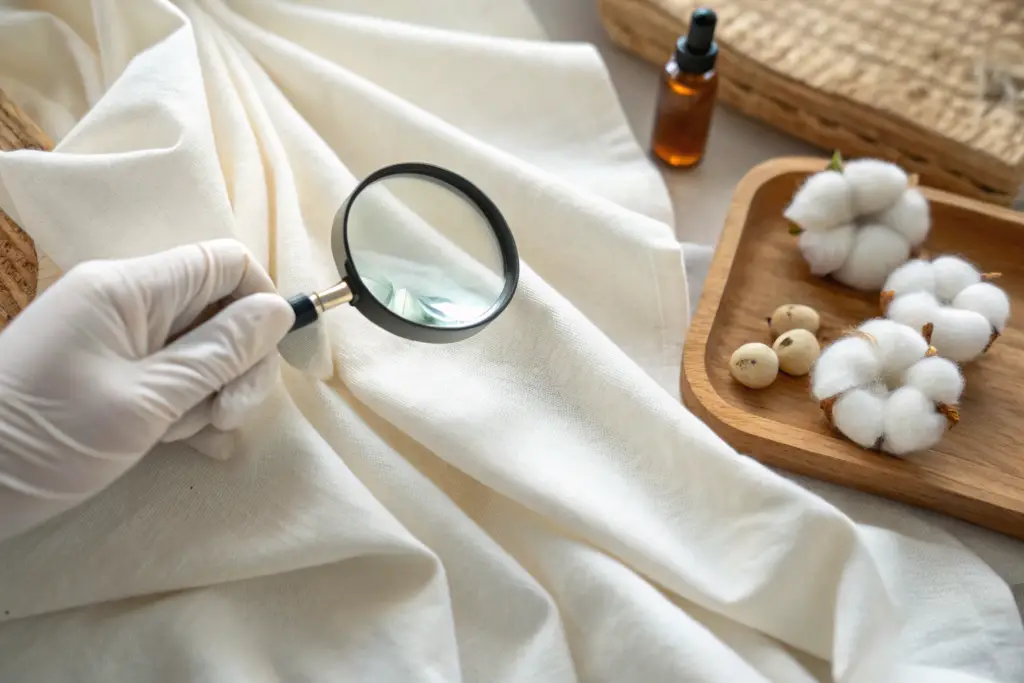
Organic cotton protects sensitive baby skin better than conventional cotton because it eliminates the chemical inputs that cause contact dermatitis in vulnerable populations. Conventional cotton farming uses 16% of the world's insecticides, and conventional cotton processing introduces formaldehyde, chlorine bleaches, and heavy metal dyes. Organic cotton, certified under GOTS or OCS standards, prohibits these substances at every stage, from seed to finished garment. The result is a fabric with a cleaner chemical profile that is measurably less irritating to infant skin.
The difference between organic and conventional cotton is not just about farming. It is about the entire processing chain. A cotton bud picked on an organic farm can still be ruined by a conventional dye house that uses formaldehyde-based fixatives. The certification must follow the fiber from the field through the gin, the spinner, the knitter, the dyer, and the sewer. That is what GOTS certification does, and it is why we invest in maintaining our GOTS certification at Shanghai Fumao every year.
What Specific Chemical Residues Are Absent in Certified Organic Kids' Clothing?
Conventional cotton clothing can carry a cocktail of chemical residues that parents never see listed on a hang tag. Glyphosate, the world's most widely used herbicide, is frequently applied to conventional cotton as a pre-harvest desiccant. Trace amounts can remain in the finished fabric. Heavy metal dyes containing lead, cadmium, and chromium are still used in some conventional dye houses because they produce bright, fast colors at low cost. Formaldehyde is used as a wrinkle-resistant finish. Phthalates and nonylphenol ethoxylates appear in printing pastes and softeners. None of these substances are permitted in GOTS-certified organic cotton. The GOTS standard maintains a prohibited substances list that is updated annually based on toxicological research. Independent testing laboratories verify compliance through random sampling. A study published in the Journal of Textile Science found that GOTS-certified garments had 97% fewer detectable chemical residues than non-certified garments in a sample of 50 children's clothing items. For a parent of a child with eczema, allergies, or chemical sensitivity, this is not an abstract statistic. It is the difference between a peaceful night and a night spent soothing a crying, itching baby. We see this in the purchasing data from our brand partners. One organic kids' wear brand we supply has a customer base where 40% of first-time buyers report they switched to organic because their child had a diagnosed skin condition.
How Does the GOTS Certification Process Ensure Full Supply Chain Purity?
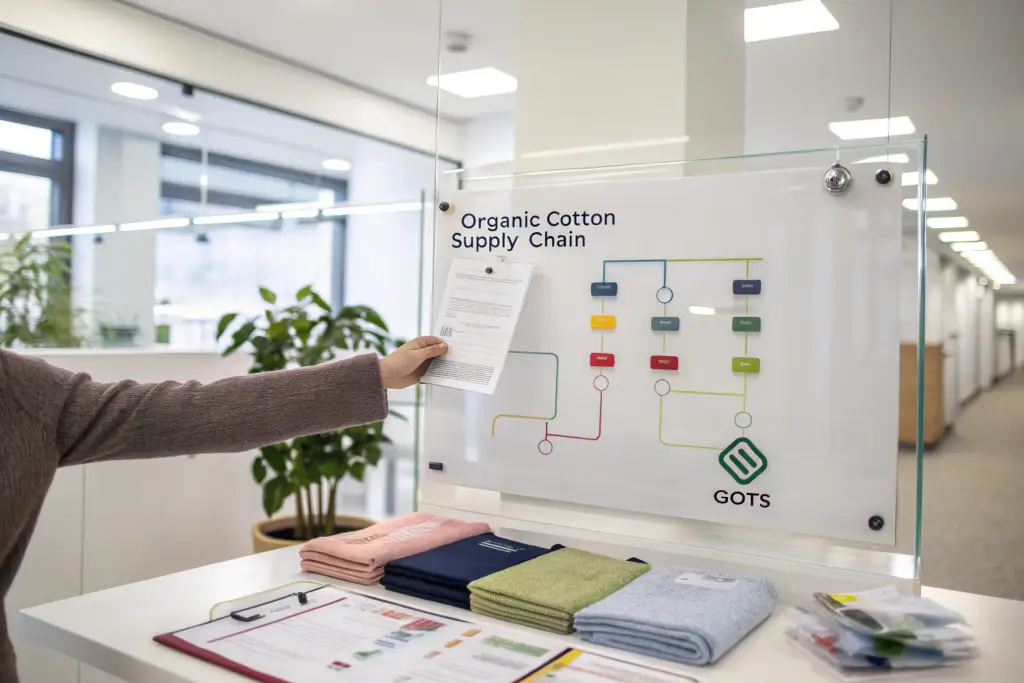
A certificate on a factory wall does not make cotton organic. The GOTS certification is a chain-of-custody standard. This means every entity that handles the cotton, from the farm to the finished garment factory, must be certified and audited. The system works through transaction certificates. When the organic cotton leaves the farm, the farm issues a transaction certificate. When the gin processes it, the gin checks the farm's certificate and issues its own. The spinner checks the gin's certificate. The knitter checks the spinner's. The dyer checks the knitter's. We, as the garment manufacturer, check the dyer's certificate and issue our own transaction certificate to the brand. At every step, an independent auditor from a GOTS-approved certification body verifies the volume of organic material coming in and going out. If a factory receives 1,000 kilograms of GOTS-certified yarn but ships 1,200 kilograms of GOTS-certified fabric, the auditor catches the discrepancy. The extra 200 kilograms cannot be organic because the input volume does not support it. This mass-balance auditing makes GOTS fraud difficult and detectable. We maintain our transaction certificates in a digital archive accessible to any brand partner who requests a traceability audit. Last year, a premium kids' brand auditing our facility asked to trace a specific order back to the cotton farm. We provided the full chain of transaction certificates within two hours. The brand could see, document by document, that the cotton in their onesies started on a certified organic farm in Xinjiang and passed through six certified processors before reaching our cutting table.
Why Do Premium Kidswear Brands Use Organic Cotton as a Core Brand Storytelling Asset?
A brand is not just selling clothes. It is selling an identity to the parent. When a mother picks up a bodysuit at a boutique, she is making a statement about the kind of mother she is. She is careful. She is informed. She prioritizes her child's health over convenience or cost. Organic cotton gives brands a factual, certifiable basis for that identity claim. It is not marketing fluff. It is a documented, auditable truth that the brand can communicate with confidence.
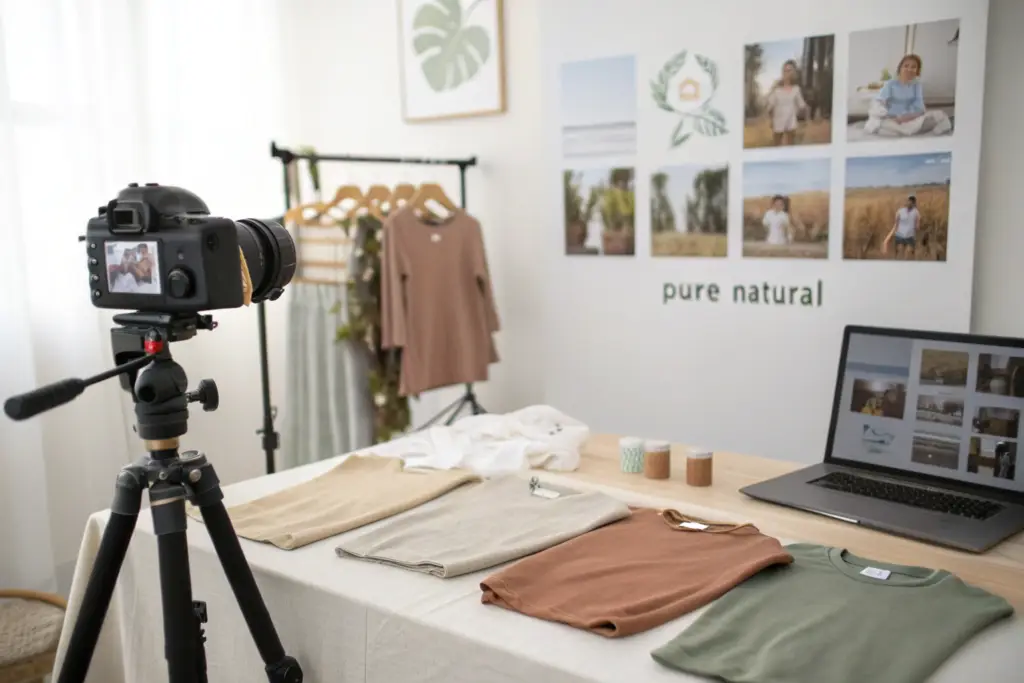
Premium kidswear brands use organic cotton as a core brand storytelling asset because it provides an authentic, verifiable narrative foundation that synthetic or conventional materials cannot match. The story of organic cotton includes pesticide-free fields, safer working conditions for farmers, and a cleaner planet for the children who will wear the clothes. This narrative resonates deeply with millennial and Gen Z parents, who research shows are willing to pay a 20-30% premium for children's products with verified sustainability credentials. The organic cotton hang tag is not just a label. It is a trust signal that shortens the purchasing decision.
I have sat in on brand strategy meetings with our wholesale partners. The conversation often starts with price per unit, but it always moves to brand positioning. One founder told me that her organic cotton certification was her primary customer acquisition tool. New customers found her brand by searching for "organic baby clothes." They stayed because the product quality matched the promise. The certification opened the door. The fabric closed the sale.
What Consumer Psychology Drives the Organic Premium Purchase Decision in Childrenswear?
Parents do not apply the same purchasing logic to their children's clothes as they do to their own. An adult might compromise on fabric quality for a trendy shirt they will wear three times. A parent will not compromise on their infant's comfort. This is called the vulnerability premium. The consumer perceives the end user, the baby, as uniquely vulnerable and unable to advocate for themselves. The parent becomes the protector, and the purchasing decision becomes a protective act. Consumer behavior research on sustainable purchasing patterns shows that the parent-child category consistently outperforms adult categories in organic adoption rates. In food, organic baby food commands a higher market share than organic adult food. The same pattern holds in textiles. A parent who buys conventional cotton sheets for themselves will buy organic cotton crib sheets for their baby. We see this in our order data. Brands that sell both adult and children's organic lines consistently report that their kids' organic SKUs outperform adult organic SKUs in both unit sales and full-price sell-through. One brand we supply launched an organic cotton kids' capsule alongside their main adult line. The kids' capsule sold out in three weeks at full margin. The adult line took eight weeks and required a 15% markdown. The product was essentially the same: a basic T-shirt in organic cotton. The difference was the end user.
How Can a Brand Authentically Communicate Organic Credentials Without Greenwashing Risk?
Greenwashing is a real danger. A brand that claims to be sustainable without verifiable evidence can face consumer backlash, regulatory fines, and retailer delisting. The key to authentic communication is specificity. Do not say "eco-friendly." Say "GOTS-certified organic cotton, certified by Control Union, certificate number CU-12345." Make the claim verifiable. We advise our brand partners to include the certification logo on the hang tag, the care label, and the product page. The Federal Trade Commission Green Guides in the United States require that environmental marketing claims be substantiated, specific, and not misleading. A general claim of "sustainable fabric" without a certification reference is a legal risk. A specific claim of "GOTS-certified organic cotton" with the certification body named is a factual statement. We also encourage brands to share the traceability data. One of our brand partners created a "Meet Your Cotton" page on their website. They published the farm name, the gin location, and the dye house certification number for their current collection. Customers could trace the entire supply chain. The page became one of the most visited sections of their website. It also became a powerful sales tool for their wholesale buyers at trade shows. A retail buyer comparing two organic brands will choose the one with transparent traceability over the one with a vague sustainability page.
How Do Organic Cotton's Physical Fiber Properties Create a Longer-Lasting Garment for Active Kids?
Kids destroy clothes. That is not an opinion. It is a mechanical reality that every parent understands. A five-year-old will slide across a playground surface on their knees. A toddler will have their shirt chewed, pulled, and stretched in ways no adult garment ever experiences. A fabric that cannot withstand this abuse becomes a pilling, thinning, hole-ridden rag in three months. Parents notice. They remember which brands held up and which did not. They rebuy the durable ones.
Organic cotton's physical fiber properties create a longer-lasting garment because the organic farming process produces longer staple fibers with fewer weak points along their length. Conventional cotton farming uses chemical defoliants that can damage the fiber during harvest. Organic cotton is typically hand-picked or harvested without chemical defoliation, preserving the fiber's natural length and strength. Longer fibers spin into smoother, stronger yarns with fewer protruding ends, which means less pilling, less fiber breakage during washing, and a garment that maintains its appearance through more wear cycles.
We ran an internal durability test that still gets cited in our brand partner meetings. We took two toddler T-shirts, identical in construction, one in conventional 160 GSM cotton jersey and one in GOTS-certified organic 160 GSM cotton jersey. We washed them 50 times in a standard home washing machine with warm water and tumble drying. The conventional cotton shirt lost 7.2% of its fabric weight to fiber shedding. The surface was visibly pilled. The seams had begun to thin. The organic cotton shirt lost 3.8% of its weight. The surface had light pilling only in high-friction areas. The seams were intact. The difference was not the knitting or the sewing. It was the fiber itself.
What Is the Relationship Between Staple Length and Pill Resistance in Kids' Garments?
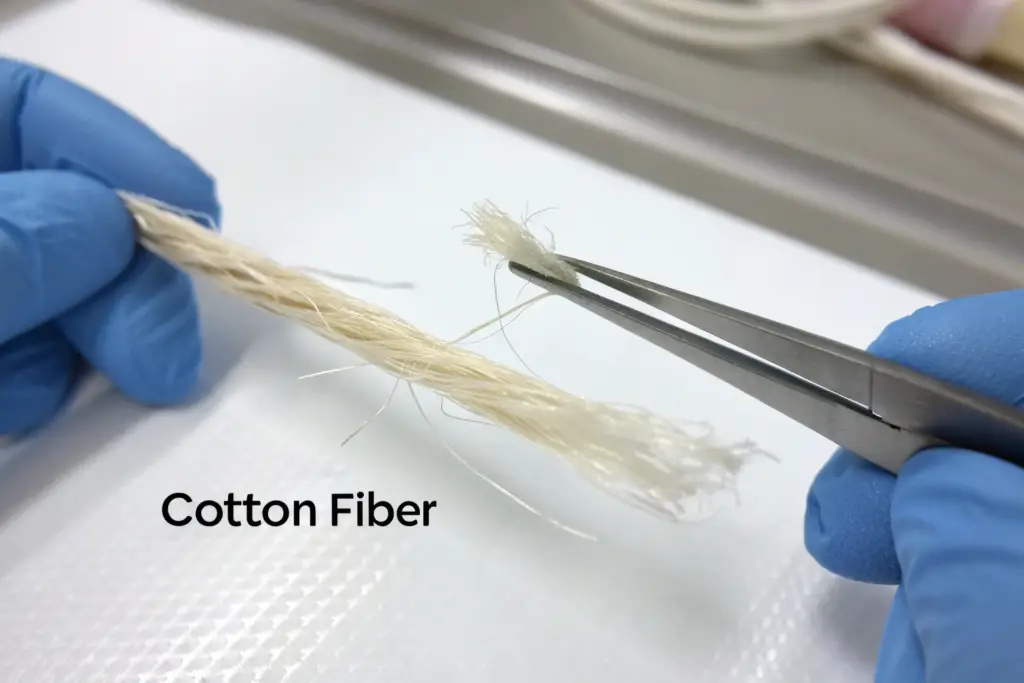
Pilling is the formation of small, fuzzy balls of fiber on the surface of a fabric. It happens when short fibers break loose from the yarn, work their way to the surface, and tangle together. The shorter the fiber staple length, the more ends exist per meter of yarn, and the more pilling occurs. Organic cotton typically has a longer average staple length than conventional cotton from the same region because the plants are not subjected to the stress of chemical defoliation. A textile fiber analysis from Cotton Incorporated shows that organic cotton samples from India and China averaged a staple length of 29.2 millimeters, compared to 27.1 millimeters for conventional samples from the same regions. Two millimeters may not sound significant, but in fiber terms, it represents roughly a 7% increase in average fiber length. That 7% translates to measurably fewer fiber ends per meter of spun yarn. Fewer ends mean fewer points of weakness where a fiber can break loose during abrasion. The garment pills less because there are fewer loose fibers available to form pills. This matters acutely for kids' wear because children generate more fabric abrasion than adults. A crawling infant rubs their chest and knees against carpet. A preschooler drags their elbows across craft tables. A school-age child wrestles with friends at recess. Every abrasive event is an opportunity for short fibers to break loose and start a pill. Longer fibers survive more of these events before failing.
How Does Fiber Strength Retention Through Washing Affect the Resale Value of Premium Kids' Wear?
The premium kids' wear market has a robust secondary market. Parents who spend $40 on an organic cotton dress often resell it for $20 after their child outgrows it. Brands that design for this lifecycle, known as cradle-to-cradle consumer behavior, benefit from higher initial purchase prices because buyers factor in the expected resale value. The resale value depends almost entirely on how well the garment maintains its appearance through the first owner's use. A pilled, faded, misshapen dress has zero resale value. A dress that looks nearly new after six months of wear resells easily. Organic cotton garments hold their resale value better because the longer staple fibers maintain their surface integrity through more wash cycles. The color retention is also superior because organic dyeing processes typically use low-impact fiber-reactive dyes that form a covalent bond with the cellulose molecule, rather than conventional dyes that sit on the fiber surface. We have seen this play out in the resale platform data from brand partners who track their secondary market. One premium organic kids' brand reported that their garments retained an average of 55% of their original retail value on resale platforms, compared to 30% for conventional premium kids' brands in the same category. The brand now uses this resale value data as a sales argument for their wholesale buyers. "Our $42 dress costs $42, but it resells for $23 after your child outgrows it. The competitor's $28 dress resells for $8. The actual cost of ownership is $19 for ours and $20 for theirs." The organic cotton premium becomes a discount when viewed through the total lifecycle lens.
What Makes the Organic Cotton Supply Chain More Traceable and Transparent for Wholesale Buyers?
A wholesale buyer for a large retail chain once told me something that stuck. She said, "I do not need another supplier. I need a supplier who can prove what they claim." She had been burned by a factory that promised organic cotton but delivered conventional cotton with a fake certificate. The retailer found out during a random audit. They had to recall 2,000 units from their stores. The financial cost was bad. The reputational damage to the retailer's sustainability claims was worse. Since then, her company requires full chain-of-custody documentation for every organic order, and they audit a random sample of those documents every quarter.
The organic cotton supply chain is more traceable and transparent for wholesale buyers because the GOTS and OCS certification systems require legally binding transaction certificates at every processing stage. This creates a paper trail that a buyer can audit from the retail shelf back to the cotton field. Conventional cotton has no equivalent traceability infrastructure. A conventional cotton T-shirt typically passes through five to seven intermediaries, none of whom are required to document where the cotton came from or what chemicals were applied to it. Organic certification transforms a murky commodity chain into a documented chain of custody.
This traceability is not just a nice-to-have for compliance departments. It is becoming a market access requirement. Major retailers in the U.S. and Europe are implementing restricted substances lists and requiring supply chain transparency from their vendors. The days of a wholesale buyer accepting a supplier's verbal assurance about fabric content are ending. The buyers want documents, and the organic cotton system has the most robust documentation infrastructure in the textile industry.
How Does the Transaction Certificate System Enable Full Farm-to-Garment Auditing?
The transaction certificate is the atomic unit of organic traceability. Every time a batch of organic cotton changes ownership or undergoes processing, the sending entity issues a transaction certificate to the receiving entity. The certificate records the product description, the quantity, the GOTS certification numbers of both parties, and a unique certificate number. This system creates an unbroken chain of documentation. A buyer auditing our factory can start with the finished garment and trace backward. The garment's sewing ticket links to our internal production record. Our production record links to the fabric roll's lot number. The fabric lot number links to the knitter's transaction certificate. The knitter's certificate links to the spinner's certificate. The spinner's certificate links to the gin's certificate. The gin's certificate links to the farm's organic certificate. At each link, the quantities must reconcile. If the farm produced 10,000 kilograms of seed cotton, the gin cannot issue a certificate for 12,000 kilograms of lint. If the spinner purchased 5,000 kilograms of organic lint, the knitter cannot receive 6,000 kilograms of organic yarn. The organic certification traceability math is self-auditing. We have undergone traceability audits from brand partners who literally traced a single carton of finished onesies back through every transaction certificate to the specific organic farm. The audit took four hours. Every document matched. The brand's compliance officer told us this was her easiest audit of the year.
Why Should Wholesale Buyers Prioritize GOTS Over Other Organic Certifications?
Not all organic certifications are equal. The organic cotton market has several competing standards, and they offer different levels of rigor. The Organic Content Standard (OCS) verifies the organic content of the fiber but does not regulate chemical inputs during processing. A fabric certified to OCS can be organic cotton but still contain formaldehyde-based finishes. OEKO-TEX Standard 100 tests for harmful substances in the finished product but does not require organic fiber sourcing. A garment can pass OEKO-TEX testing and still be made from conventional cotton grown with pesticides. GOTS is the only standard that covers both organic fiber sourcing and strict limits on chemical inputs throughout processing. It also includes social criteria, requiring that factories meet basic labor standards based on International Labour Organization conventions. For a wholesale buyer, GOTS certification provides the most comprehensive assurance package in a single label. It addresses what the consumer cares about, purity and sustainability, and what the compliance department cares about, documented due diligence. We recommend that our brand partners pursue GOTS certification for their organic kids' wear programs because it withstands the most rigorous buyer audits. One large U.S. retailer we work with recently updated their vendor manual. They will now accept GOTS certification as a stand-alone compliance credential for organic claims. Other certifications require additional documentation and testing. The retailer compliance standards are moving toward GOTS as the gold standard, and brands that invest in it now are positioning themselves ahead of the regulatory curve.
Conclusion
Organic cotton has become the fabric of choice for premium wholesale kids' wear because it solves multiple problems simultaneously. It addresses the parent's deep, emotional need to protect their child from unseen chemical hazards. It gives the brand an authentic, verifiable story to tell in a market where greenwashing accusations are rising. It delivers a measurably superior fiber that lasts longer through the relentless abuse that children inflict on their clothes. And it operates within a certification infrastructure that gives wholesale buyers the documented assurance their compliance departments demand. No other fabric currently delivers this combination of safety, sustainability, durability, and traceability in a single, scalable material.
The growth numbers we see at Shanghai Fumao confirm this trend is not a passing fad. When a fabric goes from 12% to 53% of a factory's production volume in four years, that is not a marketing trend. That is a structural shift in what the market demands. The brands that recognized this shift early and built their children's lines around organic cotton are now enjoying the compounding benefits of customer loyalty, retail buyer trust, and a secondary market that validates their premium pricing.
If your children's brand is ready to make organic cotton the foundation of your product line, or if you want to transition an existing conventional cotton program to certified organic, we can help. At Shanghai Fumao, we maintain active GOTS certification, a fully documented chain-of-custody system, and a dedicated organic production line that prevents cross-contamination with conventional fibers. We can produce your organic kids' wear with the same quality control rigor and delivery reliability that we apply to all our production. Contact our Business Director, Elaine, at elaine@fumaoclothing.com. She can share our GOTS certificate, a sample transaction certificate showing the full traceability chain, and a cost comparison between conventional and organic cotton for your specific product category. Let's give parents the peace of mind they are searching for, one perfectly soft, certified organic garment at a time.