A Boston-based children's brand once launched a beautiful May collection of lightweight linen shorts and cotton voile dresses. The fabrics were perfect for the season: breathable, soft, and visually delicate. The collection sold out in two weeks. By mid-June, the returns were flooding in. The lightweight linen had torn at the knee seams after minimal playground use. The cotton voile had snagged and pulled into irreparable runs after contact with Velcro sneakers. The delicate fabrics, which had looked so beautiful in the May catalog, were physically incapable of surviving the Summer of an active child. The brand had selected fabrics for their seasonal aesthetic but had neglected to test them against the mechanical reality of childhood: crawling, running, climbing, sliding, and the constant abrasion of knees against grass, sand, and concrete.
To select durable fabrics for May children's Summer clothes, the fabric must satisfy three specific, measurable criteria simultaneously: a minimum Martindale abrasion resistance of 20,000 cycles for tops and 30,000 cycles for bottoms to withstand the friction of active play; a tensile strength of at least 250 Newtons for woven fabrics and a burst strength of at least 200 kPa for knit fabrics to resist tearing during dynamic movement; and a high colorfastness to washing, light, and perspiration—minimum grade 4 on each respective AATCC scale—to survive the frequent laundering and intense sun exposure that children's Summer garments endure, all while maintaining a lightweight construction of 120-180 GSM appropriate for warm weather.*
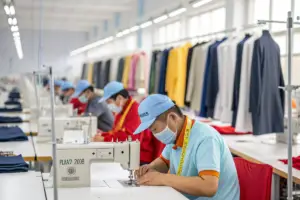
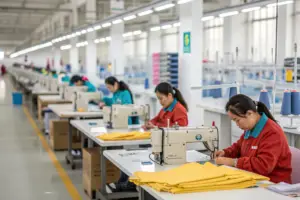
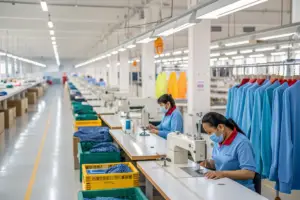
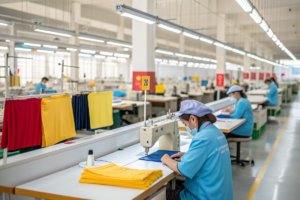
At Shanghai Fumao, I test every children's Summer fabric against these three criteria before approving it for bulk production. A fabric that is beautiful but tears on the playground is not a children's fabric. A fabric that is soft but fades to a dull, washed-out color after five washes is not a children's fabric. The durability testing is the quality gate that separates a successful season from a return disaster.
Why Does "Abrasion Resistance Measured by Martindale Testing" Predict Whether Shorts Will Survive a Summer of Playground Slides?
A San Francisco-based children's wear brand once selected a soft, 150 GSM cotton poplin for their Summer shorts because it was lightweight, available in beautiful seasonal colors, and inexpensive. The shorts launched in May. By mid-July, parents were reporting holes worn through the seat and inner thighs of the shorts. The poplin, which had a Martindale abrasion score of approximately 14,000 cycles, was suitable for a lightweight adult shirt worn occasionally. It was catastrophically inadequate for a pair of children's shorts subjected to the abrasive friction of playground slides, concrete steps, and grass. The seat of a child's short is a high-friction zone that experiences more mechanical abrasion in one Summer than an adult's dress shirt experiences in its entire usable life.
Abrasion resistance measured by Martindale testing per ASTM D4966 predicts the survival of Summer shorts by quantifying the number of rubbing cycles the fabric can withstand before developing a hole, and children's bottoms—which experience constant friction from playground equipment, concrete, grass, sand, and repeated sitting and sliding—require a minimum Martindale score of 30,000 cycles for shorts and trousers, significantly higher than the 15,000-20,000 cycles that may be acceptable for adult casual wear.
The Martindale test rubs a standardized wool abradant against the fabric in a repeating circular motion under controlled pressure. The test counts the number of cycles until the fabric develops a hole. This number is a direct, quantitative predictor of how the fabric will perform when a child slides down a plastic playground slide, scoots across a wooden bench, or drags their knees across a concrete sidewalk. A fabric with a 14,000-cycle rating will fail within weeks. A fabric with a 35,000-cycle rating will survive the entire Summer.
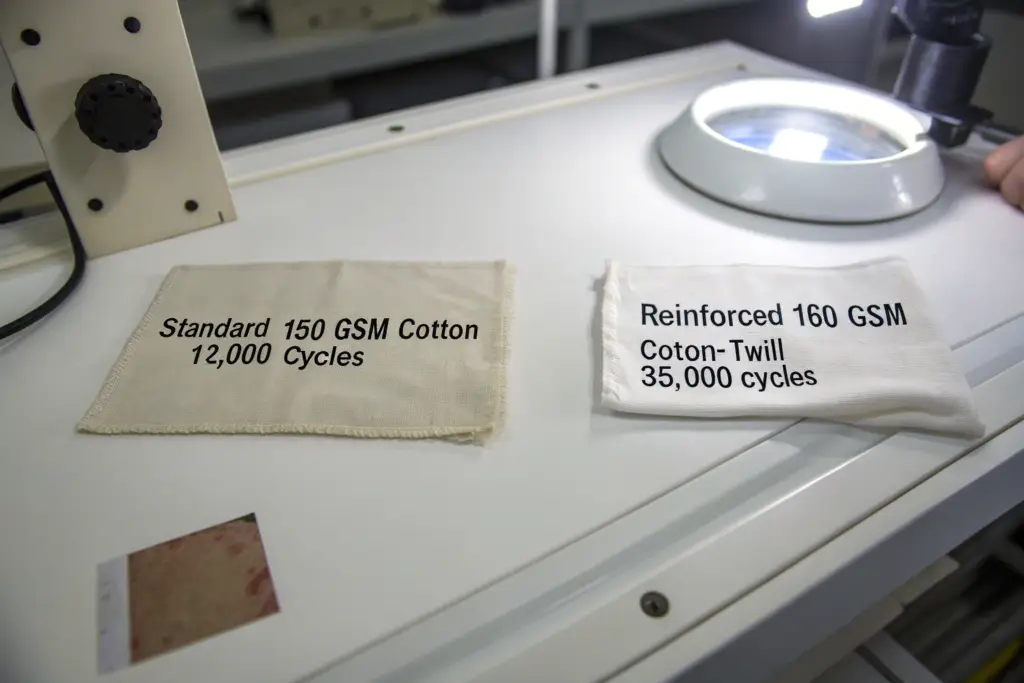
How Does a "Cotton-Twill Weave" at 160 GSM Achieve a Higher Martindale Score Than a "Cotton Poplin" at the Same Weight?
A twill weave has longer floating yarns on the fabric surface, which distribute friction force across a wider area and present a smoother, more abrasion-resistant surface. A poplin has a tighter, more compact weave with shorter yarn floats, which concentrates friction on smaller areas and wears through faster. At the same GSM, the twill will consistently achieve a higher Martindale score.
Why Should "Knee and Seat Panels" on Children's Shorts Be Reinforced With a Double Layer or a Higher-Density Fabric Insert?
The knee and seat areas of a child's short receive concentrated, repeated abrasion that the surrounding fabric does not. A double-layer reinforcement or a fabric insert with a higher Martindale score—such as a small panel of cotton-twill in a garment otherwise made from a lighter fabric—provides targeted durability at the highest-stress zones without adding weight or cost to the entire garment.
What "Tensile and Burst Strength" Specifications Prevent Active Children From Tearing Through Lightweight Summer Fabrics During Dynamic Play?
A Dallas-based children's brand once designed a beautiful romper from a lightweight, open-weave linen. The fabric breathed wonderfully, and parents loved the natural aesthetic. The rompers tore at the shoulder seams within the first week of wear. The linen had a tensile strength of approximately 180 Newtons—sufficient for a stationary adult but insufficient for a child who climbs playground equipment, pulls against the fabric while dressing themselves, and stretches their arms overhead with sudden, explosive movements. The children were not being unusually rough on the garments. The garments were structurally incapable of withstanding the normal mechanical forces generated by an active child's body.
Tensile strength for woven fabrics, measured in Newtons per ASTM D5034, and burst strength for knit fabrics, measured in kilopascals per ASTM D3786, predict the fabric's ability to resist tearing during dynamic movement, and children's Summer garments—which are subjected to sudden, high-force movements such as climbing, running, and pulling—require a minimum tensile strength of 250 Newtons for woven fabrics and a minimum burst strength of 200 kPa for knit fabrics to prevent the seam and fabric ruptures that occur when the mechanical force of an active child exceeds the fabric's structural capacity.
A child climbing a jungle gym exerts sudden, concentrated force on the shoulder seams and armholes of their garment. If the fabric's tensile strength is lower than the force the child generates, the fabric tears. The tear is not a manufacturing defect; it is a predictable mechanical failure resulting from a fabric specification that was inappropriate for the end-use conditions.
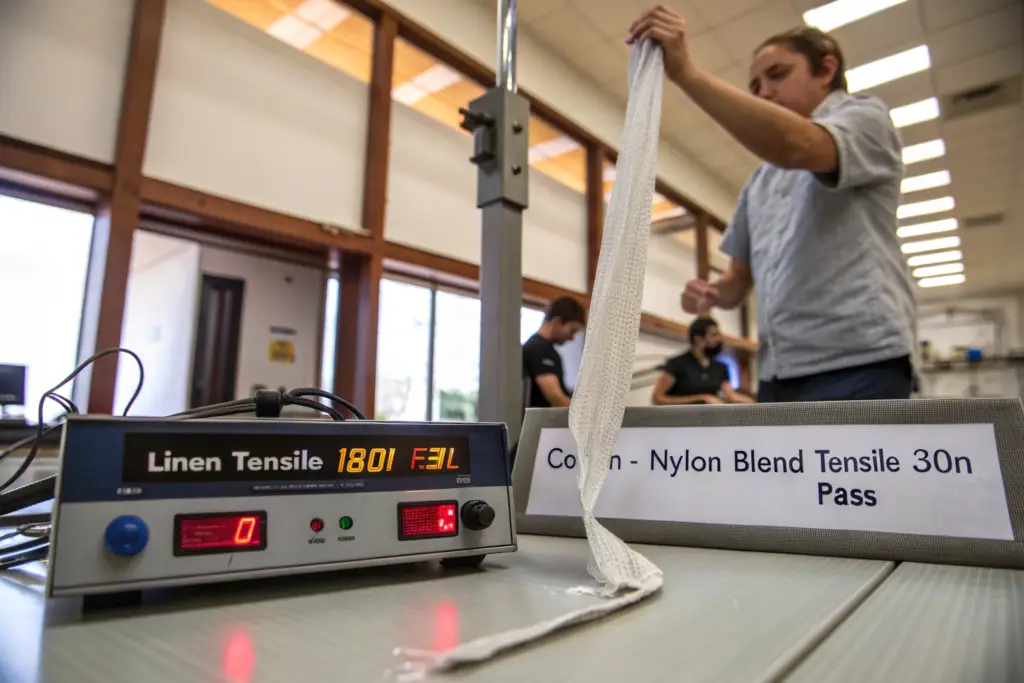
How Does a "Cotton-Nylon Blend" Provide the Necessary Tensile Strength for Active Children's Wear Without Sacrificing Breathability?
Nylon fibers have a tensile strength of 4.5-6.0 grams per denier, approximately twice that of cotton. Blending 10-15% nylon into a cotton fabric significantly increases the fabric's tensile and tear strength without compromising the soft hand feel and breathability of the cotton. The nylon fibers act as an internal reinforcement grid within the cotton fabric structure.
Why Should "Seam Tensile Strength" Be Tested Separately From "Fabric Tensile Strength"?
A garment can fail at the seam even if the fabric itself is strong enough. The seam tensile test per ASTM D1683 pulls a sewn seam apart and measures the force at which the stitching or the fabric adjacent to the stitching fails. A children's Summer garment must have seam tensile strength that matches or exceeds the fabric tensile strength.
How Does "Colorfastness to Washing, Light, and Perspiration" Ensure a May Garment Still Looks Vibrant in August?
A Charleston-based coastal children's brand once launched a May collection in a stunning palette of vibrant corals, ocean blues, and sunny yellows. The colors were the collection's primary selling point. By August, the garments that had been worn, washed, and exposed to the Summer sun were pale, faded versions of their original selves. The coral had faded to a weak peach. The ocean blue had become a dull, greyish pastel. The yellow had practically disappeared. The brand had selected dyes for their initial visual impact but had not tested the fabric for colorfastness to the three specific agents that destroy Summer children's clothing: repeated washing, intense sunlight, and the salt and acid of childhood perspiration.
Colorfastness to washing per AATCC 61, to light per AATCC 16, and to perspiration per AATCC 15 ensures a May garment still looks vibrant in August by testing the dyed fabric against each of the three specific degradation agents that Summer children's clothing encounters, with a minimum grade of 4 on the AATCC grey scale for washing and perspiration, and a minimum grade of 4 on the blue wool scale for lightfastness, required for any fabric intended for a garment that will be worn, washed, and sun-exposed repeatedly over a three-month Summer season.
A Summer garment is washed after every wear. It is exposed to direct sunlight for hours while the child plays outside. It absorbs perspiration, sunscreen, and pool chemicals. The dye must be chemically stable against all three of these degradation agents. A dye that looks beautiful on the bolt but fades after five washes is a commercial liability that will generate returns, complaints, and a damaged brand reputation.
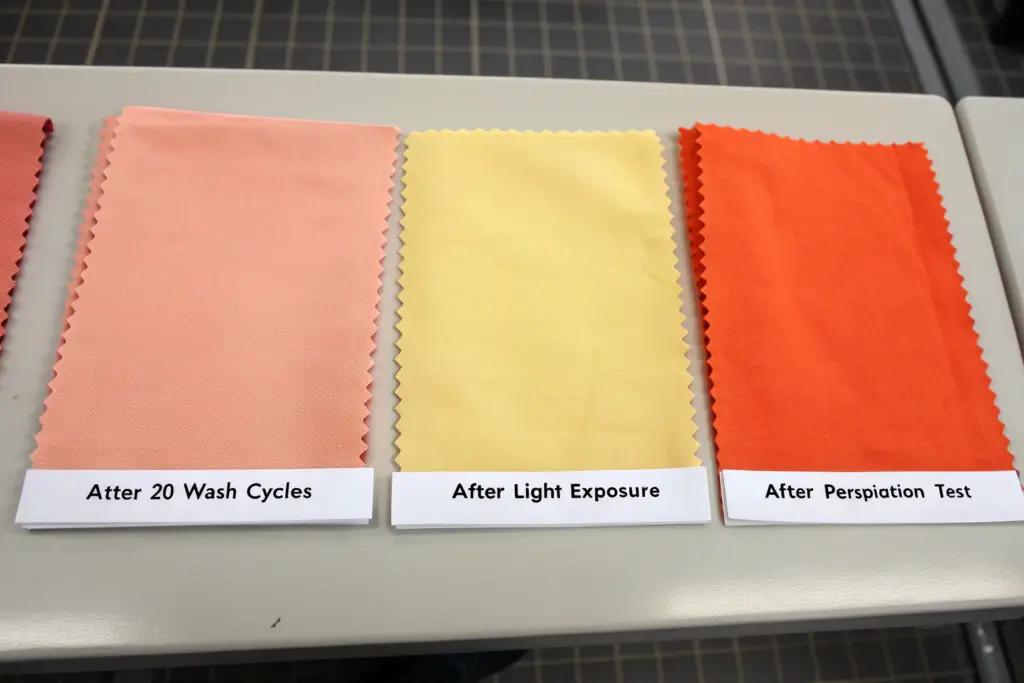
How Does the "AATCC 61 2A Accelerated Washing Test" Simulate Multiple Home Washes in a Single Laboratory Cycle?
The test uses a Launder-Ometer with a stainless steel canister, standardized detergent, and steel balls for mechanical agitation at an elevated temperature. One 45-minute test cycle approximates the color loss of five home washes. A fabric that passes with a grade of 4-5 after the test will maintain its color through a full Summer of washing.
Why Does "Perspiration Fastness Testing" Need to Include Both Acidic and Alkaline Simulated Sweat Solutions?
Human perspiration varies in pH depending on the individual, diet, and activity level. Acidic sweat and alkaline sweat can affect different dye types differently. A fabric must be tested against both to ensure colorfastness across the full range of real-world conditions.
What "Fabric Weight and Breathability Balance" Provides Durability Without Causing Overheating in May-to-August Temperatures?
A Minneapolis-based children's brand once over-corrected for a previous season's durability failures by selecting an extremely durable 280 GSM cotton canvas for their Summer shorts. The fabric was virtually indestructible. The Martindale score exceeded 50,000 cycles. The tensile strength was over 400 Newtons. The shorts survived the entire Summer without a single durability complaint. They also generated a new category of complaint: "My child refuses to wear these because they are too hot and heavy." The brand had solved the durability problem but had created a thermal comfort problem. The shorts were too heavy, too dense, and trapped too much heat for active Summer wear. The children were choosing to wear lighter, less durable shorts instead.
The fabric weight and breathability balance for durable children's Summer wear is achieved at 140-180 GSM for tops and 160-200 GSM for bottoms, with an air permeability of at least 60-80 CFM per ASTM D737, using a fabric construction that provides high tensile strength and abrasion resistance through fiber choice and weave structure rather than through sheer mass, ensuring the garment is durable enough to survive the playground but lightweight and breathable enough that a child will actually want to wear it on a 90-degree day.
Durability through mass—simply making the fabric heavier and denser—works, but it works at the expense of thermal comfort. A 280 GSM canvas short is durable but unwearable in Summer heat. A 160 GSM cotton-twill short with a nylon reinforcement can achieve nearly the same durability at a fraction of the weight. The durability is achieved through fiber engineering and weave structure, not through bulk.
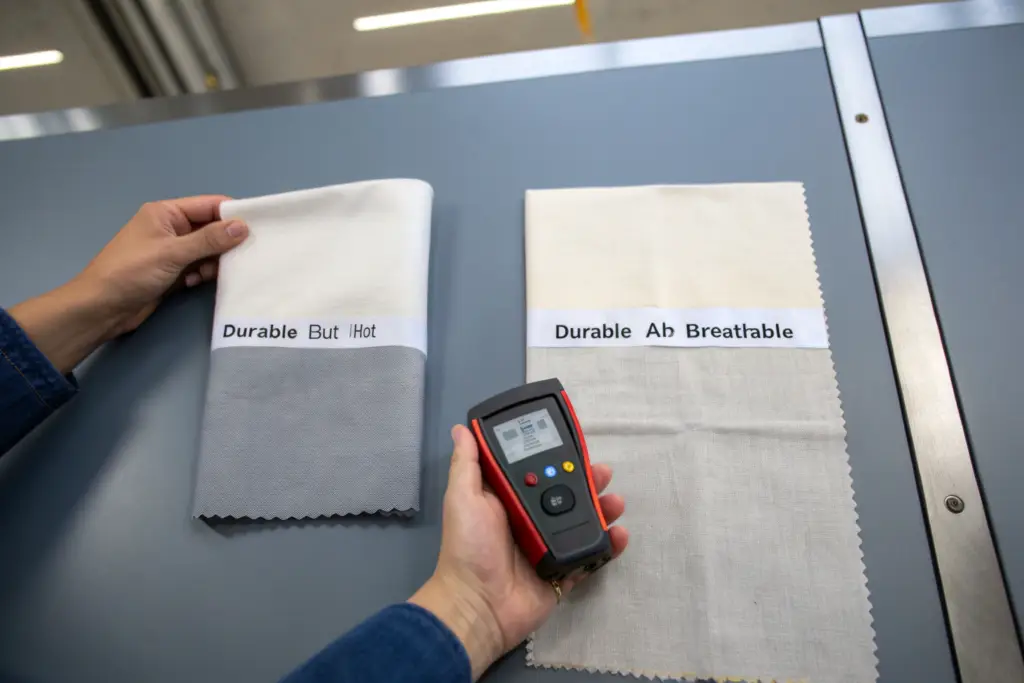
How Does a "Cotton-Nylon Blend With a Twill Weave" Achieve High Durability at 160 GSM That a "100% Cotton Poplin" Cannot Achieve at the Same Weight?
The nylon fibers provide high tensile strength and abrasion resistance without adding weight. The twill weave distributes friction across a wider surface area. Together, they produce a 160 GSM fabric with a Martindale score and tensile strength that a 100% cotton poplin of the same weight cannot match.
Why Should "Air Permeability CFM" Be Tested on the "Finished, Washed Fabric" Rather Than on the "Greige Fabric"?
The finishing processes—dyeing, softening, compacting—can close up the fabric's structure and reduce air permeability. The fabric must be tested after all finishing processes are complete, in the same state it will be in when the child wears it, to accurately measure its breathability.
Conclusion
Selecting durable fabrics for May children's Summer clothes requires a three-part testing protocol that evaluates the fabric against the specific mechanical and environmental stresses of an active child's Summer. The Martindale abrasion test per ASTM D4966 predicts whether the fabric will survive a season of playground slides, concrete, and grass, with a minimum of 20,000 cycles for tops and 30,000 cycles for bottoms. The tensile strength test per ASTM D5034 and burst strength test per ASTM D3786 predict whether the fabric will tear during the dynamic, high-force movements of climbing, running, and playing, with a minimum of 250 Newtons for woven fabrics and 200 kPa for knit fabrics. The colorfastness tests to washing, light, and perspiration per AATCC 61, 16, and 15 predict whether the vibrant May color will still look vibrant in August after three months of washing, sun exposure, and sweating. The fabric weight and breathability balance, at 140-180 GSM for tops and 160-200 GSM for bottoms, ensures that durability is achieved through fiber engineering and weave structure, not through heavy, hot, unwearable bulk.
At Shanghai Fumao, I require all three durability tests on every children's Summer fabric before it is released to my cutting tables. My fabric sourcing team selects cotton-twill blends, cotton-nylon reinforcements, and high-colorfastness dyes from mills that specialize in children's wear textiles. My QC team verifies the Martindale, tensile, and colorfastness test reports against my minimum thresholds before a single meter of fabric is cut.
If you are a brand buyer developing a children's Summer collection and you want a manufacturing partner who tests fabric durability as rigorously as you expect children to test your garments, contact my Business Director, Elaine. She can share our children's wear fabric durability specifications, our minimum Martindale, tensile, and colorfastness thresholds, and sample test reports from our current fabric library. Reach Elaine at: elaine@fumaoclothing.com. Test the fabric before you cut it, because a child will test it far more thoroughly than any laboratory can.