You have designed a beautiful collection of dresses and shirts. The fabric is perfectly pressed, the silhouette is immaculate. You carefully pack them, ship them to your wholesale customer, and hold your breath. The buyer opens the box, pulls out the garment, and their face falls. The shirt is a crumpled mess of deep, ugly creases. It looks cheap, shop-worn, and completely unappealing. Your beautiful product has been destroyed by its own packaging. A visual merchandiser for a high-end boutique once told me, "The moment a store owner has to steam a shirt before it can go on the floor, you've already failed. The packaging is not just a vessel; it's the final, critical manufacturing process that ensures your garment arrives in sellable condition."
Preventing creases in dresses and shirts requires a packaging strategy of structural support. The key principles are: 1) For Shirts: "Flat Pack" with a Rigid Insert (folding the shirt around a sturdy cardboard or foam board creates a structural core that resists bending and crushing), 2) For Dresses: Strategic Support and Controlled Folds (using acid-free tissue paper to cushion folds and, whenever possible, soft-folding delicate dresses into flat, wide boxes to minimize hard creases), and 3) The "Box" as the Ultimate Structural Shield (a rigid box is fundamentally superior to a compressible polybag for preventing crush-related wrinkles). You must build a structural skeleton inside the garment's packaging.
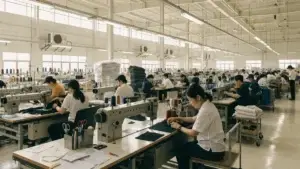
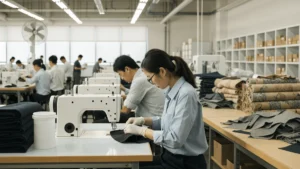
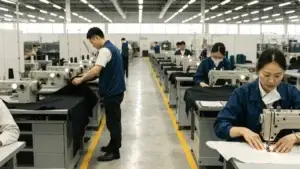
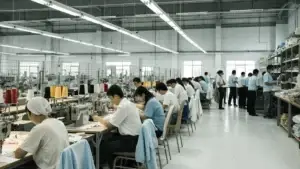
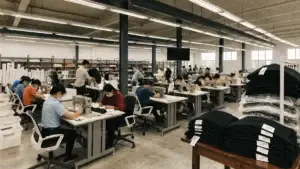
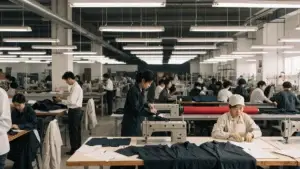
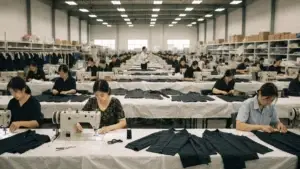
At Shanghai Fumao, we see the final presentation of your product as a critical part of our quality responsibility. We offer a range of crease-prevention packaging techniques as part of our integrated CMT and private label services. Let me explain the specific methods we use to ensure your garments arrive at your wholesale accounts looking as perfectly pressed as when they left our factory.
How to "Flat Pack" a Shirt with a Rigid Insert for a Flawless Retail-Ready Arrival?
The standard, cheap way to pack a shirt is to fold it haphazardly and stuff it into a soft polybag. Inside a shipping carton, these soft packages collapse and press into each other, creating deep, random, and stubborn creases. The professional, crease-free method is to transform the folded shirt into a rigid structural unit that can withstand the pressure and jostling of a long shipping journey. The secret weapon is a simple piece of cardboard.
The most effective way to prevent creases in a shirt is the "flat pack" method using a rigid cardboard or foam board insert. The shirt is buttoned, pressed, and laid flat. A piece of acid-free tissue paper is placed on the front to prevent friction and shine. A sturdy, custom-sized "shirt board" is inserted inside the shirt, acting as a structural core. The sleeves and sides of the shirt are then folded neatly over the board. The resulting package is a flat, rigid unit that cannot collapse or crease under external pressure. It arrives looking as crisp as it did when it was packed.
A premium men's wear brand we work with uses this exact method for all their shirting. Each garment is individually flat-packed around a custom-printed board that also serves as a subtle branding element. Their wholesale buyers constantly comment on how the shirts arrive in "perfect, retail-ready condition." The buyer can take the shirt out of the box, remove the polybag, and put it directly on the sales floor. This level of care is a direct reflection of the brand's premium quality. This is the standard of our retail-ready packaging service .

What Is a "Shirt Board" and How Does It Create a Rigid Structure?
A shirt board is a precisely cut piece of sturdy cardboard (similar to the back of a notepad) that is slightly smaller than the dimensions of the folded shirt. It is placed inside the shirt, behind the front placket. When the sleeves and sides are folded over it, it creates a flat, solid, and un-bendable core. The shirt can no longer fold in on itself and create creases. This is the fundamental engineering principle of crease-free shirting. This is a standard accessory we can provide in our custom packaging program .
Why Is Acid-Free Tissue Paper an Essential Part of the Crease-Prevention System?
The friction of fabric rubbing against fabric during transit can create surface shine and heat-set wrinkles. A layer of acid-free tissue paper between the folds acts as a soft, inert cushion. It allows the fabric to move slightly without creating friction marks and also prevents the long-term migration of acids, which is important for premium or archival-quality garments. It is a small, low-cost detail that makes a significant difference.
How to Soft-Fold Dresses to Minimize Hard Creases on Delicate Fabrics?
Dresses, especially those made from delicate, unforgiving fabrics like silk, viscose, or linen, are wrinkle magnets. A single, hard, sharp fold can create a permanent crease line that requires professional steaming to remove. The art of packing a dress is to eliminate hard folds entirely by creating a series of soft, supported, and rounded shapes that are held in place by a rigid outer box.
To prevent creases in dresses, especially delicate ones, you must avoid hard, flat folds. The technique is "soft-folding" using generous amounts of acid-free tissue paper. Each time the fabric needs to be folded, a cushion of loosely rolled tissue paper is placed inside the fold, creating a soft, rounded loop instead of a sharp, flat crease. The entire, softly folded garment is then placed into a wide, flat, and rigid box. The box provides structural protection from crushing, while the internal soft folds prevent self-creasing.
A luxury women's wear designer we work with sends her delicate silk dresses using this exact method. The dresses arrive not as crumpled messes, but with soft, gentle curves. A small note on the packaging explains, "Your garment has been soft-folded for transport. Minor, gentle creases will release naturally when hung." Her customers see this meticulous care as a hallmark of the brand's quality. This is the level of detail we bring to our luxury garment handling .
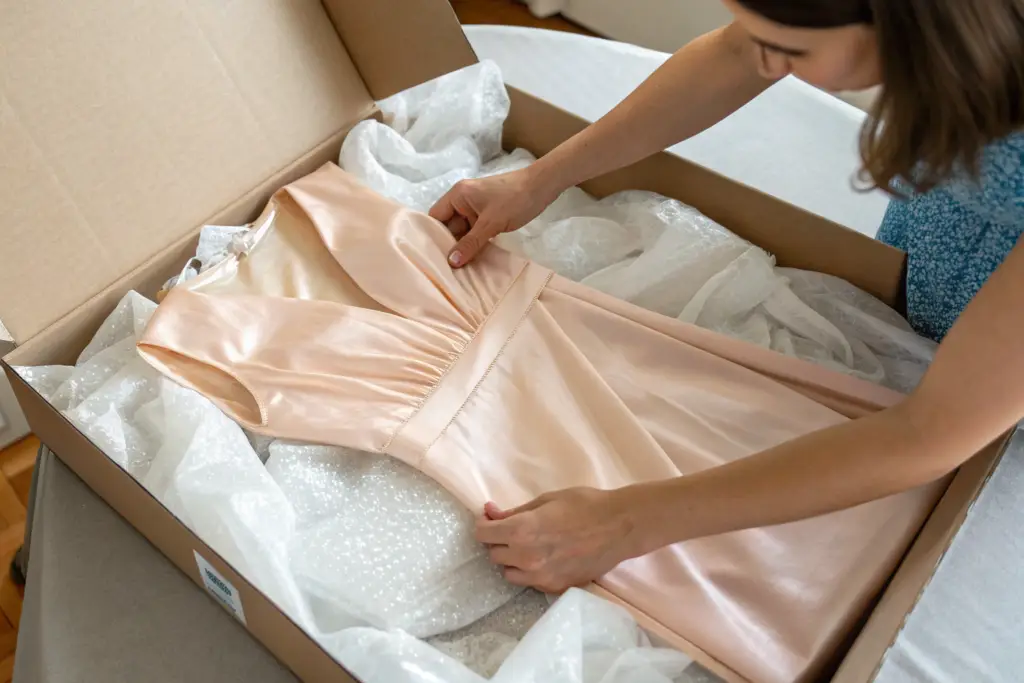
Why Is a Rigid Box a Better Structural Shield for a Dress Than a Malleable Polybag?
A polybag offers zero structural protection. It can be crushed, bent, and folded, and every external force is transferred directly to the fabric inside. A rigid cardboard box acts as a structural exoskeleton. It absorbs the crushing forces of transit and protects the delicate folds within. For a premium dress, the upgrade from a polybag to a custom, flat box is the single most effective crease-prevention strategy.
What Is the Best Way to Handle Deep Necklines and Delicate Embellishments During Packing?
These high-value areas need extra care. The deep "V" of a neckline can be supported with a lightweight, shaped cardboard insert to prevent it from collapsing and creasing. Delicate beading or embroidery should be protected with an extra layer of soft tissue paper or a small piece of foam padding, gently secured in place. This is custom, surgical packing, and it is what a premium brand demands. This is the standard of our specialty garment packing .
How Can Garment Bags and the "Box vs. Polybag" Strategy Be Used for Different Shipping Needs?
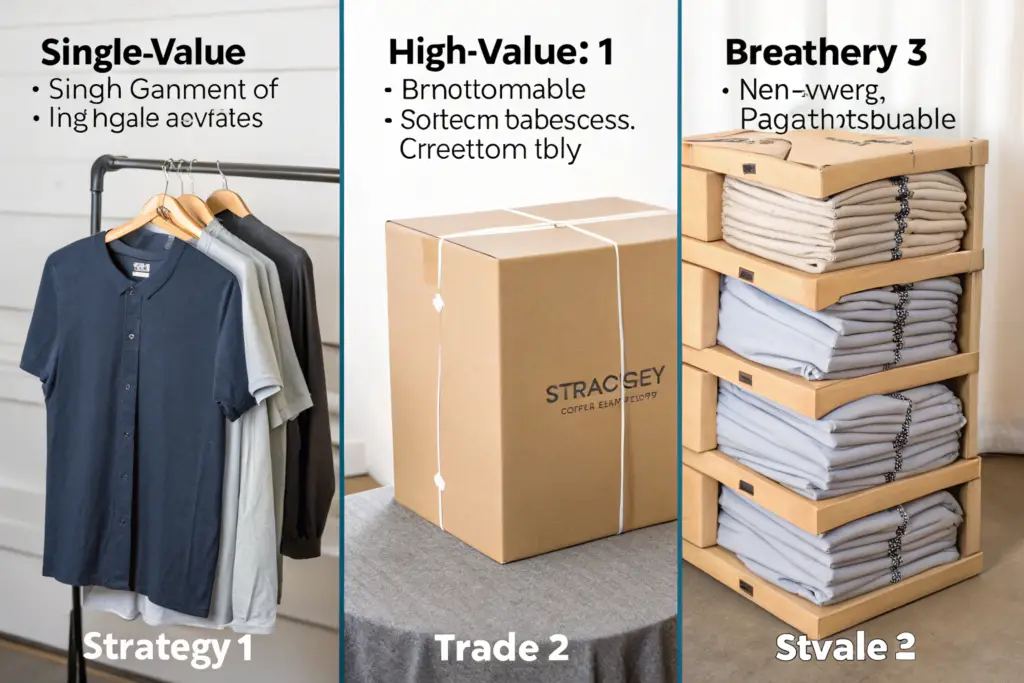
There is a spectrum of crease-prevention strategies, and the correct choice depends on the value of the garment and the expectations of the customer. You would not flat-pack a basic promotional t-shirt, but you absolutely must for a $200 dress shirt. Understanding the hierarchy of options—from a crushable polybag for a cheap, wrinkle-resistant item to a full, hanging garment bag for a luxury suit—is essential for managing costs while protecting your brand's quality.
The choice of packaging strategy should be proportional to the garment's value and the customer's expectations. For high-value, tailored garments, a "Hang & Box" method, where the garment is hung inside a breathable garment bag and then folded once into a rigid box, provides the ultimate protection. For premium shirts, flat-packing on boards is the gold standard. For large bulk orders of basic, durable items that can be quickly steamed by the retailer, efficient folding into cartons is an acceptable and cost-effective strategy.
A brand we work with produces both a high-end tailored blazer line and a large volume of basic cotton tees. For their blazers, they use the full Hang & Box method. The blazers arrive virtually ready to wear, and the packaging experience feels incredibly premium. For their tees, they use a simple, efficient fold and a polybag, accepting that the retailer will quickly steam them. This tiered strategy allows them to protect their luxury image while remaining cost-competitive on their basics. This is the intelligent application of a tiered packaging strategy .
What Is the "Hang & Box" Method for Ultimate Suit and Jacket Protection?
This is the gold standard for tailored garments. The garment is placed on a padded, shaped hanger specifically designed for shipping. It is then enclosed in a full-length, breathable, non-woven garment bag. This entire unit is then carefully folded in half, once, and placed inside a large, rigid box. The hanger and the bag provide the primary structure; the box provides the outer armor. The customer receives a garment that is virtually ready to wear.
When Is It Acceptable to Use a Standard Polybag for a Dress or Shirt Without Causing Damage?
A standard polybag is acceptable only for garments that are either made from a highly wrinkle-resistant fabric (like a heavy polyester knit) or for low-cost, high-volume items where minor creasing is an accepted norm and the retailer has the infrastructure to efficiently steam goods en masse. A polybag should never be used for a premium natural-fiber garment like a linen dress or a cotton poplin shirt. This is a key part of our packaging consultation .
How Does Fumao's Packing Expertise Ensure Your Garments Arrive in Pristine Condition?
The final presentation of a garment is not an afterthought; it is the last, critical manufacturing process. Our packing team is trained to treat each category of product with a specific, engineered protocol designed to ensure it arrives in the best possible condition. We do not just fold; we engineer the protection of your design. This meticulous care is what separates a premium partner from a simple factory.
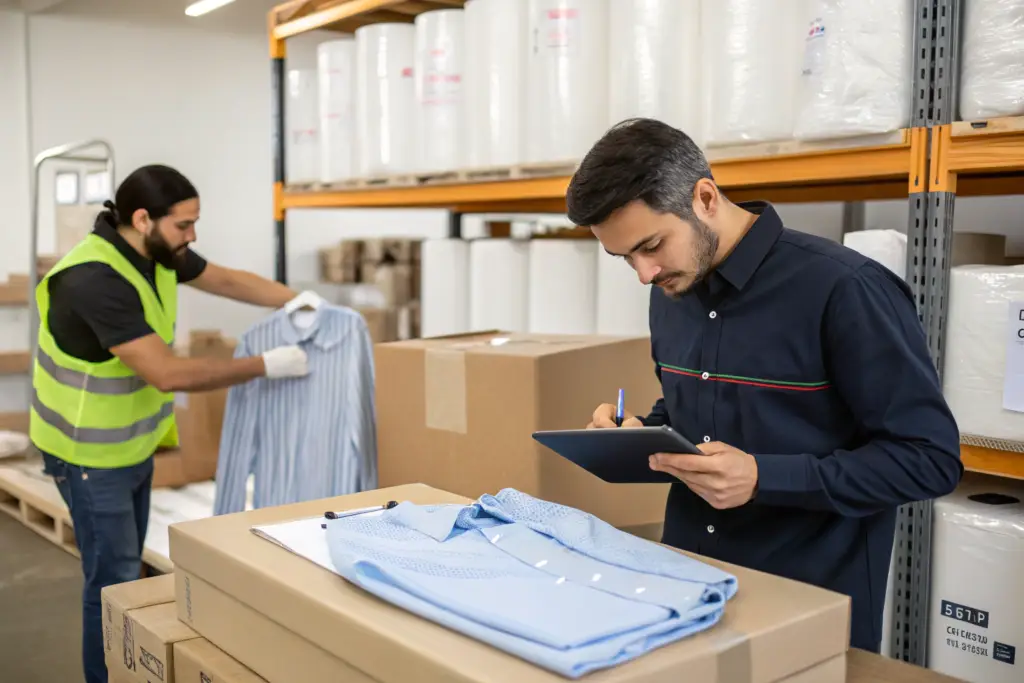
Fumao's packing expertise ensures your garments arrive in pristine condition by treating packing as a quality-controlled, engineered process. We consult with you to determine the optimal crease-prevention strategy for each garment type in your collection. Our packing teams are trained in specific protocols for flat-packing shirts, soft-folding dresses, and using the "Hang & Box" method for tailored pieces. This is not haphazard; it is a managed, audited, and consistently executed final step in our production process.
A new brand partner was amazed when their first shipment of tailored blazers arrived. They had always received blazers from previous suppliers that were a crumpled mess. "I was braced for the worst when I opened the box," they said. "Instead, I pulled out a perfectly protected, beautiful garment that looked like it had just come off the pressing table. Your packing team clearly takes as much pride in my product as the sewers who made it." That is our standard. We protect your vision right down to the final fold. This is the value of a detail-obsessed manufacturing partner .
How Do You Determine the Best Crease-Prevention Strategy for a Specific Garment?
We have a collaborative consultation. We evaluate the fabric, the silhouette, the value of the garment, and your budget. We then present the pros and cons of different methods—from a simple fold to a full "Hang & Box"—and guide you to the best solution. This is a key part of our product development and finishing services .
How Do You Ensure Consistent Packing Quality Across a Large Production Run?
We use detailed, visual "Brand Packout Guides" that are created for each of your styles. These are step-by-step, photographed instructions that are placed at the packing stations. Our QC team audits the finished packages just like they audit a seam, ensuring that every single unit is packed perfectly to the agreed standard. Consistency is our obsession. This is the standard of our quality-controlled finishing .
Conclusion
Preventing creases in dresses and shirts is a science of structural support. It requires moving beyond the simple polybag and embracing the engineering principles of the rigid insert, the soft, cushioned fold, and the protective outer box. This final, meticulous step is what ensures your beautiful product arrives at its destination looking as immaculate as it did the moment it was made, ready for the sales floor.
At Shanghai Fumao, we understand that our job is not finished when the last stitch is sewn. It is finished when the garment is perfectly presented, protected, and ready to sell. Our expert packing protocols and our commitment to quality in every detail provide the final, critical assurance that your brand's premium image is preserved from our floor to your customer's door.
If you want a manufacturing partner who cares as much about the final presentation as you do, let's talk. Our Business Director, Elaine, can walk you through our packing and finishing options. Please email Elaine at: elaine@fumaoclothing.com.