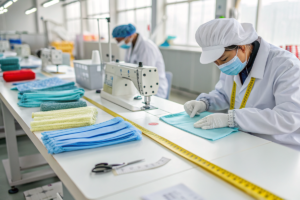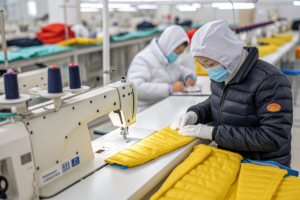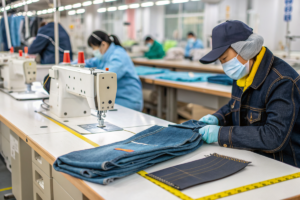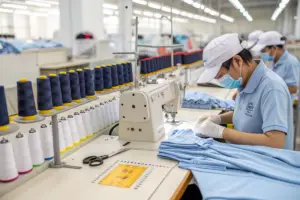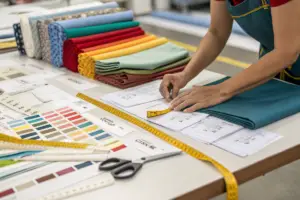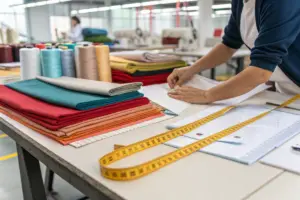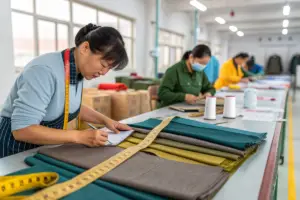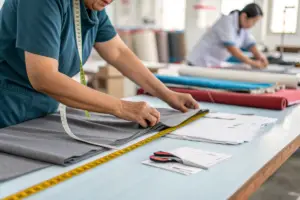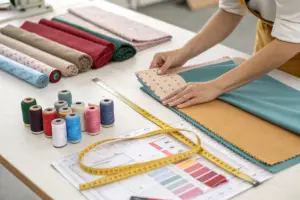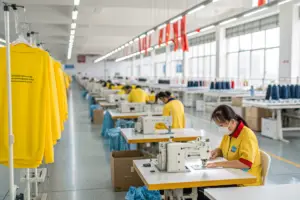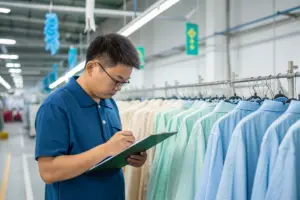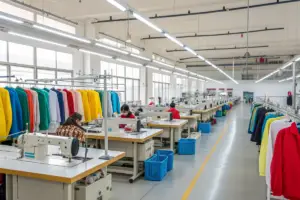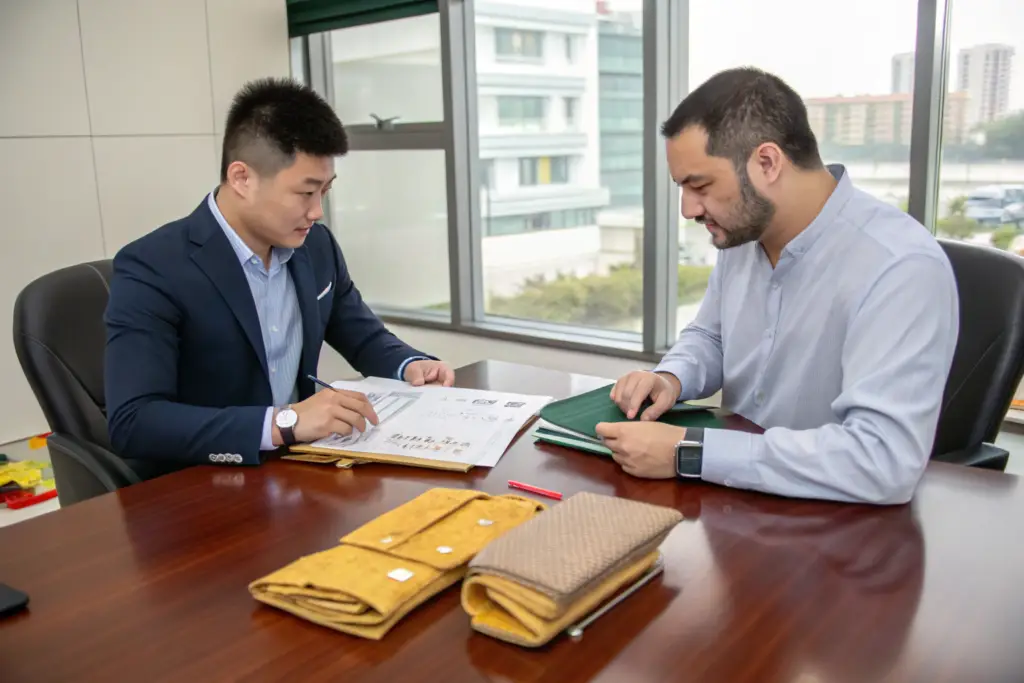
Eighteen months ago, a Denver-based outdoor apparel brand decided to transition from a generic, low-cost trading company supplier to a fully custom B2B manufacturer. The founder had spent five years building a loyal customer base with unique, functional designs, but every season, the trading company's quality drifted, the communication was filtered through a non-technical sales agent, and the brand's proprietary fabric developments kept appearing in competitor products. The founder knew she needed to move to a direct, custom manufacturing partnership. She spent three months preparing the transition. She compiled two years of sell-through data, documented every quality failure from the previous supplier, built a complete tech pack library, and personally visited three potential manufacturing partners. The transition took four months from first contact to first shipped order. The result was a 22% reduction in per-unit landed cost, a 40% drop in defect rate, and a production partner who treated her intellectual property as protected, not as a product to be resold.
The exact steps to transition your apparel brand to a fully custom B2B manufacturer are: Step One, conduct a "Supply Chain Audit" of your current production to document every specification, cost component, and quality failure from your existing supplier; Step Two, prepare a "Transition-Ready Brand Package" including two years of sell-through data, a complete graded tech pack library, and your trademark registration certificate; Step Three, vet potential manufacturers using live video factory verification, business license scope check, and direct owner meeting; Step Four, execute a "Parallel Production Pilot" where the new factory produces a 300-500 unit test order while your current supplier completes its final order; and Step Five, transition fully by signing a comprehensive manufacturing agreement with IP protection, liquidated damages, and a 12-month capacity reservation.
At Shanghai Fumao, I have guided multiple brands through this exact transition. The brands that succeed are the brands that treat the transition as a structured business process with specific deliverables at each stage, not as a simple supplier switch that can be accomplished with a single email and a purchase order.
Step One: How Do You Conduct a "Supply Chain Audit" of Your Current Production to Build the Specification Baseline?
A Chicago-based workwear brand once transitioned to a new manufacturer without first documenting their existing production baseline. The new factory asked, "What was your previous defect rate?" The brand owner guessed 3%. The new factory quoted based on a 3% defect tolerance. When production began, the brand discovered that their actual previous defect rate was 7%—they had just never measured it systematically. The new factory, priced and resourced for a 3% defect standard, was unprepared for the complexity of the brand's construction requirements, and the first order experienced delays and cost overruns.
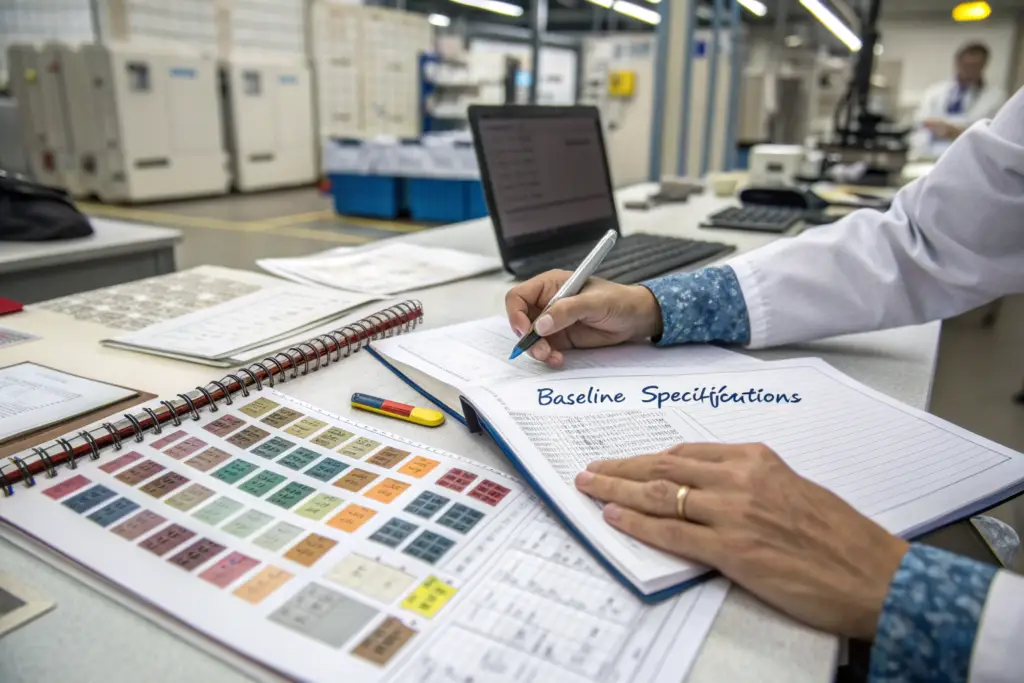
The Supply Chain Audit is a systematic documentation of your current production reality, and it must capture four specific data sets: a "Quality Failure Log" listing every defect type, frequency, and batch number from the past 24 months; a "True Cost Breakdown" deconstructing every current supplier invoice into fabric cost, trim cost, labor cost, and logistics cost to establish the baseline for negotiating with the new manufacturer; a "Complete Specification Library" compiling every tech pack, measurement chart, approved sample, and lab dip from every active style; and a "Supplier Failure Log" documenting every instance of late delivery, communication breakdown, IP leakage, or certificate fraud experienced with the current supplier.
You cannot negotiate effectively with a new manufacturer if you do not know exactly what you are currently paying and exactly what quality you are currently receiving. The Supply Chain Audit transforms "I think my current supplier is expensive and unreliable" into "My current supplier charges $8.20 FOB per unit with a 6.8% major defect rate and an average delivery delay of 11 days."
How Does the "True Cost Breakdown" Reveal Hidden Margin That the Current Supplier Is Capturing?
The brand requests a detailed cost breakdown from the current supplier, showing the fabric cost per meter, the trim cost per unit, the CMT labor cost, and the logistics cost. If the supplier refuses to provide this breakdown, that refusal itself is data. Comparing the total against market rates often reveals a 15-25% intermediary margin that a direct manufacturer will not charge.
Why Must the "Quality Failure Log" Categorize Defects by Type, Not Just Count Total Defects?
A log that simply states "3% defect rate" is useless. A log that categorizes defects into "seam failure - 1.2%," "shade variation - 0.8%," "label error - 0.5%," and "button attachment - 0.5%" tells the new manufacturer exactly which production stations require additional QC attention. The new factory can staff inline inspectors at those specific stations from day one.
Step Two: What Specific Documents and Data Comprise a "Transition-Ready Brand Package" That a Serious Manufacturer Will Respect?
A Los Angeles-based contemporary brand once approached a reputable manufacturer with a single email: "We make nice dresses, can you give us a quote?" The manufacturer, receiving dozens of similar vague inquiries every week, responded with a generic, high price and a long lead time. The brand was not taken seriously because they had presented themselves as a hobbyist, not as a business. Six months later, the same brand re-approached with a complete brand package, including sell-through data showing consistent 75% full-price sell-through on a 24-month basis. The manufacturer's response transformed completely.
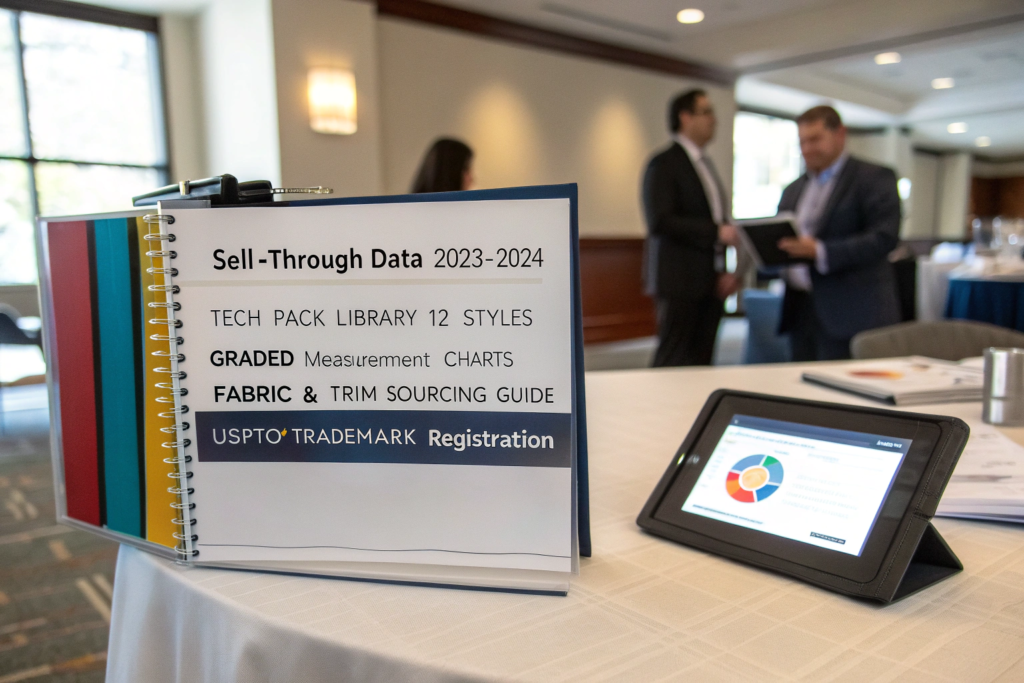
A Transition-Ready Brand Package that commands a serious manufacturer's respect must include: a "Brand Overview Document" with the company's founding story, target customer demographics, distribution channels, and annual revenue range; a "Sell-Through Data Report" covering a minimum of 24 months, showing full-price sell-through percentages, return rates, and best-selling styles; a "Complete Tech Pack Library" with fully graded measurement charts, fabric specifications, and construction details for every active style; a "Quality Standards Document" specifying acceptable defect rates, measurement tolerances, and testing requirements; and a "Trademark Registration Certificate" proving legal ownership of the brand's name and logo.
A reputable manufacturer receives dozens of inquiries every week. They are looking for brands that represent a long-term, growing partnership, not a one-time order. The brand package signals that you are a professional business with documented demand, clear specifications, and legal asset protection.
Why Does "24 Months of Sell-Through Data" Signal a Lower-Risk Partnership to a Manufacturer?
A brand that can show 24 months of consistent, documented sell-through is a brand with proven market demand. The manufacturer can confidently invest in dedicated production capacity, greige fabric reservations, and specialized operator training, knowing that the brand is likely to place consistent reorders and grow, rather than placing one order and disappearing.
How Does the "Trademark Registration Certificate" Immediately Elevate the Brand's Perceived Professionalism?
The certificate proves that the brand has invested in legal protection for its intellectual property. It signals that the brand will include an IP protection clause in the manufacturing agreement, and it gives the manufacturer confidence that the brand is a legitimate, registered business, not a temporary venture. It also enables the CBP trademark recordation that protects the brand at the US border.
Step Three: How Do You Vet a Potential Manufacturer Using Live Video Verification, Business License Audit, and a Direct Owner Meeting?
A Nashville-based lifestyle brand once selected a new manufacturer based on a beautiful website, responsive email communication, and excellent pre-production samples. They signed the contract and wired a 30% deposit of $27,000. The factory was a trading company with a rented showroom. The samples had been produced by a third-party sample room. The bulk order arrived six weeks late, with fabric that failed fiber content testing, and the brand had no legal recourse because the contract was with a trading company that had no physical assets.
To vet a potential manufacturer, you must conduct three non-negotiable verification steps: first, a live, unscripted video walk-through starting from the factory's exterior company sign, moving in a single continuous shot through the production floor, to a randomly requested machine serial plate, proving spatial and operational continuity; second, a business license audit where the brand independently verifies the supplier's unified social credit code on the National Enterprise Credit Information Publicity System and confirms the business scope includes the specific manufacturing authorization terms; and third, a direct video meeting with the factory owner—not a sales representative—where the brand asks about the factory's client concentration, financial stability, and capacity allocation for the upcoming season.
A website is a marketing asset. A sample is a one-off production. A trading company sales representative is a professional intermediary. None of these are evidence of manufacturing capability. The live video walk-through, the government business license database, and the direct owner conversation are evidence.
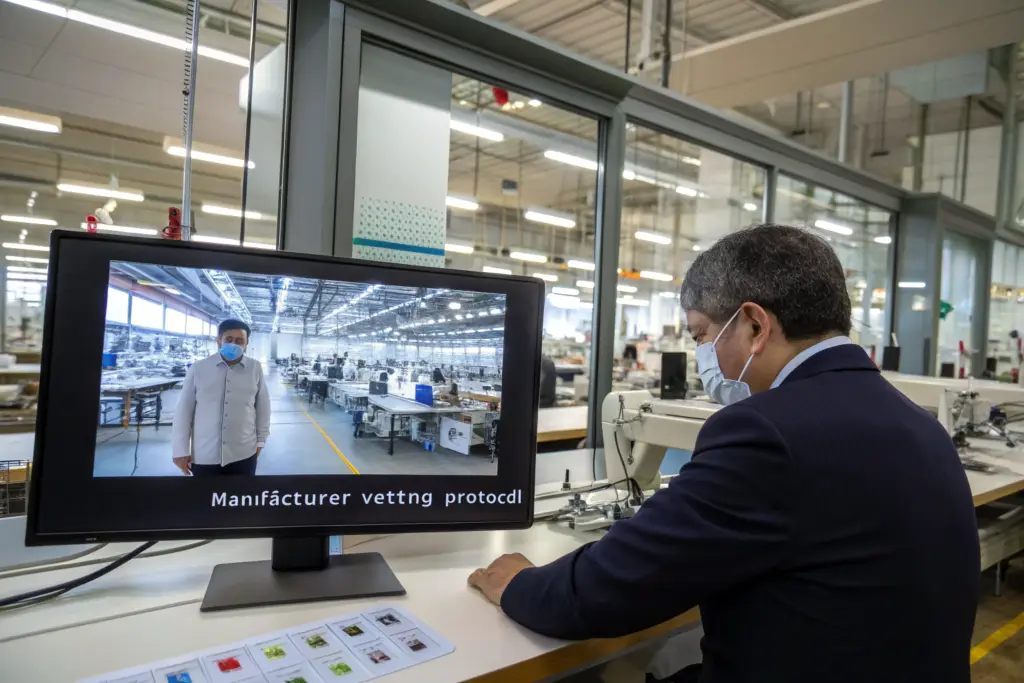
How Does the "Client Concentration Question" During the Owner Meeting Reveal Whether Your Order Will Be Prioritized?
The question is: "What percentage of your annual revenue comes from your single largest client?" If the answer is above 40%, the factory is dangerously dependent on one client, and your order will always be deprioritized when that client places a rush order. A healthy, balanced factory has no single client exceeding 25% of revenue.
Why Must the Factory Owner Be Asked Directly About Their "Raw Material Supplier Payment Status"?
A factory that is behind on payments to its fabric mills may be placed on credit hold, unable to procure your raw materials despite having received your deposit. The owner knows the true payment status. A direct question, asked face-to-face on video, is harder to evade than an emailed question.
Step Four: Why Is a "Parallel Production Pilot" the Only Safe Way to Test a New Manufacturer Without Risking Your Season?
A Portland-based sustainable brand once cancelled their existing supplier and placed their entire Spring order of 4,000 units with a new, unproven manufacturer. The new manufacturer promised an 8-week lead time. At week 10, the fabric had still not arrived due to a mill delay the manufacturer had not disclosed. The brand had no backup inventory. Their wholesale accounts cancelled. Their e-commerce store showed "Out of Stock" on every item for six weeks. The brand lost $120,000 in revenue and two major wholesale partnerships. The entire catastrophe was preventable with a parallel production pilot.
A Parallel Production Pilot is a risk-management structure where the new manufacturer produces a small, 300-500 unit test order—typically 10-15% of the seasonal volume—while the current supplier simultaneously produces the remaining 85-90% of the season's order, allowing the brand to evaluate the new manufacturer's actual production quality, communication reliability, logistics performance, and documentation accuracy on a small, low-risk order before committing the entire season's inventory to an unproven partner.
The pilot order is not a sample. It is a fully commercial, paid order, produced on the actual production line by the actual operators who will produce the future bulk orders. It tests every system: raw material procurement, cutting, sewing, finishing, QC inspection, packing, and shipping. A beautiful sample tests only the sample room.
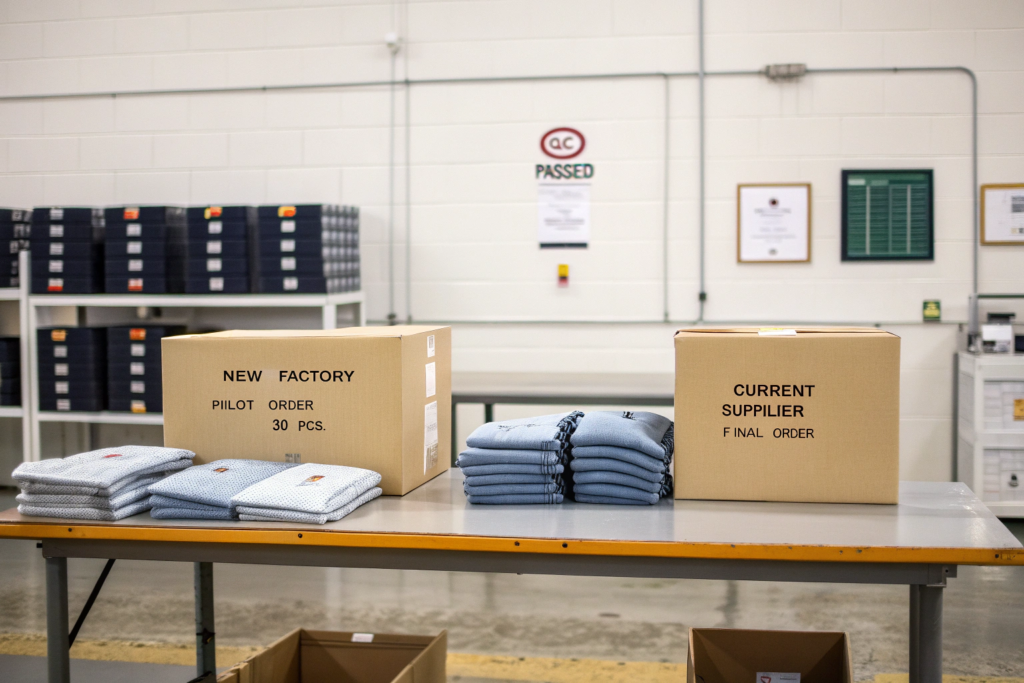
How Does the "Pilot Order Evaluation Scorecard" Objectively Compare the New Factory Against the Old Factory?
The scorecard tracks five metrics on the pilot order: On-Time Delivery (was the shipment date met?), Quality Performance (what was the AQL defect rate compared to the old factory's baseline?), Communication Responsiveness (average hours to respond to an inquiry?), Documentation Accuracy (were all certificates, invoices, and packing lists correct?), and Landed Cost Accuracy (did the final landed cost match the quoted cost?). The new factory must meet or exceed the old factory on at least four of five metrics before the brand transitions fully.
What Is the Minimum Pilot Order Quantity That Provides Statistically Valid Quality Data?
A pilot order of 125 units provides a statistically valid sample for an AQL 2.5 inspection. A pilot order of 300-500 units provides enough units to also test the factory's ability to manage multi-color, multi-size production complexity, which a smaller order cannot test.
Step Five: What Specific Clauses Must the Final Manufacturing Agreement Include to Legally Protect the Brand and Secure Future Capacity?
A Miami-based resort wear brand once transitioned to a new manufacturer with a simple, two-page purchase order as their only contract. The relationship was positive for two seasons. In the third season, the brand discovered their designs being sold on a grey-market e-commerce platform by an unknown seller. The brand had no IP protection clause in their agreement. The factory had not technically breached any contract, because the contract had never prohibited the resale of designs. The brand's entire transition investment—the months of specification work, the pilot order, the relationship building—was undermined by a missing legal clause.
The final manufacturing agreement must include: an "Intellectual Property and Non-Competition Clause" prohibiting the factory from retaining, reproducing, or selling the brand's designs, patterns, or samples, with a liquidated damages penalty of at least 200% of the infringed order value; a "Capacity Reservation Clause" that contractually allocates a specific production line for a defined number of weeks per season; a "Quality and Delivery Performance Clause" with measurable KPIs, AQL standards, and a self-executing late delivery penalty of 0.5% per day up to 5% of the order value; and a "Dispute Resolution Clause" specifying binding arbitration in a neutral jurisdiction such as Singapore or Hong Kong under UNCITRAL rules.
A purchase order is a commercial document. A manufacturing agreement is a legal architecture that protects the brand's intellectual property, secures its production capacity, enforces its quality standards, and provides a clear, enforceable dispute resolution pathway. The transition is not complete until the agreement is signed.
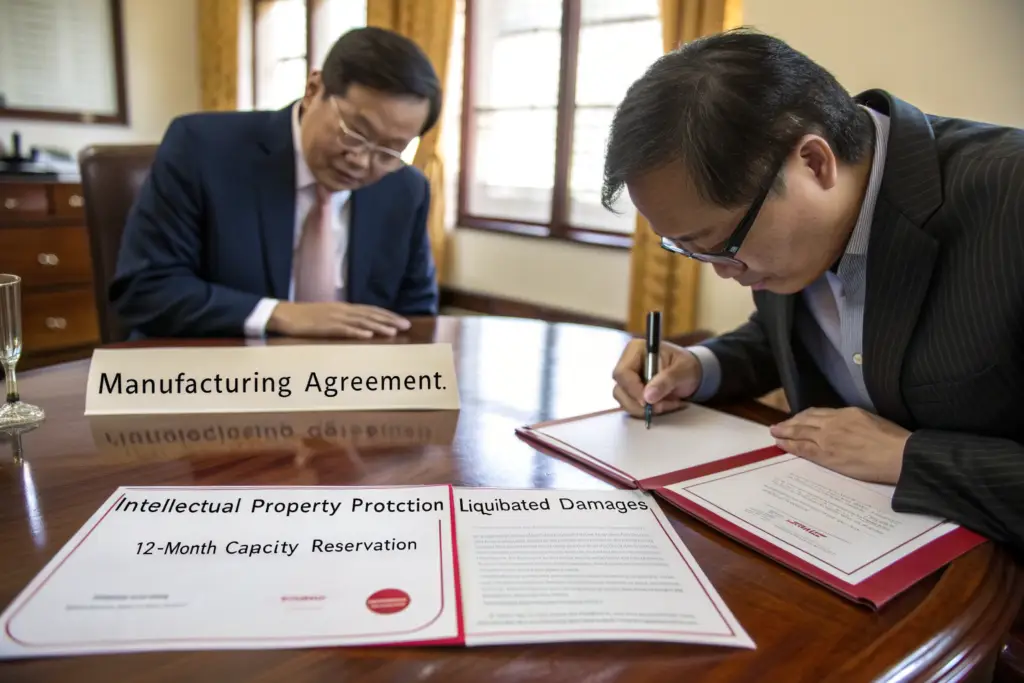
How Does a "12-Month Capacity Reservation Clause" Prevent the Factory From Dropping Your Order for a Larger Client?
The clause states: "The Manufacturer shall reserve Production Line [X] for a minimum of [Y] production weeks during each of the four calendar quarters of the contract year, as detailed in the attached Production Calendar." This legally binds the factory to allocate physical sewing capacity to the brand, preventing the "larger client bumped your order" scenario.
Why Must the "Dispute Resolution Clause" Specify Arbitration in Singapore or Hong Kong Rather Than Litigation in the Factory's Local Courts?
A local court judgment in the factory's province may be difficult for a foreign brand to enforce. A Singapore or Hong Kong arbitration award is enforceable in China under the New York Convention, an international treaty ratified by both China and the United States. It provides a neutral, enforceable legal pathway that local litigation does not.
Conclusion
Transitioning your apparel brand from a generic supplier to a fully custom B2B manufacturer is a five-step business process that, when executed correctly, reduces per-unit cost, improves quality consistency, protects intellectual property, and secures long-term production capacity. The Supply Chain Audit documents exactly what you are leaving behind. The Transition-Ready Brand Package signals to serious manufacturers that your brand is a professional, data-backed, long-term opportunity. The three-part vetting process—live video walk-through, business license audit, and direct owner meeting—eliminates trading companies and financially unstable factories. The Parallel Production Pilot tests the new manufacturer on a small, low-risk order while your current supplier maintains your seasonal inventory. The comprehensive manufacturing agreement legally protects your intellectual property, secures your capacity, enforces your quality standards, and provides a neutral dispute resolution pathway.
At Shanghai Fumao, I welcome brands that approach the transition with this level of structured preparation. I do not want a single email asking for a price. I want a brand package, a clear quality standard, a pilot order plan, and a fair, comprehensive agreement. The brands that invest in this process are the brands that become long-term, mutually profitable partners.
If you are a brand buyer ready to begin the structured transition to a fully custom B2B manufacturing partnership, contact my Business Director, Elaine. She can share our transition timeline template, our pilot order evaluation scorecard, and the key clause language for the manufacturing agreement. Reach Elaine at: elaine@fumaoclothing.com. Transition with structure, not with hope.