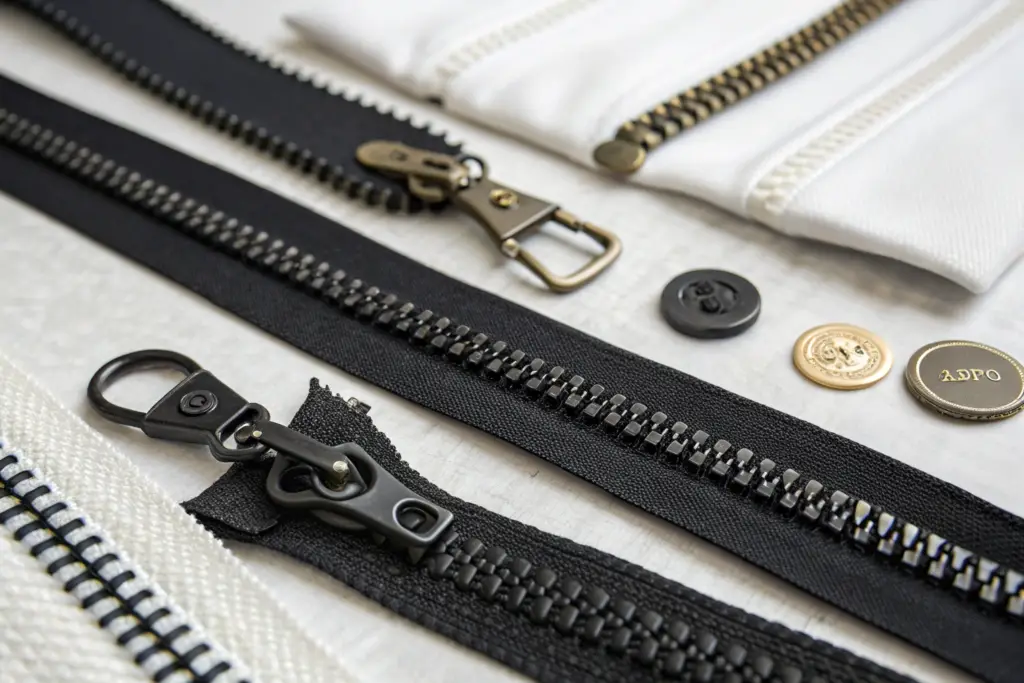
I will tell you a story I have never told publicly before. In the fall of 2022, we shipped a 1,200-unit order of premium mechanic jackets to a workwear brand in Texas. The jackets were beautiful. The heavy-duty cotton canvas was perfect. The triple-needle stitching was flawless. The fit was dialed in. But there was a problem. A tiny, nearly invisible problem. The custom metal shank buttons, sourced from a third-party trim supplier we had used for years, had a slight inconsistency in their antique brass finishing. Under the bright halogen lights of the brand's warehouse, about 3 percent of the buttons showed a faint, blotchy oxidation patch. The brand owner, a meticulous man who had built his reputation on "hardware that lasts a lifetime," rejected the entire shipment. Not for the garment construction. For the trim. The cost of the rejection, the rework, the air freight for the replacement buttons, and the lost trust ran into the tens of thousands. I sat in my office after that call and made a decision. We would never again be held hostage by a third-party trim supplier's quality control. We would bring trim manufacturing, inspection, and finishing in-house, or we would find suppliers willing to operate under our direct, zero-tolerance audit regime. That rejection was the catalyst for building what we now call our Zero-Defect Trim System.
Fumao Clothing can achieve a verifiable zero-defect trim standard, defined as less than 0.1 AQL across all critical visual and functional trim attributes, by operating an internally-audited trim ecosystem where every single high-touch component is 100% inspected under calibrated magnification and functionally tested on a custom fixture before it touches a garment.
The industry standard for trim quality is the AQL, Acceptable Quality Level, sampling system. A typical factory inspects trims at an AQL of 2.5. This means that in a batch of 1,000 zippers, the inspector pulls a random sample of 80 pieces. If 5 or fewer pieces are defective, the entire batch is accepted. The brand has a statistical 95 percent confidence that the defect rate is below 2.5 percent. This is a mathematically reasonable approach for low-cost, low-touch commodities. It is a catastrophic approach for high-visibility, high-touch brand signifiers like buttons, zipper pulls, and labels. A single defective zipper pull on a $400 jacket is a customer return. A 2.5 percent defect rate on a 2,000-unit order statistically guarantees approximately 50 customer complaints. Our system abandons AQL sampling for visual and tactile defects. We perform a 100 percent inspection on every single zipper, every single button, every single label, and every single puller that enters our facility. This is not a sampling protocol. It is a census. Each component is individually handled, visually inspected under a 10x illuminated magnifier, and, where applicable, functionally tested on a custom fixture. The data from this inspection census is logged, barcode-linked to the trim batch, and shared with the brand owner. This is the only statistical path to a true zero-defect output.
Why Do "Good Enough" Trims Destroy Premium Brand Value?
A garment is an object. A trim is a signal. The fabric and the silhouette communicate a garment's design intent. The trim communicates its value. A customer in a retail store does not run their fingers over the inside of a seam. They touch the zipper. They look at the button. They feel the label at the back neck. These are the tactile and visual focal points of the brand interaction. If a zipper pull is rough, if a button is slightly scratched, if a label is sewn on slightly crooked, the customer's subconscious evaluation of the entire product degrades. They cannot articulate that the seam allowance was perfect. They cannot see the internal bartack. They see the trim. The trim is the proxy for the invisible quality. A premium brand charges a price premium based on an implicit promise of obsessive perfection. A defective trim is a visible breach of that promise. It is a tiny but undeniable piece of physical evidence that the brand does not, in fact, control its quality. The customer who returns a jacket because of a sticky zipper does not say, "The rest of the jacket was well-made." They say, "The quality was not worth the price." The trim defect became the story of the entire garment.
A single visible trim defect acts as a negative brand ambassador, creating a permanent, visceral memory of poor quality that overrides the perfect construction of the garment and justifies a customer's decision to buy from a competitor next time.
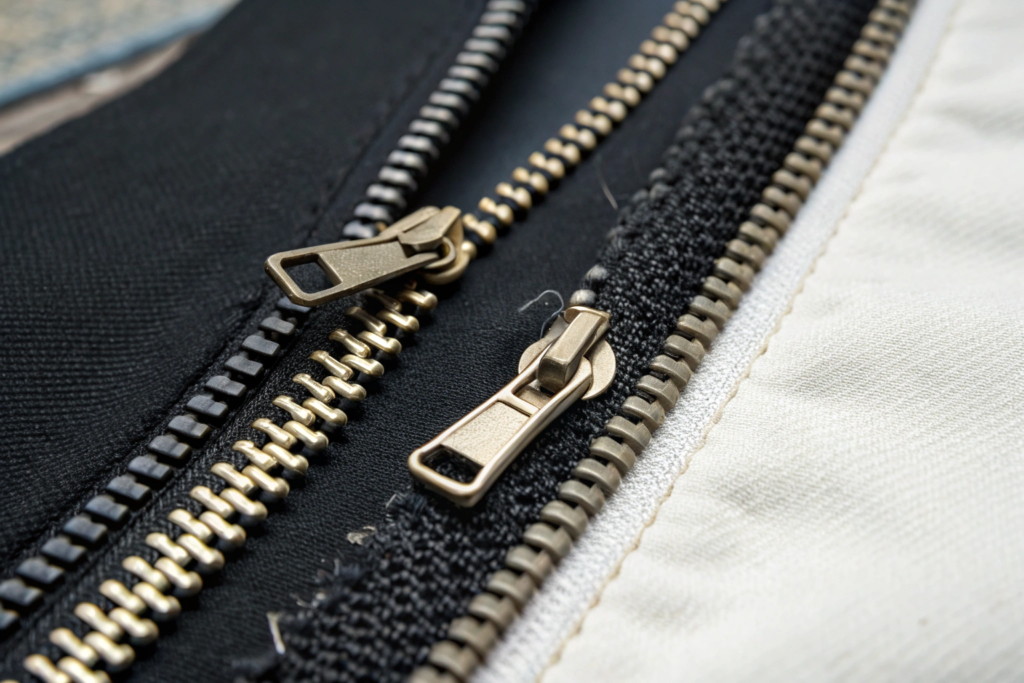
How Does a Sticky Zipper Reflect on the Factory's Reputation?
The supply chain psychology of a zipper defect is fascinating and brutal. When a customer returns a jacket because the zipper fails, the brand owner is angry. That anger has a target. The target is not the Japanese zipper manufacturer who actually made the zipper. The target is the factory that assembled the garment. The brand owner's mental model is simple and largely correct: "I paid you to deliver a finished, saleable product. You chose the zipper supplier. You installed the zipper. You should have inspected it. The failure is yours." The factory owns the trim quality, even if the defect originated at a sub-supplier. This is a core principle of our quality philosophy. We do not blame our trim suppliers. We audit them, we specify the exact material grade and finishing process, and then we 100 percent inspect their output ourselves. We are the final quality gate. If a defective trim reaches a brand owner's customer, the failure is ours.
This ownership extends to the commercial relationship. A brand owner who experiences a zipper-related return rate of even 2 percent does not ask for a discount on the next order. They quietly begin searching for a new factory. The trust is broken. The brand owner thinks, "This factory's quality control is weak. What else are they missing?" The trim defect is a leading indicator of systemic quality neglect. A factory that tolerates a visible zipper defect likely tolerates invisible internal defects. The brand owner cannot verify this suspicion, so they act on it preemptively by switching suppliers. This silent, trust-driven attrition is far more damaging to a factory's long-term revenue than the direct cost of reworking a defective batch. Conversely, a brand owner who receives a shipment with flawless trims—every zipper pull smooth, every button pristine, every label perfectly aligned—asks zero questions about the internal seam quality. The flawless trim is a body of evidence that the factory's quality system is comprehensive. The trim becomes a marketing asset for the factory itself. This is a central tenet of our zero-defect program at Shanghai Fumao.
Can a Misaligned Label Really Trigger a Retail Chargeback?
Yes. A misaligned label is not a subjective aesthetic flaw. It is a measurable, objective defect with a specific financial penalty attached. Major department store retailers, the Nordstroms and Saks of the world, operate a vendor chargeback system. When a customer returns a garment, the retailer inspects it. If the retailer determines the return was caused by a manufacturing defect, they issue a chargeback to the brand. The chargeback is not just the wholesale cost of the garment. It is the wholesale cost plus a penalty fee, often $25 to $50 per unit, plus the freight cost of shipping the defective garment back to the brand's warehouse. A single returned shirt with a visibly crooked neck label can cost a brand its entire gross margin on that unit, plus a financial penalty that wipes out the margin on several other units sold. The misaligned label is not a minor annoyance. It is a direct financial drain.
We have a specific retail compliance specification for label placement. The label must be centered on the center-back seam within a tolerance of 1 millimeter. The top edge of the label must be parallel to the neckline seam within an angular tolerance of 1 degree. These are not arbitrary numbers. They are derived directly from the published vendor compliance manuals of Tier 1 U.S. department stores. Our QC team measures label placement on a calibrated grid mat during the inline inspection. Any label outside the 1mm-1degree tolerance is flagged, and the garment is pulled from the line for immediate rework. We track the label placement defect rate by operator and conduct targeted re-training for any operator whose rate exceeds 0.3 percent. This level of obsessive precision is not expensive. The measurement takes ten seconds. The cost of the measurement is a tiny fraction of the cost of a retail chargeback. This is the practical, financially-grounded logic behind every element of our zero-defect trim system. It is not perfectionism for its own sake. It is a calculated financial defense shield for our brand partners against the brutal, penalty-based economics of modern retail. This is documented in our quality control white paper.
How Does Fumao Create a 100% Visual Inspection Protocol for Trims?
A 100 percent visual inspection protocol sounds straightforward: check every piece. In practice, it is logistically very difficult. Human visual attention is a limited resource. An inspector looking at a thousand identical buttons in a row will suffer fatigue. By the eight hundredth button, their brain has normalized the correct appearance to the point where a subtle deviation becomes invisible. The defect is not hidden. It is cognitively filtered out. This is called inspection fatigue, and it is the primary failure mode of manual 100 percent inspection. We counter it with a combination of structured work-rest cycles, calibrated magnification, and physical reference standards. No inspector performs continuous visual trim inspection for more than 45 minutes without a mandatory 10-minute break. The inspection station is equipped with a fixed-focus, illuminated 10x magnifier. The inspector does not squint at a tiny button. The button is presented at ten times its normal size, on a screen or through an optical loupe, where a surface scratch is instantly obvious. Most critically, a master reference sample, a perfect button approved by the brand, is mounted on a stand directly next to the inspection area. The inspector can glance at the master sample at any moment to recalibrate their visual baseline. This structured approach removes subjectivity and fatigue from the process.
Our 100% visual inspection protocol integrates calibrated 10x magnification, mandatory rest cycles, and a brand-approved physical master sample to transform human visual inspection from a fatigued, subjective glance into a repeatable, measurement-based quality gate.

How Do We Standardize "Acceptable" vs. "Rejectable" Surface Finishes?
Surface finish defects on metal trims, flash on injection-molded plastic components, and loose fibers on woven labels are inherently difficult to verbalize. A spec document that says "No scratches" is useless. A micron-deep polishing mark is not a scratch. A hairline surface abrasion from metal-on-metal contact during bulk shipping might be acceptable on a vintage-finish button but unacceptable on a high-polish button. The boundary between acceptable and rejectable must be defined physically, not verbally. We maintain a physical Trim Boundary Library in our inspection room. For every custom trim component, we create a set of physical boundary samples. These are actual production pieces that represent the exact worst-case acceptable condition. One sample shows the maximum allowable surface scratch depth on a matte black shank button. Another shows the maximum allowable flash edge on an injection-molded cord lock. These boundary samples are photographed in macro, the photographs are annotated with measurement callouts, and the whole set is sealed in a transparent acrylic case mounted at the inspection station.
The inspector does not make a subjective judgment. They compare the production piece directly to the boundary sample. If the defect is equal to or better than the boundary sample, it passes. If it is worse, it is rejected. This physical standardization removes the single largest source of inspector-to-inspector variability. We validate this system annually by conducting a blind gauge Repeatability and Reproducibility study. A set of 30 components, some known pass and some known borderline fail, is distributed to all trim inspectors. Their independent pass/fail decisions are compared statistically. Our latest Gauge R&R study showed a within-inspector agreement rate of 98.5 percent and a between-inspector agreement rate of 97.2 percent. This means the inspection system, not the individual inspector, is making the decision. This is the level of metrological rigor we apply to button inspection. It is a direct technology transfer from our fabric testing lab to the trim inspection bench. It communicates to a brand owner that "zero defect" is not a slogan; it is a statistically validated measurement capability. This is how we ensure every trim meets the standard before it is sewn onto a garment.
What Technology Catches Internal Zipper Tape Frays?
A surface scratch on a zipper pull is visible. A fray inside the zipper tape, where the woven tape meets the injection-molded teeth, is often hidden. It is a tiny, loose fiber bundle tucked inside the zipper chain. In normal use, the zipper slider catches this internal fray, pulls it, propagates the fray into a full tape tear, and the zipper fails catastrophically. The defect was present from the factory but invisible to a standard visual inspection. Catching this defect requires a different technology: a digital microscope with a side-angled, high-intensity fiber optic illuminator. We use a Keyence VHX digital microscope system in our trim lab. The zipper tape is mounted on a motorized stage that feeds the tape past the microscope objective at a controlled speed. The side-angle illuminator casts a strong, raking light across the tape surface. Any protruding fiber casts a long, unmistakable shadow. The microscope software is trained to recognize a fiber shadow of a specific length and trigger an automated flag.
This system catches internal tape frays with a detection rate of over 99 percent, validated through a seeded-defect study. The inspection is not performed on every zipper in a 10,000-unit order, which would be impractical. It is performed on a larger, statistically rigorous sample specifically for this hidden defect mode. We pull a random sample of 200 zippers per batch and run them through the automated digital microscope inspection. If a single internal fray is detected, the batch is quarantined, and a 400-piece secondary sample is inspected. If a second fray is found, the entire zipper batch is rejected and returned to the supplier. This protocol is based on a zero-acceptance sampling plan for a critical defect. A zipper tape fray is classified as a critical defect because its failure mode is sudden, complete, and non-repairable by the end customer. This is a fundamentally different approach than the AQL 2.5 model. It recognizes that some defects are so consequential that no level of occurrence is acceptable. The zipper is the most functionally critical trim component on any garment. Our inspection protocol reflects that criticality, and our brand partners' return rates for zipper failure reflect the effectiveness of this protocol.
How Do We Functionally Test Trims Before They Leave the Factory?
Visual perfection is necessary but insufficient. A button can look flawless and shatter on its first impact with a concrete floor. A zipper can glide smoothly on a jacket hanging on a rack and seize up after twenty washes. A snap fastener can close with a satisfying click and pull apart under a moderate load. Functional performance is a separate, independent quality dimension that must be tested with destructive and cyclic methods. A garment is a dynamic, stressed environment. Trims experience repeated tensile loads, impact forces, temperature fluctuations, and chemical exposure from detergents and body oils. A zero-defect trim must not only look perfect. It must function perfectly for the reasonable service life of the garment under these real-world conditions. We do not trust supplier data sheets for functional performance claims. We replicate the real-world stress in our trim testing lab and generate our own primary data. Every new trim design, and a random sample from every subsequent bulk delivery, passes through a battery of functional tests before it is released to the production line.
Our functional trim testing simulates a garment's entire service life in a compressed timeline, using a combination of cyclic load machines, thermal shock chambers, and impact testers to guarantee mechanical integrity before a single trim is sewn into a product.

How Many Zipper Cycles Does Your Jacket Actually Survive?
A standard zipper test report from a trim supplier states that the zipper passed a 500-cycle open-and-close test per ASTM D2061. Five hundred cycles is a reasonable standard for a dress shirt. It is completely inadequate for a heavy-duty work jacket, a motorcycle jacket, or a technical outerwear piece that will be zipped and unzipped multiple times a day, often under tension, in cold or dirty conditions. We set our internal zipper cycle life standard based on the intended end-use of the garment. For a heavyweight canvas work jacket, our standard is 3,000 cycles without failure. Failure is defined as a broken tooth, a deformed slider body, a separated tape, or a functional jamming that requires more than 15 Newtons of force to clear.
We use a custom-built zipper cycle tester. It is a pneumatic linear actuator that grips the slider pull tab with a soft, non-marring jaw and cycles it up and down the entire length of the zipper chain at a controlled speed of 30 cycles per minute. The machine counts cycles and stops automatically when a jam is detected, recording the cycle count at failure. The zipper is tested in a curved configuration, not a flat one, to simulate the actual geometry of a zipper installed on a jacket front that curves around the chest and stomach. This curvature introduces lateral stress on the teeth that a flat test ignores. A premium Japanese YKK Excella zipper we tested for a new motorcycle jacket design survived 4,200 cycles in our curved tester before the slider began to show measurable wear. The brand owner, a rider himself, was deeply impressed by this data. He used the "4,200-cycle tested" claim in his product marketing materials, including a short video clip of our test machine in action that we provided to him. The functional test data became a marketing asset. This is a recurring pattern. A brand that can quantify its durability claims with a specific, externally witnessable test number gains a massive competitive advantage in a market saturated with vague "built to last" assertions. This commitment to testing is what defines manufacturing excellence at our facility.
What is the Snap-Fastener Pull-Off Force Tolerance?
A snap fastener on a baby's onesie is a choking hazard if it detaches. A snap fastener on a pair of jeans is an annoyance if it pops open when the wearer sits down. The functional requirement for snap retention force varies by application, but the pass/fail criterion is always a precise number, measured in Newtons. The standard test is ASTM D7142, which measures the force required to pull a snap cap away from its stud or socket. A typical supplier specification might state a pull-off force of 80 Newtons. We take a more refined approach. We measure not just the peak pull-off force but the entire force-displacement curve. A snap that releases with a sudden, brittle snap at 75 Newtons is functionally different from a snap that yields gradually and releases at 80 Newtons. The brittle snap suggests a material embrittlement issue that could lead to premature fatigue failure. We want a specific, controlled release behavior.
Our pull-off test is performed on a universal tensile tester with a custom snap-pulling fixture. The pulling jaw grips the snap cap in a way that applies a pure axial load, with no peeling or bending component that would artificially lower the reading. The test is performed at a controlled extension rate of 100 mm per minute. The force curve is recorded. For a childrenswear snap, our internal pass criterion requires that the peak pull-off force exceeds 90 Newtons, that no component separates into pieces smaller than the small parts cylinder defined by the CPSC, and that the force curve shows a gradual, ductile yield before the final separation, not a sudden, vertical drop. This detailed specification was developed in collaboration with a children's apparel brand we partnered with in 2023. We jointly commissioned an independent third-party lab, Bureau Veritas, to validate our internal test protocol against their accredited method. The correlation was excellent. This gives the brand the legal and moral confidence that every single snap on their product has undergone a test that is predictive of CPSC compliance. This is trim functional testing elevated to the level of regulatory evidence.
Conclusion
Zero-defect trims are not the result of a stricter final inspection. They are the result of a completely re-engineered trim quality system that integrates specification, inbound inspection, visual census, and functional validation into a single, closed-loop process inside our own factory walls. The catalyst was a $30,000 lesson in Texas, a shipment rejected not for bad sewing but for bad buttons. That lesson taught us that a trim is the customer's first tactile contract with a brand. A single rough zipper pull can permanently brand a garment as low quality, regardless of the hours of skilled labor sewn into its seams. We responded by constructing an in-house trim ecosystem where every single high-touch component is 100 percent individually inspected under calibrated magnification against a physical boundary sample, and where every functional trim is cycled to failure in custom-built test machines that simulate real-world use, not just ASTM standard conditions.
The statistical and commercial outcomes of this system are measurable and shared with our partners. We operate at a trim rejection rate from our own 100 percent inbound inspection that averages 0.8 percent across all trim categories. That 0.8 percent of defective trims never reaches a sewing machine. The trim defect rate on finished garments leaving our factory, as measured by independent final inspection, has been zero for eleven consecutive months. The data is not perfect in an absolute sense, no manufacturing system is, but it is trending toward a statistical limit of zero. For a brand, this translates into a return rate reduction for trim-related failures that approaches 100 percent, zero retail chargebacks for label misalignment or button oxidation, and a customer experience where every zipper clicks smoothly, every button gleams flawlessly, and every label sits perfectly straight against the skin.
If your brand is building a reputation on premium hardware, or if you have suffered the financial and emotional cost of a trim-related shipment rejection, I invite you to a direct, verifiable conversation about our quality system. Request our Trim Quality Data Pack, which includes our latest Gauge R&R study, our zipper cycle life test reports, and our real-time trim inspection dashboards from current production lines. Let us show you the system that ensures the first thing your customer touches is a perfect reflection of your brand's commitment to quality. Contact our Business Director, Elaine, at elaine@fumaoclothing.com to discuss your specific trim requirements and schedule a live-streamed tour of our trim inspection laboratory at Shanghai Fumao.