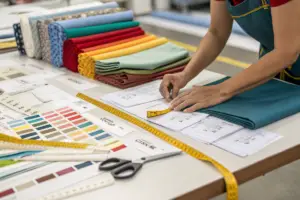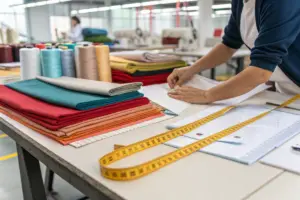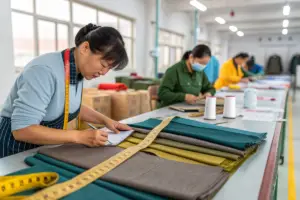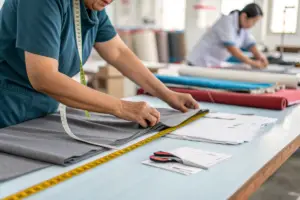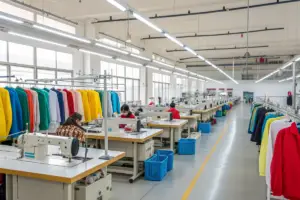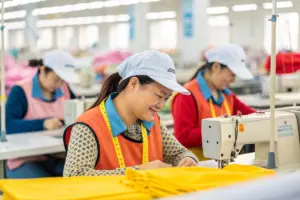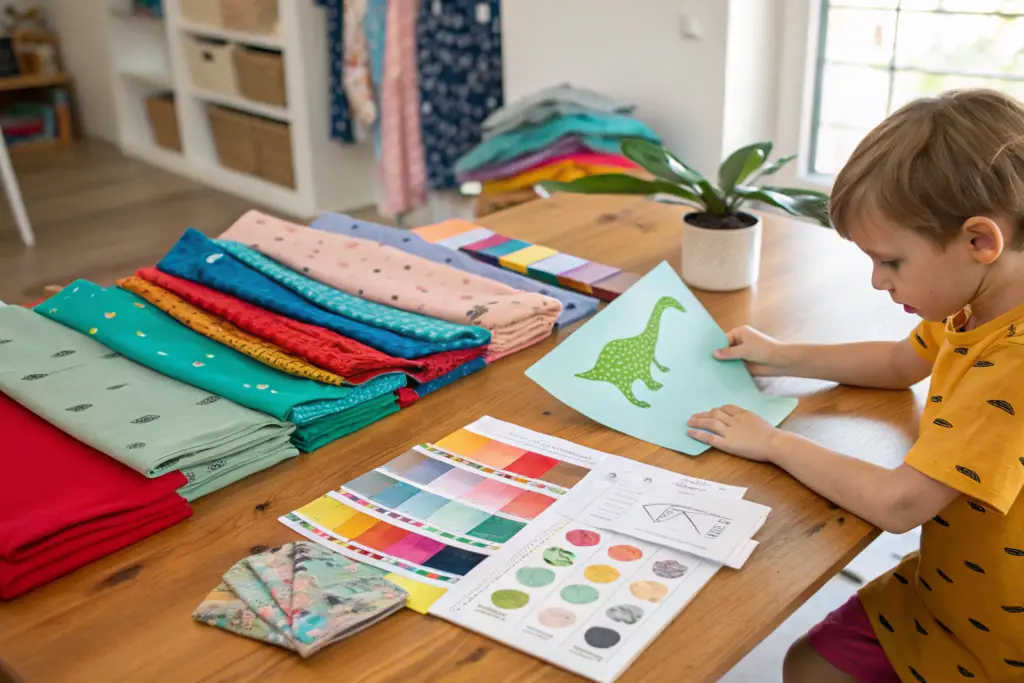
A Denver-based children's wear brand once designed a beautiful collection of toddler leggings in trendy, seasonally perfect colors—blush pink, sage green, and warm terracotta. The leggings sold out within two weeks of launch. The returns started arriving three weeks later. The fabric was a soft, lightweight 180gsm single jersey cotton that had been selected purely for its beautiful color range and soft hand feel. It had not been tested for knee abrasion resistance. Toddlers, it turned out, spend a significant portion of their day crawling, kneeling, and dragging their knees across carpets, wooden floors, and playground surfaces. The beautiful, soft fabric developed holes at the knee within a month. The brand's return rate hit 22%, their wholesale accounts cancelled reorders, and the "profitable" collection became a loss-making inventory write-off. The fabric was perfect for a mannequin and completely wrong for a toddler.
To source highly durable and trendy fabrics for profitable wholesale children's clothing, you must select fabrics that meet both a "Durability Threshold" and a "Trend Adaptability" criterion simultaneously: the fabric must achieve a minimum Martindale abrasion score of 25,000 cycles for bottoms and 15,000 cycles for tops, pass a tensile strength test of at least 300 Newtons for woven fabrics, and maintain colorfastness to washing at 40 degrees Celsius for a minimum of 30 cycles, while also being available in a wide color range from the mill's seasonal trend palette, compatible with digital printing for trend-driven surface patterns, and sourced at a per-meter cost that allows a wholesale margin of at least 2.5x the fabric cost.
At Shanghai Fumao, I source children's wear fabrics from mills that understand this dual requirement. A fabric that is durable but only available in three dull colors will not sell to today's parents. A fabric that is beautifully on-trend but develops holes after ten washes will destroy a brand's wholesale relationships. The profitable fabric sits at the intersection of abrasion resistance and aesthetic appeal.
Why Is the "Martindale Abrasion Threshold" the Non-Negotiable First Filter for Children's Wear Bottoms?
A UK-based school uniform wholesaler once sourced a competitively priced polyester-cotton twill for their boys' uniform trousers. The fabric looked smart on the hanger, held a crease well, and was priced attractively at $3.80 per meter. The wholesaler sold 15,000 pairs to schools across the country. Within a single school term, the trousers were being returned by parents with holes worn through the knee area. The fabric's Martindale abrasion score was 18,000 cycles—perfectly acceptable for adult casual trousers but catastrophically inadequate for children who spend their days kneeling on classroom floors, crawling during playtime, and sliding across playground surfaces. The wholesale contract required a two-year durability guarantee. The trousers failed within three months.
The Martindale abrasion threshold is the non-negotiable first filter for children's wear bottoms because the Martindale test quantitatively measures how many rubbing cycles a fabric can withstand before developing a hole, and children's trousers, leggings, and shorts require a minimum score of 25,000 cycles for standard wear and 35,000-45,000 cycles for school uniform applications, whereas a fabric scoring 15,000-20,000 cycles—often perfectly acceptable for adult garments—will develop holes at the knees, seat, and inner thigh within weeks of active child wear, generating returns, wholesale account cancellations, and brand reputation damage that erases the initial fabric cost savings.
An adult wearing a pair of trousers sits in an office chair, walks on smooth floors, and occasionally kneels. A child wearing the same pair of trousers crawls, slides, tumbles, kneels on abrasive surfaces, and friction-burns the fabric against playground equipment. The fabric degradation rate is three to four times faster. The Martindale threshold must be correspondingly higher.
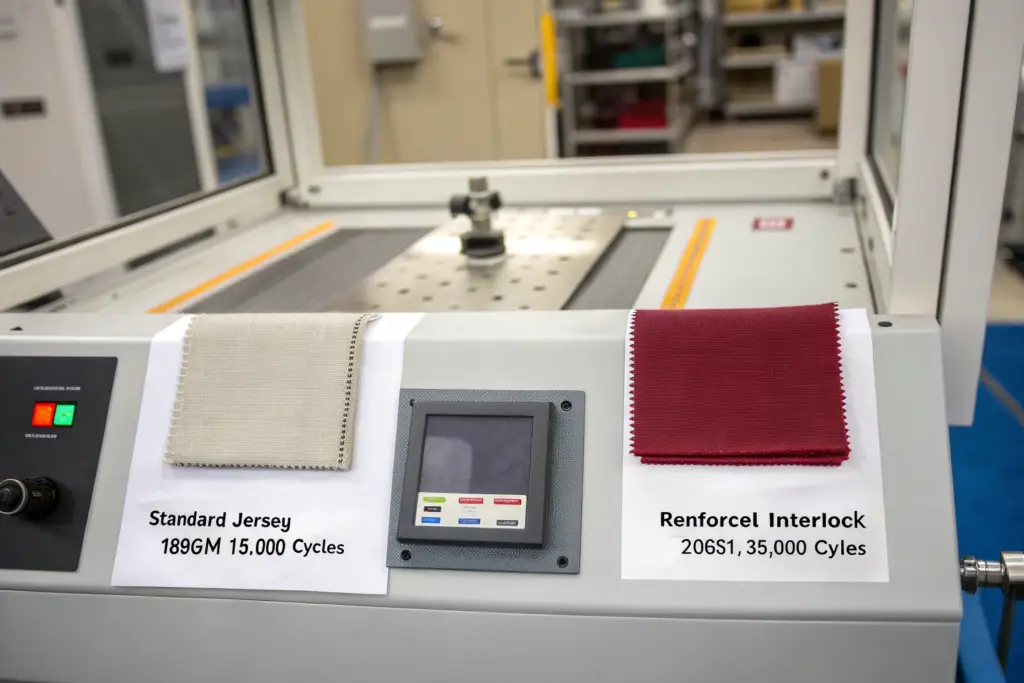
How Does a "Double-Face Interlock Knit" Achieve a Higher Martindale Score Than a Single Jersey at the Same Weight?
A single jersey knit has one layer of interlocking loops. A double-face interlock knit has two layers of loops interlocked together, creating a denser, more stable structure. The double-layer construction distributes abrasion force across twice as many yarn surfaces, effectively doubling the fabric's resistance to surface wear.
Why Is a "Polyester-Core Cotton-Wrap Yarn" More Abrasion-Resistant Than 100% Cotton Yarn?
A 100% cotton yarn is relatively weak when wet and abrades quickly under friction. A polyester-core cotton-wrap yarn has a strong, continuous polyester filament at its center, wrapped with soft cotton on the outside for skin comfort. The polyester core provides a permanent, unbreakable internal skeleton that resists abrasion even when the cotton wrapper begins to wear, extending the fabric's usable life significantly.
What Specific "Trend-Adaptable Fabric Constructions" Allow a Wholesale Brand to Refresh a Core Fabric With New Seasonal Prints and Colors?
A Nashville-based children's boutique brand once sourced six different fashion fabrics for their seasonal collection—each a different construction, weight, and fiber blend, selected purely for its on-trend print or color. The result was a sourcing, testing, and quality control nightmare. Each fabric had a different shrinkage rate, a different colorfastness performance, and a different abrasion score. The brand had to conduct six separate quality tests, manage six different minimum order quantities, and absorb the waste of unsold fabric from the prints that did not sell well. The collection's production cost was 30% higher than necessary, and the brand's margin evaporated.
Trend-adaptable fabric constructions allow a wholesale brand to select a single, high-durability base fabric—such as a 220gsm polyester-cotton interlock or a 150gsm cotton poplin—that has been thoroughly tested and validated for all physical performance requirements, and then apply seasonal trends exclusively through surface-level processes: digital printing for pattern and print trends, garment dyeing for color trends, and embroidery or appliqué for texture trends, without changing the underlying fabric construction, ensuring consistent quality performance across every seasonal collection while refreshing the aesthetic to capture current market demand.
The base fabric is the performance constant. The print, dye, or surface treatment is the trend variable. By keeping the performance constant stable and varying only the aesthetic variable, the brand achieves trend relevance without re-testing, re-validating, or re-sourcing the fabric every season.
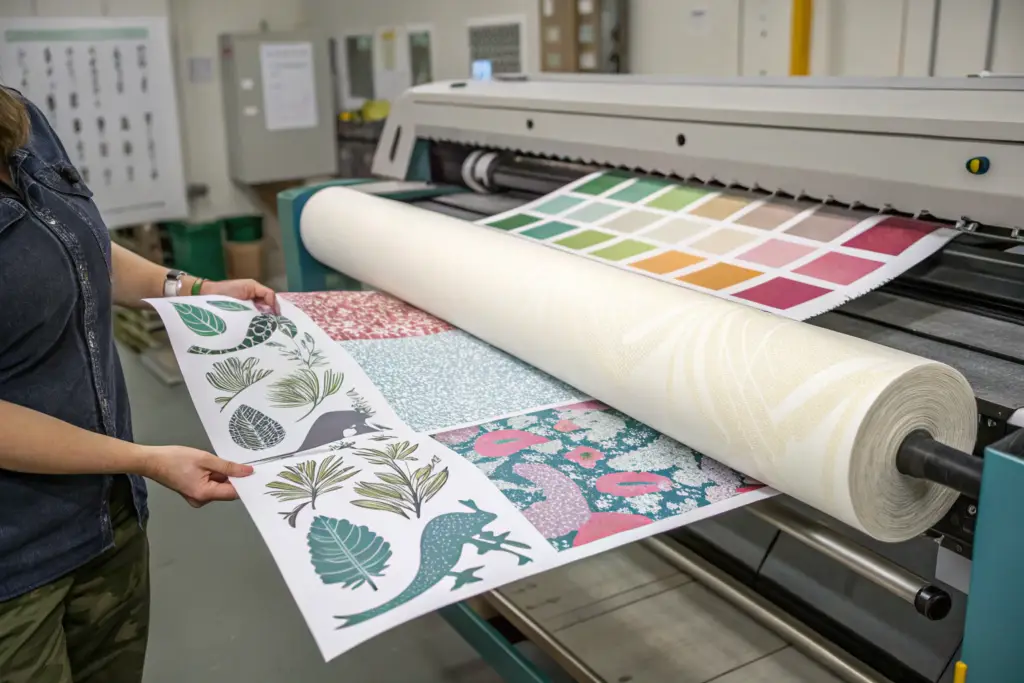
How Does "Digital Printing on a Standard Base Cloth" Enable a 100-Meter Minimum Print Run for Trend Testing?
Traditional screen printing requires a minimum order of 500-1,000 meters per print to be economical. Digital printing has a near-zero setup cost and can print as little as 50-100 meters, allowing the brand to test a new trend-driven print with a small production run before committing to a larger volume.
Why Does "Garment Dyeing" Allow a Single Undyed Base Fabric to Serve Six Different Seasonal Color Trends?
Garment dyeing applies the color to the fully sewn garment, not the fabric roll. The brand can order 1,200 units of the same style, sew them all from the same undyed base fabric roll, and then split the finished garments into six batches and dye each batch a different seasonal trend color. Only one fabric is sourced, tested, and inventoried, but six colors are achieved.
How Do You Source "Kid-Proof" Trims and Components That Survive the Same Wear and Tear as the Durable Fabric?
A Sydney-based children's outerwear brand once paired their highly durable, 35,000 Martindale-cycle outer shell fabric with a cheap, unbranded zipper that the factory sourced from a local trim market to save $0.40 per unit. The fabric was indestructible. The zipper failed after thirty cycles of a five-year-old's enthusiastic tugging. Parents returned the jackets not because the fabric was worn out, but because the jacket could no longer be closed. The brand's entire investment in premium, durable fabric was wasted because a single, inexpensive trim component was the weakest link in the garment's durability chain.
To source kid-proof trims and components, the wholesale brand must specify and test every trim component to the same durability standard as the fabric: zippers must be genuine YKK or equivalent with a minimum rated cycle life of 1,000 open-close operations, snaps and buttons must withstand a pull force of at least 70 Newtons for 10 seconds without detachment to prevent choking hazards, embroideries and appliqués must be secured with a stitch density that prevents unraveling after repeated washing, and all labels must be fully edge-sealed to prevent fraying and irritation against sensitive child skin.
A garment's perceived quality is determined by its weakest component. A parent does not distinguish between "the fabric is excellent but the zipper is poor." The parent experiences "the jacket broke," and the brand's quality reputation is damaged equally by a failed zipper or a torn fabric.
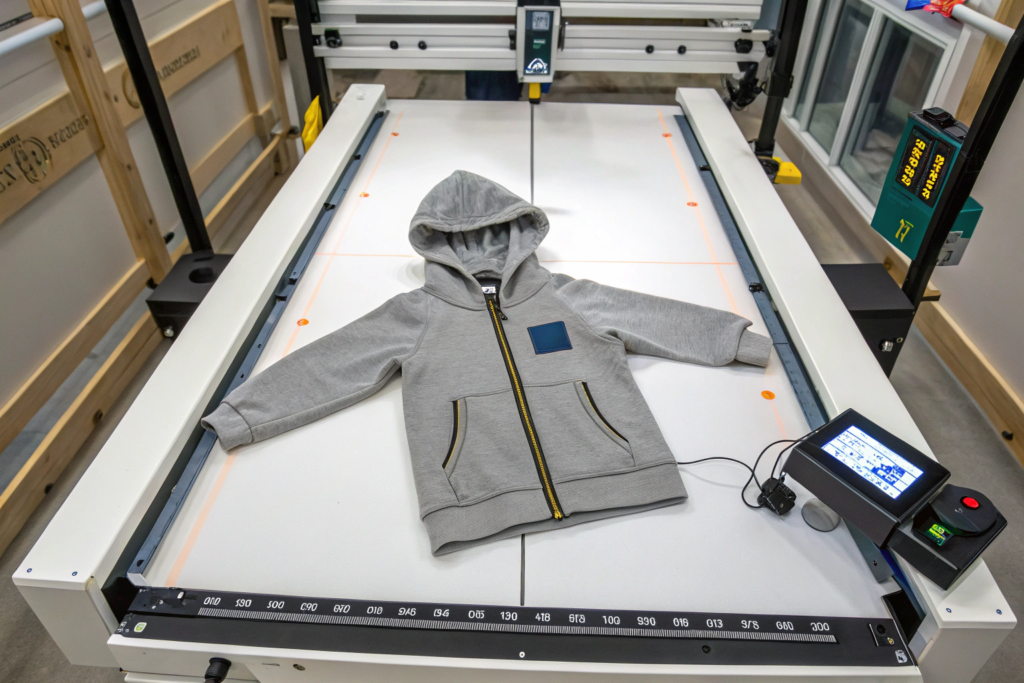
How Does a "YKK #5 Brass Zipper" Outlast a Generic Nylon Coil Zipper by a Factor of Five?
A YKK #5 brass zipper is manufactured to precise tolerances with individually locked metal teeth and a robust slider mechanism, rated for over 2,000 operation cycles. A generic nylon coil zipper, with molded plastic teeth and a lightweight slider, typically fails after 300-500 cycles, especially under the rough handling of a child who has not yet developed fine motor control.
Why Must "Snaps and Buttons on Children's Wear Under Age 3" Pass a 70-Newton Pull Test?
The 70-Newton pull force represents the approximate maximum pulling force a young child can generate. A snap that detaches below this force becomes a choking hazard. The UK BS 7907 standard and related international safety standards mandate this minimum attachment strength for small components on garments intended for children up to 36 months.
How Does "Pre-Season Fabric Testing and Reservation" Secure the Best Durable Fabrics Before the Peak Sourcing Rush?
A Chicago-based children's wear wholesaler once waited until May to source their Fall fabrics. By May, every mill that produced the high-durability, in-demand polyester-cotton interlock was sold out or operating on 45-day lead times. The wholesaler was forced to compromise, selecting a lower-durability alternative fabric that was still available. The Fall collection's return rate was 9% higher than the previous year, and the wholesale accounts noticed the quality decline. The wholesaler lost two major retail contracts.
Pre-season fabric testing and reservation secures the best durable fabrics by identifying the specific fabric qualities, weights, and constructions required for the upcoming season at least five to six months before the production start date, ordering sample yardage for independent laboratory testing of Martindale abrasion, tensile strength, colorfastness, and shrinkage, and upon confirming the fabric meets all durability thresholds, placing a greige fabric reservation with the mill that physically secures the required yardage under the brand's name before the peak-season sourcing rush depletes the available inventory.
The best durable fabrics are produced in limited quantities by specialized mills. They sell out early in the sourcing cycle. The brand that tests and reserves in February for an August production start secures the premium fabric. The brand that waits until June takes whatever is left.
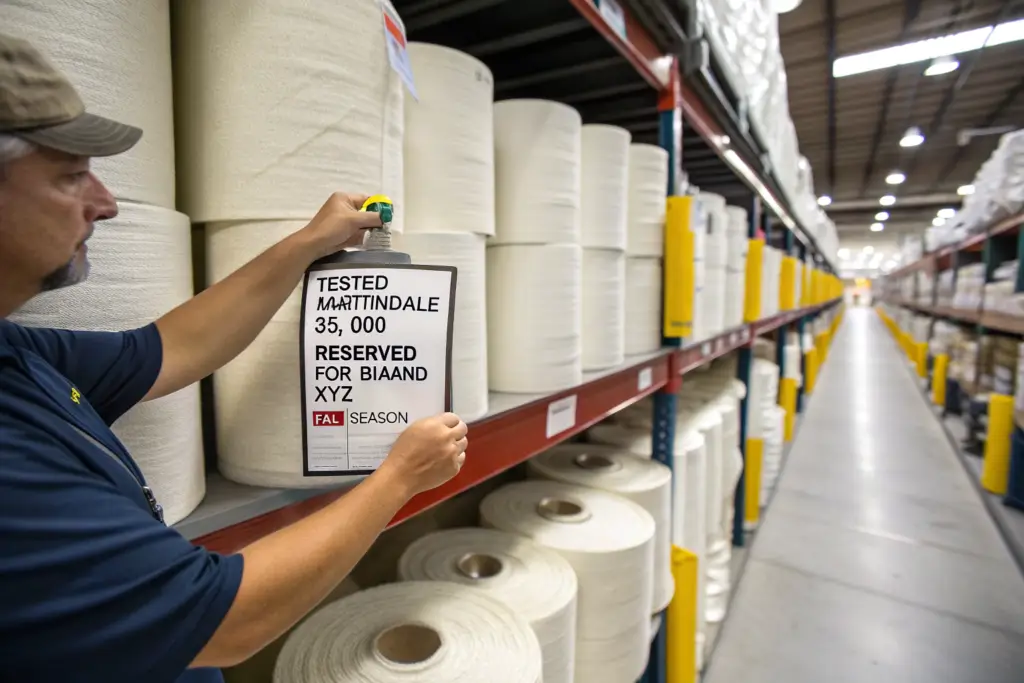
How Does "Independent Lab Testing on a Pre-Season Sample Yardage" Prevent a Mill's Overstated Durability Claims?
A mill may claim a Martindale score of 35,000 cycles. The brand orders a sample yardage of the fabric, sends it to an independent accredited laboratory such as Intertek or SGS, and receives an objective test report. The independent report confirms or disproves the mill's claim before the brand commits to a large-volume purchase.
Why Does a "Greige Fabric Reservation Agreement" Need to Include a "Dyeing Capacity Reservation" for the Trend Colors?
Securing the undyed greige fabric is the first step. Securing a dyeing time slot at the dye house for the specific seasonal trend colors is the second, equally critical step. The reservation agreement should specify both the fabric yardage and the dye house processing window, ensuring that when the trend colors are finalized, the dyeing capacity is available.
Conclusion
Sourcing highly durable and trendy fabrics for profitable wholesale children's clothing requires a dual-focus sourcing discipline that no single-minded approach can achieve. The fabric must first pass the quantitative durability thresholds—25,000 to 45,000 Martindale cycles depending on the garment type, 300 Newtons minimum tensile strength, and 30-cycle wash colorfastness. The fabric must simultaneously be adaptable to seasonal trend demands through digital printing compatibility, garment dyeing capability, and a wide available color range. The trims and components must be tested to the same durability standard as the fabric, because a failed zipper ruins a garment made from indestructible fabric. The entire fabric and trim package must be tested, reserved, and secured months before the peak sourcing rush, because the best mills sell out early.
At Shanghai Fumao, my fabric sourcing team maintains relationships with mills that produce children's wear-specific durable fabrics with Martindale scores verified by independent lab testing. My production planning system includes a pre-season greige reservation protocol that allows my brand buyer partners to secure premium fabric inventory months before their production start date. My trim sourcing team specifies YKK zippers, 70-Newton tested snaps, and fully sealed labels as standard for all children's wear orders.
If you are a wholesale children's wear brand looking to source fabrics that survive the playground and sell through at full price, contact my Business Director, Elaine. She can share our children's wear fabric durability test reports, our pre-season fabric reservation agreement template, and our recommended fabric constructions for different children's wear categories. Reach Elaine at: elaine@fumaoclothing.com. Source fabric that outlasts the child, not just the season.