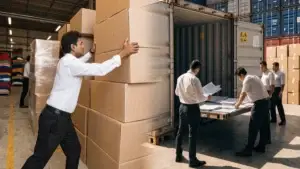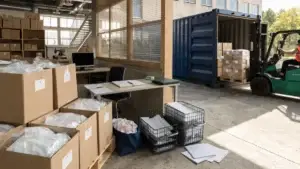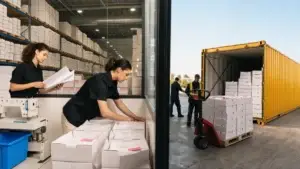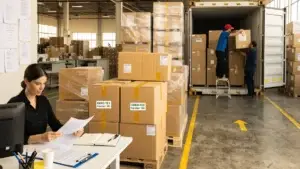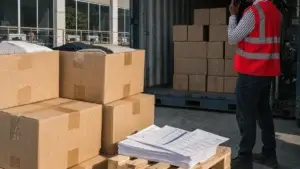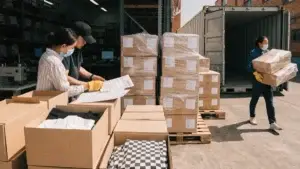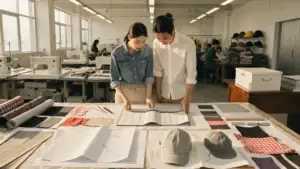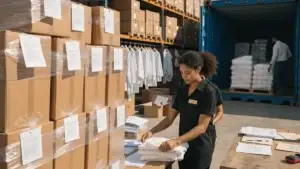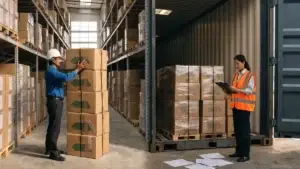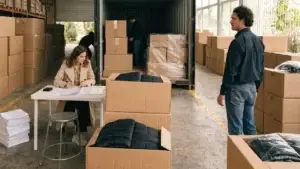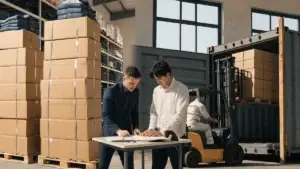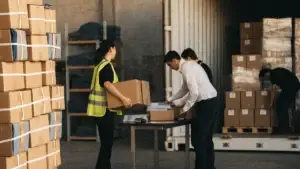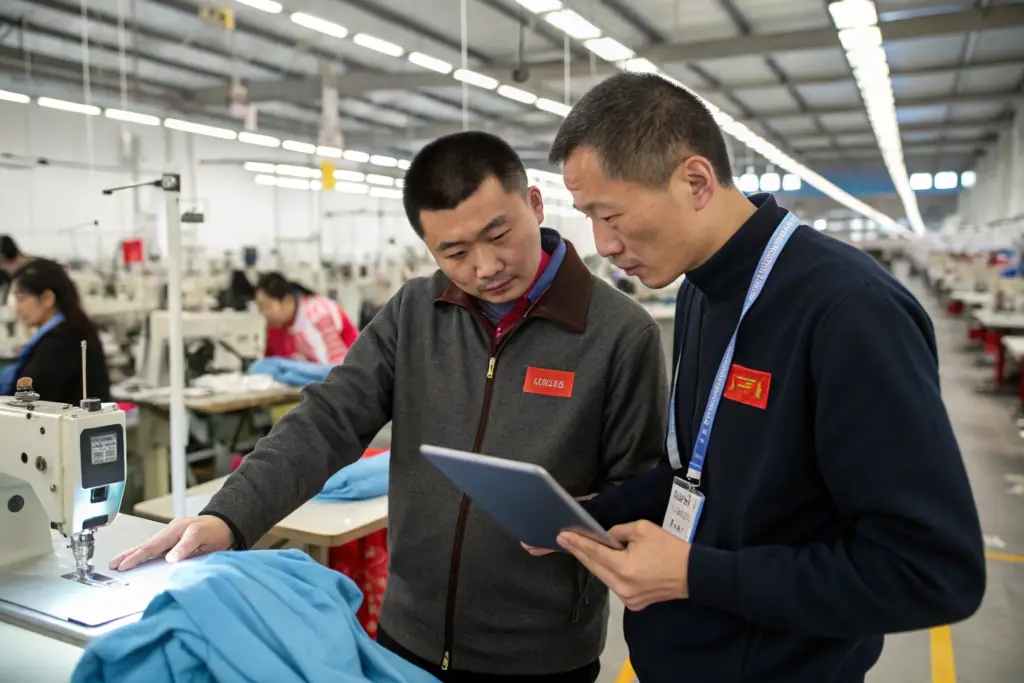
Three years ago, a large Texas-based workwear brand placed a $160,000 order with a supplier they had found on a major B2B platform. The supplier's profile displayed photos of a bright, modern factory floor with rows of sewing machines, a cutting room with automated spreading tables, and a quality control lab with testing equipment. The sales representative was knowledgeable, the samples were perfect, and the price was competitive. The brand placed the order. The goods arrived six weeks late, with inconsistent stitching, substandard fabric, and labels that were sewn crookedly. The brand investigated. The factory in the photos did not belong to the supplier. The supplier was a trading company that had paid a legitimate factory a small fee to take photos on their floor, then outsourced the actual production to a low-cost, unqualified workshop in a different province. The brand had purchased from a photographer with a sales office, not from a manufacturer.
To verify that a Chinese wholesale clothing supplier actually owns their production lines, you must bypass their website photos, their PDF certificates, and their sales representative's assurances, and instead demand a live, unscripted video walk-through of the factory floor where the camera operator walks from the factory's exterior entrance sign—showing the legal company name in Chinese characters—directly into the production area in a single, continuous shot, shows the specific serial number plates on at least three different sewing machines, and zooms in on a current newspaper or a live news website on a computer screen held next to a production worker's station, proving that the video is live and the factory is physically real and actively producing goods at this moment.
At Shanghai Fumao, I welcome this level of scrutiny. I will walk a prospective client from the street entrance of my factory, past my company registration certificate on the wall, through my five active production lines, and up to the serial plate on any sewing machine they choose. A factory owner who cannot or will not do this is not a factory owner.
Why Is a "Live, Continuous Video Walk-Through" the Only Unforgeable Proof of Factory Ownership?
A San Francisco-based sustainable fashion brand once requested a "factory video" from a potential supplier. The supplier emailed a beautifully edited, professionally filmed, three-minute video with music, drone shots of the factory exterior, and slow-motion footage of workers smiling at their machines. The brand was impressed. The video was completely real—it was a real factory, with real workers, and real machines. It just wasn't the supplier's factory. The supplier had hired a video production company to film a cooperative, third-party factory that allowed tours for a fee. The supplier's own "factory" was a small office above a tea shop with two sample sewing machines.
A live, continuous video walk-through is the only unforgeable proof of factory ownership because it cannot be pre-recorded, edited, or staged in a borrowed facility—the camera must physically travel, in a single, unbroken shot, from a permanent, externally verifiable landmark such as the factory's exterior company sign showing the legal business name in Chinese characters, through the entrance, directly onto the production floor, past active sewing lines, and up to a specific, randomly requested machine serial number plate, proving spatial continuity between the claimed company identity and the claimed production facility.
A pre-recorded video can be filmed anywhere. A collection of photographs can be stolen from another company's website. A live, unbroken, interactive video walk-through that starts at the street sign and ends at a machine you specified thirty seconds ago proves physical presence and operational control in a way that no static media can.
How Does "Touching the Company Sign" at the Start of the Live Walk-Through Prevent a "Borrowed Factory" Deception?
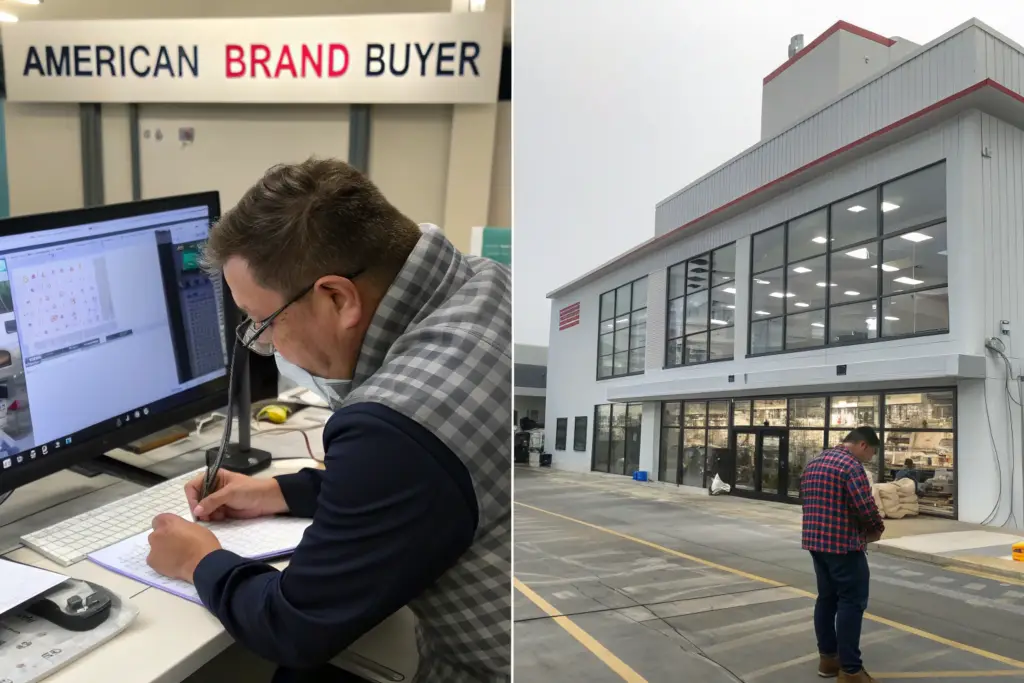
The buyer asks the camera operator to physically touch the exterior company sign with their hand during the live video. A sign that is physically touched and tapped on camera is a permanent, physically attached structure, not a temporary banner or a digitally inserted image. The Chinese characters on the sign must match the Chinese legal name on the business license.
Why Must the Buyer Request a "Random Machine Serial Number" to Be Shown Live, Rather Than Accepting a Pre-Selected Machine?
A pre-selected machine can be one of the few machines the trading company owns in a small sample room. A random machine, chosen by the buyer during the live call—"Walk to the third machine on the left in the second row"—forces the camera operator to navigate the real factory floor and proves that the entire line is operational and belongs to the same facility.
What Is the "Business License Scope" Verification and Why Does the Manufacturing Authorization Clause Matter More Than Any Certificate?
A Chicago-based streetwear brand once accepted a supplier's business license as proof of manufacturing capability. The license looked official. It had the correct stamps, the correct format, and the supplier's company name. What the brand did not check was the specific phrase in the "Business Scope" section. The scope covered wholesale, retail, import/export, and garment design. It did not include the critical authorization for manufacturing. The supplier was legally registered to design, wholesale, and export clothing. They were not legally registered to manufacture it. They were a trading company, operating perfectly within their legal scope, but misrepresenting themselves as a factory.
The business license scope verification is the single most important document check because every legally registered Chinese company has a government-approved "Business Scope" listed on its unified social credit code registration, and only a company whose scope explicitly includes the terms for manufacturing or processing is legally permitted to operate production lines—a company whose scope only includes terms for wholesale, retail, or trading is legally registered as a trading company and cannot own or operate a factory, regardless of what their website or sales representative claims.
The business license is a legal document filed with the Chinese government's Administration for Market Regulation. The scope is not a marketing description; it is a legal authorization. A company cannot legally operate outside its registered scope. The specific manufacturing authorization terms are the definitive proof of manufacturing authorization.
How Can a Brand Independently Verify a Chinese Business License Through the National Enterprise Credit Information Publicity System?
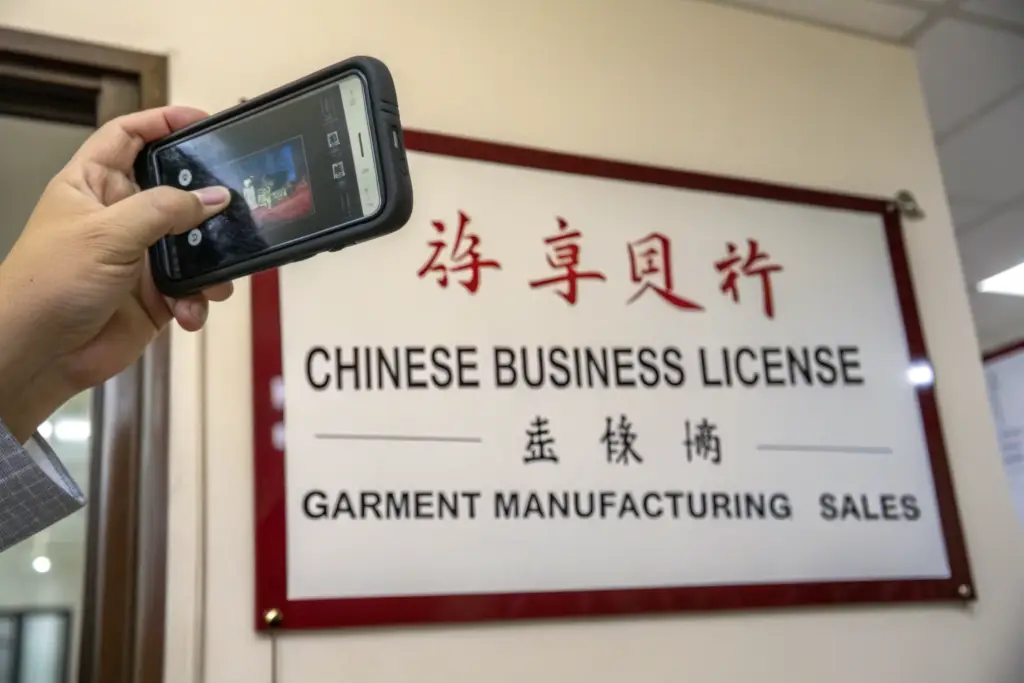
The brand can visit the official government website (www.gsxt.gov.cn), enter the supplier's unified social credit code or full Chinese company name, and view the publicly available registration record, including the registered business scope, the registered capital, the legal representative, and any administrative penalties. This verification is free, public, and cannot be faked by the supplier.
What Other Terms on the Business License Indicate a Genuine Manufacturer?
In addition to the core manufacturing term, the brand should look for terms indicating processing, manufacture, or specific garment-related manufacturing activities. The absence of these terms, combined with the presence of terms for trading, is a definitive red flag.
How Does a "Utility Bill and Workforce Audit" Reveal the True Scale and Operational Reality of the Claimed Factory?
A London-based luxury brand was once shown a beautiful factory by a supplier during a scheduled visit. The factory floor was clean, the machines were modern, and the workers were busy. The brand was convinced. Six months later, the quality of the bulk orders began to deteriorate sharply. The brand investigated and discovered that the factory they had visited was only used for client tours and sample production. The supplier's actual bulk production was outsourced to a smaller, cheaper, less equipped workshop in a different town. The brand had inspected the showroom, not the production facility.
A utility bill and workforce audit reveals the true operational scale of a claimed factory by examining the factory's monthly industrial electricity bill, which will show a high, consistent kilowatt-hour consumption consistent with running multiple production lines and industrial equipment—a trading company's office will show only a fraction of this consumption—and by reviewing the employee social insurance registration count, which must match the claimed number of production workers, typically 20-40 per production line, providing quantitative, auditable evidence of genuine manufacturing activity that cannot be staged for a single factory tour.
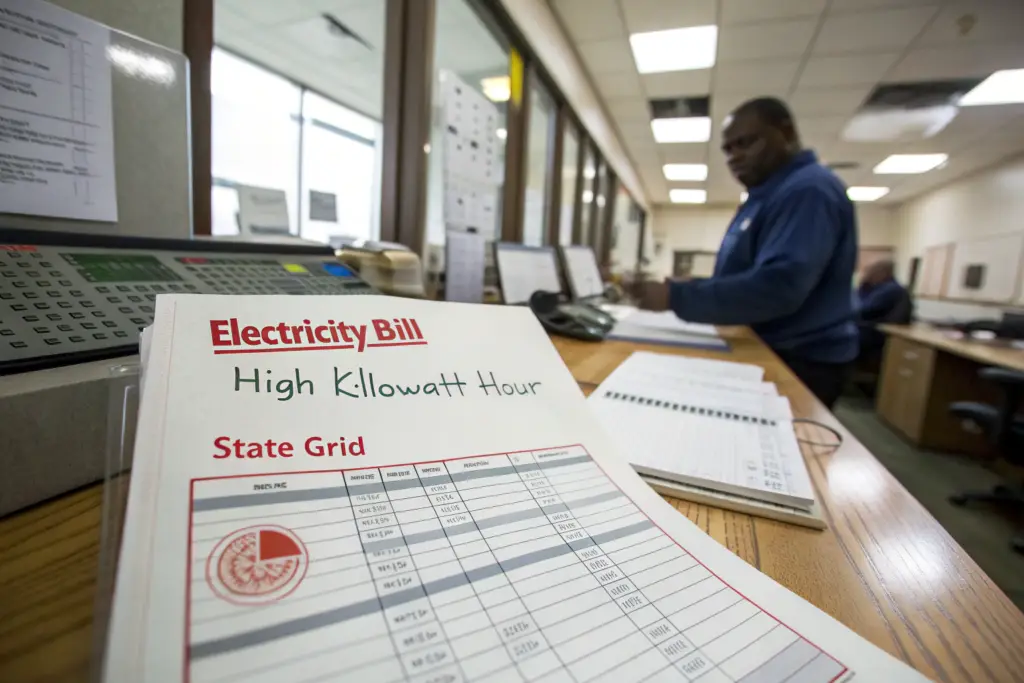
Sewing machines, cutting tables, steam irons, and factory lighting consume a large, predictable amount of electricity every month. A real factory's electricity bill is a significant operational expense and a direct reflection of its production activity level. An office with a few sample machines consumes a tiny fraction of that power.
What Is the Approximate Monthly Electricity Consumption of a Five-Line Garment Factory, and How Does It Compare to a Trading Office?
A factory operating five production lines with industrial sewing machines, cutting equipment, pressing stations, and lighting typically consumes 15,000 to 30,000 kilowatt-hours per month. A trading office with computers, lights, and a couple of sample machines consumes 500 to 1,500 kilowatt-hours per month. The difference is an order of magnitude and is immediately visible on the bill.
Why Does the "Employee Social Insurance Count" Provide a More Honest Headcount Than a Factory Tour Headcount?
Temporary workers can be brought in for a factory tour. The social insurance registration is a government record of the number of employees the company officially employs and for whom it pays mandatory social insurance contributions. A factory claiming 100 workers but insuring only 15 is either lying about its scale or illegally under-reporting its workforce.
What Specific "Production Planning Board and Work-in-Progress" Evidence Proves Active, Current Manufacturing?
A Portland-based outdoor brand once visited a supplier's factory for a scheduled audit. The factory was spotless. Every machine was clean. Every worker was at their station. The production planning board showed the brand's name on every line. The brand was impressed and placed a large order. What the brand didn't realize was that the factory had cleared the board of all other clients' work, temporarily written the brand's name everywhere, and instructed the workers to appear busy on pre-arranged tasks. The factory had staged a theatrical performance of a "dedicated production partner."
Active, current manufacturing is proven by examining the production planning board for a mix of different client names, PO numbers, and delivery dates—a board that shows only one client's name or is suspiciously neat may have been staged—and by physically inspecting the work-in-progress on the cutting tables and sewing lines for the paper work tickets attached to each bundle, which will show the actual date, the actual client name, and the actual PO number, providing evidence that the factory is genuinely producing real orders for multiple clients at this moment, not performing a staged demonstration.
A real factory is slightly chaotic. The production board has erasures, updates, and multiple client names. The work-in-progress racks have bundles from different brands with different colored fabrics and different work ticket dates. A factory that looks too perfect, too clean, and too exclusively focused on you during a first visit is likely performing.
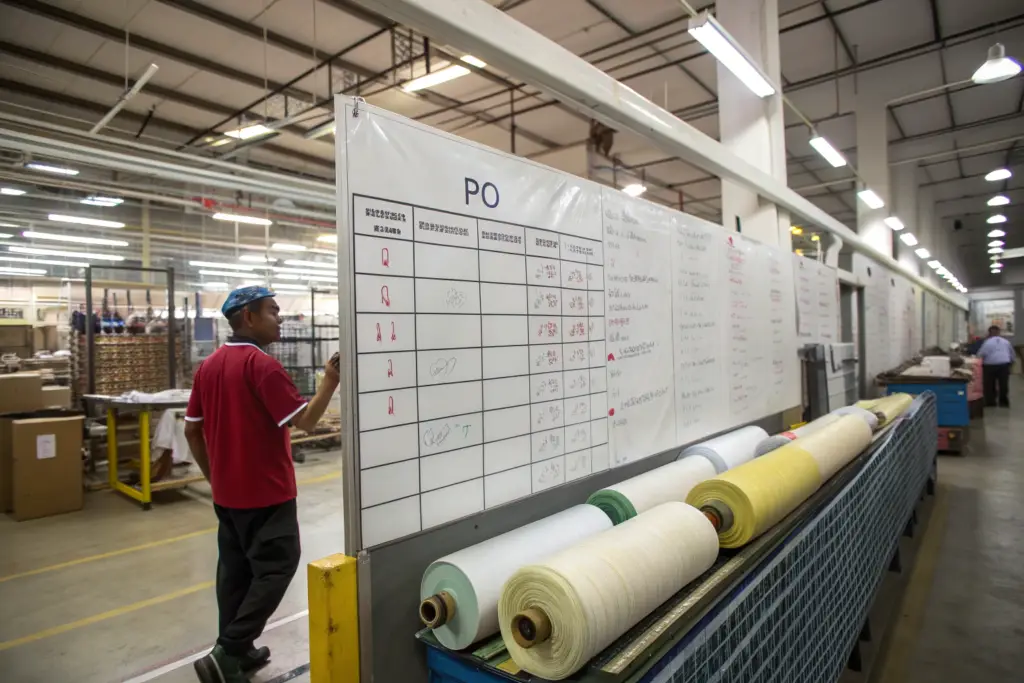
What Does a "Multi-Client Production Whiteboard" Look Like, and How Does It Differ From a Staged Board?
A real board shows 4-8 different client names or brand codes, each assigned to specific production lines and specific delivery dates, with visible erasures and date adjustments. A staged board shows only one client name repeated across every line, with no erasures, no corrections, and dates that align too perfectly.
How Does a "Work Ticket" on a Bundle of Cut Fabric Reveal Whether the Order Is Real or a Staged Demonstration?
A real work ticket shows a specific PO number, a specific style number, a specific quantity, the date the bundle was cut, and the name of the brand or the client. A staged bundle may have a generic ticket, no date, or a ticket that was clearly printed minutes before the visit. The buyer should photograph several random work tickets during the walk-through and cross-reference the dates and client names later.
Conclusion
Verifying that a Chinese wholesale clothing supplier actually owns their production lines is not an act of distrust; it is an act of due diligence that separates a genuine manufacturer from a trading company with a rented photo opportunity. The live, continuous video walk-through from the street sign to a random machine serial plate proves spatial and operational continuity. The business license scope verification—specifically the presence of the manufacturing authorization terms—proves legal authorization to manufacture. The utility bill and social insurance count proves the quantitative scale of genuine production activity. The multi-client production planning board and the dated work tickets prove that the factory is actively manufacturing real orders, not staging a performance for a visitor.
At Shanghai Fumao, I do not ask a potential client to trust my website photos or my sales representative's assurances. I invite them to conduct every one of these verifications. I will walk them live from my street entrance to any machine serial plate they choose. I will show them my business license with the manufacturing scope. I will share my industrial electricity bill and my social insurance registration. I will let them photograph the work tickets on my cutting tables. A genuine factory has nothing to hide.
If you are a brand buyer evaluating a potential Chinese manufacturing partner and you want a structured, proven verification process to confirm they genuinely own their production lines, contact my Business Director, Elaine. She can walk you through our live video verification protocol, share the specific terms to look for on a business license, and show you the electricity consumption data and workforce records that prove our five production lines are real, active, and ours. Reach Elaine at: elaine@fumaoclothing.com. Verify the factory before you invest in the production.