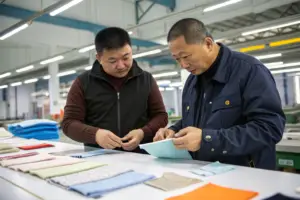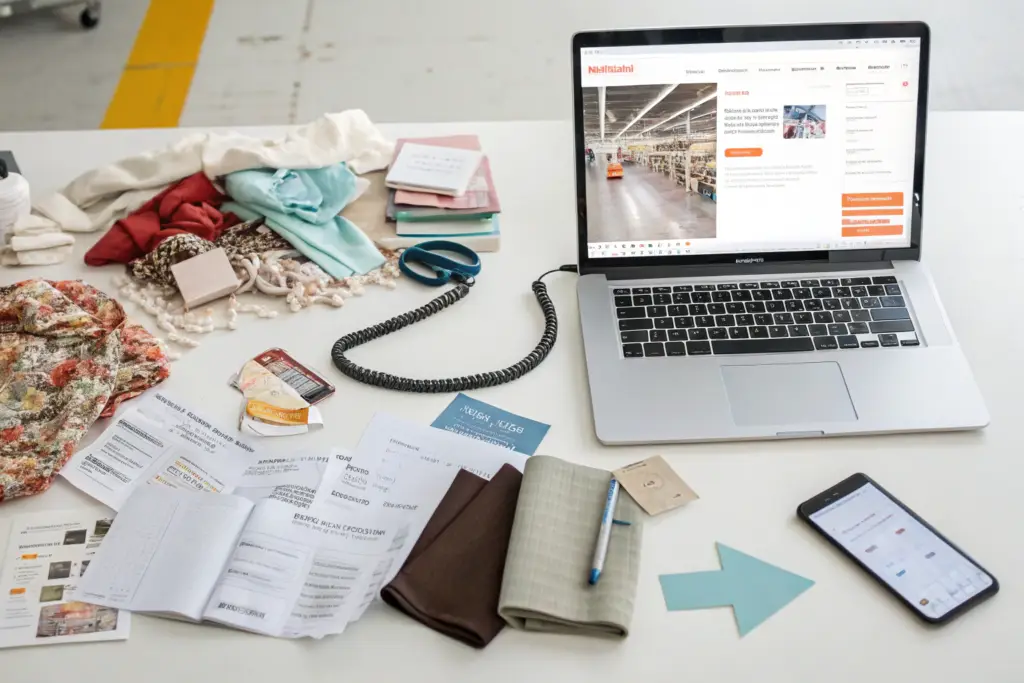
You started your brand the smart way. You found suppliers on Alibaba, ordered small batches of blank t-shirts and hoodies, maybe did some screen printing locally. It was a low-risk way to test the waters. But now you are growing. You are tired of inconsistent quality, limited fabric options, and the feeling that you are just buying a commodity. You want a real private label product. You want a partner. You know it is time to move beyond the platform, but the leap feels terrifying. A brand owner told me, "Alibaba felt safe, like a flea market with buyer protection. Moving to a dedicated factory felt like buying a house in a foreign country. I was scared."
Transitioning from Alibaba sourcing to a dedicated B2B factory is a strategic move from buying a commodity to building a supply chain. It involves shifting your mindset from finding the lowest per-unit price on a platform to vetting a long-term partner based on quality, transparency, and scalability. The process requires rigorous due diligence, starting with a small Trial Order, and establishing clear, direct communication channels.
At Shanghai Fumao, we work with many brands who have made this exact transition. We understand the fear and the uncertainty. We also know that making this leap is the single most important step a brand can take to control its quality, protect its margins, and build a defensible, scalable business. Let me walk you through exactly how to make this transition safely, smartly, and successfully.
Why Is Moving Beyond Alibaba Critical for a Growing Brand?
Alibaba is an incredible tool for finding suppliers, especially when you are just starting. It provides a layer of buyer protection and allows you to test the waters with relatively low MOQs. However, as your brand matures, the limitations of the platform begin to outweigh its benefits. You hit a ceiling. Understanding these limitations is the first step in justifying the move to a dedicated factory partnership.
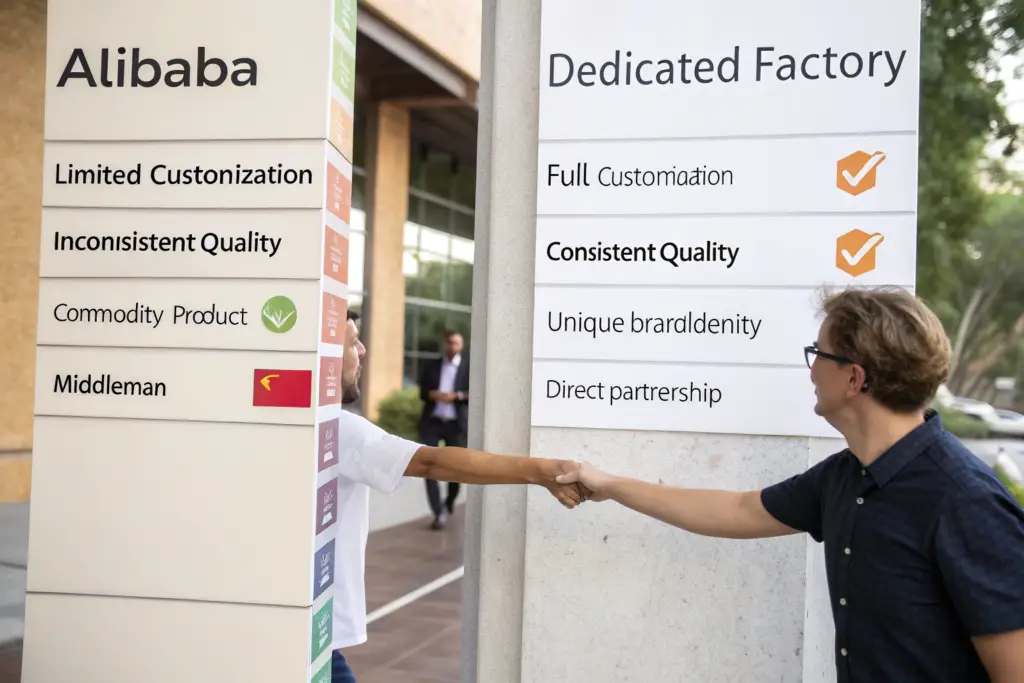
Alibaba is primarily a platform for transactions, not long-term partnerships. Its limitations for a growing brand include: a lack of true customization (you are mostly buying pre-developed blanks), inconsistent quality from order to order, limited transparency into the actual manufacturing process, and the presence of many trading companies posing as factories. A dedicated B2B factory offers full customization, consistent quality, end-to-end transparency, and a direct, strategic partnership.
I recall a brand that had built a decent business selling graphic tees sourced from an Alibaba supplier. They were stuck. Every time they wanted to tweak the fit of the tee or use a softer fabric, the supplier said "no" or quoted a massive MOQ. They couldn't evolve their product. They were also terrified that their "supplier" would change the blank on them without notice, which had happened twice before. They realized they were building their brand on rented land. When they transitioned to working with us, they were able to develop their own custom fit and fabric. Their brand finally had a unique, ownable product. Their sales doubled the following year. This is the liberation that comes from moving beyond the platform. This is the foundation of a true private label business.
What Are the Limitations of "White Label" Blanks from Alibaba?
Most "custom" apparel on Alibaba is actually white label—generic, pre-made blanks that you simply put your logo on. The limitations are significant:
- Zero Fit Control: You are stuck with the generic fit of the blank. It might be boxy, or the sleeves might be too short.
- Inconsistent Fabric: The factory may change their fabric source without telling you, altering the handfeel and quality of your product.
- No Brand Identity: Your product is fundamentally the same as hundreds of other brands. You can only compete on price and graphics.
A dedicated factory partnership allows you to develop a custom fit and proprietary fabric, which is the foundation of a defensible brand.
How Does a Dedicated Factory Provide Better Long-Term Value?
The per-unit cost from a dedicated factory might be slightly higher than the cheapest Alibaba option, but the value is exponentially greater. You are paying for:
- Consistency: The 100th order is identical to the 1st.
- Customization: You can create unique, ownable products.
- Transparency: You know where and how your goods are made.
- Partnership: You have a direct line to a team that is invested in your success.
These factors reduce your long-term risk, lower your return rate, and allow you to command higher prices. The total cost of ownership is almost always lower with a dedicated partner. This is the value of a strategic B2B partnership .
How to Vet and Choose the Right Factory Partner After Alibaba?
On Alibaba, you rely on "Gold Supplier" badges, transaction history, and reviews. When you move to a dedicated factory, the vetting process must become more rigorous and personal. You are not just buying a batch of products; you are selecting a long-term business partner. The skills required for vetting are different. You need to move beyond the platform's metrics and conduct your own primary-source verification.
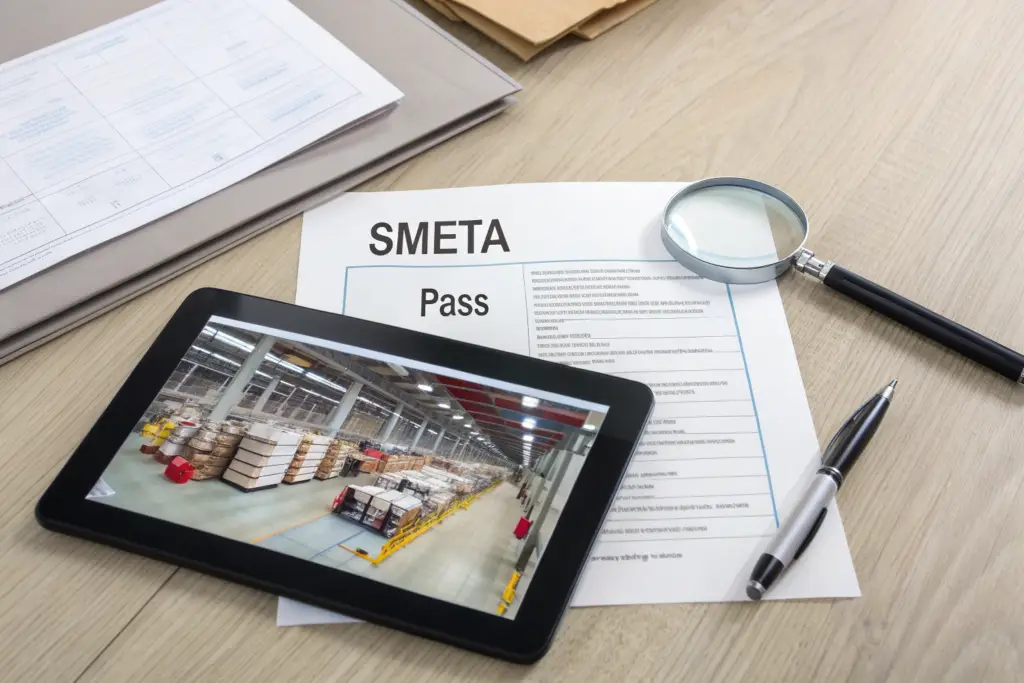
Vetting a dedicated factory requires a proactive, multi-step approach: 1) Verify their legal business license and physical address independently, 2) Conduct a live, unscripted video tour of the production floor, 3) Request and independently verify third-party audit reports (like SMETA or BSCI), and 4) Speak directly with verifiable client references, preferably on a video call, asking specific questions about communication and reliability.
I always advise clients making this transition to treat the first conversation with a potential factory partner as a two-way interview. You are interviewing them, and they are interviewing you. Ask the hard questions we outlined in our article on verifying a factory's legitimacy. A professional clothing manufacturer will welcome this scrutiny and provide transparent answers. A factory that is evasive or rushes you to a deposit is a red flag. A brand we work with told me, "The vetting process with you felt completely different from Alibaba. You volunteered information. You showed me the inside of a carton on a live tour. I felt like I was finally seeing behind the curtain." That is the level of transparency you should demand. This is the due diligence required for a trusted manufacturing partner .
What Questions Should You Ask a Factory That You Wouldn't Ask on Alibaba?
The questions become more strategic and relationship-focused:
- "Can you walk me through your process for ensuring consistent fit across multiple production runs?"
- "How do you handle a situation where a key trim is delayed?"
- "What does a typical weekly update from my Project Manager look like?"
- "Can you share a case study of how you helped a brand similar to mine scale their production?"
- "May I speak to a client who has been with you for more than two years?"
These questions probe the factory's operational maturity and their commitment to long-term partnership, not just transactional efficiency.
Why Is a Trial Order the Ultimate Test After Vetting?
Even after a successful vetting process, you should not commit your entire collection. The Trial Order is the final, real-world test. It is a small, low-risk production run (e.g., 100-200 units of a single style) designed to test the entire relationship: communication, adherence to the timeline, sample-to-bulk quality, and problem-solving. It is a small investment that provides invaluable data and builds trust before you scale. This is a standard part of our onboarding for new private label partners .
How to Manage the Shift in Communication and Project Management?
Communication on Alibaba is often transactional and fragmented. It happens in the platform's chat window, often with a salesperson who may or may not have direct access to the production floor. Moving to a dedicated factory requires a shift to a more structured, professional, and often asynchronous communication model. This is where a dedicated Project Manager becomes your most valuable asset.
Transitioning from Alibaba communication means moving from a chat window to a structured partnership. You will shift from communicating with a sales rep to working with a dedicated Project Manager who acts as your single point of contact. Communication will become more proactive (weekly updates, milestone photos) and will utilize a mix of tools: formal email for approvals and records, and instant platforms like WeChat for quick, visual updates.
A brand owner who made the switch told me, "On Alibaba, I felt like I was always chasing. With my Project Manager at Fumao, I feel like I'm being updated. I don't have to ask what's happening. I get a photo of my cutting table every Tuesday. It's a completely different experience." This shift from reactive chasing to proactive transparency is one of the biggest stress relievers for brand owners. It frees up immense mental bandwidth. This is the power of a dedicated Project Management model.
What Is the Role of a Dedicated Project Manager vs. an Alibaba Sales Rep?
This is a fundamental difference in function and accountability:
- Alibaba Sales Rep: Their primary goal is to close the sale. They may work for a trading company and have limited visibility into actual production. Their job is largely done once the order is placed.
- Dedicated Project Manager: They are an operations specialist. Their goal is the successful fulfillment of your order. They are your single point of contact and your advocate on the factory floor. They are measured on on-time delivery and quality.
How to Adapt to a More Formal, Asynchronous Communication Style?
Embrace the tools of professional collaboration:
- Email for the Record: Use email for all formal approvals (lab dips, PP samples), change orders, and important clarifications.
- WeChat for the Pulse: Use WeChat for quick questions, real-time photos, and short video updates from the factory floor.
- Weekly Updates: Expect and rely on a structured weekly update (often via email) that summarizes progress, provides photos, and highlights upcoming milestones.
This hybrid approach combines the speed of instant messaging with the rigor of formal documentation. It is the most effective way to manage a remote manufacturing partnership. This is the workflow we use with all our B2B partners .
How to Adjust Your Financial and Inventory Planning for a Factory Partnership?
The financial model of working with a dedicated factory is different from the Alibaba model. It requires a shift in thinking from "lowest unit price" to "total landed cost" and "return on investment." You will likely be placing larger, but less frequent, orders. Your cash flow planning and inventory management must adapt. This is a sign of a maturing business.
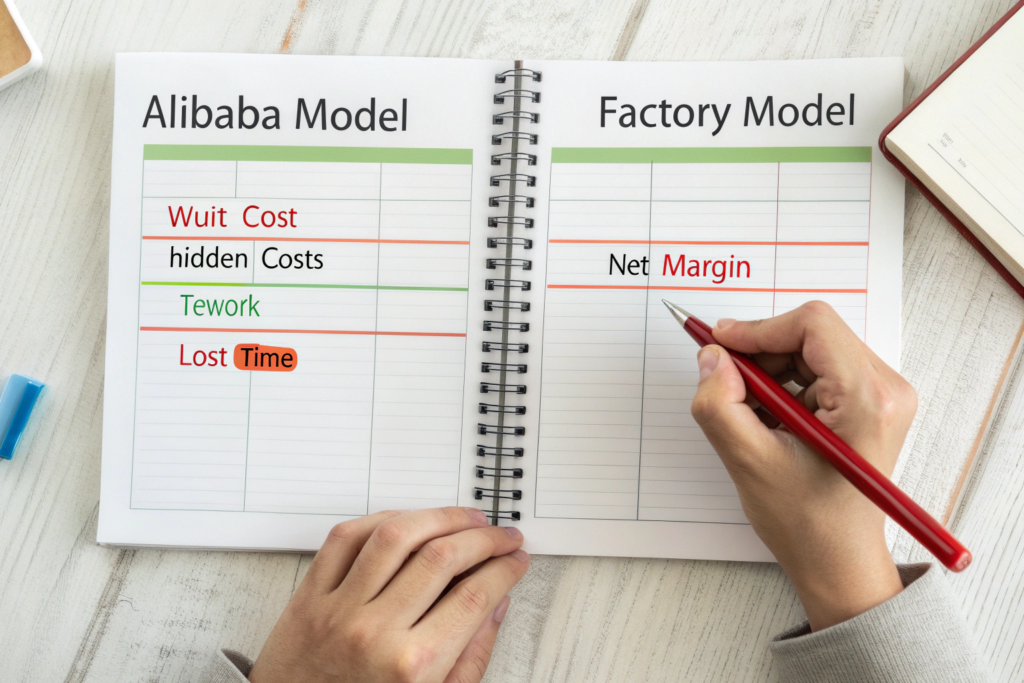
Transitioning to a factory partnership requires adjusting your financial planning. Expect to place larger POs with a 30/70 payment structure (30% deposit, 70% balance before shipment). While the per-unit cost may be higher, you will benefit from consistent landed costs (especially with DDP shipping) and a significant reduction in the "hidden costs" of quality failures and time spent managing logistics. This model favors accurate forecasting and longer-term inventory planning.
A distributor we work with had to adjust his cash flow when he moved from Alibaba to us. He was used to paying 100% upfront for small batches. He now pays a 30% deposit on a larger, season-long PO. This required him to plan his finances further in advance. However, he told me the predictability is worth it. He knows his exact landed cost with our DDP shipping. He is no longer surprised by quality issues that force him to air-freight replacements or issue refunds. His overall financial health is much stronger. This is the maturation of a brand's financial operations. This is the value of a transparent pricing model.

How to Plan for a 30/70 Payment Schedule vs. 100% Upfront?
The 30/70 structure is actually better for your cash flow than 100% upfront. You only need to put down 30% to start production. The 70% balance is not due until the goods are finished and ready to ship (typically 4-8 weeks later). This allows you to potentially collect pre-orders or revenue from other sources before the final payment is due. It is a more sophisticated and cash-flow-friendly model for a growing business. This is the standard we offer to our qualified partners .
Why Does DDP Shipping Simplify Financial Forecasting?
We have dedicated entire articles to DDP shipping, but it is a critical component of the financial transition. With Alibaba, you are often dealing with uncertain and fluctuating shipping costs. With a dedicated factory offering DDP, your landed cost is a single, fixed, and predictable number. You can plug this number into your margin calculator with 100% confidence. This eliminates the financial guesswork and allows you to price your products accurately and protect your profit. This is the foundation of sound financial planning for a fashion brand.
Conclusion
Transitioning from Alibaba sourcing to a dedicated B2B factory is a pivotal moment in the life of a growing apparel brand. It is the move from being a buyer of commodities to a builder of a unique, defensible product and a scalable supply chain. While the leap requires more rigorous upfront vetting and a shift in communication and financial planning, the rewards are immense: consistent quality, true customization, lower long-term risk, and a strategic partner invested in your success.
At Shanghai Fumao, we specialize in being that dedicated partner for brands ready to make the leap. We understand the journey because we have guided many brands through it. We provide the transparency, the structured communication, and the flexible manufacturing solutions that make the transition smooth, safe, and successful.
If you are ready to move beyond the limitations of the platform and build a real supply chain for your brand, let's talk. Our Business Director, Elaine, can walk you through our vetting process and explain how a dedicated partnership with Fumao can transform your business. Please email Elaine at: elaine@fumaoclothing.com.