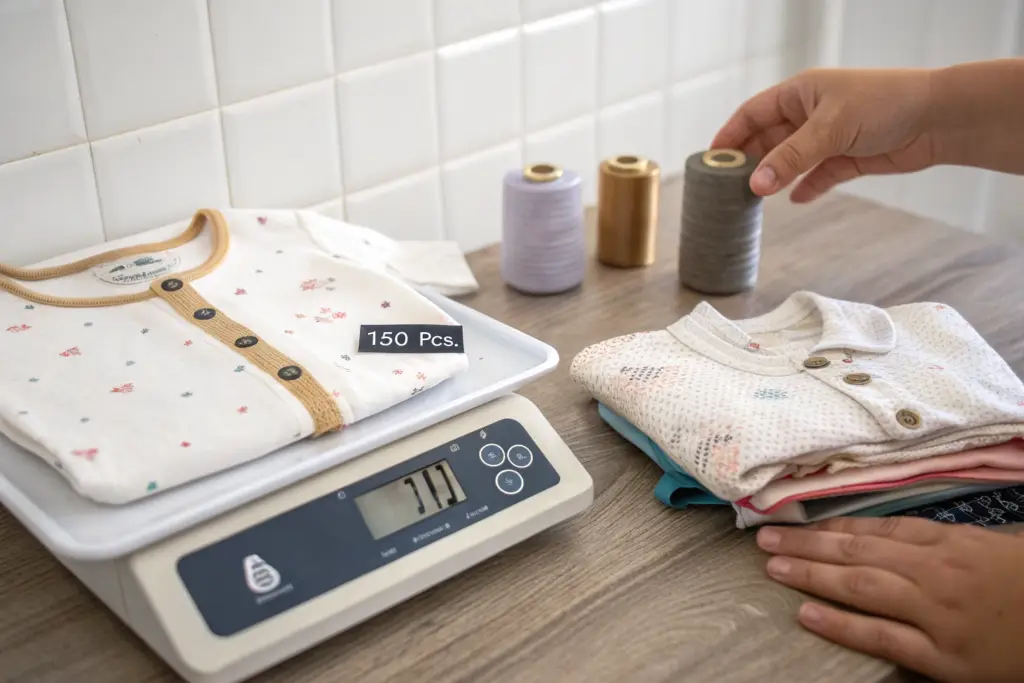
You have designed the perfect line of kids' wear. The prints are adorable. The fabrics are soft and safe. You are ready to launch your brand. You email a factory for a quote. The reply comes back: "MOQ 800 units per style, per color." Your heart sinks. You do not need 800 units. You need 150 to test the market, to build your community, to start small. A brand owner told me, "I felt like the industry was telling me I wasn't allowed to start small. The MOQs for kids' clothes were a brick wall."
The Minimum Order Quantity (MOQ) for custom kids' wear production is driven primarily by two factors: Fabric Minimums (the amount of cloth a mill requires for a custom color or print) and Production Line Efficiency. However, by using strategic approaches like selecting from a curated library of "stock" fabrics, leveraging modular production cells, and combining colors/sizes, the realistic MOQ for a fully custom kids' garment can be as low as 100-150 units per style.
At Shanghai Fumao, we believe that emerging kids' wear brands should not be locked out by prohibitive minimums. Our flexible production lines and strategic approach to materials are designed to lower the barriers to entry. Let me explain exactly how MOQs work for custom children's apparel and, more importantly, how we work with our B2B partners to make beautiful, safe, small-batch production a reality.
What Are the Typical MOQs for Custom Kids' Garments and Why?
Understanding why MOQs exist is the first step to navigating them. A factory's MOQ is not an arbitrary number designed to frustrate small brands. It is a direct reflection of the economic realities of the textile supply chain and production floor efficiency. The MOQ is essentially the sum of two separate, smaller minimums: one from the fabric mill and one from the sewing factory.
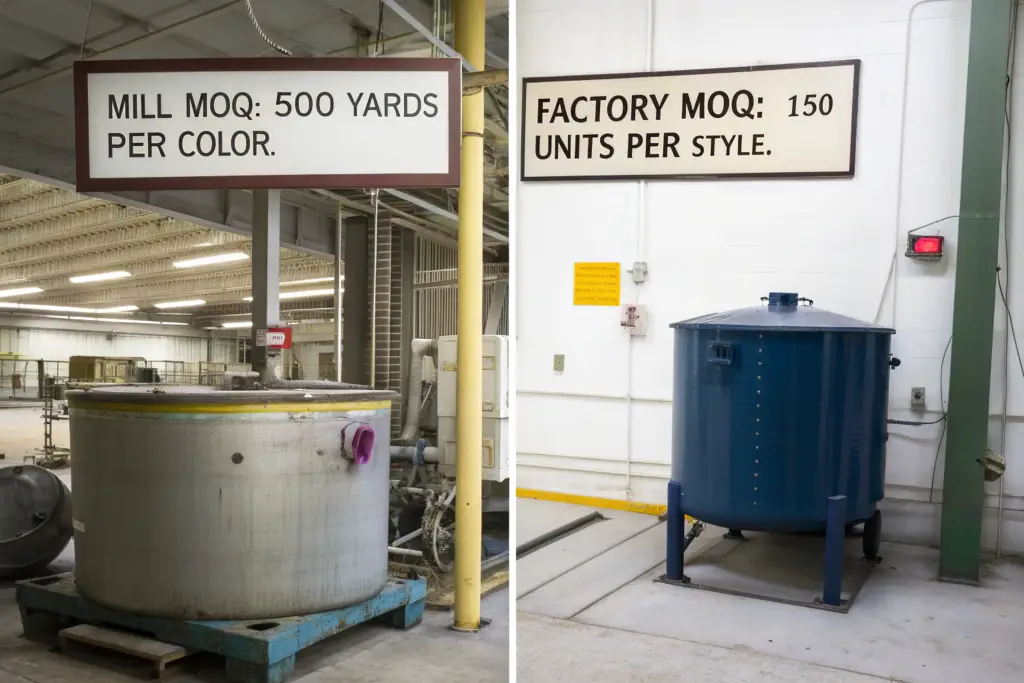
The overall MOQ is driven by two main factors: 1) Fabric Mill MOQs, which are based on the minimum yardage required for a custom dye lot or print run (often 300-500 yards per color), and 2) Factory Sewing MOQs, which are based on the minimum number of units needed to set up a production line efficiently (often 100-300 units per style). The higher of these two minimums usually dictates the final MOQ.
I recall a brand founder who was frustrated by a 500-yard MOQ on a custom-printed GOTS organic cotton for a line of baby onesies. "I only need 150 yards!" she said. I explained that the mill has to stop a large printing machine, clean the screens, and mix custom inks for her design. The setup cost is the same whether they print 50 yards or 500 yards. They need that volume to make the job profitable. Understanding this reality is key. The secret to lowering the overall MOQ is to find a factory that has creative strategies to work around these fixed upstream minimums. This is where a knowledgeable clothing manufacturer makes all the difference.
How Do Fabric MOQs for Kids' Wear Differ from Adult Apparel?
The underlying mill minimums are the same—a custom dye lot is a custom dye lot. However, the impact of that minimum is often different for kids' wear . Because children's garments are smaller, they consume less fabric per unit. A single yard of fabric might yield 2-3 baby onesies, but only one adult t-shirt. Therefore, a 500-yard fabric MOQ will result in a much higher unit MOQ for a small kids' item (e.g., 1,000+ onesies) compared to an adult item. This makes strategic fabric choices even more critical for children's apparel brands.
Why Is a Factory's Internal MOQ Often Lower Than the Fabric MOQ?
A factory with flexible, modular production cells can profitably sew a much smaller batch of units than a factory with a long, traditional assembly line. Our internal sewing MOQ on our modular lines can be as low as 50-100 units for a simple style. However, we are still constrained by the fabric. If a client insists on a fully custom-dyed or custom-printed fabric, the mill's MOQ will be the controlling factor. This is why the conversation about MOQs almost always comes back to material strategy. This is the flexibility enabled by our five production lines .
How Can You Lower the MOQ for Your First Kids' Wear Collection?
The standard MOQs quoted by many factories are for the "full custom" scenario: a unique, custom-dyed fabric in a unique print, made exactly to your specs. This is the most expensive and highest-volume path. The good news is, there are several proven strategies to dramatically lower the minimums for your first collection. These strategies require a bit of flexibility and a smart partnership, but they are the keys to unlocking small-batch private label production.
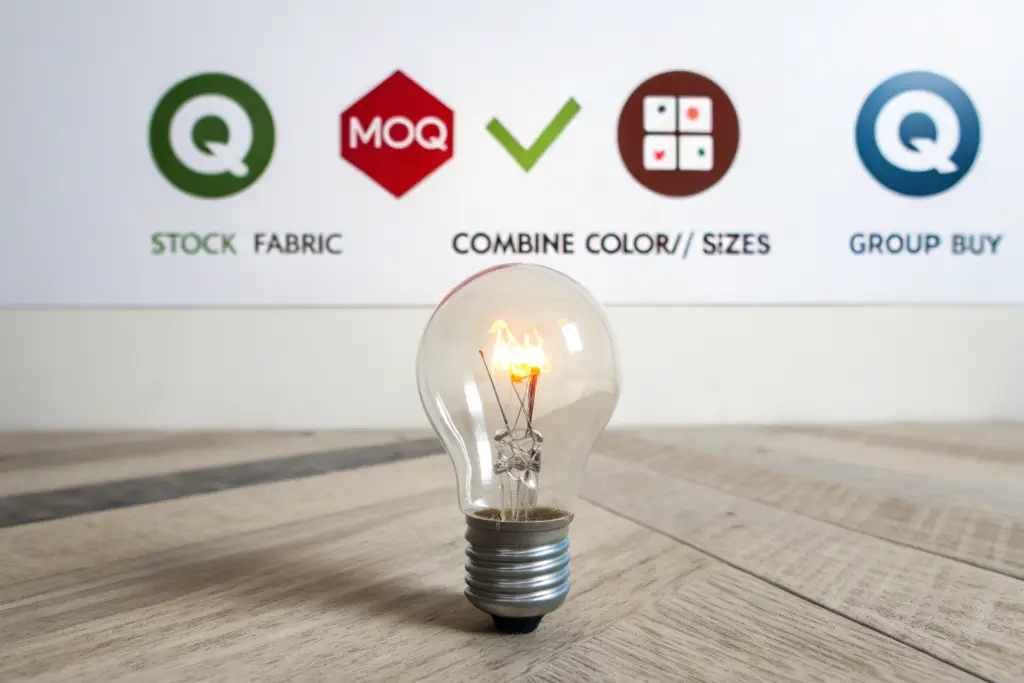
The most effective strategies to lower MOQs for a first collection are: 1) Designing from a curated library of high-quality "Stock" Fabrics (bypassing custom dye/print minimums entirely), 2) Consolidating your order by combining multiple sizes and a limited number of colors into a single style MOQ, and 3) For custom prints, utilizing Digital Printing which has significantly lower or no screen setup minimums compared to traditional screen printing.
A successful kids' wear brand we work with launched their entire first collection using this exact playbook. They chose three beautiful, soft stock fabrics from our library: a GOTS organic cotton jersey, a cozy French terry, and a lightweight cotton voile. They offered each style in 2-3 of our core stock colors. They combined all sizes (0-3m up to 24m) to meet a 150-unit per style MOQ. Their collection was beautiful, cohesive, and required zero custom fabric development. They were able to launch with minimal inventory risk and use their initial sales to fund custom fabrics for their second season. This is the smart, capital-efficient way to build a brand. This is the approach we guide all our emerging brand partners through.
What Is a "Stock Fabric" Library and How Does It Work?
This is the single most powerful tool for lowering MOQs. Our "Stock Fabric Library" is a curated collection of high-quality, safe, and popular fabrics that we keep in inventory. This includes:
- GOTS-certified organic cotton jerseys in core colors.
- Soft, brushed French terry for hoodies and joggers.
- Lightweight cotton voile for summer dresses.
- Sturdy cotton twill for pants and jackets.
Because the fabric is already made and sitting on our shelf, there is no mill minimum. You can order as little as needed for your production run. This is the most direct path to a low MOQ. You can explore our library through our fabric sourcing service.
How Can Combining Colors and Sizes Help Meet a Minimum?
This is a standard and essential practice. The MOQ is usually for the total units of a specific style, regardless of the color or size breakdown. For example, an MOQ of 150 units for a baby romper style might be split into:
- Color A (Sage Green): 80 units (sizes 0-3m to 12-18m)
- Color B (Dusty Rose): 50 units (sizes 0-3m to 12-18m)
- Color C (Natural): 20 units (sizes 0-3m to 12-18m)
This flexibility allows you to offer a small, curated color palette to your customers while still meeting the production minimums. We work with you to create a size and color breakdown that makes sense for your launch.
What Are the MOQ Considerations for Custom Prints, Labels, and Trims?
The fabric is the biggest driver of the overall MOQ, but the smaller details—the custom prints, the branded labels, the special buttons—also have their own minimum order requirements. It is important to understand these component-level MOQs to avoid surprises and to budget your development costs accurately. The good news is that many of these items have become much more accessible to small brands.
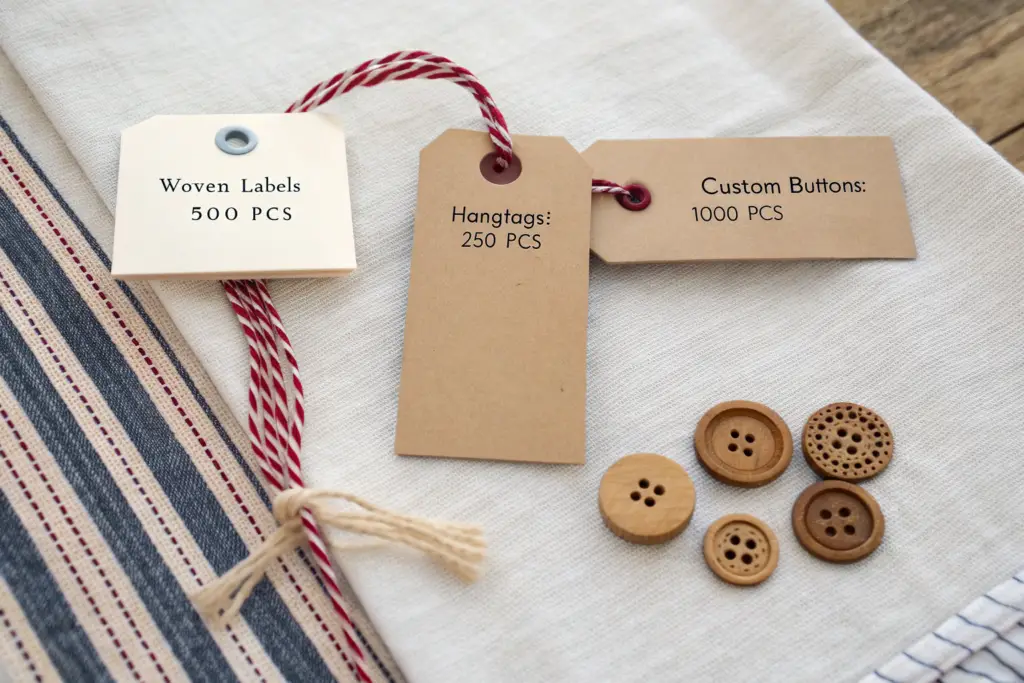
MOQs for custom elements vary: Custom Prints using digital methods have low to no minimums, making them ideal for small batches. Woven Labels typically have MOQs of 300-500 pieces. Printed Hangtags can be done in quantities as low as 100-250. However, fully custom, manufactured Trims like engraved buttons or custom-colored zippers often have higher MOQs (1,000+ pieces) and longer lead times.
A brand we work with wanted a very specific, custom-engraved wooden button for their signature cardigan. The button supplier's MOQ was 2,000 pieces. For her first order of 300 cardigans (which used 3 buttons each, so 900 total buttons), this was a challenge. We found a solution: she purchased the full MOQ of 2,000 buttons. We used 900 for her first run and held the remaining 1,100 buttons in our inventory for her future orders. This spread the cost of the custom trim over multiple production runs. This is the kind of creative problem-solving we offer our private label partners .
Why Is Digital Printing a Game-Changer for Small-Batch Kids' Wear?
As we discussed in our article on printing techniques, Digital Printing (DTG or roll-to-roll) is the ideal solution for small-batch, art-driven kids' wear . Unlike traditional screen printing, which requires expensive screens for each color and has high setup costs, digital printing has no setup fees . You can print as little as a single yard or a single garment. This allows you to create beautiful, complex, multi-color custom prints for a very small collection, with zero print-related MOQ. It is the perfect technology for testing new designs and launching a brand.
What Is a Realistic MOQ for a Custom Woven Label?
Custom woven labels are an essential branding element for any private label collection. The good news is that they are very accessible. A realistic MOQ for a high-quality woven damask or taffeta label is 300-500 pieces. The cost per label is quite low (often $0.15 - $0.40 each). This is a very manageable investment for a first collection. We manage the entire label sourcing and production process for our clients. This is part of our customization services .
How Does Fumao's Flexible Production Model Support Lower MOQs for Kids' Wear?
The reason many large factories have high MOQs is not because they are mean. It is because their entire factory floor is a long, high-speed highway designed for massive, uninterrupted runs. Asking them to do a small, complex kids' wear order is like asking a freight train to make a quick U-turn. Our factory is built differently. We have engineered agility into our physical layout.
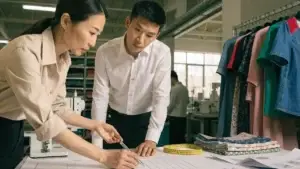
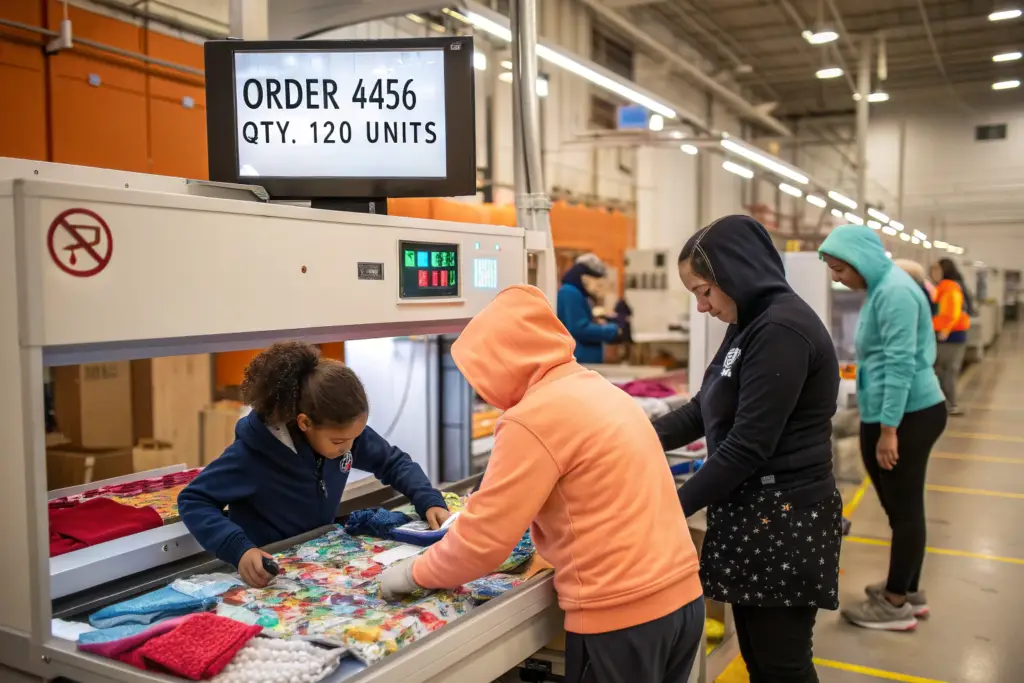
Fumao supports lower MOQs through our Modular Production Cells. These are small, self-contained, U-shaped teams of multi-skilled operators who can efficiently switch between different styles in under an hour. These cells are specifically designed for the small-batch, high-variety production that is characteristic of emerging kids' wear brands. This physical flexibility is what makes 100-150 unit MOQs profitable and sustainable for us.
We have a dedicated "Small Batch Cell" that specializes in orders under 300 units. This cell is staffed by our most versatile sewers, who are experienced in handling the delicate fabrics, tiny pattern pieces, and special safety requirements of kids' wear . A new brand can launch their entire first collection through this cell. As they grow and their order volumes increase, we can seamlessly transition their production to our higher-volume lines. This ability to scale with our partners, from 100 units to 10,000 units, is the core of our long-term partnership model.
What Is the Difference Between a Modular Cell and a Traditional Line for Kids' Wear?
This is the core operational difference that enables lower MOQs:
- Traditional Line: Long, sequential, designed for 2,000+ identical units. Changeover is slow and costly. Not suitable for small brands.
- Modular Cell: A small, agile team. Designed for 50-500 unit batches of varied styles. Changeover is fast (under 1 hour). Perfect for emerging kids' wear brands.
How Do We Handle the Specific Safety and Quality Needs of Kids' Wear in Small Batches?
Whether we are making 100 units or 10,000 units, our commitment to safety and quality is identical. For small-batch kids' wear , this means:
- All fabrics and trims are still sourced to our strict OEKO-TEX Standard 100, Class I safety requirements.
- All garments receive the same rigorous in-line and final quality control inspections.
- Small orders do not mean compromised safety. This is a non-negotiable part of our ethical production standards.
Conclusion
The Minimum Order Quantities for custom kids' wear production are a reality, but they are not an impenetrable wall. They are a puzzle that can be solved with the right strategies and the right manufacturing partner. By leveraging stock fabrics, understanding digital printing, and partnering with a factory that has flexible, modular production capabilities, emerging brands can launch beautiful, safe, and fully custom collections with realistic and manageable minimums.
At Shanghai Fumao, we are passionate about lowering the barriers to entry for creative kids' wear entrepreneurs. Our flexible production model, our curated stock fabric library, and our deep expertise in children's apparel are all designed to make your dream of launching a brand a viable, low-risk reality. We meet you where you are and provide a scalable platform for your growth.
If you are ready to explore the possibilities for your kids' wear collection and get a realistic MOQ for your specific designs, let's talk. Our Business Director, Elaine, can walk you through our stock fabric options and our flexible production process. Please email Elaine at: elaine@fumaoclothing.com.