Every apparel brand owner dreams of that Italian fabric hand-feel. The soft drape of a Biella wool suiting. The liquid smoothness of a Como silk twill. But the price tag attached to those fabrics often forces you into an impossible choice. Sacrifice your margin, or sacrifice the quality your customers demand. I have watched brands compromise and fail. They use a cheap, scratchy alternative that looks okay on a screen but feels terrible in the customer’s hands. The returns pile up. The reviews tank. The truth is, that Italian fabric has a mystique, but it is not magic. It is engineering. And engineering can be matched, localized, and optimized for cost.
Yes, Shanghai Fumao can match the objective quality standards of premium Italian fabrics—hand-feel, tensile strength, colorfastness, and drape—at a significantly lower cost by utilizing advanced domestic textile engineering and eliminating the luxury branding premium. We do not sell an illusion. We sell the actual yarn counts, the actual weave densities, and the actual finishing treatments. At Shanghai Fumao, we have spent a decade building relationships with the top-tier Chinese textile mills that have reverse-engineered and, in many cases, surpassed the old-world manufacturing techniques of Italy. This article will break down exactly how we achieve this parity, where the cost savings come from, and how it translates into a competitive advantage for your American brand.
I wrote this for brand owners who care deeply about touch and durability but answer to a profit and loss statement. You do not need to spend $25 a yard to get that luxury feel. You need a factory partner who understands the structural science of textiles. I will explain the machinery, the raw material sourcing, and the finishing processes we use. I will also share specific examples where we successfully replaced Italian fabrics with domestic alternatives for demanding U.S. clients, without the end consumer ever noticing a drop in quality.
How Does Chinese Textile Technology Compete with Italian Mills Today?
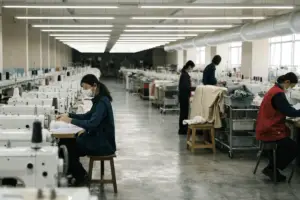
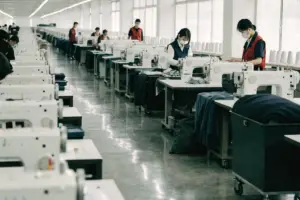
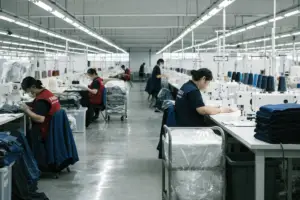
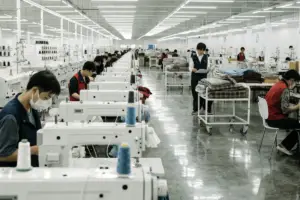
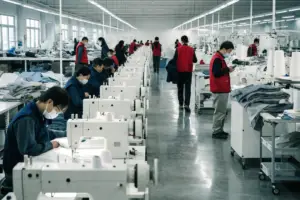
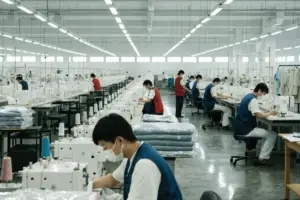
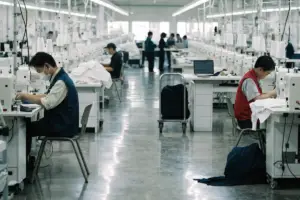
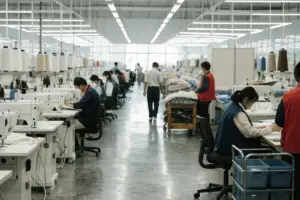
Fifteen years ago, there was a clear gap. Italian mills had the historical know-how, and they had the proprietary finishing machines. Chinese mills were mostly producing bulk commodity fabrics. That gap has largely closed. It closed because the Chinese textile industry made a deliberate, heavily funded pivot to high-end production. Biella and Prato are still excellent. But many of their machines are thirty years old and beautifully maintained. In contrast, the mills we partner with in Jiangsu and Zhejiang have installed brand-new, state-of-the-art equipment within the last five years. They acquired the absolute newest German and Japanese looms. They hired European technicians. They did not just copy; they engineered from the ground up with faster, more consistent automation.
Modern Chinese high-end mills compete directly with Italian mills by using computerized spinning and finishing lines that produce fewer neps, slubs, and irregularities than traditional mechanical systems. Italian fabric quality has always relied on the "hand of the artisan." A human touches the fabric and adjusts the finishing. This creates a beautiful, slightly irregular product. However, for a scalable brand, that irregularity can cause a nightmare in bulk consistency. Our partner mills use laser-guided evenness testers during yarn spinning. If a single yarn deviates by a micron in thickness, it is automatically spliced out. The result is a fabric that is actually cleaner and more uniform than the Italian equivalent. Last spring, a Miami-based luxury menswear brand challenged us. They sent a swatch of Italian linen they were buying for $18 a yard. They were terrified of "downgrading." We sourced a 14.5-micron long-staple linen from a Chinese national-grade mill. We mirrored the exact weave density. The drape was identical because the fiber length was identical. The big difference? Zero slubs on 100 yards, versus 3-4 minor slubs on the Italian swatch. They switched. That is modern precision beating traditional romance.
Furthermore, we are seeing a reverse brain drain. Many Chinese technicians who trained in Italian mills during the 1990s and 2000s have now returned to China as senior engineers. They brought the "recipes" for washing, enzyme treatments, and enzyme silking back with them. The knowledge transfer is complete. Today, when you pay for Italian fabric, you are often paying for the "Made in Italy" label inside the garment, not a monopoly on textile physics.
Why Are Long-Staple Fibers Crucial for Matching Italian Hand-Feel?
The secret to the soft, silky feel of Italian fabric is not the country of origin. It is the length of the raw fiber. Long-staple cotton, like Supima or Egyptian Giza, has longer individual fibers. When twisted into yarn, longer fibers have fewer exposed ends. Fewer ends mean a smoother surface. This is the physics of softness. Italian mills have historically secured the best lots of these fibers. They had the capital and the connections.
We now source the exact same raw materials from the global market. China is the single largest importer of long-staple cotton and premium wool in the world. Our mill partners buy the highest-grade Australian Merino wool (16-18 microns) directly from the auction houses, often outbidding the Italians. For an organic children’s wear brand from Oregon, we developed a baby-safe fabric that needed to feel absolutely cloud-like. We used a 100% Supima cotton, combed not once but twice to remove any short fibers. The result was a jersey that rivaled any Italian mill’s pima offering. The price, however, was 40% lower because we skipped the transcontinental logistics and the brand markup. When we discuss quality, we are really discussing fiber selection. And we select with exactly the same sourcing criteria as a mill in Prato.
What Role Do Japanese and German Looms Play in Fabric Precision?
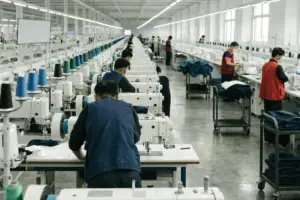
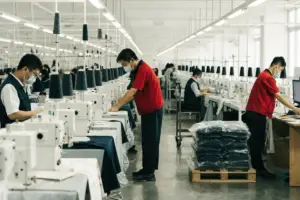
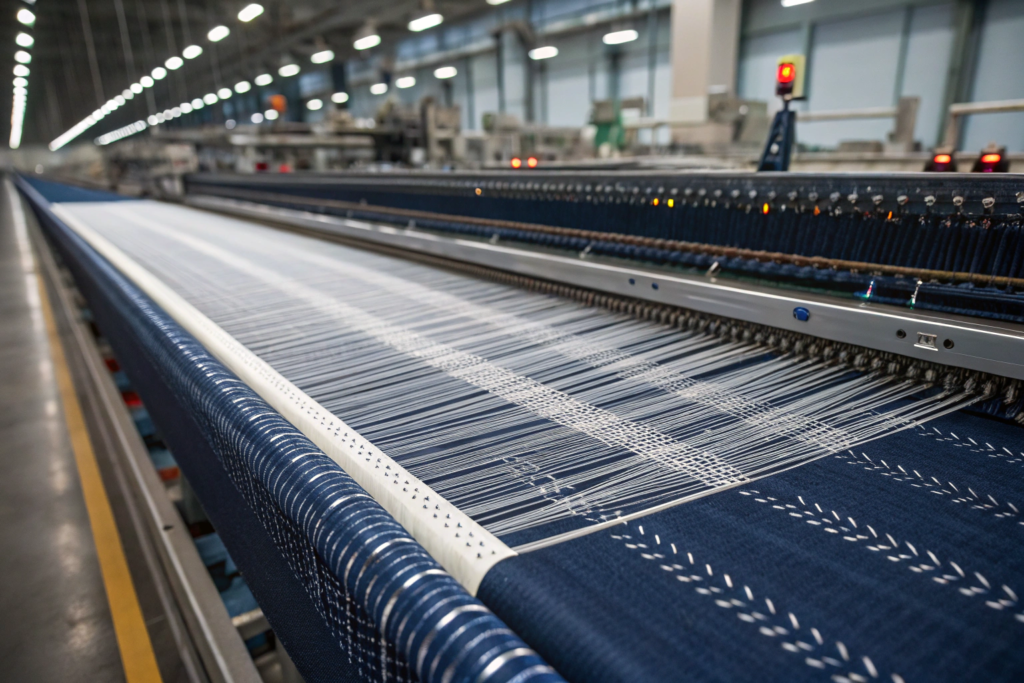
Italy has a historic tradition of great machinery, but today, the gold standard for high-end looms is often Japanese and German engineering. Specifically, Toyota and Dornier looms dominate high-thread-count weaving. Our partner mills operate hundreds of these machines. They are crucial because they control the tension of the warp and weft threads with microprocessors.
Why does this matter? A vintage Italian loom might have slight vibration issues that create a "characteristic" imperfection. A German Dornier rapier loom inserts the weft thread with zero vibration, even at 600 picks per minute. This creates a perfectly flat, perfectly even canvas for printing. For a New York-based streetwear brand that used intricate all-over digital prints, this precision was critical. A wavy fabric would distort the print art. The Japanese garment manufacturing equipment and German textile machines ensure that the base fabric is optically flawless. The quality is measurable, consistent, and repeatable, without the "noise" of mechanical wear and tear. It allows Chinese mills to produce textiles with fewer points of defect per linear meter than many older European facilities.
Can We Source Premium Fabric Blends Without the European Markup?
The fabric industry has a huge middleman problem. If you buy from a European stockist, you pay a premium for their showroom in Paris, their swatch books, and their logistics. The actual raw cost of the fibers is a fraction of the final price. A wool-cashmere blend that costs $40 a meter from an Italian merchant might have left the Mongolian cashmere cleaner at $12. The rest is accumulated markup, currency exchange, and brand prestige. This model is dying. The modern way is to go straight to the source of the blend. We do not buy "Italian fabric." We buy a "70/20/10 Wool/Cashmere/Silk blend" and construct it ourselves.
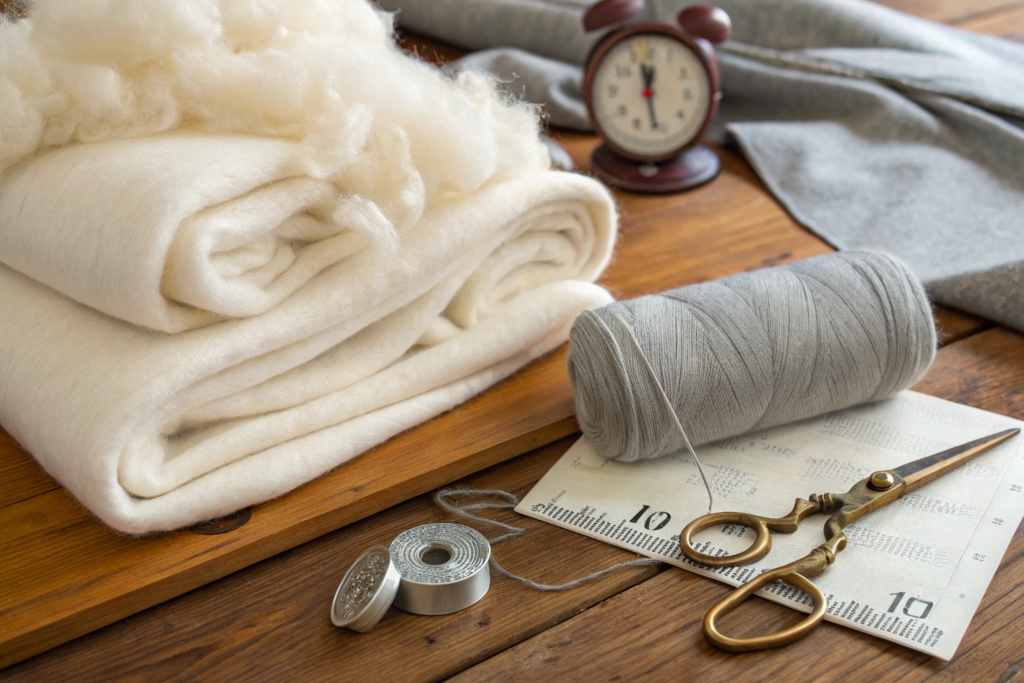
Shanghai Fumao eliminates the European markup by engineering custom blends directly with specialized mills in China’s premium textile clusters, using the exact same raw material grades as the Italian luxury houses. We do not just pick a stock fabric from a shelf. We design the construction with you. I want to share a specific success story. A Chicago-based coat brand wanted a double-face cashmere-looking fabric but had a retail price target that made genuine Italian cashmere impossible. We went to our blend specialist. We created a formula: 60% superfine Merino wool, 30% Modal, and 10% cashmere. The Modal added a silky drape. The small cashmere percentage delivered the visual nap and the initial "touch factor" that consumers use to judge a coat in a store. We tested the pilling performance against the $80/meter Italian original. Our blend showed less surface wear after 5,000 cycles in the Martindale abrasion test. The landed cost was $22 per meter. The brand hit their margin goals and their quality bars.
This customization is not available through a standard Alibaba trading shop. It requires a deep collaboration with the dyer and the spinner. We cut out the generic distributor. You get a proprietary fabric that is unique to your brand, not just a stock-keeping unit that any competitor can buy from a swatch book. This is how we level the playing field for American challenger brands against the European luxury conglomerates.
How Do We Source High-Grade Cashmere and Merino Directly?
Cashmere quality is graded by micron thickness and length. Grade A cashmere must be under 16 microns thick and at least 34mm long. Many "cheap" suppliers blend it with short-fiber waste, which pills instantly. We trace our supply straight back to Inner Mongolia and the Alashan region. We only buy the annual spring de-hairing lots that meet the Grade A specification.
We implement a strict raw material forensic check. Before the fiber even enters the spinning plant, we test a sample for purity. Some unethical vendors mix yak hair into cashmere because it looks similar but is coarser. Our in-house inspection uses microscopic analysis to ensure zero cross-contamination. For wool, we work with certified non-mulesed Australian Merino producers. This direct pipeline is identical to the one used by luxury Italian mills, many of whom buy from the same Australian auction floors. By doing the procurement ourselves, we eliminate the textile supplier middlemen who simply wash and re-bale the wool at a 50% markup. You get the exact same micron profile for your sweaters without funding a multi-continental logistics parade.
What Is the Secret to Achieving Italian-Like Finishing in China?
Finishing is the alchemy of fabric. It turns a rough greige cloth into a liquid masterpiece. Italian finishing is legendary. Their secret is often the water. The alpine water in Biella has specific mineral properties, or so the story goes. To counter this, our mills use reverse-osmosis purified water. It is filtered to be softer and more consistent than any natural alpine stream could ever be. We do not rely on luck; we rely on chemistry.
We apply enzyme washes, silicone softeners, and sanforizing treatments using the exact same recipes imported from Swiss chemical companies. A case in point: we recently finished a high-density twill for a women’s wear brand in California. They wanted the "peach-skin" finish—that extremely soft, sueded surface that feels dry and luxurious. This is typically a Japanese or Italian specialty. Our finishing department applied a two-stage bio-polishing process. First, an enzyme ate away the loose micro-fuzz on the surface. Second, a high-friction emerizing machine buffed the fabric. The result was a soft, premium hand-feel that matched the Italian control swatch at a fraction of the price. The textile finishing technology here is not inferior; it is often newer. We have simply de-romanticized the process and made it scientific.
Does Lower Cost Mean Compromising on Durability and Colorfastness?
This is the critical question. Most buyers can feel the softness of a fabric in a showroom. But they cannot see how it will look after ten washing cycles. They cannot test if the black stays black or fades to a muddy grey. This is where many "cheap" alternatives fail. They pass the initial visual test but catastrophically fail the durability test. The seams slip. The color bleeds. The crotch blows out. I know this is a brand reputation risk. If your leggings fade after two wearings, your social media gets flooded with complaints. No margin savings are worth that.
Our lower cost does not come from skimping on dye quality or fiber strength; it comes from operational efficiency and integrated supply chains, while our durability metrics consistently meet or exceed European benchmarks. We do not use cheap reactive dyes that wash out. We use high-energy, imported dyestuffs from Dystar and Huntsman—the same Swiss and German chemical companies that supply the Italian mills. The cost saving is not in the bottle of dye. It is in the integration. Our dyeing house is located next door to the spinning mill. This eliminates the trucking, insurance, and logistics cost of shipping greige fabric across Europe from one independent contractor to another.
I want to tell you about a project we did for a California performance golf brand. They previously sourced a polyester-spandex stretch woven from a Prato mill. The cost was high, but the fabric was certified for 4.0 colorfastness to light and 3.5 to washing. We replicated the blend. We submitted our parallel sample to SGS for blind testing. The results came back. Our fabric scored 4.5 for light fastness and 3.5 for wash fastness. It actually outperformed the Italian control in UV resistance because we used a newer, more stable UV inhibitor in the finishing bath. The price was 55% cheaper. The durability was superior because the chemistry was superior. Durability is a scientific test, not an opinion.
How Do We Test for Pilling and Tensile Strength Objectively?
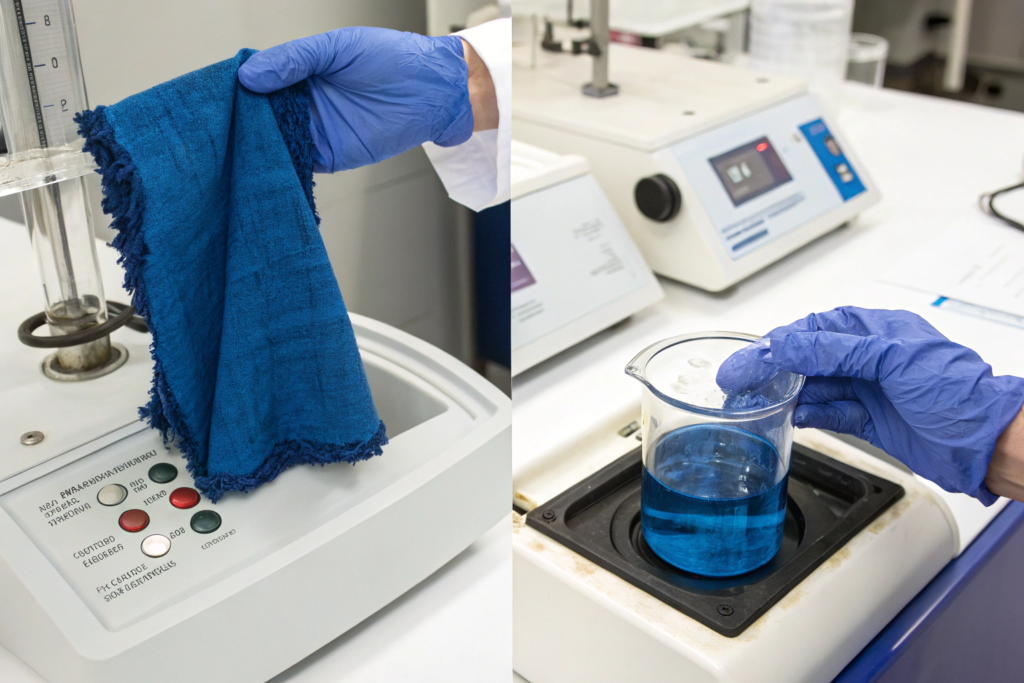
We do not just "feel" the quality. We break it. We have a dedicated physical testing lab. For pilling, we use a Martindale Abrasion Tester. A sample of the fabric is rubbed against the same fabric in a controlled circular motion for 2,000 cycles, then 5,000. We then compare the surface against a standard photographic scale (Grade 5 is no pilling; Grade 1 is severe fuzz). Most retailers require a Grade 3-4. We target Grade 4-5.
For tensile strength, we cut the fabric into a specific shape and pull it apart using a Universal Testing Machine. It measures the exact Newtons of force required to tear the weave. This is objective data. A cheap, low-twist yarn will fail this test with a "rip-stop" sound. Our high-twist yarns stretch and recover. We share these charts with you. If we claim to match Italian quality, we back it up with the physics. The Martindale test does not care about the country of origin. It cares about friction. We ensure our fabrics survive the friction.
Why Are Our Dyeing Processes Safer and Longer-Lasting?
Fast, cheap dyeing uses sulfur dyes that sit on the surface of the fiber. They look bright initially but rub off easily. They are also often environmentally toxic. We use a closed-loop, high-pressure fiber-reactive dyeing system. This method creates a covalent bond between the dye molecule and the cellulose fiber. The dye does not just sit on the fabric; it becomes part of the polymer chain. This is the science of permanence.
This process also significantly reduces our water and energy consumption, which lowers the cost, but it does so without sacrificing the depth of black. We recently dyed a batch of deep black cotton twill for a Texas uniform brand. Black is the hardest color to get right. It often "crocks" (rubs off) onto white undershirts. We ran a post-dyeing cationic fixative treatment. This locks the loose dye molecules down. The final fabric passed the AATCC 8 Crocking Test with a dry rating of 4.5. This is essential knowledge for any sustainable apparel brand that needs its uniforms to stay dark and consistent. Long-lasting color is not a luxury feature; it is a baseline requirement, and we treat it with the seriousness of a chemical engineer, which lowers your return rate.
How Does the Custom Weave Development Process Work with Fumao?
Buying stock fabric is like buying a suit off the rack. It might fit okay, but it will never be perfect. Your brand deserves a fabric that is exclusively yours. This is what the top Italian luxury houses do—they commission proprietary fabrics from mills. But they pay tens of thousands in development fees and commit to minimums that would bankrupt a mid-sized brand. We have democratized this process. Custom weave development does not have to be expensive or slow. It just requires a partner who listens and has the engineering expertise to translate your fantasy into a weave chart.
Our custom weave process begins with a collaborative conversation where we translate your tactile and visual goals into a technical specification sheet, followed by a rapid digital sampling phase that reduces the traditional swatch loop from months to weeks. You do not need to be a textile engineer to work with us. You just need to describe what you want. Do you want a crisp shirting that holds a pressed collar? Do you want a soft, brushed twill that feels like a vintage wash? We start there. I remember a specific conversation with a Brooklyn-based minimalist label. She held up a shirt and said, "I want it to sound like paper when I crush it." That is a very specific auditory and tactile clue for high-twist yarn with a dry, crisp hand. We went to work.
We created three digital options based on her brief. She approved one. We wove a 10-meter sample run. She created her prototype. The fit was exceptional. That exact fabric, that specific sound and feel, is now exclusively hers. No competitor can knock it off by simply browsing an Alibaba catalogue. This is the kind of product development partnership that builds defensible brand equity. You are not just buying fabric. You are creating an intellectual property asset.
How Do We Translate a "Feel" into a Technical Weave Specification?
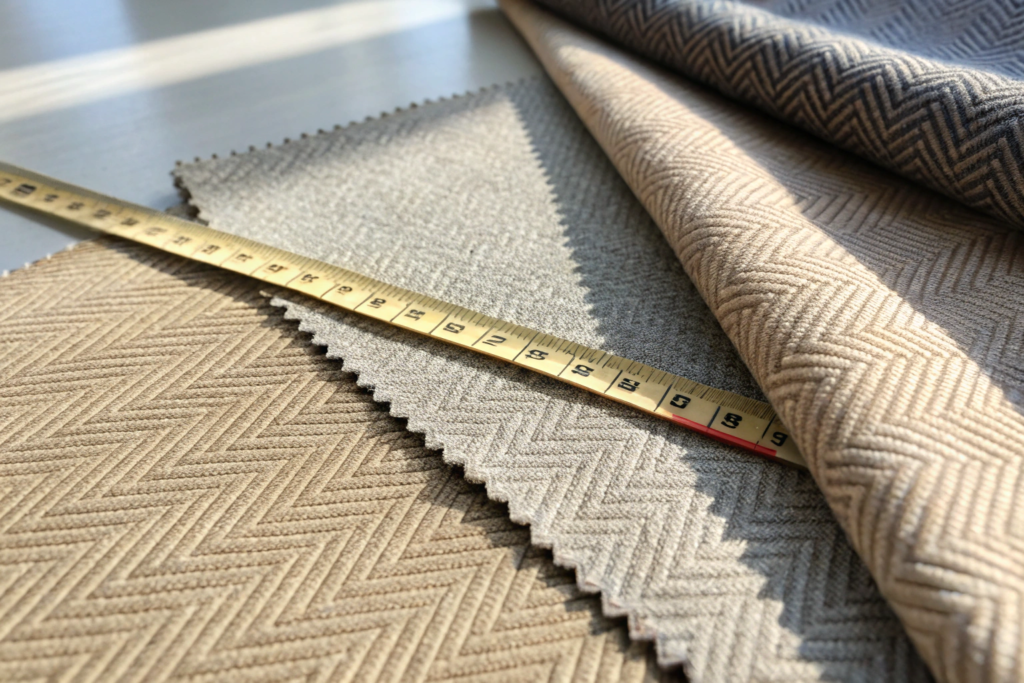
Most designers speak in adjectives: "creamy," "crisp," "slinky," "dry." We bridge the gap between adjectives and physics. "Creamy" means a low-twist, possibly enzyme-washed yarn with a high density of fibers. "Crisp" means a high-twist, two-ply yarn. We maintain a "swatch library of hand-feels." It is a massive wall of labeled fabrics. A client can touch a sample and say, "I want this exact crispness, but I need it 30% lighter for a summer dress."
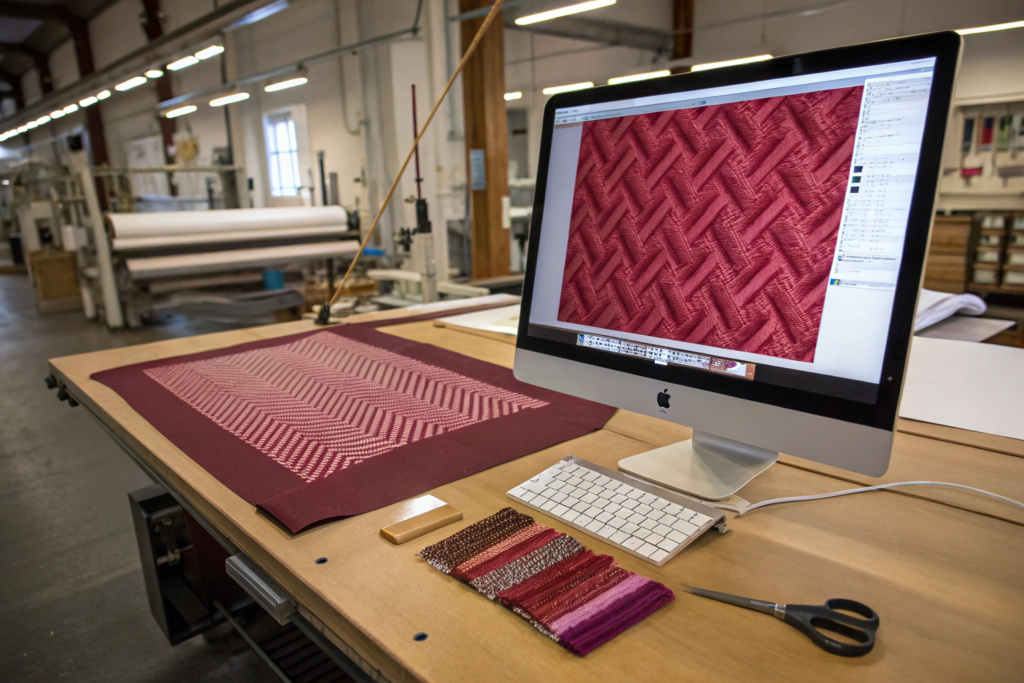
Once the hand-feel is identified, our technician decodes it. He reverses the engineering. He unravels the reference swatch, counts the ply, measures the twist per inch, and analyzes the weave structure. He then maps this to a CAD system for the loom. We can tweak the settings. If the original reference pilled too easily, we increase the twist slightly or introduce a higher percentage of long-staple fiber. It is a surgical, technical translation of a dream. It takes the subjectivity out of the equation, turning the design brief into a repeatable formula.
Can We Replicate a Rare Vintage Fabric Using Modern Technology?
Yes, and this is one of the most exciting parts of our job. Sometimes a brand has an absolute best-seller. A jacket they designed five years ago that people are still begging for. But the original fabric is discontinued, or the previous mill went out of business. They cannot source it anymore. That perfect olive-drab cotton canvas with the specific waxy finish is gone.
We can bring it back to life. We ask for a swatch, even a small, worn-out one. We perform a forensic fabric analysis. We burn a snippet to identify the fiber content (a cellulose test, protein test, etc.). We dissolve it to find the exact blend ratio. We then scan the weave density under a high-definition macro lens. Using this data, we program our looms to re-create the exact construction. For a military surplus style brand in Nashville, we recreated a 1960s ripstop fabric that was originally made on a defunct shuttle loom. We used a modern air-jet loom, which is faster, but we ran it in a slightly slower, "bullet-proof" mode to replicate the density and slight irregularity of the vintage slub yarn. The jackets sold out in three days. Technology does not just copy; it resurrects.
Conclusion
The question of whether we can match Italian fabric quality at a lower cost has a simple, data-backed answer. Yes. But we do not do it through magic. We do it by removing the mystique and applying raw textile physics. We use the identical ultra-long staple Supima, the identical Grade A cashmere, and the identical Dystar dyes. We run the identical Martindale and Crocking tests. The difference is that we take a 40% margin out of the equation by integrating supply chains, digitizing our looms, and treating finishing as a science, not a religion.
I have shown you how we helped a coat brand engineer a proprietary cashmere-blend sensation without the bankruptcy risk. I have shown you how a California golf brand got better UV performance at half the European price. You do not have to sacrifice the hand-feel your customers adore. You just have to switch from a buying model based on geography to a buying model based on specification.
If you are ready to develop a proprietary fabric that feels like a million dollars but actually makes you money, reach out to us. We want to send you a set of our fabric swatches. Feel them. Cut them. Wash them. We are confident you will not go back to paying the Italian premium.
To get your hands on our swatch book and start the conversation about your next custom weave, contact our Business Director, Elaine. She can ship a selection of our best "Italian-beater" fabrics to your office immediately. Email her at elaine@fumaoclothing.com. Let Shanghai Fumao prove that the world’s best luxury fabric now comes with a rational price tag.