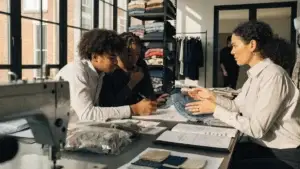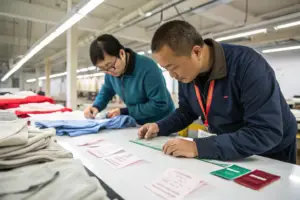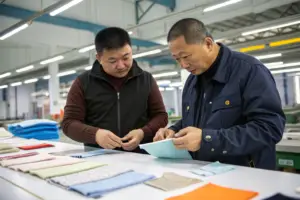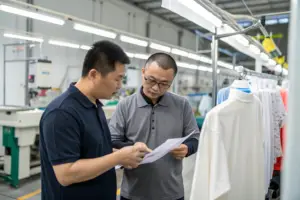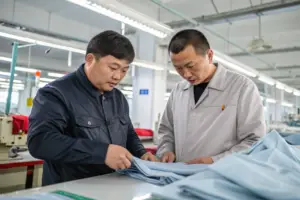
A denim brand founder from Los Angeles once sat in my showroom, picked up a pair of our selvedge jeans, and performed a silent inspection that lasted a full three minutes. He examined the selvedge outseam. He rubbed the chain-stitch hem between his fingers. He counted the stitches per inch on the waistband. He checked the back pocket reinforcement rivets. He held the jeans up to the light to look at the density of the twill weave. Finally, he put them down and said, "I have visited denim factories in Okayama, in Italy, and in North Carolina. I can tell you, within thirty seconds of picking up a jean, whether the factory understands denim as an engineering material or just treats it like another cotton twill. Your factory understands denim." That sentence, from a man who had dedicated his entire career to a single fabric, was the highest compliment I have ever received.
Yes, Shanghai Fumao has first-class garment technology for denim. Our denim capability is built on a foundation of specialized machinery, including authentic Union Special and vintage sewing equipment for chain-stitch hems and felled seams, a deep understanding of selvedge and raw denim construction requirements, and an advanced internal wash and finishing facility for garment dyeing, enzyme washes, and vintage distressing. We combine these specialized technical capabilities with our standard industrial quality systems, automated cutting precision, and multi-stage QC inspection, to produce denim garments that meet the exacting standards of the heritage and premium denim market, at scale.
Denim is not just another cotton fabric. It is a structurally unique, living material with specific engineering requirements. The heavyweight twill weave, the indigo dye that is designed to fade, and the cultural expectation of authentic construction details all demand a specialized manufacturing approach. A factory that treats denim like a standard cotton twill will produce a garment that looks like jeans from a distance but fails the close inspection of the denim-literate consumer. I want to walk you through the specific equipment, construction details, and finishing capabilities that make our denim technology first-class.
What Specialized Equipment Do We Use for Authentic Denim Construction?
The Los Angeles denim founder's silent inspection was focused on the details that only specialized equipment can produce. He was looking for the chain-stitch hem, the felled inseam, the specific bartack pattern on the back pockets. These are not decorative details. They are functional engineering features that require specific, often vintage, machinery to execute correctly. A factory that does not own this equipment cannot produce authentic denim, regardless of how skilled their operators are.
Our denim production line is equipped with the specific machinery required for authentic denim construction. This is a deliberate capital investment in a niche capability, not a general-purpose sewing line repurposed for denim.
Why Is a Union Special Chain-Stitch Machine Essential for Selvedge Denim?
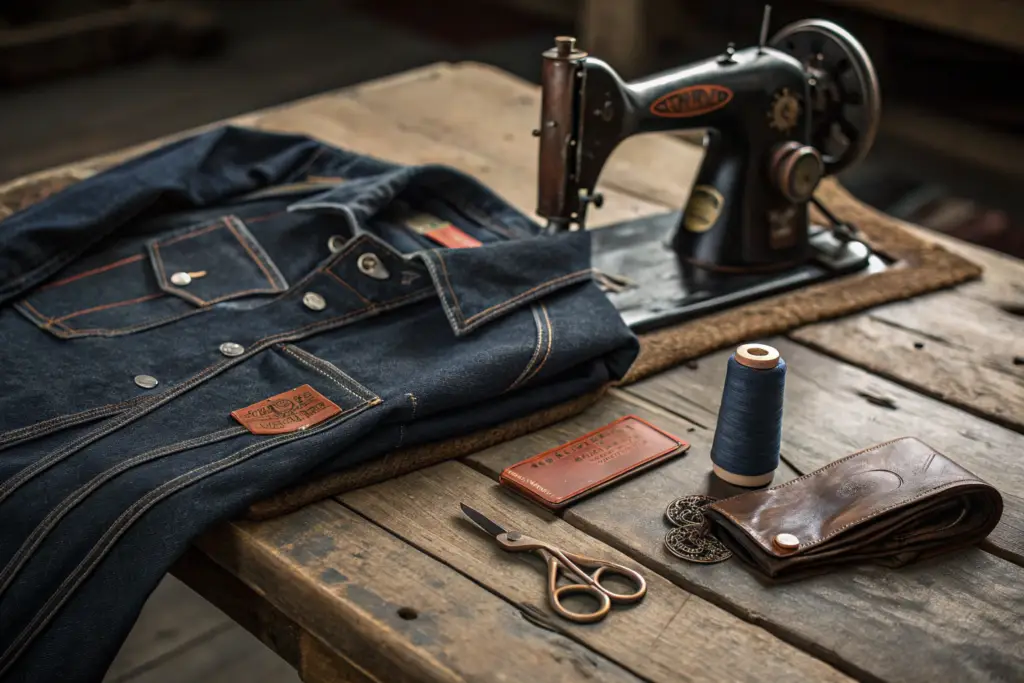
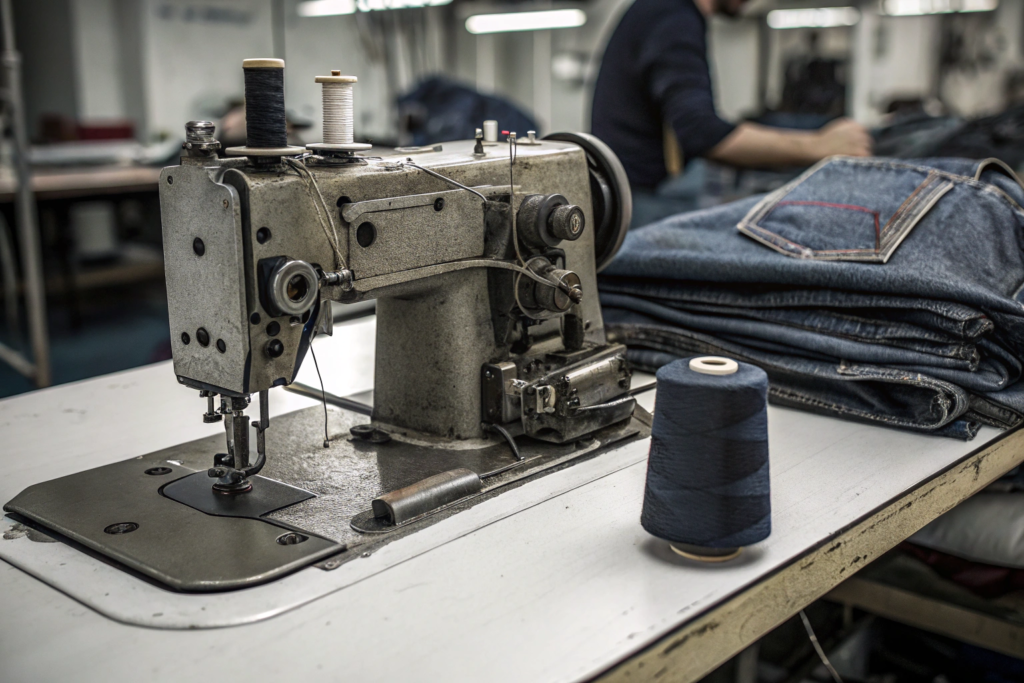
The Union Special 43200G is a vintage, single-thread chain-stitch machine that was the industry standard for hemming denim jeans for much of the 20th century. It is no longer manufactured. The machines that exist are refurbished and maintained by a small community of specialists.
This machine produces a specific chain stitch that creates a distinctive "roping" effect at the hem after washing. The single-thread chain stitch interacts with the shrinkage of the denim twill during the first wash, causing the hem to pucker and twist in a unique, aesthetically desirable way. A modern lockstitch machine, the standard in most factories, cannot replicate this effect. A lockstitch hem is flat, uniform, and remains flat after washing. The roping effect is a primary visual signifier of authentic, heritage-quality denim to the knowledgeable consumer. We own and maintain Union Special 43200G machines specifically for our selvedge denim clients. This is the equipment required to produce the authentic chain-stitch hem and the roping effect. The Union Special chain-stitch and denim hem roping is a foundational piece of denim heritage technology.
What Other Specialized Machines Are in Our Denim Line?
Beyond the Union Special, our denim line includes a range of specialized equipment designed for the heavy fabrics, thick thread, and specific seam constructions of denim.
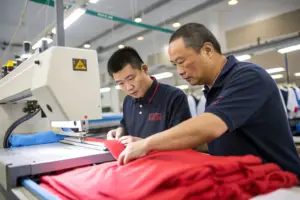
We use a twin-needle felled seam machine for the inseam. This machine folds the seam allowance, creates the classic double-stitched felled seam, and trims the edge, all in one operation. The felled seam is the strongest and most durable seam construction, essential for the high-stress inseam of a jean. We use heavy-duty bartack machines for reinforcing pocket corners, belt loops, and the base of the fly. These machines use a thicker needle and heavier thread to create a dense, abrasion-resistant reinforcement. We use a specific buttonhole machine designed for denim, capable of cleanly cutting and stitching the dense, heavy fabric. We have a heavy-duty waistband machine that can attach a multi-layer, stiff denim waistband with consistent tension. This collection of specialized, heavy-duty machinery is what allows us to construct a denim garment with authentic details and structural integrity that will last for years of wear. The denim-specific sewing machinery is a core part of our denim technology offering.
What Denim Construction Details Can We Customize for Your Brand?
The Los Angeles denim founder's second question, after his silent inspection, was about customization. He said, "Okay, you understand the basics. But can you execute my specific details? I have a specific selvedge width, a specific pocket shape, a specific bartack color, and a custom leather patch. I am not looking for a generic jean with my label sewn in. I am looking for my jean, built to my exact specification."
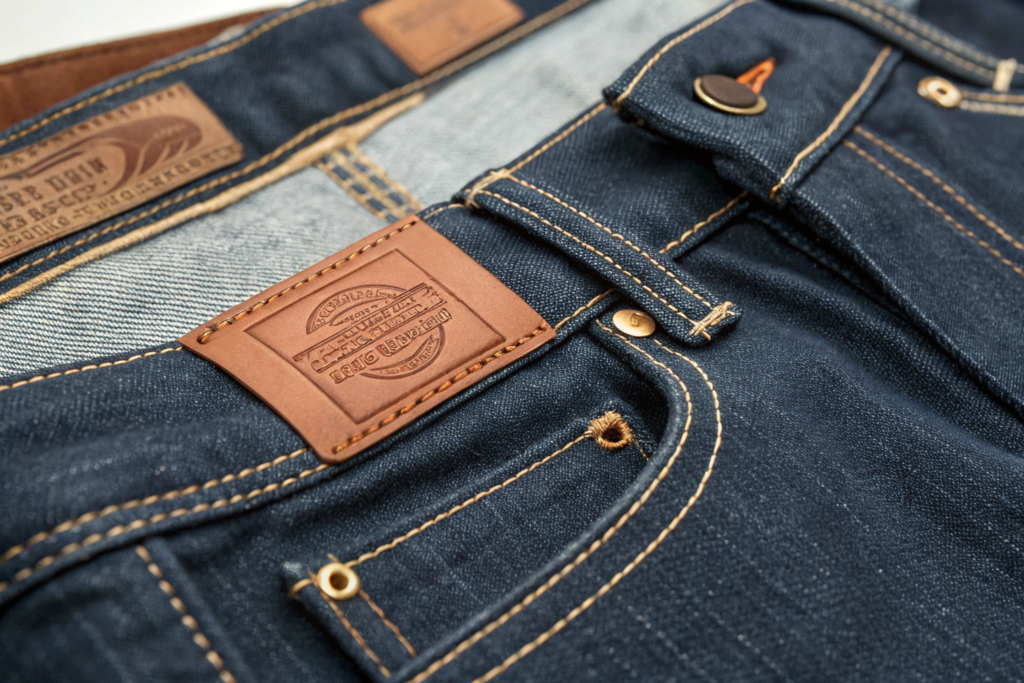
His question gets to the heart of premium denim branding. The denim market, particularly at the premium and heritage end, is defined by specific, recognizable construction details. The width of the selvedge line, the color of the bartack thread, the shape of the back pocket, the design of the leather patch, these are the visual signatures that differentiate one brand from another. A first-class denim manufacturer must be able to execute these details with precision and consistency, at scale.
Can We Vary Selvedge Width, Pocket Shape, and Bartack Color?
Yes. These are standard customization variables in our denim program. We treat your construction specifications, not a generic template, as the production standard.
The selvedge width is determined by the specific shuttle loom on which the denim was woven, and it varies between mills. We source denim with the specific selvedge ID line, typically a red line, but other colors are available from specific mills, and width that you specify. The denim is cut to preserve and showcase the selvedge line on the outseam. The back pocket shape is entirely custom. You provide the design, a classic five-pocket shape, a pointed western pocket, a curved asymmetrical pocket, and we create a custom cutting die and a placement jig to ensure the shape and position are identical across every unit in the production run. The bartack color and design are customizable. We can use a contrasting thread color for the bartacks, an orange thread on indigo denim is a classic heritage detail, and we can program specific bartack patterns and lengths. These details are documented in your brand's production file, and the specific dies, jigs, and thread specifications are archived for perfect consistency on reorders. The custom denim construction details are what make the garment uniquely yours.
Can You Produce Selvedge, Raw, and Heritage Workwear Finishes?
Yes. We produce denim garments across the spectrum, from raw, unwashed selvedge to heavily washed and distressed finishes. We have an in-house washing and finishing facility specifically equipped for denim processing.
For raw selvedge denim, the garment is constructed and shipped unwashed. The consumer experiences the personalization of breaking in the jeans themselves, creating unique fades and wear patterns. The construction precision is paramount, as there is no wash to hide minor sewing imperfections. For a heritage workwear finish, we use a combination of techniques. We can apply an enzyme wash to soften the denim and remove surface fuzz while preserving the dark indigo color. We can use a stone wash with pumice stones to create a more aggressive, vintage fade. We can apply manual distressing, hand-sanding, whiskering, and potassium permanganate spraying to create specific, localized wear patterns. We can garment-dye finished denim garments for unique color effects. Our wash technicians are experienced in denim finishing and can develop a specific wash formula to match your reference sample. We conduct wash tests on pre-production samples to ensure the wash effect is repeatable and consistent across the bulk order. The denim washing and finishing techniques are a specialized capability within our denim program.
How Do We Maintain Consistency in Denim Washing and Finishing?
A denim brand owner who had previously produced in a small Italian wash house once told me about his biggest frustration. He said, "The first batch of enzyme-washed jeans was perfect. The perfect shade of blue, the perfect softness. The second batch, two months later, was a completely different color. The wash house said it was 'the same formula.' But the result was not the same. My customers noticed. They thought I had changed the product. I need a wash process that is a science, not an art."
His frustration highlights the single greatest challenge in denim finishing: consistency. Denim washing is a complex chemical and mechanical process. Variables like water temperature, enzyme concentration, wash duration, and load size all affect the final color and hand-feel. A first-class denim manufacturer must have a scientifically controlled, repeatable wash process.
How Do We Ensure Wash Consistency from Batch to Batch?
We treat denim washing as a controlled chemical and mechanical process, not an artisanal craft where each batch is a unique expression. We use standardized wash formulas, calibrated equipment, and a rigorous sample-based approval process.
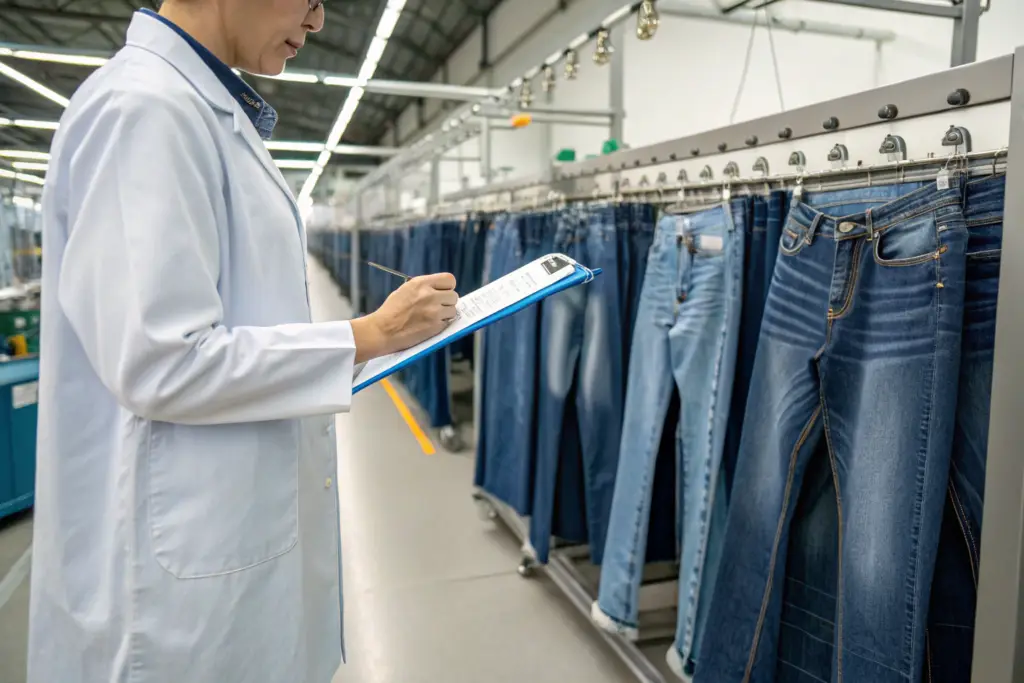
For each specific wash effect developed for a client, we create a documented wash formula that specifies the exact machine type, the load size, the water volume and temperature, the type and concentration of enzymes or other chemicals, the wash cycle duration, and the post-wash drying method. A physical "golden wash reference" sample is produced, approved by the client, and sealed. Before every bulk wash batch, a pre-production wash test is performed on a small sample of garments. The result is compared against the golden wash reference for color, hand-feel, and shrinkage. The wash formula is adjusted only if necessary to compensate for minor variations in the raw denim, and any adjustment is documented. Each bulk wash batch is inspected by our QC team against the golden wash reference under standardized D65 lighting. Batches that deviate from the reference are rejected and re-processed. The denim wash consistency and quality control process ensures that the 500th pair of jeans has the same wash as the 1st pair.
What Quality Checks Are Performed on Finished Denim Garments?
Finished denim garments undergo a specific quality inspection protocol in addition to our standard AQL garment inspection. Denim is a heavy, abrasion-resistant fabric, but it is susceptible to specific defects.
The final inspection includes a check for broken stitches, particularly on the thick, multi-layer seams like the waistband and the inseam. A check for proper rivet and button attachment, ensuring they are securely fastened and will not pull through the fabric. A check for consistent wash effect across all panels of the garment and across all garments in the batch. A measurement check against the size specification, as the wash process can cause variable shrinkage. A check for any unwanted chemical residue or odor from the wash process. The finished denim garments must pass both the standard AQL inspection and this denim-specific supplementary inspection before they are released for packing. The denim garment quality inspection is the final quality gate.
Conclusion
First-class garment technology for denim is not a general industrial capability. It is a specific, specialized suite of equipment, skills, and processes built around the unique material properties and cultural expectations of denim. At Shanghai Fumao, we have invested in the specific machinery, the Union Special chain-stitch machines, the heavy-duty felled seam and bartack equipment, required for authentic construction. We offer deep customization of the specific construction details, the selvedge width, the pocket shape, the bartack color, and the leather patch, that define a premium denim brand. And we have built an in-house washing and finishing capability with scientifically controlled, repeatable processes to achieve consistent, beautiful wash effects. Our denim technology is not an afterthought. It is a dedicated, engineered, and passionate part of our manufacturing capability.
If your brand is built on the details of denim, and you are looking for a manufacturing partner who understands the difference between a lockstitch and a chain-stitch, I invite you to start a technical conversation. Contact our Business Director, Elaine, at elaine@fumaoclothing.com. Send her a reference image, a tech pack, or a physical sample of the denim garment you want to create. Ask her a specific question about a construction detail. Let the specificity and technical depth of her reply demonstrate whether our denim technology is the right fit for your brand.