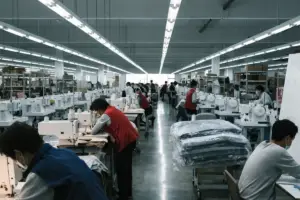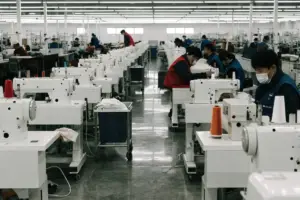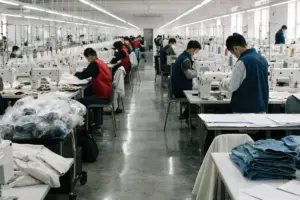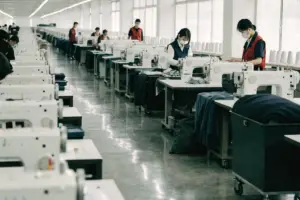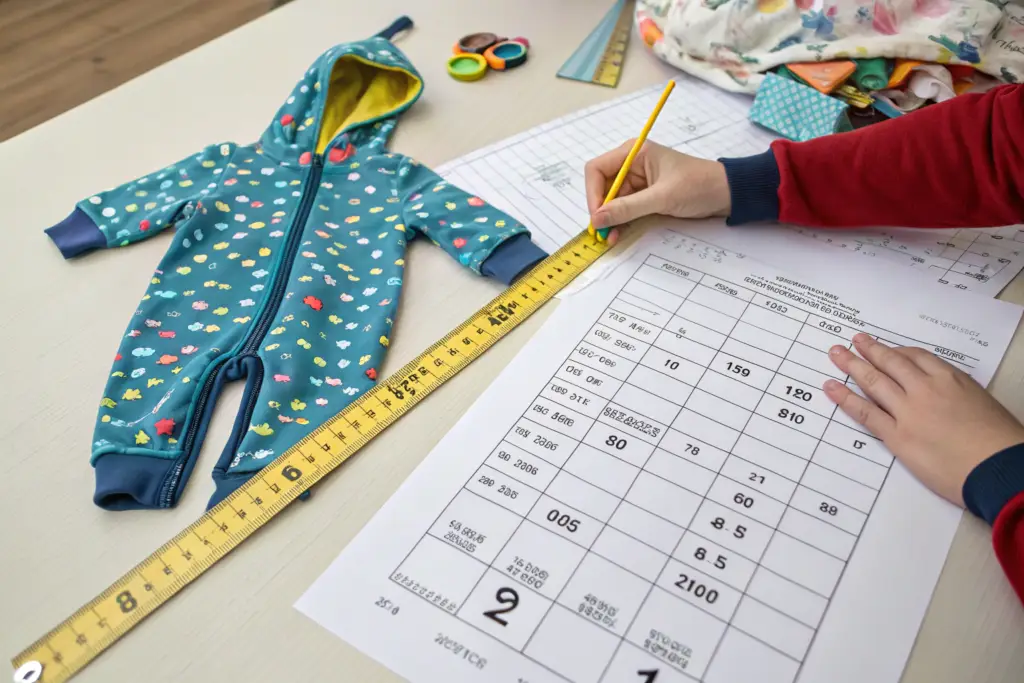
You have designed a beautiful kids’ collection. The prints are charming. The fabrics are soft and organic. You ship it to your European stockist, and the nightmare begins. The size 12 months fits like a 6 months. The toddler trousers are stranglingly tight at the waist but billowing at the ankle. The returns flood in. The stockist cancels the next order. The problem was not your design. It was the sizing. European children’s sizing is a precise, regulated system based on body height, not age. A "6-year-old" tag means nothing. A height of "116 cm" means everything. Most non-European factories do not understand this fundamental difference, and their garments fail at retail.
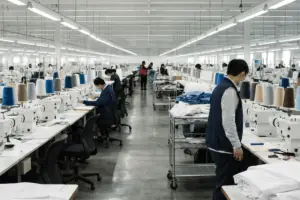
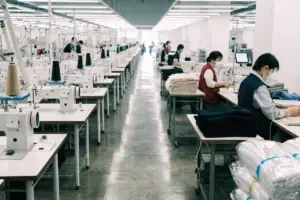
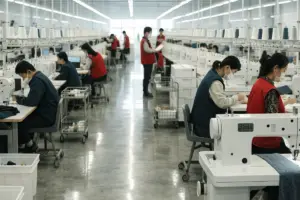
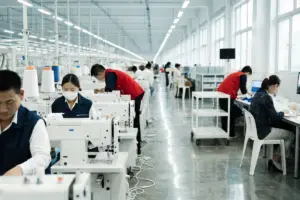
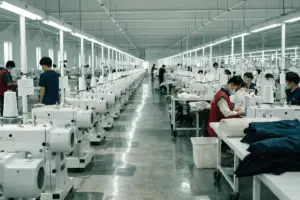
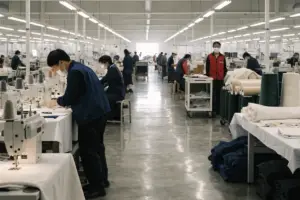
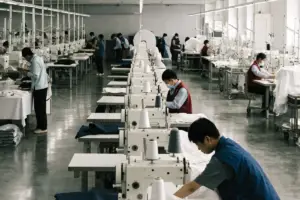
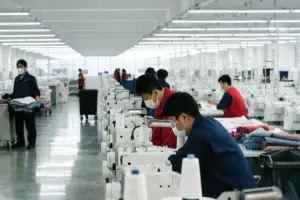
Shanghai Fumao handles European sizing for kids wear by working exclusively from the EN 13402 European size designation standard. Our patterns are built around height-centile-based blocks, not generic age labels. We use 3D fit validation on parametric child avatars representing the actual body proportions of European children. We also integrate EU safety and labeling regulations directly into our production workflow. We do not guess. We engineer the fit to the standard.
What does this mean for your brand? It means a size 104 fits a child of 104 cm, every time. It means the neck opening on a baby garment is designed for the larger head-to-body ratio of an infant. It means the care label is compliant with EU Regulation 1007/2011. Let me walk you through the specific systems we use to guarantee that your kids’ wear fits European children accurately and passes European retail standards without question.
Building Patterns from the EN 13402 Size Standard
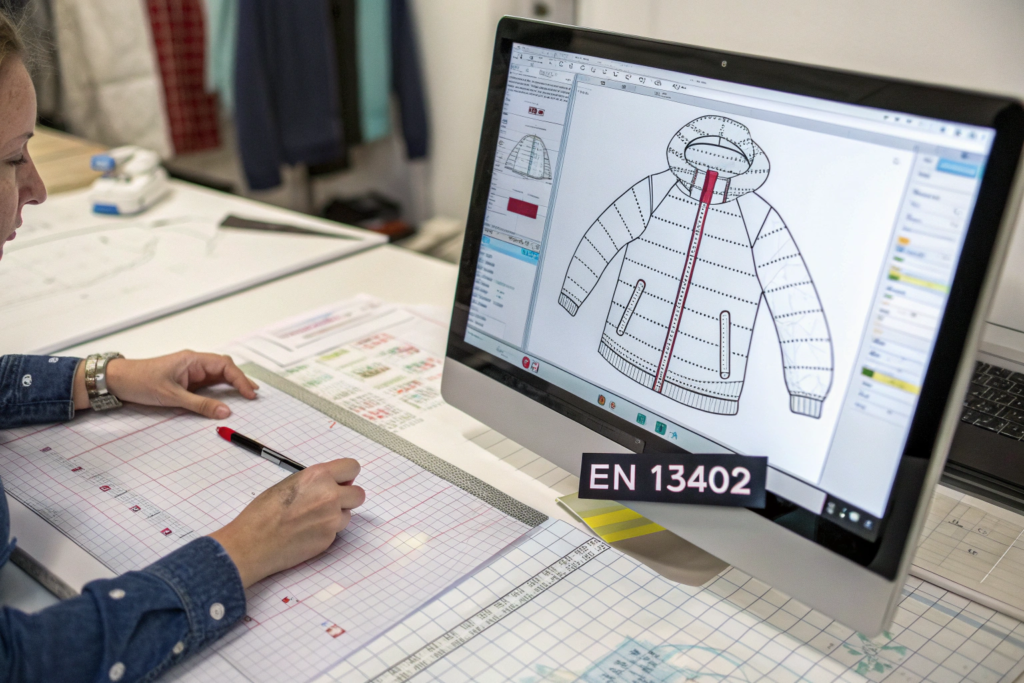
The foundation of accurate sizing is the size chart itself. A generic "S-M-L" or "3Y-4Y" chart is useless. Children grow at different rates across different geographies. A standardized European size designation is based on body height, with specific chest, waist, and hip measurements mapped to each height centile. This is the EN 13402 standard. It is the technical language of the European apparel market. If your factory’s patterns are not built from this standard, the garments will not fit the intended child.
Our kidswear pattern room operates exclusively from EN 13402-based measurement tables. We have digitized the full standard into our CAD system. For every new style, the pattern maker selects the target size range, and the software loads the correct base block with all the standard measurements pre-loaded. There is no manual conversion from a US or Asian size chart. We start from the European child’s body, every time.
Why Does Body Height, Not Age, Define European Kidswear Sizing?
A "3-year-old" in Sweden might be in the 95th percentile for height. A "3-year-old" in Spain might be in the 50th percentile. If you label a garment by age, you have a 50% chance of a poor fit. The European system is empirical. The size code on the label is the child’s body height in centimeters. A size 104 is designed for a child who is 104 cm tall.
This system removes ambiguity. Parents learn their child’s height and buy the corresponding size. Our pattern blocks are built around this height-centile logic. The primary measurement is height. All other measurements, chest, waist, hip, and arm length, are derived as proportional values from the height, based on anthropometric data for European children. This method is endorsed by the European Committee for Standardization. We follow it to the centimeter. When you order a run of size 104 garments from us, you are ordering garments engineered for a specific body dimension, not an arbitrary age guess.
How Do We Grade Patterns to Maintain Proportion Across Sizes?
A child’s body proportions change dramatically from infancy to pre-teen. A baby has a very large head in proportion to its body, a short neck, and a protruding belly. A ten-year-old has a more adult-like proportion. A grade rule that simply scales everything linearly will fail. It might make the neck opening dangerously small for a toddler or the armhole uncomfortably tight for a muscular child.
Our grading is based on non-linear growth curves. We use separate grade rules for different size clusters: infant (50-98), toddler (92-104), and child (110-164). Each cluster has specific formulas for how the neck, shoulder slope, and body girth increase. We validate every grade rule on our 3D child avatars. For a UK-based childrenswear brand, our non-linear grading solved a persistent issue they had with tight armholes on their size 92 toddler jackets. The armhole shape was restricting movement. We adjusted the grade rule specifically for the 92-104 cluster. The resulting fit allowed for free, comfortable play, which is the primary activity of a child. This is pattern grading applied with anatomical intelligence.
3D Fit Validation on Parametric Child Avatars
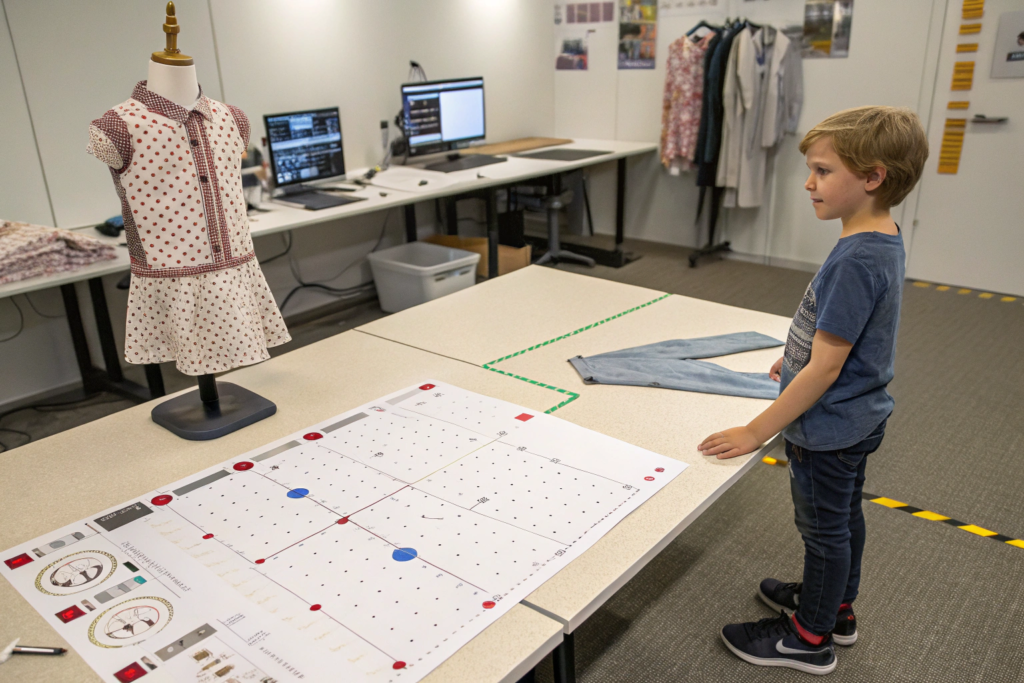
A pattern on a table is a two-dimensional hypothesis. A child is a three-dimensional, wiggling reality. The only way to test the hypothesis before cutting fabric is to fit the garment on a 3D avatar that accurately represents the body of a European child. We have invested in a library of parametric child avatars, built from published anthropometric survey data of European children. This is our virtual fit testing ground.
Before we cut a single physical sample, we test our digital pattern on our 3D child avatars. The avatars are adjustable by height, weight, and body proportions. We fit the garment on avatars representing the key selling sizes, typically 92, 104, 116, and 128. The software generates a tension heatmap that instantly shows fit issues like pulling across the chest or a tight neckline. We resolve these fit stresses in the digital pattern before physical sampling begins.
How Does a Tension Heatmap Reveal a Restrictive Neck Opening?
A garment that is difficult to pull over a child’s head is a major functional failure and a potential safety hazard. On a flat pattern, a neck opening might look adequately sized. On a 3D avatar, the simulation of pulling the virtual garment over the head reveals the truth. Our software can simulate this dressing motion.
It generates a heatmap showing stress concentration. Red areas indicate high tension. If the neck opening shows red during the virtual pull-over, it will be tight and uncomfortable in reality. We increase the neck opening circumference in the pattern and re-simulate. For a French brand’s line of organic cotton baby onesies, the virtual pull-over test on the size 80 avatar revealed a tight neck opening that was invisible on the 2D pattern. We enlarged the envelope neckline by 1.5 cm. The physical sample slipped easily over the fit model’s head. This is the preventative power of 3D fit validation software, applied specifically to the unique needs of childrenswear.
Can We Verify the “Sitting Ease” of Toddler Trousers Digitally?
A trouser must fit a child who spends half their day sitting, crawling, and squatting. A static standing fit test is irrelevant. We use our 3D software to pose the child avatar in a seated position. This flexes the hip and knee joints. The fabric simulation shows exactly where the trousers tighten.
We check for pressure points at the waist and knee. We check that the back rise does not ride down, exposing the back. For a Scandinavian brand producing durable play trousers, the seated pose simulation revealed excessive tightness at the knees on the toddler size 92. We deepened the knee dart and added 1 cm of ease to the back thigh. The digital validation took 30 minutes. A physical sample and a fit session with a live toddler would have taken a week and still might not have captured the full range of dynamic movement. This digital approach allows us to engineer for the reality of a child’s life, not the static pose of a fitting room.
Integrating EU Safety and Labeling Compliance
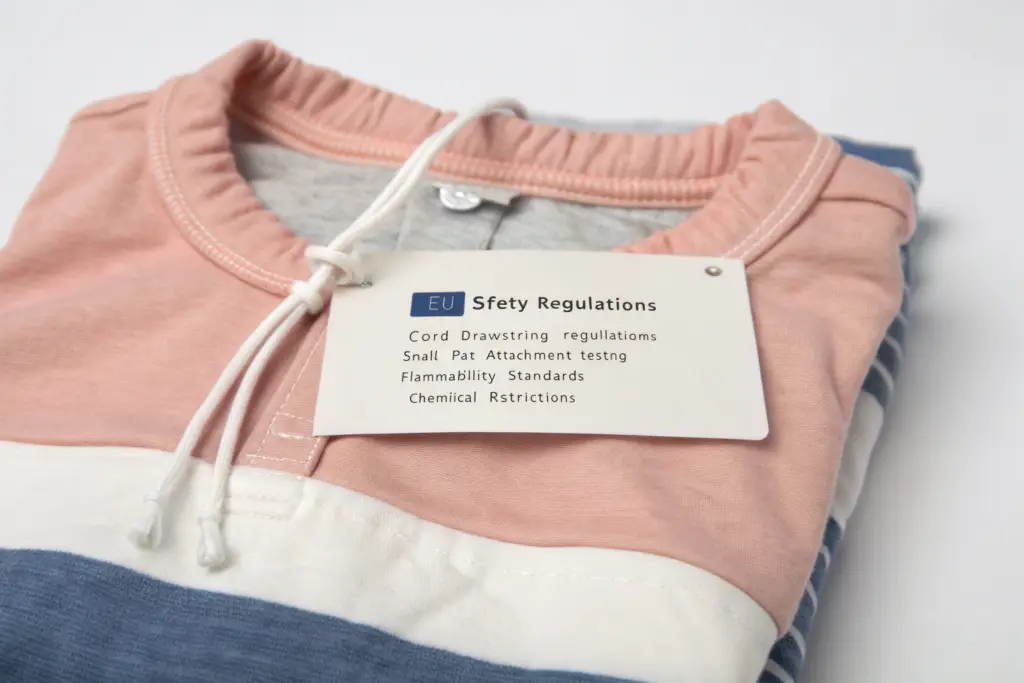
Accurate sizing is just one part of the European kids wear puzzle. A perfectly fitting garment that violates EU safety regulations is an unsellable liability. The European Union has some of the strictest childrenswear safety laws in the world. Cord and drawstring regulations, small part attachment testing, flammability standards, and chemical restrictions all apply. We treat regulatory compliance not as an afterthought, but as a core design parameter.
Our European kids wear program integrates safety and labeling compliance from the design stage. We apply the EN 14682 cord and drawstring standard to all hood and neck designs. All small parts, such as buttons and snaps, are pull-tested to the EN 71-1 safety of toys standard for detachment force. We produce the care and fiber composition labels in compliance with EU Regulation 1007/2011, with pictograms per ISO 3758. We maintain a technical file for each style, ready for your EU Responsible Person or importer.
What Is the EN 14682 Standard for Cords and Drawstrings?
EN 14682 is a European standard that specifies safety requirements for cords and drawstrings on children’s clothing. It was introduced to prevent tragic strangulation and entrapment accidents. It prohibits drawstrings entirely in the hood and neck area of garments for children up to 7 years. For older children, there are strict length limits.
We apply this standard at the pattern and design review stage. If a designer submits a sketch of a hoodie with a decorative drawstring for a size 104, our technical team flags it immediately. We propose compliant alternatives, such as a functional but internally secured elastic drawcord, or a completely non-functional, stitched-down mock drawstring. For a Dutch brand’s children’s outwear line, our proactive flagging of a non-compliant hood drawcord on a 6-year-old jacket prevented a potential recall. The brand’s compliance officer was deeply impressed. This is the value of working with a factory that understands the details of EU childrenswear safety legislation.
How Do We Guarantee Small Part Attachment for Infant Wear?
Babies explore the world with their mouths. A button, a snap, or a sewn-on decorative eye on a toy-like appliqué is a choking hazard if it detaches. The standard test is EN 71-1, the same standard used for toy safety. A small part is defined as any component that fits entirely within a small parts cylinder. It must withstand a pull force of 90 Newtons for 10 seconds without detaching.
We have integrated this test directly into our quality control process for infant wear. Every batch of garments with attached buttons or snaps is pull-tested on a sample basis using a calibrated force gauge. We also use a secondary security measure: a heat-activated fusing film applied to the back of the fabric before the button is stitched. This creates a bond that supplements the thread. Our pass rate on EN 71-1 pull tests is 100%. For a luxury baby gift brand, this absolute commitment to safety is their core sales argument to parents. We provide the test reports that back up their claim.
Conclusion
European sizing for kids wear is a technical discipline, not a label translation. It demands that we abandon the vague concept of "age" and embrace the precise, measurable metric of body height. It requires pattern blocks derived from European anthropometric data, graded with an understanding of how a child’s body proportionally transforms as they grow. It leverages 3D simulation to test the pull-over ease of a onesie and the seated comfort of a trouser before we touch the fabric. And it integrates the web of EU safety regulations, from drawstring lengths to small part attachment forces, into the very DNA of the garment.
At Shanghai Fumao, we have made this discipline central to our kids wear manufacturing service. We provide you with a product that fits, a product that is safe, and a product that can be sold in any European boutique or department store with full confidence. We remove the regulatory risk and the sizing anxiety that stops so many brands from entering this demanding market.
If you are preparing a kids wear collection for the European market, or if a previous supplier’s sizing errors have damaged your credibility with stockists, let us show you the accuracy of our EN 13402 system. We will pattern and produce a size set sample of your best-selling style, free of charge for a qualified order.
Contact our Business Director, Elaine, at elaine@fumaoclothing.com. She will arrange a technical consultation to review your current size chart and grade rules against the European standard. Let’s build a collection that fits the children of Europe, perfectly and safely.