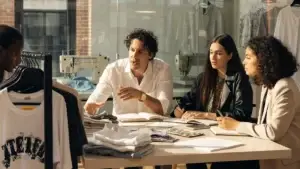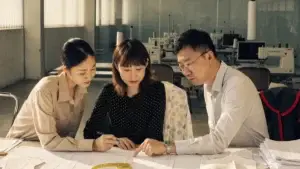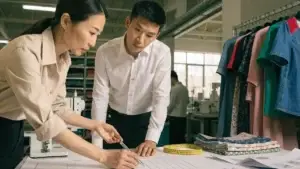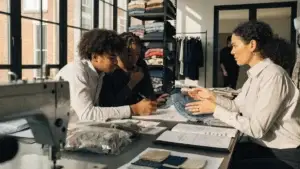
You have a design. It is not a basic t-shirt. It has an unusual sleeve, a complex draping detail, a unique combination of fabrics, a rare style of pocket. You have been told by other factories, "Sorry, too complicated. Our line is set up for basic runs. The MOQ for this would be enormous." You start to wonder if your vision is too ambitious, if "rare style" means "can't be made." A brand owner with a fiercely unique aesthetic told me, "I was afraid I'd have to compromise my design to fit a factory's limitations. I thought my vision would be watered down into something generic."
Fumao Clothing achieves rare style garment production not through magic, but through a deliberate, engineered approach. It is a combination of three critical assets: 1) Flexible, Modular Production Lines (staffed by multi-skilled artisans, not single-task operators), 2) A rigorous "Kit System" for managing complex, low-volume trims and components, and 3) A deep, collaborative Product Development process that embraces complex pattern making and iterative problem-solving.
At Shanghai Fumao, we do not run from complex designs. We are built for them. Our B2B model is specifically designed to be the manufacturing partner for brands that refuse to compromise on their creative vision. Let me show you exactly how our unique infrastructure and expertise turn the "impossible" into the impeccably made, season after season.
How Do Flexible Production Cells Enable Complex Garment Construction?
The reason most large factories reject rare style designs is because their entire physical infrastructure—long, straight assembly lines—is built for one thing: maximum speed on massive volumes of identical pieces. A complex design with multiple unique operations is a "wrench in the gears" of this system. It slows everything down and kills their efficiency. Our factory is built on a different principle. We have engineered agility into our floor plan.
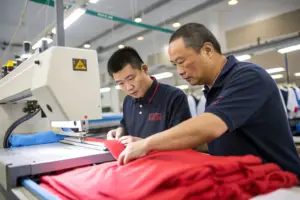
The cornerstone of our rare style capability is our Modular Production Cells. Unlike a long, sequential assembly line, a modular cell is a small, U-shaped, self-contained team of multi-skilled operators. They are trained to sew an entire garment from start to finish, not just one repetitive task. This setup allows for frequent stops, specialized machine changes, and the intricate handwork that complex designs demand, all without disrupting the rest of the factory.
I recall a women's wear designer who came to us with a sketch of a deconstructed blazer with asymmetrical seaming and a complex, built-in corset. A traditional factory laughed at her. Our "Special Projects Cell" (Line 4) embraced the challenge. This cell is staffed by our most experienced, cross-trained sewers, who are masters of multiple machine types and comfortable with non-linear construction. They worked closely with our pattern maker, figuring out the best order of operations for the unusual seams. They used specialized feet and techniques. The result was a stunning, technically flawless blazer that became the hero piece of her collection. This is only possible because of our flexible production lines .
What Is the Difference Between a "Straight Line" Operator and a "Modular Cell" Artisan?
This is the human capital difference that makes rare style production possible.
- Straight Line Operator: Highly proficient at one specific task (e.g., setting a sleeve on a basic t-shirt). Their speed and efficiency come from repetition. They are specialists in volume.
- Modular Cell Artisan: A multi-skilled sewer proficient on 3-4 different machine types (single needle, overlock, coverstitch, blind hemmer). They understand how a garment comes together. They can read a complex pattern and problem-solve on the fly. They are specialists in complexity.
We invest heavily in cross-training our workforce and retaining these highly skilled artisans. They are the heart of our rare style capability. This is a key part of our workforce development .
How Does This Model Allow for Lower MOQs on Complex Pieces?
A traditional factory's high MOQ is driven by the need to keep its long, high-speed line running efficiently. A complex, low-volume style is a profit-killer for them. Because our modular cells are designed for small batches and quick changeovers, we can profitably run orders for complex garments with MOQs as low as 100-150 units. This is a game-changer for designers who want to offer unique, statement pieces without being forced into massive inventory commitments. This is the power of our on-demand production capabilities.
How Does the "Kit System" Manage the Complexity of Rare Trims and Components?
A rare style design almost always involves rare trims. Unique, custom buttons. Specialty zippers with unusual pulls. Intricate appliqués. Specific contrast thread. Managing the sourcing, quality control, and precise allocation of these diverse components for a small, complex order is a logistical nightmare for a factory used to bulk orders of standard zippers. A single mix-up can ruin an entire batch of expensive garments.
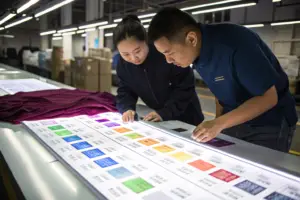
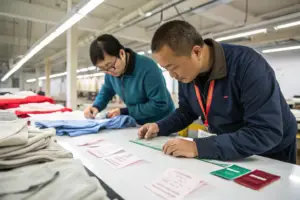
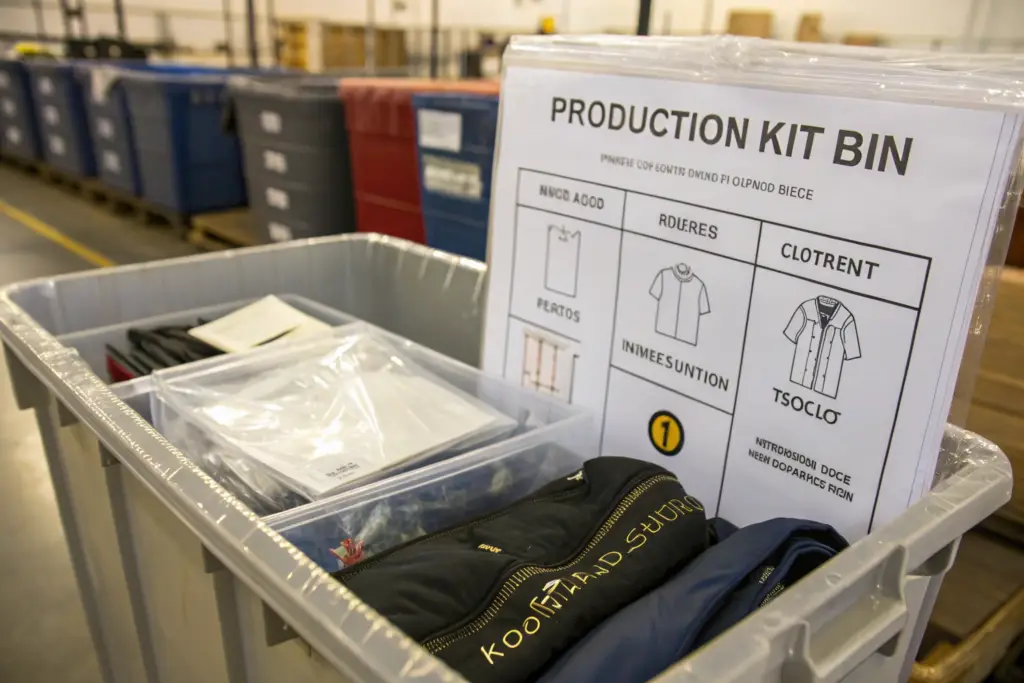
Fumao's "Kit System" is our proprietary solution for de-risking complex trim management. Before the cut fabric ever reaches the sewing cell, our warehouse team pre-assembles all the required trims for that specific, small-batch order into a single, barcoded "Production Kit." This kit travels with the fabric bundle. The sewing cell supervisor scans the barcode to verify the contents against the digital Tech Pack, ensuring the team has exactly the right components at their fingertips and eliminating the risk of costly mix-ups.
We recently produced a men's wear capsule of five different workwear-inspired jackets, each with a unique combination of branded snaps, a custom leather patch, and specific contrast stitching. The total order was only 400 units across all five styles. The trim list was a nightmare of small variations. Our Kit System handled it flawlessly. Each jacket's specific components were kitted individually. The sewing team simply opened the bin and had everything they needed, verified and ready. There were zero trim errors. This system provides the organizational backbone that makes complex, low-volume production scalable and repeatable. This is a core part of our brand protection and quality promise.
How Do You Source Unique Buttons, Zippers, and Embellishments for Small Orders?
Our location within the Chinese manufacturing ecosystem is a massive advantage. We have access to a vast network of specialized component suppliers. If a client wants a specific, vintage-style metal button, or a zipper with a custom-shaped puller, or a unique beaded embellishment, we can almost always find a source. Critically, we can often negotiate flexible MOQs for these specialty items, especially for our long-term partners. We manage the entire process: finding the right vendor, inspecting the quality, and ensuring the components arrive on time. This service saves our private label partners countless hours and prevents them from having to navigate a foreign supply chain on their own. This is the value of our supply chain expertise .
What Happens If a Specialized Trim Is Delayed or Defective?
This is where proactive communication becomes critical. Because we track every trim in our system, we know the instant a delay threatens the critical path. We do not wait for the sewing line to run out of buttons to tell you there is a problem. We flag it immediately, explore alternative solutions (air freight, a temporary substitute), and provide you with an updated timeline and a clear plan. This proactive risk management is essential when dealing with the long lead times and unique vulnerabilities of rare style components. It's how we maintain reliable delivery even on the most complex projects.
How Does Our Product Development Process Embrace Complex Design Challenges?
A beautiful sketch of a rare style is just a dream until it is translated into a precise, manufacturable pattern and a sewable construction plan. Complex designs—asymmetrical hems, unusual sleeve constructions, intricate seaming—require a level of pattern-making expertise and collaborative problem-solving that goes far beyond basic blocks. This is where many projects fail before they even begin.
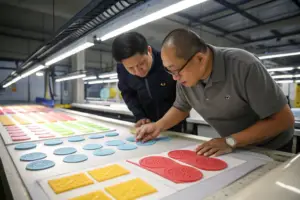
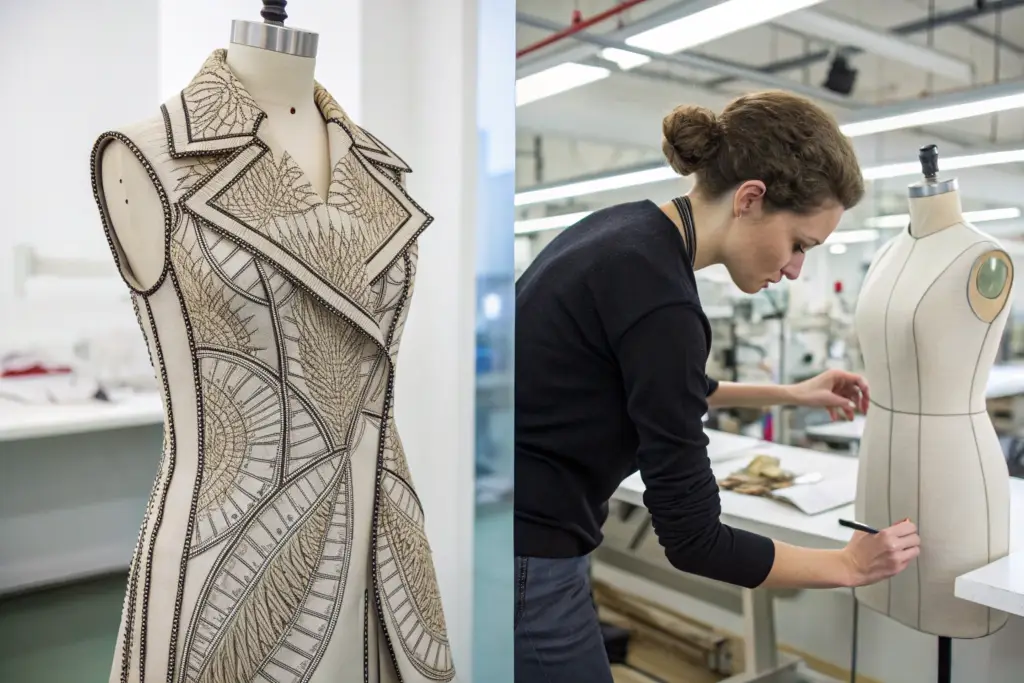
Our Product Development process is designed to embrace complexity, not avoid it. It starts with our in-house pattern makers, who use a combination of advanced 3D CAD software and meticulous hand-craftsmanship. They analyze the design for manufacturability, often creating 3D simulations to understand fabric torsion and fit. We then move to iterative physical prototyping, where our sample room artisans work hand-in-hand with the pattern maker to solve construction challenges in real-time, ensuring the design can be sewn beautifully and consistently.
I recall a designer who came to us with a sketch of a dress featuring a complex, spiraling single-sleeve construction. It was a stunning concept, but structurally very challenging. Our head pattern maker studied the sketch, created a 3D model to understand the forces on the fabric, and then built a series of physical mock-ups. She worked closely with our senior sample sewer to figure out the exact order of operations to make the spiraling sleeve lie flat and drape correctly. The final pattern was a work of art in itself. The bulk production, run on our modular line, went smoothly because the foundation—the pattern and the construction plan—was rock solid. This deep technical expertise is what makes rare style manufacturing possible. This is a key part of our product development services.

How Do You Grade a Complex, Asymmetrical Pattern for Multiple Sizes?
This is a significant technical challenge. You cannot just click "grade" in the software and hope for the best. The asymmetrical design elements must be scaled proportionally, and the fit and visual balance must be maintained across all sizes. Our pattern makers manually review and adjust each size grade, checking the critical Points of Measure (POMs) and ensuring the unique design details remain harmonious. This meticulous, hands-on approach ensures the design intent is preserved from an XS to an XXL.
What Is the Role of the "Proto Sample" in Solving Construction Challenges?
The first Proto Sample is not expected to be perfect. Its purpose is to be a "3D problem-solving tool." It allows the pattern maker, the sewer, and the designer to see how the fabric behaves, how the seams interact, and where the construction challenges lie. It is a safe space to experiment and find the best technical solutions before moving to more refined Fit Samples. This iterative, collaborative approach is how we de-risk complex designs.
Why Is Communication the Ultimate Enabler of Rare Style Success?
When you are making a basic garment, the Tech Pack does most of the talking. When you are making a rare style, the nuances are everything. The exact way a drape falls. The precise angle of an asymmetrical pocket. The specific "roll" of a collar. These subtle, critical details are almost impossible to capture in a static document. They require a higher bandwidth of communication—one that is visual, collaborative, and often real-time.
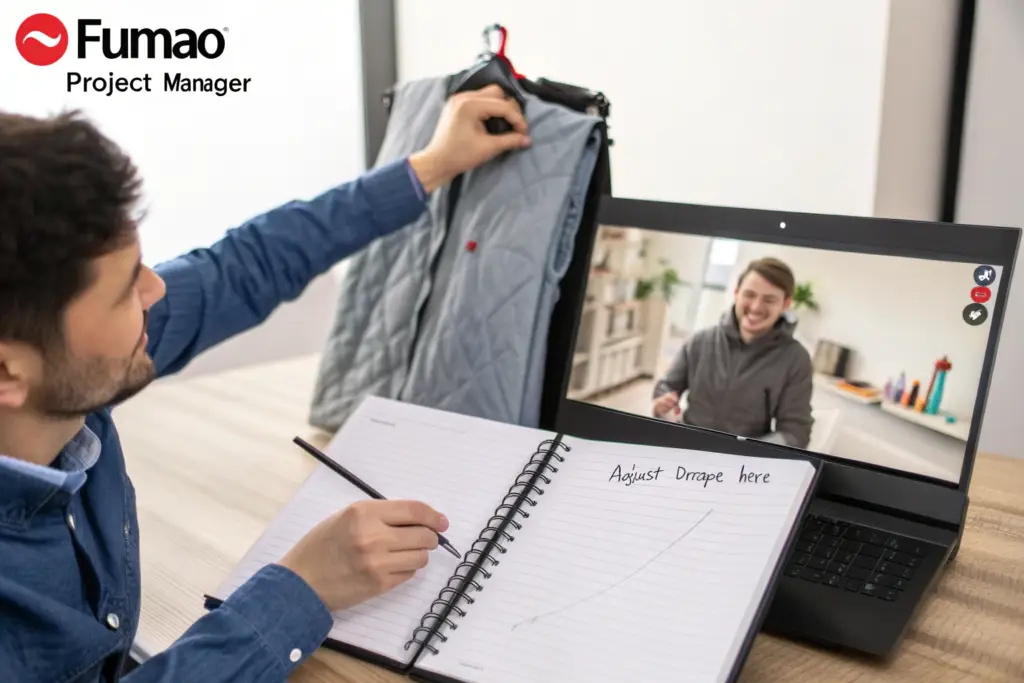
Producing rare styles successfully requires a shift from transactional emails to a collaborative partnership. At Fumao, our Project Managers act as an extension of the brand's design team. We rely heavily on live video calls, where we can hold the sample up to the camera and discuss a detail in real-time. We use annotated photos and short video clips to bridge the distance and eliminate ambiguity. The goal is to understand the designer's intent, not just the spec.
We were working on a men's wear shirt with a unique, "hidden" placket construction. The initial sample didn't quite capture the designer's vision for how the fabric should roll at the closure. Instead of a lengthy, confusing email chain, our Project Manager scheduled a 15-minute video call. The designer showed us a reference shirt and explained what he wanted. Our sample room manager held our sample up to the camera, and we discussed the adjustment in real-time. The next sample was perfect. This is the kind of agile, high-fidelity communication that brings rare styles to life across 7,000 miles. It is a cornerstone of our collaborative partnership model.
How Do You Convey "Drape" and "Handfeel" Remotely?
This is one of the hardest challenges in remote manufacturing. You cannot touch a photo. We use a combination of techniques:
- High-Quality Video: Short video clips of the garment on a moving fit model, so the designer can see how the fabric flows.
- Comparison Swatches: We ship physical "handfeel standards" alongside the sample.
- Calibrated Descriptive Language: Our team uses specific terms like "dry, papery hand" vs. "slick, cool hand."
This multi-sensory approach ensures we are aligned on the tactile experience, which is so crucial for rare style pieces.
How Does the Project Manager Translate "Designer Speak" to "Factory Floor Speak"?
You might say, "I want this sleeve to feel effortless and dramatic." That is designer speak. The Project Manager translates that into factory floor speak for the pattern maker and sewer: "We need more ease in the sleeve cap. Use a lighter-weight interlining. Cut this section on the bias." They bridge the gap between creative vision and technical execution. This translation function is one of the most valuable, yet invisible, services we provide.
Conclusion
Achieving rare style garment production is not an accident. It is the direct result of a deliberate, engineered approach that combines flexible, human-centric production, meticulous organizational systems, a problem-solving development culture, and high-bandwidth communication. It requires a factory that is not just a sewer, but a true creative and technical partner.
At Shanghai Fumao, we have built our entire B2B operation around this capability. Our modular lines, our Kit System, our skilled artisans, and our collaborative process are all designed for one purpose: to be the reliable, expert partner that turns ambitious, complex designs into flawless, sellable reality. We believe that a brand's unique vision should never be compromised by a factory's limitations.
If you have a rare style design that other factories have called "too complicated," we invite you to show it to us. Our Business Director, Elaine, can connect you with our pattern-making team to discuss the feasibility and bring your unique vision to life. Please email Elaine at: elaine@fumaoclothing.com.