You are a distributor. Your phone buzzes with another email from a boutique buyer. "Do you have anything new? Something I haven't seen at the last three trade shows?" You scroll through your supplier catalogs, and your heart sinks. It is all the same. The same basic blouses, the same generic dresses, the same safe, boring styles that every other distributor is offering. Your buyers are losing interest. They want exclusivity. They want a reason to say "wow" when they unbox your shipment. Finding a supplier who can deliver genuine rarity, consistently, and at scale is the holy grail of apparel distribution. That is the gap we fill.
Distributors love Shanghai Fumao's rare style women's wear because we provide a reliable, scalable source of genuine design rarity. We combine hard-to-find craft techniques like hand-smocking and shadow-work embroidery with innovative fabric development and a flexible, distributor-friendly MOQ model. We supply your boutiques with the "wow" product they cannot find anywhere else, and we protect your market with style exclusivity. You don't just sell clothes. You sell discovery.
What does "rare style" mean for a distributor's bottom line? It means full-price sell-through. It means higher margins. It means boutiques that return to you season after season because your catalog is a curated treasure hunt, not a commodity list. Let me walk you through the three pillars that make our women's wear a distributor's secret weapon.
Pillar One: Artisan Craft Techniques That Cannot Be Mass-Produced
The first thing a boutique buyer's fingers do when they touch a new garment is search for the quality. They feel the seams. They touch the embroidery. They examine the buttons. A machine-made garment feels flat, uniform, and cold. A hand-finished garment has a warmth, a subtle irregularity, a three-dimensional texture that machines simply cannot replicate. This tactile difference is the essence of rarity. It signals to the boutique's customer that this piece is special, that time and skill were invested in its creation.
We have built dedicated artisan cells within our factory that preserve and scale these rare craft techniques. Our women's wear features genuine hand-smocking, French knot embroidery, and shadow-work stitching. These are not machine simulations. They are executed by certified artisans who have trained for years in their specific discipline. For a distributor, these pieces are instant best-sellers because they offer an heirloom quality that fast fashion cannot touch.
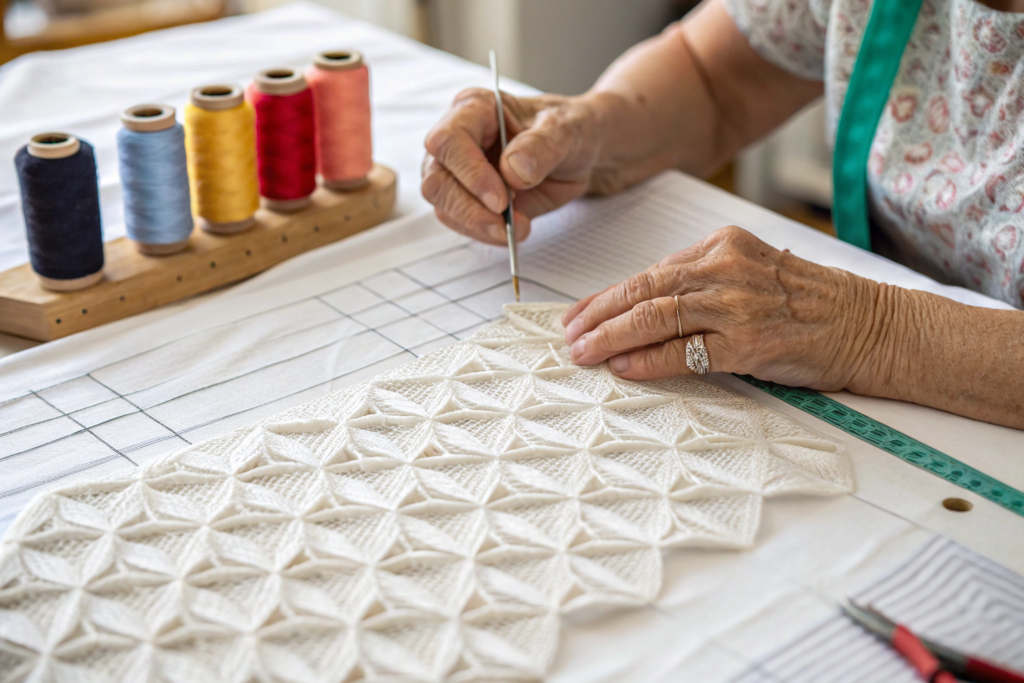
Why Can't a Machine Replicate the Feel of Hand-Smocking?
Machine smocking is essentially shirring, using elastic thread to gather fabric. It is flat, it loses its elasticity after washing, and it lacks the dimensional texture of the real thing. True hand-smocking begins with hand-pleating the fabric into precise, even folds. The artisan then embroiders decorative stitches over these folds. The result is a fabric that has both rich texture and natural, durable elasticity without a single strand of rubber.
This distinction is critical for women's wear. A hand-smocked bodice on a dress stretches gently to fit the body, then recovers its beautiful shape. It breathes. It moves. For a distributor in the UK specializing in heritage-inspired fashion, our hand-smocked cotton voile blouses became their number one reorder item. The boutiques told them that customers literally gasped when they touched the fabric. This is the power of an authentic, non-reproducible craft. You can explore more about this technique on resources like the Smocking Arts Guild of America.
What Is Shadow-Work Embroidery and Why Is It So Coveted?
Shadow-work embroidery is a subtle, sophisticated technique where the colored stitching is done on the wrong side of a sheer fabric, typically cotton voile or organdy. The thread shows through faintly on the right side, creating a soft, watercolor-like shadow effect. It is incredibly delicate and looks almost magical.
We have a small team of specialists trained in this difficult art. They use a fine herringbone stitch on the reverse, encasing small lengths of colored thread. The front of the fabric shows a gentle wash of color, like a faint pastel painting. For a distributor in France who supplies upscale resort boutiques, we developed a line of shadow-work linen tunics. The pieces were unique, artisanal, and impossible to find from any other wholesaler. The boutiques sold them at a premium, and the distributor enjoyed a 90% sell-through rate. This is the kind of rare product that builds a fiercely loyal boutique following.
Pillar Two: Exclusive Fabric Development and Textile Innovation
A rare silhouette in a standard fabric is only half the story. The true signature of a premium collection is fabric you cannot source from a generic market. This is the second pillar of our distributor appeal: exclusive textile development. We don't just sew your designs. We develop custom fabrics that become your competitive moat.
We offer our distributor partners exclusive access to proprietary fabric developments. This includes custom slub weaves, iridescent finishes, copper-infused jersey, and watercolor digital prints on sustainable bases. Because we control the dyeing and finishing in-house or through exclusive mill partnerships, we can create a fabric story that is unique to your catalog. Your boutiques cannot find this fabric anywhere else, which means they cannot comparison-shop your price.
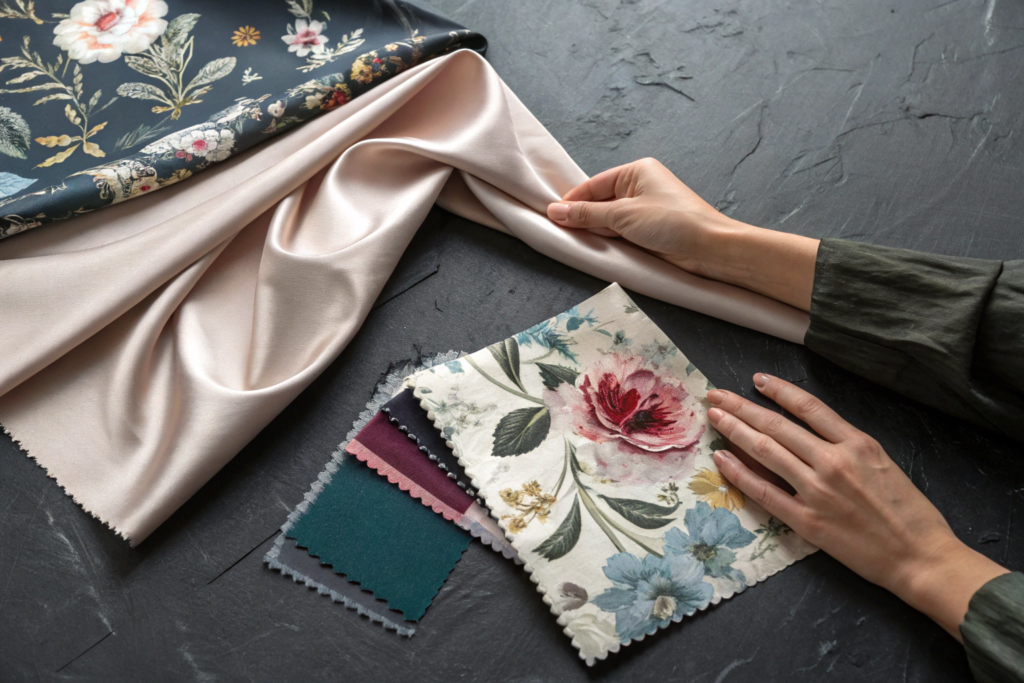
How Does a Custom Slub Linen-Lyocell Blend Create a Competitive Moat?
A standard linen is flat and prone to harsh wrinkling. We developed a heavy slub linen blended with lyocell that has a soft, fluid drape and a beautiful, irregular linear texture. The lyocell adds a subtle sheen and reduces the aggressive creasing of pure linen, while the thick-and-thin slub yarns catch the light in a unique way.
We developed this fabric exclusively for a US-based distributor's contemporary label. No other supplier could offer it. The boutiques that stocked the resulting blazers and dresses had zero competition on price, because the product was literally incomparable. The distributor commanded a higher wholesale margin, and the sell-through was exceptional. This is the power of a custom textile. You can learn more about fiber innovation from sources like Textile World.
What Is a Watercolor Digital Print and Why Does It Look So Luxurious?
Traditional screen printing uses solid color blocks. It cannot capture the subtle gradients, the bleeding edges, and the translucent washes of a watercolor painting. Digital printing can. We use high-resolution digital textile printers that apply pigment directly to the fabric, capturing every brushstroke, every color bleed, every delicate tonal variation.
This creates a print that looks like it was hand-painted directly onto the silk or cotton. It has a depth and an artistic quality that screen prints lack. For a distributor in Australia specializing in bohemian luxury, we printed an exclusive watercolor floral across a range of silk crepe de chine dresses and kaftans. The collection looked like wearable art. It was a sell-out. The digital print gave the distributor a proprietary visual signature that defined their entire season.
Pillar Three: The Distributor-Friendly Business Model
The most beautiful rare style in the world is useless to a distributor if they must buy 500 units per style. Distributors need variety. They need to offer their boutiques a curated range of 20 to 30 unique styles each season. They need to test new products without massive inventory risk. Our business model is built around this reality. We are not a mass-market factory asking for huge volume commitments. We are a rare style engine that supports distributor economics.
Our minimum order quantities for rare style women's wear are as low as 50 units per style. This allows distributors to buy wide, not deep. You can offer your boutiques a rich, diverse catalog of hand-smocked blouses, embroidered tunics, and printed dresses without over-committing to any single SKU. You test the market. You reorder the winners. We turn your inventory risk into market intelligence.

Why Is a "Buy Wide, Not Deep" Model Critical for Distributor Profit?
A distributor's primary risk is dead stock. If you buy 500 units of one dress and it only sells 200, the remaining 300 units destroy your margin. The "buy wide, not deep" model mitigates this. With a 50-unit MOQ, you can buy ten different rare styles, totaling 500 pieces, for the same investment as one deep style buy.
You put these ten styles in front of your boutiques. Three become instant best-sellers. You reorder those three in larger quantities. The other seven sell through their small runs and you move on to the next collection. You have almost no dead stock. Your inventory is responsive to actual market demand. A distributor in the Midwest US built their entire women's wear business on this model with us. They launch 40 new rare styles every season, all at low MOQs. Their boutique customers love the constant newness. Their warehouse carries very little clearance inventory. This is the modern, agile distribution model in action.
How Does Style Exclusivity Protect My Distributor Territory?
There is nothing worse for a distributor than discovering your key boutique has found the exact same garment from another distributor at a lower price. This is a race to the bottom that destroys margins. We protect our distributor partners with a contractual style exclusivity agreement.
For committed seasonal partners, we will agree not to sell the specific custom style or fabric you have developed to another distributor in your defined geographic territory or channel. This is not just a handshake. It is a clause in our supply agreement. Your rare style remains rare. Your boutiques cannot source it from anyone else. You own the product for your market. This protection allows you to build a brand, not just sell commodities. It aligns our success with yours. We grow when your distribution network grows.
Conclusion
Distributors love our rare style women's wear because we solve their core problem: finding a consistent, scalable source of unique, high-quality product that cannot be shopped around. We provide the genuine craft of hand-smocking and shadow-work that mass production cannot touch. We develop exclusive fabrics and digital prints that create a visual and tactile competitive moat. And we support the distributor business model with low MOQs that enable a "buy wide, not deep" strategy, all protected by style exclusivity agreements that safeguard your market.
We are not just a vendor. We are the product development engine behind some of the most successful and profitable women's wear distributors in the US and Europe. We provide the rare product. You provide the market relationship. Together, we build a catalog that boutique buyers eagerly anticipate each season.
If you are a distributor looking to inject genuine rarity into your women's wear catalog, I invite you to explore our current rare style development line. We can send you a curated digital lookbook of our latest craft and fabric innovations.
Contact our Business Director, Elaine, at elaine@fumaoclothing.com. She will arrange a personal presentation of our seasonal rare style collection and discuss how we can develop an exclusive capsule for your territory. Let's make your catalog the one that buyers cannot wait to open.