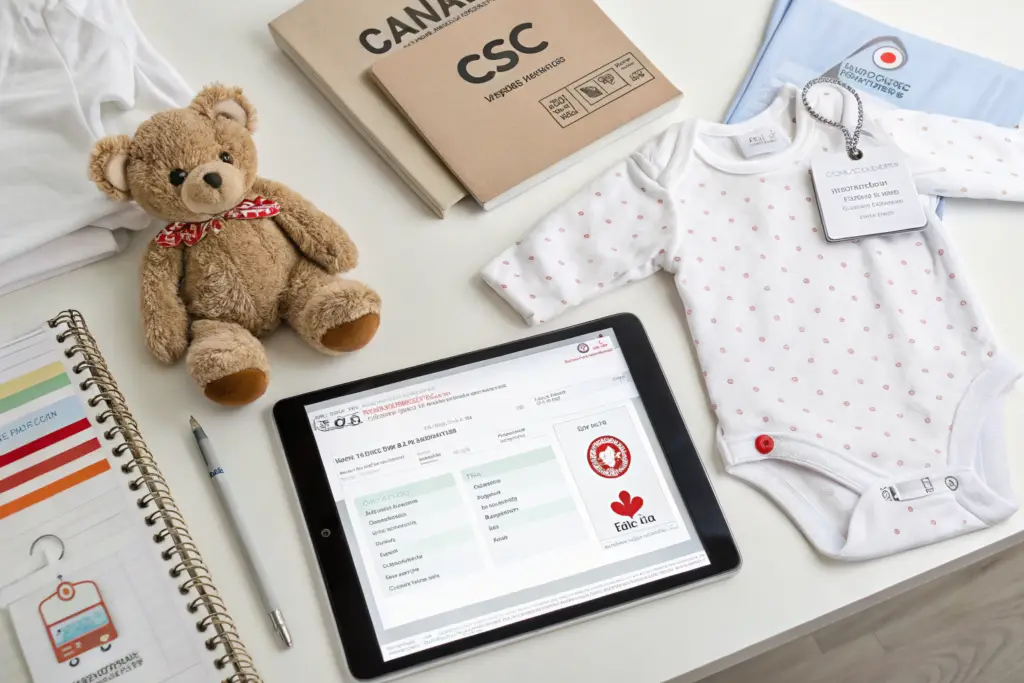
You have designed a beautiful line of children's clothing. The prints are adorable, and the fabrics are soft. You are ready to import your first bulk shipment and capture the lucrative North American market. But as you start researching, a new fear creeps in. The words "CPSIA," "flammability," "lead limits," and "tracking labels" start to blur together. You realize that selling kids' clothes in the U.S. and Canada is a legal and regulatory minefield, and a single mistake could result in your entire shipment being seized, destroyed, or slapped with a massive fine. A veteran children's wear importer once told me, "A beautiful design on a unsafe garment is a lawsuit waiting to happen. The U.S. market doesn't care about your good intentions; it cares about your test reports. Compliance is not a department; it's the cost of entry."
Successfully importing bulk children's clothing into North America requires a zero-tolerance approach to mandatory safety regulations. The process rests on four non-negotiable pillars: 1) Mandatory Third-Party Testing at a CPSC-accepted lab for lead, phthalates, and flammability (you cannot self-certify), 2) The Issuance of a Children's Product Certificate (CPC) for the U.S. (or a GCC for Canada) that lists every applicable safety regulation, 3) Permanent, Compliant Tracking Labels on every single garment, and 4) Material Compliance that starts at the source, requiring OEKO-TEX Class I or equivalent certifications for all fabrics and trims to pre-screen for safety before production even begins.
At Shanghai Fumao, we are the partner that helps you navigate this complexity. We have years of experience manufacturing for the North American kids' wear market, and our robust material compliance program is designed to ensure your products are safe, legal, and ready for the shelves. Let me explain the exact steps you must take to protect your business and the children who wear your clothes.
What Are the Non-Negotiable US Federal Safety Regulations for Kids' Wear?
The single most important thing to understand is that you cannot simply "trust" that your children's products are safe. The U.S. Consumer Product Safety Commission (CPSIA) mandates that all children's products must be tested by a CPSC-accepted, independent, third-party laboratory. This is a legal requirement, not a suggestion. The tests are specific, scientific, and non-negotiable, and you, the importer, are legally responsible for holding the passing certificates.
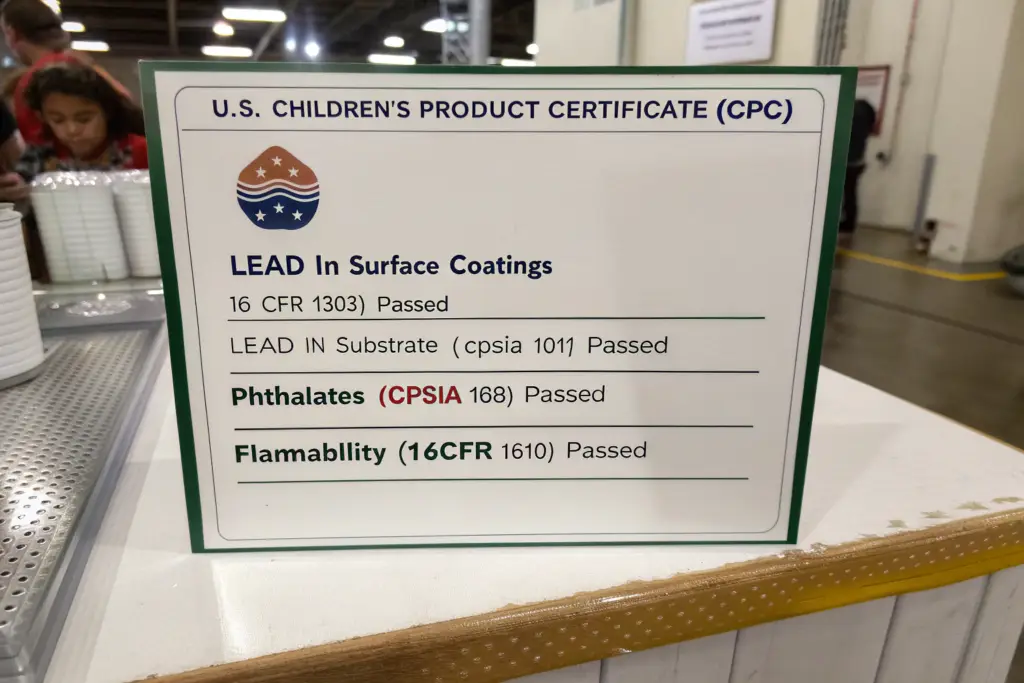
The non-negotiable U.S. safety regulations for children's wear are governed by the CPSIA. You must order mandatory third-party testing from a CPSC-accepted lab for: 1) Total Lead Content in surface coatings and accessible substrate materials (limit 90 ppm), 2) Phthalates in plasticized components like buttons and prints (limit 0.1% for 8 specific phthalates), and 3) Flammability of the finished garment, as defined by the appropriate 16 CFR part. These tests are not optional, and your factory cannot perform them; they must be done by an approved, independent lab.
A brand founder I know almost lost her entire business because she trusted her factory's word that a batch of colorful zippers were "lead-free." She did not perform independent third-party testing. A random CBP inspection at the port tested the zippers, found lead above the legal limit, and the entire $40,000 shipment was seized and destroyed. She had no insurance, no product to sell, and a legal bill. The lesson was brutal: in children's wear, a supplier's promise is worthless. Only a report from a CPSC-accepted lab has legal standing. This is the reality of safe kids' wear importing .
What Is a "Children's Product Certificate" (CPC) and Who Is Responsible for It?
The CPC is the legal document that you, the U.S. importer, must issue. It is a formal statement, based on the passing third-party test reports, that your product complies with all applicable children's product safety rules. You must provide a copy of this CPC to your retailers and, if requested, to the CPSC and CBP. It is your legal shield. We help our private label partners by providing the necessary documentation from our supply chain.
How Do the Flammability Requirements (16 CFR Part 1610) Affect Fabric Choice?
This is a critical, often overlooked test. The standard 16 CFR Part 1610 measures the speed at which a fabric burns. Certain fabrics, like very lightweight, raised-surface rayon, can be dangerously flammable and may fail the test. Others, like heavy 100% polyester or tightly woven cotton, naturally pass. This regulation dictates which fabrics you can and cannot use for children's sleepwear and apparel. We guide our clients on flammability-compliant fabrics from the start.
Why Are Permanent Tracking Labels a Non-Negotiable Requirement for US Entry?
Beyond the chemical and physical safety of the material, the U.S. government mandates a specific system for traceability. Every children's product must have a permanent, legible "tracking label" that allows the manufacturer and the consumer to identify the specific batch from which the product came. This is a non-negotiable labeling requirement that is a common cause of shipment holds if done incorrectly.
Permanent tracking labels are a non-negotiable U.S. legal requirement for all children's products. The label must be permanently affixed to the garment and contain specific, legible information that allows for traceability. This includes: the manufacturer's or private labeler's name, the location and date of production, and a specific batch or lot number. This label must be designed to withstand multiple washes and remain legible for the life of the product. Compliance is checked at the border.
We have seen shipments held at port for the simple reason that the tracking label was printed on a paper hangtag (which is removable) instead of being a permanent, sewn-in textile label. This is a simple, avoidable error. At Fumao, our compliance team knows these regulations intimately. We ensure that every garment we produce for the North American market has a fully compliant, permanent tracking label, correctly formatted, and securely attached. This is a core part of our brand protection service .
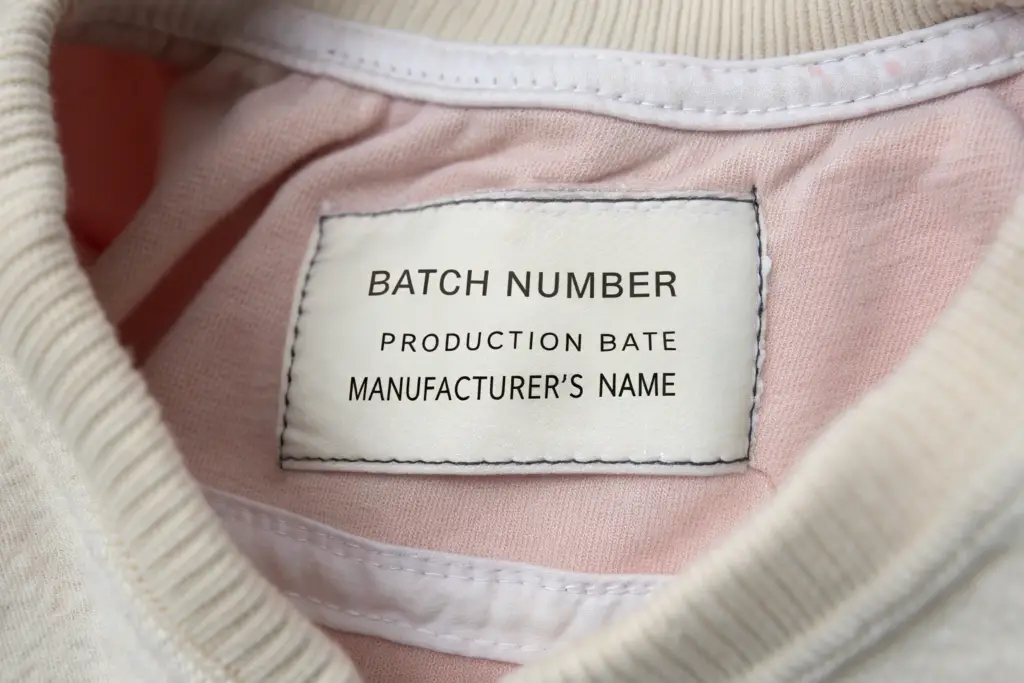
What Specific Information Must a Compliant Tracking Label Contain?
The label must clearly state:
- The Manufacturer or Private Labeler Name (this is your brand's name).
- The Location of Production (e.g., "Made in China").
- A Date Code (the month and year of production).
- A Batch or Lot Number (for traceability).
This information is your recall insurance. This is our standard for compliant labeling .
How Is a Permanent Tracking Label Different from a Standard Care Label?
A standard care label gives fiber content and washing instructions. A tracking label is exclusively for traceability. While they can sometimes be combined on one physical label, the tracking information must be present, permanent, and separate from marketing information. We guide our partners on the most efficient and compliant labeling layout.
How to Pre-Vet Your Materials to Guarantee Passing Third-Party Tests?
The most stressful and expensive way to import children's wear is to produce the goods first and then "hope" they pass the lab tests. The professional approach is to pre-vet your raw materials at the source, long before the cutting even begins. This drastically reduces the risk of a catastrophic, batch-wide failure and a wasted investment.
To guarantee passing third-party tests, you must pre-vet your materials. The single most effective step is to demand that all fabric, trim, and component suppliers provide valid, current certification, such as OEKO-TEX Standard 100, Class I. This is the strictest standard, specifically for baby and toddler products, and pre-screens for lead, phthalates, and hundreds of other harmful substances. For component-specific risks, like lead in metal zippers or snaps, you should request batch-specific third-party test reports from the supplier before you even place the order. This upstream due diligence is your most powerful risk mitigation tool.
A brand we work with always sends us their chosen custom snaps for pre-vetting before we place the bulk order. We send them to a lab for a quick lead and phthalate screen. It costs $150 and takes a week. This simple, proactive step has caught a non-compliant batch of snaps twice, saving them from a disastrous, failed final inspection and a potential shipment seizure. This is the discipline of proactive material compliance .
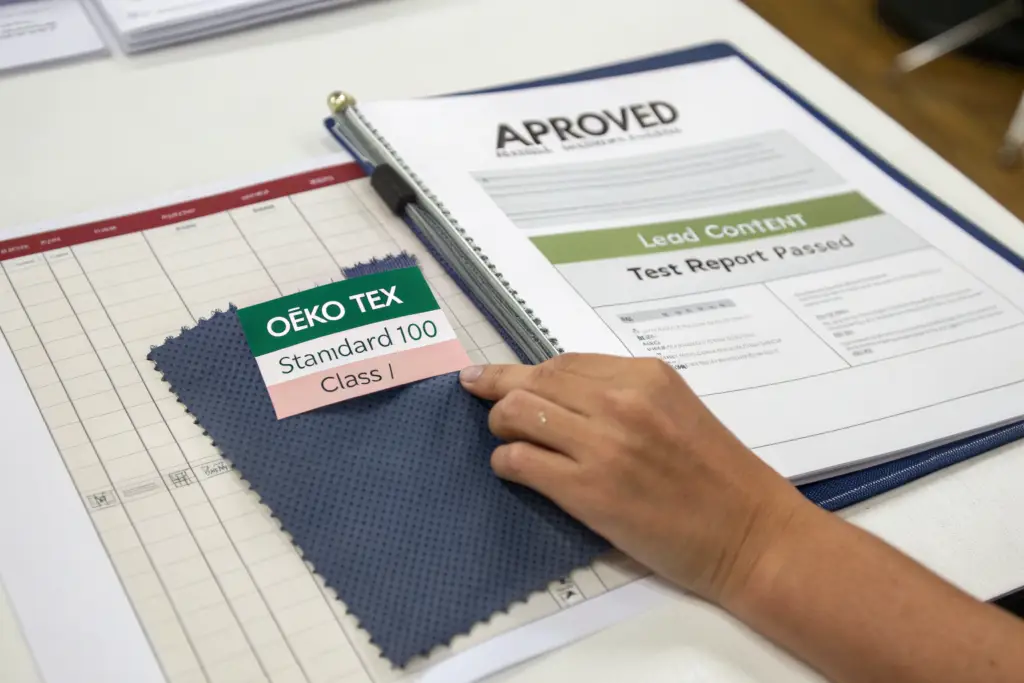
Why Is "OEKO-TEX Standard 100, Class I" the Gold Standard for Pre-Vetting Kids' Materials?
This certification screens for a comprehensive list of over 100 harmful substances, including all those regulated by CPSIA, at the strictest limits for baby items. A material with this certificate has a near 100% chance of passing U.S. lead and phthalate tests. It is the most efficient and reliable pre-screen available. We guide our partners to certified material suppliers .
How Do You Handle Trims Like Buttons and Zippers That Are the Most Common Source of Failure?
You treat them as high-risk items. For metal zippers and decorative metal buttons, you must request a batch-specific, third-party test report for lead content. For brightly colored or soft plastic components, you must request a phthalates test report. Never assume a trim is safe. The coating on a brightly colored button is a classic source of lead. Verification is mandatory. This is a core part of our trim sourcing and vetting .
How Does Fumao's Kids-Experienced Model Ensure a Stress-Free, Compliant Import?
Navigating the regulatory maze of North American children's wear is a specialized skill. You should be able to focus on your beautiful designs, not on deciphering legal test reports. Our role is to be your expert guide and operational partner, managing the compliance process from the first thread to the final label, ensuring your shipments cross the border smoothly and land safely on the sales floor.
Fumao's kids-experienced model makes compliant importing a stress-free process. We act as your proactive compliance partner. We guide your material choices to inherently safe, certified options. We can manage the third-party testing process on your behalf, coordinating with CPSC-accepted labs. We ensure every garment has the correctly formatted, permanent tracking label. We provide you with the organized documentation you need to issue your CPC with confidence. We have done this thousands of times, and we make your safety story our operational priority.
A brand founder launching her first kids' line with us told me, "The compliance side was the thing that kept me up at night. Your team just took it off my plate. You explained the tests, managed the lab submissions, and handed me a complete, organized file with everything I needed for my CPC. You made the scariest part of my business feel safe and managed." That is our goal. To provide the expert, proactive compliance infrastructure that protects your brand and gives you the freedom to create. This is the value of a trusted children's wear partner .
How Do You Manage the Entire Third-Party Testing Process on Our Behalf?
We can coordinate the entire process. We will cut the required samples from your bulk production, send them to a CPSC-accepted lab of your choice (or one we recommend), track the progress, and deliver the final test reports and a pre-filled CPC template to you. We act as your on-the-ground testing coordinator. This is a key part of our full-service children's wear CMT .
What Does Your "Compliance-Ready" Pack of Documentation Include?
For every children's order, we provide a comprehensive documentation pack that includes: all material and trim OEKO-TEX certificates, the third-party lab test reports, a sample of the compliant tracking label, and a pre-formatted CPC template. We give you a turnkey compliance solution. This is the standard of our transparent and compliant manufacturing .
Conclusion
Successfully importing bulk children's clothing into the strict North American market is not about creative design; it is about meticulous, scientific, and proactive compliance with mandatory safety regulations. The U.S. market demands a zero-tolerance approach to lead, phthalates, flammability, and traceability, backed by irrefutable third-party test reports. There are no shortcuts.
At Shanghai Fumao, we have made this complex, high-stakes process a core competency. Our model of proactive material vetting, managed testing, and precise, compliant manufacturing provides our B2B partners with the confidence and the peace of mind to enter one of the world's most lucrative—and most demanding—children's wear markets. We protect the children who wear your clothes, and we protect your brand.
If you are ready to build a safe, compliant, and beautiful children's line for the North American market, let's talk. Our Business Director, Elaine, can walk you through our compliance process. Please email Elaine at: elaine@fumaoclothing.com.