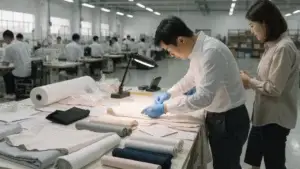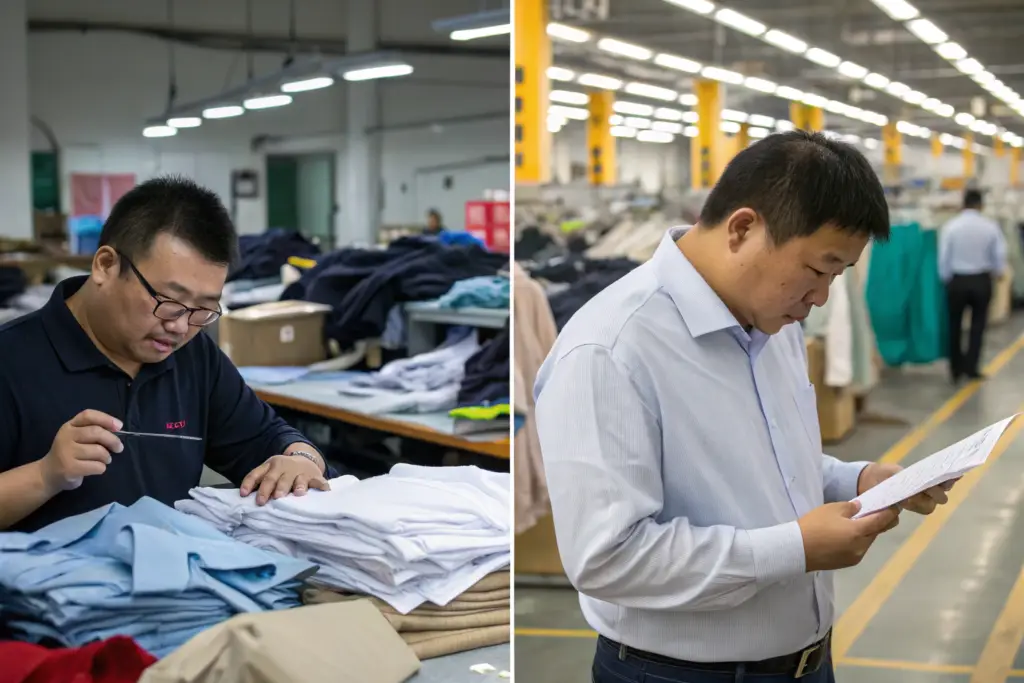
I still remember the panic in a buyer's voice last spring. They had placed a massive order for men's polo shirts with a supplier they found on a B2B platform. The samples looked perfect. The photos were great. But when the container arrived in Los Angeles, the collars were uneven. The fabric pilled after one wash. They missed their entire early summer restock window. That sinking feeling is what I hear about from American brand owners almost every week. You put your trust in a factory, and the final product betrays you. That is the moment you start searching for a real solution.
We have seen a consistent pattern: when U.S. brands switch their production to Shanghai Fumao, their defect rate drops below 2%, and their on-time delivery rate stabilizes above 98%. No more empty promises. No more surprise quality disasters. We turned a chaotic sourcing process into a predictable, transparent supply chain.
This is not just about stitching clothes. It is about protecting your brand reputation. You need a partner who treats your deadlines like their own. You need a factory that understands a delayed shipment in July means dead inventory in December. I want to walk you through what the actual transition looks like. I will use real stories from our factory floor to show you how we fix the three biggest pain points: communication breakdowns, quality lies, and logistics nightmares.
What Are the Hidden Costs of Poor Quality Control in Garment Manufacturing?
No one calculates the cost of a returned sweatshirt until it hits the balance sheet. A few years ago, a mid-sized brand from New York came to us after a disaster. They had sourced 5,000 fleece hoodies from a low-cost factory in another country. The price was 15% lower than our quote. But the hidden costs piled up fast. The fabric shrank 7% after the first wash. The zippers stuck. Customers returned the items. They spent more on reverse logistics and refunds than they saved on the unit price. And the worst part? Their Amazon seller rating dropped from 4.5 stars to 3.8 stars. That damage takes years to repair.
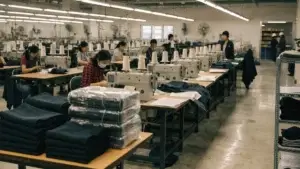
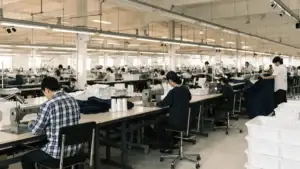
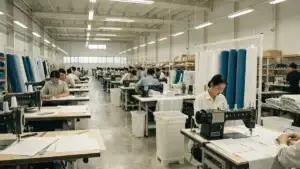
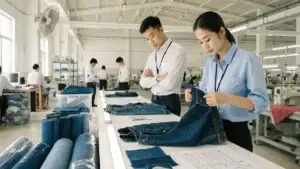
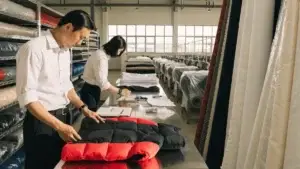
We have turned quality control into a science. I do not believe in just trusting a final inspection report. You have to build the checkpoints into the process. A garment is not just a piece of fabric. It requires precision at every step. If one seam is off, the whole fit is ruined. When we onboard a new client, we set up a strict protocol right away. This stops problems before they leave our cutting table.
How Does Inline Inspection Stop Defects Before They Happen?
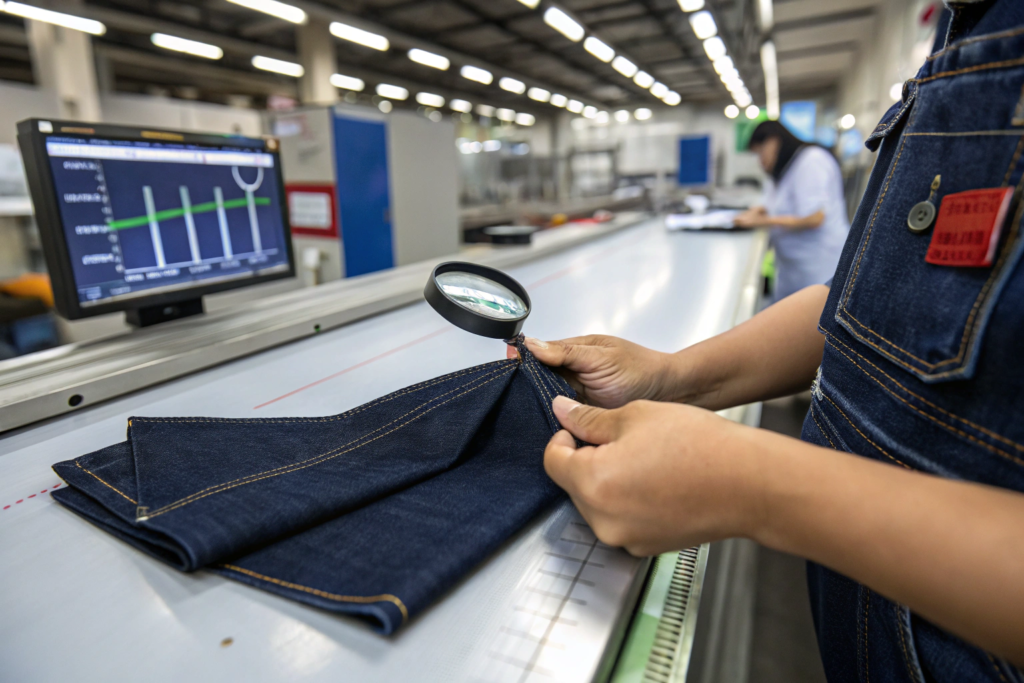
Last year, we worked on a batch of athletic shorts for a Texas-based fitness brand. The design required a four-way stretch fabric with flatlock stitching to prevent chafing. If we only checked the shorts at the end, we might have shipped 2,000 units with a weak crotch seam. That would be a lawsuit waiting to happen. Instead, our inline inspection team stops the line after every 50 pieces. We measure the stitch tension. We stretch the fabric to its limit. We check the needle heat.
During one of these inline checks, we noticed the sewing machine needle was getting dull fast. It was causing tiny pulls in the spandex blend. We stopped production for 30 minutes. We swapped the needles and adjusted the sewing machine speed. That cost us a small delay. But the brand owner told us later that their return rate for seam failure on that collection was zero. Inline inspection works because it treats the root cause, not just the symptom.
Why Is Fabric Testing Critical Before Cutting?
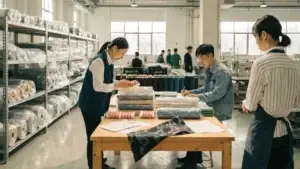
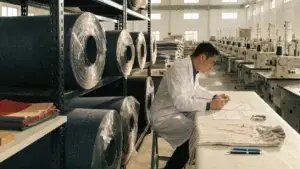
In March 2023, we received a shipment of Supima cotton from a trusted mill. It looked perfect to the naked eye. Soft, bright white, ready for cutting. But my lab team ran a standard shrinkage test anyway. Good thing they did. The fabric had a residual shrinkage rate of 5%, which is too high for a fitted women's button-down shirt. If we had cut the fabric straight away, the final garment would have twisted in the laundry.
We rejected the batch. We sent it back to the mill for re-finishing. This delayed the raw material phase by four days. But the brand owner, a lovely lady from San Francisco, called me to say thanks. She told me that five years ago, another supplier sent her jackets that shrank differently on the sleeve and the body. It killed her wholesale account with a major department store. Now, her quality assurance manual insists on a fabric test report before every cut. We do that as a standard service. We test for pilling, colorfastness, and tearing strength using AATCC standards. You should never pay for clothes that fall apart after one wear.
Why Is Direct Communication With the Factory Floor a Game Changer?
Email threads kill deals. I have seen it happen too many times. The buyer sends a design update at 9 AM New York time. But it is 9 PM in Shanghai. The sales rep on Alibaba might be sleeping, or they might be handling 50 other clients. They reply at noon the next day with a question. That question is vague. You send another email. Three days pass. Meanwhile, your market window is closing. And you still do not know if they understand your new pocket placement.
I designed our communication model to be flat. When you work with us, you are not just talking to a salesperson who has never seen a sewing machine. You get direct access to the merchandising team and, when necessary, me. We do not hide behind a curtain. If a pattern maker has a technical question, they will ask you directly. We use very simple English. We send photos and videos of the fitting session immediately. We fix problems while the sun is up, not three days later.

How Can a Tech Pack Reduce Miscommunication?
We had a client from Chicago who liked to sketch ideas on napkins. No measurements. Just a rough drawing and a note that said "make it slouchy." That rarely ends well. I sat down with him over a video call. We built a simple tech pack together. We used a base size medium. We digitized his napkin sketch into a flat drawing. We added Points of Measure (POM).
The tech pack listed the chest width tolerance as +/- 0.5 inches. It defined the sleeve length from the center back. It specified the exact Pantone color for the stitching. When the bulk production bulk production started, there was zero confusion. The factory floor had a clear blueprint. The client told me this was the first time in ten years that the final product matched the picture in his head perfectly. A tech pack is not just a document. It translates vague ideas into hard data. If a factory refuses to work with your tech pack, that is a red flag.
Why Does a Dedicated Merchandiser Matter for Reorders?
Repeat orders are how brand owners build wealth. But the second production run is often where quality dips. Suppliers change yarns to save money. They rush the cutting. They assume you will not check as closely as the first time. Two summers ago, a Florida resort wear brand came to us for a reorder of linen pants. Their original factory tried to switch the linen fabric without telling them. They used a cheaper flax blend that wrinkled differently.
We assigned a dedicated merchandiser to this account. She remembered that the original order used a washed linen from a specific lot in Zhejiang. When the mill tried to deliver a different lot number, she flagged it before cutting. She sent a swatch to the client overnight via DHL. The client approved the slight variation because we were transparent. The key here is memory and consistency. A dedicated person remembers the history of your brand. They know you prefer YKK zippers, not generic ones. They know your logo embroidery needs a specific underlay stitch to prevent puckering. This makes repeat orders seamless.
Why Are Shipping Delays the Biggest Threat to Your Apparel Brand?
Fashion is a monster with a very strict calendar. If your swimsuits arrive in July, you have already lost 60% of your season. I remember a buyer from Miami who placed an order for Christmas sweaters. The factory in a developing country promised a September ship date. October came, and the goods were still in production. They used the excuse of "power rationing." The sweaters finally shipped in late November. They arrived in the US just ten days before Christmas. The buyer had to sell them at a 70% discount to a liquidator. That is not business. That is a funeral.
We look at delivery dates as a contract of trust. We use the DDP (Delivered Duty Paid) shipping model for many of our American partners. This means you pay one price, and we handle everything until the boxes reach your warehouse door. But more than the Incoterms, we focus on production planning. A late shipment is almost never a shipping problem. It is a production planning problem that becomes visible at the dock.

How Does Production Scheduling Prevent Missed Deadlines?
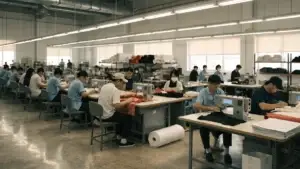
We run five dedicated production lines. But we do not book them to 100% capacity. That is a fatal mistake many factories make. I always keep a 10% capacity buffer for "surprise events." A style takes longer to sew than estimated. A zipper delivery from a supplier gets stuck in customs. In early 2024, we were producing a complex women's blazer for a Los Angeles brand. The lining fabric got held up at Shanghai port for inspection.
Because we had a buffer in our schedule, we shifted the cutting capacity to a different order for two days. We did not stop moving. When the lining finally cleared, we moved that blazer line back to the front and pushed overtime just for that line. We still hit the original ship date. We use a backward scheduling system. We start with your in-store date, subtract the ocean freight transit time, subtract the port handling time, subtract the sewing time, subtract the cutting time, subtract the raw material lead time. This gives us the "go/no-go" date. If you come to us after that date, I will tell you honestly that we cannot hit your target. Honesty prevents disasters. No one benefits from a lie about delivery dates.
What Is the Real Risk of Counterfeit Certifications?
This makes me angry. I have seen suppliers send fake Oeko-Tex certifications to brands. They photocopy a document and paste a new date on it. The buyers think they are getting eco-friendly, safe fabrics. They are actually getting chemical-laden textiles that violate US import laws. If US Customs catches this, the container gets destroyed or sent back. The brand owner takes the loss. The size of the loss is huge.
We send our lab tests directly from the third-party testing house to you, digitally. We do not just provide a certificate of conformity that we printed ourselves. We work with SGS and Intertek regularly. For a children’s wear brand in Boston, we recently did mandatory CPSIA compliance testing for lead and phthalates. The lab report came straight from the testing company’s portal. The brand owner logged in and saw the pass result in real time. He did not have to rely on a PDF attachment from me. Compliance with CPSIA and the American Apparel and Footwear Association guidelines is non-negotiable. Counterfeit certificates will literally kill your business.
How to Build a Profitable Sourcing Strategy With a Chinese Factory?
Building a private label brand is not just about finding the cheapest CMT (Cut, Make, Trim) price. It is about constructing a margin structure that allows you to scale. I have a client who owns a workwear brand. He sells durable canvas jackets to blue-collar workers in the Midwest. Three years ago, his profit margin was thin because he was buying from a distributor. We transitioned him to our full-package manufacturing model. Full package means we buy the fabric, the buttons, the lining, the labels. We do the design development. We ship the finished product to his 3PL warehouse in New Jersey.
His COGS (Cost of Goods Sold) dropped by 22%. He used that extra margin to run Facebook ads and pay for Amazon FBA fees. His business tripled in 18 months. The math is simple. When you control the supply chain at the factory level, you capture the value that a middleman usually takes. But you have to do it methodically. You cannot just throw an order over the wall and hope for perfection.

A brand owner from Colorado came to us with a mood board for a sustainable yoga line. She had never done custom sampling. She was terrified of spending thousands of dollars on samples that looked wrong. I explained our prototype-to-PPS process. We start with a sketch review. We digitize the design and send back a proposed spec sheet. This ensures we agree on the shape before we spend a dollar on fabric.
Next, we make a prototype in a similar fabric to check the silhouette. The first prototype for her high-neck sports bra was too loose in the ribcage. We adjusted the pattern digitally. The second prototype was perfect. Only then did we go to Pre-Production Sample stage using the exact performance fabric with the specific wicking finish. This stepped approach saved her a lot of money. Every step is approval-gated. You do not proceed until you say yes. This is how you bridge the gap between a creative vision and factory production. It requires a bit of patience. But it eliminates the risk of a full order turning into a loss.
What Are the Hidden Advantages of Full-Package Manufacturing?
Some buyers want to control every inch of the raw material sourcing. They think they can get a cheaper price for cotton yarn themselves. In my experience, that rarely works. We buy tons of yarn and fabric every week. Our mill relationships give us buying power that a single brand does not have. When you come to us for full-package, you leverage our supply chain scale. For a recent men's suiting project, a client wanted a specific Italian wool blend. He got a quote directly from the agent. Our internal sourcing team got the exact same fabric for 8% less because we bundled his order with our other large orders.
There is also the issue of liability. If you supply the fabric and it turns out to be defective, you eat the cost of the fabric and the labor. If we source the fabric, we swallow that cost. We are responsible for the final product. That gives us a huge motivation to check the material in advance. We also consolidate the logistics. Instead of shipping loose fabric to one place and finished goods from another, everything comes from our dock. This consolidation usually lowers the total shipping cost per unit. It simplifies your import process.
Conclusion
Switching your supply chain feels like a leap of faith. I know. You are afraid of losing control. You are afraid of a factory that starts strong and then decays. But staying with a supplier that delivers bad quality, lies about certifications, and misses the season is a guaranteed slow death for a clothing brand. The difference between a factory and a partner is simple. A factory ships boxes. A partner ships solutions. We have shown that by cutting out the communication noise, installing aggressive inline inspections, and providing honest production timelines, a brand can move from survival mode to growth mode.
The hidden costs really sit in the returns you process and the seasons you miss. The change in our quality control process is not just about checking fabric. It protects the relationship between your brand and your end customer. And the transparency we bring to logistics, especially under DDP terms, takes the guessing game out of the import process. You can focus your energy on marketing and sales, which is where your real talent lies.
If you are tired of fixing supplier mistakes and you want a reliable, high-value manufacturing extension in China, I am ready to talk. At Shanghai Fumao, we focus on making clothes that meet the standard of the American market. We cut. We sew. We ship. You grow. Reach out to our Business Director Elaine directly to start a conversation about your next collection. Her email is elaine@fumaoclothing.com. Let us show you what a smooth production run actually feels like. It changes everything.