Waiting for a container to arrive is the worst part of this business. I know the feeling. You approved the pre-production sample six weeks ago. You have a launch date set. Your marketing team is asking for assets. And then you check the vessel tracking and see it's anchored outside the Port of Long Beach with seventeen other ships. You are losing sleep and you are losing selling days. In a wholesale model where timing is everything, a three-week delay can mean the difference between a full-price sell-out and a discounted clearance rack.
The most effective way to reduce shipping times for bulk apparel orders from Asia to North America is to combine strategic pre-production planning with a Delivered Duty Paid (DDP) logistics agreement. This means finalizing fabric sourcing before the order is even cut, using a freight partner with premium vessel contracts that bypass congested transshipment hubs, and ensuring customs clearance begins while the ship is still at sea. By doing this, you eliminate the waiting time at the port of origin, the risk of customs holds, and the lag of last-mile coordination.
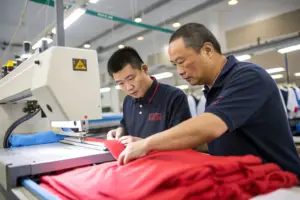
I run a factory with five production lines at Shanghai Fumao. I see the entire timeline from the moment we unroll the fabric to the moment the truck backs into your warehouse. You want to speed this up. I want to show you exactly where the time is hiding. It is not always about paying for expensive air freight. Most of the time, it is about fixing the small, invisible leaks in the schedule that happen before the goods even get to the dock.
How Long Does Sea Freight from China to the USA Take in 2026?
This seems like a simple question, but the answer changes depending on whether you are asking a freight broker or a factory floor manager. You might hear "14 days to the West Coast." That is the sailing time. That is not the door-to-door time. I have to correct this for new brand owners all the time. They plan their inventory based on 14 days and end up with a month of dead air.
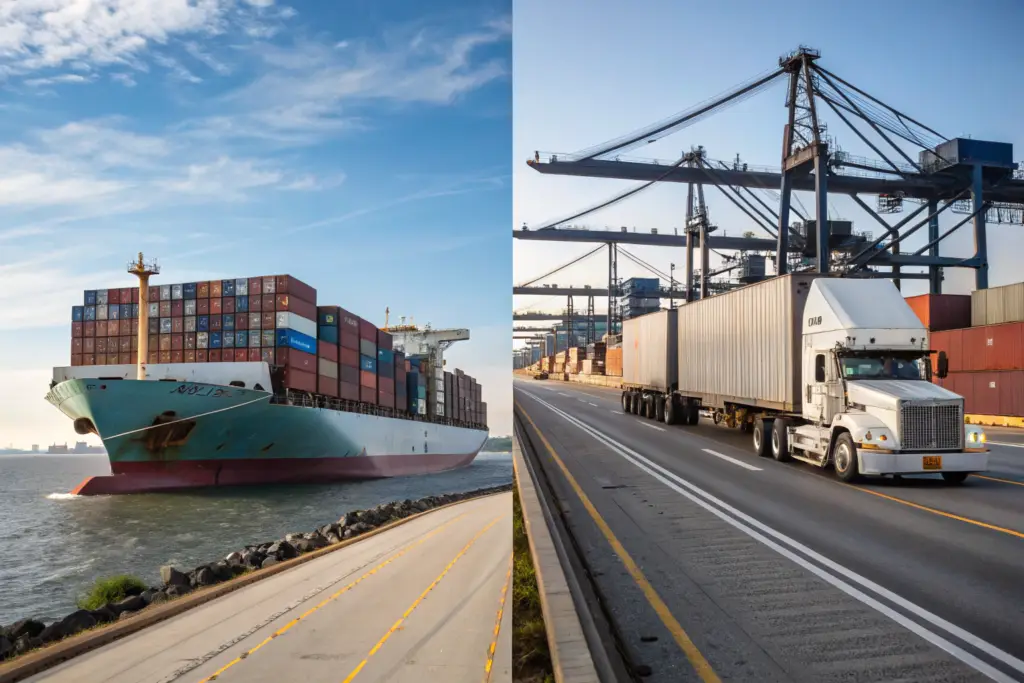
The truth is, total transit time is a chain of events. Sailing is just the biggest link. Let me give you a real example. Last November, we shipped 8,000 units of knitwear for a brand in Seattle. The vessel left Shanghai on the 5th. It arrived at the Port of Tacoma on the 20th. That's 15 days. Great. But the container wasn't unloaded from the terminal until the 27th. The trucker couldn't get an appointment for a live unload until the 30th. The brand owner received his goods on December 2nd. The "sea freight" was 15 days. The "total transit" was 27 days.
You need to plan for the last mile and the terminal dwell time, not just the ocean voyage.
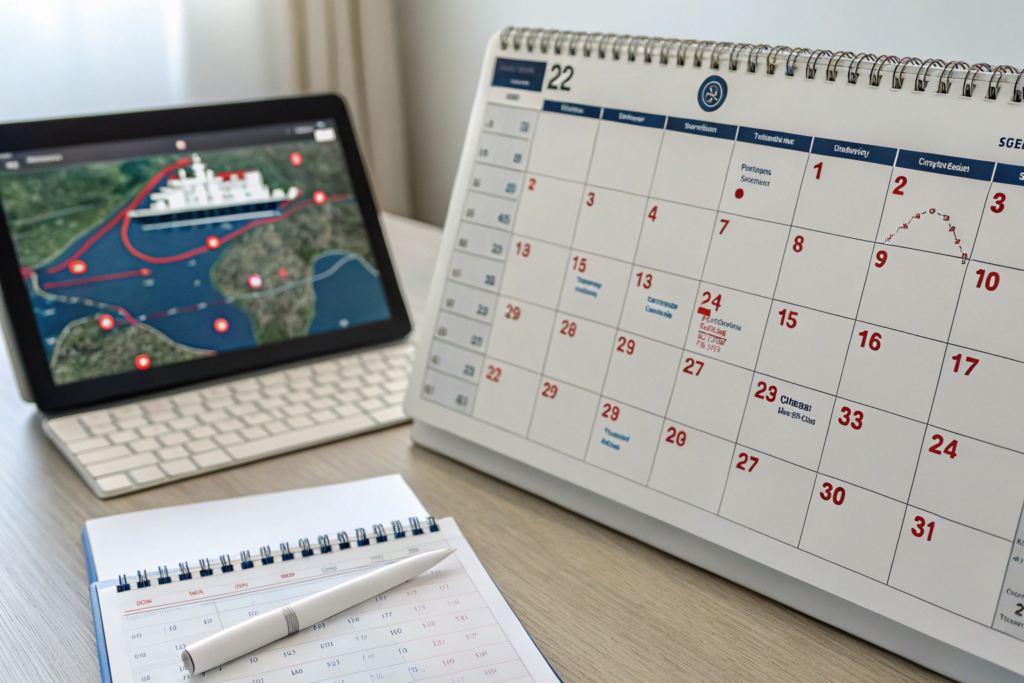
Why Do West Coast and East Coast Delivery Windows Vary So Drastically?
The difference is not just the extra week of sailing through the Panama Canal or across the country by rail. The real variance comes from port infrastructure and congestion absorption.
Comparing Route Realities
When you are sourcing bulk clothing for North America, you have to make a strategic choice about the entry port. Here is a realistic look at the timeline differences for 2026 planning:
| Factor | West Coast Routing (LA/Long Beach) | East Coast Routing (Savannah/NY/NJ) |
|---|---|---|
| Vessel Transit | 14-18 Days | 28-35 Days (via Panama or Suez) |
| Terminal Congestion | High volatility; subject to labor slowdowns and chassis shortages. | More stable; better chassis pools but longer rail dwell. |
| IPI (Inland Point) | Trucking to AZ, NV, CO is fast. | Rail ramp congestion in Chicago is a major choke point. |
| Customs Clearance | High volume; CBP uses intensive scanning for textiles. | Lower volume but stricter examination for classification. |
| Best For | West Coast distribution, fast fashion replenishment. | East Coast distribution, heavier basic goods where you can float inventory. |
I advise clients in the Midwest to use West Coast ports despite the longer trucking distance. Why? Because the rail delay from an East Coast port to a Chicago warehouse can add 10-14 unpredictable days. A truck from LA to Denver is 3 days. Predictability is worth more than a theoretical saving on ocean freight. For more on port performance metrics, check the official data from the Port of Los Angeles.
What Is the Real Impact of Peak Season Surcharges on Your Timeline?
You look at a freight quote and see "PSS." You think it's just a cost. I want you to start thinking of it as a time penalty, not just a money penalty. Peak Season Surcharge applies from roughly August to October as retailers rush for Holiday goods. But here is what happens on the ground: vessels are overbooked. Your container might get "rolled" to the next ship.
I had a situation with a client who makes activewear. He approved production on time, but we missed the cutoff for the vessel by four hours because the terminal was gridlocked. The next available vessel with space was seven days later. He paid the Peak Season Surcharge but still got a week of delay. That week cost him a placement in a key retail pop-up.
At Shanghai Fumao, we track these booking windows obsessively. We use our volume to secure "VIP" status with carriers. This means our containers are less likely to be rolled compared to a small trader's booking. This is an invisible advantage of working with a factory that moves volume. We don't just make the garment; we fight for its space on the boat.
What Is the Fastest Shipping Method for Bulk Apparel Orders from China?
When you say "fastest," you have to clarify what you mean. Fastest to move is air freight. Fastest to process is express courier. But for a bulk apparel order, neither of those is practical for the whole load. You can't fly 5,000 hoodies and expect to make a profit. The math just doesn't work.
However, there is a strategy I use for our clients that combines speed with financial sanity. It is called "Top-Up Air Freight." You ship 80% of the order via expedited ocean freight (using premium tiers like Matson or Zim ZXB) and you fly in 20% of the best-selling sizes or styles to cover the launch period.
We did this for a women's wear brand in January. They needed a specific dress style for a Valentine's Day push. We finished production of 3,000 units. We air freighted 500 units (two pallets) direct to their warehouse. The cost was high per unit, but it was only on 500 units. They used those to shoot content and fill initial orders. The other 2,500 units arrived by sea two weeks later. They bridged the gap without losing the season and without breaking the bank on the entire order.
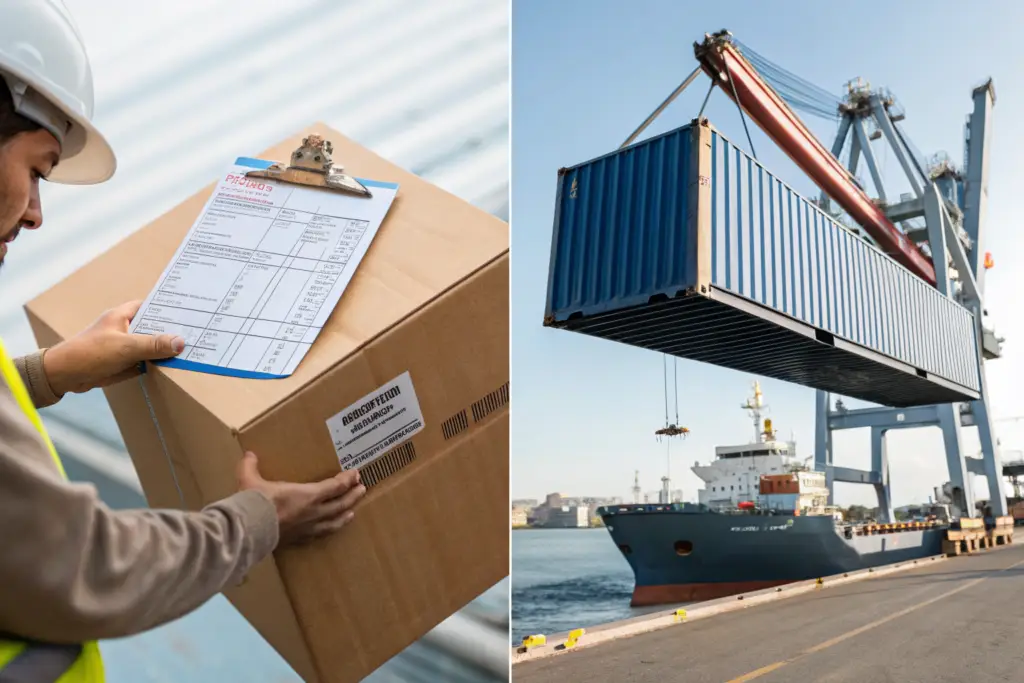
How Does Express Ocean Freight Compare to Standard Sea Freight?
Most people don't know this exists. They think "sea freight" is one slow, muddy option. There are actually tiered service levels on the ocean, just like there is First Class and Economy on a plane.
Express Ocean Services (Matson / Zim)
These carriers operate dedicated terminals. Matson in Long Beach, for example, has its own private gate. Your container does not sit in the massive pile of other ships' boxes. It gets priority unloading. Here is the reality check on speed:
| Service Level | Transit Shanghai to LA | Terminal Wait | Reliability |
|---|---|---|---|
| Standard Carrier | 14-16 Days | 3-7 Days | Low (Frequent rolling) |
| Express/ Premium | 10-11 Days | 1 Day | High (Dedicated berths) |
You pay a premium of roughly $1,500 to $2,500 per container. But you save 7 to 10 days of inventory holding time. For a high-value jacket order worth $80,000, the cost of capital tied up for those extra 10 days is often higher than the freight premium. You have to do the math on your own wholesale margin, but this is how you de-risk a tight launch window without resorting to air freight.
When Does Consolidated LCL Shipping Actually Save Time?
Less than Container Load is what I call the "patience trap." On paper, LCL is great for smaller orders of 5-10 cubic meters. You share a container with other importers. But time is a different equation.
LCL saves time only if your goods are ready to go and you don't want to wait to fill a full container. If you have 100 units of custom logo samples for a tradeshow, LCL is faster than waiting three weeks for more production to fill a 40-foot box.
However, LCL usually adds 3-5 days on the back end. Why? Because the container cannot be "stripped" until all the consignees' cargo arrives at the warehouse. If another importer's shipment is delayed or if their paperwork has a problem, your cargo sits locked in that shared box. I tell clients to use LCL for urgent, small batches where speed to ship is the driver. But if you have a full 20-foot container of men's wear, ship it FCL. You control the destiny of that box. For a detailed breakdown of how LCL works operationally, visit Flexport's Logistics Library.
How Can Pre-Production Planning Slash Weeks Off Your Delivery Date?
This is the secret weapon that no freight forwarder will tell you about. The biggest time suck is not the ocean. It is the preparation before we even cut the fabric. You are sitting in America waiting for a shipment, but you don't realize that three of those weeks were burned before we even saw the Purchase Order.
I have a client who runs a brand in North America. She used to take six weeks to get a sample approved. Six weeks! We would send a sample, she'd get it, she'd look at it under her office lights, she'd wash it at home, then she'd email us notes a week later. By the time we made the revision, two months had passed just in sampling.
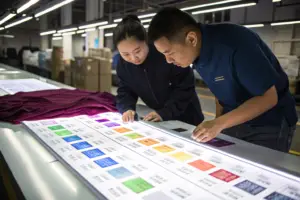
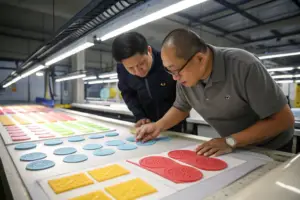
Now, we do this: She sends us a Pantone color code and we send her a digital fabric scan via email within 24 hours. She approves the "hand feel" based on a previous reference swatch we keep on file. We cut her sample lead time down to 10 days. That's a month of time we added back to her calendar. And it didn't cost a penny more.
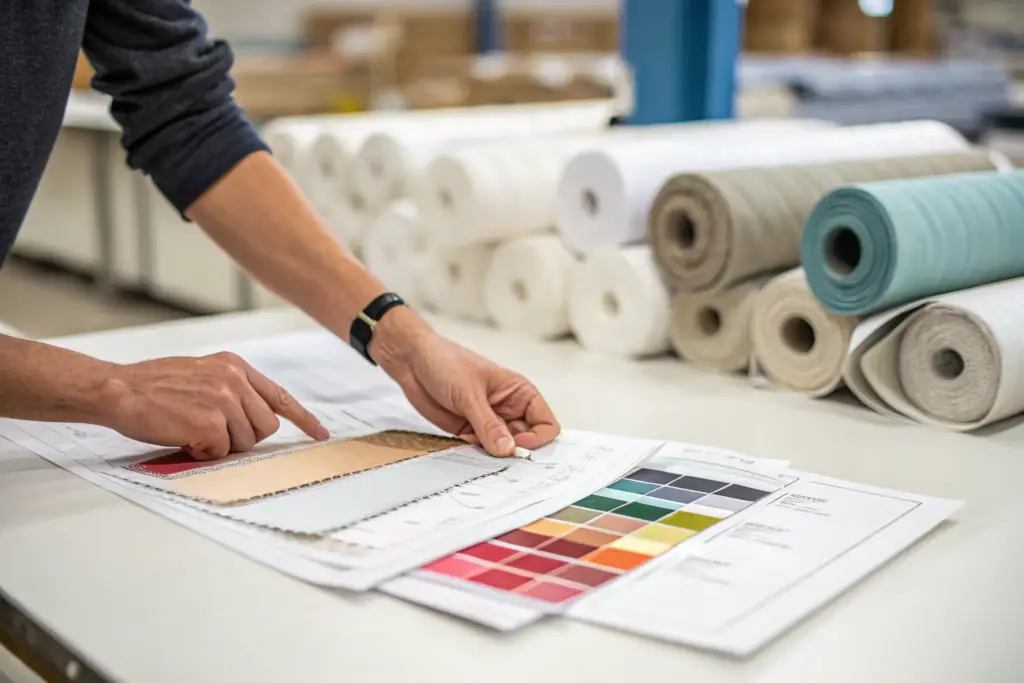
Why Is Approved Fabric Inventory the Key to Faster Turnarounds?
This is a lesson I learned the hard way on our own production floor. You can't build a house without lumber. You can't cut a garment without fabric. If you wait until you sign the contract to order the greige goods, you are automatically adding 15-25 days of lead time just for the mill to knit or weave the base material.
At Shanghai Fumao, we offer a Stock Service Program for our long-term partners. We identify the core fabrics you use season after season. Maybe it's a 180gsm single jersey cotton for T-shirt manufacturing or a solid fleece for activewear. We pre-book that raw material with the mill based on your forecast, not just your order. We hold the grey fabric in our warehouse.
Impact on Timeline
Here is what that looks like in a real production schedule:
| Milestone | Standard Workflow (Weeks) | Inventory Workflow (Weeks) |
|---|---|---|
| PO & Payment | 1 | 1 |
| Fabric Knitting | 3 | 0 (In Stock) |
| Fabric Dyeing | 2 | 2 |
| Cutting & Sewing | 3 | 3 |
| Total Ex-Factory | 9 Weeks | 6 Weeks |
We just found three weeks. For a clothing manufacturer, three weeks is an eternity. It is the difference between an August 15th delivery and a September 5th delivery. And we both know August is a much better time to sell Fall goods than September.
How Do Tech Packs with Complete Specs Prevent Sample Delays?
You send a "tech pack" that is a sketch on a napkin. I exaggerate, but sometimes not by much. I have seen spec sheets that say "Size M: Chest 40." But they don't say if that's half-chest or full-chest. They don't give the tolerance (+/- 0.5 inch or +/- 1 inch?).
Every missing detail triggers an email. That email sits in my inbox for 4 hours while I run the cutting line. Then I reply. Then you reply 12 hours later because of the time zone difference. That back-and-forth is what kills a clothing project timeline.
We created a standardized Tech Pack template for our private label clothing clients. It forces the brand owner to think about the zipper tape color, the stitch density per inch, and the exact wash care instructions. When we get a complete Tech Pack, our pattern maker starts work that same afternoon. The sample is cut the next morning. This efficiency is not about us being fast; it's about us being aligned from the first click. You eliminate the "What did you mean by this?" phase of the relationship.
You dread the email from the broker that says "Intensive Exam." It means your container has been pulled aside. It means the Customs officers are going to open the boxes, check the fabric content, and verify the country of origin. It adds five to ten days of waiting and about $1,000 in exam fees.
I understand this anxiety. But you can drastically reduce the likelihood of this happening. It comes down to the paperwork you provide before the ship even docks. In 2026, Customs and Border Protection is using more AI and data targeting. They know which importers have messy paperwork. They know which HTS codes are frequently misclassified. You want to be invisible to their algorithm.
Which HTS Codes Speed Up the Processing of Garments?
The Harmonized Tariff Schedule code is not just a tax number. It is a risk profile. If you use a generic "catch-all" code for garment because you didn't want to pay a lawyer, you are waving a red flag. Apparel classification is extremely specific based on fiber content and gender.
For example, a women's wear blouse made of 100% cotton is different from a blouse made of 60% cotton and 40% polyester. If you misclassify it to save a few percentage points on duty, and CBP tests the fabric in the lab, you not only pay back duties, but you also get flagged for future examinations on all your shipments. That's a permanent scar on your importer record.
At Shanghai Fumao, we provide a detailed mill test report with every DDP shipment. The fiber content is certified. The weight is certified. We match the commercial invoice exactly to this report. This consistency is what allows brokers to file entry with confidence and what allows CBP to clear the load without a second glance.
What Is the Advantage of Type 86 Entry for Small B2B Shipments?
If you are doing smaller, high-value bulk apparel orders—say, samples for a showroom or a small reorder of a popular knitwear style—you should be using Section 321 Type 86 Entry. This is a massive change for 2026.
This rule allows shipments valued under $800 (de minimis) to enter the U.S. duty-free and with simplified clearance. But Type 86 is specifically for B2B e-commerce and small wholesale shipments where you still need a formal entry record but want the speed of e-commerce clearance.
We use this for our customization clients who need 50 units of a new logo placement urgently. Instead of sending it via expensive express courier and getting hit with brokerage fees, we consolidate it into a Type 86 air freight consolidation. It clears customs in hours, not days. It bridges the gap between a $30 DHL envelope and a $3,000 FCL container. Understanding these entry types is crucial for managing cash flow on small runs. For the official legal text and requirements, refer to the U.S. Customs and Border Protection Section 321 page.
Conclusion
Reducing shipping times is a puzzle with many pieces. It is not just about finding a faster boat. It is about fixing the process before the boat is even in the picture. We looked at the real door-to-door timelines and why West Coast routing still dominates for speed despite the occasional congestion. We explored the strategy of using premium ocean services as a middle ground between standard sea and expensive air freight.
The most important piece, though, is the work done in the factory before the shipment is booked. Getting the Tech Pack right the first time. Having the fabric on the shelf. These are the actions that save weeks, not days. And finally, when the cargo hits the water, clean paperwork and correct HTS codes are your ticket to the fast lane through Customs.
I have spent years watching containers sit idle because of a missing comma on a commercial invoice or because a brand didn't know about the Express Ocean option. At our facility, we treat time as part of the quality control process. A perfect garment that arrives late is a liability. We want it to be an asset on your shelf, generating cash, not collecting dust in a port warehouse.
If you want to discuss how we can structure your next production run to shave weeks off your calendar, reach out to us. We can review your current supply chain timeline and identify exactly where the slack is. You can contact our Business Director Elaine directly at elaine@fumaoclothing.com. Let's make sure your 2026 inventory hits the floor when your customers are ready to buy, not a month later.