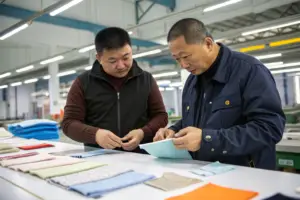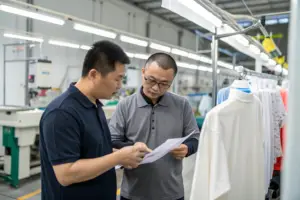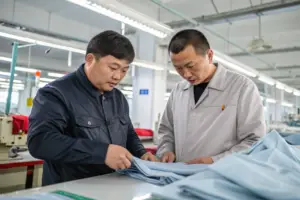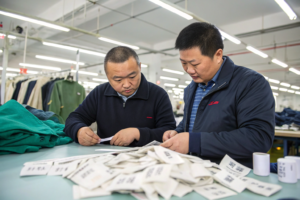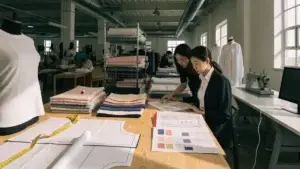
I remember a conversation with a CEO from a fast-growing outdoor brand based in Portland. He had been using a trading agent in Shanghai for three years. His margins were okay. His quality was... inconsistent. One shipment would be perfect. The next would have loose buttons and crooked labels. He couldn't figure out why. The agent always apologized and promised to fix it next time. Then, during a sourcing trip, he insisted on visiting the actual factory making his jackets. The agent made excuses for two days. Finally, the CEO followed a truck leaving the agent's office. It led to a facility two hours outside the city. It was dirty. It was understaffed. It was not the clean, modern factory in the photos the agent had shown him. He had been lied to for three years.
Successful CEOs bypass trading agents and work directly with wholesale clothing factories to gain complete visibility into production, eliminate intermediary markups of 15-30%, and establish direct relationships with the people actually sewing their garments. This direct connection enables faster problem resolution, more reliable quality control, and long-term supply chain stability.
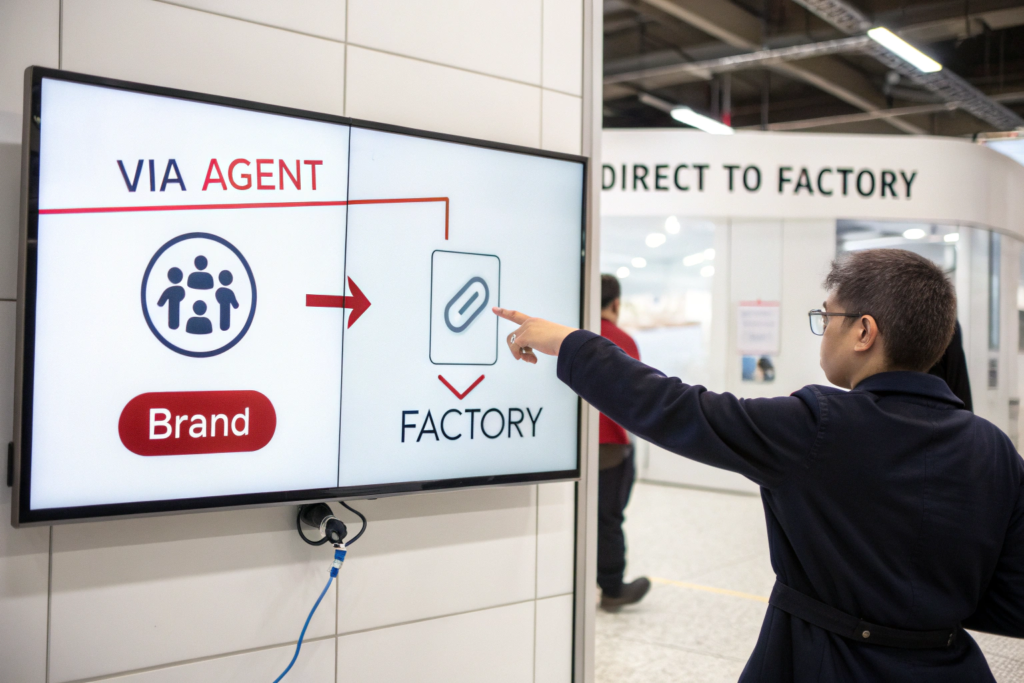
The fundamental difference is one of control and transparency. A trading agent is a middleman. Their job is to find the cheapest factory that can approximate your design. Their profit comes from the gap between what they charge you and what they pay the factory. Every dollar that goes to the agent is a dollar not spent on better fabric, better stitching, or better wages for the workers. At Shanghai Fumao, we are the factory. When a CEO calls us, they speak to the people who own the cutting tables and the sewing machines. There is no filter. There is no markup for a middleman's commission. Here is why this distinction matters to the bottom line and the brand's reputation.
How Much Margin Is Lost to Trading Company Commissions
Let's talk about the money first because that's where the pain is most obvious. A trading agent does not work for free. They typically charge a commission of 15% to 25% on top of the factory's actual production cost. For a brand doing $500,000 in annual production, that's $75,000 to $125,000 in pure intermediary cost. That's money that could fund a new website, a marketing campaign, or simply higher profits for the owner.
Direct factory relationships eliminate the intermediary markup, allowing brands to either increase their own profit margins or invest the savings into higher-quality raw materials that differentiate their products in a crowded market.
But the visible commission is only part of the story. There are hidden costs to using an agent. Because the agent controls the communication, they control the information. They might tell you the fabric price increased by 10% when it actually only increased by 3%. They pocket the difference. They might tell you a small delay was caused by "customs issues" when it was actually because they switched your order to a cheaper, slower factory to maximize their own spread. You never know the truth.

What Is the Real Price Breakdown of a Garment Through an Agent?
To understand the impact, you need to see the numbers. Here is a realistic cost comparison for a mid-weight cotton hoodie, ordered at 2,000 units.
| Cost Component | Direct Factory Cost (Shanghai Fumao) | Trading Agent Cost | Difference |
|---|---|---|---|
| Fabric & Trims | $8.50 | $8.50 | $0 (Agent uses same or cheaper fabric) |
| Cut & Sew Labor | $4.20 | $4.00 | -$0.20 (Agent pushes for lower labor rate) |
| Factory Overhead & Profit | $2.30 | $1.80 | -$0.50 (Agent squeezes factory margin) |
| Subtotal (Factory Cost) | $15.00 | $14.30 | -$0.70 |
| Agent Commission (20%) | $0.00 | $2.86 | +$2.86 |
| Final Price to Brand | $15.00 | $17.16 | +$2.16 per unit |
On a 2,000-piece order, the brand using the agent pays an extra $4,320. For that extra money, they receive a garment made in a factory they have never seen, with labor they cannot verify, and with no direct recourse if something goes wrong. The CEO who chooses the direct factory route pays less and knows exactly where the product was made. This is not just about saving money. It's about value for money spent.
Why Do Agents Often Conceal the True Factory Identity?
This is the practice that most infuriates me. It's called "Factory Privacy." The agent tells you it's their policy not to reveal their sources. They say it's to protect their business relationships. The real reason is control. If you know the factory's name and address, you could contact them directly next season. The agent loses their commission stream forever.
This secrecy creates a dangerous information vacuum. You cannot conduct a social compliance audit if you don't know where the factory is. You cannot check the Better Work program status. You cannot verify if the facility is on any restricted or denied party lists for forced labor.
I worked with a CEO who discovered, after two years of using an agent, that her "premium" knitwear was actually being subcontracted to a small village workshop with no proper ventilation and inconsistent electricity. The quality issues she had been fighting finally made sense. The agent had been showing her photos of a clean, modern factory that she had never actually set foot in. Direct factory partnerships eliminate this shadowy layer of the supply chain. With Shanghai Fumao, our doors are open. Our address is on our website. Our certifications are in our name, not a trading company shell.
How Does Direct Communication Accelerate Problem Resolution
In the apparel business, problems happen. A fabric roll has a shading defect. A zipper shipment is delayed. A sewing machine breaks down. The difference between a minor hiccup and a major crisis is the speed of the response. When you work through an agent, you add a filter and a time delay to every single problem.
Direct communication with the factory owner or production manager reduces problem resolution time from days to hours. There is no translation of technical issues through a salesperson who has never operated a sewing machine.
Think about the last time you played the game "Telephone." A message gets distorted as it passes through multiple people. Now imagine that game being played with complex garment specifications in two different languages. The agent hears your complaint about "puckering on the shoulder seam." They send a WhatsApp message to the factory manager saying "Client says shoulder looks bad." The factory manager guesses at a solution. Two days later, you get a new sample with a completely different problem. This is the daily reality of working through a middleman.
Why Is Access to the Pattern Maker Critical for Fit Consistency?
Fit is the number one reason for returns in the apparel industry. A garment that fits perfectly creates a loyal customer. A garment that pulls across the chest or gapes at the armhole creates a return and a one-star review.
When you work with an agent, you send your fit comments to the agent. The agent forwards them to a sales rep. The sales rep walks over to the pattern maker's desk and tries to explain what you meant. Crucial details are lost. The pattern maker makes an adjustment based on a third-hand description.
When you work directly with Shanghai Fumao, you can have a Zoom call where the pattern maker is standing next to the sample, with the paper pattern laid out on the table. You can say, "See this curve here? I need it 3/8 of an inch deeper." The pattern maker takes a red pen and marks the pattern on camera. You see the change happen in real time. You approve it immediately. The next sample arrives exactly as you imagined. This level of direct, technical collaboration is impossible through an agent. Agents are not pattern makers. They are salespeople. They cannot have this conversation.
How Does Direct Contact Prevent Costly Shipping Miscommunications?
Shipping from Asia to the United States is a complex dance of documents, tariffs, and vessel schedules. A small error on a commercial invoice can result in a container being held at the Port of Long Beach for two weeks, accruing thousands of dollars in demurrage and storage fees.
An agent's responsibility often ends when the goods leave the factory gate. They hand the shipment to a freight forwarder they chose (often the cheapest one), and they wash their hands of it. If the container gets rolled onto the next vessel, the agent shrugs and says, "Shipping delay. Not our fault."
A direct factory that offers DDP (Delivered Duty Paid) shipping, like Shanghai Fumao, owns the problem until the goods are in your warehouse. We have a vested interest in making sure the paperwork is perfect and the forwarder is reliable. If the container is delayed, it costs us money, not just you. This alignment of incentives is powerful. It means we are monitoring the vessel tracker just as closely as you are. We are calling the freight forwarder to demand answers. You don't have to manage that chaos from a different time zone.
What Long-Term Strategic Advantages Do Factories Offer
Beyond the immediate savings and faster problem-solving, there is a deeper, more strategic reason why successful CEOs build direct factory relationships. They are building a moat around their business. In a world where anyone can start a clothing brand with a Shopify store and a credit card, the only true competitive advantage is an efficient, reliable, and exclusive supply chain.
A long-term factory partnership provides strategic benefits including capacity prioritization during peak seasons, collaborative product development access, and financial flexibility that trading agents cannot offer.
An agent is transactional. They serve whoever pays the highest commission this month. If a bigger brand comes along, your order gets pushed to the back of the queue. A factory partner is relational. We grow with you. When you have a sudden reorder because a style went viral on TikTok, a factory partner will move heaven and earth to find the capacity because we are invested in your brand's success.

How Does Capacity Prioritization Work During Peak Season?
Every brand wants their holiday order delivered in October. Every brand is fighting for the same sewing lines in August and September. This is when the difference between an agent and a direct partner becomes brutally clear.
An agent's order is just one of many they have placed at various factories. They have no leverage to push your order ahead of a bigger client's order. They can only beg and make excuses.
A direct factory relationship like the one we offer at Shanghai Fumao includes an implicit (and sometimes explicit) agreement about capacity allocation. We know our long-term partners' business. We know their order history. We plan our production calendar with them, not just for them. We reserve capacity for their core styles. This is the difference between receiving your goods on September 25th and receiving them on November 10th. That six-week gap is the entire holiday selling season. Missing it can sink a year's worth of work.
Why Do Factories Offer More Flexibility on Payment Terms?
Trading agents are bound by strict cash flow constraints. They usually demand 30% deposit to place the order with the factory, and 70% balance before the goods leave the port. They cannot afford to extend credit because they are just a pass-through entity.
A well-capitalized factory has a different financial structure. We own real assets—the building, the machinery, the fabric inventory. This allows us to be more flexible with trusted, long-term partners.
After a successful year of working together, I have offered clients Net 30 or Net 45 payment terms on the balance payment. This means they receive the goods, sell them to their retailers or consumers, and then pay the factory. This is a massive cash flow advantage for a growing brand. It reduces their working capital requirement. It allows them to reinvest profits into marketing and inventory growth faster. An agent simply cannot provide this level of financial partnership. It's one of the silent, powerful benefits of dealing directly with the principal.
How Can You Verify You Are Dealing With a Real Factory
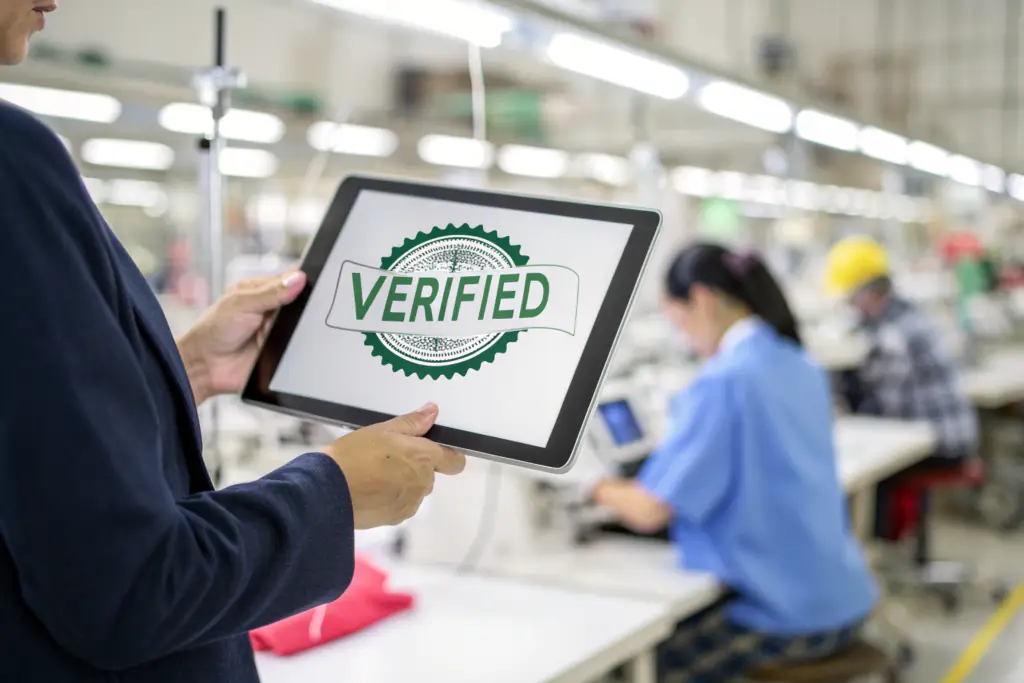
Given the prevalence of agents pretending to be factories, how does a busy CEO protect themselves? You need a verification protocol that is more reliable than a website's "About Us" page. Many trading companies have beautiful websites with stock photos of factory floors. They write "Manufacturer" in their bio. They even register on B2B platforms as a "Factory." It takes detective work to uncover the truth.
Verifying a direct factory requires a combination of business license scrutiny, video walkthrough requests, and specific conversational tests that reveal whether the person you are speaking with actually controls production.
I encourage every potential client to verify Shanghai Fumao is a real factory. I send them the business license with the manufacturing scope. I offer a live video walkthrough. I answer questions about our specific machinery. A real factory has nothing to hide. A trading agent will become evasive when pressed for these verifiable details.
What Does the Business License "Scope" Reveal?
In China, every company has a registered Business Scope. This is a legal description of what activities the company is permitted to engage in. You can request a copy of the Business License.
Look specifically for the Chinese characters 生产 (Sheng Chan) which means Production/Manufacturing. Also look for 加工 (Jia Gong) which means Processing.
If the scope only includes words like 贸易 (Mao Yi - Trading), 销售 (Xiao Shou - Sales), or 进出口 (Jin Chu Kou - Import/Export), then the company is legally registered as a TRADING COMPANY. They cannot legally operate a factory under that license. They may own a separate factory entity, but if they are showing you a trading license, you are likely dealing with the trading arm.
Ask for the license of the manufacturing entity. Compare the address on the license to the address of the production floor. They should match. If they don't, ask why.
What Specific Questions Unmask a Trading Agent?
Here is a simple test. Ask a series of technical questions about the machinery required to make your product. A trading agent will give vague, generic answers. A factory person will give specific, sometimes boring, detailed answers.
| Question to Ask | Typical Agent Answer | Typical Factory Answer |
|---|---|---|
| "What gauge of knitting machine do you use for our 12oz fleece?" | "We have many machines, all good quality." | "We run 18-gauge for the face and 14-gauge for the loop back on our Fukuhara machines." |
| "Can you send a photo of the cutting table with our fabric on it right now?" | "The factory is closed for cleaning today." (Excuses) | (Sends photo in 10 minutes showing a partially cut lay with a visible work order number). |
| "What is the name of your Head Mechanic?" | "I can ask the factory manager." | "Mr. Wang. He has been with us for 12 years. He specializes in Juki machines." |
Another powerful technique is to ask for a video call from the production floor during working hours. Ask them to walk over to a specific machine—the bartack machine or the buttonhole machine—and show it to you. The background noise should be loud with sewing machines. The lighting should be fluorescent factory lighting. A real factory cannot fake the chaos and sound of a live production floor. An agent in a quiet office can only show you a wall of fabric swatches.
Conclusion
The choice between a wholesale clothing factory and a trading agent is fundamentally a choice between transparency and opacity, partnership and transaction, long-term value and short-term convenience. Successful CEOs gravitate toward direct factory relationships because they understand that the supply chain is not just a cost center to be minimized. It is a strategic asset to be optimized. We've examined the hard numbers—the 15-30% margin erosion caused by agent commissions that could be reinvested in better materials or higher profits. We've explored the operational agility gained from direct communication with pattern makers and production managers. We've outlined the strategic advantages of capacity prioritization and financial flexibility that only a factory partner can provide. And we've equipped you with the verification tools to ensure you are truly dealing with the source.
In a market where consumers demand authenticity and quality, your supply chain must reflect those same values. You cannot build a brand on a foundation of hidden factories and obscured costs. You need a partner whose interests are perfectly aligned with yours.
If you are ready to move beyond the limitations of middlemen and build a direct, transparent relationship with a manufacturing partner who is invested in your long-term success, we are here to help. We welcome your verification process and your questions. Let us show you exactly where and how your garments are made.
For a direct conversation about moving your production to a factory that values transparency and partnership, please contact our Business Director, Elaine.
Contact Elaine at: elaine@fumaoclothing.com