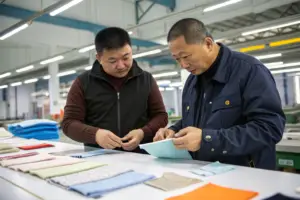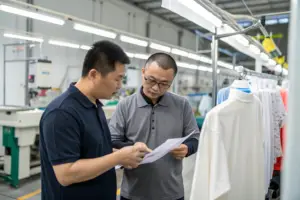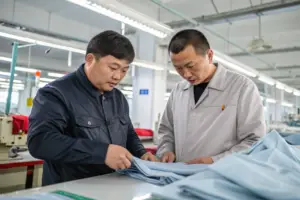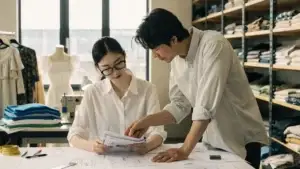
You have the vision. You see the gap in the market for a better-fitting chino, a perfectly worn-in tee, or an outerwear piece that combines function with clean design. You know your customer. But the gap between that vision and a box of finished garments arriving at your door feels immense. A CEO of a new men's wear label told me, "I understood style. I didn't understand anything about fabric weight, seam construction, or minimum order quantities. I felt like I was trying to read a foreign language."
Developing a private label men's wear line from scratch is a structured journey of four key phases: Concept & Niche Definition (identifying your specific customer and aesthetic), Fabric Sourcing & Tech Pack Development (translating your vision into technical specifications), Sampling & Fit Perfection (the critical, iterative process of getting the fit right), and Production & Scaling (managing your first bulk order and planning for growth).
At Shanghai Fumao, we have guided dozens of brands through this exact process. We are not just a factory; we are a B2B partner that helps translate a vision into a viable, sellable private label collection. Let me walk you through the essential steps, demystifying the process and giving you a clear roadmap for building your men's wear brand from the ground up.
What Is the First Step in Defining Your Men's Wear Brand Niche?
The biggest mistake new brands make is trying to be everything to everyone. They launch with a scattered collection of random pieces with no cohesive identity. The result is a brand that feels generic and fails to connect with a specific customer. Before you sketch a single design, you must define your niche. This is the strategic foundation upon which everything else is built.
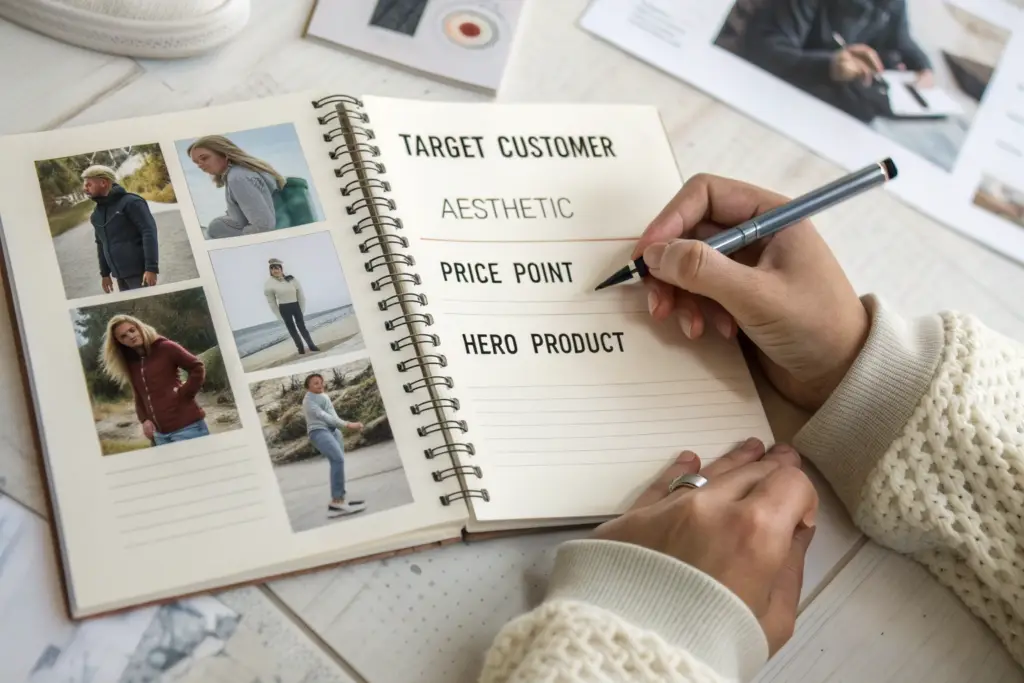
Defining your niche involves answering three core questions with brutal honesty: Who is your specific customer? (Not "men aged 25-45," but "the creative director who bikes to his studio and needs clothes that perform but don't look technical.") What is your unique aesthetic and value proposition? (What makes you different from the 500 other brands selling a basic oxford shirt?) What is your target retail price point? (This single decision dictates every material and construction choice you will make.)
I recall a founder who came to us wanting to make "high-quality basics." That is too broad. Through a series of conversations, we helped him narrow his focus. His niche became: "The Modern Minimalist Traveler." His customer is a man who lives out of a carry-on, needs wrinkle-resistant, versatile pieces that can go from a coffee shop to a client dinner, and values subtle, functional details like hidden pockets. This clarity informed every subsequent decision—the fabric choices (merino wool blends, high-twist cottons), the fit (tailored but not restrictive), and the design details (concealed zipper pockets). His brand now has a cult following because it speaks directly to a specific person. This is the power of a well-defined niche. This strategic approach is fundamental to successful brand building.
How Do You Identify a Viable Gap in the Men's Wear Market?
Look for friction points in your own life and the lives of men around you. What do you hate about your current clothes? "I can't find chinos that fit my athletic thighs." "My button-down shirts are always wrinkled." "I want a hoodie that looks sharp enough for a casual office but feels like my favorite sweatshirt." These specific frustrations are market gaps. Validate them by talking to other men, reading reviews of competitor products, and looking at Reddit threads like r/malefashionadvice. A gap born from personal frustration is often a viable business opportunity.
Why Is Setting a Target Retail Price Essential at This Stage?
The price dictates everything. A $48 shirt and a $128 shirt are completely different products, even if they look similar in a photo. The $48 shirt will use cheaper, short-staple cotton, basic construction, and plastic buttons. The $128 shirt will use long-staple cotton, have a softer unfused collar, reinforced seams, and natural buttons. You must know your target price before you source fabric and develop your Tech Pack. This prevents the heartbreak of developing a beautiful sample that costs $85 to land, only to realize you need to retail it for $170 when your customer will only pay $98.
How Do You Translate Your Vision into a Technical Tech Pack?
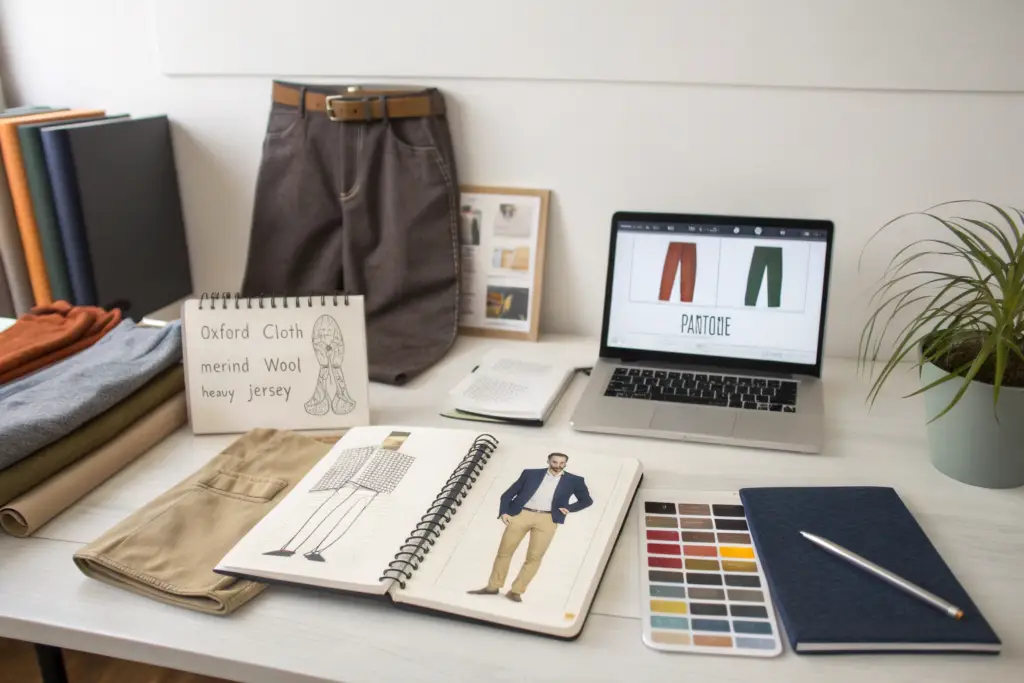
You have the concept. Now you need the blueprint. The Tech Pack is the single most important document in the entire private label process. It is the contract between you and the clothing manufacturer. A vague sketch and a Pinterest board are a recipe for a costly, disappointing sample. A detailed Tech Pack is the key to getting what you want on the first try.
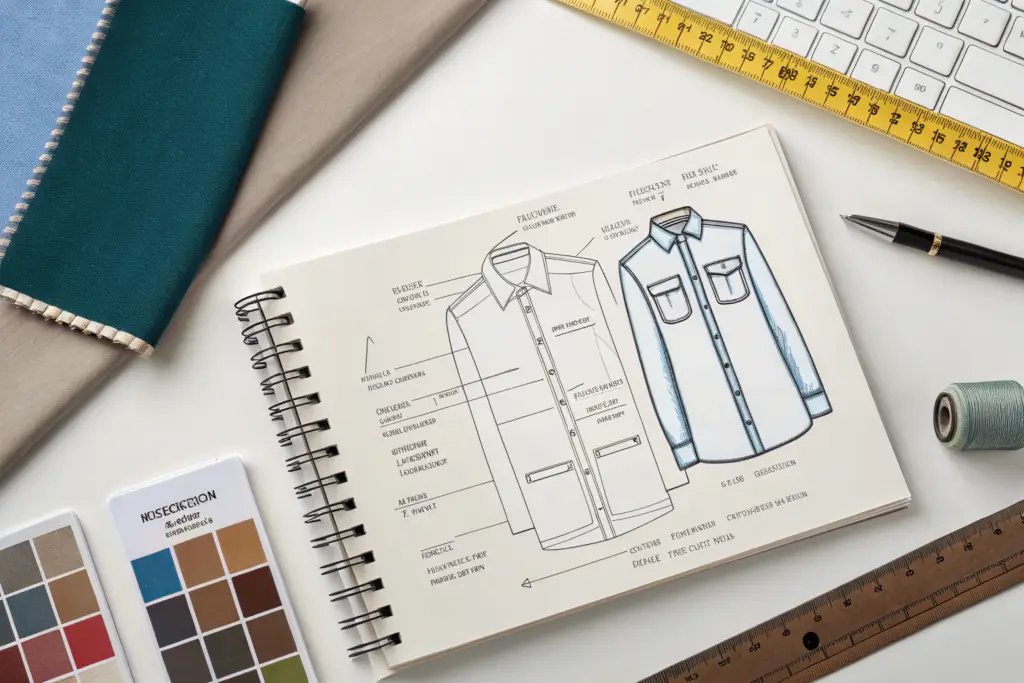
A professional Tech Pack translates your creative vision into precise technical language. It must include: Detailed Flat Sketches (front and back, showing all seams and stitch details), a Bill of Materials (BOM) specifying exact fabric, trim, and thread, a Graded Measurement Spec Sheet (with tolerances for each Point of Measure), and critical Construction Details (e.g., "single needle topstitch at 1/4", "unfused collar band").
A men's wear brand we work with is obsessive about his Tech Packs. His spec for a simple pocket tee includes the exact angle of the pocket opening and the stitch density (SPI) for the hem. His first samples from us are always 90% correct. He spends his time on minor fit tweaks, not on fixing fundamental construction errors. This level of detail saves him weeks of development time and thousands of dollars. You can hire a freelance technical designer to create your first Tech Pack. It is the best investment you will make in your brand.
What Are the Critical Points of Measure (POMs) for Men's Shirts?
For a men's shirt, fit is everything. The key POMs you must specify and measure on every sample are:
- Chest Width: 1" below the armhole.
- Body Length: From High Point Shoulder (HPS) to hem.
- Shoulder Width: Seam to seam across the back.
- Sleeve Length: From shoulder seam to cuff.
- Collar Circumference: Around the neck, at the button.
- Bicep Width: 1" below the armhole.
Providing a clear spec for each of these points, with acceptable tolerances (e.g., +/- 1/4"), is non-negotiable for achieving a consistent fit.
Why Is the Bill of Materials (BOM) So Crucial for Sourcing?
The BOM is the ingredient list. It prevents the factory from substituting cheaper materials. A weak BOM says "Blue cotton fabric, white buttons." A strong BOM says:
- Shell Fabric: 100% Combed Cotton Oxford, 150 GSM, Pantone 19-4024 (Dress Blues). Mill: XYZ Textiles.
- Buttons: Corozo Nut, 16L, Matte Black. Supplier: ABC Trims.
- Thread: Polyester Core Spun, Tex 27, Color: Match Shell.
This level of detail ensures that our sourcing team gets exactly what you want and that the final garment matches your vision. It also allows for accurate costing.
What Is the Iterative Process of Perfecting the Fit Sample?
You have sent the Tech Pack. You receive the first Proto Sample. This is the moment of truth. And it is almost never perfect. This is not a failure. This is the start of the Fit Perfection phase. This is where good brands become great. It requires patience, clear communication, and a commitment to getting the details right. Rushing this phase is the single biggest cause of bulk production disasters.
Perfecting the fit is an iterative process of sample, evaluate, and refine. The first Proto Sample checks the overall silhouette and proportions. Subsequent Fit Samples, made in the correct fabric, are evaluated on a live fit model. Feedback must be precise, measurable, and often visual (using annotated photos). Multiple rounds of Fit Samples are common, especially for tailored pieces like trousers, blazers, and outerwear.
A client developing a men's wear chino went through four rounds of Fit Samples. The Proto was to check the general shape. Fit Sample 1 revealed the crotch curve was too short, causing pulling. Fit Sample 2 fixed the crotch but the leg opening was too wide. Fit Sample 3 narrowed the leg but the back pocket placement felt off. Fit Sample 4 was perfect. This process took time, but the result was a pair of pants that fit his target customer perfectly. They became his hero product. This commitment to fit is what builds brand loyalty and justifies a premium price.
How Should You Provide Feedback on a Fit Sample?
Be precise and visual. Never say "The sleeve feels weird." Instead, say: "The bicep is too tight. Increase bicep circumference by 1/2" (1.27cm). Target spec is 15". Current sample measures 14.5". See attached photo." Use an annotated photo with a circle and arrow pointing to the issue. This removes all ambiguity and allows our pattern maker to make the exact correction.
What Is the Role of the Fit Model?
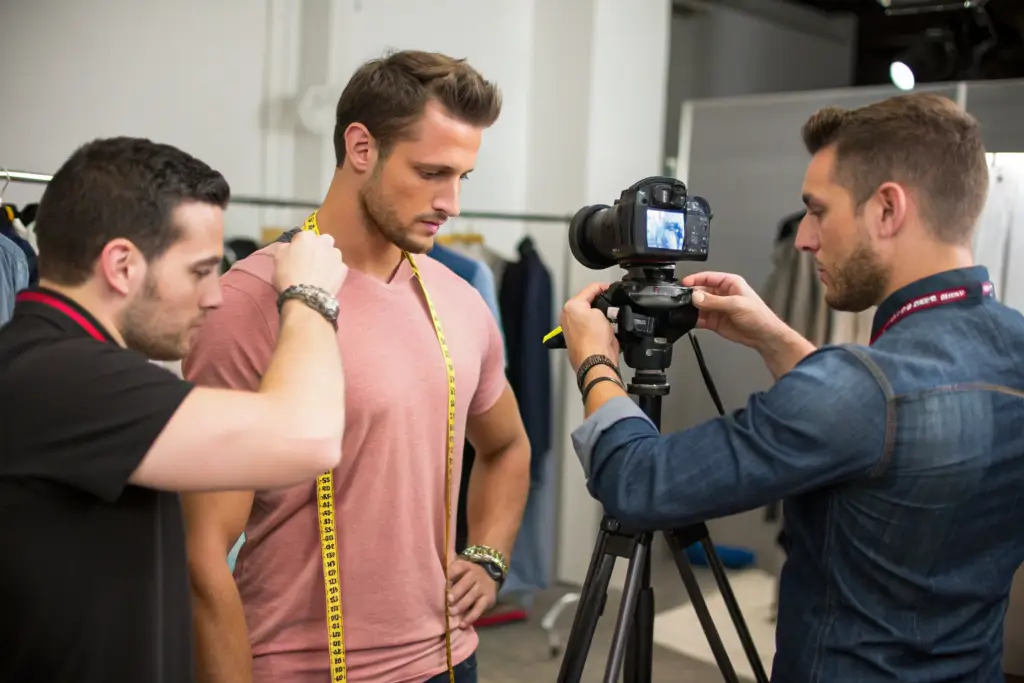
The fit model is your most important tool. He must represent your target customer's body. If your customer is an athletic, muscular guy, do not fit your samples on a slim, 6'2" model. Find a model with the right proportions. You are not just checking measurements on a table. You are checking how the garment moves and feels on a real body. Does the shoulder pull when he reaches forward? Does the collar gape when he sits down? The fit model reveals these dynamic fit issues.
How Do You Manage the First Bulk Production and Plan for Scale?
The PP Sample is approved. You place your first bulk order. The 60-90 day clock starts ticking. This phase is about trust, communication, and managing the details. It is also the bridge to your next order. How you manage this first run sets the tone for a long-term partnership.
Managing the first bulk production requires a shift in focus from creative development to operational oversight. Your key tools are the Production Timeline, the TOP (Top of Production) Sample approval, and consistent communication with your Project Manager. After delivery, conduct a thorough quality audit and a "post-mortem" call with the factory to discuss improvements for the next run.
A distributor we work with uses his first bulk order to test not just the product, but the entire system. He evaluates the packaging, the carton labeling, the accuracy of the packing list. He provides us with a detailed "Post-Receiving Report." This feedback allows us to fine-tune the process for his next, larger order. This collaborative approach is how we help our B2B partners scale efficiently.
What Is the "TOP" Sample and Why Is It Your Final Safety Net?
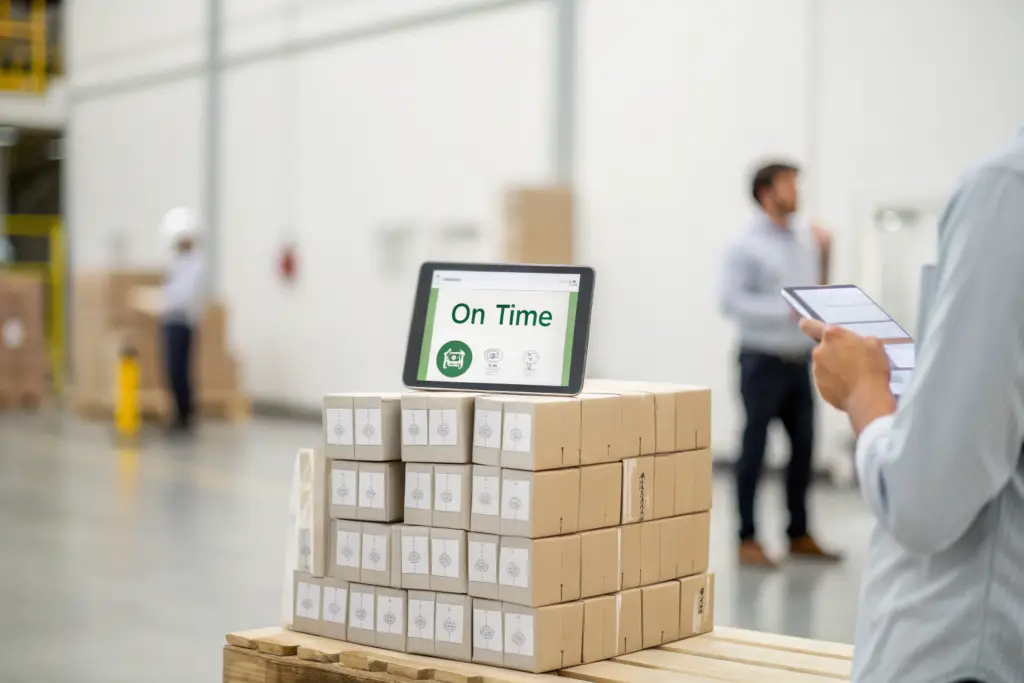
The TOP (Top of Production) Sample is pulled from the very first units of bulk production, before the line makes thousands more. It is express shipped to you for a final sign-off. You must check it against your approved PP Sample. Verify the fabric, the trims, the stitching, and the fit. This is your last chance to catch a systemic drift before it affects the entire order. It adds a few days to the timeline but provides an invaluable safety net.
How Do You Plan for a Smooth Reorder?
During your first bulk run, take notes. Which sizes sold out fastest? What feedback are you getting from early customers? Share this information with your Project Manager. We can then proactively advise you on your reorder. We might suggest increasing the quantity of the Medium and Large sizes. We can check on the availability of the fabric for a quick reorder. The reorder process is significantly faster and smoother than the first run because the patterns are proven and the relationship is established.
Conclusion
Developing a private label men's wear line from scratch is a journey of a thousand details. It is about defining a sharp, specific niche. It is about the discipline of translating that vision into a precise Tech Pack. It is about the patience and collaboration required to perfect the fit. And it is about managing that first bulk order with clear eyes and a focus on the long game.
At Shanghai Fumao, we are more than just the factory at the end of the process. We are your partner through every one of these phases. We help you source the right fabrics, guide you on construction details, and provide the transparent communication that makes the complex journey of private label manufacturing feel manageable and clear.
If you are ready to start building your men's wear brand, let's talk. Our Business Director, Elaine, can walk you through our process and help you create a roadmap for your first collection. Please email Elaine at: elaine@fumaoclothing.com.