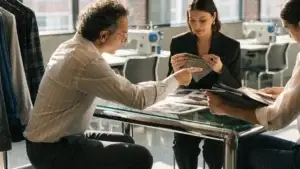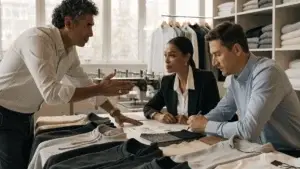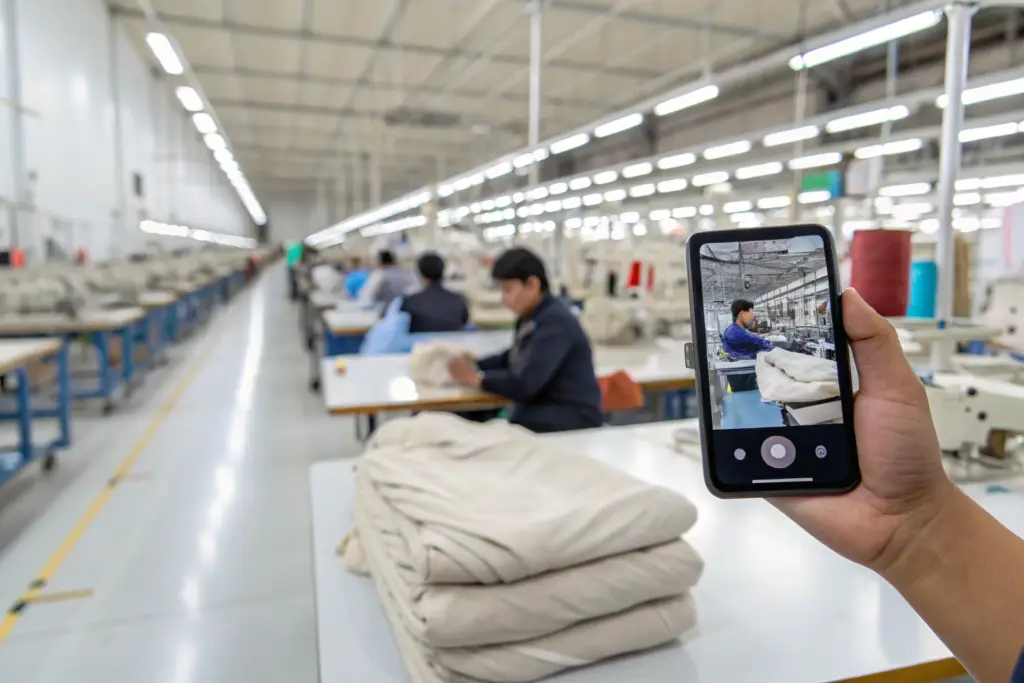
I got an email last Tuesday that stopped me mid-coffee. A brand manager from Seattle wrote, "I love your samples, but I've been burned by showroom factories before. How do I know your five production lines actually exist?" He had every right to ask. Last year, he placed a $45,000 order with a supplier who sent beautiful photos of a clean, modern facility. The goods arrived six weeks late, with uneven stitching and a strange chemical smell. The beautiful factory in the photos? It was a trading company's rented showroom. The real production happened in an unregulated workshop three hours away. He lost his fall season and nearly lost his business.
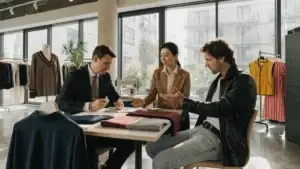
Yes, you can tour Fumao Clothing's factory virtually before placing any order. We don't just allow it—we insist on it. Our live video walkthrough covers all five production lines, the cutting room, the finishing station, and the raw material warehouse. You see the actual machines, the actual workers, and the actual fabric that will become your garments. No pre-recorded polished corporate video. No curated corners. We walk where you tell us to walk.
I built Shanghai Fumao on a simple belief: a factory that hides its floor is hiding something on its floor. When you're spending thousands of dollars from six thousand miles away, transparency isn't a bonus feature. It's the foundation of the entire deal. Let me walk you through exactly how our virtual tour process works, what you should look for, and how it protects your brand from the nightmare my Seattle client endured.
What Should You Look for During a Virtual Factory Audit?
A virtual tour is useless if you don't know what questions to ask. I learned this from the other side. Three years ago, I watched a brand owner do a 20-minute video call with one of our competitors. He asked about the weather. He complimented the floor cleanliness. He hung up feeling reassured. Two months later, he called us desperate to fix a botched order from that same factory. He looked but he didn't see.
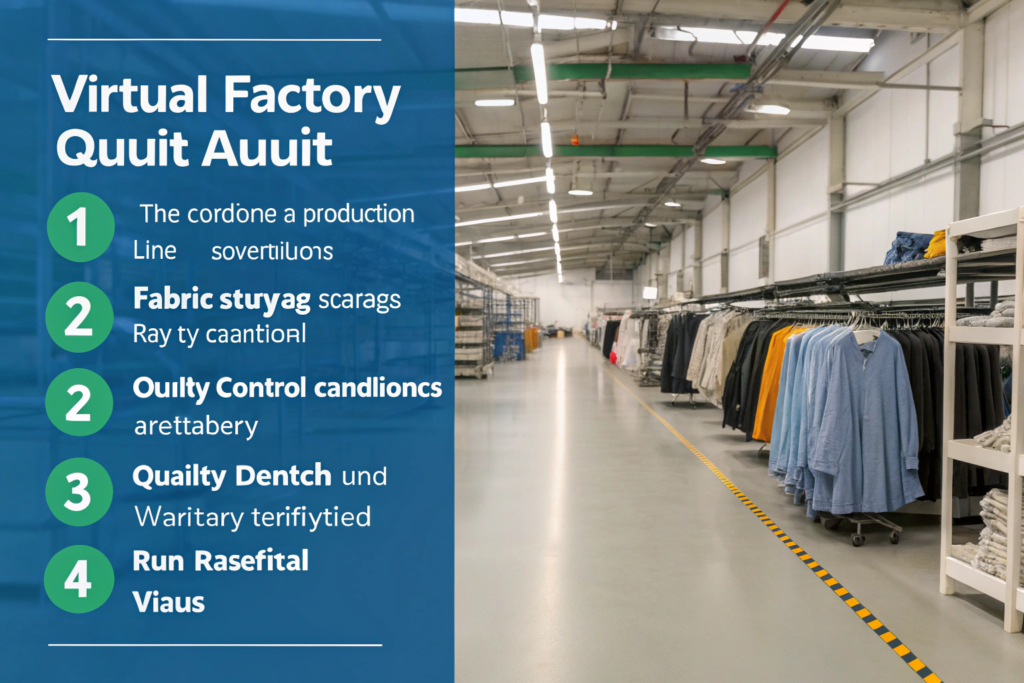
During a virtual factory audit, you need to verify four specific things: the production line continuity, the fabric storage conditions, the quality control checkpoints, and the worker density versus the claimed capacity. A clean floor means nothing if there aren't enough operators to run the lines. Raw material shelves that look sparse indicate cash flow problems. Ask to zoom in on the QC station's defect log, not just the finished garments.
I tell every potential client this: be a detective, not a tourist. A real factory tour should feel slightly inconvenient for the factory manager. If they glide through every department smoothly without a single hiccup, they are following a scripted route.
How Can You Verify That the Production Floor Matches the Sample Quality?
This is the gap that kills brands. The sample you approved was made by one master tailor in a quiet development room. The bulk production happens on a noisy line with 40 operators. These are two completely different manufacturing environments. Your job during the virtual tour is to bridge this gap visually.
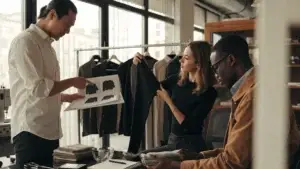
Ask the guide to walk to the specific line that would handle your product category. Don't let them stay in the sample room. Say, "Show me the woven shirt line right now." Watch the operators' hands. Are they using the same needle type specified in your tech pack? Is the stitching speed consistent or rushed? Last October, I guided a Montreal-based brand owner through our knitwear line. He asked to see the linking machine operator's work up close. He spotted a specific looping technique he wanted adjusted. We fixed it before production even started. That ten-minute zoom-in saved us both a container of rejected goods.
You should also request to see the in-line inspection station. At Shanghai Fumao, our inspectors have a physical defect sample board next to them. Ask them to hold it up to the camera. If they can't produce standardized defect references in real time, they are inspecting by gut feeling. That's not a system. That's gambling. The International Organization for Standardization publishes accepted defect classification frameworks that we reference internally.
Does the Raw Material Warehouse Reveal a Factory's True Financial Health?
Fabric tells the truth. Cash-rich factories have full warehouses. Struggling factories buy fabric only after you pay the deposit. This delay can add three to five weeks to your lead time, and you won't know it until your delivery date slips.
During the virtual tour, ask the guide to walk into the grey fabric storage area. Look at the shelf labels. Do they show dates? Are the rolls covered with dust covers? A factory that stores cotton rolls directly on the floor, uncovered, is inviting moisture damage and contamination. I walked a client through our warehouse last month and showed him the humidity monitor readings in real time. He didn't have to trust a PDF report. He saw the device on the wall with today's date.
Also, ask about greige inventory levels. A healthy factory keeps safety stock of common qualities like 20s jersey and 40s poplin. If the warehouse is nearly empty with just a few rolls stacked for photos, you're looking at a just-in-time sourcing model that will break the moment demand spikes. Our warehouse at Shanghai Fumao stocks base fabrics for repeat categories. This buffer absorbs supply chain shocks so your order doesn't get pushed back because a dyeing mill is busy.
How Does a Live Video Walkthrough Eliminate Supplier Risk?
Supplier risk lives in the shadows between what is promised and what actually exists. A polished website can hide a broker with no factory floor. A certification PDF can be photoshopped. I've seen it all. In 2021, a U.S. buyer showed me a BSCI audit report a competitor had provided. I looked up the audit number on the issuing body's database. It was revoked six months earlier for critical violations. The factory was still using the old certificate.
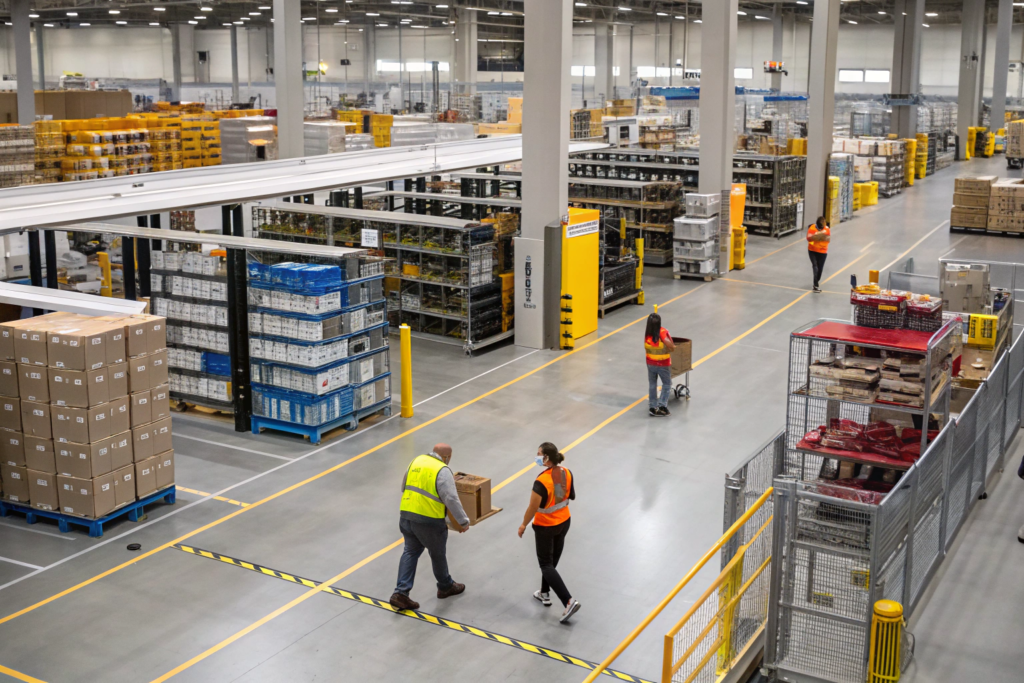
A live, unscripted video walkthrough eliminates supplier risk by removing the time gap. You see the factory as it exists at that exact moment—not as it looked during a staged photoshoot. You can ask unexpected questions and watch the reaction. You can request to speak with a random line worker through the translator. Ghost factories and trading companies cannot fake this level of spontaneous access.
This isn't just about catching fraud. It's about building an operational understanding. When you see the physical layout, you understand where potential bottlenecks will happen before they hit your specific order.
Why Is Asking "Can I Speak to a Line Operator?" the Ultimate Trust Test?
Management knows the script. A sales rep can recite lead times and certifications in perfect English at 3 AM. Line operators don't have a script. They have calloused hands and muscle memory.
When you ask to speak to a random operator, observe how the factory manager reacts. Do they hesitate? Do they walk you to a specific person far away from the others? Or do they simply hand the phone to the nearest sewer? I remember a client from Vancouver asked this during a tour last spring. My floor supervisor didn't flinch. She handed the phone to Auntie Li, a 52-year-old woman who has been stitching collars on our men's shirt line for eight years. Auntie Li spoke zero English. Our merchandiser translated her brief answers about her daily quota and how she checks seam tension. The client later told me that this 90-second interaction convinced him more than the previous hour of technical discussion.
Real factories have real people who do specific repetitive jobs. They can show you their workstation without preparation. If the factory floor looks full of new machines but the workers look confused or idle, something is off. You want to see the rhythm of production, not a museum display. Agencies like SEDEX provide frameworks for ethical audits, but nothing replaces seeing a worker's genuine comfort level with their equipment and environment.
Physical audits are valuable but infrequent. An auditor visits once a year, announces the date weeks in advance, and leaves after eight hours. A screen-share of the production planning board or ERP system gives you a dynamic, real-time pulse check.
I share our production schedule screen during virtual tours. Not a curated PowerPoint slide. The actual, live dashboard that my production manager stares at every morning. The client sees the order queue, the cutting room capacity for the day, and the finishing room output from the previous shift. If a factory refuses to share this screen—claiming it's "confidential"—they are likely hiding capacity overload or raw material shortages.
We use this transparency to plan together. A brand owner from Chicago saw on our dashboard that our knit line had a two-week gap opening before Chinese New Year. He rushed a sample approval, and we slotted his 1,500-unit polo order into that gap. He received his goods three weeks earlier than his initial timeline. That wouldn't have happened with an annual physical audit report. Software solutions like ApparelMagic or similar ERP platforms help factories like ours maintain this visual granularity.
What Technology Does Fumao Use for Transparent Remote Inspections?
The equipment matters. I learned this when a client complained that a competitor's "virtual tour" looked like it was filmed on a 2007 webcam. Grainy footage hides flawed seams and fabric slubs. If a factory is serious about remote transparency, they invest in the tools that make remote inspection meaningful, not just possible.
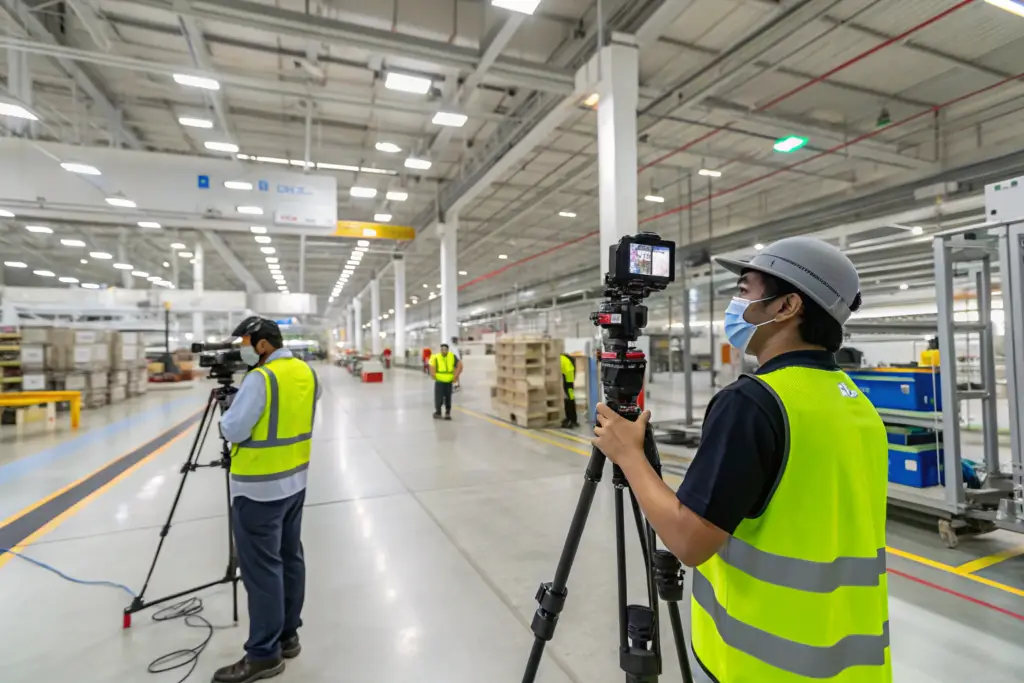
We use a combination of 4K stabilized gimbals for factory floor walkthroughs, handheld macro lenses for stitch-level detail inspection, and thermal imaging attachments for down-fill distribution verification. Our team connects via Zoom, WeChat, or Google Meet—whatever fits your team's workflow—and we can stream from anywhere on the production floor using a dedicated 5G mobile router.
This setup didn't come cheap. But consider the alternative. A rejected container from a miscommunicated spec costs $15,000 in freight alone. The technology pays for itself after one prevented error.
How Can 4K Macro Lenses Replace a Physical Swatch Book Review?
Swatch books show you the ideal fabric. A macro lens shows you the fabric that is currently being cut on the table. These are often different things. Dye lots vary. Finishing chemical batches create subtle hand-feel differences. A standard smartphone camera blurs these details into a uniform beige.
Our quality control team uses a clip-on macro lens that attaches directly to the phone. During a virtual inspection, we can zoom into the weave of a Oxford fabric on the cutting table right now. You see the yarn density. You see the cross-hatch pattern. You see if there is any nepping or uneven slubbing. Last November, a client from Austin noticed through our macro feed that the navy dye lot was one shade darker than the approved lab dip. We caught it 20 minutes into the inspection call. Production paused. The dye house adjusted the next batch. Without that lens, we would have shipped 800 units of a "wrong" blue and dealt with a chargeback.
This visual standard is industry-recognized. The American Association of Textile Chemists and Colorists (AATCC) publishes viewing standards for color evaluation. Our macro lens inspection, combined with our light booth streaming, brings that laboratory condition directly to your screen.
Does a Thermal Camera Actually Help with Down Jacket Quality Control?
Yes, and I discovered this by accident. We produce a significant volume of quilted outerwear for Scandinavian and Canadian brands. Down migration is a nightmare customer complaint. Feathers leaking through the lining, cold spots where the fill has shifted. A visual inspection can't see inside a finished jacket.
We started using a compact thermal camera attachment during virtual QC checks for puffer jackets. The thermal sensor visualizes the heat distribution across the baffles. A well-filled jacket shows a uniform warm color signature. A cold spot shows up instantly as a blue pocket on the screen. I guided a Toronto-based outerwear buyer through this exact process in February. We scanned six random jackets from their production batch. Five showed perfect heat uniformity. One showed a cold spot near the armpit. We opened the jacket, found a baffle stitching error that trapped the down in the wrong chamber, fixed the pattern template, and re-sewed the remaining units. The client avoided a post-shipment defect rate that would have averaged 8% based on that pattern error alone.
No one else in our market segment offers this. But we think about the customer opening the box in a freezing Minnesota winter. A cold spot means an instant return. Shanghai Fumao invests in strange tools because we invest in client retention, not just client acquisition.
What Planning Decisions Should a Virtual Tour Help You Finalize?
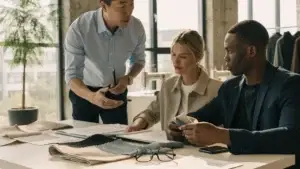
A factory tour isn't just a trust exercise. It's a strategic meeting. You are standing (virtually) inside the facility that will either make your next season a profit or a write-off. The layout you see dictates capacity. The machinery you observe dictates what products you can confidently design into your line.
A comprehensive virtual tour should help you finalize at least three planning decisions: the realistic capacity allocation for your peak season order, the specific finishing machine effects you can market as unique selling points, and the packaging and folding standards that determine your landed cost per unit. If you hang up the call without these three answers, the tour was entertainment, not business.
How Do You Calculate Realistic Capacity From a Live Floor Walk?
Brochures claim 50,000 pieces per month. The floor tells a different story. I always tell clients to count during the tour. Not machines. Operators.
Empty chairs next to machines tell you the actual active workforce. Idle machines tell you there is a labor shortage or working capital problem. When I walk a client through our five lines, I point out the attendance board at the entrance. It shows who is on leave today. Compare this to the total headcount claim. If a factory claims 200 workers but you see only 60 occupied stations and no attendance board at all, the real capacity is closer to 30% of the claim.
Ask about shift structures too. A single-shift factory has no buffer. When the season peaks, they cannot ramp output. We run two shifts during the May-to-September peak. Our virtual tours in the evening (China time) show the night shift in full operation. A client from Los Angeles saw this and immediately committed his 12,000-unit holiday order because he knew we could absorb the volume while his previous single-shift supplier always collapsed in August.
Should You Adjust Your Tech Pack Based on Observed Machine Specialties?
Every factory has hidden superpowers. Machines that the owner invested in for a past client still sit there, underused. If you don't ask during the tour, you design a generic product. If you observe, you can design into those strengths and get faster, cheaper, better output.
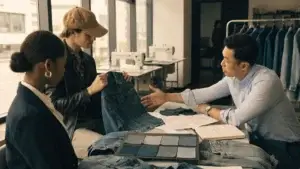
During a tour last year, I showed a brand owner our specialized flatlock stitch machine section. He noticed a particular coverstitch effect on a sample hanging nearby. He revised his tech pack on the spot to incorporate that decorative topstitch detail on his women's yoga line. The machine was already set up, the operators already trained. His production started two days after fabric approval, and the stitch detail became his brand's signature look that season. He told me later that detail alone justified the entire sourcing relationship.
You should also observe the finishing department. Do they have a laser distressing machine? A ozone washing chamber? A high-frequency embossing press? These specific technologies translate into specific garment finishing effects you can claim as proprietary in your marketing. A blank T-shirt is a commodity. A T-shirt with a perfectly controlled enzyme fade from a specific machine is a brand story. Ask the factory to demonstrate these machines live. The sound, the speed, the output quality—you can verify all of it remotely.
Conclusion
The fear of a showroom factory is rational. I've seen the aftermath too many times. Clients who believed photos, trusted glossy PDFs, and wired deposits to strangers, only to receive garments that belonged in a landfill clearance bin. A virtual tour is your shield against this specific, expensive heartbreak. But it only works if you treat it like an audit, not a sightseeing trip.
We walked through what matters: operators over architecture, live dashboards over static reports, macro lenses and thermal scans over casual smartphone point-and-clicks. A proper virtual walkthrough at Shanghai Fumao reveals not just whether we exist, but how your specific order will move through our cutting tables, stitch lines, and finishing stations. You see the exact dye lot. You talk to the exact sewing team leader. You finalize capacity slots while staring at the live production whiteboard.
This is how modern, honest manufacturing should work. No waiting for an annual audit. No settling for a sales rep's carefully worded reassurance. Just your eyes on our floor, anytime before you commit a cent.
If you are ready to see the production reality behind your next purchase order, reach out. We will schedule a live, unscripted walkthrough that fits your time zone. Contact our Business Director Elaine directly at elaine@fumaoclothing.com. Tell her what product category you're developing. She'll arrange the tour and have the relevant line supervisor on standby to answer your specific technical questions. Don't buy blind. Walk the floor first.