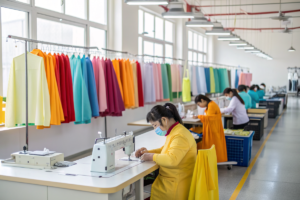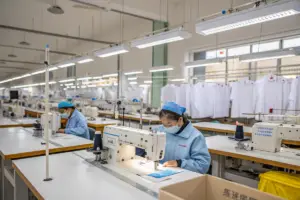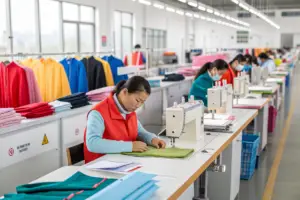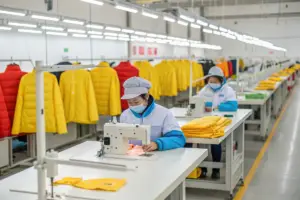
Eighteen months ago, a New York-based brand owner placed a $120,000 order for summer coats with a factory he had found on Alibaba. The factory's profile showed eight production lines, a monthly output of 80,000 units, and a glossy video of a busy sewing floor. The sales rep was responsive. The price was 12% below market. The first two sample rounds were fine. Then the bulk order went silent. Emails went unanswered for four days. When the rep finally responded, she admitted the factory was running at 200% of its actual capacity because they had taken on too many orders for the summer rush. The brand's 4,500 units would be delayed by six weeks. The brand missed its entire Memorial Day launch. The lesson was expensive but clear: a factory's claimed capacity and its real, available capacity are two completely different numbers. Verifying production capacity is not an act of distrust. It is the most basic form of supply chain due diligence.
You verify a factory's production capacity before placing an order by triangulating three independent data points: a live video walkthrough of the production floor with real-time capacity utilization, a third-party audit report that documents the number of active sewing lines and their output history, and a reference check with at least two current clients who have placed orders of similar size and complexity to yours. At Shanghai Fumao, we encourage potential partners to conduct all three of these verification steps. We do not consider a capacity question intrusive. We consider it a sign of a professional buyer who will not create problems for us later by overbooking our lines.
A factory that hides its real capacity is a factory that will fail to deliver. Capacity is not a secret. It is a physical fact. The number of sewing machines, the number of operators, the cutting table square footage, and the finishing area throughput are all measurable, countable, and verifiable. I will walk you through exactly how to verify these numbers from 7,000 miles away, how to spot the red flags that signal a capacity lie, and how to structure your order to protect yourself even if the factory is stretching the truth.
What Physical Evidence Proves A Factory's Real Production Capacity?
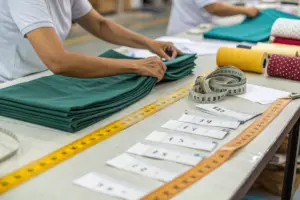
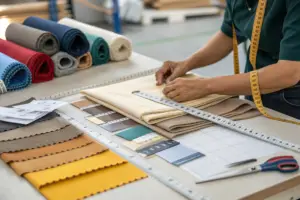
A website can be faked. A video can be staged. Even a live video call can be carefully framed to hide the empty half of the factory floor. Physical evidence is harder to fabricate, especially when you know what to look for. The capacity of a garment factory is not a single number. It is a function of three physical bottlenecks: the cutting room output per shift, the number of active sewing stations, and the finishing and packing throughput. If any one of these three is undersized, the entire factory's real capacity is constrained to that bottleneck, regardless of how many sewing machines are on the floor.
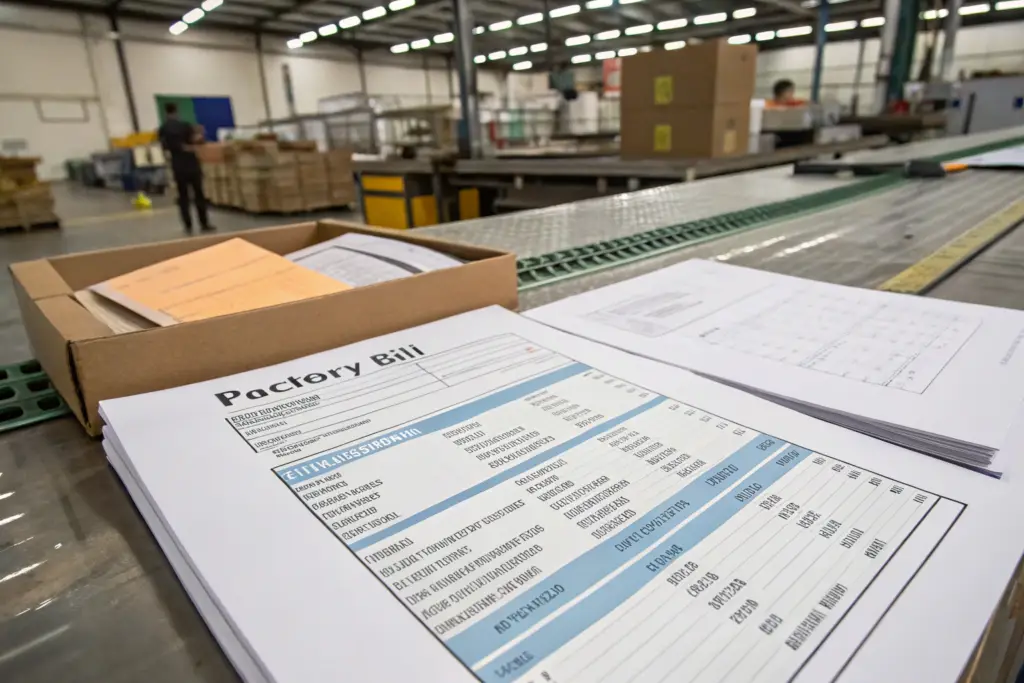
The physical evidence that proves a factory's real capacity includes the electricity bill for the last three months, the cutting table length multiplied by the number of active spreading shifts, the serialized worker attendance records cross-referenced with the payroll system, and the shipping documents from the loading dock showing the actual outbound carton volume per week. A factory running five genuine lines will have an electricity bill, a payroll liability, and a carton outflow that all tell a consistent story. At Shanghai Fumao, we are transparent with these documents for serious buyers under an NDA because we know the numbers prove our stability.
Paperwork is harder to fake than a showroom. A factory that claims 500 workers but has an electricity bill consistent with 150 workers is lying. The sewing machines don't run on goodwill.
How Can A Live Video Walkthrough Reveal Hidden Capacity Issues?
A live video call is the single most effective tool for remote capacity verification, but only if you control the narrative. Do not let the factory guide the tour. You guide the tour. You tell them where to point the camera. A factory that has nothing to hide will happily follow your instructions. A factory that resists, makes excuses, or tries to redirect the camera to the sample room instead of the main floor is hiding something.
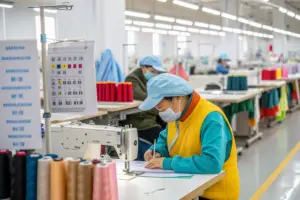
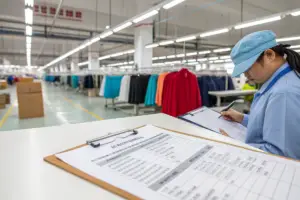
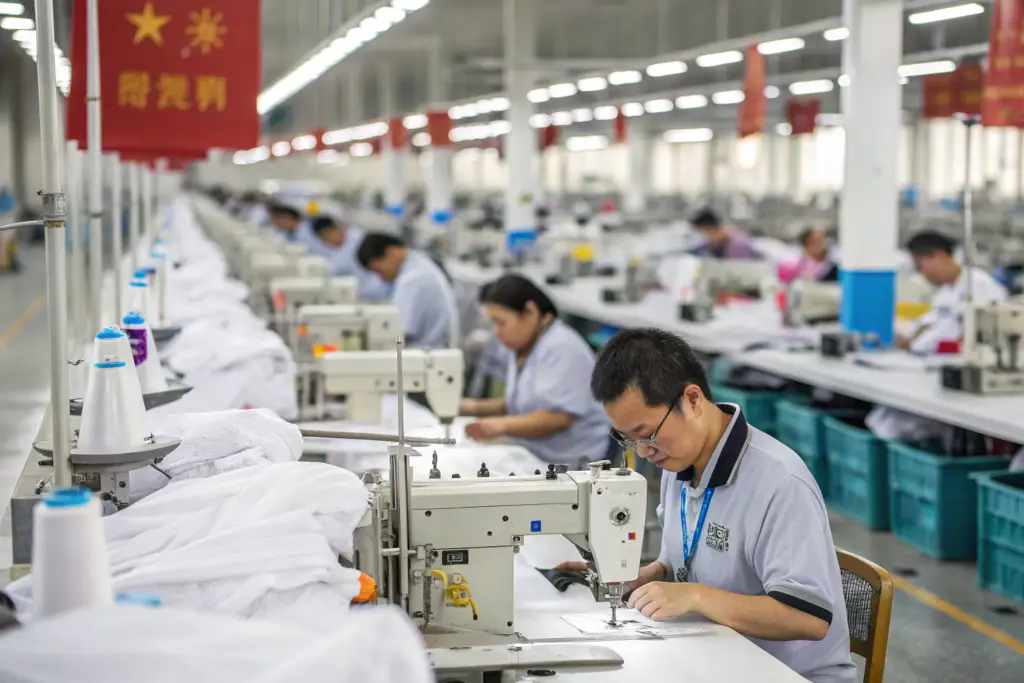
Here is my recommended script for a live video walkthrough. First, ask to see the main production floor, but start at the back wall. A busy factory has production activity visible from wall to wall. An under-capacity factory will have the first few lines near the entrance fully staffed but the back rows covered in dust cloths. Second, ask the person holding the phone to walk to a specific machine, pick up the fabric from the operator's work pile, and hold it up to the camera. You want to see the cut pieces, the work-in-progress. If the pieces are from a style you recognize as a current season item from a real brand, that is a strong signal. If the pieces are generic, unbranded, or look like they were placed there as props, be suspicious. Third, ask to see the cutting room specifically during working hours. A real cutting room has fabric rolls on the racks, spread fabric on the tables, and cut panels in bundles. An empty cutting room at 2 PM on a Tuesday means the sewing lines are about to run out of work. Fourth, ask to see the loading dock. Count the cartons waiting for pickup. A factory shipping 10,000 units a week has a dock that looks busy every afternoon. A factory shipping 2,000 units a week has a clean, quiet dock. The factory audit best practices recommend this kind of live, unscripted visual verification because props can be arranged, but the rhythm of a genuinely busy factory cannot be faked for an hour-long call.
What Production Documents Should You Request Before Signing A PO?
Before you transfer a deposit, you need to see the factory's production planning board and their capacity loading chart. These are the internal documents that the production manager uses to schedule orders. They are not polished marketing materials. They are usually a whiteboard covered in marker scribbles or an Excel spreadsheet with color-coded cells. The format does not matter. The content matters.
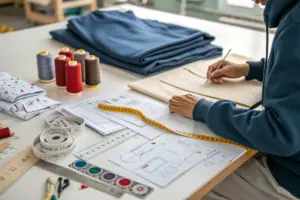
You should request three specific documents. First, the weekly production schedule for the next eight weeks. This shows the planned output per line per day, the style numbers, the quantities, and the shipment dates. Look for your order's slot. If the factory cannot show you exactly which line will run your order and on which dates, they have not actually allocated capacity to you. Your order is in a "maybe" pile. Second, the machine loading chart. This shows the number of each specialized machine type, the buttonhole machines, the bar-tack machines, the fusing presses, and how many hours per week each machine is booked. A summer coat with a lot of topstitching requires significant time on specific machines. If those machines are already booked at 100% for the period of your production, the factory will either subcontract your work or delay it. Third, the raw material procurement tracker. This shows when your specific fabric and trims were ordered, when they are expected to arrive, and where they are in the pipeline. A factory that has genuinely allocated capacity to your order has already ordered the materials. A factory that is just booking your deposit and hoping for the best has not. The production planning and control documents are the factory's honest diary. If they will not share it, ask yourself what they are hiding.
What Red Flags Indicate A Factory Is Overbooked Or Under-Resourced?
The summer season creates a predictable pattern of factory failure. March through May is the peak booking period. Every brand wants their summer coats delivered by June. Factories, especially those with weak management, panic-book orders to fill their revenue gap. They take on 130% of their capacity, believing that some orders will cancel or delay. When all the orders hold firm, the factory collapses under the weight. Shipments are late. Quality drops. The factory goes into survival mode, prioritizing the loudest or highest-margin clients and ghosting the rest. The red flags of an overbooked factory are visible months before the collapse if you know what to look for.
The top red flags of an overbooked factory are a sales representative who agrees to every deadline without checking with production, a factory that quotes a lead time significantly shorter than the industry standard for your garment type, a factory that requests a deposit that is unusually low or unusually high relative to the norm, a factory that cannot provide a specific production line number and start date for your order within one week of the deposit being paid, and a factory whose communication response time slows dramatically after the deposit clears. Any one of these flags is a warning. Two or more in combination is a clear signal to walk away.
Overbooking is not a random accident. It is a management failure. A well-run factory, even a small one like our five-line setup at Shanghai Fumao, knows its capacity ceiling and enforces it rigidly. We turn down orders in April because we know a late-May delivery promise would be a lie.
Why Is A "Too-Fast" Lead Time Promise A Warning Sign?
The physics of garment manufacturing imposes hard minimums on lead times. You cannot dye a polyester woven, dry it, finish it, truck it, spread it, cut it, sew 25 pieces per operator per day, press it, inspect it, pack it, and ship it in less than a certain number of days. The numbers vary by garment complexity, but there are floor limits.
For a standard summer blazer in a stock fabric, the absolute minimum lead time from deposit to ex-factory is about 25 days, and that assumes the fabric is on a shelf, the trim is in stock, and the line is immediately available. For a customized fabric with a special dye color, the minimum is about 45 days. For a complex utility coat with multiple pockets, zippers, and a special wash finish, the minimum is about 55 days. If a factory quotes you a lead time that is 30% or more below these benchmarks, one of two things is happening. Either they are lying to win the order, or they plan to subcontract your production to a smaller, cheaper factory that you did not vet. Subcontracting is the silent epidemic of the garment industry. The factory you contract with takes your deposit, keeps a 10% margin, and sends the work to a workshop they do not own. You have no visibility into that workshop's labor practices, quality standards, or real capacity. The garment manufacturing lead time is a physical constraint, not a marketing promise. A factory that respects you will tell you "no" when the timeline is impossible. A factory that tells you "yes" to everything is setting you up for a crisis.
How Can Reference Checks Reveal A Pattern Of Late Deliveries?
Reference checks are the most underused tool in sourcing. Every buyer asks for references. Very few actually call them. Even fewer ask the right questions when they do call. A reference call is not a checkbox exercise. It is an investigative interview.
When you call a reference provided by the factory, you must assume the reference has been prepped. The factory selected a client they know is reasonably happy. Your job is to ask questions that get past the prepared script. Do not ask, "Were you happy with the quality?" The answer will be "yes." Ask instead, "On your last three orders, what was the average delay in calendar days between the promised ex-factory date and the actual ex-factory date?" This forces a specific number. A pause before the answer is as informative as the answer itself. Ask, "Did the factory proactively communicate the delay before the deadline, or did you have to chase them to find out?" This reveals the factory's communication integrity. Ask, "What percentage of units in your last order required rework or were unsellable due to quality defects?" Ask for the number, not the opinion. Also, conduct a back-channel reference. Do not just call the references the factory gives you. Search the factory's name on LinkedIn. Find a brand owner or a production manager who worked with that factory in the past, even if they are not on the official reference list. Send them a polite message asking for a five-minute confidential call. The unfiltered truth usually comes from the back channel. The supplier reference check process is not about catching the factory in a lie. It is about understanding their normal operating pattern. A factory that is consistently three days late with good communication is manageable. A factory that is randomly three weeks late with radio silence is a business killer.
How Does A Factory's Workforce Stability Affect Its True Capacity?
A factory is not a collection of machines. It is a collection of skilled humans. The sewing machines do not operate themselves. The capacity of a factory is the product of the number of operators, their skill level, and their attendance rate. A factory that claims a capacity of 500 operators but has a 30% annual turnover rate and a 15% daily absenteeism rate during peak season does not have a real capacity of 500 operators. It has a real capacity of about 300 reliable operators and 200 empty chairs. Workforce stability is the hardest capacity metric to verify remotely, but it is the most predictive of on-time delivery and consistent quality.
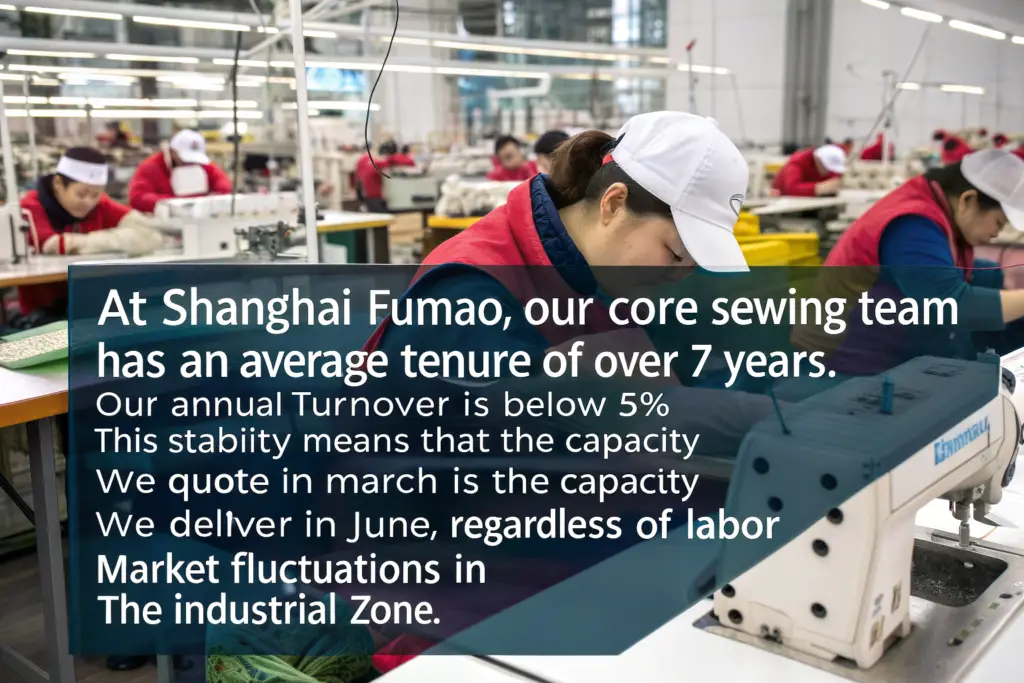
A factory's workforce stability directly determines its true capacity because an unstable workforce creates a capacity mirage. The factory can technically produce 5,000 units per day on paper, but if 20% of the skilled sewers quit between your sample approval and your bulk production, the remaining operators cannot maintain the pace or the quality. At Shanghai Fumao, our core sewing team has an average tenure of over 7 years. Our annual turnover is below 5%. This stability means that the capacity we quote in March is the capacity we deliver in June, regardless of labor market fluctuations in the industrial zone.
A factory with high turnover is permanently training new workers. A factory that is training new workers is producing defects. A factory that is producing defects is running at a fraction of its theoretical capacity because a significant portion of its hours are consumed by rework, not forward production.
What Questions Should You Ask About Operator Turnover And Training?
Factory owners do not like to discuss turnover. It is an embarrassing number. The way you ask the question determines whether you get a real answer or a deflected one. Do not ask, "What is your turnover rate?" The answer will be "very low" or "within industry standard." Ask indirect questions that force a concrete answer.
Ask these five questions. First, "How many new operators have you hired in the last three months, and how many operators have left?" The difference between these two numbers, divided by the total workforce, is the quarterly turnover rate. Second, "What is the training period for a new sewer before they are allowed to work on a client's bulk order?" A factory that puts new hires on the line after two days of training is producing defective garments on your order. A professional factory has a 4 to 6 week training program with a dedicated training line that does not touch client production. Third, "Can I see the training records for the operators who will be assigned to my specific line?" This request tests whether the factory tracks operator skills formally. A factory with a skills matrix showing each operator's proficiency on different machine types is a factory that manages quality systematically. Fourth, "How many of your current sewing line supervisors have been with the factory for more than three years?" The line supervisor is the single most important person for your order's quality and speed. If the supervisors are rotating in and out every season, the consistency of your production is at risk. Fifth, "What is your absenteeism rate during the peak May-June period?" Summer peak season in China often coincides with a period where workers travel back to their hometowns. A factory that does not have a plan to manage this absenteeism will see its capacity drop by 15% exactly when your summer coats need to ship. The workforce management in garment manufacturing is the hidden engine of on-time delivery.
How Can You Verify The Factory's Claims About Its Specialized Skilled Workers?
Summer outerwear often requires specialized operations. A bound buttonhole on a linen blazer. An invisible zipper insertion on a sheer polyester duster. A flat-felled seam on a lightweight twill trench. These operations cannot be performed by a general sewer. They require operators who have been specifically trained on that machine and that technique. A factory might have 100 sewers on the floor but only 2 who can do a high-quality bound buttonhole. If your coat design has a bound buttonhole, the factory's real capacity for your style is limited by those 2 operators, not the 100.
To verify specialized skill claims, ask the factory to show you a video of one of their operators performing the exact most complex operation on your style, on the actual fabric you have specified, within 48 hours of your request. This prevents the factory from outsourcing the sample to a specialist workshop. A factory that has the skill in-house can produce the video quickly. A factory that is planning to subcontract the difficult operations will stall or make excuses. You can also request the operator skills matrix for the specific line that will run your order. This matrix should list each operator's name, their machine certifications, and their proficiency rating on a scale of 1 to 4 for each operation type. A line that has two Level 4 operators for your critical operation is secure. A line that has one Level 2 operator who is "learning" is a risk. The skilled workforce in apparel industry is the constraint that no amount of sales promises can bypass.
What Contract Terms Protect You If The Factory's Capacity Fails?
Even the most thorough capacity verification is not a guarantee. Circumstances change. A major client increases their order unexpectedly. A key mechanic has a health emergency. A local power rationing hits the industrial zone. These things happen. The question is not whether the factory will ever face a capacity crunch. The question is what contractual protection you have when it happens. A purchase order without specific capacity-related penalty clauses is a wish, not a contract.
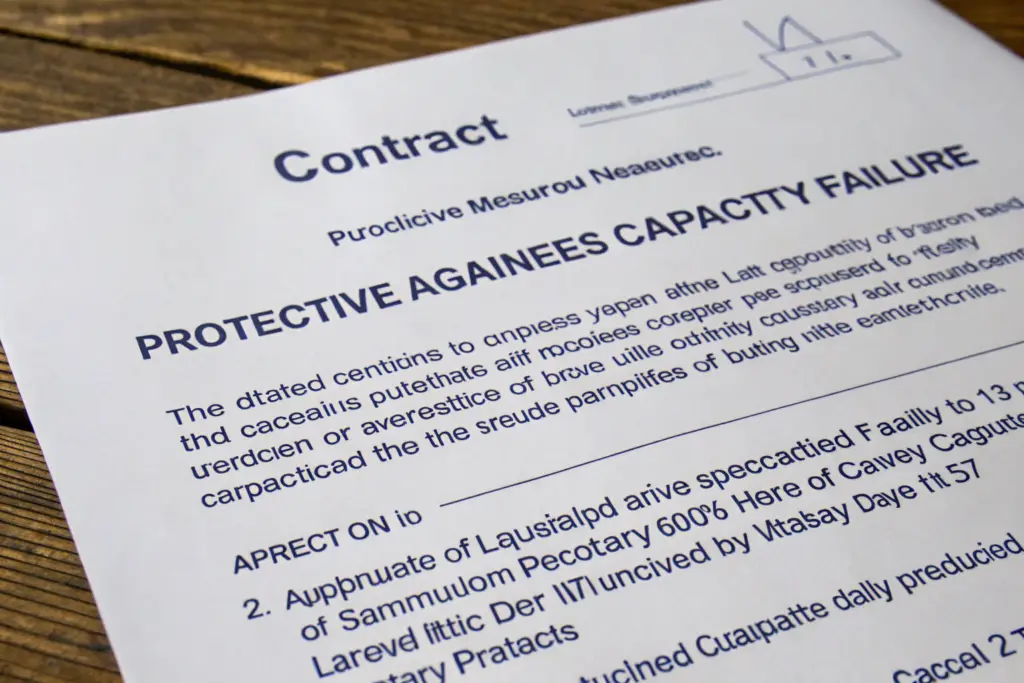
The contract terms that protect you against capacity failure are a specific liquidated damages clause for late delivery, a capacity guarantee clause that requires the factory to notify you within 48 hours if your production slot is at risk, and a deposit refund clause triggered by a delay exceeding an agreed grace period. The liquidated damages clause should specify a daily penalty, typically 0.5% to 1% of the order value per day of delay, capped at a maximum, usually 10% to 15%. The capacity guarantee clause requires the factory to provide a weekly production progress report with photos of your cut panels and sewn units. The deposit refund clause states that if the delay exceeds, for example, 14 calendar days, the buyer may cancel the order and receive a full refund of the deposit within 7 business days.
These clauses are not aggressive. They are standard commercial practice in professional sourcing. A factory that refuses to include liquidated damages for late delivery is telling you, indirectly, that they expect to be late.
What Is A Liquidated Damages Clause And How Does It Work In Garment Sourcing?
Liquidated damages are a pre-agreed amount of money that the factory pays you for each day the shipment is delayed. It is not a punishment. It is a pre-estimate of the loss you will suffer from the delay. The purpose is to align the factory's incentives with your timeline and to compensate you for a portion of your lost margin without requiring you to go to court to prove the exact damages.
A standard liquidated damages clause in a garment purchase agreement reads something like this: "In the event that the Supplier fails to deliver the Goods by the agreed Ex-Factory Date, the Supplier shall pay to the Buyer liquidated damages at the rate of 0.5% of the total FOB value of the delayed Goods per calendar day of delay, up to a maximum of 10% of the total FOB value. Such liquidated damages shall be deducted from the balance payment or, if the balance has been paid, refunded to the Buyer within 14 days." The key elements are the daily rate, the cap, and the mechanism for deduction. The daily rate should be calibrated to your real business impact. If you sell a summer coat at a 60% margin and a one-week delay means you miss a promotional window and have to mark down the goods by 30%, a 0.5% daily rate is reasonable. The cap protects the factory from a catastrophic, unlimited liability. The deduction mechanism ensures you do not have to chase the factory for a refund after you have already paid the balance. The liquidated damages in supply contracts must be reasonable in proportion to the probable loss. A rate that is punitive and disproportionate to the actual loss may not be enforceable in some jurisdictions. A rate of 0.5% to 1% per day with a 10% to 15% cap is widely accepted as reasonable in the textile industry.
How Does A Capacity Guarantee Clause Give You Early Warning?
The liquidated damages clause compensates you after the delay happens. The capacity guarantee clause is designed to prevent the delay from happening by giving you early warning so you can activate a backup plan. A factory that is overbooked often knows weeks before the delivery date that they are in trouble, but they delay telling the buyer because they hope for a miracle. The miracle rarely arrives, and the buyer finds out about the delay three days before the ship date when it is far too late to air freight or find alternate capacity.
A capacity guarantee clause requires the factory to send you a weekly production progress report that includes specific, verifiable information. The report must show the number of units cut, the number of units sewn, the number of units packed, and a photo of the work-in-progress with that week's date visible in the frame. If the actual progress is more than 15% behind the production plan at any point, the factory must notify you in writing within 48 hours and present a recovery plan. This gives you the ability to make decisions. You can negotiate an air freight split to catch up on the lost days. You can reduce the order quantity and place the balance with a backup factory. You can adjust your marketing launch date. The worst-case scenario in sourcing is not a delay. The worst-case scenario is an uncommunicated delay that you discover at the last minute. The supply chain risk management principle here is simple: information is the antidote to risk. A capacity guarantee clause forces the flow of information.
Conclusion
Verifying a factory's production capacity is not a one-time event. It is a continuous process that starts before the first deposit and continues through the final shipment. The tools are straightforward: a live video walkthrough controlled by you, not the factory. A set of production documents that tell a consistent story. A reference call that asks for specific numbers, not general impressions. An honest assessment of the workforce stability that determines whether the machines will actually be staffed. And a set of contract terms that align the factory's incentives with your timeline and give you a parachute if the factory's capacity proves to be less than promised.
A factory that has nothing to hide will cooperate with all of these verification steps. At Shanghai Fumao, we treat the capacity verification process as the beginning of the partnership, not an obstacle to it. We show our electricity bills. We walk your team through our production planning board on a live call. We introduce you to our line supervisors by name. We agree to liquidated damages clauses because we are confident in our ability to deliver on time. A factory that resists this level of transparency is telling you, through its resistance, what you need to know about the risk of placing an order there.
If you are evaluating factories for your next summer outerwear production run, and you want a partner who will open the books and the factory floor to your scrutiny, we are ready for that conversation. Reach out to our Business Director, Elaine, at elaine@fumaoclothing.com. Ask her for a live video walkthrough of our five production lines. Ask for our capacity loading chart for the upcoming season. Ask for the references from the brands who have been producing with us for years. We will answer every question. Because a factory that can prove its capacity is a factory that can keep its promises.