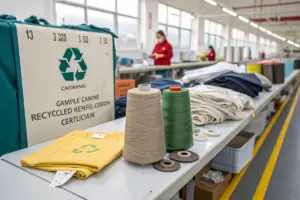
June 14th, last year. A client from Miami called me at 11 PM China time. His voice was shaking. A lightweight UV-protective duster coat he had ordered 1,500 units of had exploded on TikTok that afternoon. His warehouse had 200 units left. His website was selling 50 units an hour. Without a restock, he would be sold out by morning, and the algorithm would move on to the next viral coat. The traditional supply chain said he needed eight weeks for a reorder. I told him, "Give me the purchase order in the next 30 minutes. I will have 300 units on a plane in 72 hours, and the remaining 1,200 will sail in 14 days." He thought I was exaggerating. I was not. This is the moment where our entire operational philosophy at Shanghai Fumao is tested, and this is the moment where a generic factory fails.
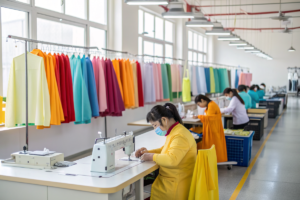
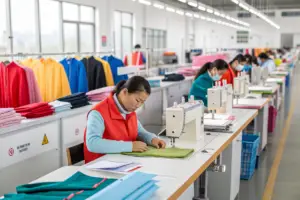
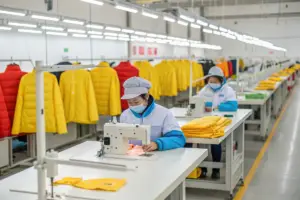
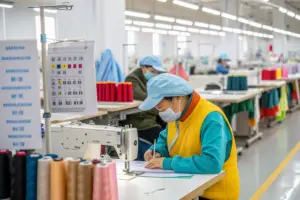
Fumao Clothing handles urgent restocking for hot summer styles through a pre-engineered rapid response system. We maintain a buffer stock of greige fabric for our partners' best-selling summer base materials. We reserve 15% of our cutting capacity and one dedicated sewing line for "express reorder" slots during the peak May through July season. When a restock request hits, we bypass the normal sampling process, pull the buyer's approved reference standard from our sealed archive, and initiate cutting within 12 hours. The first units ship by air within 72 hours. The balance ships by sea within two weeks. No design review. No new lab dip. No negotiation. Just execution.
Speed is not a reaction. Speed is a preparation. You cannot improvise a rapid restock in a factory that is running at 100% capacity on 12-week lead times. You have to build the slack into the system before the season starts. I will walk you through exactly how we compress the timeline, how we preserve quality during the rush, and how we handle the logistics so your viral moment becomes a financial windfall, not a customer service disaster.
What Is A Greige Reserve And How Does It Cut Restock Lead Times?
The biggest lie in garment manufacturing is the lead time quoted on a first-time order. Most of that time is not sewing. It is waiting. Waiting for the yarn to be spun. Waiting for the fabric to be woven. Waiting for the dyeing vat to be available. The actual cutting and sewing of a summer coat takes maybe 7 to 10 days for a standard run. The rest of the 60-day lead time is consumed by the raw material pipeline. If you want to slash a restock from 8 weeks to 2 weeks, you cannot start from yarn. You must start from fabric that already exists.
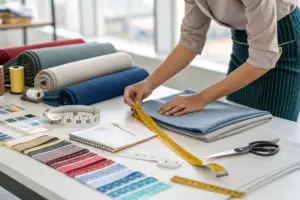
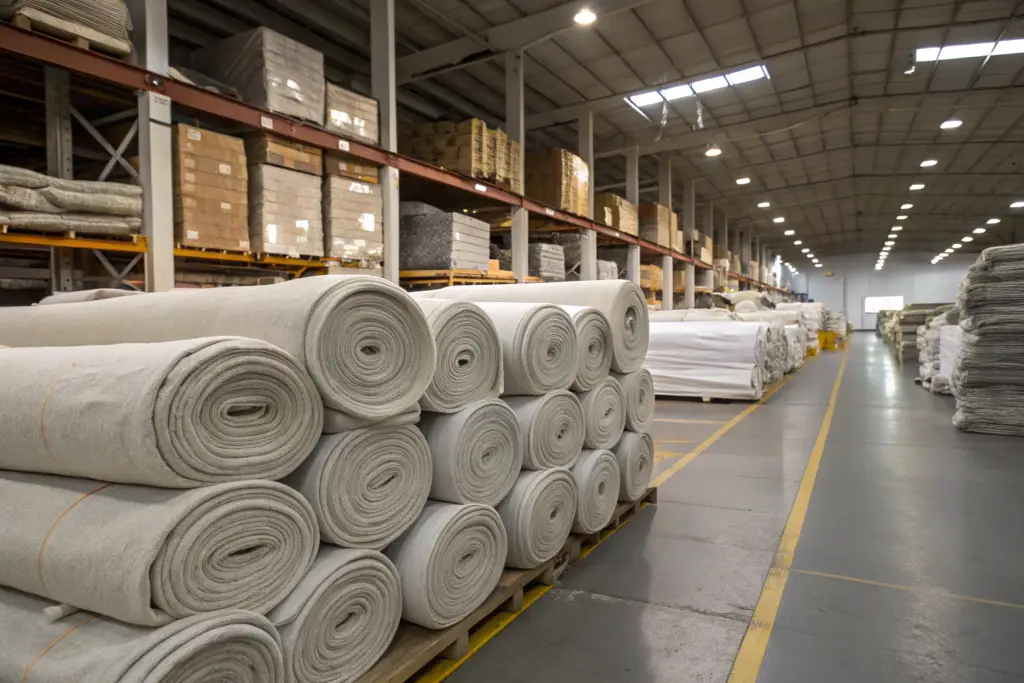
A greige reserve is a physical stock of unfinished, undyed fabric that we hold in our warehouse on behalf of a brand. Greige fabric, pronounced "gray," is the raw woven textile before it has been bleached, dyed, or finished. For a summer coat program, we typically reserve enough greige to cover 50% of the initial order quantity. When a restock is triggered, we bypass the weaving mill entirely. We send the greige directly to our dyeing partner, who runs it through the color formula we locked during the initial production. The dyeing and finishing takes 4 days instead of 25. The fabric hits our cutting table on Day 5 instead of Day 30. This one strategic stockpile cuts 25 days from the calendar.
The greige reserve is the secret weapon of brands that never stock out. It requires upfront capital to hold the inventory, but the cost of the fabric is a fraction of the cost of a missed selling season.
How Do You Decide Which Summer Fabrics To Stock In Greige Form?
You cannot stock greige for every fabric. That would bankrupt a factory. The decision of which base cloth to reserve is a strategic calculation that combines historical sales data, early signal detection, and a blunt conversation about risk tolerance.
I sit down with my brand partners in February, before the summer season kicks off, and we analyze three factors. Factor one is the core base. If a brand sells a specific linen-viscose blend blazer every single summer, and it accounts for 30% of their revenue, we stock greige for that blend. It is a no-brainer. Factor two is the trend signal. In February, we look at our sampling requests. If four different brands have asked for samples in a specific crinkle nylon, we know that fabric is going to be hot by June. We pre-position greige for our own risk, knowing we can sell it to multiple clients. Factor three is the minimum order quantity of the mill. A high-end Japanese cupro mill might have a minimum order of 1,000 meters. If the brand only needs 300 meters for their initial run, the math looks bad. But if we buy the full 1,000 meters, use 300 for the bulk, and keep 700 meters in greige reserve, the brand now has a rapid restock capability without paying a massive upfront premium. We structure this as a shared investment. The brand commits to the fabric, and we commit to the storage and management. The textile inventory management principle here is simple: hold the raw material at its lowest value state, which is undyed greige. The cost of capital on a roll of greige for three months is negligible compared to the profit of a restock order sold at full price. The discipline of fabric sourcing strategy must include this buffer concept if you are serious about competing in the fast summer cycle.
What Happens If The Dye Lot Doesn't Match The Original Bulk During A Rapid Restock?
This is the nightmare scenario. The brand finally gets a viral hit, the restock arrives in record time, and the color of the new batch of dusty rose jackets is slightly different from the first batch. The customers notice. The returns spike. The positive social media momentum turns into a quality complaint thread.
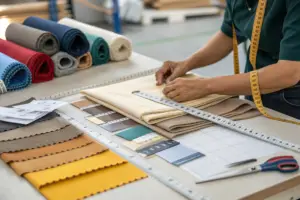
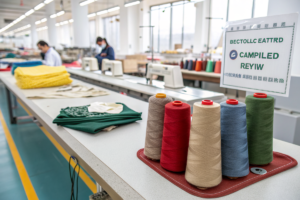
We prevent this by archiving a physical dye standard from the very first bulk production. When we finish the initial bulk order, we cut a large A4-sized swatch of the approved fabric. We seal half of it in a black, light-proof vacuum bag and store it in our quality archive. The other half stays with the brand. When the restock greige goes to the dyeing house, we do not send an email that says "match dusty rose." We send the physical swatch. The dye master runs a new lab dip against the archived swatch under the D65 light booth. If the Delta E color difference is above 1.0, the dye master adjusts the formula and re-dips. Only when the lab dip is a visual and spectro match to the archived swatch does the bulk dyeing begin. This is the same process we use for the initial order, but compressed into 48 hours instead of two weeks. The archived swatch is the anchor. It ensures that the jacket a customer buys in the June restock is the exact same color as the jacket their friend bought in the May drop. This color matching in textile production is non-negotiable for brand integrity. A batch-to-batch color variation is the fastest way to destroy the perceived value of a viral product. We also test the colorfastness to light and washing on the restock batch. A rushed dye job can sometimes fix the color visually but compromise the bonding, leading to faster fading. Our lab runs a quick xenon arc fade test on the restock fabric before we release it to cutting. This adds 12 hours to the timeline, but it saves the brand from a silent quality bomb that detonates three weeks after the customer wears the coat in the summer sun.
How Do You Maintain Quality Standards During An Accelerated Production Run?
The instinct in a rush is to cut corners. "The customer is waiting, just ship it." That sentence has destroyed more brands than any competitor. A customer who receives a defective coat during a viral moment does not silently return it. They post a video. That video gets 100,000 views. Now your viral moment is a viral scandal. The pressure of speed is the true test of a factory's quality management system. A system that only works when there is plenty of time is not a real system.
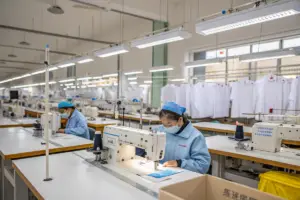
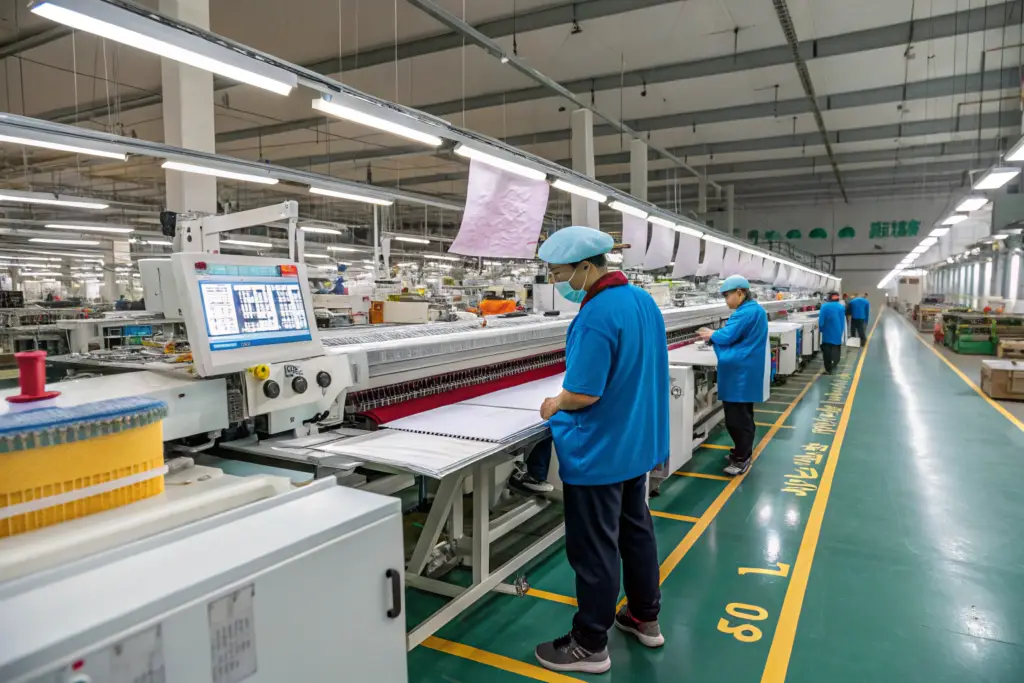
We maintain quality standards during an accelerated run by freezing the process, not the inspection. The approved sewing sequence, the machine settings, the needle types, and the pressing cycle are all locked from the initial production run and documented in a digital production file. During the restock, the line supervisor pulls this file and sets up the line exactly to the locked specification. No experimentation. No "improvements" by a new mechanic. The inline inspection frequency actually increases during a rush. We move from checking 20% of units to checking 40% of units, with the inspector standing at the end of the line instead of in a separate room.
Quality is not about time. Quality is about adherence to a proven standard. A fast operation that follows the standard produces better results than a slow operation that improvises.
Why Is The "Locked Production File" Critical For Repeat Order Consistency?
When a factory makes a coat for the first time, there is a learning curve. The mechanic adjusts the differential feed on the overlock machine. The sewer figures out a clever way to handle the curved pocket facing. These micro-adjustments are rarely written down. They live in the muscle memory of the team that ran the first batch. If the restock happens three months later, that team might be on a different line. The new team starts the learning curve from zero, and the first 200 units will have the same defects as the first 200 units of the original run.
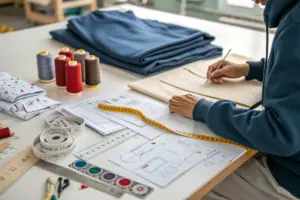
The locked production file solves this institutional amnesia. After the first bulk production, our industrial engineer documents every critical setting. The exact tension dial reading on the buttonhole machine. The specific foot used for the invisible hem. The pressing template with the precise steam pressure and dwell time for the collar. The production file even includes a video of the most complex operation, recorded on a tablet by the line supervisor, showing the exact hand movement sequence. When the restock order hits the floor, a new line can be set up in under two hours by following the locked file, not by relying on someone's memory. This is the difference between a craft workshop and an industrial operation. The standard work in lean manufacturing principle applies directly here. The standard is the best-known way to perform the task, documented, and frozen until a deliberate improvement is made. During an urgent restock, you do not want innovation. You want robotic, flawless replication. The locked file is the DNA of the garment. It ensures that the 1,500th unit sewn in July is identical to the 1st unit sewn in May.
How Do We Adjust The Inline Inspection Process For A Faster Cycle?
You cannot inspect quality into a garment at the end. You have to build it in. But when the cycle time shrinks from 10 days to 5 days, the inspection process must become more integrated, not less.
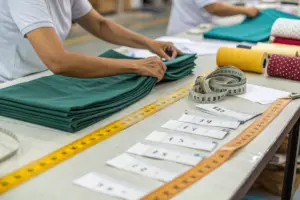
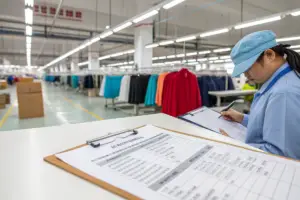
Our standard inline process has three inspection gates. Gate 1 is the cutting room output. Gate 2 is after the collar and sleeve attachment. Gate 3 is the final press and trim check. For an accelerated restock, we collapse Gate 2 and Gate 3 into a single, more intense audit, but we add a new Gate 0 at the fabric stage. The inspector checks every roll of the rush-dyed fabric for shade, hand feel, and visible defects before the spreader even touches it. This prevents a bad roll from being cut and contaminating the entire batch. We also increase the sample size for the "first piece check." Instead of checking one coat per size per line, we check three coats. The line supervisor and the QC inspector both sign off on the first three pieces before the line runs at full speed. This takes 20 minutes but prevents hours of rework. The final audit remains at AQL 2.5, but the sample size is drawn from the beginning, middle, and end of the production run to ensure no drift occurred as the shift wore on. The quality control in garment industry during a rush is about shifting resources to the front of the process. The earlier you catch a defect, the cheaper and faster it is to fix. Catching a cutting error before the pieces are sewn takes 5 minutes. Catching it after the coat is assembled takes 30 minutes of un-picking and re-stitching. In a 5-day cycle, you do not have 30 minutes to spare on any unit. The philosophy is simple: slow down the inspection to speed up the production.
What Logistics Strategy Gets A Restock From China To The US In Under A Week?
Even the fastest factory production is useless if the coat sits in a warehouse waiting for a consolidated container. Summer restocks require a split logistics strategy. You do not ship all 1,500 units by sea and make the customer wait 30 days. You do not ship all 1,500 units by air and destroy your profit margin. The art is in the split.
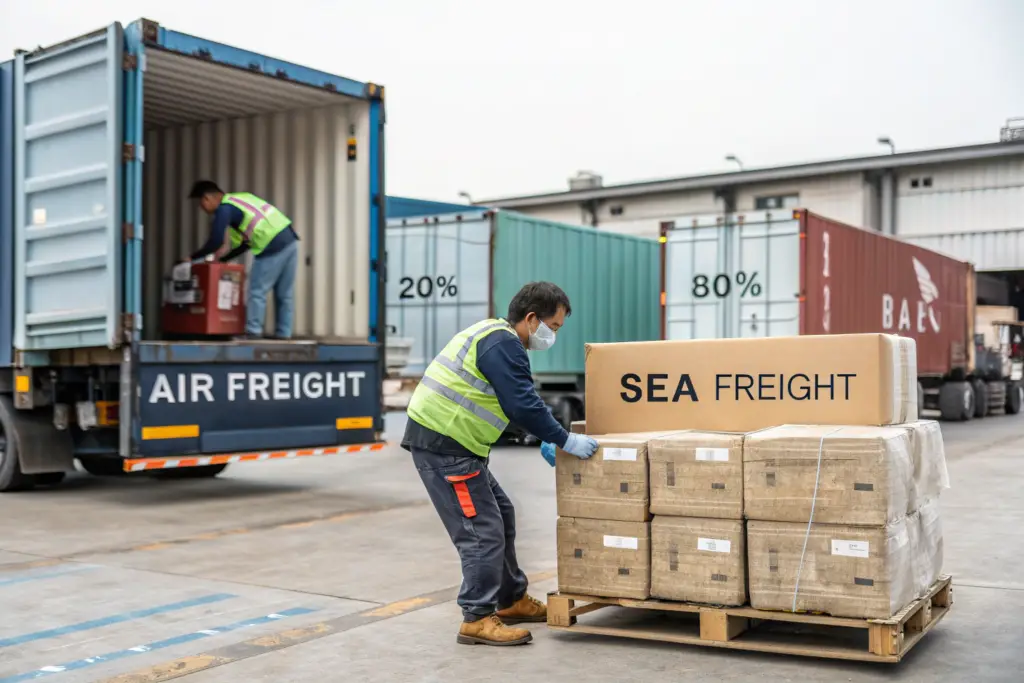
Our standard express restock logistics strategy is a 20/80 air-sea split. We produce the entire restock quantity in a single run. The first 20% of the units, typically 200 to 500 pieces, are packed separately, palletized for air freight, and picked up by our express courier partner, often DHL or FedEx, within hours of final inspection. These units land in the US in 3 to 4 business days and go directly to the brand's warehouse to immediately fulfill backorders and keep the listing alive. The remaining 80% of the units are packed in a loose-loaded container or LCL consolidation, depending on volume, and sail on the next available vessel. The customer receives the air units within the week and the sea units within two weeks.
This split strategy optimizes for both speed and cost. The air freight premium is only paid on a fraction of the order, preserving the overall margin while capturing the peak of the viral demand curve.
When Does It Make Sense To Use An All-Air Express Restock Versus A Sea Split?
The all-air decision is a pure math problem. You need to compare the air freight cost per unit against the gross margin loss of a stockout. If the math works, you put everything on the plane.
An all-air express restock makes sense when three conditions are met simultaneously. First, the retail price is high. If you are selling a $148 structured summer blazer with a gross margin of $88 per unit, and the air freight adds $7 per unit, you are still capturing $81 of margin on a sale that would be lost forever if the coat is out of stock. Second, the stockout risk is acute. If the analytics show you will be sold out in 48 hours and the next sea vessel is 10 days away, the algorithm will delist your product for lack of availability. The cost of losing your search ranking on a major e-commerce platform far exceeds the air freight bill. Third, the total volume is small. Air freight on 200 units is a manageable line item. Air freight on 5,000 units is a down payment on a house. We always run the supply chain cost-benefit analysis with our clients in real-time during a restock crisis. I have one client who sells a premium packable travel blazer at $198. We restock that style exclusively by air, every single time, because the brand's entire value proposition is "never out of stock." The air freight is baked into their pricing model. For a different client selling a $49 promotional beach cover-up, we split heavily toward sea because the air freight would consume 30% of their retail price. There is no one-size-fits-all answer. The key is that the factory is capable of executing either option immediately without a two-week delay to "figure out the logistics." Our partnership with express courier services and our in-house logistics team can pivot between modes within hours of the client's decision.
How Does DDP Shipping De-Risk An Urgent Air Freight Restock?
Urgent air freight is already stressful. You are paying a premium for speed. The last thing you need is a call from Customs saying the shipment is held because the commercial invoice has a tariff code mismatch or the declared value is flagged for review. When a coat is sitting in a customs cage at JFK, the air freight speed advantage evaporates, and you are still paying the premium.
DDP shipping removes this variable entirely. When we ship an express air restock DDP from Shanghai Fumao, the customs clearance happens before the plane even lands. We file the entry electronically with our US customs broker, using our own bond. We pre-clear the shipment based on the accurate HTS classification we have used for the brand's product category for years. The commercial invoice is perfect because we prepare it, not a third-party freight forwarder who has never seen the coat. When the plane lands, the goods are immediately transferred to the domestic courier network for last-mile delivery. No customs hold. No query letter to the brand owner. No demurrage fees. The brand simply receives the boxes at their warehouse door. This is especially critical for air freight because air cargo customs clearance delays are measured in hours, not days, but those hours matter when the entire selling window is a weekend. A shipment that lands Friday afternoon and clears customs Monday morning missed the entire weekend's sales. A DDP pre-cleared shipment lands Friday and delivers Friday afternoon. The DDP premium, which is typically 2-3% of the shipment value, buys you the insurance that your expensive air freight will actually achieve its promised speed.
How Does A Direct Relationship With The Factory Owner Enable True Speed?
All the systems I have described, the greige reserve, the locked production files, the split logistics, are necessary but not sufficient. The ingredient that makes them all work together at the speed of a viral trend is a decision-making structure that can authorize all of these actions in a single phone call. If the greige release requires an email to the finance department, and the line reallocation requires a meeting with the production planner, and the air freight booking requires a quote from the logistics department, the restock is already dead. Speed is a function of organizational trust.
A direct relationship with the factory owner enables true speed because it collapses the authorization chain to a single node. When you call me, Elaine, or the production director at Shanghai Fumao with an urgent restock request, we do not need to "get approval." We are the approval. We can commit the greige inventory, reallocate the sewing line, book the air freight, and issue the revised proforma invoice, all within the same conversation. The owner's word is the company's bond.
This is not about ego. This is about the physics of organizational decision-making. Every layer of hierarchy adds hours, and in a viral restock, hours are the difference between sold out and fully stocked. A smaller, focused factory like ours is built around this principle of radical responsiveness.

What Does A 72-Hour Restock Timeline Actually Look Like Hour By Hour?
Let me pull back the curtain and show you the real clock. This is an actual timeline from the Miami duster coat restock I mentioned earlier. The client called at 11 PM Tuesday, China time. That is 11 AM his time, Eastern.
Hour 1 to Hour 3 (Tuesday 11 PM to Wednesday 2 AM): I take the call. I pull up the client's locked production file and their greige inventory report on my laptop. I confirm we have 600 meters of the specific cotton-nylon greige in stock. I email the client a revised proforma for 300 units air and 1,200 units sea. He pays the deposit via wire transfer immediately. I forward the proforma to our dyeing house with an "URGENT" tag and a promised bonus for a 48-hour turnaround.
Hour 4 to Hour 24 (Wednesday 2 AM to Wednesday 10 PM): The greige is released from our warehouse and trucked to the dyeing house at 8 AM. The dye master receives the archived swatch from our quality archive by 9 AM. He runs the lab dip by noon. The spectro reading comes back with a Delta E of 0.8 against the archive. Approved. The bulk dyeing vat is loaded by 3 PM. The fabric is dyed, dried, and finished by 10 PM. The finished fabric is trucked back to our factory overnight.
Hour 25 to Hour 48 (Thursday 8 AM to Friday 6 PM): The fabric arrives. The cutting table is cleared. The locked marker from the original production is pulled from the CAD system. The fabric is spread, and cutting begins at 10 AM. Cutting finishes by 4 PM. The cut panels are bundled and distributed to the express line, which has been reallocated from a less urgent order. Sewing begins at 4:30 PM and runs until 10 PM. The line resumes at 7 AM Friday. The 300 air units are fully sewn, pressed, and inspected by 6 PM Friday.
Hour 49 to Hour 72 (Friday 6 PM to Saturday evening): The 300 units are polybagged, labeled, and packed into 15 cartons. The DHL truck arrives at 7 PM. The airway bill is generated, and the pre-clearance entry is filed with our US broker. The flight departs Shanghai Pudong on Saturday morning. The goods land at JFK on Sunday afternoon, clear customs immediately, and deliver to the client's Miami warehouse on Monday morning. Total elapsed time from phone call to delivery: 6 days. The 1,200 sea units ship 8 days later on the next vessel. The client sold out of the air units by Tuesday and seamlessly transitioned to the sea stock the following week. No listing ever went down. The algorithm never penalized him. The rapid response manufacturing cycle is not a theory. It is a clock that we know how to run.
Why Do Long-Term Partners Get Priority Access To The Express Restock Line?
I have to be honest here. The express restock capacity is limited. We cannot run emergency air restocks for 20 brands simultaneously in June. Someone has to be prioritized. The priority does not go to the brand that screams the loudest or threatens the most. It goes to the brand that has built a partnership with us over multiple seasons.
A long-term partner gets priority access because we have already amortized the cost of learning their brand. Their locked production file is mature and detailed. Their greige reserve is already funded and sitting in our warehouse. Their DDP logistics preferences are documented and integrated with our customs broker. Restarting production for a long-term partner is a low-friction, low-risk operation. For a new client, even with the best will in the world, there is a setup time. We need to verify the fabric spec, re-approve the trim, confirm the labeling. These steps add 24 to 48 hours to the timeline. In a viral moment, those 48 hours are the entire game. This is the hidden benefit of strategic supplier partnerships. The partnership itself becomes a competitive moat. Your competitors, who hop from factory to factory chasing a $0.20 lower unit price, cannot access the express restock capability because they have not invested in the relationship. They call a new factory with an urgent order, and the factory's legitimate first response is, "Who are you? We need a 50% deposit and a signed tech pack before we can even schedule a meeting." Meanwhile, your long-term partner factory has already released the greige and cleared the cutting table based on a single phone call. The speed is a direct dividend of the trust built over seasons of fair dealing and mutual growth.
Conclusion
Urgent restocking is the moment of truth in the summer outerwear business. The viral trend is a gift. It is a wave of demand that the market hands you for free. But the wave breaks fast. If your supply chain is rigid, the wave crashes on your head. You sell out. The customer clicks the "Notify Me When Available" button and never comes back. The algorithm moves on to the next brand that actually has inventory. The financial loss of a stockout during a viral peak is not just the missed sales. It is the permanent damage to your listing's organic ranking and your brand's reputation as a reliable retailer.
At Shanghai Fumao, we have engineered our entire operation around the understanding that speed is not a special request. Speed is the normal condition of the modern summer fashion market. We invest in greige reserves. We invest in locked production files. We invest in pre-cleared DDP logistics. We invest in a leadership structure that can make binding decisions in a single conversation. These investments cost us money and management attention, but they pay for themselves in the loyalty of our brand partners who know that when the viral moment hits, they will have product to sell.
If you have ever experienced the pain of watching a hot style sell out while your factory told you "it takes 8 weeks," you know exactly what this capability is worth. If you want to enter next summer season with a restock partner who can actually deliver the 72-hour turnaround, not just promise it in a sales email, let's talk. Reach out to our Business Director, Elaine, at elaine@fumaoclothing.com. Show her your best-selling summer styles from this season. We will build a greige reserve and a locked production file for those styles now, so that when the next viral wave hits, you are the one surfing it, not drowning in it.