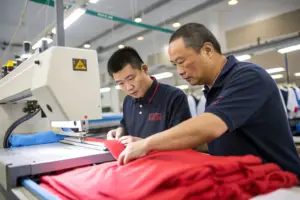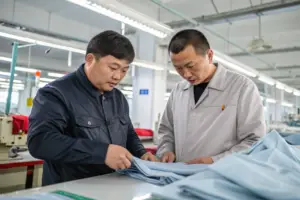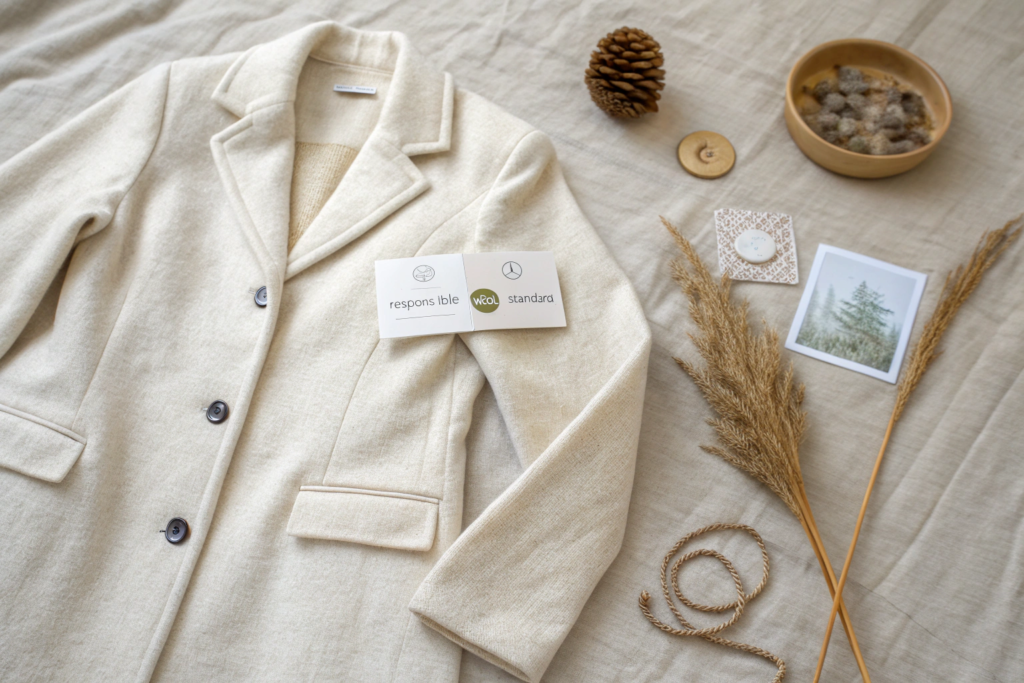
I was on a Zoom call with a wholesale director from a major European department store chain in March. She had just returned from a sustainability summit in Copenhagen, and her CEO had mandated that 60% of the store's outerwear assortment must carry a verifiable sustainability claim by the Fall/Winter 2027 season. She was staring at her current coat buy—beautiful wool wraps, tailored overcoats, quilted parkas—and realizing that fewer than 15% of them had any sustainability certification. She asked me a question I am hearing more and more: "Can you make me a coat that is both beautiful and certifiably sustainable, at a wholesale price my customer will still pay?" I told her yes, but it would require rethinking the fabric, the lining, the trim, and the packaging from the ground up.
Sustainable women's coat types are not just the future of wholesale—they are rapidly becoming a non-negotiable requirement for wholesale placement in the European and premium North American markets, driven by retailer ESG commitments, regulatory changes including the EU's Digital Product Passport, and a consumer willingness to pay a 15-25% premium for coats with verified sustainability credentials.
The shift toward sustainable outerwear is no longer a niche trend driven by a few eco-focused brands. It is a structural transformation of the wholesale buying criteria. Department stores and multi-brand retailers are setting percentage targets for sustainable assortment. Governments are introducing regulations that require transparency in the textile supply chain. Consumers are reading fiber content labels and asking questions about where and how their clothes were made. At Shanghai Fumao, we have invested significantly in sustainable fabric sourcing, certified trim options, and the documentation systems required to substantiate sustainability claims. Let me walk you through what sustainable means for women's coats in 2026, what wholesale buyers are demanding, and how brands can build a sustainable coat program that wins wholesale orders.
What Does "Sustainable" Actually Mean for a Women's Coat in 2026?
The word "sustainable" is thrown around so loosely in fashion that it has almost lost meaning. A brand that uses 5% recycled polyester in the lining calls the coat sustainable. A brand that sources wool from a farm with no certification calls the coat sustainable. A brand that ships the coat in a cardboard box instead of a polybag calls the coat sustainable. Wholesale buyers and end consumers are becoming increasingly sophisticated at detecting greenwashing. A vague sustainability claim without specific, verifiable certifications no longer carries weight in a wholesale buying meeting.
A genuinely sustainable women's coat in 2026 addresses the full lifecycle: the shell fabric is certified organic, recycled, or responsibly sourced with a recognized third-party certification like RWS, GOTS, or GRS; the lining is recycled polyester, organic cotton, or biodegradable viscose; the trims are natural, recycled, or biodegradable; the packaging is plastic-free; and the entire supply chain is traceable through documented chain of custody from fiber origin to finished garment.
I walked a brand through this definition last year when they asked me to "make our best-selling wrap coat sustainable." Their existing coat used a conventional wool shell from an uncertified mill, a virgin polyester lining, plastic buttons, and a standard polybag. Making it genuinely sustainable required changing every component. We switched the shell to RWS-certified wool from a traced supply chain. We switched the lining to GRS-certified recycled polyester. We switched the buttons to natural corozo. We switched the polybag to a biodegradable corn-starch alternative. The FOB increased by $12. The brand absorbed the cost and increased the retail price by $30. The coat sold through at 89% full price, six percentage points higher than the non-sustainable version from the previous season. The sustainability upgrade paid for itself and improved the sell-through.
What Are the Recognized Third-Party Certifications That Wholesale Buyers Trust?
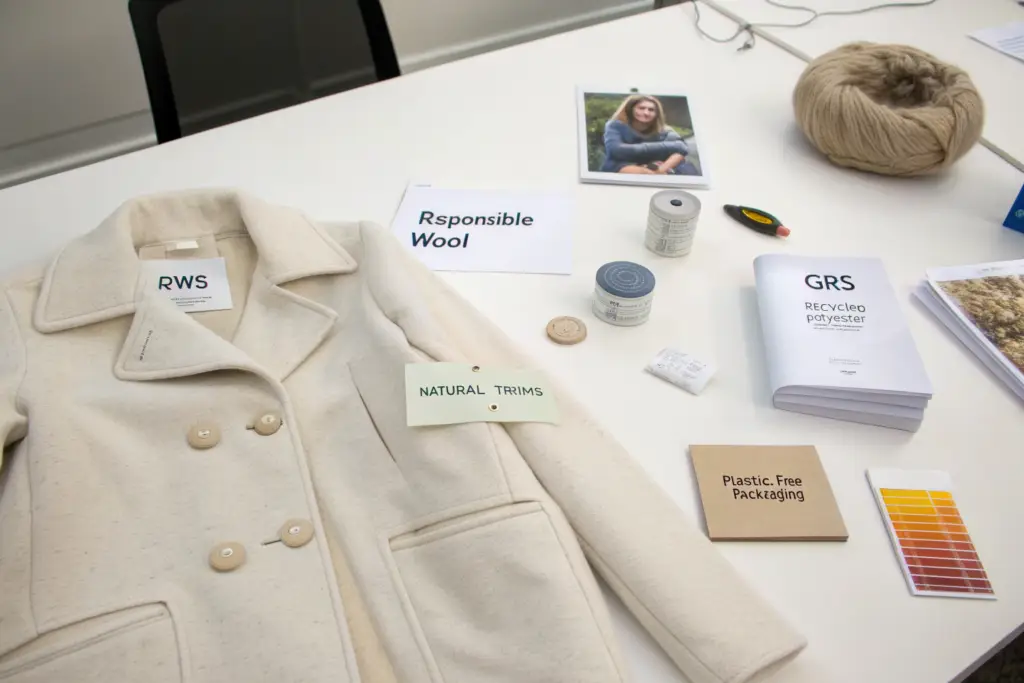
Wholesale buyers do not trust a brand's own claim that a coat is sustainable. They trust a certificate from an independent, accredited organization. The key certifications for women's coats are the Responsible Wool Standard for wool traceability and animal welfare, the Global Organic Textile Standard for organic natural fibers, the Global Recycled Standard for recycled synthetic materials, the Responsible Down Standard for down insulation, OEKO-TEX Standard 100 for chemical safety, and Cradle to Cradle for circular design. Each certification requires an audit of the supply chain by an independent third party. The certification is not a one-time achievement. It must be renewed annually. A brand that holds a current, valid certification can present it in a wholesale meeting as credible evidence. A brand that claims to be sustainable but cannot produce a certificate will lose credibility with the buyer. The certification standards are administered by organizations like the Textile Exchange and are publicly documented.
How Does the EU Digital Product Passport Impact Sustainability Requirements?
The EU's Digital Product Passport regulation, which is being phased in starting in 2026, will require textile products sold in the European Union to carry a digital record containing information about the product's materials, manufacturing processes, and environmental impact. The passport is a QR code or digital link that the consumer can scan to see where the coat was made, what fibers it contains, what certifications those fibers carry, and what the coat's carbon footprint is. For wholesale brands selling into the European market, the Digital Product Passport is not a marketing option. It is a legal requirement that is coming. The brands that build the supply chain traceability to support the passport now will be compliant when the regulation takes full effect. The brands that wait will be scrambling to retrofit traceability into a supply chain that was not designed for it.
What Sustainable Fabric and Trim Options Are Available for Women's Coats?
Five years ago, a brand that wanted to make a sustainable coat had limited material options. The fabrics were expensive. The colors were limited to undyed naturals and muted earth tones. The minimum order quantities were high. The lead times were long. The situation in 2026 is dramatically improved. Mills have invested in sustainable fiber production. The color palettes have expanded. The prices have come down as volumes have increased. A brand today can build a sustainable coat in virtually any silhouette, in a wide range of colors, at a price that is competitive with conventional alternatives—if the brand is willing to source from suppliers who have made the investment in sustainability.
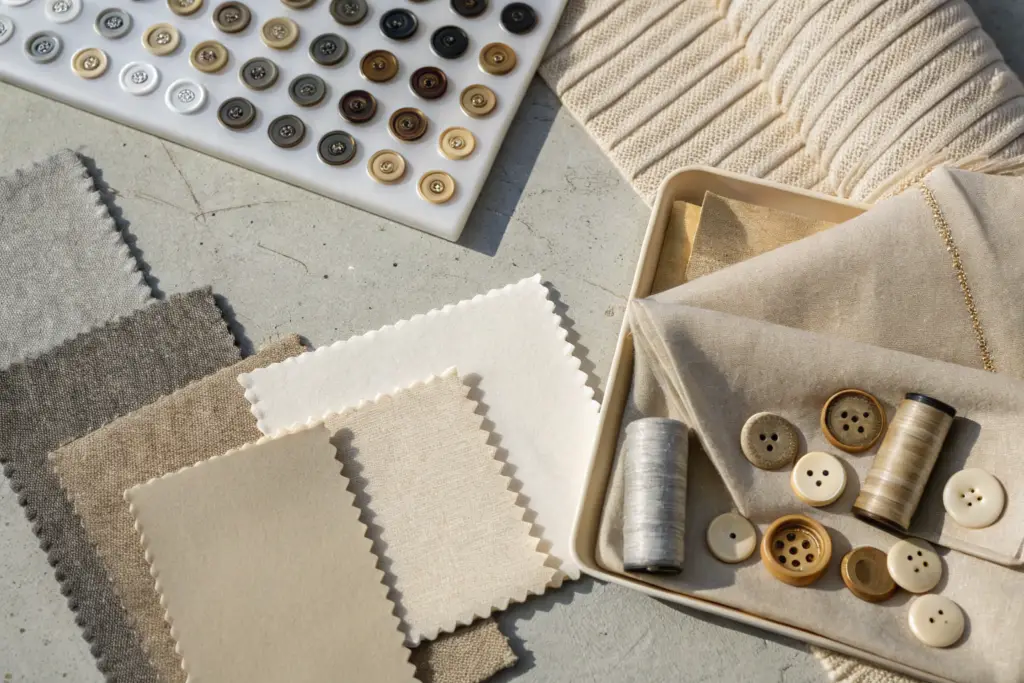
The sustainable coat material palette in 2026 includes RWS-certified wool in weights from 400 to 650gsm, recycled wool blends that repurpose post-consumer wool garments, GOTS-certified organic cotton for trench coats and dusters, Tencel and cupro linings as biodegradable alternatives to polyester, recycled polyester linings with GRS certification for performance applications, corozo and recycled metal trims, and FSC-certified paper packaging.
A brand we manufacture for launched a fully sustainable coat collection last season. The wrap coat used an RWS-certified 520gsm wool-cashmere blend in camel, black, and a new sage green that the mill had developed specifically for sustainable programs. The trench coat used a GOTS-certified organic cotton gabardine. The parka used a recycled polyester shell with an RDS-certified down fill. The linings were GRS-certified recycled polyester. The buttons were corozo. The packaging was FSC-certified cardboard with a biodegradable bag. The total FOB premium across the collection averaged 18% compared to the brand's conventional coats. The wholesale sell-through was 91%. The buyers did not push back on the price. They pushed for more colors.
How Does Recycled Wool Compare to Virgin Wool in Quality and Cost?
Recycled wool is made from post-consumer or post-industrial wool garments that are shredded, re-spun into yarn, and woven into new fabric. The process saves water, reduces landfill waste, and avoids the carbon emissions associated with raising new sheep. The aesthetic of recycled wool is different from virgin wool. It has a heathered, slightly textured appearance because the fibers come from multiple sources. The color palette is typically more muted—heathered greys, browns, and navy are common. The fabric hand is slightly less smooth than virgin wool. Some brands embrace this aesthetic as part of the sustainability story. Others prefer the clean uniformity of certified virgin wool. The cost of recycled wool is roughly comparable to mid-grade virgin wool, making it an accessible entry point into sustainable outerwear. The Global Recycled Standard certification verifies the recycled content claim.
Why Are Natural and Biodegradable Trims Important for a Holistic Sustainability Claim?
A coat with an RWS-certified wool shell and a virgin polyester lining that will sit in a landfill for 500 years is not a fully sustainable product. The trim components—the lining, the buttons, the zippers, the labels, the thread, the packaging—must align with the sustainability claim. A plastic button on an otherwise sustainable coat undermines the brand's credibility with an informed wholesale buyer. Corozo buttons, made from the seed of the tagua palm, are a natural, biodegradable alternative to plastic. Recycled metal zippers, made from post-consumer metal scrap, reduce the demand for virgin mining. Organic cotton labels and sewing thread eliminate synthetic fibers from the garment. A biodegradable polybag made from corn starch breaks down in composting conditions rather than persisting in the environment. The holistic approach to trims and packaging is what separates a marketing claim from a genuine sustainability commitment.
How Should Brands Position Sustainable Coats to Win Wholesale Orders?
A sustainable coat does not sell itself. The wholesale buyer sees dozens of coats in a buying appointment. The sustainable coat must compete on aesthetics, price, and brand appeal alongside the conventional coats. The sustainability claim is a tiebreaker and a margin protector, but it is not the primary purchase driver. The coat must first be a beautiful, desirable product. The sustainability certification then provides the buyer with a reason to choose this coat over a comparable conventional coat from another brand.
Wholesale buyers are persuaded by sustainability when it is presented as a sell-through advantage for their store, backed by data showing that sustainable coats in the same category achieve higher full-price sell-through rates and lower return rates, and supported by consumer-facing marketing materials—hangtags, QR codes, sales associate training cards—that the brand provides to help the retailer sell the sustainability story to the end customer.
A brand we manufacture for presented their sustainable wrap coat to a major department store buyer last season with a one-page data sheet. The sheet showed the previous season's sell-through comparison: the sustainable version of the wrap coat sold through at 89%, the conventional version at 78%. The return rate on the sustainable version was 3.8%, the conventional version 6.2%. The buyer placed an order for the sustainable version at a 25% higher unit depth than the conventional version from the previous season. The data made the case.
What Marketing Materials Do Wholesale Buyers Need to Sell Sustainable Coats?
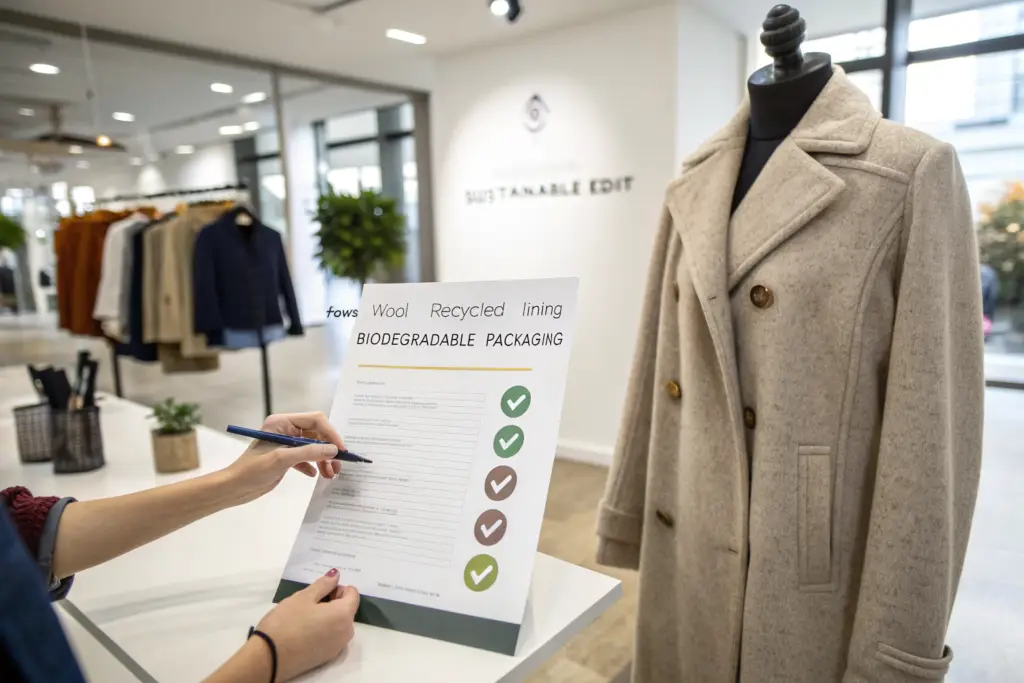
The retail sales associate on the department store floor is the person who must communicate the sustainability story to the end customer. The brand must equip that associate with simple, compelling tools. A hangtag with clear certification logos and a one-sentence benefit statement: "This coat is made from responsibly sourced wool that supports animal welfare and land stewardship." A QR code that links to a short video or webpage showing the supply chain story. A sales associate training card with three talking points and answers to the three most common customer questions about sustainability. The brand that provides these materials removes the burden from the sales associate and increases the likelihood that the sustainability story will be communicated at the point of sale. The brand that ships a sustainable coat with a standard hangtag and no associate training is leaving the sustainability premium on the table.
How Should the Price Premium Be Justified to the Wholesale Buyer?
The wholesale buyer's primary concern is sell-through at full price. A sustainable coat with a 15-25% retail price premium must justify that premium with data or with a compelling consumer value proposition. The justification can be data-driven: show the higher sell-through rates and lower return rates from the brand's DTC channel or from other wholesale accounts. The justification can be value-driven: the customer is paying for certified ethical sourcing, environmental responsibility, and a product that will biodegrade at end of life rather than persisting in a landfill. The justification can be trend-driven: sustainability is the fastest-growing consumer preference segment in the outerwear category, and the store that leads in sustainable assortment will capture that segment before its competitors. The brand that can articulate all three justifications wins the buyer's budget.
Conclusion
Sustainable women's coat types are not just the future of wholesale. They are the present requirement for any brand that wants to sell into the premium European market, the growing North American conscious-consumer segment, or any department store that has made public ESG commitments. The definition of sustainable has moved beyond vague marketing claims to specific, verifiable, third-party-certified standards. The materials are available, the color palettes have expanded, and the cost premiums have come down to levels that the market will support. The brands that invest now in sustainable fabric sourcing, certified trim options, and transparent supply chain documentation will be positioned to win wholesale orders when the sustainability requirement becomes a hard buying criterion rather than a soft preference.
The window for early-mover advantage is closing. The brands that wait until the regulation forces their hand will be competing with every other brand that also waited. The brands that build their sustainable supply chain now will have the certifications, the supplier relationships, and the consumer brand equity already established. The future belongs to the brands that see sustainability not as a constraint on their creativity but as the new baseline of quality.
If your brand is ready to develop a sustainable women's coat program that meets the wholesale market's evolving requirements, we can help. At Shanghai Fumao, we have established relationships with RWS-certified wool mills, GRS-certified recycled fabric suppliers, and natural trim vendors. We can source and manufacture coats that carry the certifications wholesale buyers are demanding. Contact our Business Director, Elaine, at elaine@fumaoclothing.com to request our sustainable materials swatch book and a sample costing for a certified sustainable coat in your target silhouette. Let's build the future of outerwear together.