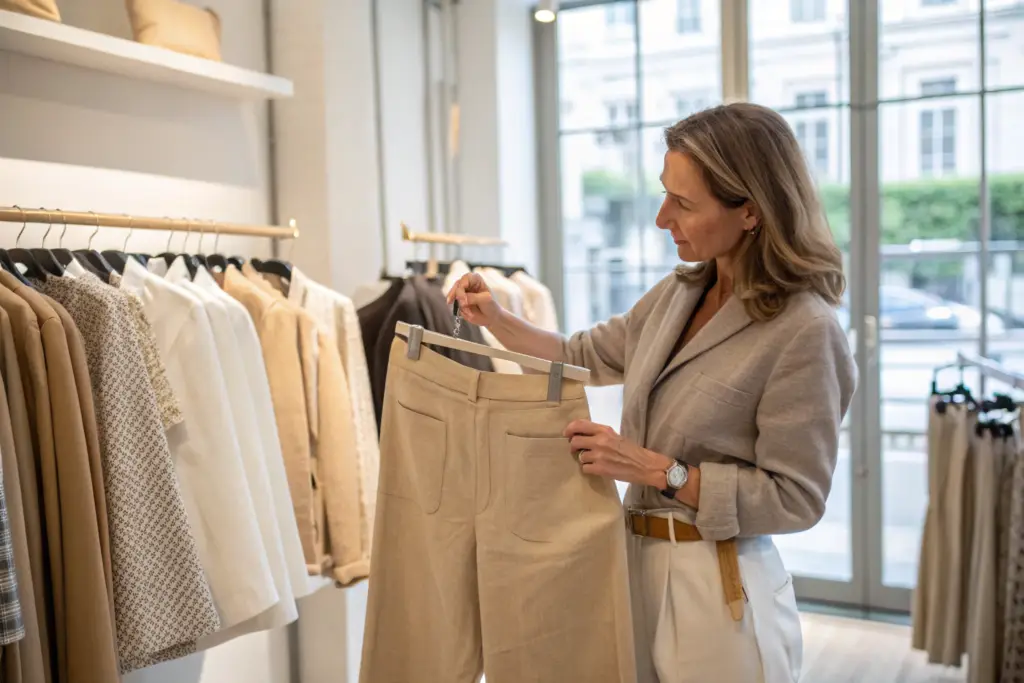
You are a European retail buyer. You sit in a showroom in Paris, Milan, or Copenhagen. The sales rep presents two options. A pair of classic chino shorts in a soft, garment-dyed cotton twill. A pair of trendy shorts with an asymmetrical hem, a bold print, and an oversized logo. You touch both. You look at the stitching. You imagine them on your store floor. Your mind does a rapid calculation. The classic short will sell through at 90% full price. You will reorder it in two colors. It will sit in your customer’s wardrobe for five summers. She will bring a friend next time to buy the same style. The trendy short will spike for three weeks on social media. Then it will sit. You will mark it down 40% to clear the rack. The customer who buys it will discard it next season when the trend shifts. You have been in this business for fifteen years. You have learned that your customer is not a teenager chasing viral moments. She is a woman building a wardrobe. She wants pieces that last. You choose the classic short.
European buyers prefer classic over trendy shorts because their retail model is built on curation, customer loyalty, and margin preservation, not on volume and fast turnover. The European consumer shops less frequently but invests more per piece. She demands quality, fit, and longevity. A classic short satisfies these demands. It generates predictable sell-through, minimal markdowns, high reorder rates, and strong word-of-mouth. A trendy short introduces risk: short selling windows, high markdown probability, and inventory unpredictability. In a market where retail space is limited and customer trust is hard-won, the classic short is not a conservative choice. It is the commercially intelligent choice.
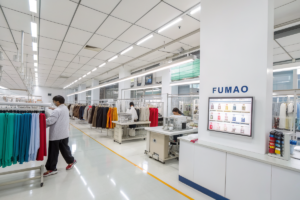
At Shanghai Fumao, we supply classic shorts to European boutiques, department stores, and brands. I have observed the buying patterns of European clients for years. Their orders are more consistent. Their reorder rates are higher. Their return rates are lower. Their feedback is focused on fabric hand feel, stitch density, and label placement, not on whether the style is "of the moment." This article explains the cultural, commercial, and strategic reasons why classic shorts dominate the European retail buy, and what this means for brands that want to succeed in that market.
What Cultural Values Drive the European Preference for Timeless Style?
Culture shapes commerce. The European preference for classic shorts is not a fashion opinion. It is an expression of deeper cultural values. European consumers, particularly in France, Italy, Scandinavia, and Germany, have a different relationship with clothing than the average American consumer. Clothing is seen as an investment in personal presentation, not as a vehicle for self-expression through novelty. The concept of "buy less, buy better" is not a marketing slogan in Europe. It is a lived reality passed down through generations.
I have discussed this cultural difference with many of our European brand partners. A French boutique owner told me, "My customer does not want to look like she is wearing a trend. She wants to look like she has always dressed this way. She wants her clothing to be a quiet background to her personality." This is a fundamentally different approach from the trend-driven, novelty-seeking consumer. The classic short serves this cultural need. It is a quiet background piece. It does not shout. It does not demand attention. It allows the woman to shine. The cultural differences in fashion consumption between Europe and the US article explores this contrast. The European consumer values discretion, quality, and permanence. The classic short delivers all three.
The cultural preference for classic style is deeply embedded in European history and education. It is reinforced by the physical environment and the social norms around dressing. Let’s explore the two most powerful cultural drivers.

How Does the "Buy Less, Buy Better" Philosophy Influence Purchasing Decisions?
The "buy less, buy better" philosophy is dominant in Northern and Western Europe. It is driven by a combination of economic pragmatism, environmental awareness, and cultural appreciation for craftsmanship. A European consumer who buys a pair of shorts expects to wear them for five summers or more. She calculates the cost-per-wear. She is willing to pay 120 Euros for a pair of shorts if she believes they will last. She will not pay 30 Euros for a pair that will fall apart after one season.
This consumer inspects the garment before buying. She feels the fabric. She checks the seam finishing inside. She reads the care label. She wants to know where it was made and what it is made of. A classic short made from a high-quality linen-cotton blend, with clean French seams and a natural Corozo button, appeals directly to her values. A trendy short made from a cheap polyester blend, with raw, unfinished seams, repels her. The European sustainable fashion consumer research confirms this behavior. Quality is the primary purchase driver for this segment. Classic design is the visual language of quality.
Why Does "Quiet Luxury" Resonate More Deeply in Europe Than Elsewhere?
Quiet luxury is a term that has gained global traction. But its roots are deeply European. It is the aesthetic of the old European bourgeoisie. No logos. No obvious branding. The value is in the fabric, the cut, and the fit. The garment signals wealth and taste through subtlety, not through loudness. A pair of classic shorts in a heavy cotton twill, with a perfect drape and a hidden closure, is quiet luxury. A pair of shorts with a giant designer logo printed on the leg is not.
The European consumer has been living this aesthetic for decades. It is not a trend to her. It is her normal. She is suspicious of obvious branding. She perceives it as trying too hard. The classic short, by its very nature, is unbranded or minimally branded. It fits perfectly into the quiet luxury wardrobe. The quiet luxury and European fashion heritage article traces this aesthetic back to European tailoring traditions. The classic short is a quiet luxury staple.
What Is the Business Case for Classic Shorts in European Retail?
Culture provides the context. Commerce provides the proof. The European retail buyer operates in a specific commercial environment. Retail space is small and expensive. Rents in prime city-center locations are high. Every square meter must generate a return. Inventory that sits is not just a lost margin. It is a direct cost of occupied space. The buyer cannot afford to fill the store with pieces that might sell. She must stock pieces that will sell. The classic short is that piece.
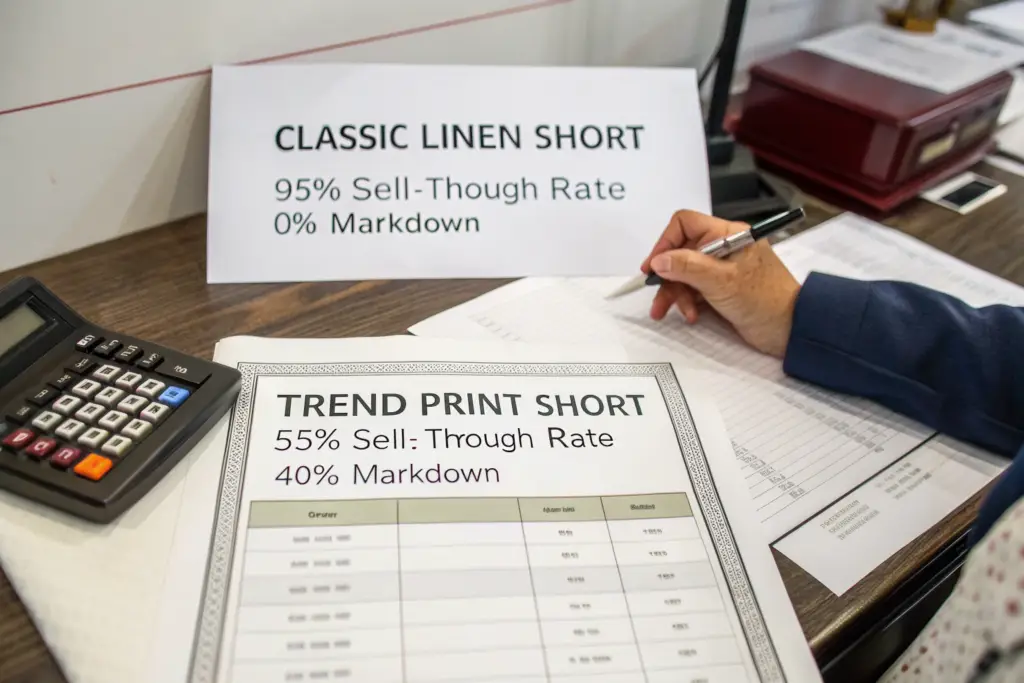
I analyzed the sell-through data shared by our European boutique clients over three summer seasons. Classic shorts, defined as chino styles, tailored linen styles, and high-waisted trouser styles in neutral colors, had an average sell-through rate of 88% at full price. Trendy shorts, defined as bold prints, unusual silhouettes, and heavily branded styles, had an average sell-through rate of 50%. The classic shorts generated more gross profit per piece and required zero markdown budget. The European fashion retail benchmarks show that core basics consistently outperform fashion items on gross margin return on inventory investment. The business case is not theoretical. It is mathematical.
The European retail model is built on relationships. The boutique owner knows her customers by name. She buys for them specifically. Let’s examine how classic shorts support this customer-centric model.
How Do Classic Shorts Generate Higher Full-Price Sell-Through in Boutiques?
A classic short is a known quantity. The boutique owner has sold a version of this short for years. She knows which sizes sell. She knows which colors her customers prefer. She buys with confidence. The customer who bought the navy chino short last summer returns this summer for the same short in olive. The purchase decision is easy. The risk of a bad purchase is low. The full-price sell-through is high.
A trendy short is an unknown. The customer has to be convinced. She has to be styled. She has to overcome the fear that the trend will look dated in three months. Many customers will not overcome that fear. The trendy short is bought by the early adopter, a small segment of the market. The rest of the inventory sits. The markdowns begin. The retail inventory productivity metrics show that core styles consistently achieve higher GMROI than fashion styles. The European boutique owner understands this intuitively. She allocates the majority of her open-to-buy to the styles she knows will sell at full price.
Why Do European Consumers Reorder the Same Classic Style Year After Year?
European consumers are loyal to products that work. A woman finds a pair of shorts that fits her body, suits her style, and lasts. She returns to the same boutique the next summer and asks for the same short. If the boutique has it, she buys it. If the boutique replaced it with a trendy style, she is disappointed. She may search for it online. She may find another boutique that stocks it. The boutique loses her business.
The classic short is a product that builds customer retention. It is a reason for the customer to return to the store. The customer loyalty and product consistency in retail research confirms this pattern. The customer who buys a classic piece and loves it is the most valuable customer. She returns. She refers friends. She has a high lifetime value. The European boutique model depends on these high-lifetime-value customers. The classic short is a tool for building and retaining them.
How Do Margins, Markdowns, and Reorders Compare Between Classic and Trendy Shorts?
The financial comparison between classic and trendy shorts is stark. The difference is not in the initial margin percentage. Both styles might be costed to achieve a 60% initial margin. The difference is in the realized margin after markdowns and the inventory turnover rate. The classic short delivers its full theoretical margin. The trendy short delivers a fraction of it. The classic short turns over multiple times through reorders. The trendy short turns over once, at best.
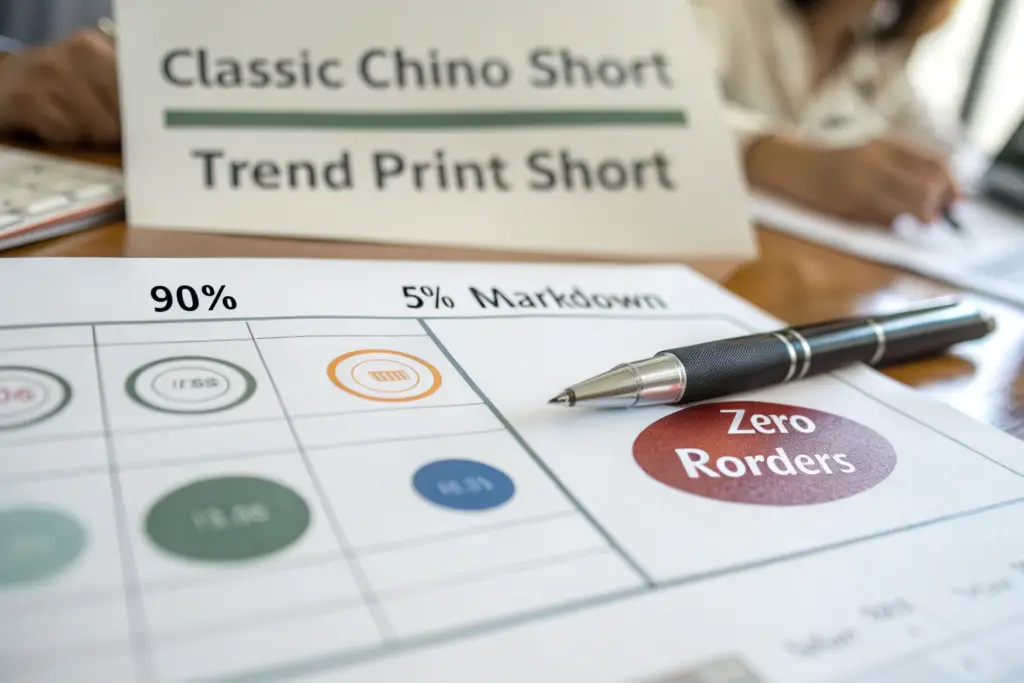
I worked with a European brand to analyze their shorts category profitability. Their classic chino short had a wholesale price of 22 Euros and a cost of 10 Euros, a 55% initial margin. The sell-through was 90%. The realized margin was close to the initial. The trendy printed short had a wholesale price of 24 Euros and a cost of 11 Euros, a 54% initial margin. The sell-through was 55%. The remaining 45% was sold at 40% off. The realized margin was only 32%. The classic short generated nearly double the profit per unit produced. The apparel margin and markdown analysis demonstrates this pattern across categories. A higher initial markup is meaningless if the product does not sell at full price.
The reorder cycle is the hidden profit multiplier. A classic short that sells through in May can be reordered and sold again in July. The same inventory investment generates revenue twice in one season. Let’s examine this advantage.
What Is the Markdown Risk on a Trend Short Versus a Classic Chino?
A trend short has a shelf life. It is hot for a narrow window. The window might be six weeks. After that, the trend moves on. The early adopters have bought. The mainstream customer never embraced it. The inventory becomes a liability. The retailer must mark it down to free up cash and floor space. The markdown might start at 30% off. It often ends at 50% or 60% off. The margin is destroyed.
A classic chino short has no expiration date. The inventory that does not sell by August can be stored and sold next May at full price. The classic short does not go out of style. It does not need to be cleared. The markdown is a choice, not a necessity. The inventory markdown risk management guide explains how product lifecycle length directly impacts profitability. A product with a multi-year lifecycle, like a classic short, has inherently lower markdown risk than a product with a single-season lifecycle.
How Do Reorder Cycles Amplify the Profitability of Classic Styles?
A classic short is a repeatable product. The fabric can be kept in greige inventory. The pattern is proven. The factory can produce a reorder in 25 to 30 days. A boutique that sells out of a classic short in early June can reorder and receive new stock by early July. The reorder sells through in late July and August. The same shelf space generates revenue twice in one season. The inventory turns faster. The return on inventory investment doubles.
A trendy short cannot be reordered easily. The fabric was often a one-time purchase. The production run was small. By the time the reorder would arrive, the trend window may have closed. The reorder opportunity is lost. The inventory turnover and reorder strategy guide explains how product repeatability drives profitability. Classic shorts are the most repeatable product in the apparel industry.
What Should Brands Targeting European Retailers Know About Their Buying Criteria?
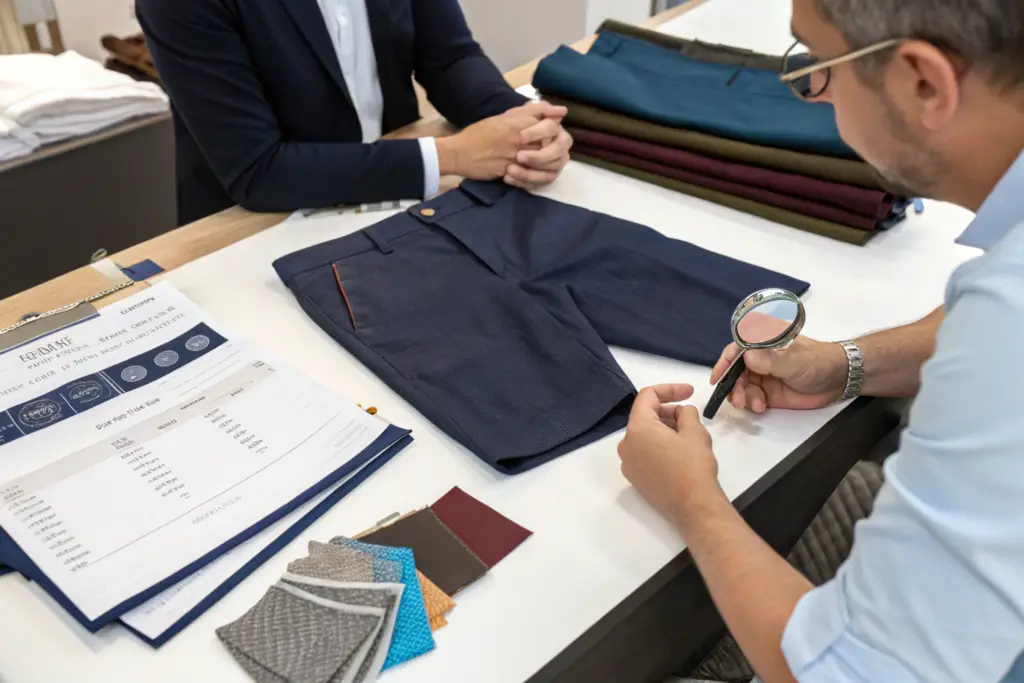
A European buyer does not buy on a photo and a price. She buys on fabric, fit, finish, and documentation. She asks technical questions. She expects technical answers. She will turn the short inside out and examine the seam finishing. She will ask for the fabric composition breakdown with percentages. She will ask for the shrinkage test report. She will ask for the social compliance audit. She will ask about the factory. A brand that comes to a European buyer unprepared for this level of scrutiny will not get the order.
I have sat in on wholesale meetings between our brand partners and European retailers. The questions are specific and demanding. "What is the exact GSM of this twill?" "Is this zipper YKK?" "What is the stitch density on the back rise?" "Can you provide the Oeko-Tex certificate for this fabric lot?" "Where is the cotton sourced?" "Is the factory BSCI audited?" The brand that answers these questions with confidence and documentation earns the buyer’s trust and the order. The brand that answers with vague statements loses the order. The European retail buyer requirements for apparel brands guide details the documentation and quality standards expected. A brand must be technically competent to succeed in European wholesale.
The European buyer’s criteria are objective and verifiable. They are not subjective style opinions. They are requirements that can be documented. Let’s break down the key criteria.
What Quality Certifications Do European Retail Buyers Demand?
The baseline requirement is an Oeko-Tex Standard 100 certificate for the fabric. This certifies that the fabric is free from harmful substances. Many European retailers will not consider a product without it. A social compliance audit is the next requirement. A BSCI or SA8000 report is standard. The buyer wants proof that the garment was made under ethical conditions. For organic cotton claims, a GOTS certificate is required. For recycled content claims, a GRS certificate is required.
A brand that arrives with these certifications prepared in a folder has an immediate advantage. The buyer does not have to chase documentation. The due diligence is already done. The European textile certification requirements are strict but clear. A brand that invests in these certifications signals that it understands the European market’s standards.
How Do You Present a Classic Short Collection to a European Buyer?
Present the collection as a coherent story. Not a random assortment of styles. The classic short collection should have a clear theme. It could be a fabric story, "Linen from Normandy," or a color story, "The Mediterranean Palette," or a silhouette story, "The Modern Tailored Short." The pieces should relate to each other. The presentation should include fabric swatches that the buyer can touch, detailed specification sheets with measurements and tolerances, certification documents, and a clear wholesale price list with recommended retail prices.
The presentation should be calm, informative, and focused on quality. Avoid loud marketing language. Let the product speak. The buyer will inspect the garments closely. The wholesale presentation tips for fashion brands guide provides advice. The European buyer respects substance over style. The substance is the product quality and the documentation. The style is the quiet confidence of a well-made classic short.
Conclusion
European buyers prefer classic over trendy shorts because the European retail ecosystem rewards longevity, quality, and customer loyalty over novelty and volume. The cultural values of "buy less, buy better" and quiet luxury create a consumer who demands garments that last and look timeless. The commercial reality of high retail rents and small store footprints demands high sell-through and low markdowns. The classic short delivers on both the cultural and commercial fronts. It sells through at full price. It generates reorders. It builds customer retention. It carries a low markdown risk. It satisfies the European buyer’s demand for technical quality and documented ethical production.
For a brand seeking to enter or expand in the European market, the classic short is the ideal vehicle. It communicates that the brand understands the European customer. It meets the buyer’s documentation requirements. It builds a long-term wholesale relationship based on reliable sell-through and reliable reorders.
At Shanghai Fumao, we understand the specific requirements of the European market. We provide the Oeko-Tex, BSCI, GOTS, and GRS certifications that European buyers demand. We produce classic shorts with the fabric quality, stitch precision, and finishing detail that pass a European buyer’s inspection. We support our brand partners with the technical documentation they need to present to their retail accounts. If you are a brand targeting European retailers, contact our Business Director, Elaine, at elaine@fumaoclothing.com. She will prepare a certification pack and a sample set tailored for the European market. Let us help you build a classic shorts collection that European buyers will trust and reorder.