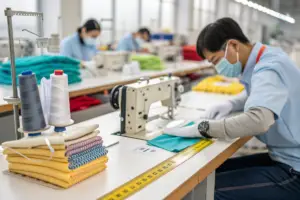
You open the carton from your custom shorts order. You pull out the first pair. The fabric feels right. The color looks correct. You breathe a small sigh of relief. Then you pull out the tenth pair. The zipper is stiff. The twentieth pair. The back pocket is crooked. The fiftieth pair. The waist measurement is an inch smaller than specified. Your relief evaporates. You realize the first pair was the lucky one. The rest are a mixed bag. You now face a painful decision. Accept the shipment and sell inconsistent quality to your customers. Or reject it and argue with the factory while your inventory sits in limbo. You wish you had known how to verify quality before the goods were packed. You wish you had a checklist.
The key quality control checks for custom men's shorts fall into five categories: fabric and trim verification, measurement and fit accuracy, stitching and seam integrity, hardware and closure function, and visual appearance and finishing. Each category has specific, measurable checks that can be performed on a pre-production sample, during an inline inspection, and at a final pre-shipment inspection. A systematic QC process, documented with a clear checklist and accepted AQL sampling standards, is the difference between receiving a shipment that builds your brand and receiving a shipment that damages it. Quality control is not an expense. It is an insurance policy.
At Shanghai Fumao, quality control is integrated into every stage of production. We do not rely on a single final inspection. We check the fabric when it arrives. We check the cut panels before they go to the sewing line. We check the garments during sewing. We check the finished goods before packing. We check the packed cartons before loading. Each stage has a checklist. Each checklist is signed by a QC inspector. This system catches defects early, when they are cheap to fix. This article shares the essential QC checks you should demand from your factory, or perform yourself through a third-party inspector.
What Fabric and Trim Checks Must Happen Before Cutting Begins?
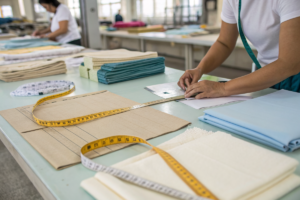
The best time to catch a quality problem is before the first cut is made. Once the fabric is cut, it is too late to reject a bad roll without incurring material waste and production delays. Fabric inspection is the first and most critical QC gate. The fabric defines the look, the feel, and the durability of the finished short. If the fabric is wrong, everything else is irrelevant. Yet many buyers skip fabric inspection entirely. They trust the supplier's word. They see the finished short and discover the fabric problem when it is too late.
I recall an order where the factory skipped fabric inspection to save time. The bulk fabric had a subtle shading variation from one roll to another. The variation was not visible under the factory's fluorescent lights. It was highly visible under the department store's bright halogen lights. Half the shorts were a slightly different shade of khaki. The entire order was rejected by the retailer. The factory had to remake the order at their own cost. A simple fabric inspection with a lightbox would have caught the problem before cutting. The fabric inspection 4-point system is the industry standard. A professional factory uses it on every roll.
Fabric and trim checks are objective and measurable. You can specify them in your purchase order. A factory that cannot provide the corresponding test reports is not a factory you should trust with your order. Let's break down the essential checks.
How Do You Verify Fabric Weight, Color, and Shrinkage Before Cutting?
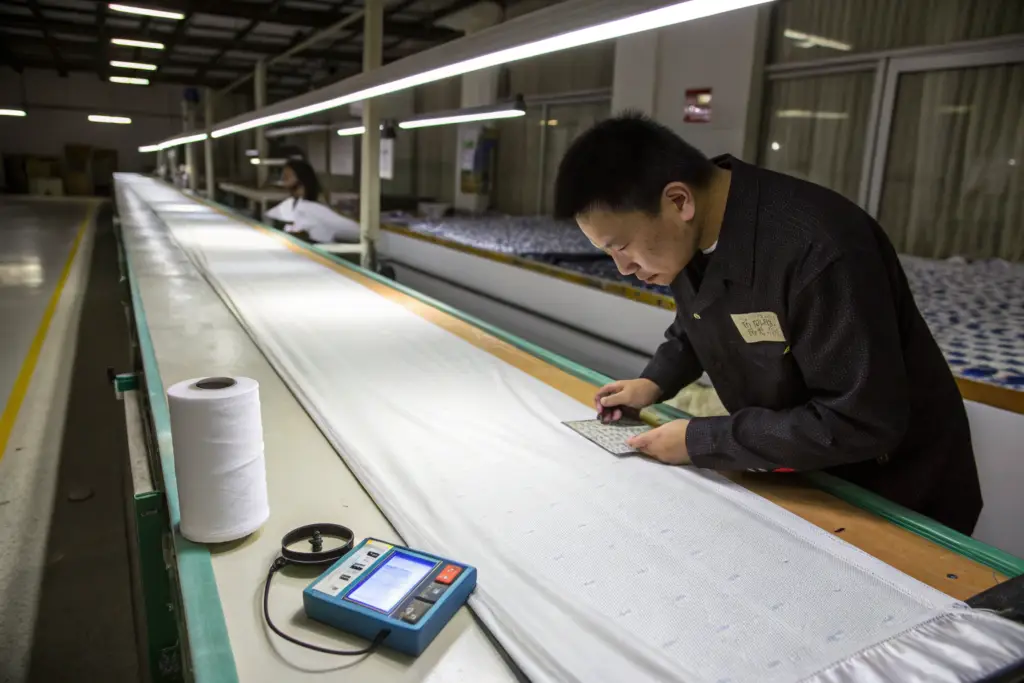
Fabric weight is verified with a GSM cutter and a digital scale. Cut a precise circle of fabric. Weigh it on the calibrated scale. Multiply by 100. The result must be within 5% of the specified GSM. A 280 GSM twill should measure between 266 and 294 GSM. Fabric outside this range is non-conforming. Fabric color is verified with a lightbox. The bulk fabric swatch is compared to the approved lab dip or color standard under multiple light sources, D65 daylight, cool white fluorescent, and incandescent. The color must match under all three. A match under one light but not another is called metamerism and is a rejectable defect.
Fabric shrinkage is verified with a pre-wash test. Cut a square of fabric. Mark a 50cm by 50cm box. Wash the fabric according to AATCC 135, the standard home laundry test. Dry it. Measure the box again. The shrinkage in both warp and weft directions must be under 2%. A fabric with 5% shrinkage will produce shorts that lose over an inch in length after the first wash. That is a return-generating defect. The fabric shrinkage test standard AATCC 135 defines the procedure. Request a test report for every fabric lot.
Why Must Zippers, Buttons, and Thread Be Tested Before Production?
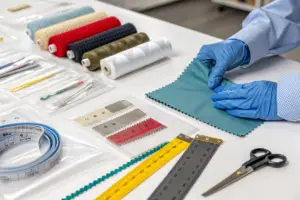
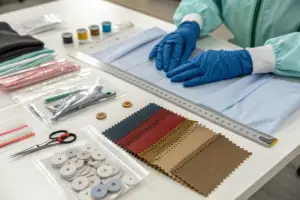
Trims are small components with a big impact. A zipper that fails renders the short unwearable. A button that falls off is a frustration. Thread that does not match the fabric color, or worse, is the wrong type for the seam, causes failures. Trim inspection is quick and essential. For zippers, check the brand, the size, and the color against the specification. YKK #5 metal zipper, antique brass finish. Operate the zipper 20 times. It should slide smoothly. The teeth should engage cleanly. The slider should lock in the down position.
For buttons, check the material, the size, and the color against the specification. 20L Corozo nut button, natural brown. Pull on the button. It should not crack. Check the back edge. It should be smooth, not sharp. A sharp edge will cut through the buttonhole thread. For thread, check the color against the approved thread card under the lightbox. Check the fiber type. Polyester core-spun thread for strength. The trim inspection checklist for apparel covers all trim types. A stitch is only as strong as the thread. A closure is only as reliable as its weakest component.
How Do You Verify Measurements and Fit Consistency Across Sizes?
A short that does not fit is a returned short. Fit consistency across a size run is what separates a professional factory from an amateur one. A customer who buys a size 32 expects it to fit like every other size 32 they have bought from that brand. If the size 32 in navy fits differently than the size 32 in khaki, the brand loses trust. Measurement verification is the QC check that ensures consistency.
I remember a brand owner who complained that his customers were returning shorts because of inconsistent sizing. We investigated. His previous factory was cutting fabric by hand with manual pattern matching. The operator was not following the grain line precisely. The cut panels were slightly off-grain. The shorts twisted slightly and measured inconsistently. We use automated cutting machines with laser alignment for our large orders. The cut panels are identical within a 1-millimeter tolerance. The measurements are consistent. The returns stopped. The garment measurement tolerance standards define acceptable variation.
Measurement verification must be done on a representative sample from the bulk production. The sample size is determined by the AQL level you have agreed with the factory. Let's look at the key measurement points and the sampling methodology.
What Are the Critical Points of Measure for a Classic Men's Short?
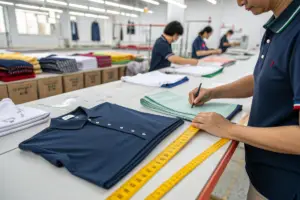
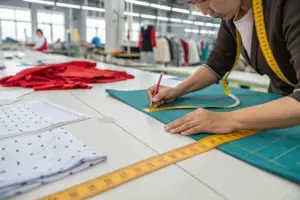
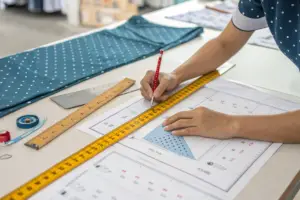
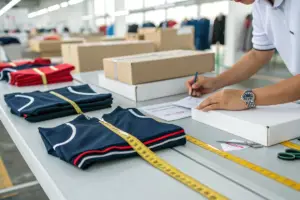
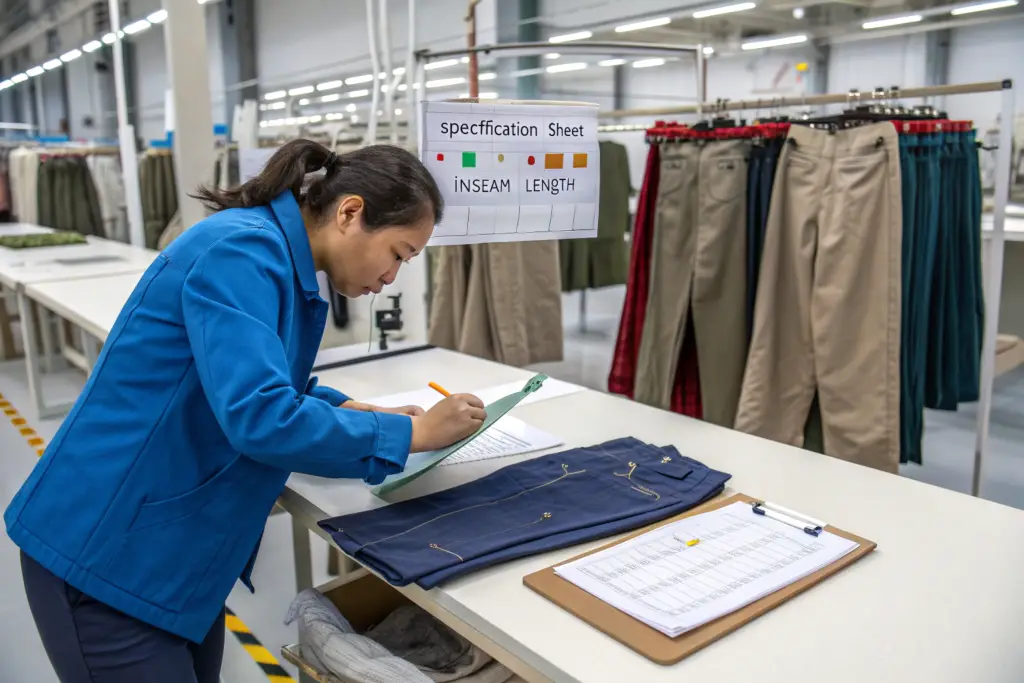
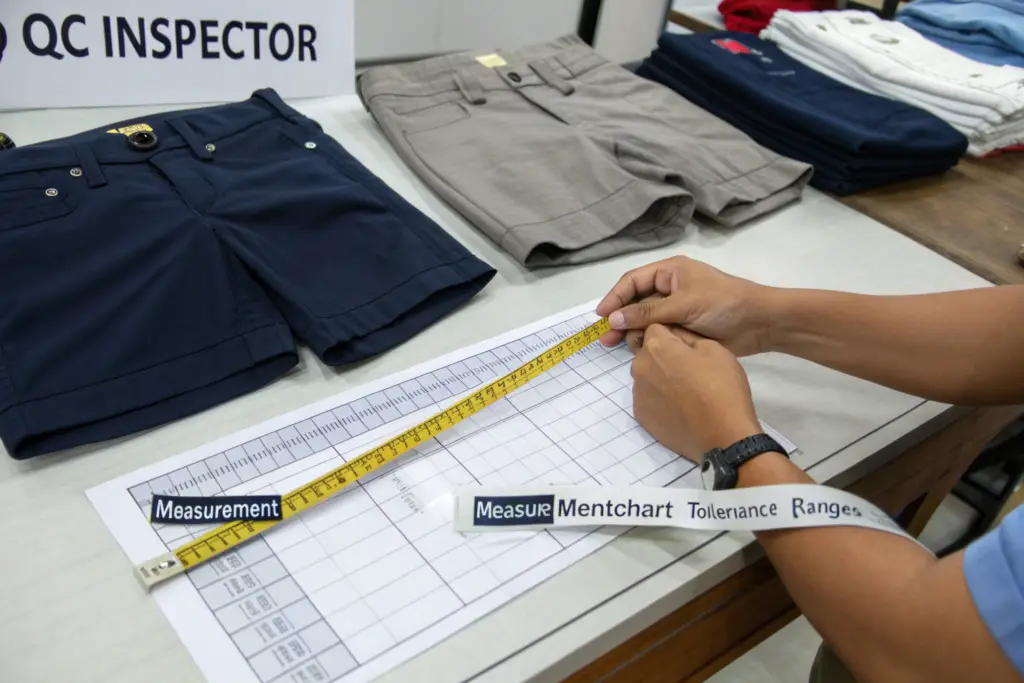
A classic men's short has at least ten critical points of measure. Waist circumference, relaxed and extended. Front rise from crotch seam to top of waistband. Back rise from crotch seam to top of waistband. Hip width measured at a specified distance below the waistband, usually 10cm. Thigh width measured at the crotch level. Leg opening circumference at the hem. Inseam length from crotch seam to hem. Outseam length from waistband top to hem. Pocket bag depth. Zipper length.
Each measurement has a specified tolerance. The half-waist measurement for a size 32 might be 42cm with a tolerance of plus or minus 0.5cm. The inseam might be 18cm with a tolerance of plus or minus 0.5cm. Tolerances tighter than 0.5cm are not realistic for mass production. Tolerances looser than 1cm result in noticeable fit variation. The men's shorts measurement specification sheet provides a template. Every custom order should have a signed measurement chart with tolerances.
How Does AQL Sampling Work for Measurement Inspection?
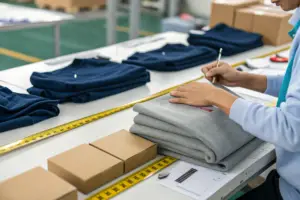
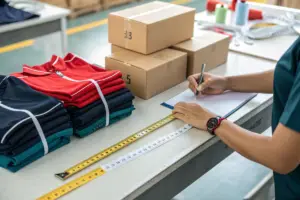
AQL stands for Acceptable Quality Limit. It is a statistical sampling standard. You do not measure every piece. You measure a random sample. The sample size is determined by the order quantity and the AQL level. For a 2,000-piece order with an AQL of 2.5, the inspector measures 125 pieces. If 7 or fewer pieces have measurement defects outside the tolerance, the lot passes. If 8 or more have defects, the lot fails.
AQL 2.5 is the standard for major defects in apparel. Measurements outside tolerance are considered a major defect. The AQL sampling tables for garment inspection provide the exact sample sizes and accept/reject numbers. A professional QC inspection uses AQL sampling. It provides a statistically valid basis for accepting or rejecting a shipment. A buyer should agree on the AQL level with the factory before production begins.
What Stitching and Seam Checks Prevent Construction Failures?
The fabric can be perfect. The measurements can be exact. But if the stitching is weak, the short will fail. Seams will split. Hems will unravel. The garment will not survive the wear and washing that a customer expects. Stitching and seam checks are the structural inspection of the short. They verify that the garment is built to last.
I once saw a pair of shorts where the back rise seam was sewn with a single-needle lockstitch instead of the specified safety stitch. The lockstitch had no stretch. When the wearer sat down, the seam snapped. The short was destroyed. The factory had used the wrong machine to save time. Our inline QC inspector caught the error after the first ten pieces were sewn. The lot was pulled, the seam was re-sewn, and the problem was contained. Without that inline check, 2,000 pairs of shorts would have been shipped with a guaranteed failure point. The garment stitch type guide explains the different stitch types and their applications.
Stitching quality is measured in stitches per inch, or SPI. It is checked visually for defects like skipped stitches, broken stitches, and puckering. It is checked functionally by pulling on the seam. Let's examine the critical seam points and the standard checks.
How Do You Check Stitch Density and Seam Strength at Stress Points?
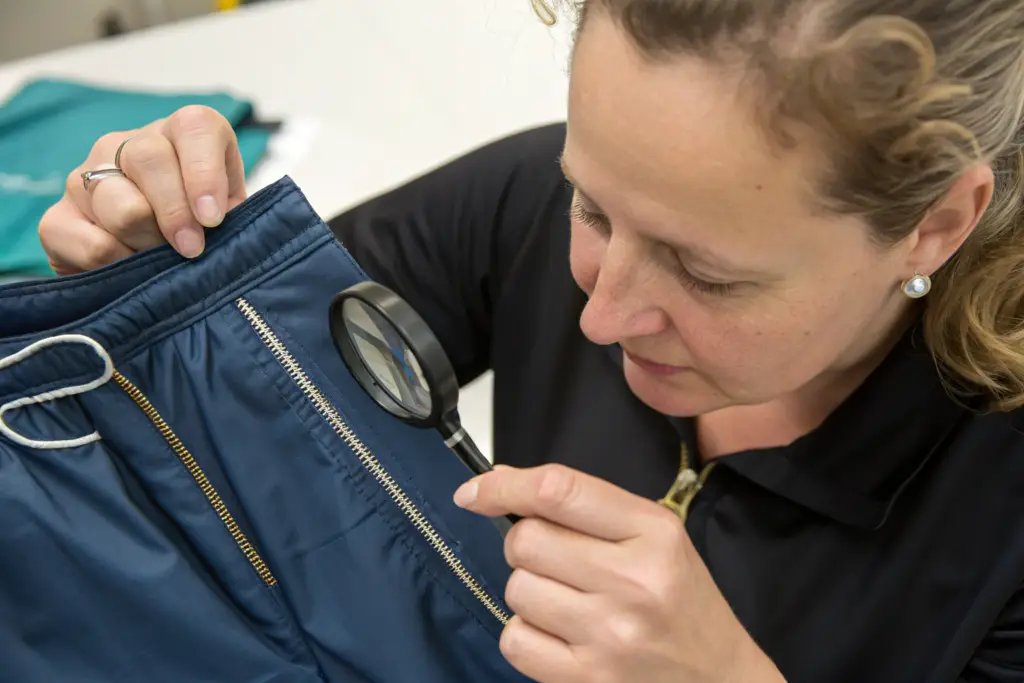
The stress points on a pair of shorts are the back rise seam, the crotch point, the side seams at the pocket openings, and the belt loops. These points take the most force during wear. The stitch density at these points should be 10 to 12 stitches per inch. Check the density with a pick glass. Place the glass on the seam. Count the stitches within a half-inch mark. Multiply by two. A seam with 8 SPI is too loose and will gape or break. A seam with 14 SPI is too tight and can perforate the fabric.
The seam strength is checked by pulling on the seam with firm, even pressure. The seam should not open. The thread should not break. The fabric around the seam should not tear. A proper 516 safety stitch on the back rise will survive this pull test. A weak lockstitch will not. The seam strength testing methods standard ASTM D1683 defines the lab test. A simple manual pull test is a useful field check. The seam should feel solid, not fragile.
What Are the Most Common Stitching Defects and Their Causes?
Skipped stitches are gaps in the stitching where the needle missed the fabric. They are caused by a dull needle, incorrect needle size, or poor fabric feeding. Puckered seams are seams where the fabric is gathered and wrinkled along the stitch line. They are caused by incorrect thread tension, a dull needle, or sewing off-grain. Uneven stitch density is where the SPI varies along the seam. It is caused by inconsistent machine speed or operator technique.
Open seams are where the seam allowance is not caught properly, leaving a hole. They are caused by poor fabric alignment during sewing. Broken stitches are where the thread is snapped. They are caused by thread that is too weak, tension that is too high, or a machine hook that is damaged. Each defect has a clear cause. A trained QC inspector identifies the defect and the cause. The common garment stitching defects guide provides photos of each defect type. A buyer should know what these defects look like.
What Final Visual and Functional Checks Complete the Inspection?
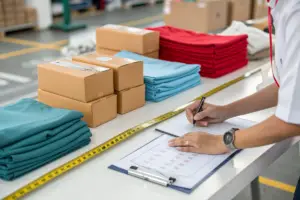
The shorts are constructed. The fabric is verified. The measurements are checked. The seams are inspected. Now comes the final visual and functional check. This is the check that simulates the customer's experience. The inspector looks at the short as a whole. They operate every closure. They inspect every pocket. They look for stains, loose threads, and pressing defects. This is the gate that the short must pass before it is packed into a carton.
I recall a shipment that passed all the technical checks. Measurements were good. Seams were strong. But the shorts had a persistent crease from the pressing process that was not supposed to be there. It was a visual defect. Our final QC inspector caught it. The lot was re-pressed before packing. The customer never knew there was an issue. That is the purpose of the final visual check. It catches the defects that affect the customer's first impression. The final garment inspection checklist covers all visual and functional checks.
The final check includes specific functional tests. Every zipper is operated. Every button is pulled. Every pocket is inspected inside and out. The general appearance is assessed under good lighting. Let's detail these final checks.
How Do You Test Zipper Function, Button Security, and Pocket Integrity?
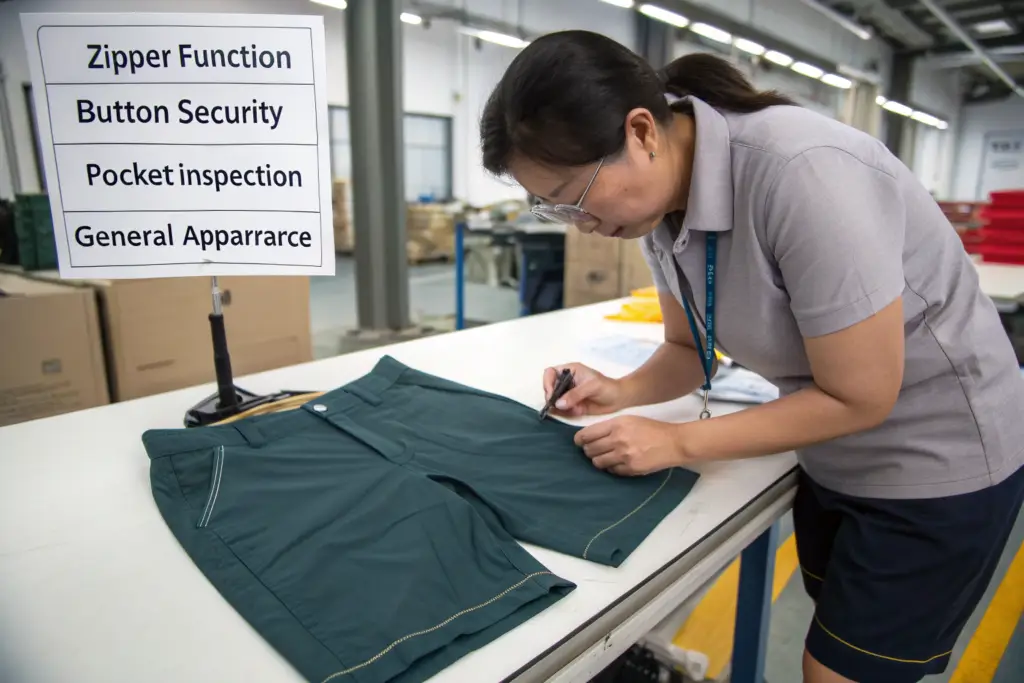
The zipper fly is zipped and unzipped ten times. It must operate smoothly without catching. The zipper slider must lock in the down position. The zipper tape must be securely sewn into the fly, with no raw edges visible. The button is pulled with firm pressure. The button should not crack. The thread should not break. The buttonhole should be cleanly cut and stitched, with no fraying threads.
The pockets are turned inside out. The pocket bag stitching is inspected. There should be no holes. The bar tacks at the pocket corners should be secure. The pocket bag should be the specified material, not a cheap substitute. The pocket opening is measured against the specification. A phone is placed in the front pocket. The phone should sit securely below the pocket opening. The back pocket button or closure is tested. The garment function testing checklist provides a systematic process. Function is as important as form.
What Visual Defects Should Trigger a Rejection?
Stains. Any visible stain, oil, dirt, dye spot, on the garment is a major defect. The piece is rejected. Loose threads. More than two loose threads longer than 1cm is a defect. The threads must be trimmed cleanly. Uneven hems. A hem that is visibly uneven, varying by more than 0.5cm around the leg opening, is a defect. Wavy topstitching. Topstitching that is not straight and parallel to the seam is a defect. Shade variation between panels. A left leg panel that is a slightly different shade than the right leg panel, visible under daylight, is a critical defect. The entire garment is rejected.
Pressing defects. Shine marks from over-pressing. Creases in the wrong place. Unpressed areas. These are defects. Label placement errors. A label that is crooked, sewn in the wrong location, or missing is a defect. The visual defect classification for garments guide defines the standard defect categories. A clear defect classification in the QC checklist ensures consistent judgment.
Conclusion
Quality control for custom men's shorts is a systematic, five-gate process. The fabric and trims are inspected before cutting to catch material defects at the source. The measurements are checked against the specification with AQL sampling to ensure fit consistency. The stitching and seams are inspected for density and strength at stress points to prevent structural failures. The hardware and closures are functionally tested. The final visual and functional check simulates the customer's unboxing experience. Each gate has a clear checklist. Each checkpoint is documented. Defects are caught early, when they are cheap to fix. The result is a shipment of shorts that meets the customer's expectations and builds the brand's reputation.
A buyer does not need to perform all these checks personally. A third-party inspection company like SGS, Bureau Veritas, or QIMA can perform them on the buyer's behalf. The key is that the checks are specified in the purchase order and the QC protocol is agreed upon with the factory before production begins. A factory that resists a defined QC protocol is a factory that does not want to be held accountable. A factory that welcomes it is a factory that is confident in its quality.
At Shanghai Fumao, quality control is our operating system, not an afterthought. We inspect fabric at receiving. We check cut panels before sewing. We perform inline QC during production. We do a 100% final inspection on every piece. We welcome third-party inspections and provide full access to our QC records. If you are placing a custom men's shorts order, contact our Business Director, Elaine, at elaine@fumaoclothing.com. She will send you our standard QC checklist and explain our quality assurance process. Let us build shorts that pass every check.