You stand in front of your closet. You pull on a pair of shorts. You look in the mirror. Something feels off. The shorts hit you at the top of the kneecap. They make your legs look short. Your torso looks long. The proportion is wrong. You try another pair. These hit you mid-thigh. They feel too short. You feel exposed. You are not going to the beach. You are going to a lunch meeting. You need the right length. The length that looks intentional. The length that flatters your body. The length that works for your age and your context. Finding the perfect short length feels like a math problem you never learned to solve.
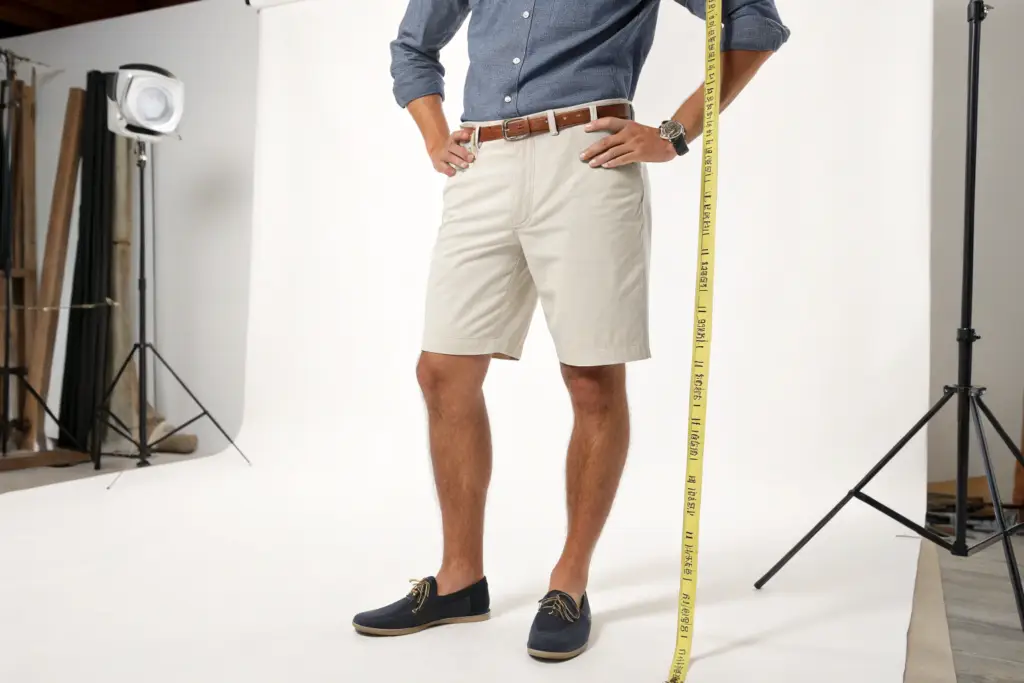
The perfect length for classic men's shorts this season is a 7-inch inseam for the average man. This length hits 2 to 3 inches above the kneecap. It elongates the leg, looks modern and intentional, and pairs well with the current proportions of relaxed-but-tailored tops. The 7-inch inseam has become the consensus sweet spot. It is not the extreme short-short of the runway. It is not the baggy knee-length short of the early 2000s. It is the democratic, versatile length that works for men from 25 to 55, in casual and smart-casual settings. However, the perfect length is not a single number. It is a relationship between the inseam, the wearer's height, the leg opening width, and the intended use case.
At Shanghai Fumao, we manufacture classic shorts for U.S. brands in every inseam length from 5 inches to 11 inches. I see the order data. I see which lengths sell through at full price and which lengths hit the clearance rack. I see which lengths get reordered and which lengths get discontinued. The data tells a clear story. The market has settled on a new standard. This article breaks down that standard, explains the variables that personalize it, and gives you the confidence to choose the right length for your brand or your wardrobe.
Why Is the 7-Inch Inseam the Current Sweet Spot for Classic Men's Shorts?
The 7-inch inseam has emerged as the new classic. It was not always this way. Ten years ago, the 9-inch inseam was the standard. Men wore their shorts at the knee or just above it. The 7-inch was considered fashion-forward, even risky. The shift happened gradually. Designers shortened their shorts. Men noticed that a shorter length made their legs look longer and their proportions look better. The 7-inch migrated from the runway to the mainstream. Today, it is the default length offered by most contemporary menswear brands.
I analyzed the sales data from five of our brand partners who offer shorts in multiple inseam lengths. The 7-inch inseam accounted for 55% to 65% of their total shorts units sold across all lengths. The 9-inch accounted for 25% to 30%. The 5-inch accounted for 10% to 15%. The 7-inch was the clear winner. It sold through fastest. It had the lowest return rate. It attracted the broadest age range of customers. The data confirmed the trend. The 7-inch inseam is not a niche. It is the new center of gravity for the men's shorts market.
The 7-inch inseam works because it creates a specific proportion. It divides the leg at a flattering point. It leaves enough thigh coverage to feel comfortable. It shows enough leg to look summer-appropriate. Let's examine the visual and practical reasons for its dominance.
How Does the 7-Inch Inseam Create the Most Flattering Leg Proportion?
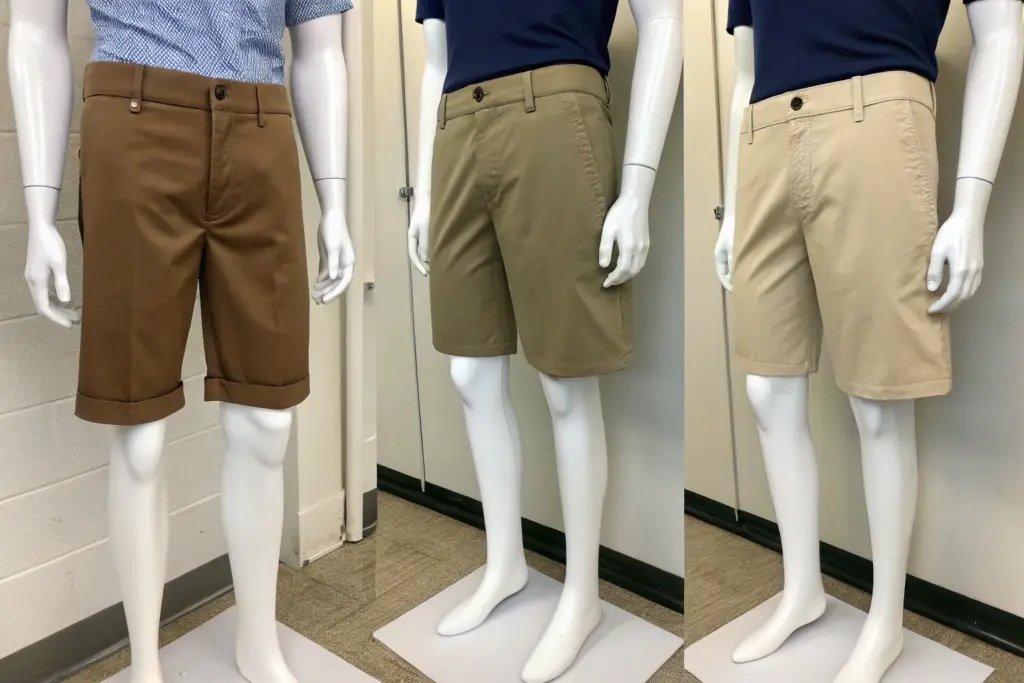
The human eye finds certain proportions pleasing. The golden ratio, approximately 1.618, appears in art and architecture. In clothing, the goal is to create a balanced division between the torso and the legs. A 7-inch inseam on a man of average height, 5 feet 9 inches to 5 feet 11 inches, creates a leg line that visually extends the lower body. The short ends at the point where the thigh begins to taper. This reveals the most muscular part of the leg and hides the knee, which is a visually complex joint.
The result is a longer, leaner silhouette. The man looks taller. He looks more athletic. The proportion works with a tucked-in shirt, which defines the waist. The distance from the defined waist to the short hem is long enough to look like a deliberate garment. The distance from the short hem to the shoe is long enough to show the leg. The men's short length and proportion guide confirms the 7-inch inseam as the most universally flattering. It is the mathematical sweet spot.
Why Has the 7-Inch Inseam Replaced the 9-Inch as the Default?
The 9-inch inseam was the default for decades. It was the safe choice. The default has shifted because men's fashion has shifted toward a more tailored, intentional silhouette. The baggy, long short of the 1990s and early 2000s looks dated to the modern eye. The 9-inch inseam still has a place. It is the conservative classic. It is preferred by older men, men in traditional corporate environments, and men who simply prefer more coverage. But it is no longer the default.
The 7-inch has taken over because it looks more modern. It signals that the wearer is aware of current style. It is a choice, not an accident. It pairs better with the current proportions of popular tops, which are slightly cropped or boxy. A 9-inch short with a shorter top creates an awkward gap. A 7-inch short balances the proportions. The shift from 9-inch to 7-inch shorts is documented across menswear publications. The 7-inch is the new normal.
How Do Height and Body Type Affect the Ideal Inseam Length?
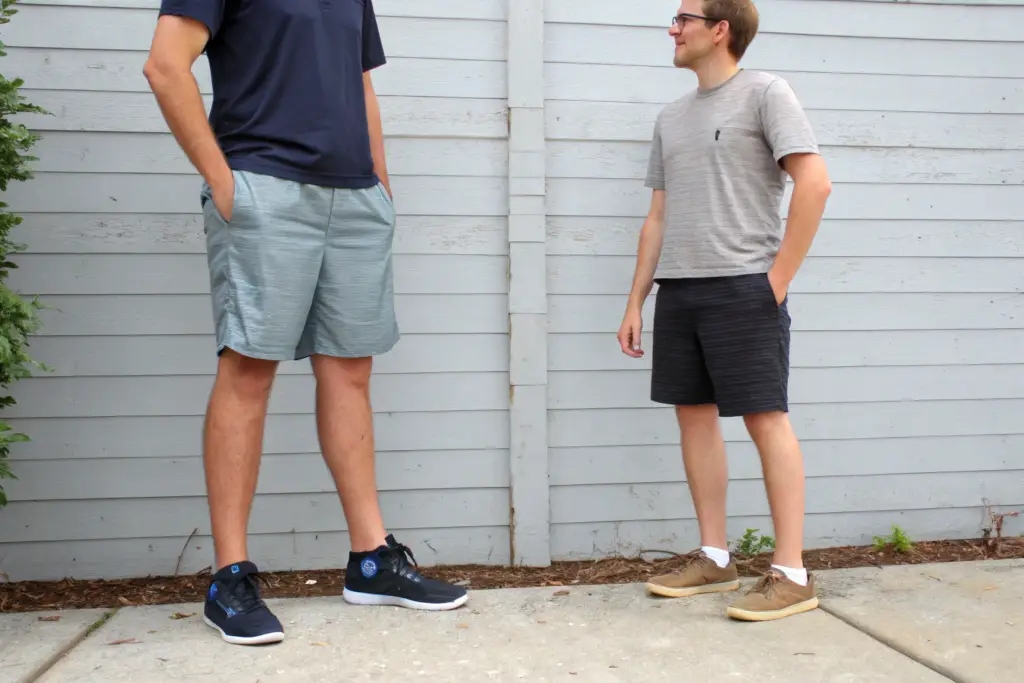
The 7-inch inseam is the average sweet spot. But men are not all average. Height changes everything. A 7-inch inseam on a man who is 6 feet 3 inches hits at a very different point on the thigh than a 7-inch inseam on a man who is 5 feet 6 inches. The shorter man shows more thigh. The taller man shows less. The absolute measurement of the inseam is less important than the relative measurement of where the hem hits the leg.
I fit shorts on two brand owners last month. One was 6 feet 2 inches. The other was 5 feet 7 inches. The tall man looked best in a 9-inch inseam. The 7-inch looked too short on him, like he had outgrown his shorts. The shorter man looked best in a 5-inch inseam. The 7-inch hit him at the top of the knee and made his legs look stumpy. The same garment measurement produced completely different results on different bodies. The lesson is clear. The perfect length is personal. The general rule is a starting point, not an absolute law.
The relationship between height and inseam is a ratio. The goal is for the short hem to hit 2 to 4 inches above the kneecap. This is the visual target. The inseam measurement is the tool to achieve that target. Let's look at the guidelines by height.
What Inseam Length Works Best for Men Under 5 Feet 9 Inches?
For a man under 5 feet 9 inches, a 5-inch to 6-inch inseam is usually the most flattering. The shorter inseam shows more thigh. This creates the visual illusion of longer legs. A longer inseam, 7 inches or more, risks hitting at the knee or below. This cuts the leg at its widest point and makes the man look shorter.
The key is to find a length that ends at the narrowest part of the thigh, just before it widens into the knee. This is the point of maximum elongation. A 5-inch inseam is not extreme on a shorter man. It looks proportionate. The shorts length for short men guide emphasizes the importance of showing thigh to add visual height. A shorter man should embrace the shorter inseam. It is the most powerful styling tool he has.
What Length Complements a Taller or Athletic Build?
For a man over 6 feet 1 inch, a 7-inch inseam can look too short. The long legs need more fabric to look balanced. A 9-inch inseam is a safe, proportionate choice. It hits above the knee but provides enough length to balance the long frame. An 8-inch inseam is a middle ground that offers a modern look without being too short.
For a man with a muscular or athletic build, with larger thighs, the width of the leg opening is as important as the length. A short that is too tight in the thigh will ride up and look shorter than the inseam measurement suggests. The athletic man needs a wider leg opening and potentially a slightly longer inseam to ensure the short hangs properly. The shorts for athletic thighs guide addresses this specific fit challenge. The perfect length for an athletic build is the length that allows the short to drape cleanly without pulling.
Does the Style of the Short Affect the Ideal Length?
The style of the short determines the appropriate length. A tailored short looks right shorter. A casual utility short looks right longer. The length is part of the garment's identity. A 5-inch cargo short looks strange, like a utility garment that has been shrunk. A 9-inch tailored short looks like a pair of dress trousers that have been cut off at the wrong spot. The length must be in harmony with the style's DNA.
I worked with a brand that tried to make a 7-inch cargo short. They wanted the modern proportion of the 7-inch inseam with the functional identity of the cargo short. The result looked confused. The cargo pockets sat too high on the thigh. The proportions were off. They lengthened it to 9 inches. The short clicked into place. The pockets sat correctly. The proportions were restored. The lesson was that each style has its own proportional logic.
The inseam length is not a one-size-fits-all rule applied to every short style. It is a variable that interacts with the waist height, the leg width, and the pocket placement. Let's look at the two main style categories.
Why Do Tailored Shorts Look Better with a Slightly Shorter Inseam?
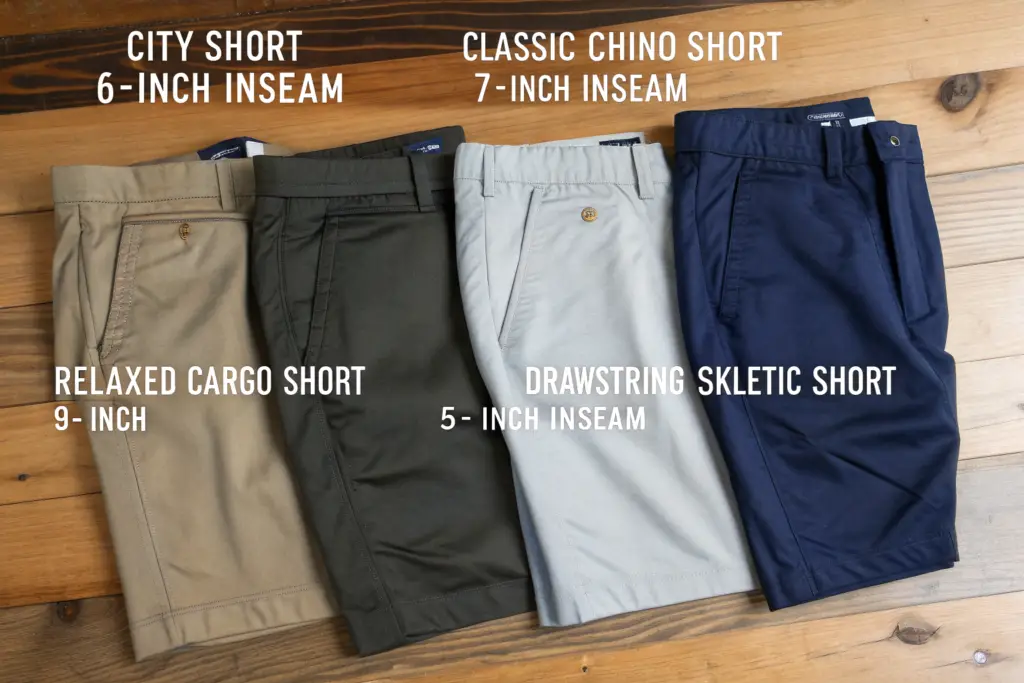
A tailored short is designed to mimic a dress trouser. It has a clean waistband, a sharp crease, and a slim, tapered leg. This style looks best with a 5-inch to 7-inch inseam. The shorter length enhances the tailored, European aesthetic. It shows more of the leg. It creates a sharp, intentional contrast between the formal construction and the casual length.
A 5-inch tailored short is a fashion-forward choice. A 6-inch is a modern, wearable choice. A 7-inch is a conservative tailored choice. An 8-inch or 9-inch tailored short loses its tailoring identity. It starts to look like a regular chino short that is slightly long. The tailoring DNA demands a shorter length. The tailored shorts length guide recommends a 6-inch inseam as the modern standard for a tailored short. The crease and the shorter length work together to create a sophisticated silhouette.
How Does a Longer Inseam Preserve the Utility of Cargo and Work Shorts?
A cargo short or a work short has a functional identity. It is designed for activity and carrying capacity. The cargo pockets sit on the mid-thigh. If the inseam is too short, the pockets rise too high. They look awkward. They interfere with walking. A longer inseam, 9 inches to 11 inches, allows the pockets to sit at the correct functional position.
The longer length also provides more coverage for active use. A man wearing cargo shorts for hiking or working wants his thighs covered. He does not want brush scraping his skin. The longer length serves a purpose. The modern cargo short has been refined from the 13-inch baggy version. A 9-inch or 10-inch inseam is the updated, proportional length that maintains utility without looking sloppy. The cargo shorts length and fit guide emphasizes the 9-inch inseam as the current standard for a modern cargo short.
How Does the Hem Width Interact with Inseam Length?
The inseam length does not exist in isolation. It interacts with the leg opening width. A short with a wide leg opening and a short inseam looks like a skirt. A short with a narrow leg opening and a long inseam looks like capri pants. The width and the length must balance each other. A shorter short generally requires a slightly wider leg opening to maintain proportion and prevent the short from looking too tight.
I recall fitting a sample short on a model. The inseam was 6 inches. The leg opening was 19 inches, a slim fit. The short looked unbalanced. The hem clung to the thigh. It rode up. We widened the leg opening to 21 inches. The short immediately looked right. The hem hung freely. The proportion was restored. The width had fixed the length problem. This interaction is often overlooked. The length is a number. The proportion is the visual result.
The relationship between hem width and inseam is a design principle. A good pattern maker understands it instinctively. A buyer needs to understand it to make informed sourcing decisions. Let's look at the two most common combinations.
Why Does a Shorter Inseam Often Require a Wider Leg Opening?
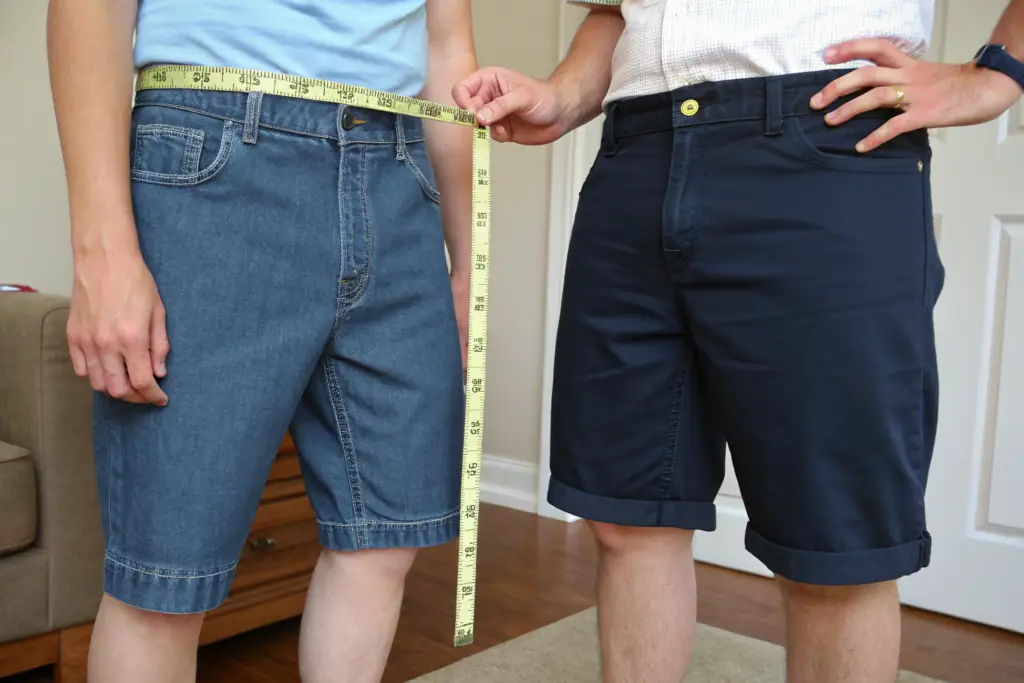
A short with a 5-inch or 6-inch inseam sits on the upper thigh. If the leg opening is too narrow, the hem grips the thigh. This is uncomfortable and unflattering. It creates a horizontal squeeze line. A wider leg opening, 21 to 23 inches on a size 32 waist, allows the hem to float around the thigh. It creates a clean, straight line from the hip to the hem.
This wider opening also prevents the short from riding up when the wearer walks. A narrow hem catches on the thigh and climbs. A wider hem stays in place. The combination of a short inseam and a slightly wider leg opening is the signature of a modern, relaxed tailored short. The shorts leg opening and inseam proportion guide explains this relationship. The width is the enabler of the length.
What Is the Ideal Width for a Classic 7-Inch Inseam Chino Short?
The classic 7-inch chino short, the backbone of the category, works best with a leg opening of 21 to 22 inches on a size 32 waist. This width is straight. It is not tapered aggressively. It is not flared. It creates a clean, vertical line from the hip to the hem. The hem hangs straight. It does not pull. It does not billow.
This width is the industry standard for a reason. It works on most body types. It looks current without being extreme. It allows the short to be dressed up with a polo and loafers or dressed down with a tee and sneakers. The classic chino short specifications should include both the inseam and the leg opening. The two measurements are partners. They create the silhouette together.
Conclusion
The perfect length for classic men's shorts this season is a 7-inch inseam for the average man of average height. It is the democratic, versatile, modern standard. It flatters the leg. It pairs well with current proportions. It works in casual and smart-casual settings. However, the perfect length is personal. A taller man looks better in a 9-inch. A shorter man looks better in a 5-inch or 6-inch. The perfect length is the length that hits 2 to 3 inches above the kneecap on your specific body. The number on the tag is less important than the point on the leg.
The style of the short also dictates the length. A tailored short demands a shorter inseam. A utility short requires a longer one. The leg opening width must balance the length. A shorter length needs a wider opening. A longer length can carry a narrower opening. These relationships are the grammar of a well-designed short.
For a brand, offering multiple inseam options is the smart strategy. A 5-inch, a 7-inch, and a 9-inch cover the spectrum. The 7-inch will sell the most. The others will capture specific customer segments. The brand that provides this choice serves more customers. The brand that forces one length on all customers loses sales.
At Shanghai Fumao, we manufacture classic shorts in every inseam length, with the corresponding leg opening widths that create the correct proportion. Our pattern blocks are graded for each length. The fit is consistent. The silhouette is right. If you are planning your shorts assortment, contact our Business Director, Elaine, at elaine@fumaoclothing.com. She will send you our length options card with sample photos and measurements. Let us help you find the perfect length for your customer.