I sat in a design meeting with a brand owner last year. She showed me a mood board of what she thought would be the next big trend: a specific shade of butter yellow and a return to minimalist slip dresses. She had seen it on a few influencers. She was ready to bet her entire spring collection on it. I asked her if she had checked the actual search data. She had not. We pulled up Google Trends. Searches for "butter yellow dress" were flat. Searches for "slip dress" were actually declining. What was rising, and rising fast, was "utility cargo pants women" and "parachute pants." The data directly contradicted her intuition. She changed her collection. The cargo pants sold out. The butter yellow dresses would have been a markdown disaster. Intuition is a compass. Data is a map. You need both to find the treasure.
To accurately identify massively trending women's wear styles before they hit the global mainstream, you must triangulate three independent signals: consumer search data, social media visual velocity, and supply chain early indicators. First, you use Google Trends, Pinterest Trends, and TikTok Creative Center to identify search terms and hashtags that are growing at 30% month-over-month, not just those with high absolute volume. Second, you analyze the visual content of fast-moving posts to identify the specific garment attributes (e.g., "oversized," "cargo pocket," "parachute material") that are driving the engagement. Third, you validate these signals against the supply chain by checking which fabrics, trims, and silhouettes are being sampled by mills and factories, indicating that major brands are already betting on the trend. The combination of consumer pull, visual validation, and supply-side confirmation gives you a 6 to 12-month head start on the mass market.
Trend prediction is not magic. It is a disciplined process of signal detection and noise filtering. Most brands are followers. They see a trend on the runway or on a major retailer's website and scramble to copy it. By then, the trend is already peaking. The brands that win are the ones that detect the trend when it is still a whisper in a niche community. I want to share the exact detection system our most forward-thinking brand partners use, and how Shanghai Fumao helps them move from detection to production faster than their competitors.
What Free Digital Tools Can Predict a Rising Silhouette 6 to 12 Months Before It Floods the Wholesale Market?
A brand owner I work with used to attend four international trade shows a year to spot trends. It cost her $20,000 in travel and time. She was always six months behind the brands that were already showing the trend at the show. I showed her how to use Google Trends. She typed in "wide leg trousers." The graph showed a slow, steady climb over two years, with seasonal spikes. Then she typed in "barrel leg jeans." The graph was a flat line for years, then a sudden, sharp 45-degree angle upward. That angle, the inflection point, was the signal. She designed a small batch of barrel leg jeans. They sold out in pre-order before a single major retailer had them on the floor. She had found the trend not at a trade show, but on a free website.
Three free digital tools provide a 6 to 12-month early warning system for rising silhouettes. Google Trends reveals search intent. You enter the name of a garment category and observe the shape of the graph over a 5-year period. A slow, steady climb is an established trend. A sudden, sharp inflection point is a breakout signal. Pinterest Trends shows what consumers are actively planning to buy, often months before they purchase. The "Popular Now" and "Trending" feeds are real-time pulse checks on visual discovery. TikTok Creative Center shows what styles are being worn and shared by early adopters. The hashtag view count and growth rate indicate the speed of community adoption. You are looking for high velocity, not just high volume. A hashtag with 10 million views growing at 50% month-over-month is a stronger signal than a hashtag with 500 million views growing at 5%. The early signal is in the acceleration, not the absolute size.
These tools democratize trend detection. A solo brand owner with a laptop has access to the same data as a multinational corporation. The advantage goes to the one who acts on the data faster.

How Do You Distinguish a "Fad" (3-Month Spike) from a "Macro Trend" (2-Year Growth) Using Google Trends?
A fad looks like a sharp spike followed by a sharp drop, often within 3 to 6 months. It is driven by a single viral moment and has no staying power. A macro trend looks like a staircase: a slow, steady climb over 12 to 24 months with small dips that recover. The macro trend is driven by a genuine shift in consumer preference. You should never commit to bulk production based on a fad. You can test a fad with a small batch. You build your core collection around macro trends.
Why Is Pinterest a Better Predictor of "Purchase Intent" Than Instagram for Wholesale Planning?
Instagram is a social network. Users browse for entertainment and inspiration, often looking at content that is aspirational but not immediately purchasable. Pinterest is a planning tool. Users search for specific items they intend to buy or make. A user searching for "spring capsule wardrobe 2026" on Pinterest has a much higher purchase intent than a user scrolling past a fashion post on Instagram. The Pinterest Trends tool reveals these planning searches.
How Do You "Reverse Engineer" a Niche Fashion Community's Organic Style Before It Is Commercialized?
A brand owner I know built a $2 million business by listening to a single subreddit. She joined the "r/ThriftStoreHauls" community. She noticed a pattern: young women were obsessively posting their finds of vintage 90s rayon floral dresses. They were not buying these dresses from brands. They were digging them out of thrift store bins. She realized the demand existed, but the supply was trapped in thrift stores. She designed a small line of new dresses inspired by that vintage silhouette and fabric. She marketed them to the exact community that was already in love with the look. The collection sold out in 48 hours.
You reverse-engineer a niche community's organic style by embedding yourself in their digital spaces and observing what they celebrate, not what they are sold. These communities exist on Reddit, in Facebook groups, on Discord servers, and in TikTok subcultures. They have names like "Dark Academia," "Cottagecore," "Gorpcore," and "Y2K Revival." They are not driven by brand marketing. They are driven by authentic aesthetic values. You observe the specific garment attributes they value: the silhouette, the fabric type, the era reference, the styling combination. You do not ask them what they want to buy. You watch what they are already buying second-hand, making themselves, or praising in each other's posts. The unmet demand is visible in their frustration at not being able to find these items new. Your job is to manufacture the supply that matches their organic demand.
The communities are the source code of future trends. Mainstream brands spend millions trying to manufacture cool. These communities are already cool. They are generating the aesthetics that will be commercialized in two years. The brand that listens to them now is the brand that commercializes the trend first.

What Are the "Core Aesthetic" Signals That Indicate a Subculture Is About to Break Out of Its Niche?
Three signals indicate a subculture is about to go mainstream. First, the community starts developing its own distinct vocabulary for its aesthetic. Second, mainstream celebrities or influencers begin to adopt elements of the look, often without understanding the subculture's deeper meaning. Third, fast fashion brands begin to release poorly-executed copies of the subculture's signature items. These three signals indicate that the aesthetic has crossed the chasm from niche authenticity to mass awareness.
How Can You Ethically "Listen" to a Digital Fashion Tribe Without Exploiting Their Creativity?
You participate honestly. You introduce yourself as a designer who is inspired by the community. You credit the community when you launch your collection. You do not simply take screenshots and run. Some brands even collaborate with community members, hiring them as consultants or models. The key is transparency. The community will support a brand that respects them and attacks a brand that steals from them.
How Do Supply Chain Signals (Fabric Mill Sampling) Confirm That a Social Media Trend Has Real Wholesale Legs?
A social media trend can be a mirage. A thousand people posting about a style does not mean there is a supply chain ready to produce it. I have seen brands chase a viral trend, only to discover that the specific fabric required was not commercially available, or that the minimum order quantities were prohibitive. Before committing to a trend, you must check the supply chain signal. Are the mills sampling that fabric? Are the trim suppliers producing that component? The supply chain signal confirms that the trend is not just a consumer fantasy, but a commercially viable production reality.
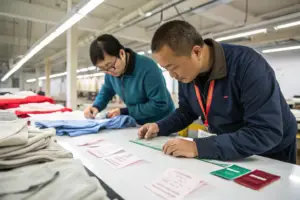
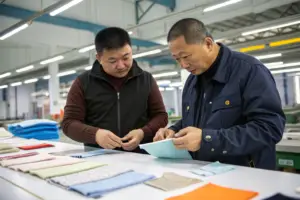
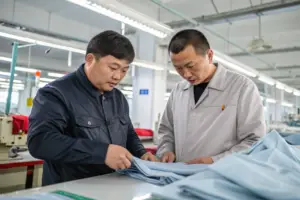
The supply chain confirmation signal comes directly from the textile mills and trim suppliers. These companies invest heavily in developing new fabrics, dyes, and components months before brands order them. By checking in with your factory's sourcing department, you can learn which fabrics are being heavily sampled for the upcoming season. If multiple major brands are sampling a specific recycled ripstop nylon or a particular bio-based sequin, that is a strong signal that the material will be a key component of upcoming collections. Your factory partner can provide this intelligence. They see the sampling requests from all their clients and can, without revealing specific client names, tell you what materials, washes, and trims are "trending" in the development pipeline. This supply-side validation is the final check before you invest in a full production run.
The supply chain signal is the most underutilized trend prediction tool in the industry. The brands that are closest to their factories have a direct line to this intelligence. The brands that treat their factory as a distant vendor are blind to it.

How Can Your Factory's Sourcing Manager Become Your Secret Weapon for Spotting "Pre-Trend" Fabric Movements?
Your factory's sourcing manager talks to fabric mills every day. They know which yarns are selling out. They know which dye colors are being requested for lab dips. They know which finishes are being asked for. Schedule a quarterly call with your factory's sourcing team. Ask them directly: "What fabrics are being sampled the most right now? What colors are mills struggling to keep in stock? What trims are on backorder?" The answers to these questions reveal the supply chain's bets on the next season's trends.
Why Does a Surge in "Lab Dip" Requests for a Specific Shade Indicate an Impending Color Dominance?
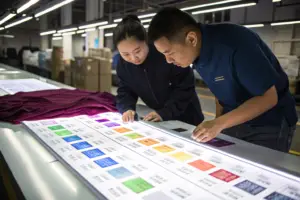
A lab dip is a small test batch of dye created to match a brand's color specification. When a mill's lab dip department is overwhelmed with requests for a specific shade, it means dozens of brands are all planning to use that color in their next collections. The lab dip surge is a 6-month leading indicator of a color trend. By the time the color appears on retail shelves, the lab dip surge was happening half a year earlier.
Conclusion
Accurately identifying massively trending women's wear styles before they hit the mainstream is a systematic process of triangulating consumer search data, community-driven aesthetics, and supply chain intelligence. The digital tools like Google Trends and Pinterest provide the early quantitative signal. The niche online communities provide the qualitative aesthetic detail. The supply chain signals from mills and factories provide the commercial viability confirmation.
The brand owner who almost bet on butter yellow was not foolish. She was relying on intuition, which is only one part of the system. When we added the search data and the supply chain check, the picture became clear. Intuition proposed the hypothesis. Data tested it. The supply chain confirmed it.
At Shanghai Fumao, we support our brand partners with trend intelligence from the supply side. We regularly share insights on which fabrics, washes, and trims are being sampled heavily by our diverse client base. We can help you validate a trend you have spotted digitally against the physical reality of the textile supply chain.
If you want to build a trend-responsive collection and need a factory partner who can provide supply chain intelligence and rapid sampling, we can help. At Shanghai Fumao, we will share our quarterly "Material Trend Insights" report and discuss which new fabrics and trims are available for sampling. Contact our Business Director, Elaine, at elaine@fumaoclothing.com. She can send you a sample trend report and connect you with our sourcing team. Be the brand that spots the trend first, not the brand that follows it.