Two summers ago, a premium streetwear brand owner from Los Angeles sat in my office with a defeated look. He had just lost a major wholesale account to a competitor. The buyer told him his denim felt "flat" and "lacked the texture" that the market now demanded. He had been using the same basic 3/1 right-hand twill for five seasons. He didn't know there were other options. He didn't know his fabric selection was quietly making his brand look outdated. He was losing money not because of his designs, but because he didn't speak the language of denim construction.
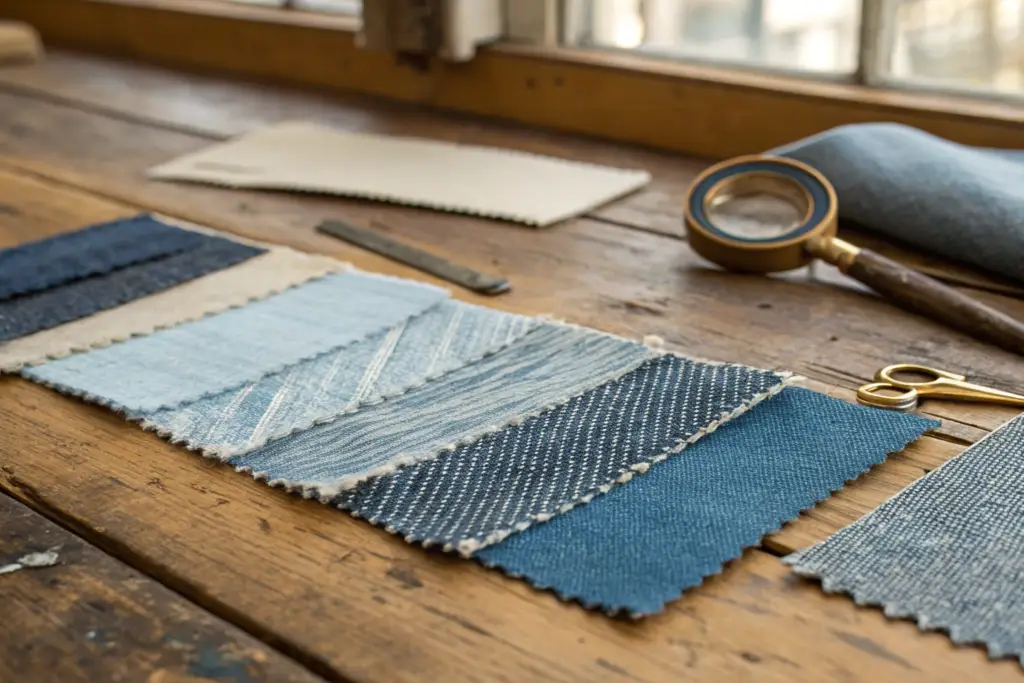
Shanghai Fumao's denim line currently offers 11 distinct production-grade weaving patterns, including classic right-hand and left-hand twills, broken twill, multiple crosshatch variations, dobby weaves, and our premium shuttle-loom selvedge constructions. These are not just samples we keep in a drawer. They are live, active constructions that we run regularly on our production lines, from Japanese Toyoda looms to modern European rapier machines.
Most buyers make a critical error. They treat the denim fabric selection as a purely aesthetic choice. They look at a color and a weight and decide. But the weaving pattern is not just about the look. It dictates the fabric's strength, its twisting behavior during washing, its comfort against the skin, and even how efficiently our sewing floor can cut and stitch your garment. At Shanghai Fumao, I insist that every brand partner understands the engine of their jeans before they order the bodywork. Let me open up our fabric library and show you the real choices.
Why Does Twill Direction Matter in Your Denim Production?
The direction of the twill line is the most basic piece of information on a denim spec sheet, yet it is the most overlooked by brand owners. I have seen startup labels order 1,000 units of a jean and then panic when the leg twists after the first home wash. The customer thinks the jean is defective. The truth is, the brand ordered the wrong twill direction for their design.
Right-hand twill and left-hand twill are not just mirror images. They are fundamentally different materials with different mechanical behaviors. Choosing one over the other will change how your product feels to the touch, how it drapes, how it ages, and even the rejection rate on your cutting table.
How Does a Right-Hand Twill Affect Your Jean's Durability?
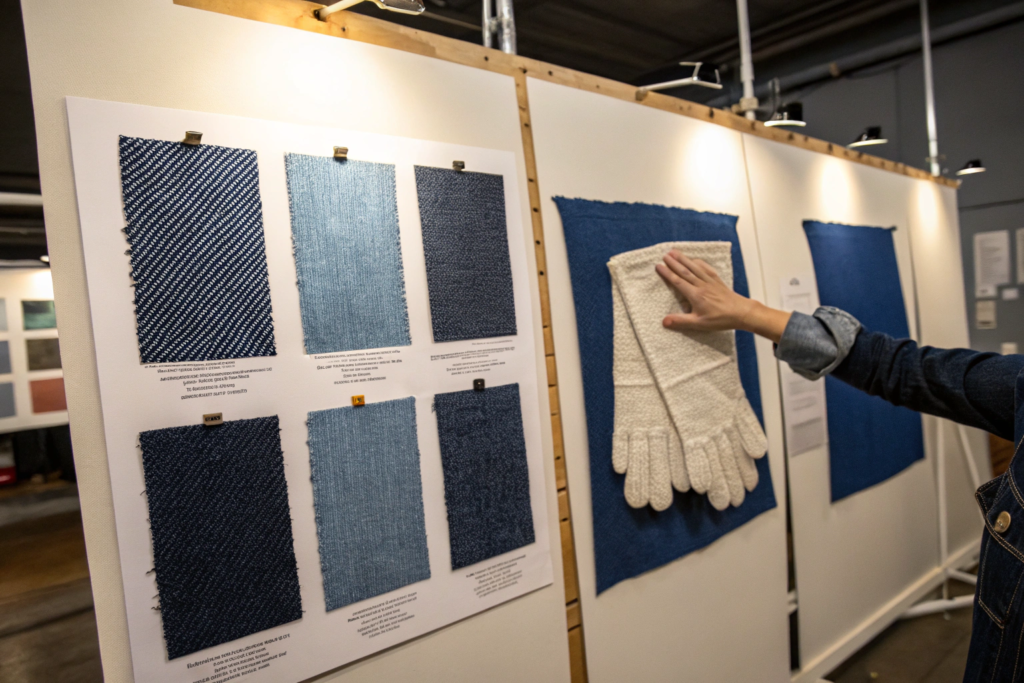
Right-hand twill, or "Z-twill," is the global standard and the DNA of classic American workwear. When you run your fingers over a piece of our 12oz right-hand twill, moving from bottom-left to top-right, the surface feels smooth. Moving against the grain, it feels rough. This tightly packed, diagonal structure creates a dense, hard-wearing surface.
This density is why heritage workwear brands rely on right-hand twill. The tighter construction makes the fabric inherently more resistant to tearing and abrasion. In our internal lab tests, our standard right-hand twill consistently scores higher on the Martindale abrasion test compared to an equivalent weight left-hand twill. For a brand selling to a customer who values long-term durability and a stiffer initial break-in period, this is the correct choice. Last year, we developed a 14oz raw selvedge right-hand twill for a workwear-inspired brand in Chicago. Their marketing story was built entirely on the concept of "toughness." That denim was specifically engineered to be rigid and to take months to break in, forming sharp, high-contrast whisker creases around the crotch and knees. The weave itself was the brand's primary storytelling tool. If you want a jean that resists abrasion and offers a crisp, long-lasting fade, a right-hand twill from our Shanghai Fumao production line is your foundation. This is engineering, not just fashion.
Can a Left-Hand Twill Make Your Denim Feel Softer to the Touch?
Yes, and this softness can be your commercial advantage in a market saturated by stiff jeans. Left-hand twill, or "S-twill," is woven with the diagonal line running from bottom-right to top-left. At the fiber level, this creates a slightly more open, less tightly packed yarn structure compared to an equivalent right-hand twill.
The practical result is a fabric that is noticeably softer to the hand from the very first wear. It has more inherent give and flexibility. We produce a 10.5oz left-hand twill for several women's and lifestyle brands that demand immediate, no-break-in comfort. The hand feel is almost velvety compared to the coarse grit of a raw right-hand twill. However, there is a production trade-off a brand owner must understand. Because the weave is more open, it produces a softer, more vintage, and "bloomier" fade rather than the sharp, high-contrast lines of a rigid twill. You trade some raw durability for everyday comfort. This is exactly why we guide our brand partners to choose left-hand twill for spring and summer lines, where the customer is wearing the jeans against bare skin. One of our large distributor clients switched their seasonal chino order to a lightweight left-hand twill denim in that same weight, and their customer feedback specifically praised the "pajama-like" comfort. If your brand's DNA is about everyday luxury and softness, left-hand twill is not an alternative; it is the more honest technical choice for your customer’s experience, and it's a detail that a good quality assurance team will highlight for you.
How Does Broken Twill Solve Skewing in Premium Jeans?
Leg twist is the silent complaint. Your customer puts on the jeans, looks down, and sees the side seam has spiraled around their calf. They think the jean is defective. They return it. But the real defect was in the fabric specification, not the sewing.
This is the problem broken twill was invented to solve. Traditional single-direction twills, whether right-hand or left-hand, are built on a spiral structure. When they get wet and dry, the yarns want to untwist, causing the fabric to skew. For a brand owner, this is a nightmare of returns and negative reviews. Broken twill is the engineering answer to this physical reality.
What Is a Zigzag Weave and Why Does It Stop Leg Twist?
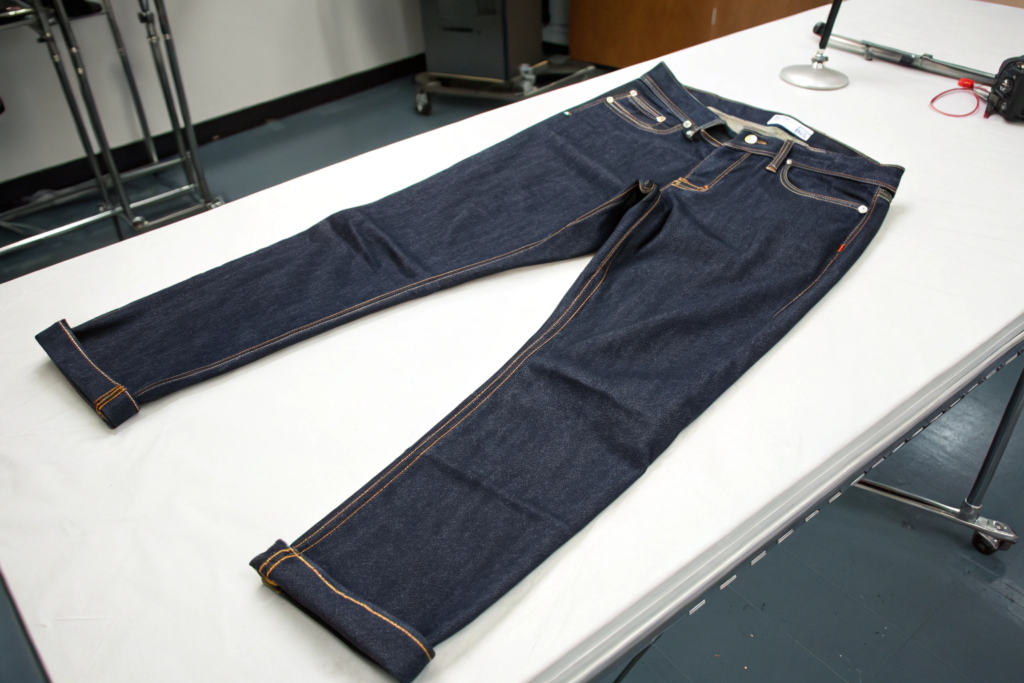
The broken twill construction deliberately alternates the twill direction, typically every two warp ends. Under a loupe, the surface looks like a tight, beautiful zigzag, a herringbone pattern without the sharp V-points. By mechanically forcing the yarns to pull right, then left, then right again, the natural twisting forces cancel each other out.
The result is a denim that lies flat, sews predictably, and resists skewing through decades of washing. We ran a controlled test last winter. We took a right-hand twill jean and a broken twill jean, both raw and unwashed, and ran them through five aggressive home laundry cycles. The right-hand twill leg seam twisted a full 1.5 inches out of position. The broken twill moved less than 0.2 inches. For a brand selling through direct-to-consumer e-commerce, this is the difference between a 1% and a 5% return rate on a denim SKU. I recommend broken twill to all our partners who are launching a premium jean and whose primary sales channel is online, where the customer cannot try before they buy. The fabric costs a few cents more per yard, but it immediately eliminates the number-one visual quality complaint, protecting your brand's reputation from a problem that feels like a defect but is actually just physics.
Is Broken Twill Worth the Extra Cost for Your E-Commerce Brand?
Yes, if you sell jeans online, broken twill is not an expense; it is an insurance policy against a specific, measurable return reason. When a customer buys jeans in a physical store, they see the leg twist and simply put them back on the shelf. The brand's defect is invisible to its own data. But when a customer receives a twisted-leg jean in the mail, they have to photograph the problem, email your support team, print a return label, and drive to the post office. They are angry by the time they finish.
This operational friction costs you money directly in return shipping and processing, and indirectly in lost customer lifetime value. Our data, gathered from multiple DTC brand partners, shows that a jean with a visible leg twist carries a return rate two to three times higher than a comparable broken twill jean. The incremental cost of the broken twill fabric on a $45 FOB jean is perhaps $1.50. The fully loaded cost of a single return can easily exceed $15 when you include outbound shipping, return postage, repackaging, and the lost margin from selling that returned item on clearance. The math is brutal and simple. Broken twill pays for itself if it prevents just one return for every ten pairs sold. It is the single most effective technical upgrade you can specify to de-risk your denim line and stabilize your margins when scaling through online retail.
What Are the Benefits of Selvedge and Dobby Options?
Sometimes, the most expensive denim is the one that uses the oldest technology. Selvedge and dobby weaves represent the extreme poles of denim production: one is about heritage and manual process, the other is about computerized, high-detail surface design. A premium brand cannot afford to misunderstand either.
These are the options that move your denim line from a commodity to a collection. I see too many brands treat selvedge as a buzzword and dobby as an afterthought. In reality, a selvedge denim order requires a completely different production mindset, and a dobby weave opens up a design vocabulary that flat, basic twills can never touch.
Why Do Premium Brands Insist on Our Shuttle-Loom Selvedge?
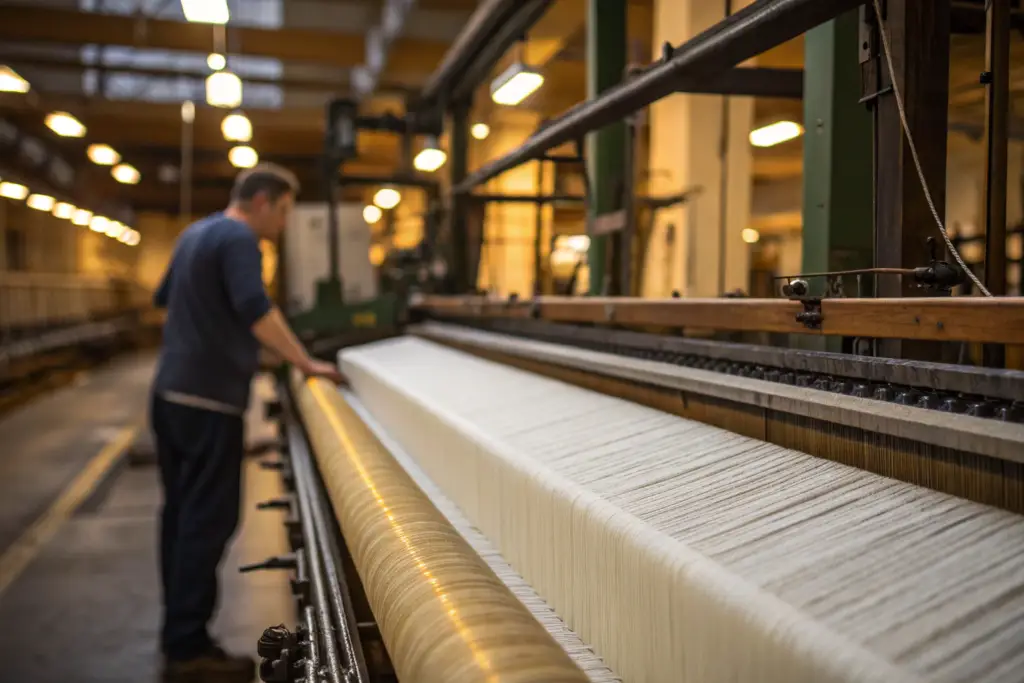
Because the narrow, self-finished edge is a physical certificate of a slower, more costly, and more beautiful production method. Our selvedge denim is woven on vintage Toyoda shuttle looms. A modern projectile loom can fire a weft yarn across a wide 72-inch fabric in a fraction of a second, cut the edge, and leave a frayed, raw fringe that must be overlocked. A shuttle loom passes a single continuous weft yarn back and forth, creating a narrow, roughly 31-inch fabric with a clean, tightly woven, natural finish on both edges.
This process is inherently inefficient. It is slower, requires more skilled labor, and produces less fabric per day. But that continuous weft creates a fabric with a completely different internal tension and character. The density is often higher. The slubs and irregularities from the yarn are more pronounced because the weaving speed is gentler. When a brand like a Japanese-inspired Americana label partners with Shanghai Fumao, they are not just buying a fabric. They are buying a story of scarcity and craft. We ask our brand partners to use that selvedge edge intelligently. Show it inside the coin pocket. Flash it when the cuff is rolled up. Let it tell the customer that this jean was not made on a mass-market machine. The cost is higher, and the minimum order quantity is often higher because the fabric roll is narrower, requiring more efficient marker making on the cutting table. But the brand value justifies the production complexity, turning a simple pair of jeans into a premium, defensible product.
How Can Dobby Weaves Create a Unique Brand Signature?
Dobby weaves are your tool for creating a fabric that your competitor literally cannot buy off the shelf. A dobby loom uses a small, computerized attachment to control the lifting of individual warp threads. This allows us to create small, repeating geometric patterns or textured stripes directly in the weave, not printed on the surface.
This is how you build a signature. A few seasons ago, a women's fashion brand asked us to design something that looked like a vintage, textured cotton bedsheet but with the durability of denim. We developed a dobby weave with a subtle, repeating micro-diamond pattern. When the fabric was garment-dyed, the diamond areas absorbed the pigment slightly differently, creating a beautiful, muted two-tone depth. That jean became their best-selling SKU for two consecutive springs. No flat twill could have achieved that effect. Dobby patterns can be a subtle crosshatch texture, a vertical pin-stripe effect, or a mini waffle structure. They add a layer of tactile and visual interest that immediately communicates "design" as opposed to "commodity." For a brand, this is crucial. In a market flooded with basic twills, a dobby weave makes your product recognizable from a single Instagram detail shot. It’s an instant differentiator that starts with the loom, not with a post-production garment wash or print. It is a piece of intellectual property for your brand, created in partnership with our textile design team.
Conclusion
The weaving pattern is the very architecture of your denim. It is not a minor technical detail to be glossed over in an email; it is the foundational decision that dictates how your jean looks, feels, twists, fades, and ultimately sells through. From the hard-wearing, crisp-fading density of a classic right-hand twill, to the soft, immediate comfort of a left-hand twill, to the structural integrity of a broken twill that saves your e-commerce return rate, all the way up to the heritage story of a shuttle-loom selvedge and the brand-signature potential of a custom dobby, your choice of weave is your choice of a market position. A flat, generic denim program produces flat, generic results.
At Shanghai Fumao, we don't just send you a stack of swatches and wish you luck. We sit down, physically or virtually, and walk you through these 11 production-grade options in the context of your specific brand, your target price, your primary sales channel, and the story you want your customers to feel when they put the jeans on. This is the difference between being a buyer of commodities and being a creator of products.
Stop losing accounts and customers to a fabric decision you didn't know you were making. Let's engineer the denim that your brand deserves, starting from the weave up. Contact our Business Director, Elaine, at elaine@fumaoclothing.com. Tell her about your current denim pain points, your price architecture, and the hand feel you are chasing. She will personally arrange for a curated set of our denim weaving pattern samples to be sent to you, along with the technical specification sheets and costing ranges you need to make a fully informed decision. Let's weave your next best-seller.