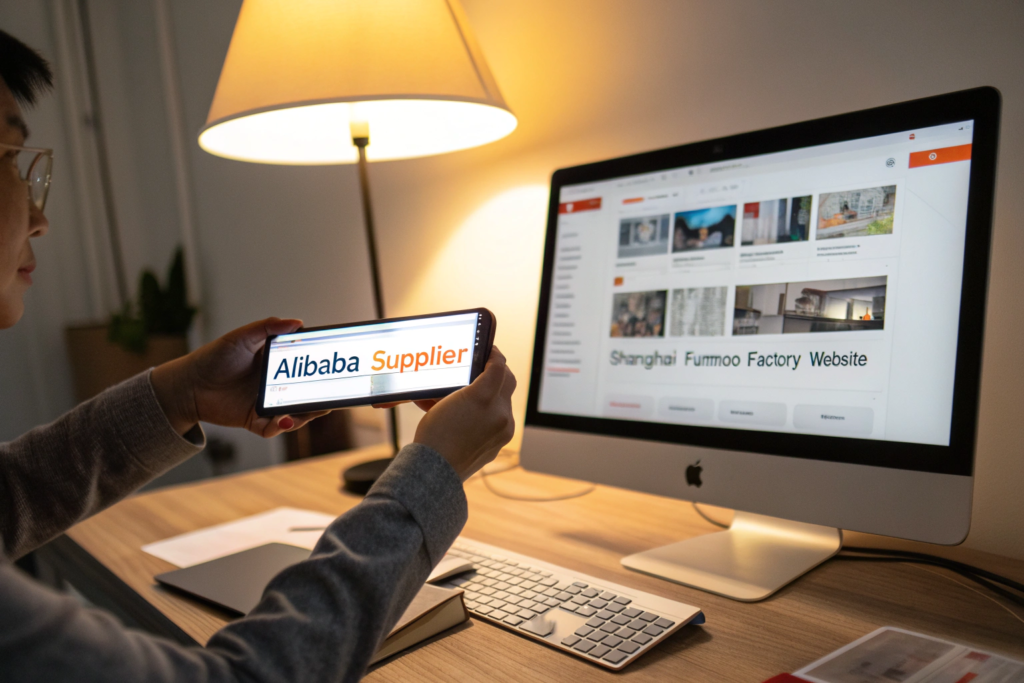
Two months ago, an angry email landed in my inbox. A small boutique owner from Portland had placed a $15,000 order for what he believed were Shanghai Fumao children's dresses. He found the "supplier" on Alibaba, communicated through TradeManager, and even received a sample. The sample was beautiful. But the bulk shipment that arrived was a disaster—unstitched hems, mismatched colors, and chemical smells so strong he couldn't even give the clothes away. He was out $15,000, and his entire summer collection launch collapsed. The worst part? This supplier had used our factory photos, our company name, and even a copy of our business license. He thought he was buying from us. He never was.
A fake Fumao reseller is any Alibaba account that illegally uses Shanghai Fumao's brand name, factory images, or certificates to deceive buyers, but has no actual legal or production connection to our company. They are identity thieves operating in the digital marketplace, and they steal not just your money, but our hard-earned reputation.
The painful truth is that we cannot take down every fraudulent account overnight. Alibaba has millions of suppliers, and these criminals are agile. But we can teach you how to spot them in seconds. I’m writing this because protecting your trust is more important than protecting my ego. If you are sourcing from China, you need a personal, actionable fraud-detection system.
What Are the Red Flags of a Fake Fumao Alibaba Store?
Scammers are not creative. They use the same tricks repeatedly because they work on busy, hopeful buyers. Over the past three years, my team has documented over forty fake accounts using our name. The pattern of their deception is predictable.
A fake storefront preys on your desire for a quick, cheap deal. They exploit the trust you have placed in a known factory name like ours. The red flags are always present if you slow down and look for them. Your first line of defense is knowing exactly what a legitimate profile should look like and what a fraudulent one almost certainly looks like.
Why Does a Price 30% Below Market Value Scream Scam?
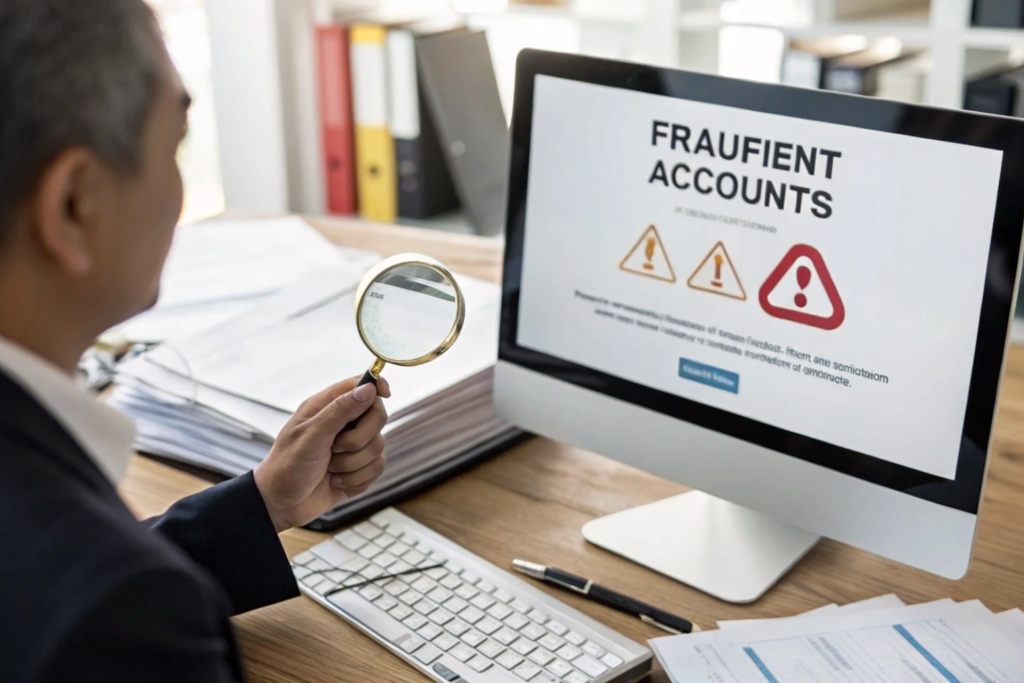
Because manufacturing is a business of thin, predictable margins. When a fake reseller quotes you a price 30%, 40%, or even 50% below our official quote, they are not offering you a secret deal. They are offering you a bait. I will be completely transparent with you. In our Shenzhen and Shaoxing production lines, the cost of top-quality, OEKO-TEX-certified cotton and Lenzing Tencel is a known, stable number. Our CMT costs are stable. Our logistics costs are stable.
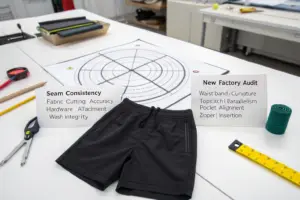
Our official wholesale price for a men's premium pique polo, for instance, is calculated to include certified raw materials, proper stitching density (we use 12-14 stitches per inch), rigorous quality checks, and safe packaging. A fake seller has none of these costs. They will use substandard, untested fabric. They will reduce stitch density to save thread and time. They will skip all quality control. This is why their price is so low. The sample they send you might be a stolen genuine piece from our factory, bought at retail or intercepted. Your final bulk production, however, will be garbage. We tested this theory last year. Our manager created a fake buyer account and requested a quote from a known fraudulent Alibaba page using our photos. Their quote was 45% lower. That margin doesn't exist in legitimate manufacturing. A low price combined with a stolen identity is not an opportunity; it’s a loss waiting to be booked.
Can a Copied Business License Confirm a Fake Supplier?
A business license uploaded to a profile means nothing if it’s stolen. This is the most dangerous trap. In China, a Business License is a public document, and scammers routinely photoshop digital copies, swapping out company names and registration codes. A buyer once proudly sent me a "verification" he had done. He had asked the supplier for their business license, and they provided one with "Shanghai Fumao" on it. The document itself looked official. The trick was simple: we never give our official license to anyone who just asks via chat.
I tell all my partners this: never accept a scanned image in a chat window as proof. The genuine verification happens only on the government's official National Enterprise Credit Information Publicity System portal. This database is free to use. You must verify that the company's registered legal representative, registered capital, and business scope match exactly what a legitimate factory would operate. Fakes will often have a mismatched scope—for example, a legitimate factory should have "manufacturing" as a primary activity, while a trading company posing as a factory will have "wholesale and retail." If you are sourcing from Alibaba, you must cross-reference the company name on the profile directly on this government website. A supplier who is lying about their identity has already proven they will lie about their product. This single check takes two minutes and has saved our clients millions in potential losses.
How to Verify a Legitimate Connection to Shanghai Fumao?
Verification is not about suspicion; it’s about building a secure foundation for a partnership that often involves five- and six-figure transactions. In my factory, we expect a buyer to verify us. A supplier who resists this process is a red flag in itself.
You don't need to be a detective. You just need a simple, unbreakable protocol that cuts through the noise of the internet. Connecting with the real Shanghai Fumao is not done through guessing which Alibaba page is real. It’s done by bypassing the Alibaba messaging system entirely for the most critical verification step: first direct contact.
Is Our Business Director Elaine Your Only Safe First Contact?
Yes, for any new inquiry about custom apparel manufacturing, Elaine is your single point of truth. This is a deliberate choice I made. To protect buyers like you, we do not authorize individual sales reps to use personal Skype IDs, WhatsApp numbers, or generic Gmail addresses to initiate a partnership for custom orders. These can be bought, stolen, or spoofed. A scammer can pretend to be "Mike from Shanghai Fumao" and you would have no way to know Mike is a ghost.
The only verification path is this: the official company email address elaine@fumaoclothing.com. If a person contacts you on Alibaba claiming to represent us, tell them you will continue the conversation only via email sent to this address. Here is the critical test: ask them to send a confirmatory email to you from that exact domain. A scammer cannot send an email from "@fumaoclothing.com" because they don't own our domain. They will make excuses—"the server is down," "I'm out of office," "use my Gmail instead." These are lies. A real supply chain partnership starts with a verified digital handshake. Once, a client from Texas insisted on getting an email from my official domain. The Alibaba seller went silent. That silence saved my client $20,000. This one-step protocol is your unbreakable shield against identity fraud in the B2B apparel industry.
What Does a Live Factory Video Call Instantly Prove?
It proves physical reality. A picture can be stolen; a live, interactive video cannot be convincingly faked in real-time. When a potential partner has verified their contact via Elaine’s email, we insist on a video call, and we recommend you do the same. This is not about politeness; it’s a physical audit from your desk.
A real factory will be able to walk the floor with you. You should ask to see something specific and unpredictable. Don't just ask to "see the factory." Say, "Walk me over to the sewing line that's currently running a navy blue polo shirt and show me the stitching on the collar." You should hear the hum of machines; you should see workers in the background. The video call should be chaotic in a controlled, productive way. A fake reseller or a trading company posing as a factory will only be able to show you a silent, empty-looking showroom or a pre-recorded video. We did this for a large American chain buyer last month. From our cutting room in Shaoxing, we showed them their own order tickets live on camera. Their quality manager, sitting in Los Angeles, read the ticket numbers aloud, and we zoomed in. That was the final piece of trust. A 10-minute live video inspection can replace a $2,000 flight and instantly vaporize any doubt created by a fake reseller.
Why Do Fake Resellers Sabotage American Brand Reputations?
The damage from a fake reseller isn't a one-time financial loss. It's a cancer that attacks your brand equity and your relationship with your end customer. The cheap price you pay upfront is just the visible tip of a very destructive iceberg.
When a fake reseller ships substandard goods under a stolen factory name, you, the American brand owner, are the one who pays the ultimate price. Your customers don't know about the Alibaba scam. They only see your label on a product that fails. Your brand is what they blame.
How Will a Quality Failure from a Fake Tarnish My Brand?
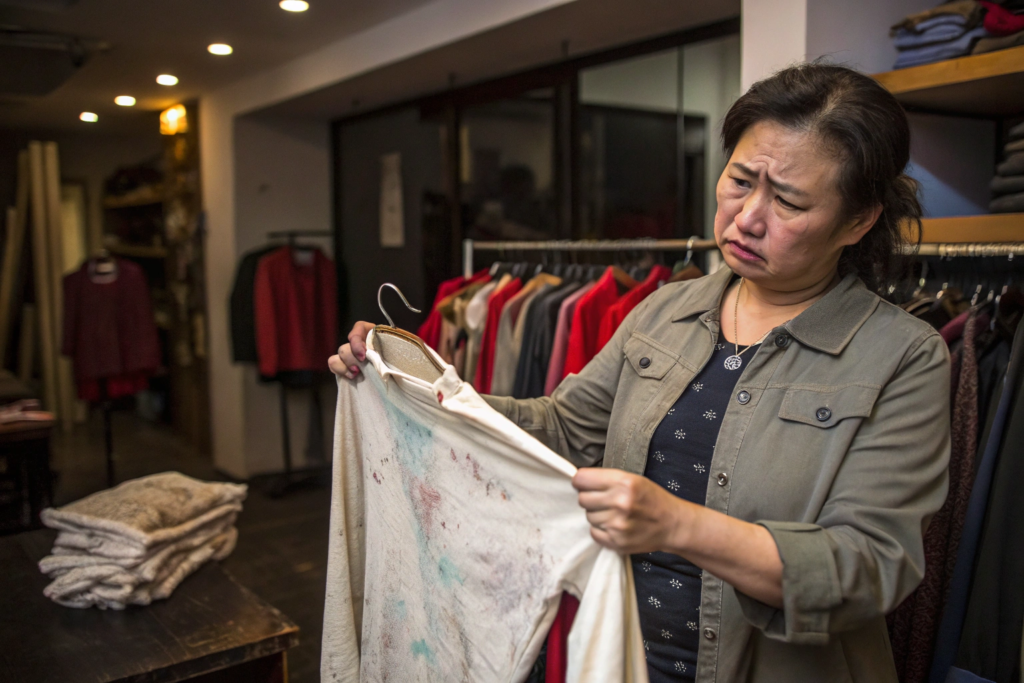
A quality failure breaks a sacred promise between your brand and your customer. I saw this firsthand with a client in California. He was a small but growing brand selling premium baby blankets. He was scammed by a fake reseller using our identity, and the blankets he received were made with an unknown, rough synthetic blend instead of the certified organic cotton he paid for. He tried to sell them anyway, hoping to recoup some costs.
The result was a catastrophe. His Amazon reviews plummeted from 4.5 stars to 2 stars in a single month. Customers posted photos of the rough fabric and babies with rashes. A once-loyal customer base turned against him, calling his brand a liar. He had to rebrand entirely, a costly and slow process. This is the invisible cost of a fake reseller: the destruction of your brand trust. A single bad batch from a scammer can permanently poison the well of customer loyalty you spent years building. In the competitive U.S. apparel market, a return rate above 5% on a product line can kill your Amazon Buy Box eligibility and tank your organic ranking. The fake supplier disappears with your money, and you are left alone to face the public, your reputation in ruins.
What Are the Hidden Legal Risks from Counterfeit Safety Certificates?
The legal risks are existential. When a scammer steals our OEKO-TEX® or CPSIA certificates and slaps them on their products, they are committing fraud. If one of their products fails a random U.S. Customs inspection or, worse, causes a health issue for a consumer, the liability chain leads directly to you, the importer of record.
I recall a chilling near-miss. A children's sleepwear brand in Florida ordered from a fake account. The fraudulent supplier provided a photoshopped CPSIA certificate. The shipment was flagged at the port by the U.S. Consumer Product Safety Commission for flammability testing. The fabric was dangerously non-compliant. The shipment was seized and destroyed. The brand owner was fined $25,000 and placed on a CPSC watchlist, leading to enhanced inspections on all his future imports. He was an innocent victim, but the U.S. legal system holds the brand strictly liable. A fake certificate from a fake reseller can expose you to fines, cargo seizures, product liability lawsuits, and the legal costs of proving you were a victim of fraud, not a co-conspirator. This is not a risk; it's a business-ending probability if you bypass the rigorous compliance verification I outlined earlier.
How to Build a Bulletproof Sourcing Verification System?
A bulletproof system is not about being paranoid. It's about being methodical. After years of fighting these scammers, my team has developed a simple, three-part framework that any brand owner, buyer, or distributor can implement. It removes emotional guesswork from sourcing and replaces it with hard, verifiable facts.
This system is your firewall. It’s designed to detect a fraud before it can hurt you. It uses free, publicly available tools, and it’s built on the principle that a supplier’s willingness to be transparent is the truest test of their honesty.
How Does a Three-Step Cross-Verification Protocol Save My Order?
This protocol is your standard operating procedure for every new Chinese supplier, period. I use it to vet my own fabric mills, and I teach it to every partner who contacts me through our official website.
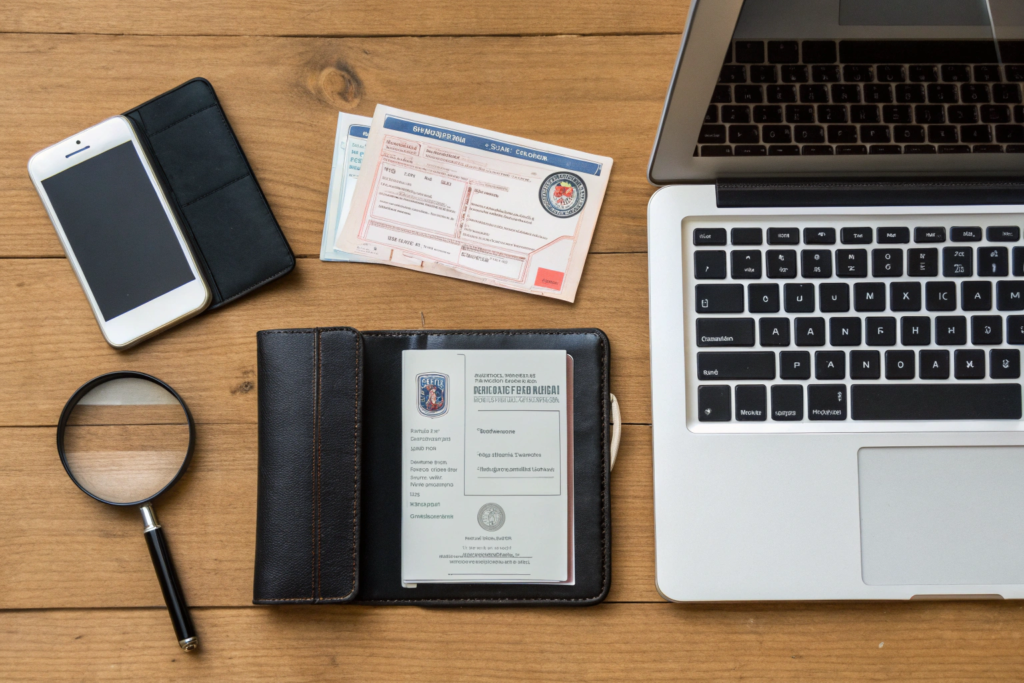
Step 1: Digital Document Verification. Never accept a document sent via chat. Demand that key certifications—OEKO-TEX, Lenzing License, GOTS, Business License—are sent as a PDF email attachment from an official company domain (like @fumaoclothing.com). Then, go to the issuing body's website. The OEKO-TEX website has a free "Label Check" tool. You enter the certificate number, and it instantly tells you if it's valid and who the real holder is. I had a buyer last fall check a fake cert this way; the number was real, but it belonged to a different factory in a different city. The game was up in 30 seconds. This step alone filters 95% of fakes. For more detailed guidance on supply chain verification, refer to resources like the CIPS knowledge library.
Step 2: Live Product-Specific Audit. This is the video call we discussed, but with a twist. You must link it to your specific order. Once a sample is approved, request a video call where they show you your bulk fabric roll, your trim, and a pilot run of your garment being sewn. Ask them to place a handwritten note with your company name and the date on the fabric and film it live. We do this joyfully for our partners at Shanghai Fumao because we are proud of our work. A fake will panic and make excuses. They cannot fake a physical, time-stamped interaction with your unique raw materials.
Step 3: Small-Scale Pilot Test. Before committing to a 5,000-unit order, negotiate a 50- to 100-unit pilot run. This is a fully paid trial production batch shipped via air freight. You inspect this pilot run yourself. You wash-test the garments. You check the labels. A fraud will avoid this because their business model is to ship one giant, terrible container and disappear. A legitimate factory views a pilot run as the final, sensible step before a mass production partnership. These three steps transform you from a hopeful buyer into a controlled, professional sourcing manager, no matter the size of your company.
Can Official Certificates Be Verified in Less Than 60 Seconds?
Yes, they absolutely can, and you must make this a non-negotiable habit. The "60-Second Certificate Check" is your fastest weapon against fraud. The certification bodies have built public databases precisely for this reason.
When I onboard a new brand, the first thing I do is not give them a sales pitch. I give them a list of our certificate numbers and tell them to go away and verify each one on the official, independent certifier websites. For an OEKO-TEX certificate, the tool is oeko-tex.com/label-check. For a Lenzing TENCEL™ license, you contact Lenzing directly through their brand licensing portal. A real certificate will display the legal name of the certificate holder that exactly matches the company name on the purchase contract and business license. I advise you to do this live on a screen-share during a video call. Tell the supplier, "I'm going to check your OEKO-TEX number now. Please watch." A real supplier's face will relax. They will be happy to see you do your homework. A fake supplier's face will show fear, then anger, and they will disconnect. This is a 60-second test of character and truth. If you are sourcing children's wear, verifying the CPSIA tracking label on a sample and cross-referencing the manufacturer's information with the CPSC's public database is your final, non-negotiable step before any payment.
Conclusion
The existence of these fake Fumao resellers is a personal insult to me and to every honest manufacturer in China. They steal our identity, our photos, and our trust. But more importantly, they steal your peace of mind and your business's future. You now have a simple, uncompromising system to defeat them. A price that is 30% below market value is not a deal; it's an alarm. A copied business license is not a credential; it's a crime. And an Alibaba chat message is not a relationship; it’s just text. A real partnership begins with an email sent to elaine@fumaoclothing.com and is solidified by a live video call showing your specific production run.
My family has been in this business for two decades. We have built Shanghai Fumao on the principle that a transparent, secure supply chain is the only true competitive advantage for our partners. We are not a hidden middleman; we are an open book. Your verification process is our welcome mat.
Do not gamble with your brand equity. If you see a suspicious store, if a price seems too good to be true, or if you simply want to start a conversation that you can trust, take the one step no fake can ever copy. Contact our Business Director, Elaine, directly at elaine@fumaoclothing.com. Let her send you our official certifications and schedule a live video tour of our factory floor where your next best-selling collection will be made. Let’s build something secure, together.