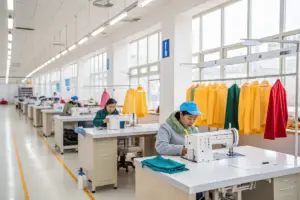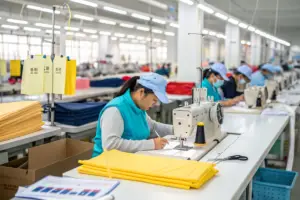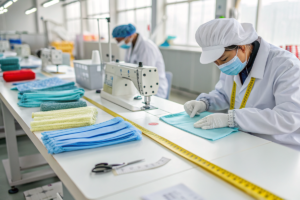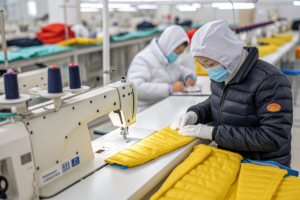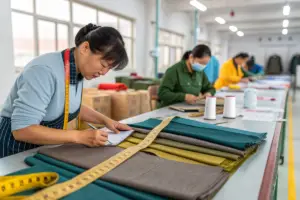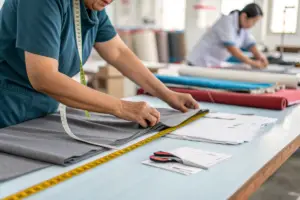
A Toronto-based premium menswear brand once approved a perfect pre-production sample of a tailored wool overcoat. The sample had a beautiful roll to the lapel, precisely 10 stitches per inch on the topstitching, a collar that hugged the neck perfectly, and a deep, rich charcoal color. The brand owner signed off with confidence. The bulk order of 1,200 coats arrived twelve weeks later. The lapels were flat and lifeless. The topstitching measured 7 stitches per inch, giving the coat a cheaper, less refined look. The collar gaped open at the back. The charcoal had a subtle but visible brownish undertone that clashed with the matching trousers. The brand owner was devastated. The factory had not made an error in their own terms; they had simply produced the bulk order at their standard production speed, using their standard production machines, with their standard thread tension settings. The sample had been sewn slowly and carefully by the factory's best sample maker on a dedicated sample-room machine, under conditions that the bulk production line could not replicate.
To guarantee your bulk menswear order perfectly matches the approved factory sample, you must implement five non-negotiable quality-control mechanisms: require the final approval sample to be a "Production Mimetic Sample" sewn on the actual bulk production line at standard line speed by the assigned bulk operator, not a sample-room sample; create a sealed, signed, and legally binding "Golden Sample" that serves as the contractual quality reference standard; provide a detailed "Seam and Stitch Construction Reference Board" with physical stitch samples and SPI density specifications; conduct a "Pre-Production Line Trial Run" of ten units that is destructively tested before the full bulk run is authorized; and perform a "Pre-Shipment Live Video Inspection" where you randomly select cartons via video call and compare the pulled garments directly against the Golden Sample before releasing the balance payment.
At Shanghai Fumao, I do not allow a brand to approve a sample-room sample and then release bulk production. The sample that the brand signs off on is sewn on the actual production line, by the actual operator, at the actual speed. The Golden Sample is sealed, signed, and becomes the legal reference standard. The bulk order is inspected live against that standard before a single carton leaves my factory.
Why Is a "Production Mimetic Sample" the Only Approval Sample That Guarantees Bulk Production Can Replicate the Quality?
A Chicago-based menswear brand once approved a sample that was so perfectly constructed it could have been displayed in a tailoring museum. The buttonholes were hand-stitched with surgical precision. The lapel pick-stitching was so fine and even it looked machine-made. Every seam intersection was geometrically flawless. The brand owner was thrilled and released the bulk order. The bulk coats that arrived were good—solid commercial quality—but they were not the museum piece. The buttonholes were machine-made, the pick-stitching was slightly less dense, and the seam intersections had the minor, acceptable variations of high-speed production. The brand owner rejected the shipment, claiming it did not match the sample. The factory owner pointed out that the sample was physically impossible to replicate 1,200 times at the agreed FOB price. Both parties were correct, and the relationship ended in litigation.
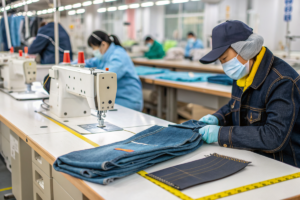
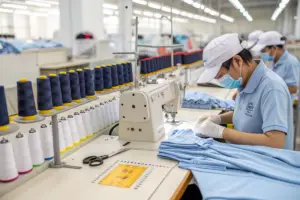
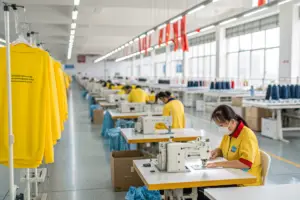
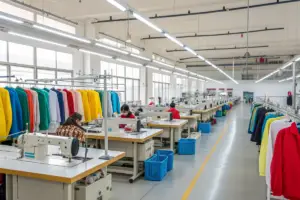
A Production Mimetic Sample is the only approval sample that guarantees bulk production can replicate the quality because it is sewn under identical conditions to the bulk order: on the actual production line, by the specific operator who will sew the bulk order, at the line's standard production speed of 6-8 units per hour, using the exact thread tension settings, presser foot pressure, and machine calibration that will be used for all 1,200 units, producing a sample that represents what the factory can realistically, consistently, and economically produce 1,200 times, not what a master sample maker can produce once in a dedicated sample room.
A sample-room sample is a proof of design. A production mimetic sample is a proof of manufacturing capability. Confusing the two is the single most common cause of the "sample was perfect, bulk was wrong" dispute. The brand must approve the manufacturing reality, not the design fantasy.
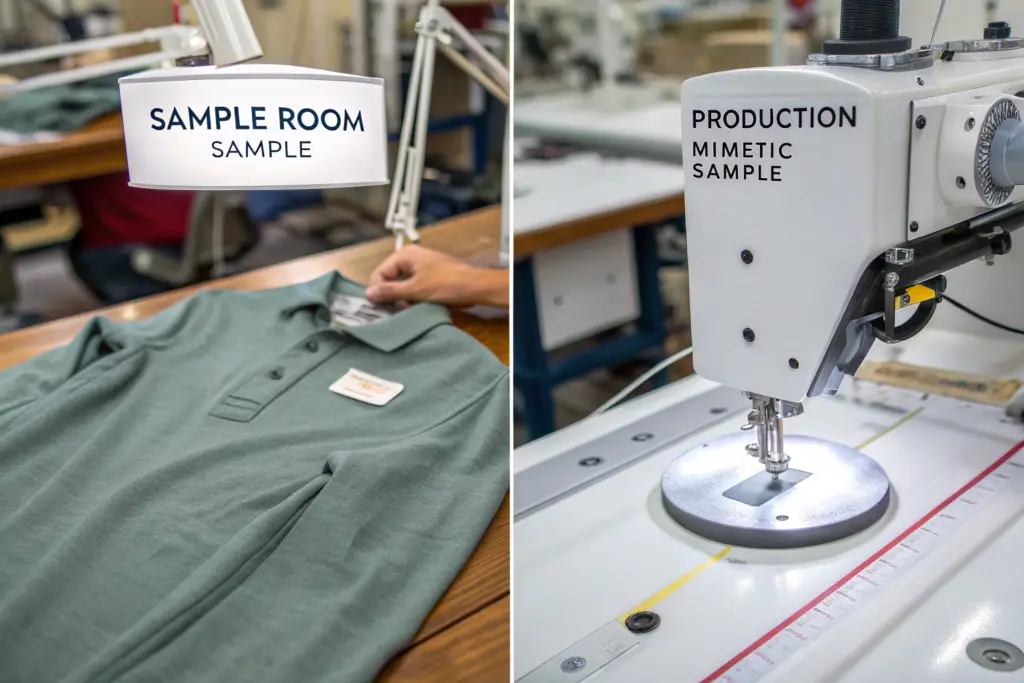
How Does "Sewing at Standard Line Speed" Change the Appearance of Topstitching and Seam Finish?
A sample maker sewing at a slow, deliberate pace can manually guide the fabric to produce a ruler-straight line of topstitching. A production operator sewing at 4,000 stitches per minute relies on the machine's folder guide and feed dog settings to maintain straightness. The production mimetic sample reveals the actual straightness achievable at speed, which is the straightness the bulk order will have.
Why Must the Sample Be Sewn by the "Named Operator" Who Will Run the Bulk Line, Not the Factory's Best Sample Maker?
Each operator has a unique hand-feeding technique, a specific rhythm, and subtle variations in how they handle the fabric. The sample maker's technique may produce a seam finish that the assigned bulk operator, with her different technique, cannot replicate. By requiring the assigned operator to sew the approval sample, the brand approves the specific operator's work, and that operator is accountable for replicating her own quality standard across all 1,200 units.
What Is a "Golden Sample" and Why Is a Sealed, Signed Physical Standard the Only Legal Protection in a Quality Dispute?
A London-based luxury menswear brand once found themselves in a quality dispute with their factory over the shoulder width on a bulk order of blazers. The brand claimed the shoulders were 1.5cm wider than the approved sample. The factory claimed the shoulders matched the approved tech pack measurement. The "approved sample" was sitting in the brand owner's office, unsealed, unsigned, and undocumented. The factory's lawyer argued that the sample could have been altered, stretched, or even swapped after production. The brand had no legally admissible evidence. The dispute was settled with a compromise discount that satisfied neither party.
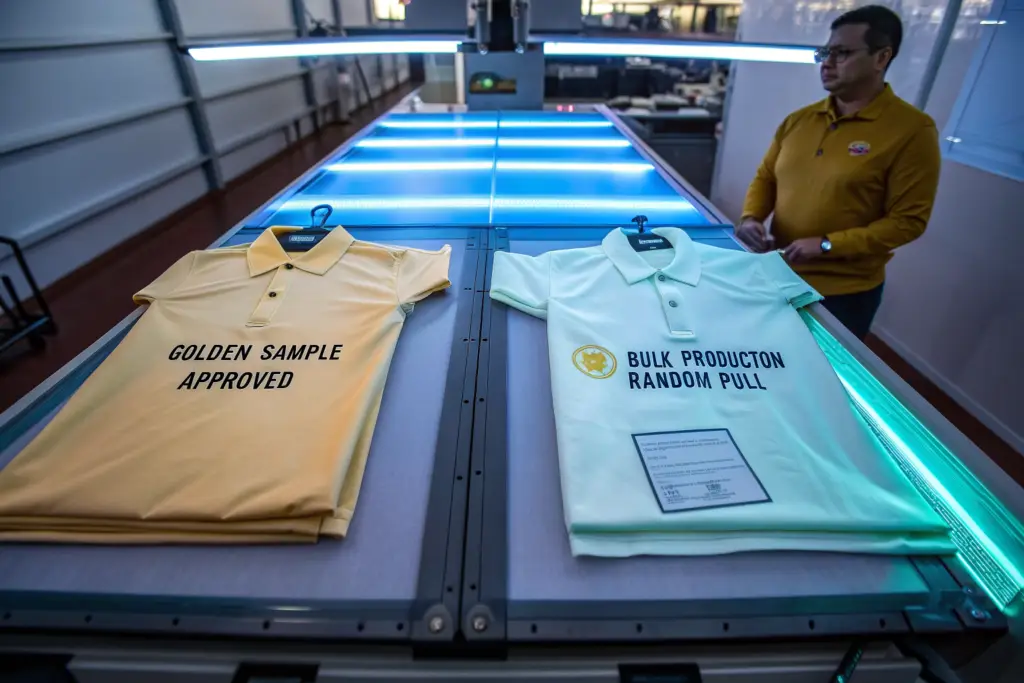
A Golden Sample is a single, specific, physical garment that has been formally approved by both the brand owner and the factory director, sealed inside a tamper-proof clear plastic evidence bag with a holographic security seal that is signed across the seal-to-bag boundary by both parties, accompanied by a co-signed Golden Sample Certificate listing every critical measurement point with the exact millimeter measurement of the sample, and contractually designated as the single, legally binding physical reference standard against which any quality dispute on the bulk order will be adjudicated.
A tech pack is a theoretical specification. A Golden Sample is a physical reality. When a dispute arises, the seal is broken in the presence of both parties, the Golden Sample is measured, the bulk garment is measured, and the difference is the legally binding evidence. There is no argument about what was "intended" or "remembered." There is only the physical object and the measurements.
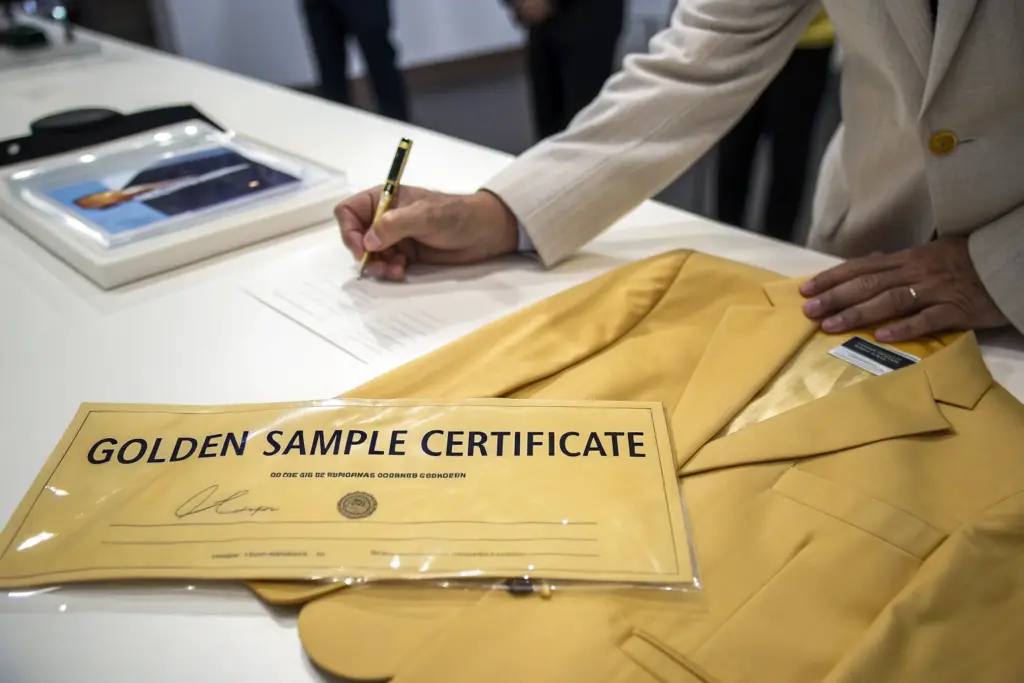
How Does a "Tamper-Proof Holographic Seal" Prevent a Factory or a Brand From Swapping the Sample After a Dispute Emerges?
The seal is signed across the boundary between the seal and the bag. Any attempt to peel the seal off destroys the holographic pattern and leaves a visible "VOID" mark on both the seal and the bag. The sealed sample is then placed in a second tamper-proof bag with a second signed seal. Double-bagging makes undetectable sample swapping physically impossible.
Why Must the "Golden Sample Certificate" List at Least Fifteen Specific Measurement Points With the Exact Millimeter Readings?
In a dispute over shoulder width, the certificate provides the exact, co-signed measurement of the Golden Sample's shoulder width on the date of approval. The bulk garment is measured at the same point, using the same measurement method diagrammed on the certificate. The difference is an objective, documented fact, not a subjective opinion.
How Does a "Seam and Stitch Construction Reference Board" Prevent the "7 Stitches Per Inch Instead of 10" Quality Degradation?
A Melbourne-based premium shirting brand once specified "10 stitches per inch" on their tech pack for the topstitching on their button-down shirts. The tech pack was filed in the factory's office. The sewing operator on the production line never saw the tech pack. She set her machine to the factory's standard default of 7 stitches per inch, which was perfectly acceptable for the factory's other clients. The 1,500 shirts were produced with visibly less refined topstitching. The brand rejected the order. The factory had met the specification on paper—it was documented in the tech pack—but the specification had never reached the operator whose hands controlled the stitch density.
A Seam and Stitch Construction Reference Board is a physical, visual, and tactile quality standard that is mounted directly at the production line, displaying an actual fabric swatch with the exact stitch type, stitch density, and thread tension that has been physically approved, allowing the sewing operator to touch the approved stitch sample, examine it with a pick glass, and compare her own work directly against the physical standard in real-time, without needing to read a tech pack, understand English, or interpret a written specification.
A written specification is an instruction for the pattern maker and the QC inspector. A physical reference board is an instruction for the sewing operator. The operator can hold her finished seam next to the approved sample, count the stitches in the pick glass, and instantly know whether her stitch density matches or needs adjustment.
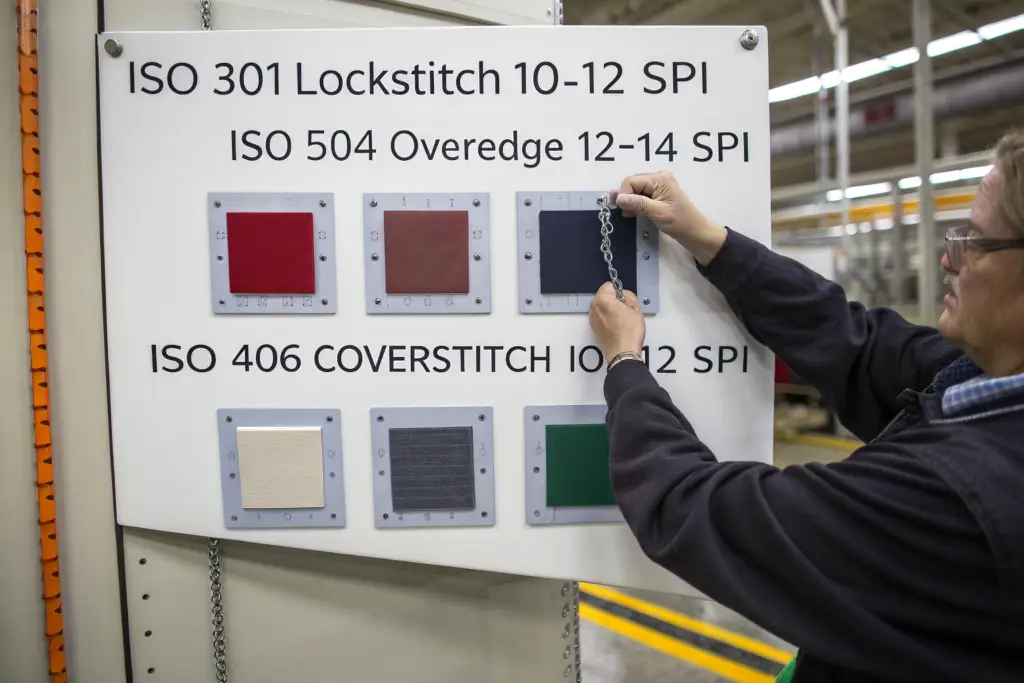
How Does a "Pick Glass Magnifier" Chained to the Reference Board Enable Real-Time Operator Self-Inspection?
The pick glass is a small, handheld magnifier with a calibrated 1-inch square window. The operator places it over her seam, counts the stitches visible within the 1-inch window, and compares the count to the reference board's specification. If the specification is 10-12 stitches per inch and she counts 8, she adjusts her machine tension immediately.
Why Must the Reference Board Be a Physical Fabric Swatch, Not a Printed Photograph?
A photograph cannot be touched, flexed, or examined under a pick glass. A physical fabric swatch with actual stitching allows the operator to feel the thread tension, see the three-dimensional stitch structure, and compare it directly to her own work. A photograph is a representation; a swatch is the standard.
What Is a "Pre-Production Line Trial Run" and How Does It Catch Systemic Defects Before They Multiply Across 2,000 Units?
A San Francisco-based menswear brand once approved a perfect Production Mimetic Sample of a technical rain jacket. The sample was water-tight, beautifully seam-sealed, and dimensionally perfect. The bulk order of 2,000 units was produced and shipped. Customers immediately reported leaks at the shoulder seams. The factory investigated. The seam-sealing machine's heating element, when operated continuously at full production speed for 200 units, would overheat and thin the seam tape application on the shoulder curve. The single production mimetic sample had been made when the machine was cold, and it did not reveal the thermal drift defect.
A Pre-Production Line Trial Run is a mandatory final verification step where the assigned bulk production team sews exactly ten units at full production speed, using the exact bulk materials and machine settings, and then subjects those ten units to a destructive quality audit—cutting open seams to measure seam allowance, pulling stitches to test tensile strength, washing garments to test shrinkage and colorfastness, and testing functional components like zippers and snaps to failure—before the line is authorized to begin sewing the full 2,000-unit batch, catching any systemic defect that only emerges when the line operates continuously at full speed.
The single sample is a photograph of one moment. The ten-unit trial run is a short film of sustained production. It reveals the machine's behavior over time, the operator's consistency across multiple units, and the hidden defects that only appear when the line is running at its designed speed for an extended period.
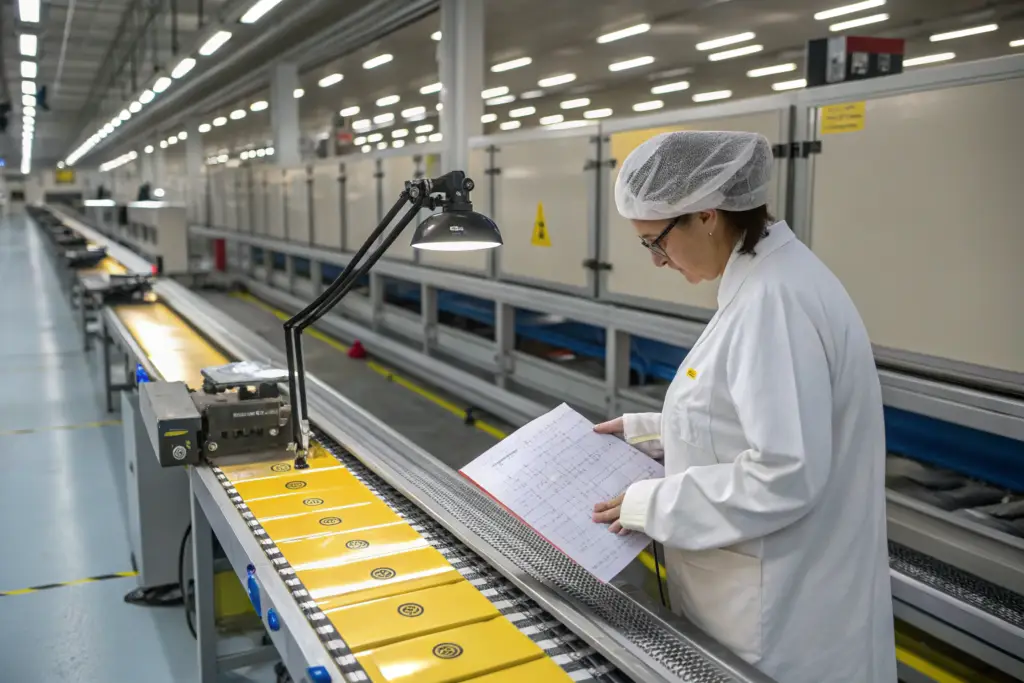
How Does a "Destructive Seam Strength Test" on the Trial Units Reveal a Machine Calibration Drift?
The QC inspector cuts a 10cm seam section from unit one and from unit ten. Both are placed in a tensile strength tester. If unit one's seam ruptures at 28 Newtons and unit ten's seam ruptures at 22 Newtons, the machine's stitching consistency is degrading across the production run. The line is stopped, the machine is recalibrated, and another ten-unit trial is run.
Why Does a "Full Wash Test" on Two Trial Units Reveal Differential Shrinkage That a Dry Measurement Never Catches?
The trial units are washed under a standardized domestic wash cycle, tumble-dried, and re-measured. If the shell fabric shrinks 2% and the lining fabric shrinks 4%, the differential shrinkage creates a puckered, distorted garment that looked perfect before washing. This failure is invisible in a dry measurement.
How Does a "Pre-Shipment Live Video Inspection" Provide Final Approval Authority Before Funds Are Released?
A New York luxury menswear brand once released a $55,000 balance payment based on a factory's emailed AQL inspection report. The report showed a passed inspection with a 1.1% major defect rate. The factory had sampled 125 units from a pre-selected set of "clean" cartons, while the remaining cartons contained garments with a significantly higher defect rate. The brand discovered the deception only after the goods arrived. The $55,000 was gone, and the factory's sales representative stopped responding to emails.
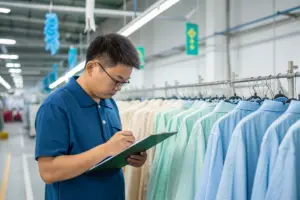
A Pre-Shipment Live Video Inspection provides final approval authority by connecting the brand owner directly to the factory's packing area via a live, unscripted video call, where the brand owner uses a random number generator to select three specific carton numbers, instructs the factory QC team to open those exact cartons live on camera, pull the garments, and inspect them directly against the Golden Sample for measurement, color, stitching, and finishing quality, ensuring that the goods being packed and shipped are the same quality as the goods that passed the AQL report, before the balance payment is authorized.
A PDF report is a promise. A live video inspection of randomly selected cartons is verification. The balance payment should only be released after the brand owner's own eyes have seen the actual, packed goods and compared them directly to the Golden Sample.
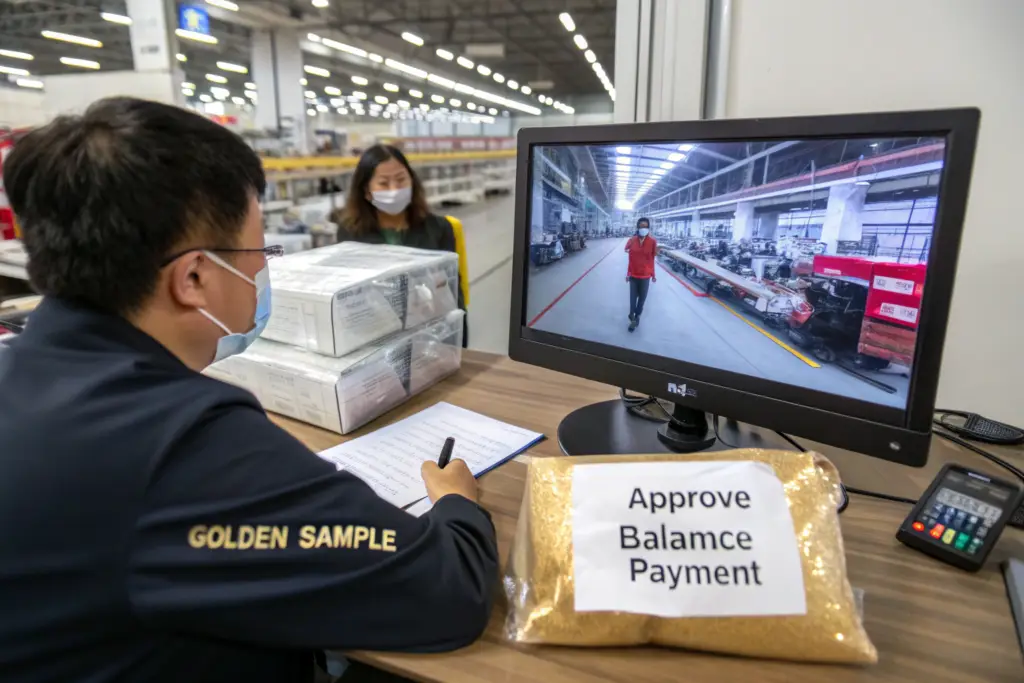
How Does a "Random Carton Number Selection" Via a Random Number Generator App Prevent a Staged Inspection?
The brand owner generates three random numbers between 1 and the total carton count during the live call, and instructs the factory team to locate and open those specific cartons. The factory cannot prepare specific cartons because the numbers are generated live and unpredictably.
Why Should the Brand Owner Physically Hold the Golden Sample Next to the Monitor During the Live Inspection?
The Golden Sample is the physical, signed, legal quality standard. Holding it next to the monitor allows the brand owner to perform a direct side-by-side visual comparison between the approved reference garment and the random bulk garment on the screen, identifying any deviations in color, stitching, or proportion that a generic AQL report might not capture.
Conclusion
Guaranteeing that your bulk menswear order perfectly matches the approved factory sample is a five-layer quality assurance architecture. The Production Mimetic Sample ensures that what you approved can actually be manufactured 1,200 times on a real production line at real speed. The sealed, signed Golden Sample provides a legally binding physical reference standard that eliminates subjective disputes. The Seam and Stitch Construction Reference Board physically communicates the exact stitch quality standard to the operator whose hands create the garment. The ten-unit Pre-Production Line Trial Run catches the systemic defects that only emerge during continuous, full-speed production. The Pre-Shipment Live Video Inspection verifies, with your own eyes, that the goods packed into the randomly selected cartons match the Golden Sample before you release your payment.
At Shanghai Fumao, I implement all five layers as standard operating procedure. I do not allow a brand to approve a sample-room sample. I require the Production Mimetic Sample, sewn on the actual line by the actual operator. I seal and sign the Golden Sample with the brand owner. I mount stitch reference boards at every production line. I run the ten-unit trial and share the destructive test data. I conduct the live video inspection with random carton selection before I ask for the balance payment.
If you are a brand buyer who has been burned by the "sample was perfect, bulk was wrong" experience, and you want a manufacturing partner whose quality assurance system is built to prevent that exact scenario, contact my Business Director, Elaine. She can walk you through our Production Mimetic Sample protocol, show you a sealed Golden Sample, share our trial run destructive test checklist, and schedule a demonstration of our live video pre-shipment inspection. Reach Elaine at: elaine@fumaoclothing.com. Approve the manufacturing reality, not the sample-room fantasy.