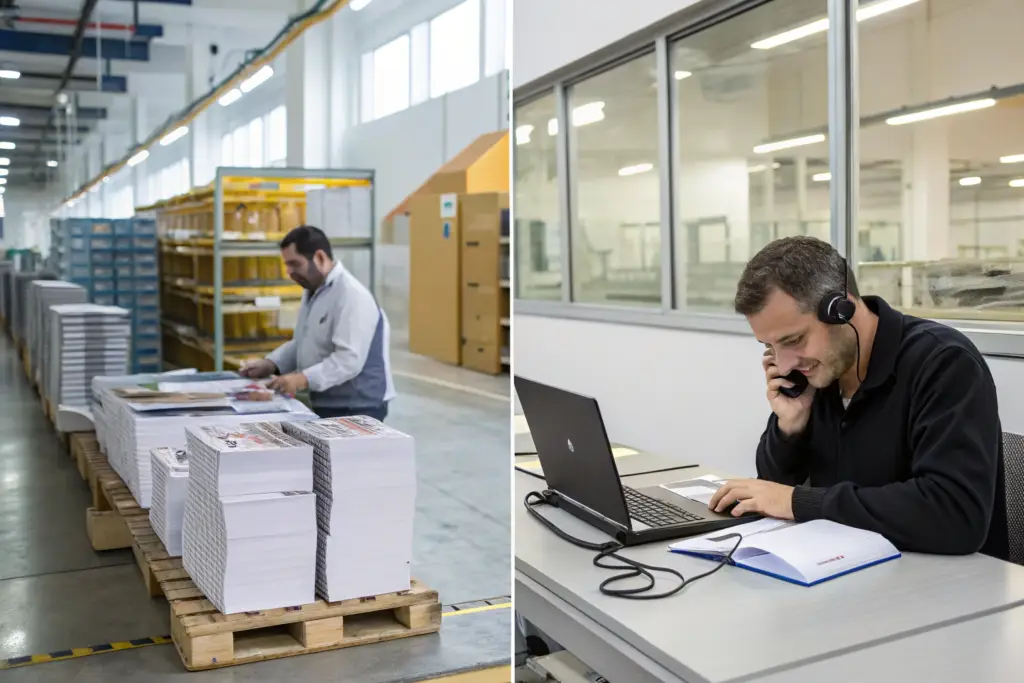
Two years ago, a major Midwest wholesale distributor placed a $250,000 order for branded fleece hoodies with a supplier they had been working with for three seasons. The supplier had always delivered acceptable quality, communicated responsively, and shipped on time. The distributor's buyer trusted them. The fourth season, a shipment arrived with a 14% defect rate, a different fabric weight than the approved sample, and a delayed delivery that missed the holiday retail window. The distributor's buyer investigated. She discovered that their supplier was not a factory. They were a trading company that had switched their backend manufacturing partner to a cheaper, unqualified workshop without informing the distributor. The trading company's sales representative had never stepped foot in the new workshop. The supplier the distributor had trusted for three years was a professional intermediary, not a manufacturer, and the intermediary's loyalty was to their margin, not to the distributor's quality standards.
Top American clothing distributors refuse to work with generic trading companies because a trading company introduces a non-transparent, financially motivated intermediary layer between the distributor and the actual manufacturer, creating a structural conflict of interest where the trading company's profit margin depends on minimizing the factory's production cost regardless of the impact on quality, the trading company controls the communication channel and can selectively filter or falsify information about production delays, quality issues, and factory conditions, and the trading company's legal relationship with the factory is a separate, opaque contract over which the distributor has zero visibility or enforcement power.
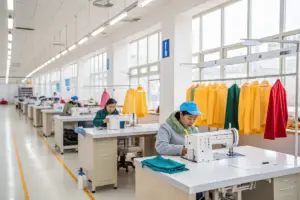
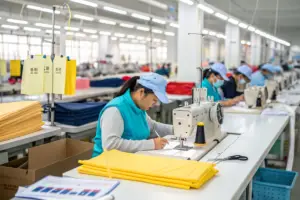
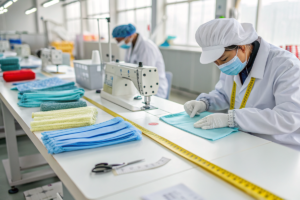
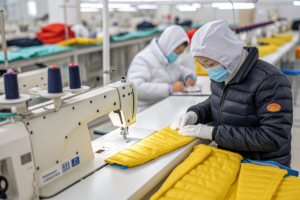
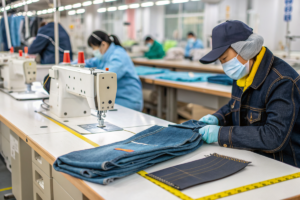
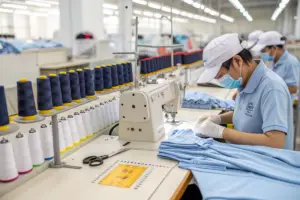
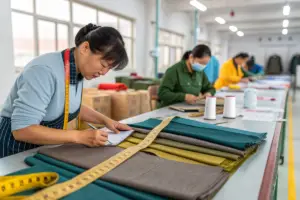
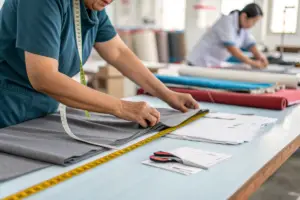
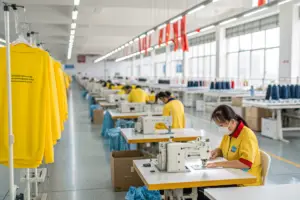
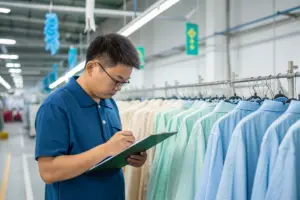
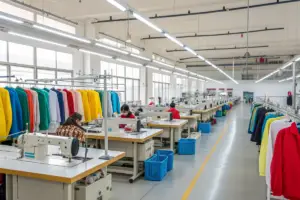
At Shanghai Fumao, I am the manufacturer. When a distributor's buyer calls me with a quality concern, I walk onto my production floor and inspect the specific sewing line. When a distributor wants to verify capacity, I show them my five production lines on a live video call. There is no intermediary filtering the communication, hiding the production reality, or marking up the cost without adding value.
Why Does a Trading Company's "Manufacturer Opacity" Create an Unacceptable Quality Risk for a Distributor?
A distributor for a major West Coast workwear brand once experienced a devastating quality failure that destroyed a $180,000 wholesale account. The fleece jackets they had ordered were pilling excessively after minimal wear, generating customer returns and retailer chargebacks. The distributor's buyer contacted their supplier—a trading company—demanding an explanation. The trading company promised to investigate. Two weeks later, they reported that the factory had "accidentally used a lower-grade yarn" and offered a 5% discount on the next order. The distributor's buyer asked to speak directly with the factory owner to discuss quality controls. The trading company refused, citing "confidentiality of our supply chain." The buyer could not verify the factory's quality systems, could not audit the factory's yarn sourcing, and could not ensure the problem would not recur.
A trading company's manufacturer opacity creates an unacceptable quality risk because the distributor's buyer is contractually and communicationally blocked from the actual factory, cannot independently verify the factory's quality control systems through a direct live video walk-through, cannot audit the factory's raw material sourcing to confirm the specified yarn or fabric is being used, and cannot establish a direct, accountable relationship with the factory's quality manager to resolve issues quickly, leaving the distributor entirely dependent on the trading company's unfiltered word that quality problems have been investigated and resolved.
A trading company earns its margin by being the exclusive intermediary. If the distributor's buyer speaks directly to the factory, the trading company's commercial reason for existence disappears. Therefore, the trading company has a structural incentive to maintain a wall of opacity between the buyer and the actual manufacturer. This wall is the single greatest quality risk in the supply chain.
How Does the "Factory Owner Direct Contact Test" Instantly Expose a Trading Company?
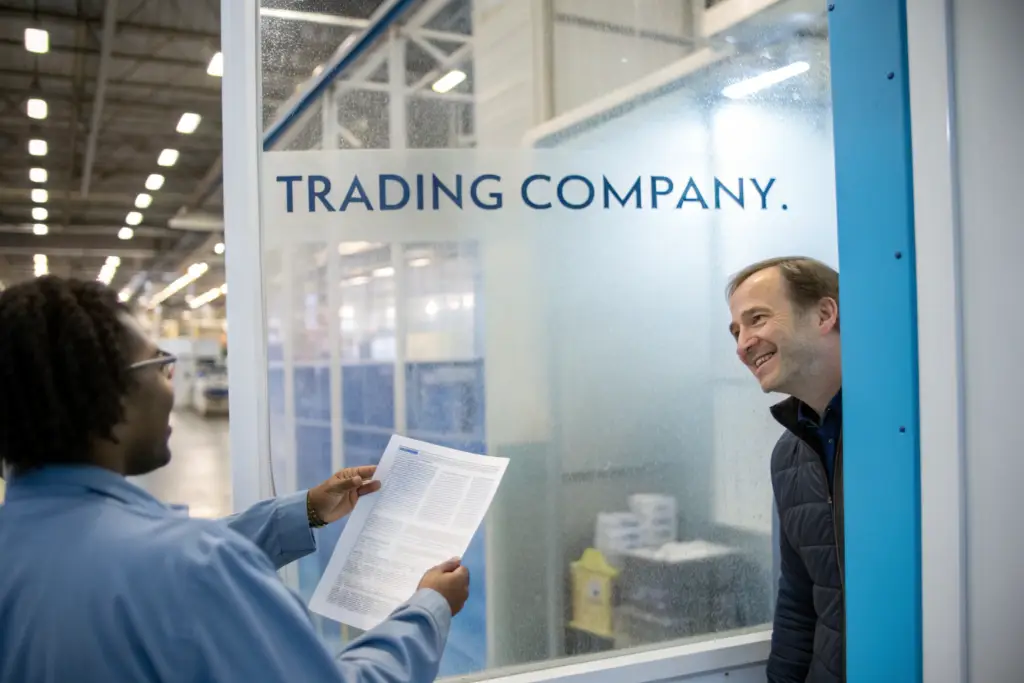
The buyer asks the supplier: "Can I have a ten-minute video call with the factory owner to discuss quality controls?" A genuine factory representative will say, "Of course, let me schedule it." A trading company will deflect: "Our quality team handles that," or "The factory owner doesn't speak English," or "That's not how we work." The deflection is the revelation.
Why Does a Trading Company's "Confidential Supply Chain" Claim Actually Mean "We Don't Want You to See the Factory"?
A legitimate factory is proud of its production lines and welcomes buyer inspections. A trading company's claim of supply chain confidentiality is almost always a cover for one of three realities: the factory is low-quality and would not survive a buyer's inspection, the trading company is sourcing from multiple unstable, small workshops, or the trading company does not want the buyer to discover the factory's true cost and calculate the trading company's margin.
How Does a Trading Company's "Double Markup" Eliminate the Price Competitiveness That Distributors Need?
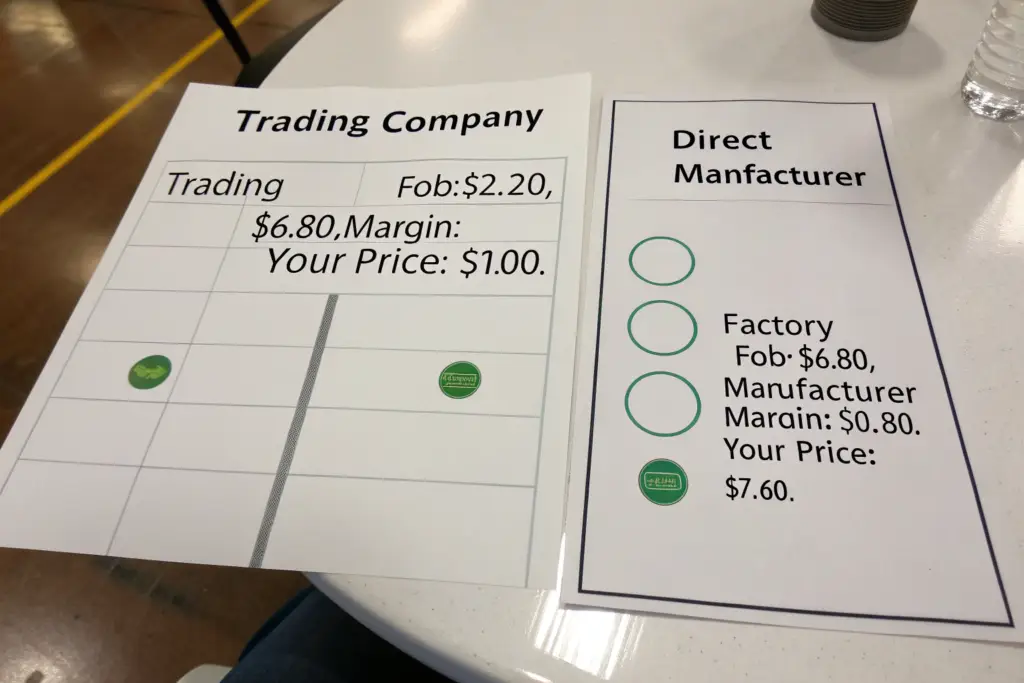
A large Eastern wholesale distributor once analyzed their cost structure across twenty product categories. They discovered that the five categories sourced through trading companies carried an average FOB cost 28% higher than the fifteen categories sourced directly from verified manufacturers, despite similar fabric qualities, similar construction complexity, and similar order volumes. The 28% difference was not a reflection of higher quality or better service. It was the trading company's intermediary margin, layered on top of the factory's own margin, adding no physical value to the garment.
A trading company's double markup eliminates the price competitiveness that distributors need because the trading company does not sew, cut, dye, or inspect a single garment—it simply forwards the factory's quote to the buyer with its own 15-35% margin added on top of the factory's existing margin, creating a final FOB price that is structurally 20-30% higher than the price a distributor would pay by contracting directly with the same factory, forcing the distributor to either accept a compressed margin, raise their wholesale price to a less competitive level, or sacrifice quality by pressuring the trading company to find an even cheaper, lower-quality backend factory.
A distributor's business model depends on margin multiplication: buying at FOB, marking up to wholesale, selling to retailers. A 28% inflation at the FOB level compresses every subsequent margin layer in the distribution chain. The distributor either absorbs the compression or passes it to retailers, who pass it to consumers, making the product less competitive at retail.
How Can a Distributor's Buyer Reverse-Engineer a Trading Company's True Margin?
The buyer requests a detailed cost breakdown from the trading company: fabric cost, trim cost, CMT labor cost, and logistics cost. A genuine manufacturer will provide this breakdown, perhaps with a note that the margin is confidential. A trading company will resist or provide a fabricated breakdown. Comparing the total against known market rates for the specific fabric and garment type often reveals the intermediary margin.
Why Does the "Same Factory, Same Garment, Different Price" Test Reveal the Structural Inefficiency of the Trading Model?
A distributor can send an identical tech pack and sample to both a trading company and a verified direct manufacturer. The quotes will differ by 20-30%. The garments, if both produced by competent factories, will be identical in quality. The price difference is the cost of the intermediary, and it represents pure margin erosion for the distributor.
What Specific "Capacity and Delivery Reliability" Failures Are Inherent in the Trading Company Model?
During the peak season of 2023, a Southern wholesale distributor placed a critical, time-sensitive order of 8,000 fleece vests with their trading company supplier. The order was confirmed for an October 1st ship date. On September 15th, the trading company informed the distributor that the backend factory had overbooked its capacity and the order would be delayed by three weeks. The trading company had no control over the factory's capacity allocation, no real-time visibility into the factory's production schedule, and no ability to enforce the delivery date. The distributor lost a $90,000 wholesale contract with a major retailer because the trading company had promised a delivery date they had no power to guarantee.
Capacity and delivery reliability failures are inherent in the trading company model because the trading company does not own or control any production capacity—it is entirely dependent on the production scheduling decisions of independent third-party factories over which it has no contractual authority beyond a standard purchase order, and when peak season demand creates conflicts between multiple trading companies competing for the same factory's limited capacity, the factory owner will prioritize direct-brand relationships and higher-margin orders, leaving the trading company's clients with delayed, de-prioritized production that the trading company is powerless to prevent.
A factory owner facing a capacity crunch allocates limited production slots based on relationship priority. A direct brand relationship, where the factory owner has personally committed to the brand, receives top priority. A trading company's order, which is just another purchase order from an intermediary, receives whatever capacity is left. The trading company's sales representative can promise anything; the factory owner decides the actual production sequence.

How Does a "Live Production Schedule Verification" Expose a Trading Company's Lack of Control?
The distributor asks the trading company to show, on a live video call, the factory's physical production planning whiteboard with the distributor's order visibly scheduled on a specific line for a specific date. A trading company cannot do this because they have no physical presence in the factory and no access to the factory's internal planning board.
Why Does a "Direct Factory Owner Commitment" Guarantee Capacity in a Way a Trading Company's Purchase Order Cannot?
When a distributor's buyer meets the factory owner directly and the owner personally places the distributor's order on the production whiteboard, that is a personal commitment backed by the owner's reputation. A trading company's purchase order is a commercial document that can be bumped by a higher-priority direct client without the trading company ever knowing until it is too late.
How Does a Trading Company's "Communication Filter" Distort Critical Technical Specifications and Quality Feedback?
A premium contemporary womenswear distributor once relayed a specific fit correction through their trading company: "The armhole is binding at the front; we need to lower the front armhole curve by 1cm and reshape the curve to be more of a J-shape than a U-shape." The trading company's sales representative, a generalist with no pattern-making training, translated this into a message to the factory: "Customer says armhole too tight, make bigger." The factory's pattern maker, receiving an unspecific instruction, enlarged the entire armhole circumference by 2cm, ruining the fit and creating a gaping armhole. The trading company's sales rep lacked the technical vocabulary to translate the buyer's specific, anatomical correction into a specific, actionable pattern adjustment.
A trading company's communication filter distorts critical technical specifications because the trading company's sales representative is a commercial intermediary, not a garment technician—they lack the pattern-making knowledge, the fabric engineering vocabulary, and the quality control expertise to accurately translate the distributor's specific technical feedback into a specific manufacturing instruction, and their commercial incentive is to simplify, reassure, and close the order, not to ensure technical precision, resulting in a lossy, simplified, and often critically incorrect communication chain between the distributor's technical team and the factory's production team.
Technical communication is a lossy process. Every intermediary between the speaker and the listener degrades the signal. A direct communication channel between the distributor's technical buyer and the factory's pattern maker preserves the signal. A trading company sales representative who does not understand the difference between "lowering the armhole curve" and "enlarging the armhole" introduces catastrophic signal loss.

How Does a "Direct Pattern Maker Conversation" Solve a Fit Issue in Ten Minutes That a Trading Company Takes Two Weeks to Miscommunicate?
The distributor's technical buyer schedules a ten-minute live video call directly with the factory's pattern maker. The buyer holds up the problematic garment, points to the binding armhole, and says, "Lower this curve here by 1cm, and reshape it from a U to a J." The pattern maker nods, makes the adjustment on her digital pattern immediately, and shows the revised curve on screen. The correction is confirmed in real-time, by the people who understand the technical language, with zero information loss.
Why Do Trading Companies Often Refuse to Let Distributors Speak Directly to the Factory's QC Manager?
A direct conversation between the distributor's buyer and the factory's QC manager would reveal the factory's true defect rate, the factory's actual quality control processes, and the factory's real production timeline. The trading company's refusal to facilitate this conversation is a red flag that the factory's quality reality does not match the trading company's marketing promises.
Conclusion
Top American clothing distributors refuse to work with generic trading companies because a trading company is a structurally unnecessary intermediary that introduces opacity, inflates cost, fragments accountability, and distorts communication. The opacity prevents the distributor from verifying the factory that actually produces their goods. The double markup erodes the distributor's margin or forces a price increase that reduces retail competitiveness. The lack of direct capacity control means delivery promises are unenforceable wishes, not commitments. The communication filter degrades technical specifications into simplified, inaccurate instructions that produce defective garments.
At Shanghai Fumao, I am the manufacturer. Distributors work with me directly. They speak to my pattern maker directly. They see my production lines on live video directly. They negotiate my cost breakdown directly. There is no intermediary filtering the information, marking up the price, or hiding the production reality. The distributor's buyer and my production team are a single, transparent, accountable communication channel.
If you are a brand buyer or a wholesale distributor who is tired of discovering that your "manufacturer" is actually a trading company with a rented website and no production lines, contact my Business Director, Elaine. She can schedule a live video walk-through of our five production lines, show you our business license with the manufacturing authorization, and connect you directly with the project manager who would oversee your account. Reach Elaine at: elaine@fumaoclothing.com. Work with the factory, not the middleman.