A Miami-based contemporary womenswear brand once designed a collection that was 80% trend-driven—bold neon color-blocking, exaggerated puff sleeves, micro-mini hemlines, and heavily distressed denim. The collection generated massive social media buzz and sold out within three weeks of launch. The founder celebrated. The following season, the trends shifted. Neon was out. Minimalism was in. Puff sleeves looked dated. The brand's entire inventory became dead stock. The founder had no cash to develop the next season because all her capital was trapped in unsold trend pieces. She had built a brand on the shifting sands of trend cycles, and when the tide went out, her business was left with nothing. The following season, she restructured her collection to 70% classic staples and 30% seasonal trends. Her sell-through stabilized, her cash flow became predictable, and her brand identity deepened beyond "what's hot right now."
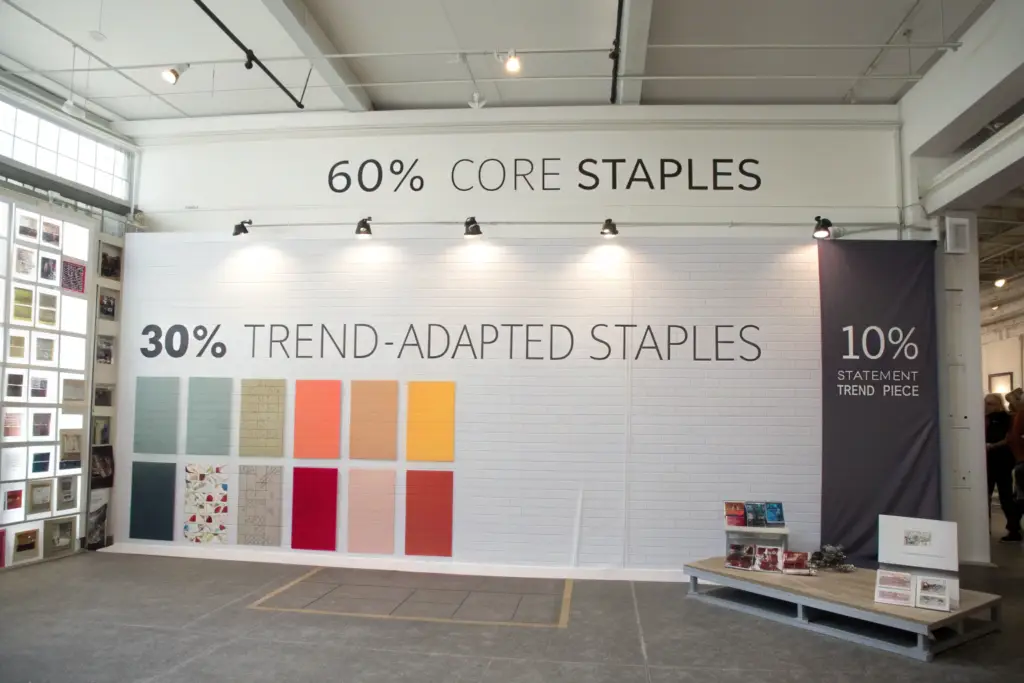
To balance trend items and classic staple pieces, you must build your collection on a foundation of 60-70% core staple silhouettes in neutral, seasonless color palettes and premium, durable fabrications that sell consistently across multiple seasons, allocate 20-30% of the collection to seasonal trend interpretations that incorporate one or two current trend elements—a specific color, a silhouette detail, a print direction—into those existing core silhouettes rather than creating entirely new, trend-dependent garments, and reserve a maximum of 10% for a single, high-impact, pure trend statement piece that generates social media attention and editorial coverage without financially endangering the brand if it does not sell through.
At Shanghai Fumao, I work with brands across this entire spectrum—from pure trend-driven streetwear labels to timeless heritage workwear brands—and I have observed a consistent financial pattern: the brands that survive beyond their third season are the brands that anchor their collection in staples and use trends as seasoning, not as the main course.
Why Does a "60-30-10 Collection Architecture" Financially Protect a Brand From a Single Bad Trend Season?
A Nashville-based contemporary brand once allocated 70% of their production budget to a single, heavily embellished, trend-driven festival jacket that had generated huge social media pre-orders. The festival season ended. The jacket trend died overnight. The brand was left with 2,800 unsold jackets, a warehouse bill of $3,200 per month, and no cash to produce the basic t-shirts and denim that their wholesale accounts were actually requesting for the next delivery window. The brand had bet the entire season on a single trend, and the trend had lost.
The 60-30-10 collection architecture financially protects a brand because the 60% core staple allocation generates stable, predictable, year-round revenue from best-selling, replenishable basics that have a multi-season shelf life and low markdown risk, the 30% trend-adapted staple allocation introduces seasonal freshness and relevance without requiring entirely new pattern development or fabric sourcing, and the 10% statement trend allocation limits the brand's financial exposure to a single, unproven trend to an amount that, even if the piece achieves a 0% sell-through, will not threaten the brand's working capital or prevent the production of the following season's collection.
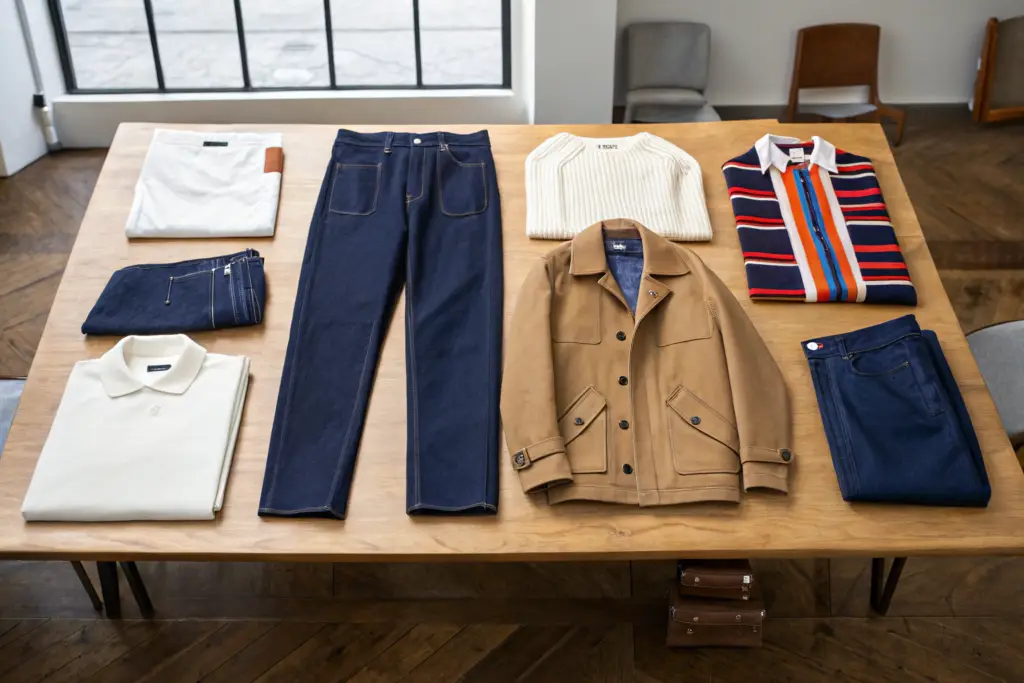
A core staple—a white cotton shirt, a navy blazer, a dark denim jean—sells in January and in July, this year and next year. Its demand curve is a flat, predictable line. A trend piece has a steep, short demand curve that can collapse to zero in a matter of weeks. The 60-30-10 architecture uses the predictable revenue from the staples to fund the calculated risk of the trends.
How Is the "Core Staple" Defined and Identified for a Specific Brand's Customer Base?
A core staple is a silhouette that has sold consistently across at least four consecutive seasons with a sell-through rate above 70% and a markdown rate below 15%. It is identified by analyzing the brand's own historical sales data, not by copying a generic industry list of basics.
Why Does the "30% Trend-Adapted Staple" Generate Higher Margin Than a Pure Trend Piece?
A trend-adapted staple takes an existing, proven core silhouette—for example, a best-selling relaxed blazer—and updates it with a seasonal trend color or a single trend detail, such as a slightly adjusted lapel width. The pattern development cost is minimal, the fit is already validated, and the production risk is low. The trend update commands a higher perceived value and a higher MSRP than the core version, generating a higher margin without the risk of a completely new, untested design.
How Do You Adapt a Single Seasonal Trend Element Onto a Proven Core Silhouette Without Destroying Its Sell-Through?
A London-based contemporary brand once radically redesigned their entire blazer silhouette every season, chasing the trend of the moment—oversized one season, shrunken the next, single-button then double-button. Their wholesale accounts became frustrated because the fit was never consistent. Their customers who loved the Season One blazer returned in Season Two, tried on the new silhouette, and found it unflattering on their body type. They left without purchasing. The brand had trained its customers not to trust the fit of its most expensive garment category.
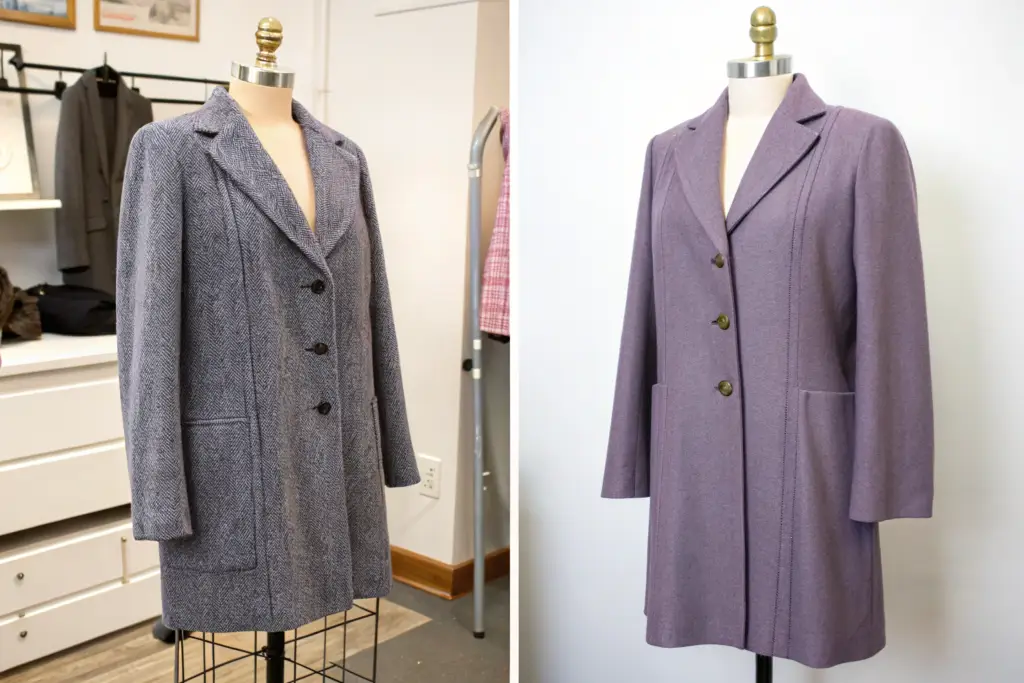
To adapt a seasonal trend element onto a proven core silhouette without destroying its sell-through, you must preserve the exact, validated fit block—the graded pattern, the shoulder slope, the sleeve cap height, the body length—that achieved the historically high sell-through, and apply the trend exclusively through surface-level, non-structural variables: the seasonal color, the fabric texture or print, the button material or finish, and the pocket shape or placement, ensuring that the customer who loved the blazer last season will experience the identical, flattering fit and simply discover a refreshed, seasonally relevant version of her favorite garment.
The fit block is the brand's most valuable intellectual property. It represents years of customer feedback, return data analysis, and pattern refinement. Throwing it away every season in pursuit of a new silhouette trend is throwing away the single strongest predictor of sell-through.
What Are the Five "Non-Structural Variables" That Can Apply a Trend to a Core Garment Without Altering the Fit Block?
The five variables are: Color (applying the season's Pantone trend color to the core silhouette), Fabric Texture (switching from smooth wool to a brushed, textured wool), Print or Pattern (applying a seasonal print to a core dress silhouette), Trim and Hardware (updating buttons, zipper pulls, or rivets to a trend finish), and Surface Detail (adding a removable accessory like a detachable collar or a pin).
How Does a "Detachable Trend Element" Allow a Staple Garment to Capture Both the Trend Customer and the Classic Customer?
A classic trench coat with a detachable, trend-driven faux-fur collar or a bold, printed scarf that can be removed captures the trend-seeking customer who wants the statement piece, and the classic customer who wants the timeless coat and can simply remove the trend element and wear it as a pure staple.
What Specific Fabric and Trim Sourcing Strategy Prevents Trend Pieces From Becoming Unsellable Dead Stock at Season End?
A Melbourne-based fashion brand once sourced 2,500 meters of a bold, trend-driven tiger-stripe printed silk for a single blouse design. The blouse sold moderately well but did not sell out. The brand was left with 800 meters of an instantly recognizable, highly seasonal, un-reusable printed silk. The fabric could not be used for the next season's collection, which was a minimalist, neutral aesthetic. The entire remaining fabric value was written off. The brand had purchased trend fabric at the same bulk volume and commitment level as their core staple fabric.
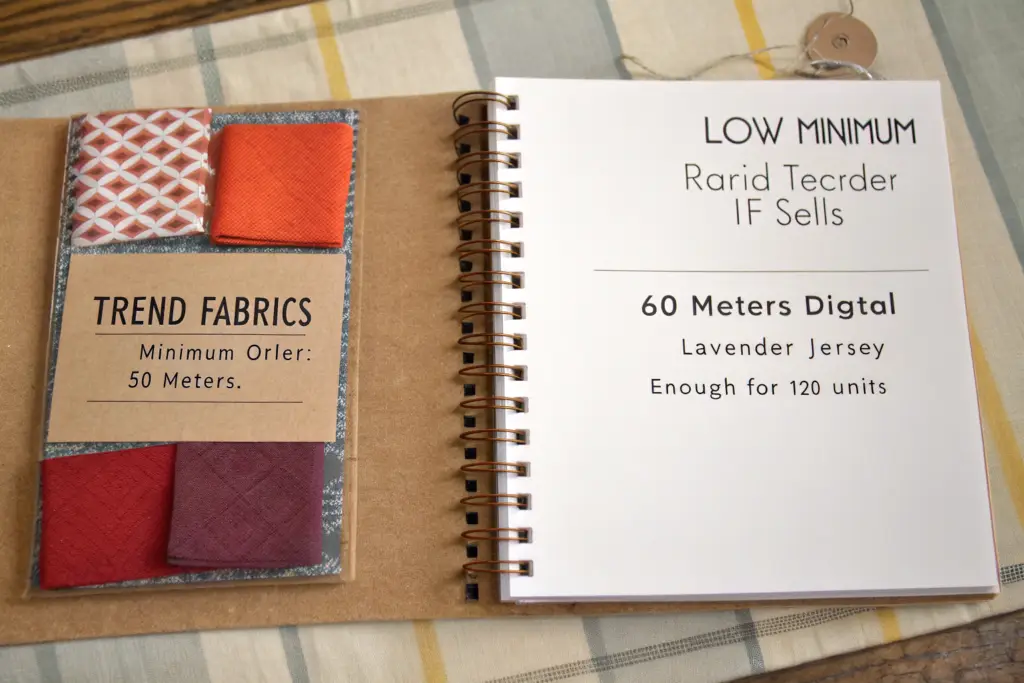
The fabric and trim sourcing strategy that prevents trend pieces from becoming dead stock is to source all trend-specific fabrics, prints, and trims at the absolute minimum order quantity the mill will accept—even if the per-meter cost is 20-30% higher—negotiate a "Rapid Reorder" clause that guarantees the mill can reproduce the trend fabric within 10-14 days if the style sells out, and ensure that any trend fabric can be physically returned or, if custom-printed, is ordered in a quantity that does not exceed the brand's financial write-off tolerance if the trend fails, typically limiting trend fabric commitment to no more than 8-12% of the total seasonal fabric budget.
Core staple fabric—a standard navy wool suiting, a white cotton poplin—can be used across multiple seasons and multiple styles. It is a safe, high-volume purchase. Trend fabric is a fashion gamble. The sourcing volume must reflect the gamble's risk profile.
How Does a "Digital Printing" Technology Enable Small-Batch Trend Fabric Orders That Traditional Screen Printing Cannot?
Traditional screen printing requires a high setup cost and a minimum order quantity of 500-1,000 meters to be economical. Digital printing has a near-zero setup cost and can print as little as 20-50 meters economically, allowing a brand to order a very small batch of a trend print, test the market, and reorder digitally if it sells.
Why Should "Trend Buttons" Be Sourced as a Small, Easily Switchable Trim Rather Than a Permanent Garment Attachment?
If a brand uses an unusual, trend-driven custom button on a core blazer silhouette, the blazer is unsellable to the classic customer. If the button is designed to be easily removable and replaceable—attached with a standard thread shank, not a riveted shank—the brand can switch the buttons back to a classic style if the trend fails, salvaging the core garment.
How Does "Sell-Through Data Integration" Between the Brand and the Factory Enable Mid-Season Trend Pivots?
A Vancouver-based lifestyle brand once launched three trend styles in September. By October 15th, their internal sales data clearly showed that Style A had sold through 88%, Style B had sold through 35%, and Style C had sold through 12%. The brand's founder did not share this data with the factory. The factory proceeded with the scheduled replenishment order for all three styles in equal quantities. By December, Style A was sold out with customers on a waiting list, while Styles B and C were sitting in the warehouse at 60% off. The brand had the data to make a smart mid-season pivot but lacked the communication channel to act on it.
Sell-through data integration between the brand and the factory enables mid-season trend pivots by establishing a weekly "Data Share" protocol where the brand sends a simple, one-page sell-through report showing the percentage sold for each active style, the factory responds within 48 hours with a revised production recommendation—cancelling the planned replenishment for the underperforming trend style, reallocating the reserved greige fabric and production capacity to the overperforming style, and producing a rapid replenishment order for the winning style within 10-14 days—turning the brand's real-time consumer demand signal into a factory production adjustment.
The traditional model assumes the collection plan, set six months before launch, is correct and immutable. The data-integrated model treats the collection plan as a hypothesis, and the first four weeks of sell-through data as the experiment that validates or rejects the hypothesis. The factory that can respond to the data captures the upside of the winning trend and avoids the downside of the losing trend.

What Is a "Weekly Sell-Through Flash Report" and Why Must It Be Simpler Than a Full Financial Analysis?
The flash report contains only three data points per style: units produced, units sold this week, and percentage sold to date. It is designed to be read and actioned by the factory's production manager in under 60 seconds, not to be analyzed by a financial analyst over several hours.
How Does a "Greige Reallocation Clause" in the Production Contract Allow the Factory to Shift Reserved Fabric From a Failing Trend Style to a Winning One?
The clause states: "In the event that any style exceeds 75% sell-through within four weeks of launch, the Buyer may reallocate up to 80% of the reserved greige fabric capacity from any style below 25% sell-through to the overperforming style, with the Factory committing to a 14-day production turnaround on the reallocated volume."
Conclusion
Balancing trend items and classic staple pieces is not a creative compromise. It is a financial architecture that protects a brand's working capital while allowing it to participate in the cultural conversation. The 60-30-10 collection model uses the stable, predictable revenue from core staples to fund the calculated risk of trend experiments. The trend-adapted staple strategy refreshes proven, validated silhouettes with seasonal surface-level updates, preserving the fit block that customers trust. The small-batch trend fabric sourcing strategy limits financial exposure to unproven trends by using digital printing, minimum order quantities, and easily switchable trims. The sell-through data integration protocol turns the first month of sales into a real-time market research signal that redirects production capacity from failing trends to winning ones.
At Shanghai Fumao, I support brands that operate across the staple-to-trend spectrum. I have helped heritage brands refresh their core silhouettes with seasonal trend adaptations, and I have helped trend-driven brands build a foundation of reliable staples that stabilizes their cash flow. My production planning system accommodates both the high-volume, predictable core orders and the small-batch, rapid-turnaround trend orders.
If you are a brand buyer looking to restructure your collection architecture toward a more financially sustainable balance of staples and trends, contact my Business Director, Elaine. She can share our 60-30-10 collection planning template, our trend-adapted staple development process, and our Rapid Replenishment agreement structure. Reach Elaine at: elaine@fumaoclothing.com. Build a collection that survives the trend cycle, not one that dies with it.