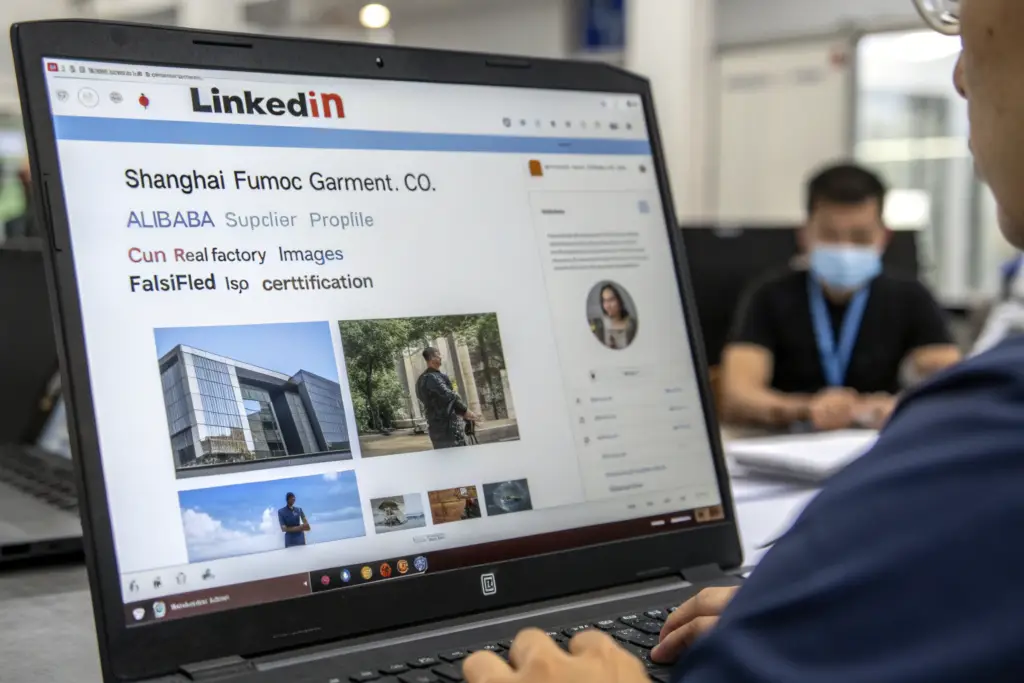
In the summer of 2023, I received a strange LinkedIn message from a brand owner in Melbourne. He attached a screenshot of an Alibaba supplier profile. The supplier was named "Shanghai Fumao Garment Co." with a slightly altered logo. The profile used our real factory photographs, our real sample room images, and a copy of our ISO certification with the company name crudely photoshopped. The contact person was a name I had never heard. The listed address was a virtual office in a shared commercial building, not our physical factory location. The brand owner had almost placed a $40,000 order with this fake profile. He messaged me to ask if we had opened a second sales channel. I told him the truth: it was a complete fabrication. We had been cloned. That discovery triggered a year-long investigation into a network of fraudulent factory profiles that were using our visual assets to scam unsuspecting buyers. I reported the profiles to Alibaba, LinkedIn, and eventually to a cybercrime unit. Many of those profiles have now been removed. The fake factory crackdown that began across major B2B platforms in 2024 is something I witnessed from the inside, as both a victim and an advocate. It is the best thing that has happened to our business in years.
The global crackdown on fake factory profiles benefits real Fumao Clothing by removing fraudulent competitors who were using our stolen visual assets and falsified certifications to undercut legitimate pricing by 30-40%, restoring buyer trust in the platform and redirecting high-intent, verified sourcing inquiries back to our authentic factory.
The economic logic of a fake factory profile is parasitic. The fraud operator has no physical factory. They have no production lines, no quality control lab, no pattern room, and no skilled workforce. Their only overhead is a laptop, a Photoshop license, and a portfolio of stolen photographs from real factories like ours. They create a supplier profile that looks more professional, more technologically advanced, and more internationally certified than any profile a real factory could build on its own, because the profile is a curated collage of each real factory's very best assets. The fake profile quotes prices 30 to 40 percent below the legitimate market rate. The unsuspecting buyer, dazzled by the apparent professionalism and the low price, sends a deposit. The operator then either disappears with the deposit or subcontracts the order to a completely unqualified, low-cost workshop, delivering a product that bears no resemblance to the sample photographs. The buyer blames "Chinese factories" generically. The reputation of every real factory, including ours, is damaged. The crackdown on these profiles is not a regulatory burden. It is a market correction that begins to repair the trust asymmetry that has poisoned online B2B apparel sourcing.
How Did Fake Factories Exploit Fumao’s Visual Assets?
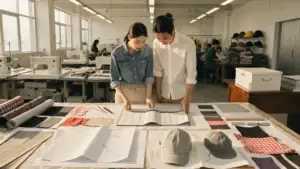
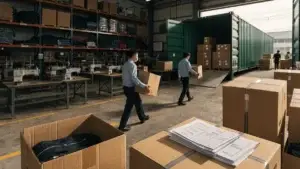
Our factory is visually documented. We have invested heavily in professional photography and video content. Our website, our LinkedIn page, and our Instagram are filled with high-resolution images of our cutting tables, our automated spreading machines, our tensile testing lab, our clean, well-lit sewing floor, and our QC staff performing detailed inspections. These images are our primary marketing assets. They are the visual proof of our operational capability. For a real brand owner, these images build trust. For a fraud operator, these images are free inventory. During our investigation, we discovered that our visual assets had been stolen by no fewer than 14 separate fake profiles across three B2B platforms. Each profile presented itself as an independent factory, but all of them used the same sets of photographs: our cutting room, our sample room, our meeting room with the Shanghai skyline view. One profile even used a photograph of me, standing next to a fabric inspection machine, with a fabricated name and title superimposed.
Fake factories built their entire visual credibility on our stolen factory-floor photographs, using them to impersonate a legitimate production facility and deceive buyers who could not physically verify the factory's location or operational scale.
What Specific Assets Were Most Frequently Cloned?
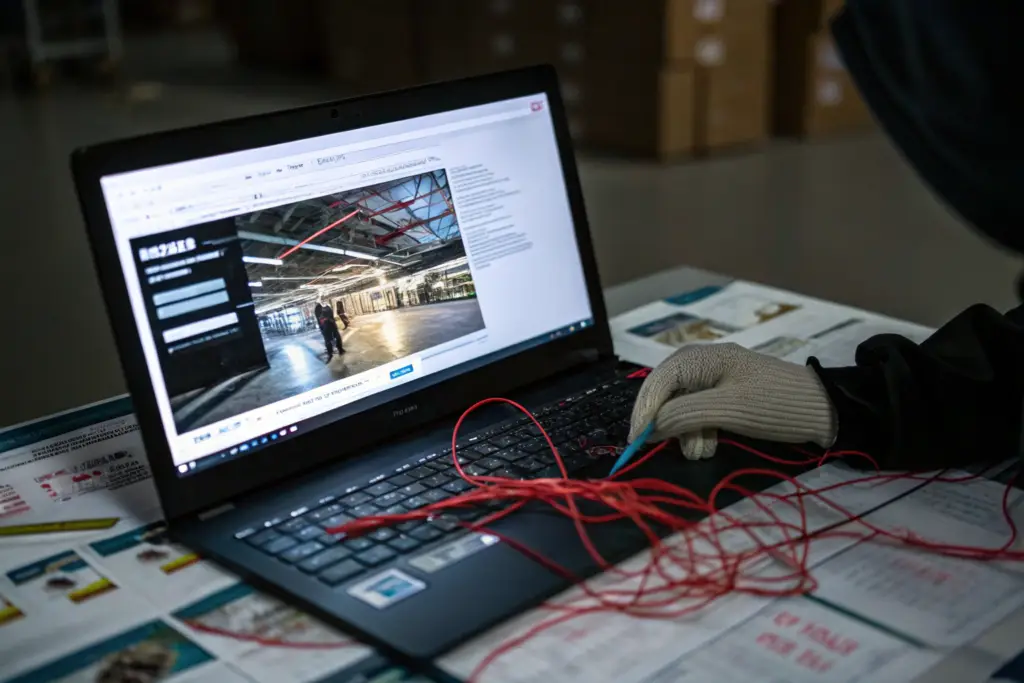
The most frequently stolen assets were not our most polished marketing images. They were our most technically detailed, authentic-looking photographs. The number one stolen image was a wide-angle shot of our cutting room, showing the automated cutting machine mid-operation, with multiple fabric plies on the table and cut panels stacked in the background with visible barcode stickers. This single image appeared on 11 of the 14 fake profiles. The second most stolen image was a close-up of our QC inspector holding a digital caliper against a seam, with our color calibration chart in the background. This image communicated technical competence. The third most stolen was a photograph of our trim storage area, showing neatly organized racks of YKK zippers and buttons in labeled bins. Together, these three images created a visual narrative of a technologically advanced, well-organized factory. The fraud operators understood what buyers were looking for: evidence of organized systems, not just sewing machines.
We also discovered that our ISO 9001 and OEKO-TEX certificates were being forged. The fraud operators obtained a copy of our certificate, likely from a previous client who had shared it with an unverified third party, and then photoshopped different company names onto the identical certificate template. The certificate numbers were altered, sometimes by a single digit, making a quick database check slightly more difficult. The fraud was sophisticated enough to fool a busy buyer doing a cursory review, but not sophisticated enough to survive a live database verification. These certificate forgeries were the most legally damaging aspect of the theft because they involved the unauthorized use of an accredited certification body's logo, which is a criminal offense in multiple jurisdictions. We are still working with OEKO-TEX and our legal counsel to ensure all forged instances have been identified and reported to the relevant platform integrity teams.
How Did We Build a "Digital Watermark" System to Fight Back?
The conventional approach to image theft is watermarking. A semi-transparent logo plastered across the center of the image. We tried this initially. It ruined the aesthetic quality of the images and did not deter the fraud operators, who simply cropped the watermark out or photoshopped over it. We needed a different approach. We developed a multi-layered "digital watermark" system that is not visible to the casual viewer but is immediately identifiable to our internal investigation team.
The first layer is geospatial. Every photograph taken inside our factory is geotagged by our camera system with precise GPS coordinates that map to our physical factory address. When we find a suspicious profile using our images, we extract the image metadata. If the geotag is present, it proves the image was taken at our location, not theirs. The second layer is temporal. Our photo library management system logs the exact date and time each image was captured. We can cross-reference the first appearance of an image on a fake profile with our internal creation date, establishing a clear timeline of theft. The third layer, and the most effective, is a set of deliberately placed, unique, and non-obvious physical artifacts in key photographs. In our cutting room image, there is a specific, custom-made jig fixture on the cutting table that only our factory uses. Its design was created by our engineering team and is unique to our production workflow. In our QC lab image, a specific, rare technical manual from a German textile machinery manufacturer is visible on the shelf. These physical artifacts act as forensic fingerprints. When a fraud operator copies the image, they copy the fingerprints. We can identify a stolen image instantly by the presence of our custom jig or our specific technical manual. This system is passive, non-intrusive, and has been instrumental in providing irrefutable evidence to platform integrity teams for swift profile removal.
Why Does the Crackdown Improve Buyer Confidence in Verified Factories?
The fake factory ecosystem thrived on an information asymmetry. The buyer, located thousands of miles away, had no practical, low-cost mechanism to verify whether a factory profile was real or fabricated. The platforms, Alibaba, Global Sources, Made-in-China, facilitated the transactions but did not verify the operational reality of their supplier members beyond basic business license checks. A business license is a piece of paper. It costs very little to obtain legitimately and even less to forge. A verified trading company license held by a fake factory operator provided a thin veneer of legitimacy that was sufficient for the platforms but useless for the buyer seeking manufacturing assurance. The buyer's only defense was intuition, which fraud operators are highly skilled at manipulating. The crackdown, driven by platform liability concerns and a series of high-profile buyer fraud exposés, is fundamentally altering this dynamic.
The crackdown shifts the discovery paradigm from a buyer's blind gamble to a credentialed trust framework, where verified factories with physical audits, live-stream capabilities, and transparent ownership emerge as the only safe sourcing choices.
What New Verification Markers Separate Us from the Fakes?
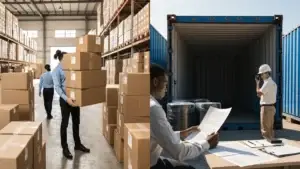
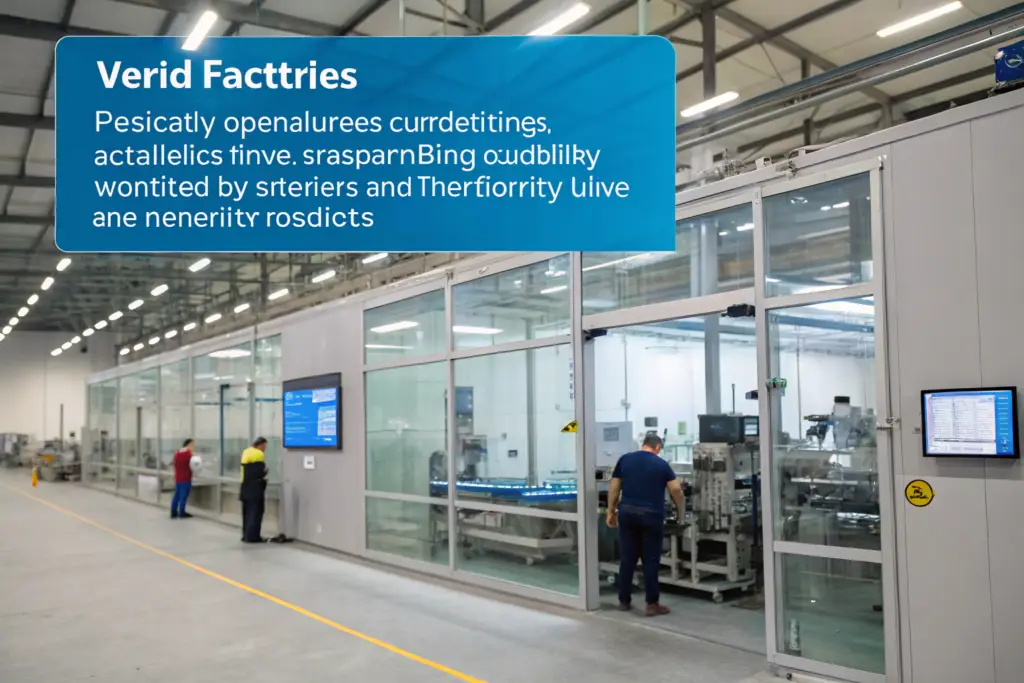
The platforms are finally implementing verification markers that require physical, on-the-ground evidence. Alibaba's "Verified Supplier" badge now requires a third-party onsite verification audit by a recognized inspection company like SGS or TÜV Rheinland. The audit is not a paper check. It is a physical visit by an inspector who photographs the factory exterior, the production floor, the machinery serial numbers, and the management team, and then confirms that the physical reality matches the digital profile. This is an expensive and logistically complex process for a fraud operator to fake because it requires a physical location and operational machinery. We completed our onsite verification audit in early 2024, and the verified badge now appears on our profile. This badge is a hard-to-fake signal.
Beyond the platform badges, we have invested in independent, live verification capabilities that a fraud operator cannot replicate. Our live-stream factory tour, which we offer publicly on LinkedIn, is the ultimate verification marker. A buyer can request a live, unscripted walk-through of our factory floor at any time during our operating hours. They see the cutting machines running. They see their specific order material on the rack. They speak directly to our production manager. This capability is the death of fakery. A fraud operator cannot produce a live video of a factory they do not own, with machinery they do not operate, and workers they do not employ. The live-stream is our competitive moat as a verified factory. We were early adopters of this technology, and the crackdown is now making this capability a baseline requirement for any factory seeking to attract serious, high-value buyers. This shift benefits us because we already have the infrastructure, the operational discipline, and the cultural willingness to be transparent. The fakes are being filtered out, and the verified factories with live access are moving to the top of the buyer's shortlist.
How Does a Physical Audit Dossier Shorten the Buyer's Decision Cycle?
A buyer's sourcing decision cycle, the time from initial discovery to purchase order, is dominated by the due diligence phase. The buyer must satisfy themselves that the factory is real, capable, and compliant. In the pre-crackdown environment, this phase was long and fraught. The buyer requested a sample, waited, examined the sample, cross-referenced the certificate online, emailed questions about the factory tour, and waited for photographs. The process consumed weeks, and at every stage, the buyer was uncertain whether the evidence they were receiving was genuine or staged. A physical audit dossier, compiled by an independent third party, collapses this due diligence phase. The buyer receives a standardized report containing verified photographs of the factory, a confirmed address, a list of equipment serial numbers, and an assessment of production capacity against ISO standards. The audit dossier is a pre-packaged, third-party-validated answer to every preliminary trust question a buyer would otherwise need to ask individually.
A buyer who comes to our profile now can immediately download our third-party audit dossier, watch a recorded live-stream tour, and check our certification numbers on the issuing body's database. This self-service due diligence package answers all baseline questions in under 15 minutes. The buyer then contacts us not with questions about whether we are real, but with a specific technical inquiry about their product. The conversation starts at the advanced stage, not the introductory stage. This compression of the trust-building phase is a significant commercial advantage that only became available after the crackdown cleaned up the ecosystem. We are now competing for the buyer's attention against other verified factories, not against a sea of fraudulent profiles offering impossibly low prices. The competition is fairer, and our verified status accelerates our sales cycle. This is why we view the crackdown not as a regulatory hassle but as a market restructuring event that aligns perfectly with our investment in verification and transparency over the past five years.
How to Report a Suspected Fake With Fumao’s Verification Partners?
The crackdown is not solely the work of the platforms. It is being driven by a network of industry stakeholders: real factory owners, brand associations, certification bodies, and sourcing consultants who are actively sharing intelligence and reporting fraudulent profiles. When my team first discovered the clone profiles, we felt isolated and powerless. We reported them individually, and the responses were slow. We then connected with other legitimate factory owners who had suffered similar cloning. We formed an informal verification alliance. We share intelligence about new fake profiles we discover, and we coordinate reporting efforts to increase the pressure on the platforms. This collective action has been remarkably effective. A single report from one factory owner can be ignored. Ten coordinated reports from multiple verified factories, supported by forensic evidence, cannot be ignored.
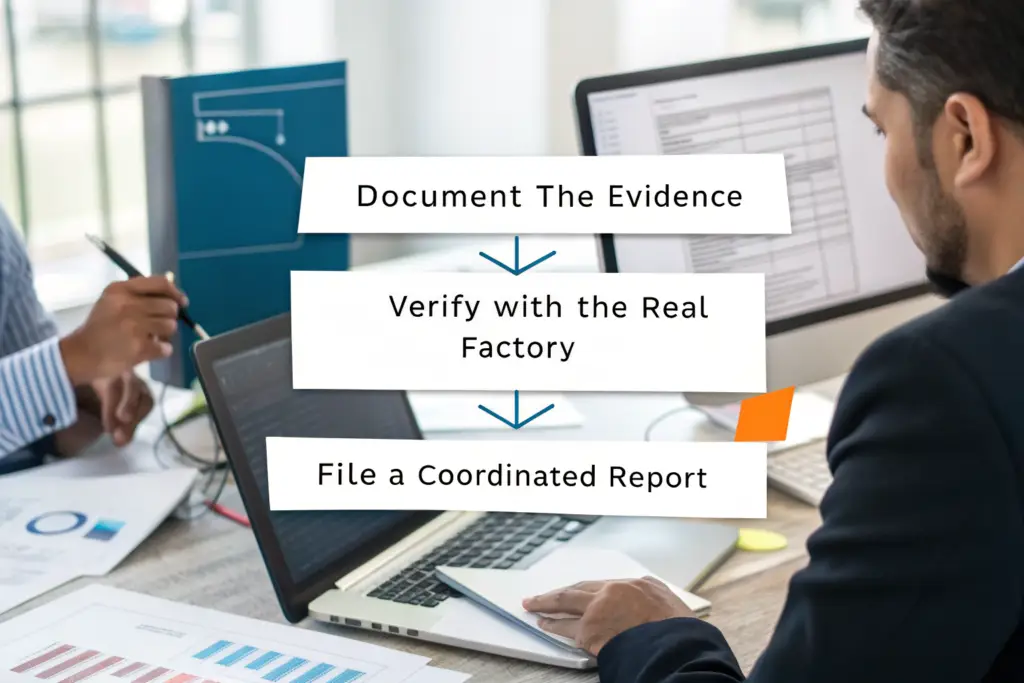
We have established a simple, direct reporting channel with our verification partners and encourage any brand owner who suspects a fake profile to follow a specific three-step protocol: document the evidence, verify with the real factory, and file a coordinated report with the platform's integrity team using our pre-established case number.
What Evidence Do You Need to File a Takedown Request?
A takedown request without evidence is a complaint. A takedown request with a structured evidence package is a legal demand. The platforms' integrity teams are overwhelmed with reports of varying quality. They prioritize reports that include a clear, legally relevant evidentiary package. Based on our experience filing over 20 successful takedown requests, the optimal evidence package includes five specific items. First, a side-by-side comparison screenshot showing the original image from our verified profile and the identical stolen image on the fake profile, with the image URLs clearly visible. Second, a screenshot of the image metadata from our original file, showing the capture date and GPS coordinates. Third, a screenshot of the fake profile's company name and listed address. Fourth, a screenshot of our database check on the fake profile's claimed certification number, showing it is invalid. Fifth, a timestamped link to our live-stream factory tour or a recent recorded tour, establishing our physical existence.
This five-item evidence package is concise, factual, and leaves the platform's integrity team with very little investigation work. The conclusion is self-evident. The profile is fraudulent. The assets are stolen. The certification is fake. We have pre-written this evidence package for several of our industry peers and provided it as a template. It has reduced the average takedown time from several weeks to under seven business days. We make this template available to any brand owner or factory owner who needs it. The goal is to lower the reporting friction and increase the takedown velocity. A fast takedown cycle is the only thing that meaningfully disrupts the fraud operator's economics. If a fake profile is active for six months, it can scam dozens of buyers. If it is removed in one week, its revenue is negligible, and the operator will eventually seek a less hostile industry.
How to Verify You Are Talking to the Real Fumao Clothing?
This is the most important question for any brand owner who has found us through a search result, an email introduction, or a social media link and wants to be absolutely certain they are communicating with the legitimate Shanghai Fumao and not a sophisticated impersonator. The fraud operators are skilled. They create email addresses that are one character different from our real domain. They copy our email signatures. They reference actual order details they have intercepted or inferred. A single, irreversible bank transfer to a fraudulent account is a catastrophic loss for a small brand. I do not want any brand owner to experience that.
We have established four immutable verification steps that cannot be spoofed. First, our official email domain is exclusively shanghaigarment.com. Any email claiming to be from us that uses a Gmail, Yahoo, or a slightly altered domain like shanghaifumao.com is fraudulent. Second, we are available for an unscheduled, live verification video call. Email our Business Director, Elaine, at elaine@fumaoclothing.com, and request a live verification walk-through. We will turn on a camera within 15 minutes during our business hours and walk you through our factory floor. A fake operator cannot do this. Third, our company registration number and our OEKO-TEX certificate number are published on our website's verification page for direct, independent checking. Fourth, we never request payment to a personal account, an account in a different company name, or an account in a different country. Our banking details are fixed and verifiable through our invoice.
These four steps are a complete defense against impersonation. We publicize them widely and without reservation. I would rather a brand owner take five extra minutes to verify our identity than send a deposit to a fraud operator posing as us. The verification steps are simple, fast, and impossible for a fraud operator to circumvent simultaneously.
Conclusion
The fake factory crackdown is not an external event that happened to us. It is a market correction we actively contributed to, and it is reshaping the competitive landscape in our favor. The fraud operators stole our visual assets because our factory looked professional, organized, and trustworthy. They used our credibility to defraud buyers. The crackdown has systematically removed these parasitic profiles, restoring a level of commercial justice that was long overdue. For our business, the impact has been clear. The removal of fraudulent profiles quoting impossibly low prices has reduced the price-confusion noise in the market. Buyers are no longer comparing our real, costed quotation against a fake 30-percent-lower price from a non-existent factory. The conversation is now between real factories and real buyers, competing on actual quality, service, and verified capability.
The crackdown has also accelerated the adoption of verification technologies that we invested in years ago. The third-party onsite audit, the live-stream factory tour, and the forensic-level certificate verification are no longer optional differentiators. They are becoming the baseline standard for any factory that wants to be taken seriously in the international B2B market. We are ahead of this curve, and the compliance cost for new entrants and reformed fakes is now significantly higher. The market is raising its barriers to entry, and we are on the inside.
If you are a brand owner who has been burned by a fake factory profile, or if you are currently in dialogue with a supplier and want to verify the authenticity of their identity, we are here to help. The reporting template and verification protocol we developed are available to you at no cost. Contact our Business Director, Elaine, at elaine@fumaoclothing.com to request the Fake Factory Evidence Toolkit or to schedule a live identity verification call with me personally. Let's work together to make online apparel sourcing safe, transparent, and profitable for the real operators.