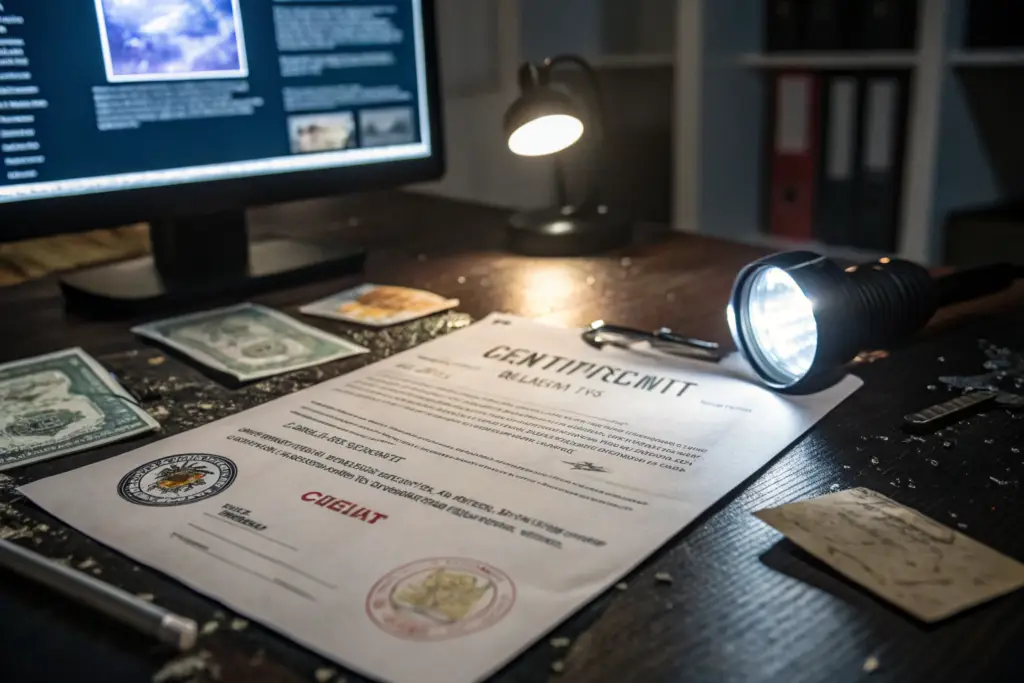
I nearly signed a contract with a certification mill. In 2021, a fabric supplier my team had sourced for a children's wear project sent us a suite of compliance documents. The OEKO-TEX certificate looked perfect. The font was correct. The logo was sharp. The certificate number was formatted correctly. The issuing body was listed as a well-known European testing institute. My procurement manager had already approved the supplier. The purchase order was drafted. Something, a tiny, nagging instinct I could not name, told me to pick up the phone. I called the issuing body's verification hotline directly, not the number printed on the certificate, but the number on their official website. I read the certificate number. The voice on the other end was silent for a moment. Then she said, "That number does not exist in our database. That certificate is a forgery." The fabric was conventional cotton, not organic. The dye was a standard azo formulation, not the low-impact dye claimed. The entire compliance package was a work of graphic design, not chemical analysis. That near-miss shook me to my core. I realized that a brand owner, trusting a digital scan of a certificate, had no defense against this fraud. The certification system itself, the very mechanism designed to build trust, had been weaponized against the trusting. I knew we had to expose this.
A Fumao Clothing video exposed fake certification mills by live-streaming a physical chemist's verification of a fabric's OEKO-TEX claim, visually demonstrating that the certification number printed on the supplier's document did not exist in the certifier's public database, and showing the real-time spectrophotometer scan that confirmed the presence of a restricted phthalate.
The video was not a polished documentary. It was a raw, 18-minute live-stream on LinkedIn, filmed on my phone. I held up a printed copy of the suspicious certificate to the camera. I showed the certification number. I then opened the official website of the certifying body, navigated to their public label check portal, and typed in the number. The screen returned in bright red text: "No valid certificate found." I then took a swatch of the associated fabric, walked it to our in-house chemistry lab, and placed it under a Thermo Fisher Niton XRF analyzer. Within 60 seconds, the elemental spectrum appeared on the shared screen. The lead peak was unmistakable. The fabric contained a restricted heavy metal at a concentration that was three times the legal limit for adult garments under REACH Annex XVII. The certificate claimed the fabric was OEKO-TEX Standard 100 Class I, safe for babies. The live data showed it was toxic. The chat exploded. Within a week, the video had been shared by three major fashion watchdog accounts, embedded in a Business of Fashion article, and forwarded to the inbox of a U.S. congressperson working on textile safety legislation. The video did not just expose one bad supplier. It revealed the systemic vulnerability of the paper-based certification model and simultaneously demonstrated the antidote: live, verifiable, instrumental analysis that any brand owner could witness without a plane ticket.
What Is a "Certification Mill" in the Garment Supply Chain?
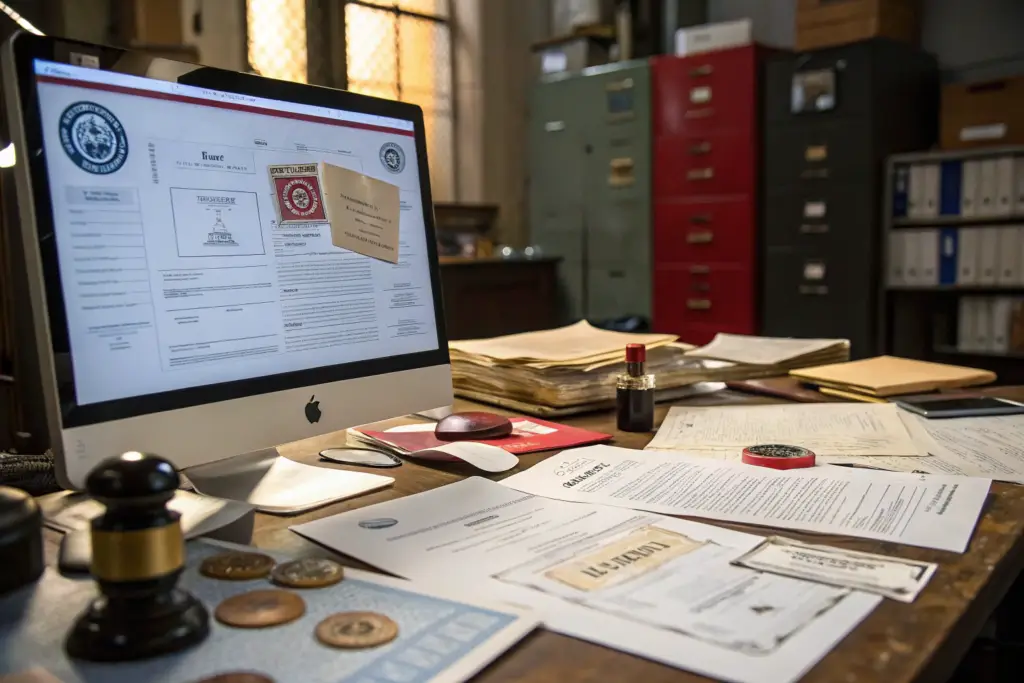
A certification mill is a ghost factory. It produces no garments, no fabric, and no yarn. Its only product is a PDF document. The document is a counterfeit compliance certificate, designed to look identical to the real certificates issued by legitimate bodies like OEKO-TEX, GOTS, SGS, Bureau Veritas, or Intertek. The mill operator obtains a single copy of a real certificate, often by ordering a small batch of fabric from a genuinely certified mill and then scanning the document. Using basic desktop publishing software, they alter the company name, the product description, and the date. They apply a fake hologram sticker, scan the document at high resolution, and save it as a PDF. This PDF is then sold to a non-compliant factory for a fee, typically between 200 and 500 dollars per document. The factory attaches the PDF to their supplier profile, sends it to unsuspecting buyers, and gains an unfair competitive advantage over genuinely certified factories that have invested heavily in compliant chemistry and auditing. The buyer, often a small brand owner with no in-house chemical expertise, receives the PDF, sees the logo of a trusted institution, and checks the compliance box in their sourcing spreadsheet. The fraud is invisible.
A certification mill is a criminal enterprise that mass-produces digitally forged compliance documents, exploiting the brand owner's rational trust in institutional logos to bypass the expensive reality of chemical safety testing.
How Did We Spot a Forged OEKO-TEX Certificate in Real Time?
The live-stream identified the forgery using a two-step verification protocol that any brand owner can replicate. Step one is a digital database check. Every legitimate OEKO-TEX certificate has a unique number. That number can be entered into the free, public OEKO-TEX Label Check portal on their official website. The portal returns one of two results: "Valid" with the certified company name, or "Invalid/Not Found." There is no third option. If the company name on the certificate does not match the company name in the database, the certificate is either forged or fraudulently transferred. The database check takes exactly 30 seconds. In our live-stream, the database returned "Invalid." This alone was sufficient to prove fraud.
But we went further. The supplier had claimed the fabric was tested for restricted substances. If the claim was false, the fabric itself would be the final witness. We used an X-ray fluorescence, or XRF, analyzer. This is a handheld, non-destructive instrument that shoots a beam of X-rays at a material. The atoms in the material fluoresce, emitting secondary X-rays at energies that are characteristic of specific elements. The instrument's software instantly identifies the elements present and their concentrations. Heavy metals like lead, cadmium, mercury, and chromium have unique spectral signatures that are unmistakable. The XRF scan of the suspicious fabric revealed a lead concentration of 9.8 milligrams per kilogram. The OEKO-TEX limit for lead in a Class I infant garment is not detectable, quantified at a limit of 1.0 mg/kg. The fabric contained nearly ten times the permitted level. The live XRF scan transformed the suspicion from a digital inquiry into a physical, observable, and undeniable fact. The video displayed the data in the language of the periodic table, a language that cannot be photoshopped. This dual-attack verification, combining a public database query with a live instrumental analysis, is a repeatable, low-cost methodology that renders the certification mill's entire business model obsolete. This is the kind of transparency we practice daily at Shanghai Fumao.
Is a "Digitally Verifiable" Certificate Always Safe?
No. A "digitally verifiable" certificate is safer than a static paper scan, but it is not immune to sophisticated fraud. The most advanced certification mills now understand the public database vulnerability. They have developed a workaround. They obtain a legitimate test report for a single, small, compliant batch of fabric. The report is real, the number is real, and the database check returns "Valid." The fraudulent factory then uses this single valid test report as a permanent, rotating cover document. They show it to every buyer, claiming it covers their entire production, even though it only covers one sample test from two years ago. The document is technically real. Its application is fraudulent. This is called certificate laundering.
Uncovering certificate laundering requires a different line of questioning. The brand owner must interrogate the temporal scope of the certificate. An OEKO-TEX certificate has a validity period of 12 months. A valid certificate that expired last month is not a valid certificate. The brand owner must check the date on the database entry. They must also interrogate the material scope. A certificate for a 100 percent cotton woven fabric does not cover a polyester-cotton knit fabric, even if the factory name on the certificate is the same. The certificate is specific to a product category and a fiber composition. They must also interrogate the supply chain scope. A certificate issued to a dyeing mill does not automatically certify the sewing factory that receives the dyed fabric. The certification is entity-specific. We have built these multi-layered verification steps into our supplier onboarding checklist. Every certificate is checked not just for numeric validity, but for date, product scope, and entity scope. The combination of these checks, plus a random XRF audit of incoming fabric against the certified specification, forms a web of verification that is extremely difficult for even a sophisticated certificate launderer to penetrate. This is the protocol we shared in our video, and it has become a training resource for sourcing teams globally. We are doing our small part to educate the industry on responsible sourcing.
How Is Live-Streamed Lab Testing Disrupting the Audit Industry?
The traditional audit industry operates on a snapshot model. An auditor, employed by a certification body, physically visits a factory once every 12 to 18 months. The audit is scheduled weeks in advance. The factory prepares its documentation, cleans its chemical storage area, and temporarily addresses visible safety violations. The auditor spends one to three days on-site, takes photographs, reviews paper records, and collects a small number of samples for laboratory testing. The auditor then leaves. The factory receives a report and, if successful, a certificate. The certificate is a historical document, valid on the day of the audit but increasingly stale with each passing month. The fundamental limitation is the cost and logistics of physical presence. An auditor cannot be everywhere, continuously. The industry has accepted this limitation as an unavoidable constraint. Live-streamed lab testing challenges this assumption by decoupling verification from physical co-location. The instrument data, the chemical spectrum, the fabric tensile curve, and the wash test result are all digital signals. A digital signal can be transmitted live to a remote witness. The witness does not need to travel to the lab. The lab can broadcast its instrumental truth to 500 buyers simultaneously.
Live-streamed lab testing disrupts the traditional audit industry by replacing the episodic, scheduled, and paper-based snapshot model with a continuous, on-demand instrumental verification model where buyers witness the chemical truth of their products directly, not via an interpreted audit report.

Can a Spectrometer Stream Replace a Physical Lab Audit?
A spectrometer stream cannot replace every dimension of a physical social compliance audit. It cannot verify that workers are paid a living wage or that fire exits are unblocked. These human-centric audit elements still require human eyes, and honest conversation, on the factory floor. However, a spectrometer stream can replace the chemical testing component of an audit with superior temporal resolution. A traditional audit tests one fabric sample, once per year, at a cost of approximately $450 per elemental screen, with a 10-business-day turnaround. The result is a single data point. A live-streamed XRF scan, performed by a factory technician on the actual incoming fabric roll, costs approximately $0.50 in machine amortization and technician time and takes 90 seconds. The result is immediate, and the test can be repeated on every single fabric batch, for every single production order, at virtually no marginal cost.
This shift from annual single-point testing to per-batch continuous testing is a statistical revolution. A traditional audit has a significant probability of missing an intermittent contamination event. Suppose a fabric mill accidentally contaminates a single dye batch with a restricted substance due to a cross-contamination error. If you test one sample per year, your probability of catching that single contaminated batch is extremely low. If you test every batch with a live-streamed XRF protocol, your probability of catching it approaches 100 percent. The live-stream also removes the chain of custody gap. In a traditional audit, the fabric sample is collected, bagged, shipped to a remote lab, logged, queued, and finally tested weeks later. Between collection and testing, the sample's identity could be compromised or mislabeled. In a live-streamed test, the fabric roll is identified on camera, the swatch is cut on camera, the swatch is placed in the test chamber on camera, and the result is read on camera within a two-minute continuous, unbroken observation sequence. The chain of custody is visually unbroken. The evidence is co-witnessed. This is a fundamentally stronger evidentiary standard than a remote lab report. This is the standard we now offer to all sustainable clothing brands as part of our fabric sourcing transparency package.
Why Did the Video Trigger a Regulatory Conversation?
Our video caught the attention of a legislative aide working on textile safety reform. The aide's office contacted us, not because the video was novel, but because it demonstrated a scalable, low-cost enforcement mechanism that did not require expanding a government inspection budget. The regulatory challenge with textile chemical restrictions is enforcement practicality. The U.S. Consumer Product Safety Commission, or CPSC, does not have the resources to physically inspect every container of imported garments for restricted phthalates. The enforcement model is reactive, relying on post-market injury reports and random port sampling that catches a tiny fraction of violations. The live-streamed XRF protocol we demonstrated offered a proactive, pre-market enforcement model. A factory that voluntarily broadcasts its XRF data for every batch creates a real-time, auditable compliance data stream. A regulator could theoretically subscribe to that data stream and monitor compliance passively, without deploying an inspector.
This is a nascent concept, but the conversation has begun. We are not advocating for a regulatory mandate. We are demonstrating what is technically possible now. A brand owner can, today, require their suppliers to perform a live-streamed XRF and tensile test on their exact production fabric and witness the results in real-time. The technology is available, the cost is trivial, and the evidential value is superior to a paper certificate. The video simply made this possibility visible to non-technical decision-makers. A fashion brand CEO who watched the video told me it was the first time she understood what a chemical test actually looked like. She had been signing off on compliance documents for a decade without ever seeing an XRF machine. The video demystified the testing process and exposed the absurdity of a system where a piece of paper, easily forged, was the sole barrier between her brand and a potential product recall. This demystification of technical verification is a core part of our commitment to manufacturing ethics.
How to Audit Your Own Supplier's Certificates in 3 Steps?
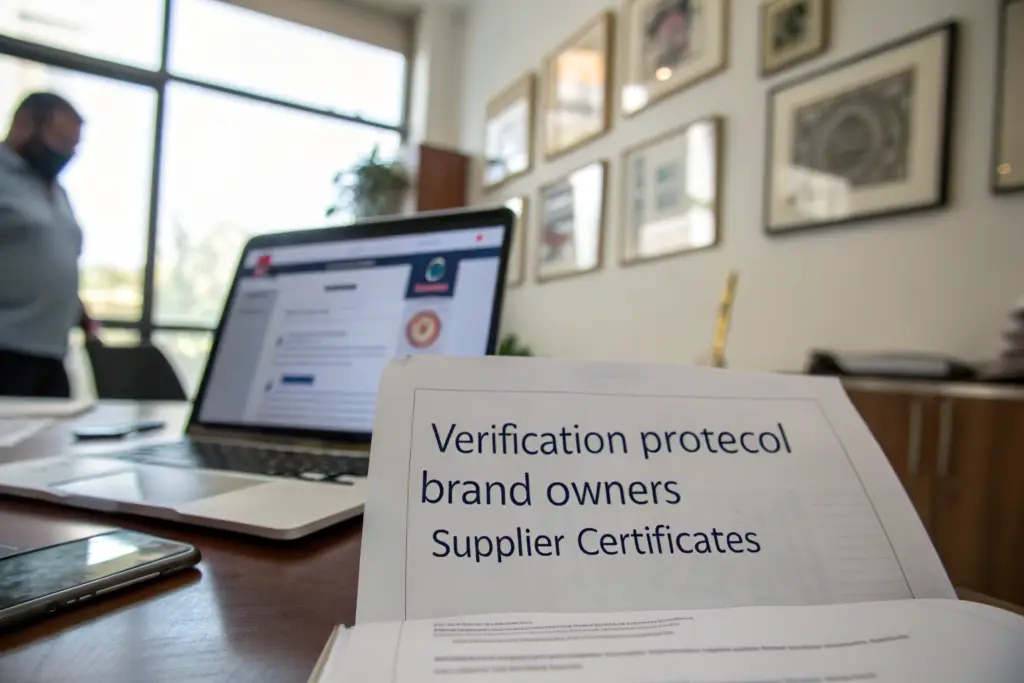
After the video was released, the most frequent question we received was not about our factory. It was a personal, urgent request from small brand owners: "I have a supplier's certificate in my inbox right now. How do I check if it is real? Can you teach me?" We realized the video had created awareness but not yet agency. Brand owners were now suspicious of their certificates, but they did not know the practical steps to verify them. They assumed verification required expensive equipment and a chemistry degree. We created a simple, three-step verification protocol that any brand owner can execute from their desk using a computer, a phone, and, optionally, a third-party testing lab for physical samples. We published this protocol as a downloadable one-page checklist on our website, and we walk through it live during our supplier transparency webinars. The protocol is designed to be a filter, catching the most common and dangerous frauds before a purchase order is issued.
Audit your supplier's certificate by first validating the certificate number on the issuer's official public database, then interrogating the temporal and material scope for applicability to your specific product, and finally, if the financial risk is significant, commissioning a blind physical spot-test of the fabric from a local ISO 17025 lab.
What Are the Red Flags on a Digital Compliance Document?
The first red flag is the easiest to check and the most frequently missed. Look at the email address that sent the certificate. A legitimate certificate from a testing lab like SGS or Intertek will be sent from an email domain that matches the lab's official website domain, such as @sgs.com or @intertek.com. If the certificate arrives from a Gmail, Yahoo, or generic factory email address, it is almost certainly a forgery or an unauthorized redistribution. The certificate itself should be a digitally signed, non-editable PDF, not a scanned image embedded in a Word document. A Word document is an open invitation to edit.
The second red flag is a certificate date that is more than 12 months old. An OEKO-TEX certificate is valid for one year. A GOTS scope certificate is valid for one year, with the specific validity dates stated on the certificate. If the certificate has no date, or if the date is in the past but the supplier claims it is still valid, this is a serious red flag. The third red flag is a mismatch between the factory name on the certificate and the factory name on the purchase contract. A certificate is issued to a specific legal entity at a specific physical address. If the certificate is issued to a dyeing mill and your supplier is a separate trading company that cannot provide a valid chain of custody linking the two, the certificate does not apply to your product. The fourth red flag, and the one we highlighted in our video, is a failed database check. If the certification number pulls up nothing, or pulls up a different company name, the document is fraudulent. These four checks cost zero dollars and take less than ten minutes. They will catch the vast majority of counterfeit certificates circulating in the industry. We recommend performing these checks on every new supplier before any financial transaction.
When Should You Commission an Independent Third-Party Test?
Even a valid, scope-appropriate certificate is a lagging indicator of a single point in time. It does not prove that the specific fabric you are about to receive is compliant. If your order value is significant, your brand reputation is vulnerable, or the product is intended for a high-risk demographic like infants, you should commission an independent, blind, physical spot test. This is a test that you, the buyer, control. Do not rely on the factory to send a sample directly to a lab. The factory could send a golden sample. Purchase a few yards of the bulk fabric yourself, have it shipped to your own address, cut a swatch, and mail that swatch directly to an ISO 17025 accredited laboratory in your own country, with no notification to the factory. This is a blind test.
The test request should be specific. Ask for a heavy metals screen by EPA Method 3050B and a phthalate screen by CPSC-CH-C1001-09.3, plus any additional tests required by your specific regulatory market, such as REACH Annex XVII for Europe or Proposition 65 for California. The cost for a combined screen is typically between $250 and $400. The result is a legally admissible, evidentiary-quality test report issued directly to your company, with your product name on it. This is the only level of assurance that provides legal defensibility in the event of a regulatory challenge. During our video, a brand owner in the chat asked if we recommended third-party testing even if the factory was certified. Our answer was an unambiguous yes. Certification is a filter. Independent blind testing is verification. Your brand's legal liability rests on verification, not on a filter operated by a third party you have never met. Pair the third-party test with a live-streamed XRF scan of the same fabric for a real-time pre-screen, followed by the formal lab analysis for the legal record. This dual approach provides immediate go/no-go decision-making power and long-term legal protection. This layered verification strategy is the new standard of care for responsible garment sourcing, and it is the most important practical lesson the video taught its audience. We continue to advocate for this approach at industry events, including discussions on textile manufacturing integrity.
Conclusion
The video began as a personal act of frustration, a near-miss with a toxic fabric that was one phone call away from becoming a children's garment shipped under my company's name. It grew into a public demonstration of a broken system. The certification mill is a parasite that feeds on the gap between a brand owner's need for assurance and their inability to independently verify. The paper certificate, once a symbol of trust, has become a vector of fraud. Our live-stream did not just expose one fake document. It demonstrated a repeatable, low-cost methodology for replacing trust with verification. The OEKO-TEX database check, the live XRF scan, the unbroken chain of custody on camera—these are not futuristic concepts. They are available tools today, and they collectively render the certification mill's product obsolete. The video also sparked a deeper conversation about the future of the audit industry. An annual snapshot audit by a traveling inspector can be complemented, and in some dimensions replaced, by continuous, live-streamed, instrumental data that a buyer can witness from their own desk.
The most rewarding outcome was not the media coverage or the regulatory conversation. It was the emails from small brand owners who, after watching the video, audited their own supplier certificates using our three-step protocol. Several of them discovered fraudulent documents in their own supply chains, cancelled purchase orders, and avoided what would have been devastating product recalls. They were empowered. The video transferred a piece of our internal quality control capability directly into their hands. This democratization of verification is a core purpose behind our content now. We want every brand, regardless of size or budget, to have access to the investigative tools that can protect their customers and their life's work.
If you have a supplier's certificate you would like us to review, or if you want to schedule a live, witnessed XRF scan of your current production fabric, we are making this verification capability available to the industry. We are not a certification body. We are a factory that has invested in the laboratory instrumentation and the live-streaming infrastructure to prove that our own claims are true, and we are willing to help you verify the claims of your other suppliers using the same transparent methodology. To request a certificate review or to schedule a fabric verification session, contact our Business Director, Elaine, at elaine@fumaoclothing.com. Let us help you move from trusting documents to witnessing data.