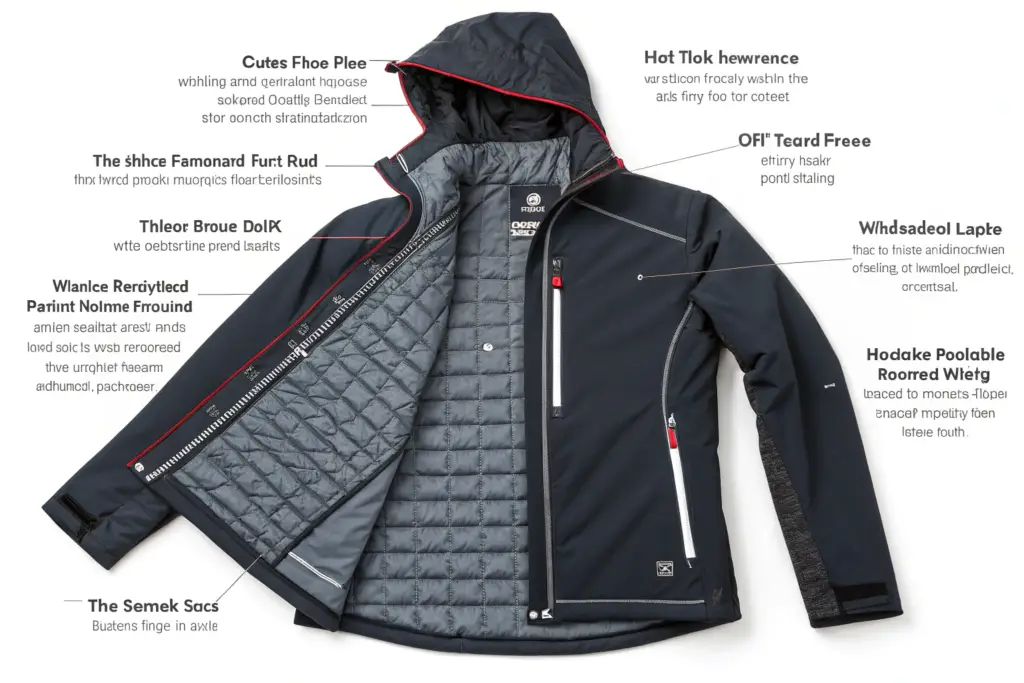
You are designing a winter running tight or a mid-layer for high-output alpine skiing. This is the most challenging engineering problem in all of apparel: you need a garment that is thick enough to insulate against the biting cold, but breathable enough to prevent the wearer from drowning in their own sweat during intense physical exertion. Getting this balance wrong means creating either a freezing, useless garment or a portable, clammy sauna. A leading fabric engineer for a major outdoor brand once told me, "Anyone can make a warm jacket. Just stuff it with a ton of down. The genius, the true innovation, is in making a garment that is both warm and breathable. It's about creating a dynamic system, not a static barrier. The fabric must be an intelligent traffic controller for heat and moisture."
Balancing thickness and breathability in winter sportswear is a science of engineered architecture, not a choice of a single fabric weight. The key strategies are: 1) The "Multi-Layer Intelligent System" Approach (separating the functions of heat-trapping and moisture-moving into distinct, specialized layers that work together), 2) The Innovation of "Grid-Fleece" and "High-Loft Channel" Technologies (using a thick, warm fabric with a specific, engineered structure that creates physical pathways for hot air and vapor to escape), and 3) The Strategic Zoning of "Body-Mapped" Panels (placing the thick, insulating fabrics only where the body needs them for warmth, and using thinner, highly breathable materials in the body's primary sweat and heat zones to create a precisely balanced overall system).
At Shanghai Fumao, our sourcing team is expert in these advanced, high-performance winter textiles, and our activewear and outerwear lines have the specialized construction skills to build them. Let me explain the science of the perfect winter sports fabric system, which is the secret behind the gear worn by professional athletes and serious enthusiasts.
How Does a "Grid-Fleece" or "High-Loft Channel" Fabric Solve the Warmth vs. Breathability Paradox?
The most revolutionary solution to the winter sports paradox is a category of fabrics that do not just passively insulate, but actively solve the breathability equation within their own physical structure. The most famous of these is the "grid-fleece," a technology that uses a specific, engineered geometry to create a dynamic, intelligent thermal system. It is not a compromise; it is a brilliant, physical solution.
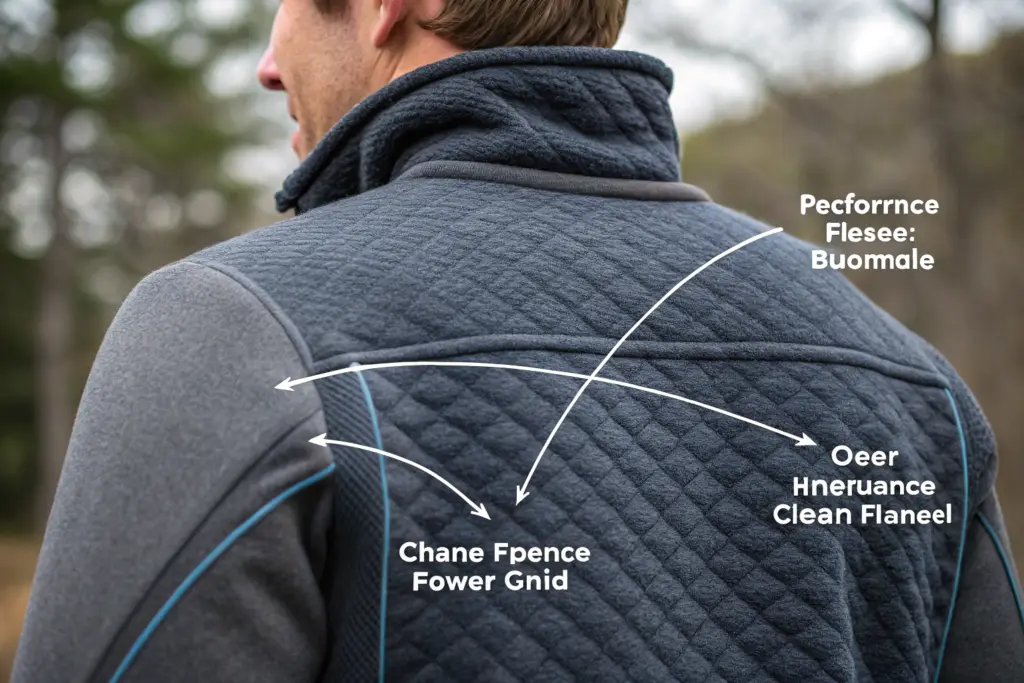
Grid-fleece solves the paradox through its unique, three-dimensional engineered geometry. The fabric is constructed with a series of raised, thick, insulating "islands" or channels of fleece that trap body heat against the skin. But between these warm islands, the fabric has deep, clean, and open "channels" where the material is very thin, creating a dedicated, low-resistance physical pathway for hot, humid air to escape through the fabric. This allows a single layer of clothing to provide the warmth of a much heavier fleece, with the breathability of a much lighter fabric.
A high-performance running brand we work with uses a specific, lightweight Polartec Power Grid fabric for their winter mid-layers. They market the science of the grid to their customers, showing them how the raised fleece squares trap heat, while the open channels allow sweat vapor to escape. Their athletes report that it is the only garment that can keep them warm during a freezing start but prevent them from overheating on a steep, demanding climb. The performance is not magic; it is a visible, engineered, and marketable function of the fabric's physical geometry. This is the power of an engineered performance textile .
What Is the Physical Function of the "Open Channel" in a Thermal Grid Fabric?
The open channel is the low-resistance escape route. The hot, humid air from your body naturally seeks the path of least resistance. In a standard, solid fleece, that path is blocked, trapping the moisture. In a grid fleece, the deep, clean channels between the raised insulating islands provide exactly that: a clear, unobstructed physical path for the hot air to vent directly out of the garment. It is an active, passive ventilation system.
How Does a "Lotus-Effect" or DWR Finish on the Outer Shell Work Synergistically with the Breathable Layer Inside?
This is the essential final piece of the system. The breathable mid-layer moves your sweat vapor out. If the outer shell is a dense, airtight layer, that vapor will hit the inside of the cold shell, condense back into liquid water, and you will be wet and cold. A Durable Water Repellent (DWR) finish, or a microporous membrane, on the outer shell allows liquid rain and snow to bead and roll off, while still allowing the hot water vapor from your body to pass through to the outside. The system must breathe from the inside out, while being sealed from the outside in. This is the complete winter performance system .
How Can "Body-Mapping" Strategically Place Thickness and Breathability Precisely Where They Are Needed?
Even with the most brilliant single fabric, a "one-material" approach to a full garment is a compromise. The front of a cyclist's body is a wind-chilled radiator, while their back is a heat-generating furnace. The solution to creating a truly balanced garment is not to find a single, magical fabric, but to use a "Body-Mapping" approach, strategically placing different materials with different thermal and breathability properties on the specific zones of the body that need them.
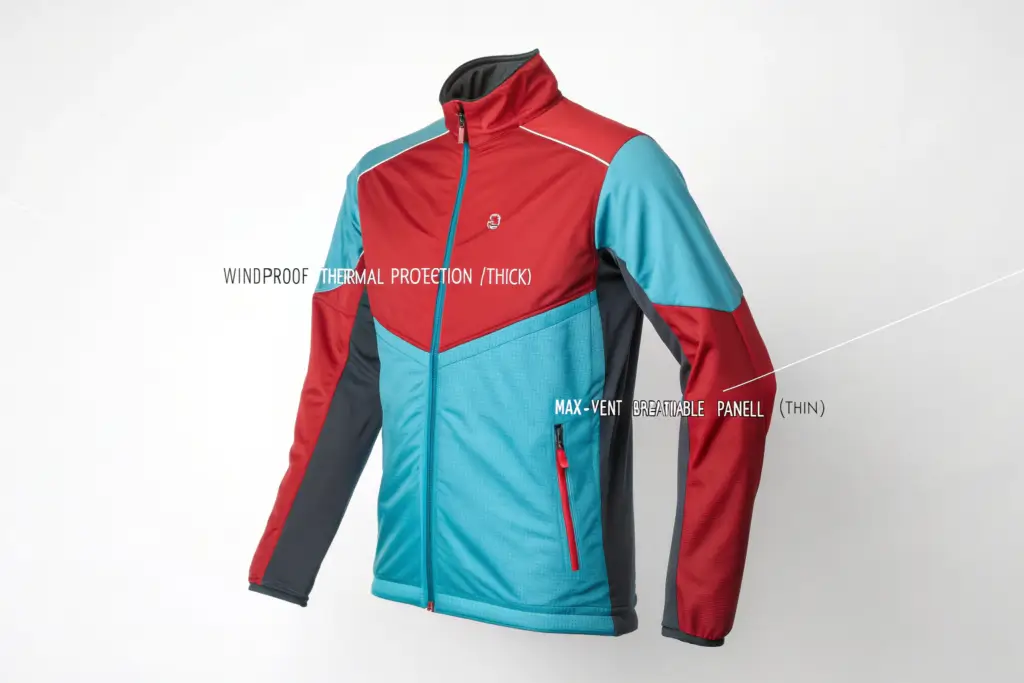
Body-mapping creates a perfectly balanced winter sports garment by strategically placing different fabrics on different body zones. You place a thick, windproof, and thermally protective softshell on the front of the torso, shoulders, and the top of the arms—the areas that face the direct blast of cold wind and weather. Simultaneously, you place highly breathable, thin, and stretchy mesh or a lightweight thermal knit on the underarms, the side panels, and the center back—the body's primary heat and sweat exhaust zones. The garment becomes a precisely engineered map of protection and ventilation.
A cycling brand we work with uses body-mapping on their winter jerseys. The front panel is a laminated, windproof softshell that blocks the freezing wind on descents. The entire back panel and the underarms are a lightweight, high-wicking thermal mesh. On a cold day, the front protects, and the back breathes. The rider stays perfectly warm without the wet, clammy overheating that a standard, un-mapped jacket would create. This is the power of a body-mapped performance design .
What Are the Specific "Hot Spots" That Need Maximum Breathability in a Winter Sports Garment?
These are the zones that generate the most heat and sweat during high-exertion activities and need to be designed as primary ventilation exhausts. They are the center upper back, the underarms, the side ribs, and the back of the knees. These areas should be mapped with the thinnest, most breathable, and most moisture-wicking materials in the garment.
What Are the Specific "Cold Spots" That Need Maximum Thermal Protection?
These are the zones that face the direct blast of wind and cold and have less natural metabolic heat generation. They are the front chest, the shoulders, the top of the arms, and the front of the thighs. These areas should be mapped with the thickest, most windproof, and thermally protective materials in the garment, often with a bonded softshell or a high-loft, dense fleece.
How Can the Right Fiber and Weave Choice Achieve Both Warmth and Breathability in a Single Layer?
For a next-to-skin base layer or a lightweight mid-layer, you often want the performance of a single, perfectly chosen material. The key to achieving high warmth with high breathability in a single layer is to select a specific fiber and a specific, open weave construction. The fiber manages the moisture, while the open weave creates the insulating loft and the physical space for airflow.
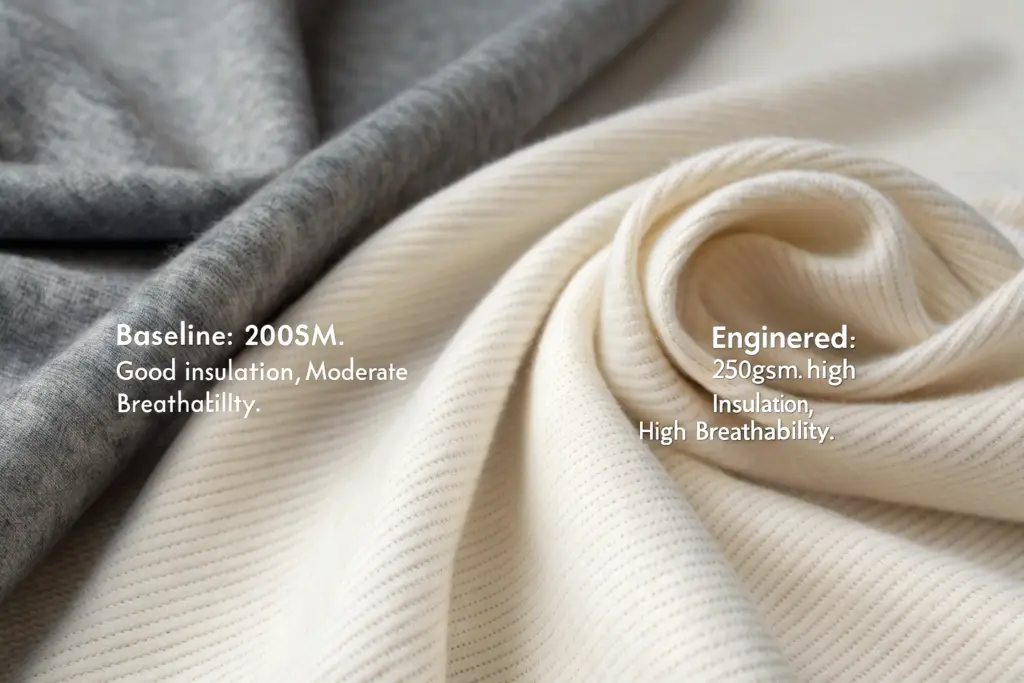
The ultimate single-layer solution for winter sports is a fine-gauge Merino wool or a high-performance Merino/Tencel blend, knitted into a specific, open, and lofted structure. Merino wool is naturally breathable, excellently wicks moisture, and has a unique thermoregulating property. When knitted into a "waffle" or "honeycomb" structure, the fabric gains a third dimension of thickness, creating thousands of tiny, insulating air pockets that trap body heat, while the open structure still allows for excellent airflow and moisture transport. It provides a high warmth-to-weight ratio with uncompromised breathability.
A luxury ski touring brand we work with uses a specific, fine-gauge Merino wool waffle-knit for their base layers. The fabric is thicker and warmer than a standard baselayer, but the open, waffle structure ensures it never feels suffocating or clammy during high-exertion uphill climbs. The athletes can wear a single, perfectly designed layer for a wide range of conditions, reducing the need to add and shed multiple layers. This is the elegance of a single-layer high-performance fiber solution .
How Does Merino Wool's Natural "Hydrophilic" Property Actively Manage Moisture, Unlike a Synthetic?
Unlike a synthetic polyester, which simply moves moisture along its surface, Merino wool is hydrophilic. It actively absorbs water vapor into the core of the fiber itself, before it has a chance to condense into liquid sweat on your skin. This process, called "heat of sorption," even generates a small amount of heat, keeping you warmer during the initial absorption phase. The moisture is then gradually released, leaving your skin feeling dry and comfortable.
What Is a "Waffle Knit" Structure and How Does It Create Insulating Air Pockets?
A waffle knit uses a specific stitch pattern to create a three-dimensional, raised, grid-like texture on the fabric's surface. The raised squares create a layer of "dead air" between your skin and the fabric, which is an incredibly effective insulator. Because the structure is open and three-dimensional, it does not trap moisture like a dense, flat knit would. It is a simple, mechanical way to add warmth and breathability to a single layer.
How Does Fumao's Performance Fabric Expertise Engineer the Perfect Balance for Your Winter Line?
The perfect balance between thickness and breathability is not found in a single, magical product; it is engineered through a strategic combination of advanced material science, intelligent design, and expert construction. Our role is to provide our B2B partners with access to the world's best performance textiles and the technical expertise to apply them in a way that creates a truly superior, high-functioning garment.
Fumao's performance fabric expertise is the strategic solution to the winter sportswear paradox. We provide access to the advanced engineered materials—the grid fleeces, the lightweight softshells, the Merino waffle knits—that are the essential building blocks. Our product development team understands how to combine these materials in an intelligent, body-mapped design, and our specialized activewear and outerwear production lines have the skills to construct them flawlessly. We help you engineer the perfect, breathable warmth for your customers' most demanding activities.
A brand founder who had struggled to get the warmth/breathability balance right for her running line told me, "Your team didn't just show me fabrics; you taught me the science. You showed me the grid fleece cross-section, you explained the body-mapping logic, and you helped me build a system that works. My athletes now tell me it's the best winter gear they've ever worn. Your expertise is in every seam." That is our purpose. To be the technical, knowledgeable, and performance-driven manufacturing partner that empowers your brand to lead in the most demanding category of apparel. This is the power of a performance-driven strategic partnership .
How Do We Provide the Technical Performance Data (MVTR, Thermal Resistance) to Support Your Fabric Choices?
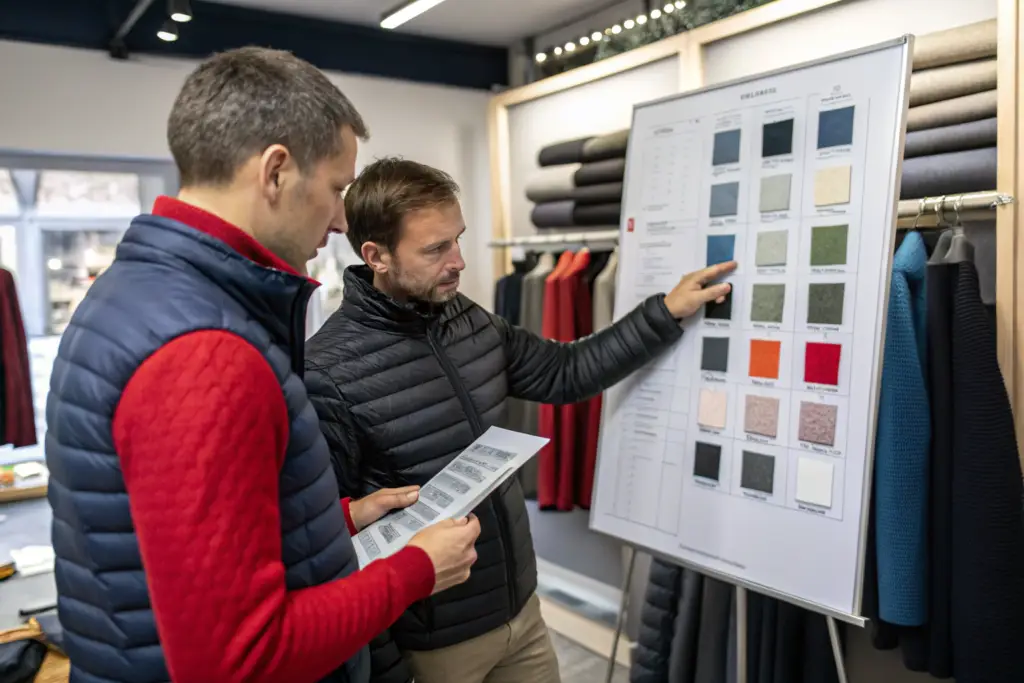
We provide the objective test data from our mill partners. For a winter activewear fabric, you can see its specific Moisture Vapor Transmission Rate (MVTR) , telling you how breathable it is, and its thermal resistance (R-Value or CLO), telling you how well it insulates. We present this data so you can make a precise, engineering-based decision, not a guess. This is the foundation of our data-driven material selection .
How Can You Use Our CMT Model to Prototype and Test a Body-Mapped Garment Before Committing to a Large Bulk Run?
Our specialized CMT sample room can produce a small batch of complex, multi-material, body-mapped samples, allowing you to put your design on a real athlete for field-testing. This is not a standard cut-and-sew sample; it's a technical prototype. This allows you to refine your engineering in the real world before making a large, expensive bulk commitment. This is our agile, performance-focused CMT service .
Conclusion
Balancing thickness and breathability in winter sportswear is the ultimate challenge of performance apparel engineering. It cannot be solved with a single, thicker fabric. It is solved through an intelligent system: a grid fleece with built-in ventilation channels, a body-mapped garment that surgically places protection and breathability, and a smart choice of a natural fiber in an open, lofted construction.
At Shanghai Fumao, we are experts in building these performance systems. Our deep knowledge of advanced technical textiles, our design-for-performance philosophy, and our specialized manufacturing capabilities provide our B2B partners with the strategic, technical, and material advantage they need to create the gear that wins in the most demanding conditions.
If you are ready to engineer the next generation of high-performance winter sportswear with a technically expert partner, let's talk. Our Business Director, Elaine, can walk you through our performance fabric library and our body-mapping capabilities. Please email Elaine at: elaine@fumaoclothing.com.