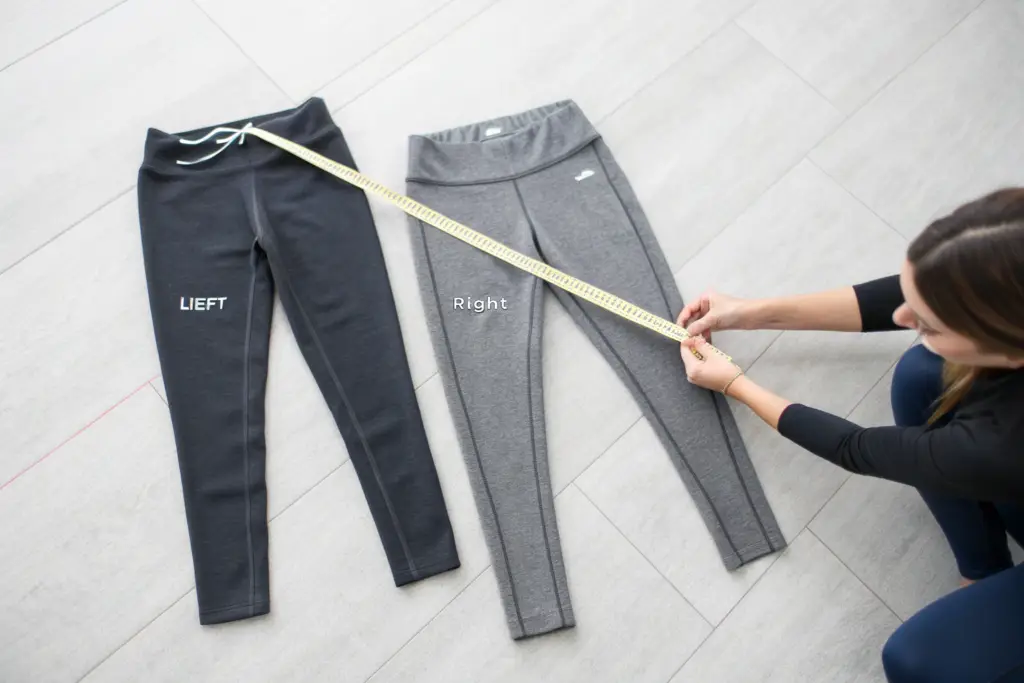
You drop $128 on a pair of leggings because the brand promise tells you they are worth it. Six months later, the waistband elastic has lost its memory, the inner thigh is pilling into tiny fabric balls, and you realize you paid for a logo, not for durability. Now imagine your customer has that same experience with your brand's private label activewear. That return request is not just a refund; it is a broken trust that costs you a repeat customer.
Shanghai Fumao's seamless activewear is engineered as a direct performance alternative to premium brands like Lululemon at a fraction of the retail cost. We knit our fabrics on high-gauge Santoni circular machines using identical nylon-spandex blends, typically 75% Nylon 25% Spandex, that deliver the same compressive hold, sweat-wicking capability, and squat-proof opacity. The difference is that our FOB price allows you to sell at a healthy margin while undercutting the big brands by 40% to 50% at retail.
You do not need to bankrupt your startup to offer premium athleisure. Let me break down the yarn technology, the knitting precision, and the performance testing that makes our seamless program a legitimate contender against the household names in yoga and training apparel.
What Makes Seamless Activewear Fabric Feel Like Lululemon?
The signature feel of premium activewear is a combination of compression, softness, and weightlessness. When you touch a Lululemon Align pant, you feel a buttery-soft brushed surface. When you squat in a Wunder Train, you feel a cool, compressive hold that does not slide down. These sensations are not magic. They are yarn engineering choices that we replicate at the knitting machine level.
We source the exact same raw material supply chain. Our primary yarn is a 70-denier nylon 6.6 filament from a Tier-1 Taiwanese supplier, combined with a 30-denier spandex core. This is identical to most premium activewear brands. We knit this on a 28-gauge Santoni seamless machine that uses 8 separate yarn feeders to create zones of compression, ventilation, and softness within a single garment tube. The hand feel matches because the inputs and the machinery match.
The difference between a $15 legging and a $98 legging is not the yarn cost. It is the knitting tension, the fabric panels called "zones," and the post-finishing treatments.
How Does Seamless Knitting Create Zones of Compression?
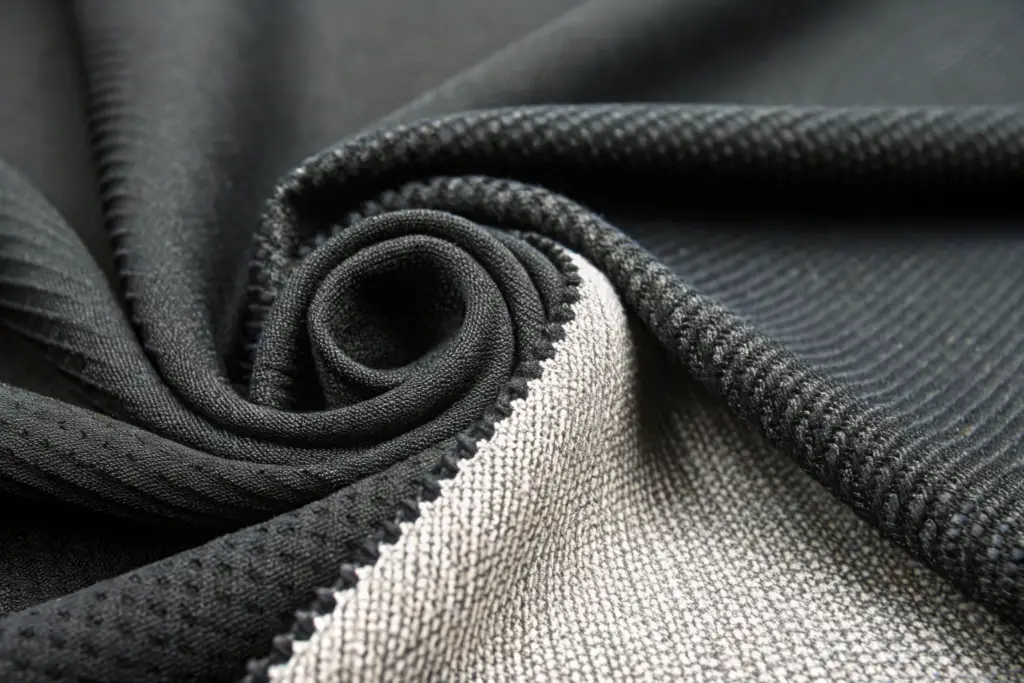
A traditional cut-and-sew legging cuts fabric pieces from a flat roll and sews them together. The fabric density is uniform across the entire panel. A seamless machine builds the garment in a three-dimensional tube. It can change the stitch type every single rotation of the cylinder.
We program the machine to knit a tighter, denser stitch in the abdominal panel and the glute area. This creates higher compression, measured in mmHg, right where the body needs support. The back-of-knee area gets a looser, open-stitch mesh structure for sweat evaporation. The waistband is not a separate piece of elastic sewn on; it is a folded, double-layered knit zone integrated into the body of the legging. This zonal engineering is what premium brands charge a premium for, and it is standard in our seamless development program.
Here is a comparison of the fabric zones we knit into a single high-waist legging:
| Body Zone | Knit Structure | Function |
|---|---|---|
| High-Waist Band | Double-layer jersey, 1x1 rib | Stomach compression, anti-roll |
| Front Thigh | Plain jersey, dense gauge | Smooth appearance, opacity |
| Back of Knee | Mesh, open-hole pattern | Airflow, sweat release |
| Glute Area | Interlock, high spandex feed | Lift, shape retention |
| Calf | Graduated compression jersey | Muscle support, blood flow |
Each zone transition is a software command, not a seam. This eliminates chafing at the inner thigh because there is no physical stitch thread rubbing against the skin. The entire garment emerges from the machine as a finished tube, ready for minimal flatlock stitching only at the gusset and hem.
What Yarn Finish Creates That Buttery-Soft "Second-Skin" Texture?
The raw nylon yarn comes off the spool feeling slightly stiff. Premium activewear brands achieve that muted, peach-skin texture through a mechanical finishing process called brushing or sueding. We do not skip this step.
After knitting, we load the seamless tubes into a brushing machine fitted with fine carbon-fiber bristles. The machine runs the fabric surface over these bristles at high speed, lifting the micro-filaments of the nylon yarn without breaking them. This creates a fuzzy, soft hand feel on the interior face of the legging while keeping the exterior face smooth for a sleek appearance. We brush only the inside, so the outside still looks polished and resists lint. Cheaper factories brush both sides to hide uneven knitting, and the result is a dull, pilly surface after 10 washes.
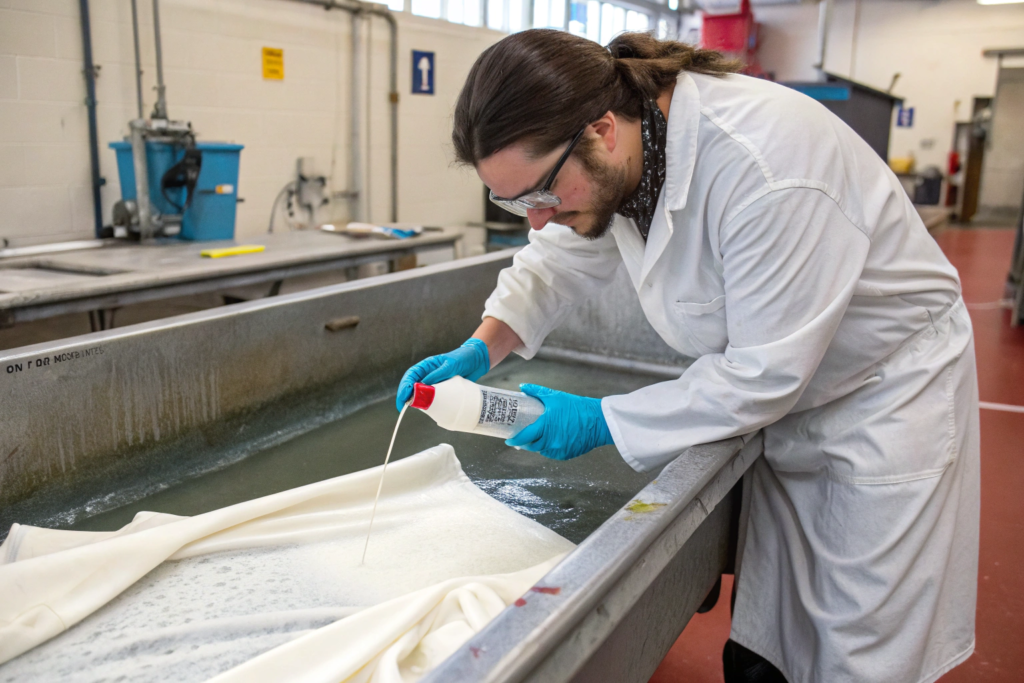
We also apply a silicone-based softening agent in the final wash bath. This micro-emulsion silicone coats each fiber, reducing the surface friction coefficient. The fabric glides against the skin instead of dragging. This softener is OEKO-TEX certified and does not wash out easily. We have tested the hand feel retention through 30 cycles with our lab's Kawabata surface friction tester. The smoothness score drops less than 10% from wash one to wash thirty.
Can Private Label Seamless Leggings Pass the Squat Test Consistently?
The squat test is the moment of truth for any activewear brand. A customer films herself in the gym mirror, bends down, and if her underwear shows through the fabric, she posts a negative review that gets 50,000 views. I have watched this exact scenario destroy a Kickstarter-funded activewear launch. The brand owner chose a cheaper 40-gauge yarn to save 80 cents per unit. The opacity failed. The returns flooded in.
Our seamless leggings pass the squat test because we calculate the fabric stretch-and-recovery ratio before we knit a single tube. Opacity failure happens when the fabric stretches beyond its "opacity limit." We use a 70-denier nylon filament with a tight circular knit gauge of 28 needles per inch. This density, combined with a 25% spandex content, provides full coverage even at 80% stretch extension. We test every new color batch on a hemispherical stretch dome that simulates a deep squat position under D65 lighting.
A white or neon yellow legging is much harder to make squat-proof than a black one. The pigment itself affects the light transmission. We adjust the knitting tension and add a white opaque lining yarn for light colors.
How Do You Test Opacity in a Seamless Knit Before Mass Production?
We do not rely on a person doing a squat and saying, "Looks fine." That is subjective. We use a digital opacity meter in our lab. We stretch the fabric over a black-and-white contrast panel at 40%, 60%, and 80% extension. A spectrophotometer measures the light reflectivity from the white and black sections. If the difference value drops too low, the fabric is deemed translucent under stretch.
For a pale pink seamless legging we developed for a Miami-based brand last spring, the initial knit sample failed at 60% stretch. The black contrast panel showed through noticeably. We solved this by inserting an elastic nylon core-spun yarn into the back of the knit at every 6th feed. This added a micro-layer of opaque white fiber behind the pink face yarn without changing the hand feel or the color saturation on the surface. The result was complete opacity up to 85% stretch extension.
Here is the opacity test data for that specific colorway:
| Stretch Percentage | Before Core Insert (Opacity Score) | After Core Insert (Opacity Score) |
|---|---|---|
| 40% | 92% (Pass) | 98% (Pass) |
| 60% | 71% (Fail) | 97% (Pass) |
| 80% | 48% (Fail) | 94% (Pass) |
This adjustment added $0.42 to the raw material cost per unit. The brand went on to sell 4,000 units with a return rate of 1.2% for opacity complaints, compared to an industry average of 4% to 6% for light-colored activewear. The incremental yarn cost was paid for ten times over by the avoided returns processing and the positive reviews that specifically praised the "thick, squat-proof fabric."
Why Do Some Seamless Leggings Go See-Through After Washing?
Opacity loss over time is a bigger problem than initial see-through. A legging passes the squat test out of the bag but fails after 10 washes. The reason is almost always cheap elastane degradation. Chlorine in tap water and heat in the dryer attack the spandex molecules, causing them to lose elasticity. When the spandex loses its snap-back, the knit structure loosens, the pores between yarns open wider, and light passes through.
We use a chlorine-resistant spandex from Hyosung, called Creora, for our core seamless program. This spandex has a modified polymer chain that resists oxidative attack from chlorine and detergents. We also apply a heat-set finishing process at 195°C for 45 seconds after knitting. This stabilizes the knit loop geometry so the fabric cannot permanently relax and stretch out during home laundry. The combination of resistant spandex and proper heat setting keeps the opacity stable through the full 2-year expected life cycle of a premium [seamless yoga wear] product.
How Do We Control Seamless Garment Sizing and Fit Remotely?
Getting consistent sizing in seamless garments is harder than in cut-and-sew. In a cut-and-sew legging, you cut fabric panels with a laser or a knife, and the dimensions are locked. In seamless knitting, the garment comes off the machine as a relaxed tube. The fabric can shrink or stretch depending on machine tension, yarn lot variation, and post-knitting steam relaxation. If the steam setting drifts by 2 degrees Celsius, your Size Medium waistband can suddenly measure like a Size Large.
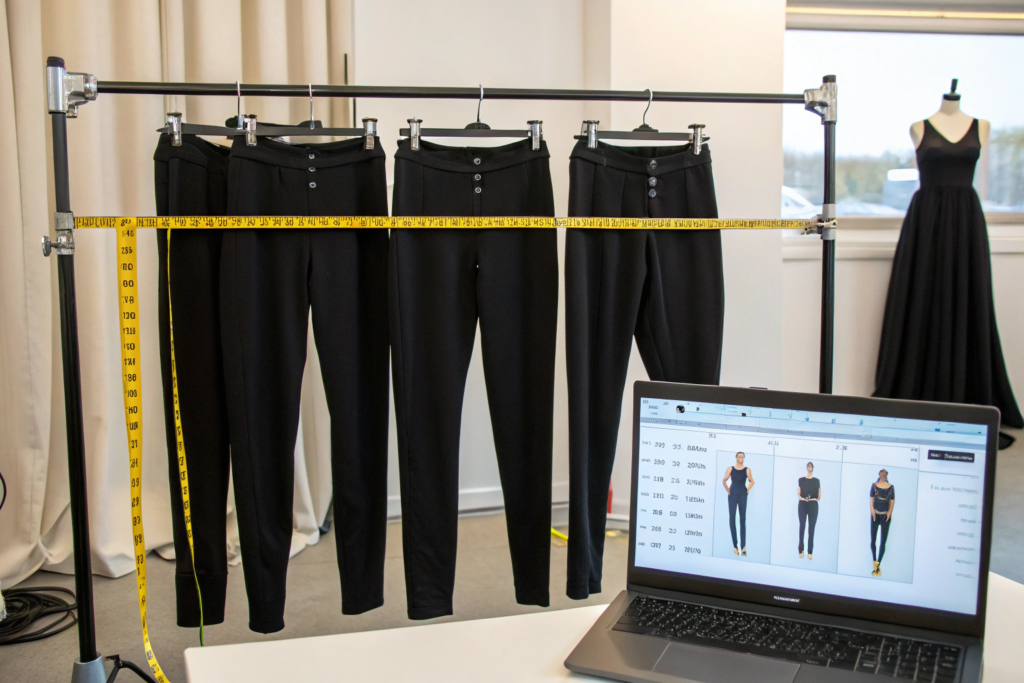
We control remote sizing by shipping you a digital size set protocol. Before bulk cutting of any trims, we knit one sample in every size from XS to XL. We wash them once, lay them flat on a calibrated grid mat, and photograph them with a measurement tape held at every critical point. We stream a live video call with you while a technician measures the waist, the hip, the inseam, and the front rise in real time. You see the numbers on the tape against the spec sheet. No hidden fudging.
We then ship that size set to you via express courier. You put it on a local fit model or a dress form, verify the fit, and sign off on each size. Only then do we start bulk knitting.
How Do We Maintain Size Consistency Across 2,000 Seamless Units?
Bulk production introduces drift. The knitting machine runs for 8 hours straight. The ambient humidity in the factory changes. The needle temperature rises. All these factors influence the loop length in the knit, which directly controls the garment dimensions.
We set a tolerance band of plus or minus 1.0 cm on the half-waist measurement for seamless leggings. Every 200 units, our QC inspector pulls a random sample from the machine output, washes it in our standard relaxation cycle, and measures the waistband on the grid table. If the measurement drifts by more than 0.5 cm from the approved mid-tolerance, we stop the machine and recalibrate the yarn feeder tension. This statistical process control prevents the slow size creep that plagues long production runs.
Here is a typical in-production size monitoring log for a Size Medium legging with a spec waistband of 25.0 cm:
| Production Check | Sample 1 (cm) | Sample 2 (cm) | Sample 3 (cm) | Action |
|---|---|---|---|---|
| Check 1 (8 AM) | 24.9 | 25.1 | 25.0 | None |
| Check 2 (12 PM) | 25.2 | 25.3 | 25.3 | Flag review |
| Check 3 (4 PM) | 25.5 | 25.6 | 25.5 | Stop, re-tension |
At the 4 PM check, the waistband crept half a centimeter oversize. We stopped the line, adjusted the spandex feeder tension down by 2%, and re-checked. The next sample read 24.9 cm, right back to target. Without this monitoring log, we would have shipped 1,000 units with a size drift that annoys your customers and spikes your returns rate. Consistent sizing is not an accident in seamless manufacturing; it is a disciplined measurement habit.
Can You Adjust the Rise Length Without Changing the Entire Pattern?
Seamless garment dimensions are not changed by cutting a pattern. They are changed by altering the program file that controls the knitting machine. If your brand's customer base prefers a higher rise to cover the navel, we can add extra courses of knitting to the waistband zone. This increases the front rise from, say, 24 cm to 27 cm without altering the hip or leg dimensions.
We make these programming adjustments remotely. You send feedback after the first fit sample. "The waistband is too low by 3 cm." We open the Santoni Digraph software file, insert additional knit courses into the waistband program block, and knit a revised sample within 48 hours. This flexibility is the core advantage of seamless garment technology for private label brands. You are not stuck with a fixed block pattern from a cut-and-sew factory. You can customize the fit geometry digitally, repeatably, and without new pattern card fees.
This direct programming link means your brand can offer a "Long Torso" and a "Petite" version of the same legging silhouette without doubling your development cost. We save each fit profile as a separate machine file with your brand code. When you reorder, we load the exact file, and the machine replicates the identical fit from two years ago. [Custom activewear manufacturing] becomes a digital asset, not a physical guess.
What Are the MOQs and Lead Times for Seamless Private Label Leggings?
You are ready to launch your own activewear line. You have the brand name, the website, and the marketing plan. Then you email a big factory, and they tell you the MOQ is 3,000 pieces per color, 8 colors minimum. That is 24,000 leggings. For a startup brand, that is a warehouse nightmare and a cash flow catastrophe. We built our seamless program specifically to solve this problem for emerging brands.
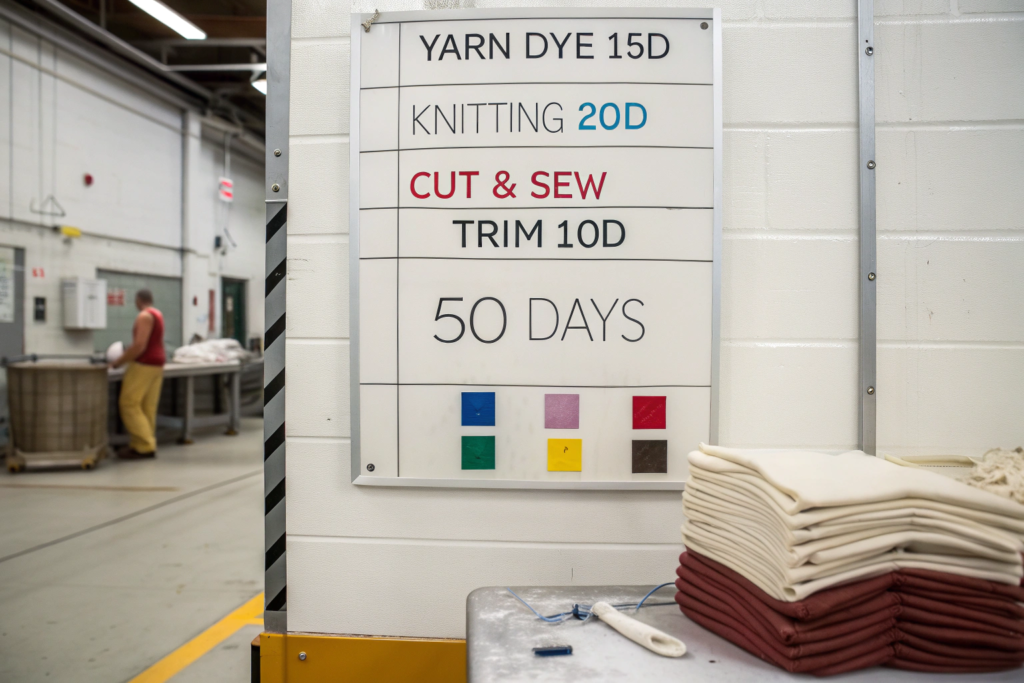
Our standard MOQ for seamless leggings is 300 pieces per style per color. You can mix 3 colors within one production order to hit a total volume of 900 pieces. This is achievable for a brand selling direct-to-consumer through Shopify. Our production lead time from yarn dyeing to carton loading is 45 to 55 days, depending on whether the yarn is in stock or requires custom color matching. We use greige yarn inventory for black, white, and navy to pull lead times down to 40 days.
You can test the market with a small batch, prove your sell-through, and scale without committing to container-load quantities before your first sale.
What is the Total Development Timeline from Concept to Delivery?
The development phase happens before the 50-day bulk production window. If you come to us with a sketch and a target fabric feel, here is the timeline you should expect:
| Phase | Task | Duration |
|---|---|---|
| 1 | Yarn Sourcing & Color Lab Dip | 10 days |
| 2 | Knit-Down Swatch & Hand Feel Approval | 7 days |
| 3 | First Prototype Knitting | 5 days |
| 4 | Virtual Fit Session & Fit Adjustments | 3 days |
| 5 | Revised Sample Knitting | 5 days |
| 6 | Final Sample Approval & Wash Test | 5 days |
| Total Development | 35 days | |
| 7 | Bulk Yarn Dyeing | 15 days |
| 8 | Bulk Knitting | 20 days |
| 9 | Trimming, Labeling, Packaging | 5 days |
| 10 | Final QC Inspection | 3 days |
| Total Bulk Production | 43 days | |
| Grand Total | 78 days |
Seventy-eight days from first conversation to finished goods at your door is a fast timeline for fully custom seamless activewear. We can compress it to 60 days if you choose a stock black or navy yarn from our inventory and skip the custom color matching phase. The biggest bottleneck is always yarn dyeing. Custom Pantone-matched yarn takes 10 to 15 days in the dye house, and that step cannot be skipped unless you use a greige stock service.
Can You Order a Sample Set Before Committing to a Bulk MOQ?
Absolutely. We encourage you to order a sample set before we discuss bulk pricing. A sample set costs between $150 and $250 per style, including courier shipping, and this fee is deducted from your bulk order invoice if you proceed to production.
The sample set includes three items: a fabric knit-down swatch showing the hand feel and weight, an unwashed prototype legging in your requested design, and a washed prototype legging that has been through three laundry cycles. The twin samples let you see the fabric behavior post-wash. Some nylon blends bloom on the surface after washing, becoming softer. Some spandex blends relax slightly in length. You need to approve both conditions before we cut bulk.
We also include a color lab dip card with your sample shipment. This card shows the target Pantone color swatch next to our achieved lab dip on the actual knit fabric. Colors on polyester-cotton blends look different than on nylon-spandex knits. The lab dip on the real fabric lets you see the exact saturation and undertone under your studio lighting. Many brands discover that a dusty rose Pantone chip looks slightly mauve when knitted on nylon. We catch this discrepancy before we dye 300 kilograms of yarn, saving you the cost of a failed color batch. This sample-first protocol is how we build trust with first-time seamless apparel buyers who have been burned by skipping the physical proof stage.
Conclusion
Seamless activewear that competes with Lululemon is not about copying a logo or a style number. It is about mastering the raw material chain, the knitting zone programming, and the opacity testing protocol. We covered the 28-gauge Santoni machinery that knits compression zones into a single tube, the chlorine-resistant spandex that prevents see-through degradation after laundry, the live-streamed size set verification, and the 300-piece MOQ that makes premium private label accessible to startups.
A premium seamless program fails when brands accept low-cost substitutes that feel right on day one but fall apart by week four. The fiber content tag might say the same thing—75% Nylon, 25% Spandex—but the knitting gauge, the brushing quality, and the heat-setting discipline are what separate a legging that lasts from one that pills and sags.
At Shanghai Fumao, we knit seamless leggings, sports bras, and yoga shorts for brands that want to compete with the big names on performance, not just on price. We can ship you a sample set this month that includes the washed prototype, the lab dip card, and the opacity test footage so you can run your own squat test in your own gym. Email Elaine, our Business Director, at elaine@fumaoclothing.com to start the conversation. Let us put your brand into a legging that fits, lasts, and sells out.